Quick Answer
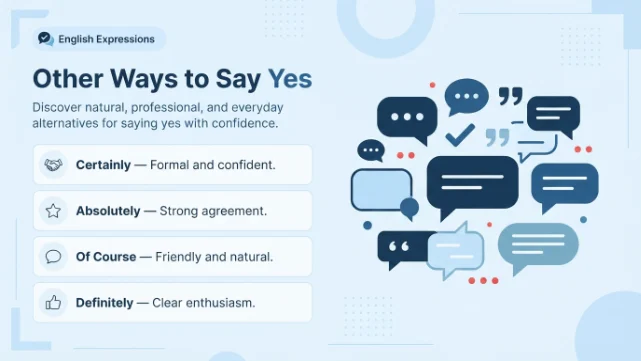
Instead of repeating “yes” every time, English speakers use a range of alternatives depending on tone and setting. The top five alternatives are: absolutely, certainly, of course, definitely, sure.
“Yes” is one of the most common words in English. People use it to agree, accept an offer, confirm information, or approve a request. It appears constantly in conversation, email, meetings, and casual chats.
Learning alternatives to yes helps you sound more natural and confident in different situations. Repeating the same word in every conversation can sound flat or robotic, while the right synonym can also help you express excitement in English or show a more measured, professional tone.
This guide breaks down 30 alternatives to “yes” by formality, so you always know which word fits the moment.
Quick Categories
Formal alternatives to “yes”
- Certainly
- Indeed
- Affirmative
- Very well
Casual alternatives
- Sure
- Yeah
- Yep
- For sure
Professional alternatives
- Absolutely
- Of course
- Agreed
- Consent granted
Informal expressions
- You bet
- Uh-huh
- Totally
- Count me in
Pro Tip: Match your alternative to the setting first, then the emotion. A formal email needs “certainly,” not “yep,” even if you feel excited.
Common Mistakes
- Using “yeah” in formal writing. Incorrect: “Yeah, I will attend the board meeting.”
- Overusing “sure” in professional emails, which can sound unenthusiastic. Example: “Sure.” (as a standalone email reply looks careless)
- Mixing formal and informal tone in the same message. Example: “Certainly, yep, I’ll be there.”
- Using “affirmative” in everyday casual conversation, where it sounds stiff. Example: “Affirmative, let’s grab coffee.”
- Repeating the same alternative too often, which reduces its impact. Example: “Absolutely. Absolutely. Absolutely.” across one conversation.
What Does “Yes” Mean?
“Yes” is an adverb used to give an affirmative response, confirm a statement, or grant permission. It functions as a standalone word or as the start of a longer sentence.
Grammar note: “Yes” does not require a verb to function. It can stand alone as a complete response.
Example sentence: “Yes, I can join the call at 3 PM.”
When to Use “Yes”
- Confirming plans or appointments
- Accepting an invitation or offer
- Answering a direct question
- Agreeing with an opinion or statement
Spoken vs Written: In speech, “yes” is often shortened to “yeah” or “yep.” In writing, especially formal writing, “yes” stays in its full form.
Formal vs Informal: Formal writing prefers “yes” or “certainly.” Informal chats allow “yeah,” “yep,” or “sure.”
Is It Professional or Polite to Say “Yes”?
“Yes” is always polite, but on its own it can sound plain or abrupt in professional writing, especially without added context.
Business example: “Yes, I will send the report by Friday” is professional and clear, while a bare “Yes.” as an email reply can feel curt.
Polite? Yes Professional? Yes, when paired with context or detail
Pull Quote: “The right tone makes your English sound professional and confident.”
Pros and Cons of Using “Yes”
Pros:
- Simple and natural
- Universally understood
- Common in every context
- Easy to understand
Cons:
- Can sound repetitive
- Lacks emotional nuance
- Too plain for enthusiastic responses
- Limited for formal negotiation language
Other Ways to Say “Yes”
These alternatives will help you sound more fluent, confident, and natural in different situations. Use them according to tone, context, and audience to express excitement, admiration, or approval.
1. Phrase: Absolutely
Meaning: A strong, confident way to agree. Explanation: Shows enthusiasm and certainty. Example Sentence: “Absolutely, I’d love to join the project.” Best Use: enthusiastic agreement Worst Use: hesitant situations Tone: confident, warm, energetic Context Variability: casual, professional, spoken
2. Phrase: Certainly
Meaning: A polished, formal way to say yes. Explanation: Common in business and customer service. Example Sentence: “Certainly, I will prepare the documents by tomorrow.” Best Use: formal writing Worst Use: casual texting Tone: formal, polite, professional Context Variability: professional, written
3. Phrase: Of course
Meaning: An easy, reassuring way to agree. Explanation: Suggests the request was simple or expected. Example Sentence: “Of course, I can help you with that.” Best Use: reassuring someone Worst Use: serious legal contexts Tone: friendly, reassuring Context Variability: casual, professional, spoken
4. Phrase: Definitely
Meaning: A confident confirmation with no doubt. Explanation: Adds emphasis to a positive answer. Example Sentence: “Definitely, count me in for Saturday.” Best Use: confirming plans Worst Use: formal contracts Tone: confident, enthusiastic Context Variability: casual, spoken
5. Phrase: Sure
Meaning: A relaxed way to agree. Explanation: Common in everyday conversation. Example Sentence: “Sure, I can meet at noon.” Best Use: informal chats Worst Use: formal emails Tone: casual, easygoing Context Variability: casual, spoken
6. Phrase: Yeah
Meaning: An informal version of yes. Explanation: Used mostly in speech among friends or peers. Example Sentence: “Yeah, I’ll be there tonight.” Best Use: friendly conversation Worst Use: professional writing Tone: casual, relaxed Context Variability: casual, spoken
7. Phrase: Yep
Meaning: A short, casual confirmation. Explanation: Very informal and quick to say. Example Sentence: “Yep, that sounds good to me.” Best Use: texting friends Worst Use: business meetings Tone: casual, playful Context Variability: casual, spoken
8. Phrase: Indeed
Meaning: A formal way to strongly confirm something. Explanation: Often used to agree with a statement, not just answer a question. Example Sentence: “Indeed, the results exceeded our expectations.” Best Use: formal agreement Worst Use: casual texting Tone: formal, thoughtful Context Variability: professional, written
9. Phrase: Affirmative
Meaning: A formal, technical way to say yes. Explanation: Common in military, aviation, or technical communication. Example Sentence: “Affirmative, the shipment has been received.” Best Use: technical or official contexts Worst Use: casual conversation Tone: formal, precise Context Variability: professional
10. Phrase: You bet
Meaning: An enthusiastic, informal yes. Explanation: Shows eagerness and friendliness. Example Sentence: “You bet, I’ll bring the snacks.” Best Use: friendly, upbeat replies Worst Use: formal writing Tone: enthusiastic, casual Context Variability: casual, spoken
11. Phrase: For sure
Meaning: A casual way to confirm agreement. Explanation: Popular in spoken, informal English. Example Sentence: “For sure, let’s meet after lunch.” Best Use: casual conversation Worst Use: formal reports Tone: casual, relaxed Context Variability: casual, spoken
12. Phrase: No doubt
Meaning: A confident way to confirm something is true. Explanation: Suggests total certainty. Example Sentence: “No doubt, this plan will work.” Best Use: confident agreement Worst Use: uncertain situations Tone: confident, assured Context Variability: casual, professional
13. Phrase: Without a doubt
Meaning: A stronger, more formal version of “no doubt.” Explanation: Adds emphasis and certainty. Example Sentence: “Without a doubt, she is the best candidate.” Best Use: strong endorsements Worst Use: casual small talk Tone: confident, formal Context Variability: professional, written
14. Phrase: Naturally
Meaning: A way to say yes because something is expected or obvious. Explanation: Suggests the answer was predictable. Example Sentence: “Naturally, I’ll support the team’s decision.” Best Use: expected agreement Worst Use: surprising situations Tone: calm, assured Context Variability: professional, spoken
15. Phrase: That works
Meaning: A practical way to agree to a plan or option. Explanation: Focuses on approving logistics or arrangements. Example Sentence: “That works for me, let’s schedule it for Monday.” Best Use: scheduling, planning Worst Use: emotional topics Tone: practical, neutral Context Variability: casual, professional
16. Phrase: Sounds good
Meaning: A friendly way to approve a suggestion. Explanation: Common in both casual and workplace chats. Example Sentence: “Sounds good, I’ll send the invite.” Best Use: approving plans Worst Use: formal contracts Tone: friendly, agreeable Context Variability: casual, professional
17. Phrase: I agree
Meaning: A direct way to confirm you share the same opinion. Explanation: Focuses on agreement with an idea, not a request. Example Sentence: “I agree, the new policy is a good idea.” Best Use: discussions, debates Worst Use: accepting invitations Tone: clear, respectful Context Variability: professional, written
18. Phrase: Correct
Meaning: A way to confirm that a statement is accurate. Explanation: Used to verify facts rather than accept offers. Example Sentence: “Correct, the meeting starts at 10 AM.” Best Use: confirming facts Worst Use: accepting invitations Tone: precise, neutral Context Variability: professional
19. Phrase: Right
Meaning: A quick way to confirm agreement or accuracy. Explanation: Common in spoken English to acknowledge correctness. Example Sentence: “Right, that’s exactly what I meant.” Best Use: conversational confirmation Worst Use: formal documents Tone: casual, direct Context Variability: casual, spoken
20. Phrase: Exactly
Meaning: A strong way to agree that something is precisely correct. Explanation: Adds emphasis to shared understanding. Example Sentence: “Exactly, that’s the point I was making.” Best Use: agreeing with an idea Worst Use: accepting invitations Tone: confident, engaged Context Variability: casual, professional
21. Phrase: Consent granted
Meaning: A formal way to approve a request. Explanation: Used in legal, administrative, or official settings. Example Sentence: “Consent granted for the proposed changes.” Best Use: legal or official approval Worst Use: everyday conversation Tone: formal, official Context Variability: professional, written
22. Phrase: Agreed
Meaning: A short, formal way to confirm shared agreement. Explanation: Common in meetings and negotiations. Example Sentence: “Agreed, we will move forward with the plan.” Best Use: business decisions Worst Use: casual invitations Tone: formal, decisive Context Variability: professional
23. Phrase: As you wish
Meaning: A polite way to accept someone’s request or preference. Explanation: Suggests respect for the other person’s choice. Example Sentence: “As you wish, we’ll follow your schedule.” Best Use: deferring politely Worst Use: assertive negotiations Tone: polite, accommodating Context Variability: professional, spoken
24. Phrase: I’m on board
Meaning: A friendly way to show you support a plan. Explanation: Common in team and project settings. Example Sentence: “I’m on board with the new marketing strategy.” Best Use: team agreement Worst Use: formal legal writing Tone: supportive, engaged Context Variability: casual, professional
25. Phrase: Count me in
Meaning: An enthusiastic way to accept an invitation. Explanation: Shows eagerness to participate. Example Sentence: “Count me in for the weekend trip.” Best Use: social invitations Worst Use: formal business replies Tone: enthusiastic, friendly Context Variability: casual, spoken
26. Phrase: Totally
Meaning: A casual, energetic way to agree. Explanation: Common among younger speakers and informal chats. Example Sentence: “Totally, that movie was amazing.” Best Use: casual excitement Worst Use: formal writing Tone: enthusiastic, casual Context Variability: casual, spoken
27. Phrase: Uh-huh
Meaning: A verbal sound used to confirm agreement. Explanation: Common in relaxed spoken conversation. Example Sentence: “Uh-huh, that makes sense to me.” Best Use: informal conversation Worst Use: written communication Tone: casual, relaxed Context Variability: spoken
28. Phrase: That’s affirmative
Meaning: A formal, technical confirmation. Explanation: Used in radio, aviation, or emergency communication. Example Sentence: “That’s affirmative, proceeding as planned.” Best Use: technical communication Worst Use: everyday chat Tone: formal, precise Context Variability: professional
29. Phrase: Very well
Meaning: A formal, slightly old-fashioned way to agree. Explanation: Suggests calm acceptance of a decision. Example Sentence: “Very well, we will proceed with your suggestion.” Best Use: formal acceptance Worst Use: casual texting Tone: formal, composed Context Variability: professional, written
30. Phrase: Gladly
Meaning: A warm way to say yes with enthusiasm. Explanation: Shows willingness and happiness to help. Example Sentence: “Gladly, I’ll take care of that for you.” Best Use: offering help Worst Use: neutral business terms Tone: warm, willing Context Variability: casual, professional
Pull Quote: “Alternatives to yes are not just synonyms, they are tone signals.”
Pull Quote: “Small word choices shape how confident and professional you sound.”
Mini Quiz
1. Which phrase is best for a formal business email? a) Yep b) Certainly c) Uh-huh d) Totally
2. Which alternative shows the most enthusiasm for a social invitation? a) Correct b) Count me in c) Consent granted d) Very well
3. Which phrase fits technical or aviation communication? a) Affirmative b) Sounds good c) I’m on board d) Sure
4. Which alternative is too casual for a client email? a) Certainly b) Agreed c) Yeah d) Absolutely
(Answers: 1-b, 2-b, 3-a, 4-c)
Comparison Table: Top Alternatives
| Phrase | Tone | Best Use |
|---|---|---|
| Absolutely | confident, warm | enthusiastic agreement |
| Certainly | formal, polite | formal writing |
| Of course | friendly, reassuring | reassuring someone |
| Definitely | confident | confirming plans |
| Sure | casual | informal chats |
| Indeed | formal, thoughtful | formal agreement |
| Affirmative | formal, precise | technical contexts |
| Agreed | formal, decisive | business decisions |
| Count me in | enthusiastic | social invitations |
| Gladly | warm, willing | offering help |
FAQs
1. What is the most professional way to say yes?
“Certainly” and “Agreed” are among the most professional alternatives, especially in emails and meetings.
2. What is a casual way to say yes?
“Sure,” “Yeah,” and “For sure” are common casual alternatives used in everyday spoken English.
3. Is “yeah” acceptable in written English?
“Yeah” is fine in texting or casual chat, but it should be avoided in formal writing or business emails.
4. How can I sound more confident when agreeing? Use stronger alternatives like “absolutely,” “definitely,” or “without a doubt” to show confidence.
5. What is the best way to accept an invitation enthusiastically?
“Count me in” and “gladly” are great choices to show excitement while accepting an invitation.
Conclusion
Learning other ways to say yes helps you avoid repetition and match your tone to every situation, from formal emails to casual chats with friends. Each alternative carries its own shade of meaning, from calm formality to energetic enthusiasm.
Practice using a few new alternatives each day, and pay attention to tone before choosing a word. Over time, this small habit will make your English sound more natural, confident, and professional.
Ready to sound more confident in English? Start using one new alternative today in your next conversation or email.

Richard Scott is an experienced author dedicated to creating compelling and well-researched content for online audiences. As a contributor to Responary.com, he enjoys sharing knowledge through clear, engaging, and informative articles that connect with readers worldwide.