Quick Answer
The phrase “have a good day” is a friendly way to wish someone well before parting. If you want to sound more natural, more formal, or more expressive, try alternatives like: have a wonderful day, have a great one, wishing you a pleasant day, hope today treats you well, and enjoy your day.
“Have a good day” is one of the most common parting phrases in English. People say it at the end of a conversation, after a customer service call, or when leaving a shop, office, or meeting. It signals politeness and goodwill without requiring a long conversation.
Learning alternatives to “have a good day” helps you avoid sounding repetitive and gives you more control over tone. Whether you want to sound warm with friends, respectful with elders, or polished at work, the right phrase makes a difference.
This guide also helps you express excitement in English and choose between formal and informal options, so you always sound natural, confident, and appropriate for the situation.
“The right tone makes your English sound professional and confident.”
Quick Categories
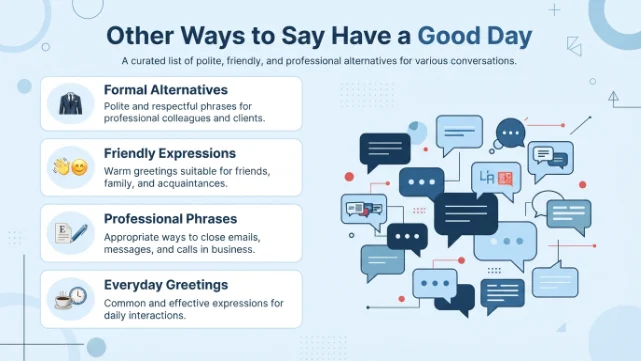
Formal alternatives to “have a good day”
- Wishing you a pleasant day
- I hope your day goes well
- Best wishes for your day
- Wishing you a great day ahead
Pro Tip: Use formal alternatives in emails, business calls, or with clients to sound respectful and polished.
Casual alternatives
- Have a great one
- Have a good one
- Catch you later, have a good one
- Take it easy today
Pro Tip: Save casual alternatives for friends, classmates, or informal chats, not for professional emails.
Professional alternatives
- Have a productive day
- Have a rewarding day
- Have a good day ahead
- Hope today treats you well
Pro Tip: Professional alternatives work well in workplace emails and meetings because they sound polite without being overly personal.
Informal expressions
- Have a nice day
- Enjoy your day
- Have a good one
- Make it a good day
Pro Tip: Informal expressions are perfect for daily conversations with coworkers, neighbors, or acquaintances.
“Small changes in phrasing can completely change how confident you sound.”
Common Mistakes
- Overusing the same phrase
Saying “have a good day” to everyone, every time, sounds repetitive. Example: “Have a good day” (said the same way five times in one hour). - Using casual phrases in formal emails
“Have a good one” feels too relaxed for business writing. Example: “Have a good one, sir” (mismatched tone). - Forgetting context (morning vs evening)
Saying “have a good day” late at night is incorrect. Example: “Have a good day!” (said at 10 PM). - Missing punctuation or tone markers
Flat delivery can make the phrase sound insincere. Example: “have a good day.” (written without warmth or emphasis). - Translating literally from another language
This can create awkward or unnatural phrasing. Example: “You spend your day good” (incorrect translation).
What Does “Have a Good Day” Mean?
“Have a good day” is a polite expression used to wish someone a pleasant, successful, or enjoyable day. Grammatically, it is an imperative sentence functioning as a well-wish rather than a command.
Example Sentence: “Thanks for calling, have a good day!”
When to Use “Have a Good Day”
- At the end of a phone call or customer service interaction
- When leaving a store, office, or meeting
- After a casual conversation with a coworker
- Spoken: Very common in daily speech
- Written: Common in emails, but often replaced with more formal alternatives
- Formal: Acceptable, though not the most polished option
- Informal: Extremely common and natural
Is It Professional or Polite to Say “Have a Good Day”?
“Have a good day” is polite, but it is not always seen as highly professional in formal business writing, since it can sound generic or repetitive.
Business Example: “Thank you for your email. Please let me know if you need anything else. Have a good day.” (acceptable, but “best regards” or “wishing you a productive day” may sound more polished.)
Polite? Yes Professional? No (in most formal writing contexts)
Pros and Cons of Using “Have a Good Day”
Pros:
- Simple and natural
- Friendly tone
- Common usage
- Easy to understand
Cons:
- Too informal for work
- Overused
- Limited emotional range
- Not suitable for formal writing
“Fluent English is not about big words, it is about the right words at the right time.”
Other Ways to Say “Have a Good Day”
These alternatives will help you sound more fluent, confident, and natural in different situations. Use them according to tone, context, and audience to express excitement, admiration, or approval.
1. Phrase: Have a Great Day
Meaning: Wish someone an even better day.
Explanation: A slightly warmer alternative than “have a good day.”
Example Sentence:
Thanks for stopping by. Have a great day!
Best Use: Everyday conversations
Worst Use: Formal ceremonies
Tone: Friendly, positive
Context Variability:
- Casual
- Professional
- Spoken
2. Phrase: Enjoy Your Day
Meaning: Hope someone enjoys everything they do today.
Explanation: Warm and encouraging.
Example Sentence:
Enjoy your day at the beach.
Best Use: Friendly chats
Worst Use: Condolence messages
Tone: Cheerful, kind
Context Variability:
- Casual
- Spoken
- Professional
3. Phrase: Take Care
Meaning: Wish someone safety and well-being.
Explanation: One of the most versatile farewells.
Example Sentence:
Take care, and I’ll see you tomorrow.
Best Use: Everyday goodbyes
Worst Use: Formal speeches
Tone: Caring, warm
Context Variability:
- Casual
- Professional
- Spoken
4. Phrase: Have a Wonderful Day
Meaning: Wish someone a delightful day.
Explanation: Sounds warmer and more heartfelt.
Example Sentence:
Have a wonderful day with your family.
Best Use: Friendly emails
Worst Use: Serious discussions
Tone: Warm, sincere
Context Variability:
- Casual
- Professional
- Spoken
5. Phrase: Have a Fantastic Day
Meaning: Wish someone an amazing day.
Explanation: More enthusiastic than “have a good day.”
Example Sentence:
Have a fantastic day at work!
Best Use: Positive conversations
Worst Use: Formal reports
Tone: Enthusiastic, cheerful
Context Variability:
- Casual
- Spoken
- Professional
Native speakers often choose different farewells depending on the situation, not just the meaning.
6. Phrase: Wishing You a Pleasant Day
Meaning: Politely wish someone a pleasant day.
Explanation: A refined expression suitable for formal situations.
Example Sentence:
Thank you for visiting. Wishing you a pleasant day.
Best Use: Customer service
Worst Use: Close friends
Tone: Formal, respectful
Context Variability:
- Professional
- Written
- Formal
7. Phrase: Hope Your Day Goes Well
Meaning: Express hope that everything turns out positively.
Explanation: Friendly and supportive.
Example Sentence:
Hope your day goes well at the new job.
Best Use: Everyday messages
Worst Use: Official letters
Tone: Supportive, natural
Context Variability:
- Casual
- Professional
- Spoken
8. Phrase: Have an Amazing Day
Meaning: Wish someone an exceptional day.
Explanation: More energetic and uplifting.
Example Sentence:
Have an amazing day ahead!
Best Use: Friends
Worst Use: Legal documents
Tone: Positive, enthusiastic
Context Variability:
- Casual
- Spoken
- Social media
9. Phrase: Have a Beautiful Day
Meaning: Wish someone a lovely and peaceful day.
Explanation: Sounds thoughtful and heartfelt.
Example Sentence:
Have a beautiful day wherever you go.
Best Use: Personal messages
Worst Use: Corporate emails
Tone: Gentle, warm
Context Variability:
- Casual
- Spoken
- Personal
10. Phrase: Have a Productive Day
Meaning: Wish someone success in their work or tasks.
Explanation: Common in workplaces and professional settings.
Example Sentence:
Good luck with your presentation. Have a productive day.
Best Use: Business communication
Worst Use: Vacation greetings
Tone: Professional, encouraging
Context Variability:
- Professional
- Workplace
- Written
11. Phrase: Wishing You a Wonderful Day
Meaning: Express a sincere hope that someone has a wonderful day.
Explanation: This phrase sounds thoughtful and works well in both personal and professional conversations.
Example Sentence:
Wishing you a wonderful day and a successful meeting.
Best Use: Emails, farewells
Worst Use: Sympathy messages
Tone: Warm, polite, encouraging
Context Variability:
- Casual
- Professional
- Written
12. Phrase: Have a Lovely Day
Meaning: Wish someone a pleasant and enjoyable day.
Explanation: A kind and cheerful farewell commonly used in everyday English.
Example Sentence:
Thank you for shopping with us. Have a lovely day!
Best Use: Customer service
Worst Use: Formal business reports
Tone: Friendly, gentle, positive
Context Variability:
- Casual
- Professional
- Spoken
13. Phrase: All the Best Today
Meaning: Wish someone success and good fortune throughout the day.
Explanation: This expression is suitable when someone has an important event or task.
Example Sentence:
You have a big interview today. All the best today!
Best Use: Exams, interviews
Worst Use: Casual greetings
Tone: Supportive, encouraging, polite
Context Variability:
- Professional
- Casual
- Spoken
14. Phrase: Hope You Have a Wonderful Day
Meaning: Express your sincere wish for someone to enjoy their day.
Explanation: A slightly more personal alternative to “Have a good day.”
Example Sentence:
Hope you have a wonderful day with your family.
Best Use: Friends, colleagues
Worst Use: Formal announcements
Tone: Caring, warm, sincere
Context Variability:
- Casual
- Professional
- Written
15. Phrase: Have a Blessed Day
Meaning: Wish someone a peaceful and blessed day.
Explanation: Often used in religious or heartfelt conversations.
Example Sentence:
Take care, and have a blessed day.
Best Use: Personal conversations
Worst Use: Secular corporate communication
Tone: Respectful, kind, heartfelt
Context Variability:
- Casual
- Spoken
- Personal
The best farewell is one that matches the situation, the relationship, and the tone of your conversation.
16. Phrase: Have Fun Today
Meaning: Wish someone an enjoyable day.
Explanation: This expression is ideal when someone is going somewhere exciting.
Example Sentence:
Have fun today at the amusement park!
Best Use: Friends, children
Worst Use: Business meetings
Tone: Cheerful, playful, informal
Context Variability:
- Casual
- Spoken
- Social
17. Phrase: Enjoy the Rest of Your Day
Meaning: Wish someone a pleasant remainder of the day.
Explanation: Common when speaking later in the afternoon or evening.
Example Sentence:
Thanks for your time. Enjoy the rest of your day.
Best Use: Customer support
Worst Use: Morning greetings
Tone: Polite, natural, professional
Context Variability:
- Professional
- Casual
- Written
18. Phrase: Hope Everything Goes Well Today
Meaning: Wish someone success throughout the day.
Explanation: This phrase is supportive when someone has important plans.
Example Sentence:
Good luck with your presentation. Hope everything goes well today.
Best Use: Important events
Worst Use: Quick goodbyes
Tone: Encouraging, supportive, thoughtful
Context Variability:
- Casual
- Professional
- Spoken
19. Phrase: Wishing You a Successful Day
Meaning: Hope someone achieves their goals during the day.
Explanation: This is a professional alternative often used in business communication.
Example Sentence:
Wishing you a successful day and productive meetings.
Best Use: Workplace
Worst Use: Casual chats
Tone: Professional, respectful, motivating
Context Variability:
- Professional
- Business emails
- Written
20. Phrase: Make Today Amazing
Meaning: Encourage someone to make the most of their day.
Explanation: This expression motivates and inspires.
Example Sentence:
You’ve got this. Make today amazing!
Best Use: Motivation
Worst Use: Formal correspondence
Tone: Inspirational, energetic, positive
Context Variability:
- Casual
- Social media
- Spoken
21. Phrase: Have an Excellent Day
Meaning: Wish someone an outstanding and enjoyable day.
Explanation: This phrase is a stronger and more enthusiastic version of “Have a good day.”
Example Sentence:
Thank you for your assistance. Have an excellent day!
Best Use: Customer service
Worst Use: Sympathy messages
Tone: Polite, positive, enthusiastic
Context Variability:
- Professional
- Casual
- Spoken
22. Phrase: Take It Easy
Meaning: Encourage someone to relax and enjoy the day.
Explanation: A casual farewell commonly used among friends and family.
Example Sentence:
See you tomorrow. Take it easy!
Best Use: Close friends
Worst Use: Formal emails
Tone: Relaxed, friendly, informal
Context Variability:
- Casual
- Spoken
- Social
23. Phrase: See You Soon
Meaning: Say goodbye while expecting to meet again.
Explanation: Although it doesn’t directly wish someone a good day, it leaves the conversation on a positive note.
Example Sentence:
Thanks for coming. See you soon!
Best Use: Everyday conversations
Worst Use: Final farewells
Tone: Friendly, natural, warm
Context Variability:
- Casual
- Professional
- Spoken
24. Phrase: Stay Safe
Meaning: Wish someone safety and well-being.
Explanation: This phrase became especially common during challenging times but remains useful in everyday conversations.
Example Sentence:
Drive carefully. Stay safe!
Best Use: Travel, bad weather
Worst Use: Formal reports
Tone: Caring, thoughtful, sincere
Context Variability:
- Casual
- Professional
- Spoken
25. Phrase: Have a Relaxing Day
Meaning: Hope someone enjoys a peaceful and stress-free day.
Explanation: Best used when someone is taking time off or needs a break.
Example Sentence:
You’ve worked hard this week. Have a relaxing day!
Best Use: Weekends, vacations
Worst Use: Busy workdays
Tone: Calm, caring, warm
Context Variability:
- Casual
- Personal
- Spoken
Using the right expression at the right time helps you communicate with confidence and professionalism.
26. Phrase: Wishing You the Best
Meaning: Express sincere good wishes.
Explanation: A versatile phrase suitable for both personal and professional communication.
Example Sentence:
Wishing you the best with today’s presentation.
Best Use: Emails, interviews
Worst Use: Very casual chats
Tone: Polite, sincere, supportive
Context Variability:
- Professional
- Written
- Casual
27. Phrase: Have a Nice Day
Meaning: Wish someone a pleasant day.
Explanation: One of the closest alternatives to “Have a good day” and widely understood worldwide.
Example Sentence:
Thanks for visiting. Have a nice day!
Best Use: Customer interactions
Worst Use: Emotional conversations
Tone: Friendly, polite, neutral
Context Variability:
- Casual
- Professional
- Spoken
28. Phrase: Hope Today Treats You Well
Meaning: Wish someone a positive and enjoyable day.
Explanation: This expression sounds natural and slightly more personal.
Example Sentence:
Hope today treats you well and brings good news.
Best Use: Friendly messages
Worst Use: Formal announcements
Tone: Warm, thoughtful, caring
Context Variability:
- Casual
- Written
- Spoken
29. Phrase: Have a Joyful Day
Meaning: Wish someone happiness throughout the day.
Explanation: A heartfelt alternative that emphasizes joy and positivity.
Example Sentence:
Have a joyful day with your loved ones.
Best Use: Holiday greetings
Worst Use: Business meetings
Tone: Warm, uplifting, sincere
Context Variability:
- Casual
- Personal
- Written
30. Phrase: Have a Terrific Day
Meaning: Wish someone an exceptionally enjoyable day.
Explanation: An energetic and optimistic farewell often used in friendly conversations.
Example Sentence:
Thanks again. Have a terrific day!
Best Use: Everyday conversations
Worst Use: Formal legal writing
Tone: Cheerful, enthusiastic, friendly
Context Variability:
- Casual
- Professional
- Spoken
Learning other ways to say “have a good day” helps you choose the perfect farewell for every conversation.
Mini Quiz
1. Which phrase is most appropriate for a formal business email?
A) Have a good one B) Wishing you a great day ahead C) Catch you later, have a good one
2. Which phrase best expresses excitement in a casual setting?
A) Have a marvelous day B) I hope your day goes well C) Best wishes for your day
3. Which phrase is best used with coworkers to wish them success at work?
A) Have a productive day B) Have a good one C) Take it easy today
4. Which phrase would be least suitable for a text message to a close friend?
A) Have an awesome day B) Wishing you a great day ahead C) Have a good one
“Fluency grows when you notice tone, not just vocabulary.”
Comparison Table: Top Alternatives
| Phrase | Tone | Best Use |
|---|---|---|
| Have a wonderful day | Warm, cheerful | Friends, family |
| Wishing you a pleasant day | Formal, polite | Emails, clients |
| Have a productive day | Professional, encouraging | Coworkers, managers |
| Have a great one | Casual, friendly | Casual chats |
| Have a good day ahead | Polite, professional | Business emails |
| Have an amazing day | Excited, positive | Casual, celebrations |
| Best wishes for your day | Formal, polished | Business writing |
| Enjoy your day | Friendly, relaxed | Coworkers, friends |
| Hope today treats you well | Friendly, modern | Casual professional talk |
| Have a peaceful day | Calm, soothing | Wellness, friends |
FAQs
1. What is a formal way to say “have a good day”?
“Wishing you a pleasant day” or “best wishes for your day” are polished, formal alternatives.
2. What is a casual way to say “have a good day”?
“Have a great one” or “have a good one” are common casual alternatives.
3. Is “have a good day” appropriate in business emails?
Yes, but “have a good day ahead” or “wishing you a great day ahead” sound more professional.
4. What can I say instead of “have a good day” to a coworker?
“Have a productive day” or “hope today treats you well” work well in workplace settings.
5. How can I express excitement instead of a plain “have a good day”?
Try “have an amazing day” or “have a marvelous day” to sound more enthusiastic and warm.
Conclusion
Learning multiple ways to say “have a good day” helps you sound more fluent, adaptable, and confident in both spoken and written English. Instead of repeating the same phrase, you can now choose from formal, casual, professional, and informal alternatives depending on your audience.
Practice using a few new phrases every day, pay attention to tone, and notice how native speakers vary their expressions. Small changes in wording can make a big difference in how polished and natural your English sounds.
Try it now: Pick three alternatives from this list and use them in your conversations today.
Discover More Related article:

Richard Scott is an experienced author dedicated to creating compelling and well-researched content for online audiences. As a contributor to Responary.com, he enjoys sharing knowledge through clear, engaging, and informative articles that connect with readers worldwide.