Quick Answer
Looking for other ways to say congratulations? The most common alternatives are well done, way to go, kudos, bravo, and cheers to you. Each one carries a slightly different tone, so choosing the right phrase depends on whether you are speaking casually with friends or writing a professional email.
Congratulations is one of the most frequently used words in English, but repeating the same word over and over can make your speech or writing sound flat. Learning alternatives to congratulations helps you sound more natural, more expressive, and more fluent in everyday conversation.
People use congratulatory phrases to celebrate achievements, mark milestones, and express excitement in English when someone succeeds. Whether it is a promotion, a graduation, a wedding, or a small personal win, the right words show genuine warmth and support.
Expanding your vocabulary with fresh alternatives to congratulations also helps you match your tone to the situation. A casual “way to go” fits a friend’s gym milestone, while a polished “please accept my sincere congratulations” fits a corporate email. Knowing both ends of the spectrum makes your English more versatile and confident.
“The right tone makes your English sound professional and confident.”
Quick Categories
Formal Alternatives to “Congratulations”
- Please accept my congratulations
- My sincere congratulations to you
- Warmest congratulations on your achievement
- Allow me to congratulate you
Pro Tip: Use formal alternatives in emails, official letters, and workplace announcements where a respectful tone matters.
Casual Alternatives
- Way to go
- Nice one
- You did it
- Good job
Pro Tip: Save casual phrases for friends, family, and relaxed social settings, not for client-facing communication.
Professional Alternatives
- Well deserved
- Great achievement
- Kudos on your success
- Impressive work
Pro Tip: Pair professional alternatives with a specific detail, such as the project name, to sound sincere rather than generic.
Informal Expressions
- Bravo
- Cheers to you
- You rock
- High five
Pro Tip: Informal expressions work best in spoken English or casual texts, not in formal written documents.
Common Mistakes People Make Using “Congratulations”
- Using it without an object | Saying just “Congratulations!” with no context can feel abrupt. Example: Instead of “Congratulations!” try “Congratulations on your new job!”
- Mixing formal and informal tone in the same message | This confuses the reader. Example: Avoid “Please accept my congratulations, you rock!” in a business email.
- Overusing the same phrase repeatedly | This makes writing sound repetitive. Example: Repeating “Congratulations, congratulations, congratulations” loses impact.
- Forgetting the preposition “on” | Many learners drop it by mistake. Example: Say “Congratulations on your promotion,” not “Congratulations your promotion.”
- Using it in the wrong tense | Congratulations should stay in its fixed plural form. Example: Avoid “I congratulation you”; instead say “I congratulate you.”
“A small grammar mistake can change how confident you sound in English.”
What Does “Congratulations” Mean?
Congratulations is an expression used to praise or celebrate someone’s success, achievement, or good fortune. Grammatically, it is always used in its plural form, even though it refers to a single feeling of praise.
Example Sentence: Congratulations on passing your exam.
When to Use “Congratulations”
- Celebrating a graduation, promotion, wedding, or new job
- Acknowledging a personal milestone, such as a new home or baby
- Responding to good news shared by a colleague or friend
- Recognizing an award, achievement, or successful project
Spoken vs Written:
- In spoken English, it is often shortened or paired with excitement, such as “Congrats, that’s amazing!”
- In written English, it is usually paired with a specific reason, such as “Congratulations on your well-deserved promotion.”
Formal vs Informal:
- Formal: “Please accept my congratulations on this achievement.”
- Informal: “Congrats, you totally earned this!”
Is It Professional or Polite to Say “Congratulations”?
“Congratulations” itself is both polite and professional, making it one of the safest words to use in almost any setting. However, some of its casual alternatives, like “way to go” or “you rock,” are polite but not always appropriate for formal business communication.
Business Example: “Congratulations on closing the Q3 deal. Your dedication clearly made the difference.”
Polite? ✔️ Yes Professional? ✔️ Yes (for the core word itself)
Pros and Cons of Using “Congratulations”
Pros:
- Simple and natural to use
- Friendly and warm tone
- Common usage across all English-speaking regions
- Easy to understand for learners at any level
Cons:
- Can feel repetitive if overused
- Sometimes too generic without added detail
- Limited emotional range on its own
- May sound plain in highly formal or literary writing
“Vocabulary variety keeps your English sounding fresh instead of repetitive.”
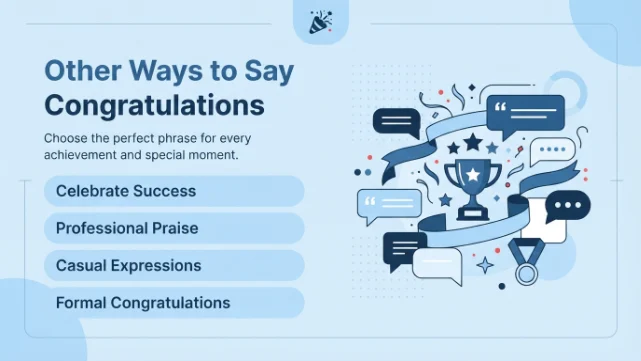
Other Ways to Say “Congratulations”
These alternatives will help you sound more fluent, confident, and natural in different situations.
Use them according to tone, context, and audience to express excitement, admiration, or approval.
1. Phrase: Well done
Meaning: A short expression of praise for a job completed successfully. Explanation: Used to acknowledge effort and a positive result. Example Sentence: Well done on finishing the marathon. Best Use: friends, coworkers Worst Use: formal letters Tone: warm, encouraging Context Variability: spoken, casual
2. Phrase: Way to go
Meaning: An enthusiastic way to praise someone’s success. Explanation: Common in casual, spoken English among peers. Example Sentence: Way to go on landing that internship! Best Use: casual chats Worst Use: business emails Tone: excited, friendly Context Variability: spoken, casual
3. Phrase: Kudos
Meaning: Praise or recognition for an achievement. Explanation: Slightly informal but widely used in workplaces too. Example Sentence: Kudos on wrapping up the project early. Best Use: team messages Worst Use: formal ceremonies Tone: appreciative, light Context Variability: casual, professional
4. Phrase: Bravo
Meaning: An exclamation praising excellent performance. Explanation: Often used for performances or bold achievements. Example Sentence: Bravo on your outstanding presentation. Best Use: performances, achievements Worst Use: everyday small tasks Tone: dramatic, celebratory Context Variability: spoken, casual
5. Phrase: Cheers to you
Meaning: A toast-like phrase celebrating someone’s success. Explanation: Often used in social or celebratory settings. Example Sentence: Cheers to you on your well-earned promotion. Best Use: parties, celebrations Worst Use: written reports Tone: festive, warm Context Variability: spoken, casual
6. Phrase: You did it
Meaning: A direct acknowledgment of someone’s accomplishment. Explanation: Highlights the person’s effort and success personally. Example Sentence: You did it! I’m so proud of you. Best Use: close friends, family Worst Use: formal business writing Tone: proud, personal Context Variability: spoken, casual
7. Phrase: Nice one
Meaning: A brief, casual compliment for success. Explanation: Common in British and Australian English. Example Sentence: Nice one, you passed your driving test. Best Use: casual conversation Worst Use: professional emails Tone: light, friendly Context Variability: spoken, casual
8. Phrase: Good job
Meaning: A simple compliment for good work or performance. Explanation: Neutral and easy to use across many situations. Example Sentence: Good job on handling that difficult client. Best Use: workplace feedback Worst Use: formal award ceremonies Tone: simple, encouraging Context Variability: casual, professional
9. Phrase: You rock
Meaning: An enthusiastic compliment showing admiration. Explanation: Very informal and energetic in tone. Example Sentence: You rock for finishing that project solo. Best Use: friends, social media Worst Use: client communication Tone: playful, energetic Context Variability: spoken, casual
10. Phrase: High five
Meaning: An expression celebrating a shared or personal win. Explanation: Often used with a physical gesture in person. Example Sentence: High five for acing that interview! Best Use: casual celebrations Worst Use: written formal messages Tone: playful, celebratory Context Variability: spoken, casual
11. Phrase: Well deserved
Meaning: Recognition that success came from genuine effort. Explanation: Adds sincerity by emphasizing the person earned it. Example Sentence: That award was well deserved after years of hard work. Best Use: workplace recognition Worst Use: casual texting Tone: respectful, sincere Context Variability: professional, spoken
12. Phrase: Great achievement
Meaning: A phrase highlighting a significant accomplishment. Explanation: Suitable for formal recognition of milestones. Example Sentence: Completing your certification is a great achievement. Best Use: professional recognition Worst Use: casual banter Tone: formal, respectful Context Variability: professional, written
13. Phrase: Kudos on your success
Meaning: A workplace-friendly way to praise an accomplishment. Explanation: Slightly more formal than “kudos” alone. Example Sentence: Kudos on your success with the new product launch. Best Use: team announcements Worst Use: casual chats with friends Tone: appreciative, professional Context Variability: professional, written
14. Phrase: Impressive work
Meaning: A compliment focused on the quality of effort shown. Explanation: Highlights skill and effort rather than luck. Example Sentence: Impressive work on the quarterly report. Best Use: office feedback Worst Use: personal milestones Tone: professional, respectful Context Variability: professional, written
15. Phrase: Please accept my congratulations
Meaning: A formal way to express praise in writing. Explanation: Common in official letters and business emails. Example Sentence: Please accept my congratulations on your retirement. Best Use: formal letters Worst Use: casual texting Tone: formal, respectful Context Variability: written, professional
16. Phrase: My sincere congratulations
Meaning: An honest, heartfelt expression of praise. Explanation: Adds warmth to formal or semi-formal messages. Example Sentence: My sincere congratulations on your engagement. Best Use: formal cards, emails Worst Use: casual group chats Tone: warm, formal Context Variability: written, professional
17. Phrase: Warmest congratulations
Meaning: A caring and formal way to celebrate someone’s news. Explanation: Often used in greeting cards and letters. Example Sentence: Warmest congratulations on the birth of your daughter. Best Use: cards, formal notes Worst Use: quick casual replies Tone: affectionate, formal Context Variability: written, professional
18. Phrase: Allow me to congratulate you
Meaning: A polite and formal introduction to praise. Explanation: Used in speeches or official written communication. Example Sentence: Allow me to congratulate you on this well-earned title. Best Use: speeches, ceremonies Worst Use: everyday texting Tone: formal, respectful Context Variability: written, spoken formal
19. Phrase: Congratulations are in order
Meaning: A phrase announcing that praise is appropriate now. Explanation: Often used to introduce good news to a group. Example Sentence: Congratulations are in order for our new manager. Best Use: team announcements Worst Use: private one-on-one texts Tone: formal, celebratory Context Variability: professional, spoken
20. Phrase: Hats off to you
Meaning: An expression of respect for someone’s accomplishment. Explanation: Shows admiration, often for a difficult task. Example Sentence: Hats off to you for finishing the certification in a month. Best Use: admiration, respect Worst Use: formal documents Tone: respectful, warm Context Variability: spoken, casual
21. Phrase: You should be proud
Meaning: A supportive way to acknowledge someone’s success. Explanation: Focuses on the person’s internal sense of achievement. Example Sentence: You should be proud of how far you’ve come. Best Use: encouragement, personal Worst Use: quick professional replies Tone: supportive, personal Context Variability: spoken, casual
22. Phrase: That’s fantastic news
Meaning: An enthusiastic reaction to someone’s good news. Explanation: Focuses on the news itself rather than the person. Example Sentence: That’s fantastic news about your new house. Best Use: casual reactions Worst Use: formal writing Tone: excited, friendly Context Variability: spoken, casual
23. Phrase: Best wishes on your achievement
Meaning: A polite phrase combining praise with good wishes. Explanation: Common in cards and semi-formal notes. Example Sentence: Best wishes on your achievement and future success. Best Use: cards, notes Worst Use: quick texts Tone: polite, warm Context Variability: written, professional
24. Phrase: You earned this
Meaning: A personal acknowledgment that success was deserved. Explanation: Emphasizes effort rather than luck. Example Sentence: You earned this promotion through hard work. Best Use: personal recognition Worst Use: formal ceremonies Tone: sincere, personal Context Variability: spoken, casual
25. Phrase: Applause for your success
Meaning: A figurative way to celebrate an achievement. Explanation: Often used in written or public recognition. Example Sentence: Applause for your success in the national competition. Best Use: public recognition Worst Use: private casual chats Tone: celebratory, formal Context Variability: written, professional
26. Phrase: Big congrats
Meaning: A shortened, casual version of congratulations. Explanation: Common in texting and social media comments. Example Sentence: Big congrats on your new puppy! Best Use: texting, social media Worst Use: professional emails Tone: casual, friendly Context Variability: spoken, casual
27. Phrase: You smashed it
Meaning: An informal way to say someone succeeded impressively. Explanation: Common in British English casual speech. Example Sentence: You smashed it in that final presentation. Best Use: friends, informal teams Worst Use: formal client meetings Tone: energetic, informal Context Variability: spoken, casual
28. Phrase: What an accomplishment
Meaning: An expression highlighting the scale of someone’s success. Explanation: Works well for major milestones or awards. Example Sentence: What an accomplishment, finishing your degree while working full-time. Best Use: milestones, awards Worst Use: minor everyday tasks Tone: admiring, formal Context Variability: written, professional
29. Phrase: I’m thrilled for you
Meaning: A personal expression of shared happiness for someone’s success. Explanation: Focuses on the speaker’s emotional reaction. Example Sentence: I’m thrilled for you and your new role. Best Use: close relationships Worst Use: formal business writing Tone: heartfelt, personal Context Variability: spoken, casual
30. Phrase: Congratulations on a job well done
Meaning: A complete phrase praising both effort and result. Explanation: Common in workplace recognition and formal notes. Example Sentence: Congratulations on a job well done this quarter. Best Use: workplace recognition Worst Use: casual quick replies Tone: professional, respectful Context Variability: professional, written
“Learning alternatives to congratulations turns a single word into a full range of emotion.”
Mini Quiz:
- Which phrase is most appropriate in a formal business email?
a) You rock b) Please accept my congratulations c) Nice one d) High five - “Way to go” is best used in which setting?
a) A formal award ceremony b) A legal document c) A casual conversation with friends d) A corporate press release - Which sentence uses the correct preposition?
a) Congratulations your promotion b) Congratulations on your promotion c) Congratulations for on your promotion d) Congratulations at your promotion - Which phrase focuses on the speaker’s personal emotional reaction?
a) Great achievement b) I’m thrilled for you c) Applause for your success d) Congratulations are in order
Answers: 1-b, 2-c, 3-b, 4-b
Comparison Table: Top Alternatives
| Phrase | Tone | Best Use |
|---|---|---|
| Well done | Warm, encouraging | Friends, coworkers |
| Way to go | Excited, friendly | Casual chats |
| Kudos | Appreciative, light | Team messages |
| Bravo | Dramatic, celebratory | Performances |
| Cheers to you | Festive, warm | Celebrations |
| Well deserved | Respectful, sincere | Workplace recognition |
| Great achievement | Formal, respectful | Professional recognition |
| Please accept my congratulations | Formal | Formal letters |
| My sincere congratulations | Warm, formal | Formal cards, emails |
| You smashed it | Energetic, informal | Friends, informal teams |
FAQs
1. What is another word for congratulations in formal writing?
“Please accept my congratulations” or “my sincere congratulations” are common formal alternatives.
2. What is a casual way to say congratulations?
“Way to go,” “nice one,” and “you rock” are popular casual alternatives.
3. Is “kudos” a professional word?
Yes, kudos is acceptable in most professional settings, especially in team messages and internal communication.
4. How do I say congratulations in a business email?
Use phrases like “well deserved” or “congratulations on a job well done” for a professional tone.
5. Why should I learn other ways to say congratulations?
Learning alternatives to congratulations helps you avoid repetition, sound more fluent, and match your tone to different social or professional situations.
Conclusion
Expanding your vocabulary with alternatives to congratulations makes your English sound more natural, expressive, and confident in both spoken and written communication. From formal business emails to casual celebrations with friends, having the right phrase ready for each situation shows real fluency.
Practice using a few new phrases each week, paying attention to tone and context every time. Over time, this small habit will help you communicate praise and celebration with far more precision and warmth.
Discover More Related Articles:

Jennifer Wilson is an experienced writer and content creator with over 20 years of expertise in digital publishing, lifestyle, and informative content. Holding a degree in English Literature, she contributes to Responary.Com, where she shares engaging, well-researched articles that help readers stay informed and inspired.