Quick Answer
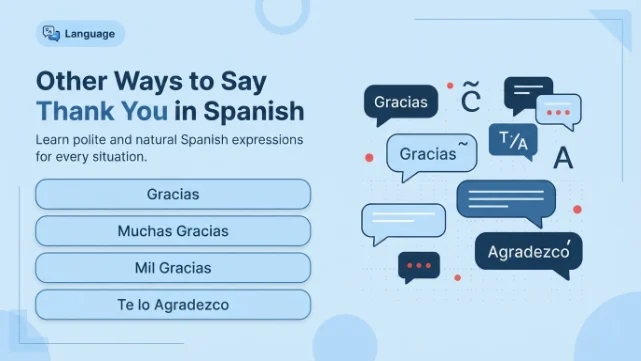
If you want alternatives to “thank you in Spanish”, the most useful phrases are muchas gracias, mil gracias, te lo agradezco, se lo agradezco, and muy amable.
These expressions range from casual and friendly to formal and professional, helping you communicate politely in any Spanish-speaking setting.
The phrase “thank you in Spanish” usually refers to the common expression gracias, which means “thank you” in English. It is one of the first Spanish phrases learners use in daily conversation.
People use it to show appreciation, acknowledge help, and maintain polite communication. Whether you are traveling, working with Spanish-speaking colleagues, or learning a new language, knowing several alternatives can make your speech sound more natural and confident.
Learning alternatives to thank you in Spanish also improves fluency because different situations require different levels of formality. It helps you choose the right phrase for friends, customers, teachers, or business contacts while sounding more professional and culturally aware.
“A simple gracias is good. The right alternative is even better.”
Quick Categories
Formal alternatives to “thank you in Spanish”
- Se lo agradezco
- Le agradezco mucho
- Le estoy muy agradecido/a
- Le doy las gracias
Pro Tip: Use se lo agradezco in emails, customer service, and professional conversations because it sounds respectful and polished.
Casual alternatives
- Muchas gracias
- Mil gracias
- Gracias por todo
- Te lo agradezco
Pro Tip: These are ideal with friends, classmates, and people you know well.
Professional alternatives
- Le agradezco su ayuda
- Muchas gracias por su tiempo
- Quedo muy agradecido/a
- Aprecio mucho su apoyo
Pro Tip: Add por su tiempo or por su ayuda to sound especially professional in business communication.
Informal expressions
- Gracias mil
- Muchísimas gracias
- Te debo una
- Eres muy amable
Pro Tip: Use these in relaxed conversations, but avoid te debo una in formal workplaces.
Common Mistakes
- Using “gracias” in a formal business email only. Example: “Gracias por la reunión.” Better: “Le agradezco su tiempo y apoyo.”
- Mixing formal and informal pronouns. Incorrect: “Te agradezco su ayuda.” Correct: “Le agradezco su ayuda.”
- Overusing “mil gracias” in professional settings. Better: “Muchas gracias por su colaboración.”
- Forgetting the reason for thanks. Better: “Gracias por su respuesta rápida.”
- Using slang with strangers. Avoid: “Te debo una” with clients or supervisors.
What Does “Thank You in Spanish” Mean?
The basic phrase is gracias, which means thank you in English.
It is an interjection used to express gratitude. Spanish speakers often expand it with words such as muchas (many), mil (a thousand), or muchísimas (very many) to show stronger appreciation.
Example: “Gracias por tu ayuda.” (Thank you for your help.)
When to Use “Thank You in Spanish”
Common situations include:
- Receiving help or information
- Replying to a gift or favor
- Ending an email politely
- Thanking a customer, colleague, or teacher
- Showing appreciation during travel or daily conversation
Spoken: Gracias, muchas gracias, mil gracias
Written: Le agradezco mucho, muchas gracias por su tiempo
Formal: Se lo agradezco, le doy las gracias
Informal: Gracias mil, te debo una
Is It Professional or Polite to Say “Thank You in Spanish”?
Polite? ✔️ Yes
Professional? ✔️ Yes, when you choose the formal version.
Business example: “Le agradezco su tiempo y quedo atento a sus comentarios.”
Simple gracias is always polite, but formal alternatives sound more professional in workplace communication.
Pros and Cons of Using “Thank You in Spanish”
Pros
- Simple and natural
- Friendly tone
- Common usage
- Easy to understand
Cons
- Too informal for some work situations
- Can sound repetitive
- Limited emotional range
- Not ideal for very formal writing
“Professional Spanish often sounds warmer when you thank people with a complete phrase, not just gracias.”
Other Ways to Say Thank You in Spanish
These alternatives will help you sound more fluent, confident, and natural in different situations. Use them according to tone, context, and audience to express appreciation appropriately.
1. Muchas gracias
Meaning: Thank you very much.
Explanation: The most common stronger form of gracias.
Example Sentence: Muchas gracias por tu ayuda hoy.
Best Use: Everyday thanks | Worst Use: None | Tone: Warm, polite | Context Variability: casual / professional / spoken
2. Muchísimas gracias
Meaning: Thank you very, very much.
Explanation: Adds extra emphasis and gratitude.
Example Sentence: Muchísimas gracias por acompañarme.
Best Use: Heartfelt thanks | Worst Use: Very formal reports | Tone: Warm, enthusiastic | Context Variability: casual / spoken / friendly professional
3. Mil gracias
Meaning: A thousand thanks.
Explanation: Expresses strong appreciation in a natural way.
Example Sentence: Mil gracias por el regalo.
Best Use: Friends, family | Worst Use: Formal business | Tone: Warm, appreciative | Context Variability: casual / spoken
4. Gracias mil
Meaning: Many thanks.
Explanation: A variation of mil gracias.
Example Sentence: Gracias mil por venir.
Best Use: Informal chats | Worst Use: Client emails | Tone: Friendly, informal | Context Variability: casual / spoken
5. Te lo agradezco
Meaning: I appreciate it.
Explanation: Sounds more personal than gracias.
Example Sentence: Te lo agradezco de verdad.
Best Use: Personal gratitude | Worst Use: Formal clients | Tone: Sincere, personal | Context Variability: casual / spoken
6. Se lo agradezco
Meaning: I appreciate it (formal).
Explanation: A respectful professional expression.
Example Sentence: Se lo agradezco mucho, señor Gómez.
Best Use: Business emails | Worst Use: Close friends | Tone: Formal, respectful | Context Variability: professional / written / spoken
7. Le agradezco mucho
Meaning: I thank you very much.
Explanation: Common in formal communication.
Example Sentence: Le agradezco mucho su apoyo.
Best Use: Workplace | Worst Use: Casual texting | Tone: Professional, polite | Context Variability: professional / written
8. Le doy las gracias
Meaning: I give you my thanks.
Explanation: Formal and courteous.
Example Sentence: Le doy las gracias por su atención.
Best Use: Formal speeches | Worst Use: Casual chat | Tone: Formal, courteous | Context Variability: professional / spoken / written
9. Gracias por todo
Meaning: Thanks for everything.
Explanation: Appreciates overall support.
Example Sentence: Gracias por todo durante el proyecto.
Best Use: Teamwork | Worst Use: Tiny favors | Tone: Warm, appreciative | Context Variability: casual / professional
10. Gracias por tu ayuda
Meaning: Thanks for your help.
Explanation: Specific and natural.
Example Sentence: Gracias por tu ayuda con la presentación.
Best Use: Colleagues, friends | Worst Use: Formal clients | Tone: Friendly, clear | Context Variability: casual / spoken / professional
11. Gracias por su ayuda
Meaning: Thank you for your help (formal).
Explanation: The professional version of #10.
Example Sentence: Gracias por su ayuda con este asunto.
Best Use: Customer service | Worst Use: Close friends | Tone: Professional, respectful | Context Variability: professional / written
12. Muchas gracias por su tiempo
Meaning: Thank you very much for your time.
Explanation: Excellent for meetings and emails.
Example Sentence: Muchas gracias por su tiempo hoy.
Best Use: Business meetings | Worst Use: Casual chat | Tone: Professional, courteous | Context Variability: professional / written / spoken
13. Aprecio mucho su apoyo
Meaning: I really appreciate your support.
Explanation: Emphasizes appreciation rather than thanks.
Example Sentence: Aprecio mucho su apoyo en este proyecto.
Best Use: Leadership, teamwork | Worst Use: Tiny favors | Tone: Professional, sincere | Context Variability: professional / written
14. Estoy muy agradecido/a
Meaning: I am very grateful.
Explanation: Expresses deep gratitude.
Example Sentence: Estoy muy agradecida por esta oportunidad.
Best Use: Formal appreciation | Worst Use: Quick replies | Tone: Sincere, formal | Context Variability: professional / spoken / written
15. Le estoy muy agradecido/a
Meaning: I am very grateful to you.
Explanation: A respectful formal variation.
Example Sentence: Le estoy muy agradecido por su orientación.
Best Use: Mentors, managers | Worst Use: Casual friends | Tone: Respectful, sincere | Context Variability: professional / written
16. Quedo muy agradecido/a
Meaning: I remain very grateful.
Explanation: Common in formal correspondence.
Example Sentence: Quedo muy agradecido por su atención.
Best Use: Formal emails | Worst Use: Text messages | Tone: Formal, polished | Context Variability: professional / written
17. Muy amable
Meaning: Very kind of you.
Explanation: A short polite response.
Example Sentence: Muy amable por ayudarme.
Best Use: Everyday courtesy | Worst Use: Long formal emails | Tone: Polite, concise | Context Variability: casual / spoken / professional
18. Eres muy amable
Meaning: You are very kind.
Explanation: Friendly and appreciative.
Example Sentence: Eres muy amable por esperarme.
Best Use: Friends, acquaintances | Worst Use: Formal clients | Tone: Warm, friendly | Context Variability: casual / spoken
19. Es usted muy amable
Meaning: You are very kind (formal).
Explanation: Respectful and courteous.
Example Sentence: Es usted muy amable por su ayuda.
Best Use: Older adults, clients | Worst Use: Casual texting | Tone: Formal, courteous | Context Variability: professional / spoken
20. Gracias por su atención
Meaning: Thank you for your attention.
Explanation: Common at the end of presentations or emails.
Example Sentence: Gracias por su atención y participación.
Best Use: Presentations | Worst Use: Casual favors | Tone: Professional, formal | Context Variability: professional / spoken / written
21. Gracias por compartir
Meaning: Thank you for sharing.
Explanation: Useful in discussions and meetings.
Example Sentence: Gracias por compartir su experiencia.
Best Use: Meetings, classes | Worst Use: Gift thanks | Tone: Appreciative, respectful | Context Variability: professional / spoken
22. Gracias por venir
Meaning: Thank you for coming.
Explanation: Common when hosting or welcoming people.
Example Sentence: Gracias por venir esta tarde.
Best Use: Events, visits | Worst Use: Email sign-off | Tone: Warm, welcoming | Context Variability: casual / spoken
23. Gracias por acompañarme
Meaning: Thank you for accompanying me.
Explanation: Appreciates someone’s company.
Example Sentence: Gracias por acompañarme al evento.
Best Use: Friends, family | Worst Use: Business clients | Tone: Warm, personal | Context Variability: casual / spoken
24. Gracias por su colaboración
Meaning: Thank you for your cooperation.
Explanation: Standard business phrase.
Example Sentence: Gracias por su colaboración en este proceso.
Best Use: Workplace, customer service | Worst Use: Friends | Tone: Professional, formal | Context Variability: professional / written
25. Gracias por la oportunidad
Meaning: Thank you for the opportunity.
Explanation: Ideal after interviews or invitations.
Example Sentence: Gracias por la oportunidad de participar.
Best Use: Interviews, networking | Worst Use: Small favors | Tone: Professional, appreciative | Context Variability: professional / written
26. No sé cómo agradecerte
Meaning: I don’t know how to thank you.
Explanation: Shows deep gratitude.
Example Sentence: No sé cómo agradecerte todo lo que hiciste.
Best Use: Emotional thanks | Worst Use: Routine business | Tone: Heartfelt, sincere | Context Variability: casual / spoken
27. No tengo palabras para agradecerte
Meaning: I have no words to thank you.
Explanation: Very strong emotional appreciation.
Example Sentence: No tengo palabras para agradecerte tu apoyo.
Best Use: Major help | Worst Use: Everyday favors | Tone: Emotional, sincere | Context Variability: casual / spoken
28. Te debo una
Meaning: I owe you one.
Explanation: Informal and friendly.
Example Sentence: Gracias por el favor, te debo una.
Best Use: Close friends | Worst Use: Workplace | Tone: Informal, friendly | Context Variability: casual / spoken
29. Muy agradecido/a
Meaning: Very grateful.
Explanation: Short but sincere.
Example Sentence: Muy agradecido por su ayuda.
Best Use: Formal replies | Worst Use: Casual jokes | Tone: Respectful, concise | Context Variability: professional / written
30. Se agradece mucho
Meaning: It is greatly appreciated.
Explanation: Polite and slightly indirect.
Example Sentence: Su apoyo se agradece mucho.
Best Use: Professional messages | Worst Use: Personal emotional thanks | Tone: Polite, neutral | Context Variability: professional / written / spoken
Mini Quiz:
1. Which phrase is best in a business email?
A) Te debo una
B) Se lo agradezco
C) Gracias mil
Answer: B
2. Which phrase means “I owe you one”?
A) Muy amable
B) Mil gracias
C) Te debo una
Answer: C
3. Which phrase is strongest for heartfelt gratitude?
A) Gracias por venir
B) No tengo palabras para agradecerte
C) Muy amable
Answer: B
4. Which option is both polite and professional?
A) Gracias mil
B) Le agradezco mucho
C) Te debo una
Answer: B
Comparison Table: Top Alternatives
| Phrase | Tone | Best Use |
|---|---|---|
| Muchas gracias | Warm | Everyday conversation |
| Muchísimas gracias | Enthusiastic | Heartfelt thanks |
| Mil gracias | Friendly | Friends & family |
| Te lo agradezco | Sincere | Personal gratitude |
| Se lo agradezco | Formal | Business communication |
| Le agradezco mucho | Professional | Workplace emails |
| Gracias por su ayuda | Respectful | Customer service |
| Muchas gracias por su tiempo | Courteous | Meetings & interviews |
| Aprecio mucho su apoyo | Sincere | Teamwork & leadership |
| Gracias por la oportunidad | Professional | Interviews & networking |
FAQs
What is the most common way to say thank you in Spanish?
The most common expression is gracias. It is suitable for both spoken and written Spanish.
What is a more formal alternative to gracias?
Se lo agradezco and le agradezco mucho are excellent formal alternatives for professional situations.
Is mil gracias formal or informal?
Mil gracias is generally informal to semi-formal. It sounds warm and friendly rather than strictly professional.
How do I thank someone professionally in Spanish?
Use phrases such as muchas gracias por su tiempo or gracias por su colaboración in business communication.
What is the difference between te lo agradezco and se lo agradezco?
Te lo agradezco is informal and used with friends or peers. Se lo agradezco is formal and used with clients, managers, or people you address as usted.
See Also
- See also: Other Ways to Say Hello
- See also: Professional English Phrases for Emails and Meetings
Conclusion
Learning other ways to say thank you in Spanish helps you communicate with greater confidence, politeness, and cultural awareness. From simple phrases like muchas gracias to professional expressions such as se lo agradezco, each option fits a different situation.
Practice a few new expressions every day and pay attention to the tone and audience. The more naturally you choose the right phrase, the more fluent and professional your Spanish communication will sound.
Discover More Related article:
- Other Ways to Say Goodnight | Friends, Family & Loved Ones In 2026
- Other Ways to Say Good Night | Formal, Casual & Cute Expressions In 2026

Jennifer Wilson is an experienced writer and content creator with over 20 years of expertise in digital publishing, lifestyle, and informative content. Holding a degree in English Literature, she contributes to Responary.Com, where she shares engaging, well-researched articles that help readers stay informed and inspired.