Quick Answer
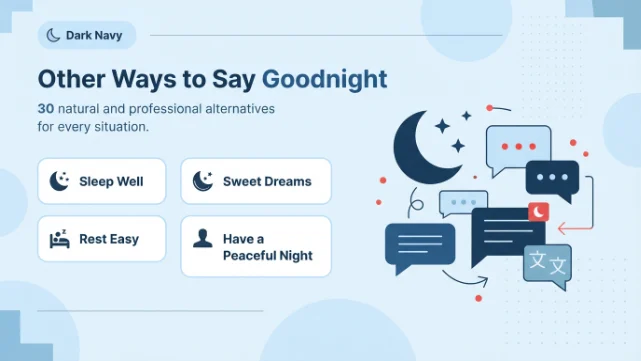
Looking for other ways to say goodnight? English offers many warm and creative alternatives for every situation, from casual texts to formal farewells. Top alternatives include: Sleep well, Sweet dreams, Rest easy, Have a peaceful night, and Good night, sleep tight.
“Goodnight” is one of the most common phrases in English, used to wish someone a restful night before sleep. People say it at the end of a phone call, before leaving a gathering, in text messages, or when parting ways in the evening.
Learning alternatives to goodnight helps you sound more fluent and expressive in daily conversation. It also allows you to express excitement in English, show warmth, or match the right tone for formal and informal situations.
Whether you are writing a professional email, texting a close friend, or speaking with family, having a variety of goodnight phrases ready will make your English feel more natural and confident.
“The right tone makes your English sound professional and confident.”
Quick Categories
Formal Alternatives to “Goodnight”
- Wishing you a restful night
- Have a good evening ahead
- I hope you sleep well tonight
- Goodnight, and take care
Pro Tip: Use formal alternatives in professional emails, business calls, or when addressing someone you do not know well.
Casual Alternatives
- Night night
- Sleep tight
- Catch you tomorrow
- Off to bed, night
Pro Tip: Save casual alternatives for friends, siblings, or close colleagues in relaxed settings.
Professional Alternatives
- Have a good night ahead
- Wishing you a peaceful evening
- I will follow up tomorrow morning, goodnight for now
- Take care and rest well
Pro Tip: In workplace chats, pair a professional goodnight phrase with a quick note about next steps to keep things polished.
Informal Expressions
- Sweet dreams
- Nighty night
- Sleep well, superstar
- See you in dreamland
Pro Tip: Informal expressions work best in texts, social media, and casual voice notes, not in formal writing.
“Small word choices create big impressions in conversation.”
Common Mistakes People Make Using “Goodnight”
- Using it too early in the evening
Example: Saying “Goodnight” at 5 PM instead of “Good evening.” - Overusing it in professional emails
Example: Ending every single work email with “Goodnight” instead of a proper sign-off. - Confusing “Good night” and “Goodnight” spelling
Example: Writing “Good night” as one word in formal writing without checking context. - Using overly casual versions with strangers
Example: Texting “Night night” to a new business contact. - Repeating the same phrase constantly Example: Saying “Goodnight” the exact same way every day without variation.
What Does “Goodnight” Mean?
“Goodnight” is a farewell expression used before someone goes to sleep or leaves in the evening. It functions as an interjection or a short phrase rather than a full sentence.
Example Sentence: “It’s getting late, so goodnight, I will see you tomorrow.”
When to Use “Goodnight”
Spoken vs Written
- Spoken: Common at the end of phone calls, video chats, or in person before bed.
- Written: Frequently used in text messages, emails, and chat apps.
Formal vs Informal
- Formal: Used briefly in professional correspondence, often paired with polite phrasing.
- Informal: Common among friends and family, often shortened or made playful.
Common contexts include:
- Ending a phone or video call in the evening
- Leaving a family gathering
- Closing a casual text conversation
- Wrapping up a late work message
“Context decides whether a phrase feels warm or careless.”
Is It Professional or Polite to Say “Goodnight”?
“Goodnight” is polite in almost every context, but it is not always considered professional on its own, especially in formal business writing.
Business Example: “Thank you for your time today. Goodnight, and I will follow up with the report tomorrow.”
Polite? Yes Professional? No, in most formal writing situations
Pros and Cons of Using “Goodnight”
Pros:
- Simple and natural
- Friendly tone
- Common usage
- Easy to understand
Cons:
- Too informal for some workplaces
- Overused
- Limited emotional range
- Not suitable for formal written reports
Other Ways to Say “Goodnight”
These alternatives will help you sound more fluent, confident, and natural in different situations. Use them according to tone, context, and audience to express excitement, admiration, or warmth when parting ways in the evening.
1. Phrase: Sleep Well
Meaning: Wish someone a restful sleep.
Explanation: One of the most common alternatives to goodnight.
Example Sentence:
Sleep well, and I’ll talk to you tomorrow.
Best Use: Friends, family
Worst Use: Formal speeches
Tone: Warm, caring
Context Variability:
Casual, spoken, everyday conversations.
2. Phrase: Sweet Dreams
Meaning: Wish someone pleasant dreams.
Explanation: Often used with loved ones or close friends.
Example Sentence:
Sweet dreams! See you in the morning.
Best Use: Family, partner
Worst Use: Business emails
Tone: Affectionate, gentle
Context Variability:
Casual, personal conversations.
3. Phrase: Rest Well
Meaning: Hope someone gets enough rest.
Explanation: Sounds slightly more formal than “Sleep well.”
Example Sentence:
You’ve had a long day. Rest well tonight.
Best Use: Professional, family
Worst Use: Humorous settings
Tone: Caring, respectful
Context Variability:
Professional, casual, spoken.
4. Phrase: Have a Restful Night
Meaning: Wish someone a peaceful night.
Explanation: A polite and professional alternative.
Example Sentence:
Have a restful night after your busy day.
Best Use: Workplace
Worst Use: Casual jokes
Tone: Professional, polite
Context Variability:
Professional, written, spoken.
5. Phrase: Have a Peaceful Night
Meaning: Hope someone’s night is calm and relaxing.
Explanation: Suitable in both personal and professional conversations.
Example Sentence:
Have a peaceful night, and take care.
Best Use: Formal conversations
Worst Use: Playful chats
Tone: Respectful, warm
Context Variability:
Professional, spoken, written.
6. Phrase: Night!
Meaning: A shortened version of goodnight.
Explanation: Very common among friends.
Example Sentence:
Night! See you tomorrow.
Best Use: Close friends
Worst Use: Business communication
Tone: Casual, friendly
Context Variability:
Informal, spoken, texting.
7. Phrase: Take Care Tonight
Meaning: Wish someone safety and comfort.
Explanation: Adds kindness beyond simply saying goodnight.
Example Sentence:
Drive safely and take care tonight.
Best Use: Coworkers
Worst Use: Romantic messages
Tone: Thoughtful, polite
Context Variability:
Professional, casual.
8. Phrase: Have a Good Sleep
Meaning: Wish someone quality sleep.
Explanation: A straightforward alternative suitable for everyday use.
Example Sentence:
Have a good sleep. Tomorrow will be busy.
Best Use: Family
Worst Use: Formal presentations
Tone: Friendly, caring
Context Variability:
Casual, spoken.
9. Phrase: See You Tomorrow
Meaning: End the conversation while mentioning the next meeting.
Explanation: Works well when you’ll meet again the following day.
Example Sentence:
See you tomorrow. Sleep well!
Best Use: School, office
Worst Use: Long-term farewells
Tone: Friendly, positive
Context Variability:
Professional, casual.
10. Phrase: Have a Relaxing Evening
Meaning: Wish someone a calm and enjoyable evening.
Explanation: A professional and polite alternative to goodnight.
Example Sentence:
Thank you for attending the meeting. Have a relaxing evening.
Best Use: Workplace
Worst Use: Bedtime with children
Tone: Professional, courteous
Context Variability:
Professional, written, spoken.
“Every alternative you learn adds another shade of tone to your English.”
11. Phrase: Sleep Tight
Meaning: Wish someone a comfortable and peaceful sleep.
Explanation: A classic bedtime expression, often used with family members and children.
Example Sentence:
Sleep tight, and I’ll see you in the morning.
Best Use: Family, children
Worst Use: Formal meetings
Tone: Warm, affectionate
Context Variability: Casual, spoken, personal
12. Phrase: Have a Wonderful Night
Meaning: Wish someone an enjoyable and pleasant night.
Explanation: A cheerful alternative that works well in both personal and professional settings.
Example Sentence:
Have a wonderful night, and take care on your way home.
Best Use: Friends, coworkers
Worst Use: Urgent situations
Tone: Positive, polite
Context Variability: Casual, professional, spoken
13. Phrase: Wishing You a Peaceful Night
Meaning: Express the hope that someone enjoys a calm and restful night.
Explanation: This phrase sounds thoughtful and is suitable for formal communication.
Example Sentence:
Wishing you a peaceful night and a productive day tomorrow.
Best Use: Professional emails
Worst Use: Casual texting
Tone: Respectful, caring
Context Variability: Professional, written
“Choosing thoughtful alternatives to goodnight can make even simple conversations feel more genuine.”
14. Phrase: Have a Pleasant Evening
Meaning: Politely wish someone an enjoyable evening.
Explanation: This expression is more formal than simply saying goodnight.
Example Sentence:
Thank you for your time today. Have a pleasant evening.
Best Use: Business conversations
Worst Use: Close family
Tone: Professional, courteous
Context Variability: Professional, written, spoken
15. Phrase: Get Some Rest
Meaning: Encourage someone to relax and recover.
Explanation: Often used when someone has had a busy or tiring day.
Example Sentence:
You’ve worked hard today. Get some rest.
Best Use: Friends, coworkers
Worst Use: Celebrations
Tone: Caring, supportive
Context Variability: Casual, professional, spoken
16. Phrase: Hope You Sleep Well
Meaning: Express your wish for someone to have a good night’s sleep.
Explanation: This sounds warm and sincere without being overly personal.
Example Sentence:
Hope you sleep well and feel refreshed tomorrow.
Best Use: Friends, colleagues
Worst Use: Formal announcements
Tone: Friendly, thoughtful
Context Variability: Casual, professional
17. Phrase: Until Tomorrow
Meaning: Say goodbye while indicating you’ll meet again the next day.
Explanation: This phrase focuses on your next conversation rather than bedtime.
Example Sentence:
Until tomorrow. Have a restful night.
Best Use: Coworkers, classmates
Worst Use: Long-term goodbyes
Tone: Positive, professional
Context Variability: Professional, spoken
18. Phrase: Take It Easy Tonight
Meaning: Encourage someone to relax during the evening.
Explanation: This expression emphasizes unwinding after a busy day.
Example Sentence:
You’ve earned a break. Take it easy tonight.
Best Use: Friends
Worst Use: Formal emails
Tone: Casual, relaxed
Context Variability: Informal, spoken
“The best English speakers adjust their tone to match the situation and the person they’re speaking with.”
19. Phrase: Have a Cozy Night
Meaning: Wish someone a comfortable and relaxing night.
Explanation: This expression creates a warm and comforting feeling.
Example Sentence:
It’s cold outside. Have a cozy night!
Best Use: Family, friends
Worst Use: Business meetings
Tone: Warm, friendly
Context Variability: Casual, spoken
20. Phrase: See You in the Morning
Meaning: End the conversation while mentioning the next meeting.
Explanation: A natural alternative when you’ll see the person the following morning.
Example Sentence:
Good work today. See you in the morning.
Best Use: Family, coworkers
Worst Use: Long-distance conversations
Tone: Friendly, optimistic
Context Variability: Casual, professional, spoken
“Building a wider vocabulary isn’t about replacing ‘goodnight’ it’s about choosing the expression that fits the moment.”
Mini Quiz
1. Which phrase is most suitable for a formal business email?
A) Night night B) Wishing you a restful night C) Sweet dreams D) Off to dreamland
2. Which phrase would you avoid using with a new business contact?
A) Nighty night B) Have a restful evening C) Signing off for the night D) Wishing you pleasant dreams
3. Which phrase focuses on the next meeting rather than sleep?
A) Sleep tight B) Catch you tomorrow C) Sweet dreams D) Rest easy
4. Which phrase is best suited for texting a close friend?
A) Wishing you a restful night B) Signing off for the night C) Sleep well, superstar D) Have a restful evening
“Choosing the right phrase shows you understand tone, not just vocabulary.”
Comparison Table: Top Alternatives
| Phrase | Tone | Best Use |
|---|---|---|
| Sleep well | Warm, simple | Friends, family |
| Sweet dreams | Affectionate, soft | Close friends |
| Rest easy | Gentle, reassuring | Comforting someone |
| Have a peaceful night | Calm, respectful | Polite conversations |
| Good night, sleep tight | Nostalgic, playful | Family, children |
| Wishing you a restful night | Formal, courteous | Business emails |
| Night night | Cute, informal | Family, partners |
| Take care and goodnight | Caring, polite | Ending conversations |
| Have a good evening ahead | Polished, courteous | Professional closings |
| Rest well tonight | Considerate, calm | Supportive conversations |
FAQs
1. What is the most common alternative to goodnight?
“Sleep well” is one of the most common and widely understood alternatives to goodnight.
2. Is “sweet dreams” too informal for work?
Yes, “sweet dreams” is best reserved for close friends or family, not professional settings.
3. What should I say instead of goodnight in a business email?
Use formal alternatives like “Wishing you a restful night” or “Have a good evening ahead.”
4. Can I use “goodnight” in the afternoon?
No, “goodnight” should be used only in the evening or right before someone goes to sleep.
5. What is a polite way to end a late work call?
Try “Good night, and take care” or “Signing off for the night” for a polite, professional close.
Conclusion
Learning different ways to say goodnight helps you sound more natural, thoughtful, and confident in everyday English. From formal business closings to warm, casual texts, choosing the right phrase shows a strong understanding of tone and context.
Practice using a few new alternatives to goodnight each day, and pay attention to whether the situation calls for formal, professional, or casual language. Over time, this awareness will make your spoken and written English feel far more natural and polished.

Jennifer Wilson is an experienced writer and content creator with over 20 years of expertise in digital publishing, lifestyle, and informative content. Holding a degree in English Literature, she contributes to Responary.Com, where she shares engaging, well-researched articles that help readers stay informed and inspired.