Quick Answer
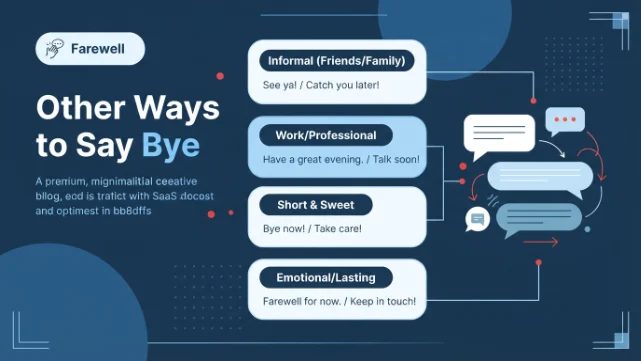
Looking for other ways to say bye? English offers dozens of alternatives depending on how formal, casual, or warm you want to sound. The five most popular options are: see you later, take care, catch you later, farewell, and have a good one.
“Bye” is one of the first words every English learner picks up, but relying on it too much can make your speech sound flat or repetitive. Whether you are ending a phone call, leaving a meeting, or saying goodnight to a friend, there are many alternatives to bye that carry different levels of warmth, formality, and emotion.
People use farewell expressions in almost every conversation, spoken or written. Choosing the right one signals respect in a business email, warmth with family, or ease with friends. Just like learners work to express excitement in English with the right words, mastering farewells helps you sound confident and natural in any situation.
Learning a wider range of goodbye phrases also builds fluency faster than memorizing grammar rules alone. Once you know when to use each phrase, your English will sound less textbook and more like a native speaker.
“The right tone makes your English sound professional and confident.”
Quick Categories
Formal Alternatives to “Bye”
- Farewell
- Goodbye
- Until we meet again
- I bid you farewell
Pro Tip: Save formal alternatives for written letters, ceremonies, or official speeches. They can sound overly dramatic in daily conversation.
Casual Alternatives
- See ya
- Catch you later
- Later
- Peace out
Pro Tip: These work well with close friends and peers, but avoid them in professional emails or with people you have just met.
Professional Alternatives
- Have a great rest of your day
- Take care
- I look forward to our next meeting
- Best regards (for written communication)
Pro Tip: In business settings, pair your farewell with a forward-looking phrase, such as mentioning the next meeting or follow-up.
Informal Expressions
- Bye bye
- Toodle-oo
- See you around
- Take it easy
Pro Tip: Informal expressions are great for relaxed, everyday situations, but they can seem unprofessional if used with clients or supervisors.
“Casual does not mean careless. Match your farewell to your audience.”
Common Mistakes
- Using “bye” repeatedly in the same conversation.
Example mistake: “Bye, bye, okay bye, talk soon, bye.” - Using casual phrases in formal emails.
Example mistake: “Catch you later, regards, the manager.” - Mixing formal and informal tone in one sentence.
Example mistake: “Farewell, see ya!” - Overusing slang farewells with strangers. Example mistake: Saying “peace out” to a new client.
- Forgetting context when ending a phone call versus a text message.
Example mistake: Writing “so long” in a quick work text instead of “talk soon.”
“Small tone mistakes can change how professional you sound.”
What Does “Bye” Mean?
“Bye” is a short, informal way of saying goodbye. It comes from a shortened form of “goodbye,” which itself developed from the phrase “God be with ye.”
Grammar note: “Bye” functions as an interjection. It does not need a subject or verb and can stand alone as a complete expression.
Example sentence: “I have to go now, bye!”
When to Use “Bye”
- Ending a casual phone call
- Leaving a room after a quick chat
- Saying goodbye to friends or family
- Closing an informal text message
Spoken vs Written
- Spoken: Extremely common and natural
- Written: Rare in professional emails, common in casual texts or chats
Formal vs Informal
- Formal: Rarely used; “goodbye” or “farewell” is preferred
- Informal: Very common and widely accepted
Is It Professional or Polite to Say “Bye”?
“Bye” is polite in nearly every social setting, but it is not always seen as professional.
Business-style example: Ending a client call with “Bye” instead of “Thank you for your time, goodbye” can feel abrupt.
Polite? ✔️ Yes Professional? ❌ No (in most cases)
Pros and Cons of Using “Bye”
Pros:
- Simple and natural
- Friendly tone
- Common usage
- Easy to understand
Cons:
- Too informal for work
- Overused
- Limited emotional range
- Not suitable for formal writing
“Knowing when not to use a word is as important as knowing the word itself.”
Other Ways to Say “Bye”
These alternatives will help you sound more fluent, confident, and natural in different situations. Use them according to tone, context, and audience to express warmth, respect, or ease when ending a conversation.
1. Phrase: Goodbye
Meaning: A standard, neutral way to end a conversation. Explanation: Works in almost any setting, formal or informal. Example Sentence: “Goodbye, I’ll see you tomorrow at the office.” Best Use: general, everyday Worst Use: none really Tone: neutral, polite Context Variability: casual, professional, spoken
2. Phrase: Farewell
Meaning: A formal way of saying goodbye, often permanent or long-term. Explanation: Common in speeches, ceremonies, or serious partings. Example Sentence: “The team gathered to say farewell to their retiring manager.” Best Use: speeches, ceremonies Worst Use: daily chats Tone: formal, solemn Context Variability: formal, written
3. Phrase: See you later
Meaning: Indicates you expect to meet again soon. Explanation: A friendly, common way to end everyday conversations. Example Sentence: “See you later, I’m heading to lunch.” Best Use: friends, coworkers Worst Use: formal letters Tone: friendly, casual Context Variability: spoken, casual
4. Phrase: See you soon
Meaning: Suggests a near-future meeting. Explanation: Slightly warmer than “see you later.” Example Sentence: “See you soon, safe travels!” Best Use: friends, family Worst Use: distant contacts Tone: warm, hopeful Context Variability: casual, spoken
5. Phrase: Take care
Meaning: Wishes someone wellbeing as they leave. Explanation: Shows concern and warmth without being too casual. Example Sentence: “Take care, and call me when you land.” Best Use: friends, coworkers Worst Use: legal documents Tone: caring, polite Context Variability: casual, professional, spoken
6. Phrase: Catch you later
Meaning: An informal way to say goodbye temporarily. Explanation: Common among peers and younger speakers. Example Sentence: “Catch you later, I’ve got class now.” Best Use: friends, peers Worst Use: business meetings Tone: casual, relaxed Context Variability: casual, spoken
7. Phrase: Have a good one
Meaning: A casual wish for the rest of someone’s day. Explanation: Common in retail, customer service, and daily chats. Example Sentence: “Thanks for coming in, have a good one!” Best Use: customer service, casual talk Worst Use: formal writing Tone: friendly, upbeat Context Variability: casual, spoken
8. Phrase: Have a great day
Meaning: A warm wish for someone’s day ahead. Explanation: Widely used in service and casual settings. Example Sentence: “Have a great day, see you tomorrow.” Best Use: service settings Worst Use: legal or academic writing Tone: cheerful, polite Context Variability: casual, professional
9. Phrase: Until next time
Meaning: Suggests you’ll meet again in the future. Explanation: Slightly poetic, used in both writing and speech. Example Sentence: “Until next time, take care of yourself.” Best Use: letters, farewells Worst Use: quick exchanges Tone: warm, reflective Context Variability: written, spoken
10. Phrase: Until we meet again
Meaning: A formal or sentimental farewell. Explanation: Used when a longer separation is expected. Example Sentence: “Until we meet again, my friend.” Best Use: emotional farewells Worst Use: everyday chats Tone: sentimental, formal Context Variability: written, formal
11. Phrase: So long
Meaning: An old-fashioned, informal goodbye. Explanation: Less common today but still understood. Example Sentence: “So long, it was great catching up.” Best Use: casual talk Worst Use: professional emails Tone: nostalgic, casual Context Variability: spoken, casual
12. Phrase: Later
Meaning: A short, informal goodbye. Explanation: Very casual, often used among young people. Example Sentence: “Later, I’ll text you tonight.” Best Use: friends, texting Worst Use: formal settings Tone: casual, quick Context Variability: casual, spoken
13. Phrase: Peace out
Meaning: A slang way to say goodbye. Explanation: Popular in informal youth culture. Example Sentence: “Peace out, I’m heading home now.” Best Use: close friends Worst Use: any professional setting Tone: slang, playful Context Variability: casual, spoken
14. Phrase: Toodle-oo
Meaning: A light-hearted, old-fashioned goodbye. Explanation: Rarely used seriously today, often for humor. Example Sentence: “Toodle-oo, see you at the party!” Best Use: playful conversation Worst Use: formal or business talk Tone: playful, quirky Context Variability: casual, spoken
15. Phrase: Bye for now
Meaning: Suggests a short, temporary parting. Explanation: Friendly and slightly softer than a plain “bye.” Example Sentence: “Bye for now, I’ll call you later tonight.” Best Use: phone calls, texts Worst Use: formal letters Tone: friendly, light Context Variability: casual, spoken
16. Phrase: I’m off
Meaning: Announces that you are leaving. Explanation: Common in British English for casual departures. Example Sentence: “I’m off, see you all tomorrow.” Best Use: casual departures Worst Use: formal writing Tone: casual, direct Context Variability: spoken, casual
17. Phrase: I gotta go
Meaning: Signals a quick, often urgent departure. Explanation: Very informal and common in spoken English. Example Sentence: “I gotta go, my bus is here.” Best Use: quick exits Worst Use: business meetings Tone: casual, urgent Context Variability: spoken, casual
18. Phrase: Take it easy
Meaning: Wishes someone a relaxed, stress-free time. Explanation: Friendly and laid-back, common among peers. Example Sentence: “Take it easy, I’ll see you next week.” Best Use: friends, casual talk Worst Use: formal writing Tone: relaxed, warm Context Variability: casual, spoken
19. Phrase: Stay safe
Meaning: Expresses concern for someone’s safety. Explanation: Common after travel plans or during uncertain times. Example Sentence: “Stay safe, and text me when you arrive.” Best Use: travel, uncertain situations Worst Use: light, everyday chats Tone: caring, sincere Context Variability: casual, professional
20. Phrase: Have a good rest of your day
Meaning: A polite wish for the remainder of someone’s day. Explanation: Common in customer service and workplace settings. Example Sentence: “Thanks for your time, have a good rest of your day.” Best Use: workplace, service roles Worst Use: very casual chats Tone: polite, professional Context Variability: professional, spoken
21. Phrase: See you around
Meaning: Suggests an uncertain but possible future meeting. Explanation: Casual and non-committal. Example Sentence: “See you around, maybe at the gym.” Best Use: acquaintances Worst Use: close, planned meetings Tone: casual, easygoing Context Variability: casual, spoken
22. Phrase: Best wishes
Meaning: A polite closing that expresses good intentions. Explanation: Common in written communication, especially emails. Example Sentence: “Best wishes, and thank you for your help.” Best Use: emails, letters Worst Use: casual spoken talk Tone: polite, formal Context Variability: written, professional
23. Phrase: Adios
Meaning: A borrowed Spanish word meaning goodbye. Explanation: Used casually in English-speaking countries too. Example Sentence: “Adios, have fun at the party.” Best Use: casual conversation Worst Use: formal writing Tone: playful, casual Context Variability: casual, spoken
24. Phrase: Ciao
Meaning: An Italian borrowed word for goodbye or hello. Explanation: Common in casual English, especially in fashion or media circles. Example Sentence: “Ciao, see you at the meeting tomorrow.” Best Use: casual, trendy contexts Worst Use: formal reports Tone: stylish, casual Context Variability: casual, spoken
25. Phrase: I look forward to seeing you again
Meaning: A professional way to end on a positive, future-focused note. Explanation: Common in business emails and client communication. Example Sentence: “Thank you for the meeting, I look forward to seeing you again.” Best Use: business emails Worst Use: casual texting Tone: professional, warm Context Variability: written, professional
26. Phrase: Wishing you well
Meaning: Expresses good intentions as you part. Explanation: Slightly formal, often used in cards or emails. Example Sentence: “Wishing you well on your new journey.” Best Use: cards, farewells Worst Use: quick daily chats Tone: warm, sincere Context Variability: written, formal
27. Phrase: It was great seeing you
Meaning: Expresses appreciation before saying goodbye. Explanation: Common after in-person meetings with friends or colleagues. Example Sentence: “It was great seeing you, let’s catch up again soon.” Best Use: in-person farewells Worst Use: written formal letters Tone: warm, appreciative Context Variability: spoken, casual, professional
28. Phrase: Talk to you soon
Meaning: Suggests a future conversation, often by phone or message. Explanation: Common when ending calls or chats. Example Sentence: “Talk to you soon, I’ll send the details tonight.” Best Use: calls, messages Worst Use: formal documents Tone: friendly, casual Context Variability: spoken, casual, professional
29. Phrase: Keep in touch
Meaning: Encourages continued contact after parting. Explanation: Common when someone is moving away or ending a chapter. Example Sentence: “Keep in touch, and let me know how the new job goes.” Best Use: long-term goodbyes Worst Use: quick daily exits Tone: warm, encouraging Context Variability: spoken, written, casual
30. Phrase: See you next time
Meaning: Implies a planned or expected future meeting. Explanation: Common in recurring meetings, classes, or appointments. Example Sentence: “Great session today, see you next time.” Best Use: recurring meetings, classes Worst Use: one-time farewells Tone: friendly, professional Context Variability: spoken, professional
“Every farewell phrase carries its own tone. Choose the one that matches the moment.”
Mini Quiz
1. Which phrase is best for a formal business email closing?
A) Peace out B) Best wishes C) Catch you later D) Toodle-oo
2. Which phrase suggests a quick, informal exit?
A) I gotta go B) Until we meet again C) I bid you farewell D) Wishing you well
3. Which phrase is most appropriate for ending a client meeting? A) See ya B) I look forward to seeing you again C) So long D) Bye bye
4. Which phrase shows concern for someone’s safety while traveling?
A) Later B) Stay safe C) Adios D) Ciao
(Answers: 1-B, 2-A, 3-B, 4-B)
Comparison Table: Top Alternatives
| Phrase | Tone | Best Use |
|---|---|---|
| Goodbye | Neutral, polite | General, everyday |
| Farewell | Formal, solemn | Speeches, ceremonies |
| See you later | Friendly, casual | Friends, coworkers |
| Take care | Caring, polite | Friends, coworkers |
| Catch you later | Casual, relaxed | Friends, peers |
| Have a good one | Friendly, upbeat | Customer service |
| Best wishes | Polite, formal | Emails, letters |
| I look forward to seeing you again | Professional, warm | Business emails |
| Stay safe | Caring, sincere | Travel situations |
| See you next time | Friendly, professional | Recurring meetings |
FAQs
1. What are other ways to say bye in a professional email?
Use phrases like “best wishes,” “I look forward to seeing you again,” or “have a great rest of your day” for a polished, professional tone.
2. What is a formal alternative to bye?
“Farewell” and “until we meet again” are strong formal alternatives suited for speeches or serious partings.
3. What is a casual way to say bye to friends?
Try “catch you later,” “see ya,” or “take it easy” for a relaxed, friendly tone with people you know well.
4. Is it rude to just say bye?
No, saying “bye” is polite in casual settings, but it can feel too brief or informal in professional communication.
5. How can I sound more fluent when saying goodbye in English?
Practice using different farewell expressions based on context, and pay attention to tone, formality, and audience each time you speak.
Conclusion
Learning multiple ways to say bye helps you sound more natural, fluent, and adaptable in everyday conversations. From formal farewells like “farewell” to casual expressions like “catch you later,” each phrase carries its own tone and purpose.
Practice using these alternatives daily, and pay close attention to context before choosing your words. With consistent practice and tone awareness, your English farewells will sound confident, professional, and effortlessly natural.

Laura Adams is a dedicated content writer and blogger known for crafting clear, informative, and engaging articles. As a contributor to Responary.com, she specializes in creating reader-friendly content that educates, inspires, and keeps audiences informed on a wide range of subjects.