Quick Answer
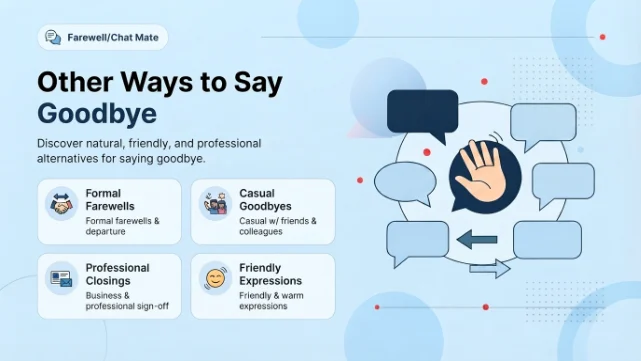
Looking for other ways to say goodbye? Native speakers rarely repeat the same word every time they leave a conversation, a meeting, or a friend. Instead, they switch between formal, casual, and professional expressions depending on the situation. Here are 5 top alternatives to get started: take care, see you later, farewell, catch you later, talk soon.
“Goodbye” is one of the most common words in the English language. It is used to end a conversation, leave a place, or close a message. People say it in person, on the phone, in emails, and in text messages every single day.
However, repeating the same word again and again can make your English sound flat or robotic. Learning alternatives to goodbye helps you sound more natural, more fluent, and more emotionally accurate. Some alternatives express warmth, some express excitement in English, and others sound calm and professional.
This guide breaks down formal, casual, professional, and informal expressions in English so you always know the right phrase for the right moment.
“The right tone makes your English sound professional and confident.”
Quick Categories
Formal alternatives to “goodbye”
- Farewell
- Take care
- Until we meet again
- I bid you farewell
Pro Tips Box: Use formal alternatives in speeches, ceremonies, or written letters. Avoid them in casual daily conversation, as they can sound overly dramatic.
Casual alternatives
- See ya
- Catch you later
- Later
- See you around
Pro Tips Box: Save these for friends, classmates, or close colleagues. They are too relaxed for job interviews or formal emails.
Professional alternatives
- Have a good rest of your day
- I’ll follow up with you
- Best regards
- Talk soon
Pro Tips Box: In business emails, pair a professional alternative with a clear next step, such as “Talk soon, I’ll send the report tomorrow.”
Informal expressions
- Peace out
- I’m out
- Gotta go
- Adios
Pro Tips Box: Informal expressions in English work well in texting or with close friends, but they can sound disrespectful in professional settings.
“Choosing the wrong tone can make a polite phrase sound careless.”
Common Mistakes
- Using “goodbye” in every message
Example: “Goodbye. Goodbye. See you tomorrow, goodbye.” (Repetitive and unnatural) - Mixing formal and slang in one sentence
Example: “Farewell, catch you later!” (Inconsistent tone) - Using informal expressions in business emails
Example: “Peace out, let me know about the contract.” (Unprofessional) - Forgetting cultural context Example: Using “adios” in a formal British business meeting may sound out of place.
- Ending abruptly without warmth
Example: “Bye.” (Can sound cold in personal relationships)
What Does “Goodbye” Mean?
“Goodbye” is an expression used to end a conversation or interaction, often signaling that the speaker is leaving or ending contact for now.
Grammar note: “Goodbye” functions as an interjection. It does not change form based on tense, number, or subject.
Example Sentence: She waved and said goodbye before boarding the train.
When to Use “Goodbye”
- Ending a phone call
- Leaving a meeting or classroom
- Closing a conversation with a stranger
- Signing off a formal letter
Spoken vs Written: In speech, “goodbye” is often shortened to “bye.” In writing, it usually appears in its full form, especially in formal letters.
Formal vs Informal: “Goodbye” itself sits in a neutral zone. It is polite enough for most situations but can feel plain in professional writing.
Is It Professional or Polite to Say “Goodbye”?
“Goodbye” is polite in almost every context, but it is not always the most professional choice for business communication, where phrases like “best regards” or “talk soon” sound more polished.
Business example: “Thank you for your time today. I’ll follow up with you by email. Goodbye for now.”
Polite? ✔️ Yes Professional? ❌ No (in most cases)
Pros and Cons of Using “Goodbye”
Pros
- Simple and natural
- Friendly tone
- Common usage
- Easy to understand
Cons
- Too informal for work
- Overused
- Limited emotional range
- Not suitable for formal writing
“Fluency is not about big words. It’s about choosing the right word at the right time.”
Other Ways to Say “Goodbye”
These alternatives will help you sound more fluent, confident, and natural in different situations. Use them according to tone, context, and audience to express excitement, admiration, or approval when parting ways.
1. Phrase: Farewell
Meaning: A formal way of saying goodbye. Explanation: Often used in speeches or emotional partings. Example Sentence: The manager gave a short farewell speech before retiring. Best Use: speeches, ceremonies Worst Use: texting friends Tone: formal, respectful, solemn Context Variability: professional, spoken
2. Phrase: Take care
Meaning: A warm way to say goodbye while showing concern. Explanation: Suggests the speaker cares about the listener’s wellbeing. Example Sentence: Take care, and text me when you get home. Best Use: friends, family Worst Use: strict formal letters Tone: warm, caring, friendly Context Variability: casual, spoken, professional
3. Phrase: Until we meet again
Meaning: A poetic way of saying goodbye. Explanation: Suggests confidence about seeing someone in the future. Example Sentence: Until we meet again, my friend, safe travels. Best Use: farewells, travel Worst Use: quick daily exits Tone: poetic, formal, sincere Context Variability: spoken, written
4. Phrase: I bid you farewell
Meaning: A very formal expression of goodbye. Explanation: Common in literature or ceremonial speech. Example Sentence: I bid you farewell as I begin this new chapter. Best Use: ceremonies, writing Worst Use: everyday chat Tone: formal, dramatic, elegant Context Variability: written, spoken
5. Phrase: Goodbye for now
Meaning: Indicates a temporary farewell. Explanation: Softens the finality of “goodbye.” Example Sentence: Goodbye for now, I’ll call you tomorrow. Best Use: phone calls, meetings Worst Use: permanent departures Tone: neutral, reassuring Context Variability: spoken, professional
6. Phrase: See ya
Meaning: A casual, shortened way to say goodbye. Explanation: Common among friends and peers. Example Sentence: See ya at lunch tomorrow. Best Use: friends, casual chats Worst Use: business meetings Tone: casual, playful Context Variability: casual, spoken
7. Phrase: Catch you later
Meaning: An informal way to say goodbye, implying a future meeting. Explanation: Suggests a relaxed, friendly relationship. Example Sentence: Catch you later, I’m heading to class. Best Use: friends, colleagues you know well Worst Use: formal emails Tone: relaxed, friendly Context Variability: casual, spoken
8. Phrase: Later
Meaning: A very casual short form of goodbye. Explanation: Common among young people or close friends. Example Sentence: Later, I’ve got to run. Best Use: texting, casual talk Worst Use: professional settings Tone: casual, brief Context Variability: casual, spoken
9. Phrase: See you around
Meaning: A casual goodbye without a specific plan. Explanation: Implies you might meet again but no fixed time. Example Sentence: See you around campus! Best Use: acquaintances, casual settings Worst Use: formal business closing Tone: casual, easygoing Context Variability: casual, spoken
10. Phrase: Take it easy
Meaning: A relaxed way to say goodbye while wishing someone well. Explanation: Suggests a laid-back, friendly tone. Example Sentence: Take it easy, see you next week. Best Use: friends, informal work settings Worst Use: formal documents Tone: relaxed, friendly Context Variability: casual, spoken
11. Phrase: Have a good rest of your day
Meaning: A professional and polite way to end an interaction. Explanation: Common in customer service and workplace communication. Example Sentence: Thank you for calling, have a good rest of your day. Best Use: customer service, offices Worst Use: close friend chats Tone: polite, professional Context Variability: professional, spoken
12. Phrase: Talk soon
Meaning: Indicates future communication is expected. Explanation: Common in both professional and personal contexts. Example Sentence: Talk soon, I’ll send the file by Friday. Best Use: emails, calls Worst Use: final goodbyes Tone: friendly, professional Context Variability: professional, casual
13. Phrase: I’ll follow up with you
Meaning: Signals the end of a conversation with a promise of future contact. Explanation: Often used in business meetings and negotiations. Example Sentence: I’ll follow up with you after reviewing the proposal. Best Use: business, meetings Worst Use: casual social settings Tone: professional, formal Context Variability: professional, written
14. Phrase: Thank you for your time, goodbye
Meaning: A polite and professional closing statement. Explanation: Shows appreciation before ending a conversation. Example Sentence: Thank you for your time, goodbye, and good luck with the project. Best Use: interviews, meetings Worst Use: casual texting Tone: polite, formal Context Variability: professional, spoken
15. Phrase: Best regards
Meaning: A formal closing used mainly in written communication. Explanation: Common at the end of professional emails and letters. Example Sentence: Best regards, and thank you for the update. Best Use: emails, letters Worst Use: spoken conversation Tone: formal, professional Context Variability: written, professional
16. Phrase: Peace out
Meaning: A slang way of saying goodbye. Explanation: Popular among younger speakers and informal groups. Example Sentence: Peace out, catch you at the game. Best Use: friends, informal settings Worst Use: workplace, formal writing Tone: playful, slang Context Variability: casual, spoken
17. Phrase: I’m out
Meaning: A slang expression meaning “I am leaving now.” Explanation: Very informal and abrupt. Example Sentence: I’m out, see everyone tomorrow. Best Use: casual groups, texting Worst Use: professional emails Tone: blunt, casual Context Variability: casual, spoken
18. Phrase: Gotta go
Meaning: An informal way to end a conversation quickly. Explanation: Suggests urgency or limited time. Example Sentence: Gotta go, my bus is here. Best Use: quick exits, friends Worst Use: formal closings Tone: casual, rushed Context Variability: casual, spoken
19. Phrase: Adios
Meaning: A borrowed Spanish word used casually in English. Explanation: Adds a light, fun tone to a farewell. Example Sentence: Adios, I’ll see you next weekend. Best Use: casual chats, texting Worst Use: formal business settings Tone: playful, casual Context Variability: casual, spoken
20. Phrase: Ciao
Meaning: An Italian word adopted informally in English for goodbye. Explanation: Common among fashionable or casual speakers. Example Sentence: Ciao, see you at the party tonight. Best Use: social settings, informal talk Worst Use: formal writing Tone: stylish, casual Context Variability: casual, spoken
21. Phrase: See you later
Meaning: A neutral way to say goodbye, implying a future meeting. Explanation: Works in both casual and semi-formal settings. Example Sentence: See you later, don’t forget the meeting notes. Best Use: everyday conversation Worst Use: highly formal letters Tone: neutral, friendly Context Variability: casual, professional
22. Phrase: Until next time
Meaning: A gentle way to end a conversation with future contact implied. Explanation: Slightly more polished than “see you later.” Example Sentence: Until next time, thank you for the wonderful evening. Best Use: social events, semi-formal settings Worst Use: rushed exits Tone: warm, polished Context Variability: casual, professional
23. Phrase: Take care of yourself
Meaning: A caring way to say goodbye. Explanation: Emphasizes concern for the other person’s wellbeing. Example Sentence: Take care of yourself while you’re traveling. Best Use: close friends, family Worst Use: strict business emails Tone: caring, sincere Context Variability: casual, spoken
24. Phrase: Have a great day
Meaning: A cheerful and polite way to end an interaction. Explanation: Common in customer service and daily greetings. Example Sentence: Have a great day, and thank you for visiting. Best Use: shops, offices Worst Use: deep personal farewells Tone: cheerful, polite Context Variability: professional, casual
25. Phrase: Stay safe
Meaning: A caring goodbye that shows concern for safety. Explanation: Often used before travel or during uncertain times. Example Sentence: Stay safe, and message me when you land. Best Use: travel, uncertain situations Worst Use: routine daily goodbyes Tone: caring, protective Context Variability: casual, spoken
26. Phrase: So long
Meaning: An old-fashioned but still used way to say goodbye. Explanation: Slightly nostalgic, common in older English or film dialogue. Example Sentence: So long, it was great catching up with you. Best Use: casual, nostalgic tone Worst Use: modern business writing Tone: nostalgic, casual Context Variability: spoken, casual
27. Phrase: I’ll see you soon
Meaning: A reassuring goodbye that implies a near-future meeting. Explanation: Adds warmth and certainty to a farewell. Example Sentence: I’ll see you soon, take care until then. Best Use: friends, family Worst Use: uncertain long-term goodbyes Tone: warm, reassuring Context Variability: casual, spoken
28. Phrase: Bye for now
Meaning: A light, temporary way to say goodbye. Explanation: Suggests the conversation will continue later. Example Sentence: Bye for now, I’ll message you tonight. Best Use: texting, quick chats Worst Use: final formal farewells Tone: light, casual Context Variability: casual, spoken
29. Phrase: Keep in touch
Meaning: A goodbye that encourages future communication. Explanation: Common when parting after a long meeting or trip. Example Sentence: Keep in touch, and let me know how the move goes. Best Use: long-term goodbyes, travel Worst Use: quick daily exits Tone: friendly, hopeful Context Variability: casual, professional
30. Phrase: Wishing you well
Meaning: A polished, professional way to end a conversation. Explanation: Common in formal emails and farewell messages. Example Sentence: Wishing you well in your new role, goodbye. Best Use: professional emails, farewells Worst Use: casual daily chats Tone: polished, professional Context Variability: professional, written
“Every farewell carries a tone. Choose yours with intention.”
Mini Quiz / Self-Check
1. Which phrase is most appropriate for a formal business email closing?
A) Peace out B) Best regards C) Later D) I’m out
2. Your close friend is leaving after a casual hangout. Which phrase fits best?
A) I bid you farewell B) Catch you later C) Wishing you well D) Thank you for your time, goodbye
3. Which phrase implies future contact is expected?
A) So long B) Talk soon C) Ciao D) Peace out
4. Which alternative shows concern for someone’s safety?
A) Stay safe B) Later C) Adios D) See ya
Answers: 1-B, 2-B, 3-B, 4-A
Comparison Table: Top Alternatives
| Phrase | Tone | Best Use |
|---|---|---|
| Farewell | formal, respectful | speeches, ceremonies |
| Take care | warm, friendly | friends, family |
| Best regards | formal, professional | emails, letters |
| See you later | neutral, friendly | everyday conversation |
| Talk soon | friendly, professional | emails, calls |
| Catch you later | relaxed, casual | friends, colleagues |
| I’ll follow up with you | professional | business meetings |
| Peace out | playful, slang | friends, informal groups |
| Stay safe | caring, protective | travel, uncertain situations |
| Wishing you well | polished, professional | professional farewells |
FAQs
What are the most common other ways to say goodbye?
The most common alternatives include take care, see you later, farewell, catch you later, and talk soon, depending on the tone you need.
What are formal alternatives to goodbye?
Formal alternatives include farewell, until we meet again, and I bid you farewell, which are best used in speeches or written letters.
Is “goodbye” too casual for professional emails?
“Goodbye” is polite but often too plain for business writing. Professional alternatives like best regards or talk soon sound more polished.
What are some informal expressions in English for goodbye?
Informal expressions include peace out, I’m out, gotta go, and adios, which are best used with friends or in casual texting.
How can learning alternatives to goodbye improve my English?
Learning alternatives helps you match tone to context, sound more natural, and express excitement, warmth, or professionalism appropriately.
Conclusion
Learning different ways to say goodbye gives your English more flexibility and emotional accuracy. Instead of relying on one word, you can now choose formal, casual, professional, or informal expressions depending on who you are speaking to and why.
Practice using a new alternative every day, and always stay aware of tone. Small choices like these make a big difference in sounding confident, fluent, and natural in English.

Richard Scott is an experienced author dedicated to creating compelling and well-researched content for online audiences. As a contributor to Responary.com, he enjoys sharing knowledge through clear, engaging, and informative articles that connect with readers worldwide.