Quick Answer
The best way to respond to thank you depends on the situation, your relationship, and the tone of the conversation. You can keep it simple, sound professional, make someone laugh, or add a little warmth with the right words.
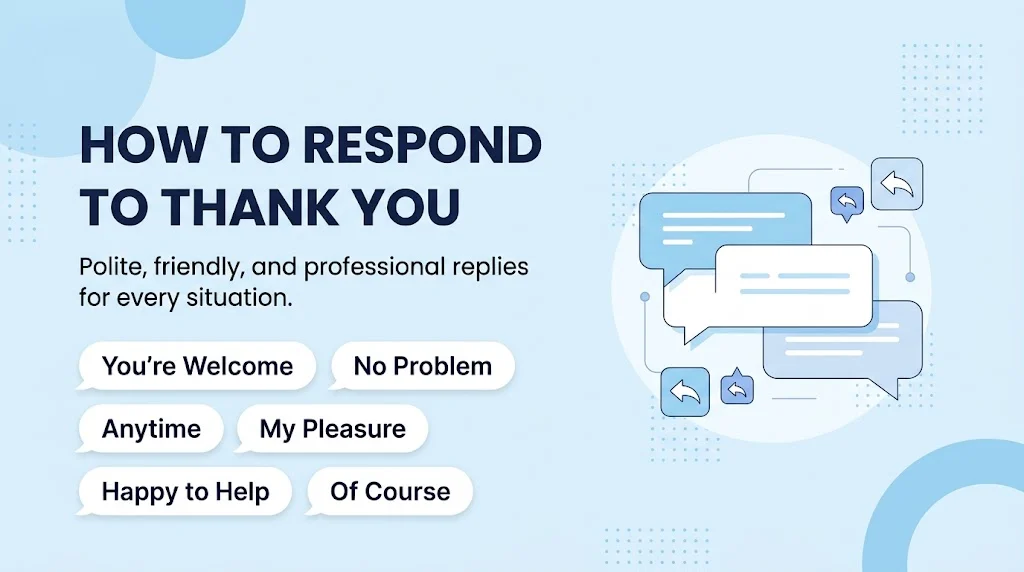
Top replies include You’re welcome, No problem, Anytime, Happy to help, My pleasure.
Someone says thank you, and suddenly your brain forgets every reply except “You’re welcome.” Sound familiar? Whether you’re texting a friend, replying to a coworker, chatting with your crush, or responding to someone who appreciates your kindness, having a few natural responses ready can make conversations feel smoother.
The good news is that you don’t need a perfect sentence every time someone appreciates you. Sometimes a quick “No worries” is all you need, while other moments deserve something more thoughtful, funny, or professional. The trick is knowing which reply fits the situation without sounding awkward or overly formal.
1. Simple and Common Responses
These everyday replies work in almost any casual conversation. Keep them handy for texts, quick chats, and daily interactions.
– You’re welcome!
Use this when someone thanks you for a favor or a small act of kindness.
Meaning: You are politely acknowledging their gratitude.
– No problem!
Use this when helping someone was easy or required little effort.
Meaning: You are letting them know that helping them was not a burden.
– Of course!
Use this when helping someone feels natural to you.
Meaning: You are showing that you were happy to help.
– Anytime!
Use this when you would gladly help the person again.
Meaning: You are letting them know they can count on you.
– Sure thing!
Use this for a quick, friendly exchange.
Meaning: You are responding casually and positively.
– No worries!
Use this when you want the other person to feel comfortable.
Meaning: You are reassuring them that everything is fine.
– Don’t mention it!
Use this when you want to downplay a small favor.
Meaning: You are suggesting that the favor was nothing to worry about.
– Glad to help!
Use this after assisting someone with a task.
Meaning: You are expressing happiness that your help was useful.
– My pleasure!
Use this when you want to sound warm and courteous.
Meaning: You are saying that helping them was enjoyable.
– Absolutely!
Use this when you want an upbeat, confident response.
Meaning: You are enthusiastically acknowledging their gratitude.
– It’s all good!
Use this with friends or people you know well.
Meaning: You are reassuring them that there is no issue.
– Happy to!
Use this when someone thanks you for doing something you genuinely wanted to do.
Meaning: You are showing that you were pleased to help.
– Of course, no worries!
Use this when someone seems concerned about asking for help.
Meaning: You are making the interaction feel relaxed and friendly.
– You’re very welcome!
Use this when you want to sound slightly warmer than usual.
Meaning: You are graciously accepting their appreciation.
– Not a problem at all!
Use this when you want to reassure someone that their request was fine.
Meaning: You are emphasizing that helping them caused no inconvenience.
2. Funny Responses
Want to make someone smile instead of giving the same old reply? These playful responses work especially well with friends, siblings, and people who enjoy your sense of humor.
– You’re welcome. I’ll accept payment in snacks.
Use this when a friend thanks you for helping them with something.
Meaning: You are jokingly asking for a snack as a reward.
– No problem, I’m basically a superhero.
Use this after solving a small problem for someone.
Meaning: You are playfully exaggerating your helpfulness.
– You’re welcome! My good deeds quota is complete.
Use this when joking with a close friend.
Meaning: You are humorously pretending you have a daily limit for kindness.
– Anytime, but I charge in compliments.
Use this when you want a funny response with a little charm.
Meaning: You are jokingly asking for appreciation in return.
– I accept your gratitude and imaginary trophy.
Use this after doing something helpful.
Meaning: You are making light of the recognition you received.
– You’re welcome! Please hold your applause.
Use this when you want to sound dramatically funny.
Meaning: You are jokingly acting like a celebrity receiving praise.
– No worries, my kindness subscription is active.
Use this with a friend who frequently asks for favors.
Meaning: You are playfully suggesting that your helpfulness never expires.
– Anything for my favorite troublemaker.
Use this when responding to a close friend.
Meaning: You are showing affection through playful teasing.
– You’re welcome. That’ll be five imaginary dollars.
Use this after doing someone a small favor.
Meaning: You are jokingly pretending your help comes with a fee.
– Don’t thank me, thank my excellent decision-making.
Use this when you have cleverly solved a problem.
Meaning: You are humorously giving yourself credit.
– I know, I’m amazing.
Use this with someone who appreciates confident humor.
Meaning: You are playfully acting proud of yourself.
– You’re welcome! Add it to my legend.
Use this after helping a friend with something memorable.
Meaning: You are jokingly turning an ordinary favor into a heroic achievement.
– No problem. I live to serve, apparently.
Use this when teasing a friend who keeps asking for help.
Meaning: You are playfully commenting on your helpful role.
– You’re welcome! Invoice coming never.
Use this after doing a favor for free.
Meaning: You are jokingly confirming that you do not expect payment.
– Just doing my unpaid internship in being awesome.
Use this with friends who enjoy silly jokes.
Meaning: You are humorously presenting your helpfulness as professional training.
3. Polite Responses
These replies are perfect when you want to sound considerate, respectful, and approachable without being overly formal.
– You’re most welcome.
Use this when someone thanks you for a thoughtful gesture.
Meaning: You are responding with warmth and courtesy.
– It was my pleasure.
Use this after helping someone with something meaningful.
Meaning: You are expressing genuine satisfaction in helping.
– I’m glad I could help.
Use this when someone appreciates your assistance.
Meaning: You are happy that your help made a difference.
– You’re very welcome, and I’m happy to help.
Use this when you want to make someone feel appreciated.
Meaning: You are acknowledging their gratitude and showing willingness to assist.
– It was nothing, really.
Use this when someone thanks you for a small favor.
Meaning: You are modestly suggesting that the favor was easy.
– I’m happy it worked out.
Use this after helping someone resolve an issue.
Meaning: You are expressing relief and happiness about the outcome.
– I’m glad everything went well.
Use this when someone thanks you after a successful experience.
Meaning: You are showing that their positive outcome matters to you.
– You’re welcome, and I wish you the best.
Use this when concluding a helpful conversation.
Meaning: You are ending the interaction with goodwill.
– It was the least I could do.
Use this when helping someone you care about.
Meaning: You are modestly expressing that the help felt natural or deserved.
– I’m always glad to lend a hand.
Use this when you want to show a helpful attitude.
Meaning: You are communicating that you value being supportive.
– No thanks needed.
Use this when someone seems overly grateful for a small favor.
Meaning: You are reassuring them that appreciation is not required.
– You’re welcome. I’m glad it was useful.
Use this after sharing advice, information, or a resource.
Meaning: You are pleased that what you offered helped them.
– It was truly no trouble.
Use this when someone apologizes for asking for assistance.
Meaning: You are reassuring them that the request was not inconvenient.
– I’m pleased I could be of assistance.
Use this in a respectful or slightly formal conversation.
Meaning: You are expressing satisfaction in providing help.
– You’re welcome. Please feel free to reach out again.
Use this after helping a neighbor, colleague, or acquaintance.
Meaning: You are inviting them to ask for help in the future.
4. Professional Responses
When responding at work, aim for a reply that sounds capable, courteous, and natural. You can be friendly without making your message too casual.
– You’re welcome. Happy to assist.
Use this in workplace chats or emails.
Meaning: You are acknowledging the thanks while remaining professional.
– My pleasure.
Use this when a client or colleague appreciates your work.
Meaning: You are expressing courteous satisfaction in helping.
– Glad I could help.
Use this after resolving a work-related question.
Meaning: You are showing that you are pleased to have supported the person.
– You’re welcome. Let me know if you need anything else.
Use this when finishing a work task or answering a request.
Meaning: You are offering continued assistance.
– Happy to support the team.
Use this when a teammate thanks you for contributing to a project.
Meaning: You are emphasizing collaboration.
– It was a pleasure working on this with you.
Use this after completing a collaborative task.
Meaning: You are recognizing the value of working together.
– You’re welcome. I’m glad we got it sorted out.
Use this after solving a workplace problem.
Meaning: You are highlighting the successful resolution.
– Of course. I’m happy the information was helpful.
Use this when someone thanks you for sharing details or guidance.
Meaning: You are confirming that you are pleased your information was useful.
– You’re welcome, and thank you for the collaboration.
Use this when a coworker thanks you after a joint effort.
Meaning: You are recognizing their contribution as well.
– Always happy to contribute.
Use this when acknowledging thanks for your work.
Meaning: You are expressing a positive attitude toward teamwork.
– I’m glad I could provide the support you needed.
Use this when assisting a colleague or client.
Meaning: You are confirming that their needs were important to you.
– You’re welcome. Please don’t hesitate to contact me if needed.
Use this in formal professional correspondence.
Meaning: You are offering future assistance in a courteous way.
– It was no trouble at all.
Use this after completing a routine work request.
Meaning: You are reassuring the person that the task was manageable.
– I’m pleased we were able to achieve a good result.
Use this after a successful project or collaboration.
Meaning: You are emphasizing the positive outcome.
– You’re welcome. I appreciate the opportunity to help.
Use this when assisting a manager, client, or professional contact.
Meaning: You are showing gratitude for being able to contribute.
5. Casual Text Message Responses
For everyday texts, you do not need a long reply. These short options keep the conversation moving without sounding stiff.
– Np!
Use this when texting a friend who thanks you for something small.
Meaning: You are casually saying there was no problem.
– Ofc!
Use this in a relaxed conversation with someone you know well.
Meaning: You are saying that helping them was natural.
– Anytime 😊
Use this when you want a friendly, warm text.
Meaning: You are letting them know you are happy to help again.
– Got you!
Use this after helping someone with a task.
Meaning: You are showing support and reassurance.
– All good!
Use this when someone thanks you and you want to keep things easygoing.
Meaning: You are letting them know everything is fine.
– No biggie!
Use this for a small favor among friends.
Meaning: You are saying the favor was not a big deal.
– For sure!
Use this when you want a relaxed, positive response.
Meaning: You are agreeing enthusiastically and casually.
– Glad to help 😊
Use this when someone appreciates something you did.
Meaning: You are showing warmth without overexplaining.
– You got it!
Use this after helping with a request.
Meaning: You are confirming that the person can rely on you.
– Of course, friend!
Use this when replying to someone close to you.
Meaning: You are combining reassurance with friendly affection.
– Don’t sweat it!
Use this when someone seems worried about bothering you.
Meaning: You are telling them not to stress about the favor.
– No stress!
Use this when someone apologizes while thanking you.
Meaning: You are keeping the interaction relaxed.
– Always!
Use this when you want a quick reply that communicates support.
Meaning: You are showing that your willingness to help is ongoing.
– You know it!
Use this with a friend who appreciates playful confidence.
Meaning: You are responding with upbeat familiarity.
– We’ve got each other!
Use this when a friend thanks you for being supportive.
Meaning: You are emphasizing mutual friendship and support.
6. Sweet and Heartfelt Responses
Sometimes someone thanks you because your help genuinely mattered. A thoughtful response can show that you care about them, not just the favor.
– Anything for you. ❤️
Use this with a close friend, partner, or family member.
Meaning: You are expressing affection and willingness to support them.
– I’m just happy I could make your day easier.
Use this after helping someone through a difficult moment.
Meaning: You are showing that their comfort matters to you.
– You deserve all the help and kindness in the world.
Use this when someone you care about feels especially grateful.
Meaning: You are reminding them that they deserve support.
– It means a lot that I could be there for you.
Use this after supporting a loved one.
Meaning: You are expressing how meaningful it was to help.
– You don’t ever have to thank me for being there.
Use this with someone very close to you.
Meaning: You are reassuring them that your support comes from genuine care.
– I’m just glad you’re okay.
Use this after helping someone through a stressful situation.
Meaning: You are showing that their well-being matters more than recognition.
– Helping you makes me happy, honestly.
Use this with someone who is important to you.
Meaning: You are explaining that helping them brings you genuine joy.
– That’s what friends are for. 💛
Use this when a friend thanks you for support.
Meaning: You are emphasizing the value of friendship.
– You would do the same for me.
Use this with someone who feels indebted to you.
Meaning: You are reminding them that your relationship is based on mutual support.
– I’m grateful I could be there when you needed me.
Use this after an emotionally meaningful moment.
Meaning: You are expressing gratitude for the chance to support them.
– You matter to me, so of course I helped.
Use this with someone you deeply care about.
Meaning: You are connecting your helpfulness to your affection.
– Never hesitate to ask me for help.
Use this when you want to reassure someone who struggles to ask for support.
Meaning: You are making it easier for them to reach out in the future.
– Seeing you happy is enough for me.
Use this when your help has made someone feel better.
Meaning: You are expressing that their happiness is rewarding.
– I’m always rooting for you.
Use this when someone thanks you for encouragement or advice.
Meaning: You are showing ongoing emotional support.
– You deserve kindness, always.
Use this when someone seems surprised by your generosity.
Meaning: You are reminding them that kindness is something they deserve.
7. Flirty Responses
When your crush or partner thanks you, a little charm can make the exchange more interesting. Keep it natural and match the level of flirting you already share.
– Anything for you, cutie. 😉
Use this with someone you already flirt with.
Meaning: You are expressing affection with a playful compliment.
– You’re welcome, but you owe me a smile.
Use this when you want to make your crush smile.
Meaning: You are playfully asking for a little attention in return.
– For you? Always. ❤️
Use this when you want to sound sweet and romantic.
Meaning: You are suggesting that this person is especially important to you.
– You don’t have to thank me, just keep talking to me.
Use this when you enjoy chatting with someone.
Meaning: You are hinting that their attention is your favorite reward.
– Helping you is becoming my favorite hobby.
Use this with someone you have a playful connection with.
Meaning: You are teasing them while showing interest.
– You’re welcome, gorgeous.
Use this when complimenting someone feels natural between you.
Meaning: You are returning their gratitude with a direct compliment.
– I’d do it again just to see you smile.
Use this after doing something thoughtful for a crush or partner.
Meaning: You are expressing romantic warmth.
– No thanks needed, your smile is enough.
Use this when you want a charming response.
Meaning: You are suggesting that their happiness is your reward.
– Anything to stay on your favorite-person list.
Use this with someone who enjoys playful flirting.
Meaning: You are jokingly seeking a special place in their life.
– You’re welcome. So, when are you taking me out?
Use this when you want to turn a playful exchange into a date invitation.
Meaning: You are teasing them about spending time together.
– I’d say anytime, but you might take that seriously.
Use this with someone who enjoys subtle flirting.
Meaning: You are hinting at interest while keeping things light.
– You make being helpful way too easy.
Use this when you enjoy doing thoughtful things for someone.
Meaning: You are implying that your affection makes helping them effortless.
– For that smile? Worth it.
Use this after making someone happy.
Meaning: You are telling them that their happiness is rewarding.
– You’re welcome, favorite notification.
Use this in a playful text conversation.
Meaning: You are suggesting that hearing from them is especially enjoyable.
– Don’t tempt me, I’ll start finding excuses to help you.
Use this when the flirting is already mutual.
Meaning: You are playfully admitting that you want more opportunities to interact.
8. Sarcastic Responses
Sarcasm works best when you know the other person will understand your humor. These replies are meant for friendly teasing, not situations where someone genuinely needs reassurance.
– I know, I’m a delight.
Use this with a friend who appreciates dry humor.
Meaning: You are jokingly acting pleased with yourself.
– You’re welcome. Try not to cry from gratitude.
Use this with someone you regularly tease.
Meaning: You are exaggerating their appreciation for comedic effect.
– Finally, the recognition I deserve.
Use this after doing something small for a friend.
Meaning: You are jokingly suggesting that your effort deserves an award.
– Please, hold the applause.
Use this after solving a simple problem.
Meaning: You are humorously pretending to be a celebrated hero.
– Yes, my greatness is hard to ignore.
Use this when your friend thanks you for a favor.
Meaning: You are making a playful, exaggerated boast.
– You’re welcome. My work here is done.
Use this after fixing something or providing an answer.
Meaning: You are dramatically announcing the end of your task.
– I accept gratitude in cash or snacks.
Use this with a friend who owes you a favor.
Meaning: You are jokingly suggesting a payment method.
– Don’t make it weird. You’re welcome.
Use this when a friend gets unusually sentimental.
Meaning: You are using humor to soften an emotional moment.
– I expect a five-star review.
Use this after helping someone with a task.
Meaning: You are jokingly asking them to rate your performance.
– You’re welcome. I’m available for autographs later.
Use this when you want an exaggerated celebrity-style response.
Meaning: You are playfully treating your helpfulness as a major achievement.
– Another day, another heroic act.
Use this after handling a minor problem for someone.
Meaning: You are humorously presenting yourself as a daily hero.
– I do what I can for the public.
Use this with a friend who enjoys dramatic sarcasm.
Meaning: You are pretending your favor benefited everyone.
– Your gratitude has been received and filed.
Use this in a playful, mock-official conversation.
Meaning: You are making their thanks sound like formal paperwork.
– You’re welcome. Don’t let it go to my head.
Use this after receiving a compliment or thanks.
Meaning: You are jokingly acknowledging your own ego.
– I expect this favor to become part of my origin story.
Use this after helping someone with something ridiculous or memorable.
Meaning: You are exaggerating a small event into an epic personal story.
9. Cute Responses With Emojis
Emojis can make a simple reply feel more personal. These options work well in WhatsApp messages, Instagram DMs, and conversations with people who enjoy expressive texting.
– You’re welcome 😊
Use this for a friendly, everyday conversation.
Meaning: You are showing warmth and friendliness.
– Anytime, bestie 💕
Use this when a close friend thanks you.
Meaning: You are expressing affection and support.
– No worries at all 🫶
Use this when reassuring someone you care about.
Meaning: You are communicating kindness and understanding.
– Happy to help! ✨
Use this after sharing advice or assisting with a task.
Meaning: You are showing enthusiasm about being useful.
– Of course, lovely 🌷
Use this with someone you know well.
Meaning: You are returning their gratitude with a gentle, affectionate tone.
– You got it! 💛
Use this in a casual chat with a friend.
Meaning: You are offering a cheerful confirmation.
– Always here for you 🤍
Use this when a loved one thanks you for emotional support.
Meaning: You are reassuring them of your continued care.
– My pleasure, sunshine ☀️
Use this with someone who appreciates cheerful messages.
Meaning: You are combining gratitude with a warm nickname.
– No biggie 🥰
Use this after a small favor for someone close.
Meaning: You are downplaying the favor in an affectionate way.
– Anything for you 💖
Use this with a partner or close friend.
Meaning: You are expressing care and willingness to help.
– Glad I could help 🤗
Use this when someone is genuinely appreciative.
Meaning: You are conveying warmth and reassurance.
– You’re always welcome 🌸
Use this when you want a soft, friendly response.
Meaning: You are letting them know their appreciation is received kindly.
– No stress, friend 💚
Use this when someone worries they have inconvenienced you.
Meaning: You are reassuring them in a relaxed and supportive way.
– Happy to make your day a little easier 🩷
Use this after helping someone with a stressful task.
Meaning: You are showing that their comfort matters to you.
– We’ve got each other 🫂
Use this with someone who regularly supports you too.
Meaning: You are emphasizing mutual care and connection.
10. Witty and Clever Responses
These replies add personality without being too sarcastic. They are useful when you want to sound smart, playful, or memorable.
– Gratitude accepted, friendship maintained.
Use this with a friend who enjoys clever humor.
Meaning: You are playfully confirming that the friendship is still going strong.
– Consider it a favor well delivered.
Use this after helping someone solve a problem.
Meaning: You are confidently acknowledging that you did what was needed.
– No thanks necessary, but appreciated.
Use this when you want to sound gracious and thoughtful.
Meaning: You are saying that gratitude is not required, even though you value it.
– Teamwork makes everything easier.
Use this when someone thanks you for collaborating.
Meaning: You are emphasizing the value of working together.
– Happy to turn a problem into a solution.
Use this after offering useful advice.
Meaning: You are expressing satisfaction in helping resolve an issue.
– That’s what good people do for each other.
Use this when responding to a heartfelt thank-you.
Meaning: You are framing your help as an act of mutual kindness.
– A little help goes a long way.
Use this after doing something meaningful for someone.
Meaning: You are highlighting how small actions can make a difference.
– Glad my timing was useful.
Use this when your help arrived at just the right moment.
Meaning: You are acknowledging that your assistance was well timed.
– One good turn deserves another.
Use this when someone thanks you for returning a favor.
Meaning: You are recognizing the value of reciprocity.
– Happy to make the complicated simple.
Use this after explaining something confusing.
Meaning: You are expressing satisfaction in making things easier to understand.
– A good outcome is thanks enough.
Use this after helping someone achieve a goal.
Meaning: You are saying that the result matters more than recognition.
– Consider it a small investment in good karma.
Use this when helping a friend with a minor task.
Meaning: You are humorously suggesting that kindness has its own rewards.
– Always happy to be part of the solution.
Use this in a work or teamwork setting.
Meaning: You are showing a constructive and collaborative attitude.
– Glad the effort paid off.
Use this after assisting someone with a successful outcome.
Meaning: You are acknowledging that your contribution made a difference.
– Kindness is better when it is shared.
Use this when someone thanks you for a thoughtful gesture.
Meaning: You are expressing the idea that helping others benefits everyone.
11. Responses When Someone Thanks You for a Big Favor
When someone expresses deep gratitude for your time, effort, or support, a more thoughtful reply can help them feel comfortable and appreciated.
– I’m really glad I could be there for you.
Use this after supporting someone through a difficult situation.
Meaning: You are expressing genuine care for their well-being.
– You would have done the same for me.
Use this when someone feels they owe you something.
Meaning: You are emphasizing the mutual nature of your relationship.
– I’m happy things worked out for you.
Use this after helping someone achieve a positive result.
Meaning: You are showing that their success makes you happy.
– You don’t owe me anything.
Use this when someone feels indebted after receiving help.
Meaning: You are reassuring them that your support was not transactional.
– I’m just glad it made a difference.
Use this when your help had a meaningful impact.
Meaning: You are emphasizing the value of the outcome.
– I’m grateful I was able to help when it mattered.
Use this after an important or emotional experience.
Meaning: You are expressing appreciation for the opportunity to support them.
– That’s what people are here for, to help each other.
Use this when someone is deeply thankful for your assistance.
Meaning: You are highlighting the importance of human connection.
– You can always reach out when you need support.
Use this when you genuinely want to remain available.
Meaning: You are offering continued help and reassurance.
– I’m glad you didn’t have to handle it alone.
Use this after helping someone through a stressful event.
Meaning: You are acknowledging the comfort of having support.
– It was worth the effort to see things improve.
Use this when you invested significant time in helping someone.
Meaning: You are saying that their progress made your effort worthwhile.
– I’m proud of how you handled everything.
Use this when someone thanks you for guidance during a difficult time.
Meaning: You are recognizing their own strength and effort.
– I’m just happy you’re in a better place now.
Use this after someone has overcome a challenge.
Meaning: You are prioritizing their well-being over your contribution.
– We made it through together.
Use this when you and another person worked through a challenge.
Meaning: You are recognizing shared effort and support.
– You deserve the same kindness you give others.
Use this when a caring person seems surprised by your help.
Meaning: You are reminding them that they deserve support too.
– No repayment needed. Just keep moving forward.
Use this when someone feels they must repay your kindness.
Meaning: You are encouraging them to focus on their progress instead of feeling indebted.
12. Responses That Keep the Conversation Going
Sometimes a thank-you is the perfect opportunity to continue chatting. These replies acknowledge the gratitude while naturally opening the door to another message.
– You’re welcome! How did everything turn out?
Use this after helping someone with a problem or task.
Meaning: You are showing continued interest in the outcome.
– Anytime! So, what’s next?
Use this when finishing one task and moving on to another topic.
Meaning: You are keeping the conversation active and forward-looking.
– Glad I could help! Did it work out the way you wanted?
Use this after offering advice or assistance.
Meaning: You are checking whether your help achieved the desired result.
– Of course! How’s everything going now?
Use this when you want to check in with someone.
Meaning: You are expressing ongoing interest in their situation.
– You’re welcome! Tell me how it goes.
Use this when someone is about to try your suggestion.
Meaning: You are inviting them to share an update.
– Happy to help! Anything else on your mind?
Use this with a friend who may need further support.
Meaning: You are making space for another question or concern.
– No worries! What are you up to now?
Use this when chatting casually with a friend.
Meaning: You are shifting the conversation toward their current activities.
– You’re welcome! Did you get everything sorted out?
Use this after helping someone manage a task.
Meaning: You are checking whether the problem has been resolved.
– My pleasure! How has your day been otherwise?
Use this when you want to move into a friendly conversation.
Meaning: You are showing interest in the person beyond the favor.
– Anytime! We should catch up soon.
Use this with a friend you have not spoken to recently.
Meaning: You are using the exchange to reconnect.
– Glad it helped! What do you think you’ll do next?
Use this after giving advice or explaining options.
Meaning: You are encouraging the person to discuss their next step.
– Of course! Keep me posted.
Use this when someone is working toward a goal.
Meaning: You are inviting them to share future progress.
– You’re welcome! Hope the rest goes smoothly.
Use this after helping with part of a larger task.
Meaning: You are wishing them continued success.
– Happy to help! Did you celebrate afterward?
Use this after someone completes an important milestone.
Meaning: You are showing interest in how they marked the occasion.
– No problem! Let’s talk more when you have time.
Use this when you want to continue the conversation later.
Meaning: You are leaving the door open for future communication.
FAQs
What Does It Mean When Someone Says Thank You?
When someone says thank you, they are expressing gratitude for something you did, said, gave, or offered.
What Is the Best Way to Respond to Thank You?
The most versatile reply is You’re welcome. You can also say No problem, Anytime, or Happy to help in casual situations.
How Do You Respond to Thank You From Your Crush?
Keep it warm and playful if flirting is appropriate. Try Anything for you, You’re welcome, cutie, or For you? Always.
How Do You Respond to Thank You Professionally?
Use courteous and direct phrases such as You’re welcome. Happy to assist, My pleasure, or Glad I could help.
Is It Okay to Say No Problem Instead of You’re Welcome?
Yes. No problem is common and friendly, particularly in casual conversations. In formal situations, You’re welcome or My pleasure may sound more polished.
Conclusion
Knowing what to say when someone thanks you can make everyday conversations feel more natural. You do not always need a clever comeback or a perfectly polished sentence. Sometimes, a simple “You’re welcome” communicates everything, while a funny response, heartfelt message, or professional reply can make the moment more personal.
The secret is to match your words to the situation and let your personality come through. Try a few different responses in your texts, workplace chats, and conversations with friends. Save this list for those moments when your mind suddenly goes blank, and share it with someone who could use a little conversational inspiration. After all, kindness deserves a good response, too!
Discover More Related Articles:
- How to Respond to a Compliment | Funny, Flirty & Sweet Replies In 2026
- How to Respond to an Email | for Every Situation In 2026

Jennifer Wilson is an experienced writer and content creator with over 20 years of expertise in digital publishing, lifestyle, and informative content. Holding a degree in English Literature, she contributes to Responary.Com, where she shares engaging, well-researched articles that help readers stay informed and inspired.