Quick Answer
If you’re looking for other ways to say how are you, there are many natural alternatives depending on the situation. Popular options include How’s it going?, How have you been?, How are things?, How’s everything?, and How’s your day going?
These expressions help you sound more fluent and adapt your English to different social and professional settings.
Greeting someone with “How are you?” is one of the most common parts of everyday English. It is friendly, polite, and works well in many situations, whether you’re meeting a friend, colleague, or someone new.
However, using the same greeting every time can make conversations feel repetitive. Learning alternatives to other ways to say how are you helps you sound more natural, confident, and expressive while improving your spoken and written communication.
As your vocabulary grows, you’ll be able to choose greetings that match different situations, personalities, and relationships. Although this guide focuses on greetings rather than how to express excitement in English, choosing the right expression still helps you communicate naturally and confidently.
“The greeting you choose sets the tone for the entire conversation.”
Quick Categories
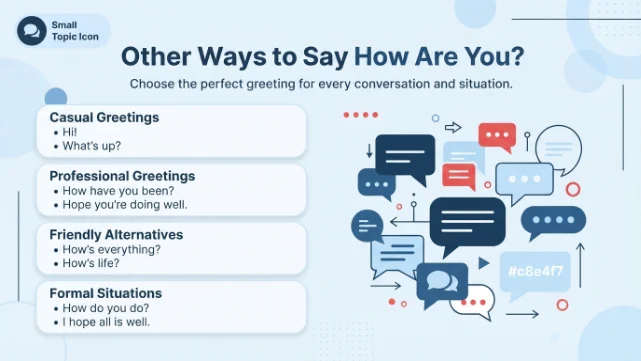
Formal Alternatives to “How Are You?”
- How do you do?
- I hope you are doing well.
- How have you been?
- How is everything going?
Pro Tip: Use formal greetings in emails, interviews, and conversations with people you don’t know well.
Casual Alternatives
- How’s it going?
- What’s up?
- How’s everything?
- How are things?
Pro Tip: Casual greetings work best with friends, classmates, and family members.
Professional Alternatives
- I hope you’re doing well.
- How has your week been?
- I trust you’re doing well.
- How are things on your end?
Pro Tip: Professional greetings sound polite without being overly formal.
Informal Expressions
- What’s new?
- What’s going on?
- How’s life?
- Everything good?
Pro Tip: Informal expressions are ideal for relaxed conversations but should be avoided in formal business communication.
“Speaking naturally is not about using difficult words. It’s about choosing the right words.”
Common Mistakes
1. Using very casual greetings in formal emails
Incorrect:
What’s up, Professor?
Better:
I hope you’re doing well.
2. Repeating “How are you?” multiple times
Instead, vary your greeting.
Example:
How have you been lately?
3. Asking without expecting an answer
If you ask sincerely, be prepared to listen.
Example:
How’s your week been?
4. Using slang with strangers
Incorrect:
Yo, what’s up?
Better:
How are you today?
5. Using formal greetings with close friends
Instead of:
How do you do?
Say:
How’s it going?
What Does “How Are You” Mean?
“How are you?” is a common English greeting used to ask about someone’s health, feelings, or general well being. In many conversations, it functions more as a polite greeting than a request for detailed information.
Example:
“Hi Sarah! How are you today?”
When to Use “How Are You”
Use this greeting when:
- Meeting someone
- Starting a conversation
- Greeting coworkers
- Talking with customers
- Calling friends
- Meeting neighbors
Spoken vs Written
Spoken: Extremely common
Written: Common in emails and messages
Formal vs Informal
Works in both, although more formal alternatives may sound better in professional settings.
“Using different greetings makes your English sound more fluent and confident.”
Is It Professional or Polite to Say “How Are You”?
Polite? ✔️ Yes
Professional? ❌ Not always
While “How are you?” is perfectly polite, many workplaces prefer greetings like:
- I hope you’re doing well.
- I trust you’re doing well.
Business Example
“Good morning, James. I hope you’re doing well before today’s meeting.”
Pros and Cons of Using “How Are You”
Pros
- Simple and natural
- Friendly tone
- Common usage
- Easy to understand
Cons
- Too informal for some workplaces
- Overused
- Limited emotional range
- Not suitable for very formal writing
Other Ways to Say “How Are You”
These other ways to say how are you help you sound more fluent, confident, and natural in different situations.
Choose the greeting that best matches your audience and conversation.
Phrase: How’s it going?
Meaning: A casual greeting.
Explanation: Very common among friends.
Example Sentence: Hey! How’s it going?
Best Use: Friends
Worst Use: Formal meetings
Tone: Friendly, relaxed
Context Variability: Casual, spoken
Phrase: How have you been?
Meaning: Ask after someone you haven’t seen recently.
Explanation: Warm and personal.
Example: How have you been since graduation?
Best Use: Old friends
Worst Use: First meeting
Tone: Friendly, caring
Context Variability: Casual, professional
Phrase: How are things?
Meaning: Ask about someone’s general life.
Explanation: Slightly broader than asking about feelings.
Example: How are things at work?
Best Use: Everyday conversations
Worst Use: Very formal writing
Tone: Friendly, natural
Context Variability: Spoken, professional
Phrase: How’s everything?
Meaning: Ask how life is going.
Explanation: Warm and conversational.
Example: How’s everything these days?
Best Use: Friends
Worst Use: Interviews
Tone: Casual, warm
Context Variability: Spoken
Phrase: How’s your day going?
Meaning: Ask about today’s experience.
Explanation: Great for daytime conversations.
Example: How’s your day going so far?
Best Use: Coworkers
Worst Use: Formal letters
Tone: Friendly, caring
Context Variability: Casual, professional
Phrase: What’s new?
Meaning: Ask about recent events.
Explanation: Casual greeting.
Example: Hi! What’s new?
Best Use: Friends
Worst Use: Clients
Tone: Relaxed, cheerful
Context Variability: Spoken
Phrase: What’s going on?
Meaning: Ask what is happening.
Explanation: Friendly conversation starter.
Example: Hey! What’s going on?
Best Use: Friends
Worst Use: Formal emails
Tone: Casual, energetic
Context Variability: Spoken
Phrase: Everything good?
Meaning: Ask if everything is okay.
Explanation: Short and natural.
Example: Everything good today?
Best Use: Close friends
Worst Use: Interviews
Tone: Friendly, informal
Context Variability: Casual
Phrase: How’s life?
Meaning: Ask generally about someone’s life.
Explanation: Warm and conversational.
Example: How’s life treating you?
Best Use: Friends
Worst Use: Business emails
Tone: Relaxed, caring
Context Variability: Spoken
Phrase: Nice to see you
Meaning: Friendly greeting.
Explanation: Shows happiness to meet someone.
Example: Nice to see you again!
Best Use: Meetings
Worst Use: Phone calls
Tone: Warm, polite
Context Variability: Casual, professional
Good to see you
Meaning: Friendly welcome.
Explanation: Expresses pleasure.
Example: Good to see you today.
Best Use: Meetings
Worst Use: Email
Tone: Warm, positive
Context Variability: Spoken
Hope you’re doing well
Meaning: Polite greeting.
Explanation: Common in emails.
Example: Hope you’re doing well this week.
Best Use: Email
Worst Use: Close friends
Tone: Professional, polite
Context Variability: Professional
I hope all is well
Meaning: Formal greeting.
Explanation: Frequently used in business writing.
Example: I hope all is well with you.
Best Use: Email
Worst Use: Casual chat
Tone: Professional, respectful
Context Variability: Written
I trust you’re well
Meaning: Professional greeting.
Explanation: Formal business English.
Example: I trust you’re well.
Best Use: Business
Worst Use: Friends
Tone: Formal, respectful
Context Variability: Professional
How’s your week been?
Meaning: Ask about recent experiences.
Explanation: Great for coworkers.
Example: How’s your week been so far?
Best Use: Work
Worst Use: First greeting
Tone: Friendly, professional
Context Variability: Professional
How are things on your end?
Meaning: Ask about someone’s situation.
Explanation: Common in remote work.
Example: How are things on your end?
Best Use: Business
Worst Use: Family
Tone: Professional, conversational
Context Variability: Professional
How have things been?
Meaning: Ask about recent life.
Explanation: Slightly more personal.
Example: How have things been lately?
Best Use: Friends
Worst Use: Interviews
Tone: Warm, caring
Context Variability: Casual
What’s happening?
Meaning: Ask what’s going on.
Explanation: Informal greeting.
Example: Hey! What’s happening?
Best Use: Friends
Worst Use: Formal work
Tone: Casual, lively
Context Variability: Spoken
What’s up?
Meaning: Casual greeting.
Explanation: Very common in American English.
Example: What’s up?
Best Use: Friends
Worst Use: Formal business
Tone: Relaxed, informal
Context Variability: Casual
How’s your morning?
Meaning: Ask about someone’s morning.
Explanation: Time specific greeting.
Example: How’s your morning going?
Best Use: Work
Worst Use: Evening
Tone: Friendly
Context Variability: Spoken
How’s your afternoon?
Meaning: Afternoon greeting.
Explanation: Time based.
Example: How’s your afternoon going?
Best Use: Office
Worst Use: Morning
Tone: Friendly
Context Variability: Professional
How’s your evening?
Meaning: Evening greeting.
Explanation: Natural after work.
Example: How’s your evening?
Best Use: Casual
Worst Use: Morning
Tone: Relaxed
Context Variability: Spoken
Is everything okay?
Meaning: Check someone’s wellbeing.
Explanation: Shows concern.
Example: Is everything okay today?
Best Use: Concern
Worst Use: First greeting
Tone: Caring
Context Variability: Personal
Are you doing okay?
Meaning: Ask about wellbeing.
Explanation: Supportive expression.
Example: Are you doing okay?
Best Use: Emotional support
Worst Use: Formal meeting
Tone: Caring, gentle
Context Variability: Personal
How are you feeling?
Meaning: Ask about health.
Explanation: More specific.
Example: How are you feeling today?
Best Use: Illness
Worst Use: Casual hello
Tone: Caring
Context Variability: Personal
How’s work going?
Meaning: Ask about work.
Explanation: Workplace conversation.
Example: How’s work going lately?
Best Use: Coworkers
Worst Use: Children
Tone: Friendly
Context Variability: Professional
How have you been holding up?
Meaning: Ask during difficult times.
Explanation: Shows empathy.
Example: How have you been holding up?
Best Use: Difficult situations
Worst Use: Small talk
Tone: Compassionate
Context Variability: Personal
Is everything going well?
Meaning: Ask about progress.
Explanation: Polite inquiry.
Example: Is everything going well?
Best Use: Work
Worst Use: Casual greeting
Tone: Professional
Context Variability: Professional
How’s your family?
Meaning: Ask about relatives.
Explanation: Personal greeting.
Example: How’s your family doing?
Best Use: Friends
Worst Use: New acquaintances
Tone: Warm
Context Variability: Personal
How are you doing today?
Meaning: Friendly greeting.
Explanation: A slightly warmer version of “How are you?”
Example: Good morning! How are you doing today?
Best Use: Everyday conversations
Worst Use: Very formal letters
Tone: Friendly, polite
Context Variability: Casual, professional
“The best speakers don’t memorize more words. They choose better words for each situation.”
Mini Quiz
1. Which greeting is best for a business email?
A. What’s up?
B. Hope you’re doing well
C. Yo!
Answer: B
2. Which greeting is most casual?
A. I trust you’re well
B. What’s happening?
C. How do you do?
Answer: B
3. Which phrase works best after not seeing someone for months?
A. How have you been?
B. Everything good?
C. Yo!
Answer: A
4. Which greeting is best for a job interview?
A. Good morning. It’s nice to meet you.
B. What’s up?
C. What’s happening?
Answer: A
Comparison Table: Top Alternatives
| Phrase | Tone | Best Use |
|---|---|---|
| How’s it going? | Casual | Friends |
| How have you been? | Warm | Reunions |
| How are things? | Neutral | Everyday |
| How’s everything? | Friendly | Casual chats |
| Hope you’re doing well | Professional | Emails |
| I trust you’re well | Formal | Business |
| How’s your day going? | Friendly | Workplace |
| What’s new? | Casual | Friends |
| Good to see you | Warm | Meetings |
| How are things on your end? | Professional | Remote work |
FAQs
What are the best other ways to say how are you?
Some of the best alternatives include How’s it going?, How have you been?, How are things?, Hope you’re doing well, and How’s your day going?
Which greeting is most professional?
“I hope you’re doing well” and “I trust you’re well” are among the most professional choices.
Is “How are you?” formal?
It is polite but generally considered neutral rather than truly formal.
Can I use “What’s up?” at work?
Only with coworkers you know well. Avoid it in formal business communication.
Why should I learn alternatives to “How are you”?
Learning other ways to say how are you improves fluency, helps you adapt your tone, and makes conversations sound more natural.
Conclusion
Learning other ways to say how are you allows you to communicate more naturally in both personal and professional situations. By choosing greetings that fit the context, you can make stronger first impressions and sound more confident in English.
Practice these alternatives every day, listen to how native speakers use them, and pay attention to tone. Small vocabulary changes can make a big difference in how natural and fluent your English sounds.

Laura Adams is a dedicated content writer and blogger known for crafting clear, informative, and engaging articles. As a contributor to Responary.com, she specializes in creating reader-friendly content that educates, inspires, and keeps audiences informed on a wide range of subjects.