Quick Answer
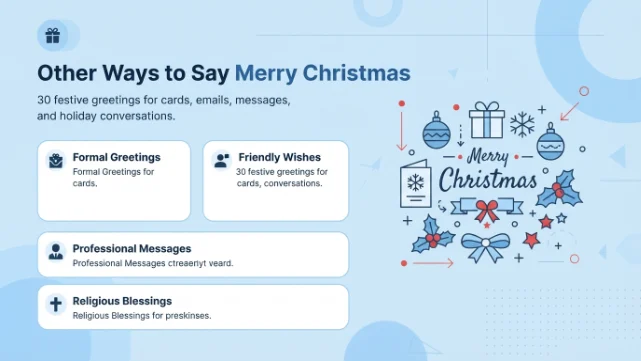
Looking for fresh ways to spread holiday cheer instead of the same old line? There are dozens of warm, festive alternatives to Merry Christmas that fit cards, texts, emails, and conversations. Top five picks: Happy Holidays, Season’s Greetings, Wishing you a joyful Christmas, Warmest wishes this holiday season, and Have a wonderful Christmas.
“Merry Christmas” is the most common holiday greeting in English, used to wish someone happiness and joy during the Christmas season. People say it in shops, offices, family gatherings, greeting cards, and online messages. It works well in almost any setting, but repeating the same phrase can feel flat, especially in cards, speeches, or messages sent to many people.
Learning alternatives to Merry Christmas helps you sound more thoughtful and personal. It also helps you match your tone to your audience, whether you want to express excitement in English for close friends or keep things neutral and inclusive for coworkers and clients.
This guide breaks down formal, casual, professional, and informal options, along with examples, common mistakes, and a quick self-check quiz so you can choose the right words every time.
“The right tone makes your English sound professional and confident.”
Quick Categories
Formal alternatives to “Merry Christmas”
- Season’s Greetings
- Wishing you a peaceful and joyful Christmas
- Warmest wishes for the holiday season
- May your Christmas be filled with peace and joy
Pro Tips Box: Use formal alternatives in business cards, client emails, and official announcements to stay warm without sounding too casual.
Casual alternatives
- Merry Christmas, friend!
- Hope your Christmas is amazing
- Enjoy the holidays!
- Christmas vibes to you and yours
Pro Tips Box: Casual phrases work best with friends and family in texts, social media captions, or handwritten cards.
Professional alternatives
- Happy Holidays
- Wishing you and your team a wonderful holiday season
- Best wishes for a restful holiday season
- Season’s Greetings from all of us
Pro Tips Box: In professional emails, pair the greeting with a short line of gratitude to keep it warm and appropriate for work relationships.
Informal expressions
- Merry Christmas, ya’ll!
- Happy Crimbo (British slang)
- Have a cracking Christmas
- Merry and bright to you
Pro Tips Box: Save slang-heavy expressions like these for close friends who share the same casual style of speaking.
“Small changes in wording can completely shift how warm or professional a greeting feels.”
Common Mistakes
- Using it in non-Christian or mixed workplaces without alternatives.
Example: Sending “Merry Christmas” to an entire office instead of “Happy Holidays.” - Overusing exclamation marks in formal writing.
Example: “Merry Christmas!!!” in a client email. - Repeating the same phrase in every card or message.
Example: Writing “Merry Christmas” on ten cards with no variation. - Mixing formal and informal tone in one message.
Example: “Season’s Greetings, hope y’all have a blast!” - Forgetting the audience’s cultural background.
Example: Assuming every recipient celebrates Christmas.
What Does “Merry Christmas” Mean?
Merry Christmas is a greeting used to wish someone happiness, joy, and good fortune during the Christmas holiday. Grammatically, “merry” is an adjective meaning cheerful, and it modifies the noun “Christmas” to form a fixed holiday greeting.
Example sentence: “Merry Christmas! I hope you enjoy the day with your family.”
When to Use “Merry Christmas”
- Greeting friends, family, and neighbors during December
- Signing off on holiday cards and gift tags
- Ending a phone call or in-person conversation near the holiday
- Spoken: casual, friendly settings like homes and social gatherings
- Written: cards, personal texts, and informal emails
- Formal settings: often replaced with “Season’s Greetings” or “Happy Holidays”
- Informal settings: used freely and warmly among people who celebrate Christmas
Is It Professional or Polite to Say “Merry Christmas”?
Merry Christmas is polite and friendly, but it is not always the safest professional choice. In diverse workplaces, it assumes everyone celebrates Christmas, which can unintentionally exclude colleagues or clients who do not.
Business example: “Wishing our valued clients a wonderful holiday season and a bright New Year” is safer than “Merry Christmas to all our clients.”
Polite? Yes Professional? No, in most mixed or client-facing settings
Pros and Cons of Using “Merry Christmas”
Pros:
- Simple and natural
- Friendly tone
- Common usage
- Easy to understand
Cons:
- Too informal for work
- Overused
- Limited emotional range
- Not suitable for formal writing
“A greeting is more than words. It shows how well you understand your audience.”
Other Ways to Say “Merry Christmas”
These alternatives will help you sound more fluent, confident, and natural in different situations. Use them according to tone, context, and audience to express excitement, admiration, or warmth during the holiday season.
1. Phrase: Happy Holidays
Meaning: A general, inclusive holiday greeting. Explanation: Covers Christmas and other winter holidays without assuming religion. Example Sentence: “Happy Holidays to you and your family this December.” Best Use: workplaces, mixed groups Worst Use: close family cards Tone: neutral, inclusive Context Variability: professional, spoken, written
2. Phrase: Season’s Greetings
Meaning: A traditional, formal holiday wish. Explanation: Common on official cards and business communications. Example Sentence: “Season’s Greetings from our entire team.” Best Use: business cards, newsletters Worst Use: casual texts Tone: formal, polished Context Variability: professional, written
3. Phrase: Wishing you a joyful Christmas
Meaning: A warm hope for a happy Christmas experience. Explanation: Slightly more descriptive and heartfelt than the standard greeting. Example Sentence: “Wishing you a joyful Christmas filled with laughter.” Best Use: personal cards Worst Use: quick texts Tone: warm, sincere Context Variability: written, spoken
4. Phrase: Warmest wishes this holiday season
Meaning: A caring, general holiday greeting. Explanation: Often used to close emails or letters during December. Example Sentence: “Warmest wishes this holiday season from our family to yours.” Best Use: emails, letters Worst Use: quick spoken greetings Tone: gentle, formal Context Variability: professional, written
5. Phrase: Have a wonderful Christmas
Meaning: A simple, friendly wish for a good holiday. Explanation: Easy substitute that keeps the same meaning as the original phrase. Example Sentence: “Have a wonderful Christmas with your loved ones.” Best Use: casual conversations Worst Use: formal documents Tone: friendly, easy Context Variability: spoken, casual
6. Phrase: Merry Christmas and a Happy New Year
Meaning: Combines Christmas and New Year wishes together. Explanation: Popular on cards sent close to the end of December. Example Sentence: “Merry Christmas and a Happy New Year to all of you!” Best Use: cards, closing remarks Worst Use: mid-December casual chats Tone: festive, traditional Context Variability: written, spoken
7. Phrase: Enjoy the festive season
Meaning: A wish for someone to have a good holiday period overall. Explanation: Broader than Christmas alone, useful for varied audiences. Example Sentence: “Enjoy the festive season with your friends and family.” Best Use: mixed audiences Worst Use: religious Christmas cards Tone: light, general Context Variability: professional, casual
8. Phrase: Wishing you peace and joy this Christmas
Meaning: A heartfelt wish for calm and happiness. Explanation: Often used in more reflective or spiritual messages. Example Sentence: “Wishing you peace and joy this Christmas and always.” Best Use: sincere cards Worst Use: quick office chats Tone: reflective, warm Context Variability: written, spoken
9. Phrase: Happy Christmas
Meaning: A common British variation of Merry Christmas. Explanation: Widely used across the UK as an equal alternative. Example Sentence: “Happy Christmas, everyone! See you at dinner.” Best Use: British English contexts Worst Use: strictly American formal writing Tone: cheerful, regional Context Variability: spoken, casual
10. Phrase: Cheers to a beautiful Christmas
Meaning: A celebratory toast-like wish for the holiday. Explanation: Often used in speeches or festive gatherings. Example Sentence: “Cheers to a beautiful Christmas surrounded by loved ones.” Best Use: parties, toasts Worst Use: written business emails Tone: celebratory, upbeat Context Variability: spoken, casual
11. Phrase: Sending you Christmas cheer
Meaning: A wish to share holiday happiness with someone. Explanation: Friendly and often used in cards or social posts. Example Sentence: “Sending you Christmas cheer all the way from home.” Best Use: social media, cards Worst Use: formal reports Tone: friendly, upbeat Context Variability: casual, written
12. Phrase: May your Christmas be merry and bright
Meaning: A traditional, song-inspired holiday wish. Explanation: Poetic phrasing often used in cards and greetings. Example Sentence: “May your Christmas be merry and bright this year.” Best Use: greeting cards Worst Use: business emails Tone: poetic, traditional Context Variability: written, spoken
13. Phrase: Wishing you a magical Christmas
Meaning: A hope for a special, memorable holiday. Explanation: Popular for messages aimed at children or close family. Example Sentence: “Wishing you a magical Christmas full of surprises.” Best Use: family messages Worst Use: corporate newsletters Tone: whimsical, warm Context Variability: casual, written
14. Phrase: Hope your Christmas is filled with love
Meaning: A wish focused on emotional warmth over the holiday. Explanation: Personal and heartfelt, ideal for close relationships. Example Sentence: “Hope your Christmas is filled with love and laughter.” Best Use: personal messages Worst Use: formal client emails Tone: sincere, affectionate Context Variability: spoken, written
15. Phrase: Best wishes for the holiday season
Meaning: A neutral, respectful holiday greeting. Explanation: Common in professional settings to remain inclusive. Example Sentence: “Best wishes for the holiday season from our whole team.” Best Use: business communication Worst Use: close friend texts Tone: neutral, polite Context Variability: professional, written
16. Phrase: Wishing you all the joys of Christmas
Meaning: A wish for full holiday happiness. Explanation: Slightly more expressive version of a standard greeting. Example Sentence: “Wishing you all the joys of Christmas this year.” Best Use: greeting cards Worst Use: quick texts Tone: warm, expressive Context Variability: written, spoken
17. Phrase: Christmas blessings to you
Meaning: A wish rooted in gratitude or faith. Explanation: Common among religious or church communities. Example Sentence: “Christmas blessings to you and your entire family.” Best Use: religious greetings Worst Use: secular workplaces Tone: spiritual, warm Context Variability: written, spoken
18. Phrase: Wishing you a cozy Christmas
Meaning: A hope for a comfortable, relaxed holiday. Explanation: Popular in casual, homey holiday messages. Example Sentence: “Wishing you a cozy Christmas by the fire.” Best Use: casual cards Worst Use: formal business notes Tone: relaxed, comforting Context Variability: casual, written
19. Phrase: Have yourself a merry little Christmas
Meaning: A gentle, song-inspired holiday wish. Explanation: Borrowed from a well-known holiday song title. Example Sentence: “Have yourself a merry little Christmas this year.” Best Use: personal, nostalgic messages Worst Use: professional emails Tone: nostalgic, gentle Context Variability: spoken, casual
20. Phrase: Wishing you warmth and happiness this Christmas
Meaning: A wish combining comfort and joy. Explanation: Balanced phrase that suits many types of relationships. Example Sentence: “Wishing you warmth and happiness this Christmas season.” Best Use: cards, emails Worst Use: quick spoken greetings Tone: warm, balanced Context Variability: professional, written
21. Phrase: Happy holidays to you and yours
Meaning: A friendly wish that includes someone’s family. Explanation: Common closing line in cards and messages. Example Sentence: “Happy holidays to you and yours this December.” Best Use: cards, group messages Worst Use: formal legal documents Tone: friendly, inclusive Context Variability: casual, professional
22. Phrase: Wishing your family a wonderful Christmas
Meaning: A greeting directed at someone’s whole household. Explanation: Personal touch that acknowledges family members too. Example Sentence: “Wishing your family a wonderful Christmas together.” Best Use: personal cards Worst Use: individual coworker messages Tone: warm, personal Context Variability: written, spoken
23. Phrase: All the best this Christmas
Meaning: A short, simple holiday well-wish. Explanation: Easy closing line for texts or short notes. Example Sentence: “All the best this Christmas, see you soon!” Best Use: quick messages Worst Use: formal speeches Tone: casual, brief Context Variability: spoken, casual
24. Phrase: Wishing you a Christmas full of laughter
Meaning: A wish for a fun, lighthearted holiday. Explanation: Ideal for playful, upbeat relationships. Example Sentence: “Wishing you a Christmas full of laughter and good food.” Best Use: friends, family Worst Use: formal business cards Tone: playful, cheerful Context Variability: casual, spoken
25. Phrase: May this Christmas bring you happiness
Meaning: A hopeful wish for holiday joy. Explanation: Slightly formal, works well in written greetings. Example Sentence: “May this Christmas bring you happiness and good health.” Best Use: formal cards Worst Use: casual texts Tone: hopeful, formal Context Variability: written, professional
26. Phrase: Sending festive wishes your way
Meaning: A general holiday greeting sent from a distance. Explanation: Common in emails or messages to remote contacts. Example Sentence: “Sending festive wishes your way from our office to yours.” Best Use: remote teams, clients Worst Use: intimate family notes Tone: neutral, friendly Context Variability: professional, written
27. Phrase: Wishing you a Christmas as bright as your smile
Meaning: A playful, complimentary holiday wish. Explanation: Adds a personal compliment to the greeting. Example Sentence: “Wishing you a Christmas as bright as your smile.” Best Use: close friends Worst Use: professional clients Tone: playful, affectionate Context Variability: casual, spoken
28. Phrase: Have a blessed Christmas
Meaning: A wish rooted in gratitude and faith. Explanation: Common in religious or family-oriented messages. Example Sentence: “Have a blessed Christmas surrounded by family.” Best Use: religious greetings Worst Use: secular corporate emails Tone: spiritual, sincere Context Variability: written, spoken
29. Phrase: Wishing you a season of giving and gratitude
Meaning: A wish focused on holiday values rather than the date itself. Explanation: Popular in corporate or community messages. Example Sentence: “Wishing you a season of giving and gratitude this year.” Best Use: corporate newsletters Worst Use: casual friend texts Tone: reflective, formal Context Variability: professional, written
30. Phrase: Merry Christmas to you and your loved ones
Meaning: A classic wish extended to someone’s close circle. Explanation: Slightly expanded version of the standard greeting. Example Sentence: “Merry Christmas to you and your loved ones this year.” Best Use: cards, closing messages Worst Use: strictly formal business notes Tone: warm, traditional Context Variability: written, spoken
“Great communicators do not just say the right words. They choose the right tone for the moment.”
Mini Quiz / Self-Check
- Which phrase is best for a formal client email?
a) Merry Christmas, ya’ll! b) Season’s Greetings c) Happy Crimbo d) Christmas vibes to you - Which phrase is most inclusive for a diverse workplace?
a) Merry Christmas b) Happy Holidays c) Christmas blessings to you d) Have a cracking Christmas - Which phrase would suit a close friend’s birthday card in December?
a) Wishing you a season of giving and gratitude b) Best wishes for the holiday season c) Wishing you a Christmas as bright as your smile d) Season’s Greetings from our entire team - True or False: “Merry Christmas” is always the safest choice in professional settings.
a) True b) False
Answer key: 1-b, 2-b, 3-c, 4-b
“Confidence in English comes from choosing words that fit the moment, not just the meaning.”
Comparison Table: Top Alternatives
| Phrase | Tone | Best Use |
|---|---|---|
| Happy Holidays | Neutral, inclusive | Workplaces, mixed groups |
| Season’s Greetings | Formal, polished | Business cards, newsletters |
| Wishing you a joyful Christmas | Warm, sincere | Personal cards |
| Warmest wishes this holiday season | Gentle, formal | Emails, letters |
| Have a wonderful Christmas | Friendly, easy | Casual conversations |
| Merry Christmas and a Happy New Year | Festive, traditional | Cards, closing remarks |
| Best wishes for the holiday season | Neutral, polite | Business communication |
| Christmas blessings to you | Spiritual, warm | Religious greetings |
| Sending festive wishes your way | Neutral, friendly | Remote teams, clients |
| Merry Christmas to you and your loved ones | Warm, traditional | Cards, closing messages |
FAQs
Is “Happy Holidays” more polite than “Merry Christmas”?
“Happy Holidays” is often seen as more inclusive since it does not assume the recipient celebrates Christmas specifically.
What is a professional reaction phrase for a Christmas email at work?
“Wishing you and your team a wonderful holiday season” works well as a professional reaction phrase in workplace emails.
Can I use informal expressions like “Happy Crimbo” in writing?
Informal expressions in English like this suit texts or social posts with close friends, not formal or business writing.
What are common alternatives to “Merry Christmas” for greeting cards?
Popular card alternatives include Season’s Greetings, Warmest wishes this holiday season, and Wishing you a joyful Christmas.
Why should I learn other ways to say Merry Christmas?
Learning alternatives to Merry Christmas helps you match tone and context, so your greetings sound natural in both spoken and written English.
Conclusion
Learning other ways to say Merry Christmas gives you more flexibility in how you connect with people during the holiday season. From formal alternatives suited to the workplace to casual, heartfelt options for close friends and family, each phrase carries its own tone and purpose.
Practice using a few new expressions each December, and pay attention to how tone shifts between spoken and written English. Small, consistent practice with these phrases will help you sound more fluent, confident, and professional across every holiday conversation.
Discover More Related Articles:
- Other Ways to Say Thank You in Spanish | Common Phrases & Expressions In 2026
- Other Ways to Say You’re Welcome |After Thank You In 2026

Richard Scott is an experienced author dedicated to creating compelling and well-researched content for online audiences. As a contributor to Responary.com, he enjoys sharing knowledge through clear, engaging, and informative articles that connect with readers worldwide.