Quick Answer
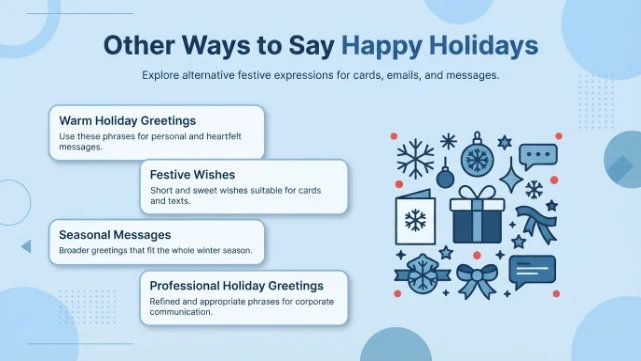
Looking for fresh ways to greet people this season instead of the same old line? English offers many warm, natural alternatives to “Happy Holidays” for cards, emails, speeches, and casual chats. Top picks: Season’s Greetings, Warm Holiday Wishes, Happy Festive Season, Wishing You a Joyful Holiday Season, Enjoy the Holidays.
“Happy Holidays” is one of the most common seasonal greetings in English. People use it to wish others well during the winter holiday season without referring to a specific religious or cultural celebration. It works in cards, emails, store signage, and everyday conversation.
Learning alternatives to Happy Holidays helps you sound more natural, thoughtful, and less repetitive, especially if you send multiple greetings during the season. It also helps you express excitement in English in a way that fits the audience, whether that is a close friend, a client, or a large team.
Below, you will find 30 alternatives organized by tone, along with examples, common mistakes, a comparison table, and a quick self-check quiz.
“The right tone makes your English sound professional and confident.”
Quick Categories
Formal alternatives to “Happy Holidays”
- Season’s Greetings
- Warmest Wishes for the Holiday Season
- Wishing You a Joyful Holiday Season
- Blessed Holidays
Pro Tip: Formal alternatives work best in business emails, official cards, and public announcements where a neutral, respectful tone matters.
Casual alternatives
- Enjoy the Holidays
- Holiday Cheers
- Cheers to the Holiday Season
- Have a Wonderful Holiday Season
Pro Tip: Save casual phrases for friends, family group chats, or social media captions where a relaxed tone fits naturally.
Professional alternatives
- Best Wishes for the Season
- Wishing You a Bright and Beautiful Holiday Season
- Warm Holiday Wishes
- Season’s Best Wishes
Pro Tip: Professional alternatives are ideal for client emails, newsletters, and workplace cards since they stay warm without becoming too personal.
Informal expressions
- Happy Holidays to You and Yours
- Take Care and Enjoy the Holidays
- Cheers to Good Times This Season
- Enjoy This Special Time of Year
Pro Tip: Use informal expressions with people you already know well; they can sound too casual for first-time or formal contacts.
“Small changes in wording can completely shift how warm or professional your message feels.”
Common Mistakes
- Overusing the exact phrase in every message.
Example: Writing “Happy Holidays” in every single email of the season instead of varying it. - Using informal phrases in business communication.
Example: Texting a client “Cheers to good times this season” instead of a professional line. - Mixing religious-specific greetings with a general audience. Example: Sending “Happy Hanukkah” to a group whose beliefs and celebrations you do not know.
- Forgetting to match tone with the relationship.
Example: Using “Take care and enjoy the holidays” with a senior executive you barely know. - Adding excessive punctuation or exclamation marks in formal writing.
Example: Writing “Season’s Greetings!!!” in an official company card.
What Does “Happy Holidays” Mean?
“Happy Holidays” is a general seasonal greeting used to wish someone joy and well-being during the winter holiday period, without naming a specific holiday such as Christmas or Hanukkah.
Grammar note: It functions as a short exclamatory phrase or greeting, often used on its own or at the start or end of a message.
Example sentence: “Happy Holidays! I hope you get some rest before the new year starts.”
When to Use “Happy Holidays”
- Greeting cards sent to a mixed audience
- Store signage, ads, and public messages
- Emails to coworkers or clients in December
- Casual conversations with neighbors or acquaintances
Spoken vs Written: Common in both; frequently used as a closing line in written messages and as a quick greeting in spoken exchanges.
Formal vs Informal: Neutral by default, but tone shifts depending on the words placed around it.
Is It Professional or Polite to Say “Happy Holidays”?
“Happy Holidays” is polite and widely accepted in most social and public settings because it does not assume a specific religion or celebration.
Business example: “On behalf of our entire team, Happy Holidays and thank you for your continued partnership this year.”
Polite? Yes Professional? Yes, in most workplace and client-facing contexts
Pros and Cons of Using “Happy Holidays”
Pros
- Simple and natural
- Inclusive of different beliefs and celebrations
- Common and widely understood
- Easy to use in speech and writing
Cons
- Can feel repetitive if overused
- Sounds generic without added warmth
- Limited emotional range on its own
- May feel too neutral for close relationships
Other Ways to Say “Happy Holidays”
These alternatives will help you sound more fluent, confident, and natural in different situations. Use them according to tone, context, and audience to express excitement, admiration, or approval this season.
1. Phrase: Season’s Greetings
Meaning: A formal, general way to wish someone well during the holiday season. Explanation: Common on cards and official communications. Example Sentence: “Season’s Greetings from our entire team to yours.” Best Use: Official cards Worst Use: Close friends Tone: Formal, neutral, respectful Context Variability: professional, written
2. Phrase: Warmest Wishes for the Holiday Season
Meaning: A heartfelt greeting expressing goodwill for the season. Explanation: Adds warmth while staying appropriate for formal use. Example Sentence: “Warmest wishes for the holiday season to you and your family.” Best Use: Client emails Worst Use: Casual texts Tone: Warm, formal, sincere Context Variability: professional, written
3. Phrase: Wishing You a Joyful Holiday Season
Meaning: A wish for happiness throughout the holidays. Explanation: Slightly more expressive than a standard greeting. Example Sentence: “Wishing you a joyful holiday season filled with good company.” Best Use: Cards, emails Worst Use: Quick chats Tone: Warm, formal, kind Context Variability: professional, written
4. Phrase: Merry Christmas and a Happy New Year
Meaning: A combined greeting for Christmas and the upcoming year. Explanation: Best when the audience specifically celebrates Christmas. Example Sentence: “Merry Christmas and a Happy New Year to you and your loved ones.” Best Use: Christmas cards Worst Use: Mixed audiences Tone: Festive, specific, warm Context Variability: casual, spoken
5. Phrase: Happy Festive Season
Meaning: A general greeting covering the wider festive period. Explanation: Popular in regions with diverse celebrations. Example Sentence: “Happy festive season to everyone joining us this year.” Best Use: Public messages Worst Use: Very formal reports Tone: Neutral, friendly, inclusive Context Variability: professional, spoken
6. Phrase: Enjoy the Holidays
Meaning: A simple, relaxed wish to have a good time off. Explanation: Short and easy to use in speech. Example Sentence: “Enjoy the holidays, see you back in January.” Best Use: Coworkers, friends Worst Use: Formal cards Tone: Casual, friendly, light Context Variability: casual, spoken
7. Phrase: Cheers to the Holiday Season
Meaning: A cheerful toast-like way to greet someone for the season. Explanation: Common in informal spoken settings and social posts. Example Sentence: “Cheers to the holiday season, let’s make it a good one.” Best Use: Social media Worst Use: Business emails Tone: Casual, upbeat, playful Context Variability: casual, spoken
8. Phrase: Wishing You Peace and Joy This Season
Meaning: A gentle wish for calm and happiness. Explanation: Suitable for people going through a difficult year. Example Sentence: “Wishing you peace and joy this season, however you choose to spend it.” Best Use: Personal cards Worst Use: Quick texts Tone: Gentle, warm, thoughtful Context Variability: professional, written
9. Phrase: Happy Winter Holidays
Meaning: A neutral greeting referring to the winter break period. Explanation: Useful when avoiding specific holiday names. Example Sentence: “Happy winter holidays, enjoy the time away from work.” Best Use: Mixed groups Worst Use: Summer contexts Tone: Neutral, friendly, simple Context Variability: professional, spoken
10. Phrase: Best Wishes for the Season
Meaning: A polite, general wish tied to the current season. Explanation: Common closing line in professional emails. Example Sentence: “Best wishes for the season and thank you for a great year.” Best Use: Client emails Worst Use: Casual chats Tone: Professional, polite, warm Context Variability: professional, written
11. Phrase: Sending Holiday Cheer Your Way
Meaning: A friendly way to say you are thinking of someone this season. Explanation: Personal and warm, often used in casual writing. Example Sentence: “Sending holiday cheer your way from all of us here.” Best Use: Personal notes Worst Use: Legal documents Tone: Friendly, warm, informal Context Variability: casual, written
12. Phrase: Have a Wonderful Holiday Season
Meaning: A simple wish for an enjoyable holiday period. Explanation: Works well in both spoken and written farewells. Example Sentence: “Have a wonderful holiday season, we’ll catch up in the new year.” Best Use: Coworkers, clients Worst Use: Overly formal letters Tone: Friendly, warm, easy Context Variability: casual, spoken
13. Phrase: Wishing You a Bright and Beautiful Holiday Season
Meaning: A descriptive, uplifting holiday wish. Explanation: Adds a more vivid, positive tone than a standard greeting. Example Sentence: “Wishing you a bright and beautiful holiday season ahead.” Best Use: Newsletters Worst Use: Short texts Tone: Warm, professional, vivid Context Variability: professional, written
14. Phrase: Happy Holidays to You and Yours
Meaning: A greeting extended to someone and their family. Explanation: Personal without being overly formal. Example Sentence: “Happy holidays to you and yours, take care.” Best Use: Acquaintances, coworkers Worst Use: Strangers, first contact Tone: Friendly, personal, informal Context Variability: casual, spoken
15. Phrase: May Your Holidays Be Merry and Bright
Meaning: A traditional, cheerful wish for a happy season. Explanation: Slightly poetic; common on printed cards. Example Sentence: “May your holidays be merry and bright this year.” Best Use: Greeting cards Worst Use: Business memos Tone: Festive, warm, traditional Context Variability: casual, written
16. Phrase: Warm Holiday Wishes
Meaning: A short, professional way to express seasonal goodwill. Explanation: Frequently used as an email sign-off. Example Sentence: “Warm holiday wishes from our entire department.” Best Use: Email sign-offs Worst Use: Spoken greetings Tone: Professional, warm, concise Context Variability: professional, written
17. Phrase: Wishing You Joy This Holiday Season
Meaning: A direct wish for happiness during the holidays. Explanation: Simple, sincere, and adaptable to most audiences. Example Sentence: “Wishing you joy this holiday season and a fresh start in January.” Best Use: Cards, emails Worst Use: Sarcastic contexts Tone: Sincere, warm, neutral Context Variability: professional, written
18. Phrase: Happy Hanukkah
Meaning: A specific greeting for those who celebrate Hanukkah. Explanation: Only appropriate when you know the recipient celebrates it. Example Sentence: “Happy Hanukkah to you and your family this year.” Best Use: Known celebrants Worst Use: Unknown audiences Tone: Specific, warm, respectful Context Variability: casual, spoken
19. Phrase: Blessed Holidays
Meaning: A wish that highlights gratitude and blessing during the season. Explanation: Often used in communities with a religious tone. Example Sentence: “Blessed holidays to you and everyone you hold dear.” Best Use: Faith-based groups Worst Use: Strictly secular settings Tone: Warm, formal, reflective Context Variability: professional, written
20. Phrase: Wishing You a Season Filled with Joy
Meaning: A wish for a happy, fulfilling holiday period. Explanation: Slightly longer, adding emotional warmth. Example Sentence: “Wishing you a season filled with joy and good memories.” Best Use: Personal letters Worst Use: Quick greetings Tone: Warm, sincere, expressive Context Variability: professional, written
21. Phrase: Enjoy This Special Time of Year
Meaning: An informal wish to make the most of the season. Explanation: Works well in relaxed, everyday conversation. Example Sentence: “Enjoy this special time of year with your loved ones.” Best Use: Friends, neighbors Worst Use: Formal reports Tone: Friendly, informal, easy Context Variability: casual, spoken
22. Phrase: Happy Yuletide
Meaning: A traditional term referring to the Christmas and winter season. Explanation: Slightly old-fashioned but charming in cards or creative writing. Example Sentence: “Happy Yuletide, may your days be cozy and bright.” Best Use: Creative cards Worst Use: Business emails Tone: Traditional, festive, playful Context Variability: casual, written
23. Phrase: Wishing You Warmth and Happiness This Season
Meaning: A comforting wish focused on emotional wellbeing. Explanation: Suitable for messages meant to feel personal and caring. Example Sentence: “Wishing you warmth and happiness this season and always.” Best Use: Close friends Worst Use: Formal announcements Tone: Gentle, warm, personal Context Variability: casual, written
24. Phrase: Holiday Cheers
Meaning: A short, energetic way to greet someone for the holidays. Explanation: Common in social captions and quick greetings. Example Sentence: “Holiday cheers, everyone! Enjoy the break.” Best Use: Social posts Worst Use: Formal letters Tone: Casual, upbeat, brief Context Variability: casual, spoken
25. Phrase: Wishing You a Cozy Holiday Season
Meaning: A relaxed wish emphasizing comfort during the holidays. Explanation: Popular in lifestyle and personal messaging. Example Sentence: “Wishing you a cozy holiday season by the fire.” Best Use: Personal notes Worst Use: Corporate memos Tone: Warm, informal, relaxed Context Variability: casual, written
26. Phrase: Season’s Best Wishes
Meaning: A polished variation of a general seasonal greeting. Explanation: Frequently used in corporate holiday materials. Example Sentence: “Season’s best wishes from our leadership team.” Best Use: Corporate cards Worst Use: Informal texts Tone: Professional, formal, polished Context Variability: professional, written
27. Phrase: Happy Holiday Season to You
Meaning: A direct, friendly greeting for the holiday period. Explanation: Slightly more personal than the standard phrase. Example Sentence: “Happy holiday season to you, thank you for a great year.” Best Use: Colleagues, clients Worst Use: Very formal writing Tone: Friendly, warm, professional Context Variability: professional, spoken
28. Phrase: Wishing Your Family a Joyful Season
Meaning: A greeting extended specifically to someone’s family. Explanation: Adds a personal, considerate touch. Example Sentence: “Wishing your family a joyful season and a restful break.” Best Use: Personal relationships Worst Use: Large public audiences Tone: Personal, warm, thoughtful Context Variability: casual, written
29. Phrase: Cheers to Good Times This Season
Meaning: An informal wish for fun and enjoyment. Explanation: Works best among friends or in relaxed social settings. Example Sentence: “Cheers to good times this season, let’s catch up soon.” Best Use: Friends, gatherings Worst Use: Client communication Tone: Casual, playful, friendly Context Variability: casual, spoken
30. Phrase: Take Care and Enjoy the Holidays
Meaning: A caring farewell wish for the holiday break. Explanation: Commonly used when saying goodbye before a break. Example Sentence: “Take care and enjoy the holidays, see you soon.” Best Use: Coworkers, acquaintances Worst Use: Formal written cards Tone: Friendly, caring, informal Context Variability: casual, spoken
“Choosing the right holiday phrase shows attention to detail and cultural awareness.”
“Fluency is not about knowing more words, it is about knowing which word fits the moment.”
Mini Quiz
- Which phrase is most appropriate for a formal corporate holiday card?
a) Cheers to good times this season b) Season’s Greetings c) Holiday cheers - Which phrase should you avoid using with someone whose beliefs you do not know?
a) Happy Hanukkah b) Happy Holidays c) Season’s Best Wishes - Which phrase fits best as a casual sign-off to a close friend?
a) Wishing you a season filled with joy b) Take care and enjoy the holidays c) Warmest wishes for the holiday season - True or False: “Happy Holidays” assumes the recipient celebrates Christmas.
a) True b) False
“Answers: 1-b, 2-a, 3-b, 4-b”
Comparison Table: Top Alternatives
| Phrase | Tone | Best Use |
|---|---|---|
| Season’s Greetings | Formal | Official cards |
| Warmest Wishes for the Holiday Season | Warm, formal | Client emails |
| Wishing You a Joyful Holiday Season | Warm, formal | Cards, emails |
| Happy Festive Season | Neutral, friendly | Public messages |
| Enjoy the Holidays | Casual | Coworkers, friends |
| Best Wishes for the Season | Professional | Client emails |
| Have a Wonderful Holiday Season | Friendly, warm | Coworkers, clients |
| Warm Holiday Wishes | Professional, concise | Email sign-offs |
| Season’s Best Wishes | Formal, polished | Corporate cards |
| Take Care and Enjoy the Holidays | Casual, caring | Coworkers, acquaintances |
FAQs
1. What is the most professional way to say Happy Holidays?
“Season’s Greetings” or “Warm Holiday Wishes” are considered the most professional and neutral choices for business communication.
2. Is Happy Holidays more polite than Merry Christmas?
It is more inclusive since it does not assume a specific religion, making it a safer choice for mixed audiences.
3. Can I use Happy Holidays in a work email?
Yes, it is widely accepted in workplace emails and is considered both polite and professional.
4. What are some casual alternatives to Happy Holidays?
Try “Enjoy the Holidays,” “Holiday Cheers,” or “Cheers to Good Times This Season” for a relaxed tone.
5. How can I sound more fluent when greeting someone for the holidays?
Vary your phrasing based on the audience, use professional reaction phrases in formal settings, and keep casual expressions for friends and family.
Conclusion
Learning multiple alternatives to “Happy Holidays” helps you sound more fluent, thoughtful, and adaptable in different situations. Instead of repeating the same phrase, you can match your wording to the audience, whether that is a client, a coworker, or a close friend.
Practice using a few new phrases each season, pay attention to tone, and notice how native speakers vary their greetings in emails, cards, and conversation. Small adjustments in wording go a long way toward sounding confident and natural in English.
If you found these alternatives useful, share this guide with a friend or colleague preparing their own holiday messages this year.
Discover More Related Articles:

Richard Scott is an experienced author dedicated to creating compelling and well-researched content for online audiences. As a contributor to Responary.com, he enjoys sharing knowledge through clear, engaging, and informative articles that connect with readers worldwide.