Quick Answer
Looking for other ways to say Happy New Year? Instead of repeating the same greeting, try warmer and more varied alternatives that fit your tone and audience. Top picks: Wishing you a wonderful new year, Cheers to a fresh start, Best wishes for the new year, New year, new beginnings, Sending new year cheer.
“Happy New Year” is the most common greeting used to celebrate the start of a calendar year. People say it to family, friends, coworkers, and clients to express hope, warmth, and good wishes for the months ahead.
Learning alternatives to Happy New Year helps you avoid sounding repetitive, especially when writing cards, emails, or social media posts. It also allows you to express excitement in English in a way that feels personal rather than automatic.
Whether you are writing a formal business email or a casual text to a friend, having a range of greetings ready makes your English sound more natural, fluent, and confident.
“The right tone makes your English sound professional and confident.”
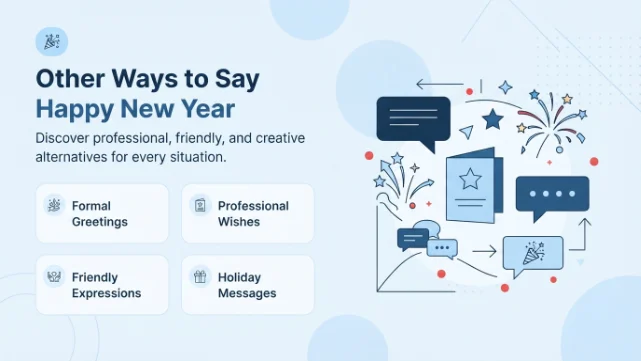
Quick Categories
Formal Alternatives to “Happy New Year”
- Wishing you a prosperous new year
- Best wishes for the year ahead
- May the new year bring you continued success
- Warm wishes for a successful new year
Pro Tip: Use formal alternatives in business emails, official cards, and client communication to sound polished and respectful.
Casual Alternatives
- Cheers to a fresh start
- New year, new beginnings
- Here’s to another great year
- Happy 2027, friend
Pro Tip: Casual alternatives work best with friends and family, especially in texts, social media captions, or spoken conversation.
Professional Alternatives
- Wishing you continued success in the new year
- May this year bring growth and achievement
- Best wishes for a productive new year
- Looking forward to another great year of collaboration
Pro Tip: Pair professional greetings with a specific wish, such as growth, success, or collaboration, to sound genuine rather than generic.
Informal Expressions
- Happy New Year, my friend
- Cheers to 2027
- Ringing in the new year with joy
- New year vibes
Pro Tip: Informal expressions are great for social media, group chats, and casual celebrations, but avoid them in professional writing.
“Small changes in wording can completely change how warm or formal your message feels.”
Common Mistakes
- Using overly casual phrases in business emails
Example: “Yo, happy new year boss!” in a client email sounds unprofessional. - Repeating the same greeting card after card
Example: Writing “Happy New Year” ten times on ten different cards feels impersonal. - Mixing formal and informal tone in one message
Example: “Wishing you continued success, dude” mismatches tone. - Forgetting the audience’s cultural context
Example: Using slang-heavy greetings with someone from a different cultural background may confuse them. - Overusing exclamation marks to sound excited
Example: “Happy New Year!!!!!” can look unprofessional in written communication.
What Does “Happy New Year” Mean?
“Happy New Year” is a greeting used to wish someone joy, health, and success as a new calendar year begins. Grammatically, it functions as an exclamatory phrase, often used without a full sentence structure.
Example Sentence: “Happy New Year! I hope this year brings you everything you’re working toward.”
When to Use “Happy New Year”
- At the stroke of midnight on December 31st or January 1st
- In greeting cards, emails, and social media posts
- During work events, family gatherings, or public celebrations
Spoken: Common in toasts, phone calls, and face-to-face greetings. Written: Common in cards, emails, texts, and social captions.
Formal: Suitable in professional emails when paired with a warm, respectful tone. Informal: Common among friends and family in everyday conversation.
Is It Professional or Polite to Say “Happy New Year”?
“Happy New Year” is always polite, but its professionalism depends on context and delivery. A short, warm business message works well, while a casual or joke-filled version does not.
Business Example: “Happy New Year! Wishing you and your team a successful year ahead.”
Polite? ✔️ Yes Professional? ❌ No (in most cases, unless paired with additional context)
Pros and Cons of Using “Happy New Year”
Pros:
- Simple and natural
- Friendly tone
- Common usage
- Easy to understand
Cons:
- Too informal for some formal writing
- Overused
- Limited emotional range
- Not suitable for highly formal documents
“Variety in language is what separates fluent speakers from beginners.”
Other Ways to Say “Happy New Year”
These alternatives will help you sound more fluent, confident, and natural in different situations. Use them according to tone, context, and audience to express excitement, admiration, or approval.
1. Phrase: Wishing you a wonderful new year
Meaning: A warm wish for a good year ahead. Explanation: Common in cards and messages to loved ones. Example Sentence: “Wishing you a wonderful new year filled with joy and success.” Best Use: Cards, messages Worst Use: Formal contracts Tone: Warm, sincere, friendly Context Variability: casual, spoken
2. Phrase: Cheers to a fresh start
Meaning: Celebrating new beginnings. Explanation: Often used at parties or toasts. Example Sentence: “Cheers to a fresh start and new opportunities this year.” Best Use: Parties, toasts Worst Use: Formal emails Tone: Upbeat, celebratory Context Variability: casual, spoken
3. Phrase: May this year bring you joy
Meaning: A hope for happiness in the coming year. Explanation: Common in written greetings. Example Sentence: “May this year bring you joy, health, and success.” Best Use: Cards, emails Worst Use: Casual texting Tone: Gentle, hopeful Context Variability: formal, written
4. Phrase: Happy New Year to you and yours
Meaning: A greeting extended to someone’s family too. Explanation: Common in personal and community messages. Example Sentence: “Happy New Year to you and yours from our whole team.” Best Use: Family, community Worst Use: Strangers, clients Tone: Warm, inclusive Context Variability: casual, spoken
5. Phrase: Best wishes for the new year
Meaning: A general expression of goodwill. Explanation: Neutral and safe for most audiences. Example Sentence: “Best wishes for the new year from our entire office.” Best Use: Business, cards Worst Use: Very casual chats Tone: Polite, neutral Context Variability: professional, written
6. Phrase: Here’s to a bright new year
Meaning: Looking forward to a hopeful year. Explanation: Common in toasts and speeches. Example Sentence: “Here’s to a bright new year full of possibilities.” Best Use: Toasts, speeches Worst Use: Formal documents Tone: Hopeful, energetic Context Variability: casual, spoken
7. Phrase: Wishing you prosperity in the new year
Meaning: A hope for success and wealth. Explanation: Common in business greetings. Example Sentence: “Wishing you prosperity in the new year and beyond.” Best Use: Business, formal cards Worst Use: Casual texts Tone: Formal, respectful Context Variability: professional, written
8. Phrase: May the new year bring happiness
Meaning: A wish for joy in the year ahead. Explanation: Common in personal messages. Example Sentence: “May the new year bring happiness to your whole family.” Best Use: Personal cards Worst Use: Business emails Tone: Sincere, warm Context Variability: casual, written
9. Phrase: Welcome to a brand new year
Meaning: Marking the start of a new year with enthusiasm. Explanation: Common in social posts and speeches. Example Sentence: “Welcome to a brand new year full of exciting opportunities.” Best Use: Social media Worst Use: Legal writing Tone: Energetic, welcoming Context Variability: casual, spoken
10. Phrase: Ringing in the new year with joy
Meaning: Celebrating the new year with happiness. Explanation: Common in party or event contexts. Example Sentence: “We’re ringing in the new year with joy and gratitude.” Best Use: Parties, events Worst Use: Business reports Tone: Joyful, celebratory Context Variability: casual, spoken
11. Phrase: Sending new year cheer
Meaning: Offering positive wishes for the new year. Explanation: Common in short messages or cards. Example Sentence: “Sending new year cheer to you and your family.” Best Use: Texts, cards Worst Use: Formal contracts Tone: Friendly, casual Context Variability: casual, written
12. Phrase: Happy New Year to a wonderful friend
Meaning: A personalized greeting for a close friend. Explanation: Adds warmth by naming the relationship. Example Sentence: “Happy New Year to a wonderful friend like you.” Best Use: Close friends Worst Use: Professional emails Tone: Personal, affectionate Context Variability: casual, spoken
13. Phrase: May all your dreams come true this year
Meaning: A hope that goals and wishes are fulfilled. Explanation: Common in heartfelt, personal messages. Example Sentence: “May all your dreams come true this year and beyond.” Best Use: Personal cards Worst Use: Business communication Tone: Heartfelt, sincere Context Variability: casual, written
14. Phrase: New year, new beginnings
Meaning: Emphasizing fresh starts and change. Explanation: Popular in motivational and social posts. Example Sentence: “New year, new beginnings, and new goals to chase.” Best Use: Social media, captions Worst Use: Formal letters Tone: Motivational, upbeat Context Variability: casual, written
15. Phrase: Wishing you a prosperous new year
Meaning: A hope for financial and general success. Explanation: Common in business greetings and cards. Example Sentence: “Wishing you a prosperous new year filled with growth.” Best Use: Business, formal Worst Use: Casual chats Tone: Formal, respectful Context Variability: professional, written
16. Phrase: Have a fantastic new year
Meaning: A simple, enthusiastic wish for a good year. Explanation: Common in everyday spoken greetings. Example Sentence: “Have a fantastic new year, everyone!” Best Use: Casual conversation Worst Use: Legal documents Tone: Cheerful, casual Context Variability: casual, spoken
17. Phrase: Cheers to new beginnings
Meaning: Celebrating the start of something new. Explanation: Common in toasts and social captions. Example Sentence: “Cheers to new beginnings and endless possibilities.” Best Use: Toasts, social media Worst Use: Business reports Tone: Celebratory, hopeful Context Variability: casual, spoken
18. Phrase: May this year be your best yet
Meaning: A hope that the coming year exceeds previous ones. Explanation: Common in personal and motivational messages. Example Sentence: “May this year be your best yet, both personally and professionally.” Best Use: Personal, professional cards Worst Use: Very casual texts Tone: Encouraging, warm Context Variability: professional, written
19. Phrase: Wishing you joy and success this year
Meaning: A dual wish for happiness and achievement. Explanation: Common in professional new year messages. Example Sentence: “Wishing you joy and success this year and always.” Best Use: Professional emails Worst Use: Very informal chats Tone: Balanced, respectful Context Variability: professional, written
20. Phrase: Here’s to new adventures
Meaning: Looking forward to new experiences. Explanation: Common among friends and travelers. Example Sentence: “Here’s to new adventures and unforgettable memories this year.” Best Use: Friends, social posts Worst Use: Formal writing Tone: Adventurous, casual Context Variability: casual, spoken
21. Phrase: New year blessings to you
Meaning: A spiritual or heartfelt wish for the new year. Explanation: Common in religious or family contexts. Example Sentence: “New year blessings to you and your entire family.” Best Use: Family, community Worst Use: Corporate emails Tone: Warm, respectful Context Variability: casual, written
22. Phrase: Wishing you good health and happiness
Meaning: A wish focused on wellbeing. Explanation: Common in personal cards and messages. Example Sentence: “Wishing you good health and happiness this new year.” Best Use: Personal cards Worst Use: Business memos Tone: Caring, sincere Context Variability: casual, written
23. Phrase: May the new year be filled with blessings
Meaning: A hope for good fortune throughout the year. Explanation: Common in heartfelt or religious greetings. Example Sentence: “May the new year be filled with blessings for you and your loved ones.” Best Use: Family, personal Worst Use: Business reports Tone: Warm, reflective Context Variability: casual, written
24. Phrase: Happy New Year, my friend
Meaning: A friendly, personal greeting. Explanation: Common in casual conversation and texts. Example Sentence: “Happy New Year, my friend. Let’s make this year count.” Best Use: Friends Worst Use: Professional settings Tone: Casual, personal Context Variability: casual, spoken
25. Phrase: Best of luck in the new year
Meaning: Wishing someone good fortune ahead. Explanation: Common when someone has upcoming goals or plans. Example Sentence: “Best of luck in the new year with your new project.” Best Use: Colleagues, friends Worst Use: Very formal writing Tone: Encouraging, friendly Context Variability: professional, spoken
26. Phrase: Wishing you a joyful new year
Meaning: A simple wish for happiness. Explanation: Common in general greetings. Example Sentence: “Wishing you a joyful new year surrounded by loved ones.” Best Use: Cards, texts Worst Use: Legal writing Tone: Warm, cheerful Context Variability: casual, written
27. Phrase: May your new year sparkle with joy
Meaning: A poetic wish for happiness and excitement. Explanation: Common in creative or festive greetings. Example Sentence: “May your new year sparkle with joy and endless smiles.” Best Use: Cards, social media Worst Use: Business writing Tone: Playful, expressive Context Variability: casual, written
28. Phrase: Here’s to another great year
Meaning: Optimism for the year ahead. Explanation: Common in toasts and casual speeches. Example Sentence: “Here’s to another great year with this amazing team.” Best Use: Toasts, team events Worst Use: Legal documents Tone: Positive, casual Context Variability: casual, spoken
29. Phrase: New year wishes to you and your family
Meaning: A greeting extended to the whole family. Explanation: Common in cards and community messages. Example Sentence: “New year wishes to you and your family from all of us.” Best Use: Family, community Worst Use: One-on-one business emails Tone: Warm, inclusive Context Variability: casual, written
30. Phrase: Cheers to 2027
Meaning: A short, modern greeting naming the year. Explanation: Common in social captions and casual toasts. Example Sentence: “Cheers to 2027 and everything it has in store!” Best Use: Social media, toasts Worst Use: Formal correspondence Tone: Trendy, casual Context Variability: casual, spoken
“Every alternative you learn adds another layer of fluency to your English.”
Mini Quiz
1. Which phrase is most appropriate for a business email?
A) Cheers to 2027 B) Wishing you continued success in the new year C) New year vibes D) Happy New Year, dude
Answer: B
2. Which phrase is best for a toast among friends?
A) Wishing you prosperity in the new year B) Best wishes for the new year C) Here’s to a bright new year D) May the new year be filled with blessings
Answer: C
3. Which sentence uses a mismatched tone?
A) “Wishing you continued success, dude.” B) “Happy New Year, my friend.” C) “Cheers to 2027!” D) “Best of luck in the new year.”
Answer: A
4. Which phrase is ideal for a family greeting card?
A) New year wishes to you and your family B) Looking forward to another great year of collaboration C) Wishing you a productive new year D) New year vibes
Answer: A
Comparison Table: Top Alternatives
| Phrase | Tone | Best Use |
|---|---|---|
| Wishing you a wonderful new year | Warm, sincere | Cards, messages |
| Cheers to a fresh start | Upbeat, celebratory | Parties, toasts |
| Best wishes for the new year | Polite, neutral | Business, cards |
| Wishing you prosperity in the new year | Formal, respectful | Business greetings |
| New year, new beginnings | Motivational, upbeat | Social media |
| Have a fantastic new year | Cheerful, casual | Casual conversation |
| May this year be your best yet | Encouraging, warm | Personal, professional |
| Wishing you joy and success this year | Balanced, respectful | Professional emails |
| Here’s to new adventures | Adventurous, casual | Friends, social posts |
| Cheers to 2027 | Trendy, casual | Social media, toasts |
FAQs
1. What is a formal way to say Happy New Year?
“Wishing you a prosperous new year” or “Best wishes for the year ahead” are both formal alternatives suitable for business contexts.
2. What is a casual way to say Happy New Year?
“Cheers to a fresh start” or “Happy New Year, my friend” work well in relaxed, everyday conversation.
3. Is it okay to say Happy New Year in a work email?
Yes, but pair it with a professional alternative like “Wishing you continued success in the new year” to keep the tone appropriate.
4. How can I express excitement in English for the new year?
Use energetic phrases like “Here’s to a bright new year” or “Ringing in the new year with joy” to sound enthusiastic and natural.
5. Why should I learn different ways to say Happy New Year?
Learning alternatives to Happy New Year helps you avoid repetition, match your tone to your audience, and sound more fluent overall.
Conclusion
Learning different ways to say Happy New Year helps you communicate with more warmth, variety, and confidence. Whether you are writing a professional message or greeting a close friend, the right phrase makes your English feel natural and thoughtful.
Practice using these alternatives in your daily conversations, emails, and social posts. Paying attention to tone, whether formal, casual, or professional, will help you sound like a more fluent and confident English speaker.
Discover More Related Articles:
- Other Ways to Say Merry Christmas | For Every Occasion In 2026
- Other Ways to Say I’m Proud of You | For Any Occasion In 2026

Jennifer Wilson is an experienced writer and content creator with over 20 years of expertise in digital publishing, lifestyle, and informative content. Holding a degree in English Literature, she contributes to Responary.Com, where she shares engaging, well-researched articles that help readers stay informed and inspired.