Quick Answer
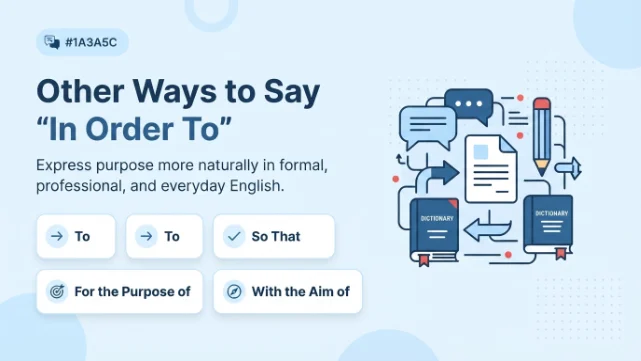
Looking for other ways to say “in order to”? The fastest, most natural alternatives are: so that, to, with the aim of, for the purpose of, and so as to. Each one shifts the tone slightly, from casual speech to formal business writing, so picking the right one instantly makes your English sound more fluent and precise.
“In order to” is a purpose connector. It links an action to its goal, showing why something is done. Learners use it constantly in essays, presentations, and emails, but repeating the same phrase again and again makes writing feel flat and repetitive.
Knowing alternatives to “in order to” helps you match your tone to your audience, whether you’re writing a formal report or chatting with a colleague. It also helps you express excitement in English more naturally when a purpose statement is tied to a goal you’re genuinely enthusiastic about, instead of sounding robotic or overly academic.
This guide breaks down alternatives, grouped by formality, with real examples, common mistakes, and a quick self-check quiz so you can start using them with confidence today.
“The right tone makes your English sound professional and confident.”
Quick Categories
Formal alternatives to “in order to”
- With the aim of | used in reports, proposals, and academic writing
- For the purpose of | common in legal and business documents
- With a view to | British formal English, often in strategy documents
- With the intention of | formal but still conversational enough for meetings
Pro Tip: Save these for written communication like emails, reports, and presentations. They signal precision and professionalism.
Casual alternatives
- So that | the most natural spoken substitute
- To | the simplest, shortest option
- So | quick and conversational
- Toward | soft, goal-oriented, everyday tone
Pro Tip: In spoken English, native speakers almost always drop “in order to” and just say “to.” Practice this shortcut to sound less textbook-formal.
Professional alternatives
- With the goal of | great for project updates and strategy talks
- In an effort to | common in news writing and workplace summaries
- To ensure that | useful when the purpose is about guaranteeing an outcome
- With the objective of| used in KPIs, project plans, and performance reviews
Pro Tip: Pair these with active verbs (“launched,” “implemented,” “redesigned”) to sound results-driven in professional writing.
Informal expressions
- So as to | slightly old-fashioned but still used casually
- Aiming to | light, friendly, and common in everyday speech
- For the sake of | carries emotional or personal weight
- Meant to | very conversational, implies intention rather than formal purpose
Pro Tip: Informal expressions work well in texts, casual emails, and conversations, but avoid them in academic essays.
Common Mistakes
- Overusing “in order to” in every sentence.
Incorrect: I woke up early in order to study. I left in order to catch the bus. I ran in order to arrive on time. - Using “in order to” before a noun instead of a verb.
Incorrect: She studied hard in order to a good job. - Confusing “in order to” with “in order that.”
Incorrect: He saved money in order that buy a car. - Adding unnecessary formality in casual conversation.
Incorrect: I called you in order to ask about dinner. (Better: I called to ask about dinner.) - Forgetting the base form of the verb after the phrase.
Incorrect: She exercises in order to losing weight.
What Does “In Order To” Mean?
“In order to” is a purpose connector used before a verb to explain the reason or goal behind an action. Grammatically, it must be followed by the base form of a verb (the infinitive without “to” doubling).
Example Sentence: She woke up early in order to catch the first train.
When to Use “In Order To”
- To explain the purpose or reason behind an action
- In formal writing, such as essays, reports, and proposals
- In spoken English, though native speakers often shorten it to “to”
- When you want to sound deliberate and precise about intention
Spoken vs Written: In writing, “in order to” is common in formal essays and reports. In speech, it’s often replaced with the simpler “to.”
Formal vs Informal: “In order to” fits both, but in informal conversation it can sound slightly stiff compared to alternatives like “so that” or “to.”
Is It Professional or Polite to Say “In Order To”?
“In order to” is polite and neutral, but it isn’t always the most natural professional choice. Overusing it in emails or presentations can sound repetitive or overly formal.
Business Example: We restructured the team in order to improve efficiency. This works, but “with the goal of improving efficiency” often sounds sharper and more strategic in a business context.
Polite? Yes Professional? Yes, in moderation, but variety improves professional writing
Pros and Cons of Using “In Order To”
Pros:
- Simple and natural
- Clear and easy to understand
- Works in both spoken and written English
- Common usage across formal and informal contexts
Cons:
- Overused in essays and reports
- Can sound repetitive if used too often
- Sometimes unnecessarily formal in casual speech
- Limited stylistic variation compared to alternatives
“Variety in language is what separates fluent speakers from textbook learners.”
Other Ways to Say In Order To
These alternatives will help you sound more fluent, confident, and natural in different situations. Use them according to tone, context, and audience to express excitement in English, describe goals clearly, or sound more professional in writing.
1. Phrase: So that
Meaning: Used to explain a purpose, often followed by a full clause. Explanation: More natural in spoken English than “in order to.” Example Sentence: I left early so that I could catch the bus. Best Use: spoken, casual Worst Use: legal documents Tone: natural, conversational Context Variability: casual, spoken examples
2. Phrase: To
Meaning: The simplest way to express purpose before a verb. Explanation: A shorter, more common substitute in everyday speech. Example Sentence: She called to check on the schedule. Best Use: spoken, everyday writing Worst Use: formal reports Tone: simple, direct Context Variability: casual, spoken, professional
3. Phrase: So as to
Meaning: A formal way to state purpose before a verb. Explanation: Slightly old-fashioned, common in written English. Example Sentence: He spoke slowly so as to be understood clearly. Best Use: formal writing Worst Use: casual texting Tone: formal, precise Context Variability: professional, written
4. Phrase: With the aim of
Meaning: Expresses a clear, deliberate goal. Explanation: Common in reports, proposals, and academic writing. Example Sentence: The company launched the app with the aim of improving customer service. Best Use: business reports Worst Use: casual conversation Tone: formal, strategic Context Variability: professional, written
5. Phrase: With the intention of
Meaning: Highlights a deliberate plan behind an action. Explanation: Slightly formal but still usable in speech. Example Sentence: She joined the gym with the intention of getting healthier. Best Use: formal speech, writing Worst Use: quick casual chats Tone: deliberate, formal Context Variability: professional, spoken
6. Phrase: For the purpose of
Meaning: States the exact reason behind an action. Explanation: Common in legal, academic, and business documents. Example Sentence: This meeting is held for the purpose of reviewing the budget. Best Use: legal, formal documents Worst Use: casual speech Tone: formal, precise Context Variability: professional, written
7. Phrase: In an effort to
Meaning: Suggests active work toward achieving a goal. Explanation: Common in news writing and workplace updates. Example Sentence: The team worked overtime in an effort to meet the deadline. Best Use: news, workplace reports Worst Use: informal texting Tone: determined, professional Context Variability: professional, written
8. Phrase: With a view to
Meaning: Expresses a future-focused purpose or plan. Explanation: Common in British formal English and strategy documents. Example Sentence: They restructured the department with a view to increasing efficiency. Best Use: strategy documents Worst Use: everyday speech Tone: formal, strategic Context Variability: professional, written
9. Phrase: Aiming to
Meaning: Describes an intended goal in a light, direct way. Explanation: Common in everyday speech and casual professional talk. Example Sentence: We’re aiming to finish the project by Friday. Best Use: casual professional talk Worst Use: legal writing Tone: light, motivated Context Variability: casual, professional, spoken
10. Phrase: For the sake of
Meaning: Suggests purpose tied to importance or care. Explanation: Often carries emotional or personal weight. Example Sentence: He stayed calm for the sake of the team. Best Use: personal, emotional contexts Worst Use: technical writing Tone: caring, sincere Context Variability: casual, spoken
11. Phrase: Toward
Meaning: Indicates movement or effort directed at a goal. Explanation: Softer and less direct than “in order to.” Example Sentence: She’s working toward earning her certification. Best Use: goal-setting talk Worst Use: precise legal statements Tone: soft, goal-oriented Context Variability: casual, professional
12. Phrase: With the goal of
Meaning: Clearly states the intended outcome. Explanation: Common in project updates and business strategy. Example Sentence: We redesigned the website with the goal of boosting conversions. Best Use: project updates Worst Use: casual chats Tone: results-driven, professional Context Variability: professional, written
13. Phrase: So
Meaning: A quick, casual way to state purpose before a clause. Explanation: Very informal, common in everyday spoken English. Example Sentence: Come early so we can talk before the meeting. Best Use: everyday speech Worst Use: formal essays Tone: casual, quick Context Variability: casual, spoken
14. Phrase: In order that
Meaning: A more formal variant that introduces a full clause. Explanation: Rare in modern English but still used in formal writing. Example Sentence: He explained the rules in order that everyone would understand. Best Use: formal, academic writing Worst Use: casual conversation Tone: formal, traditional Context Variability: professional, written
15. Phrase: As a means to
Meaning: Describes an action used as a tool to reach a goal. Explanation: Common in analytical and strategic writing. Example Sentence: They introduced training as a means to improve performance. Best Use: analytical writing Worst Use: casual speech Tone: analytical, formal Context Variability: professional, written
16. Phrase: With the object of
Meaning: States a formal, specific purpose. Explanation: Traditional formal phrasing, less common today. Example Sentence: The committee met with the object of finalizing the policy. Best Use: formal documents Worst Use: everyday conversation Tone: formal, precise Context Variability: professional, written
17. Phrase: To ensure that
Meaning: Expresses purpose focused on guaranteeing an outcome. Explanation: Useful when the goal is about safety, accuracy, or compliance. Example Sentence: We double-checked the data to ensure that the report was accurate. Best Use: quality, compliance contexts Worst Use: casual small talk Tone: careful, professional Context Variability: professional, written
18. Phrase: With the purpose of
Meaning: Directly states the reason behind an action. Explanation: Slightly more formal restating of “for the purpose of.” Example Sentence: The workshop was designed with the purpose of improving teamwork. Best Use: formal writing Worst Use: casual texting Tone: formal, clear Context Variability: professional, written
19. Phrase: Intending to
Meaning: Expresses a personal plan or goal. Explanation: Common in speech when describing future actions. Example Sentence: I called intending to apologize. Best Use: personal, spoken English Worst Use: technical reports Tone: personal, direct Context Variability: casual, spoken
20. Phrase: Designed to
Meaning: Describes a purpose built into a product, plan, or system. Explanation: Common in marketing, product, and technical writing. Example Sentence: This tool is designed to save you time. Best Use: marketing, product writing Worst Use: personal conversation Tone: functional, professional Context Variability: professional, written
21. Phrase: Geared toward
Meaning: Indicates that something is focused on a specific goal or audience. Explanation: Common in marketing and educational contexts. Example Sentence: This course is geared toward beginners. Best Use: marketing, education Worst Use: formal legal writing Tone: targeted, casual-professional Context Variability: professional, written
22. Phrase: In pursuit of
Meaning: Suggests an ongoing, active effort toward a goal. Explanation: Slightly literary, often used for ambitious goals. Example Sentence: She moved abroad in pursuit of better opportunities. Best Use: storytelling, motivational writing Worst Use: short casual messages Tone: ambitious, expressive Context Variability: professional, written
23. Phrase: To achieve
Meaning: States the specific result someone wants to reach. Explanation: Direct and results-focused, common in goal-setting. Example Sentence: We changed our strategy to achieve better results. Best Use: goal-setting, business Worst Use: emotional or personal topics Tone: direct, results-driven Context Variability: professional, spoken
24. Phrase: With the end of
Meaning: A formal, less common way to state purpose. Explanation: Rare in modern English, mostly seen in academic texts. Example Sentence: The policy was created with the end of reducing waste. Best Use: academic writing Worst Use: everyday speech Tone: formal, dated Context Variability: professional, written
25. Phrase: For
Meaning: A very simple, minimal way to express purpose. Explanation: Extremely common in casual, quick speech. Example Sentence: I saved money for a new laptop. Best Use: everyday speech Worst Use: formal reports Tone: simple, casual Context Variability: casual, spoken
26. Phrase: Meant to
Meaning: Expresses intended purpose or design. Explanation: Very conversational, often used for plans or objects. Example Sentence: This guide is meant to help beginners learn faster. Best Use: casual explanations Worst Use: legal documents Tone: conversational, friendly Context Variability: casual, professional
27. Phrase: With the intent to
Meaning: A formal way to state deliberate purpose. Explanation: Common in legal and official language. Example Sentence: He signed the contract with the intent to relocate. Best Use: legal, official writing Worst Use: casual conversation Tone: formal, deliberate Context Variability: professional, written
28. Phrase: So as to ensure
Meaning: Combines purpose with a focus on guaranteeing an outcome. Explanation: Formal, often used in instructions or procedures. Example Sentence: Follow the steps so as to ensure accuracy. Best Use: instructions, procedures Worst Use: casual chats Tone: formal, instructional Context Variability: professional, written
29. Phrase: To make sure that
Meaning: A conversational way to express purpose tied to certainty. Explanation: Common in both spoken and written English. Example Sentence: I called to make sure that everything was ready. Best Use: everyday communication Worst Use: highly formal legal text Tone: clear, reassuring Context Variability: casual, professional, spoken
30. Phrase: With the express purpose of
Meaning: Strongly emphasizes a specific, deliberate reason. Explanation: Very formal, used to stress intentionality. Example Sentence: The task force was created with the express purpose of solving the housing crisis. Best Use: formal, official writing Worst Use: casual conversation Tone: formal, emphatic Context Variability: professional, written
“Choosing the right purpose phrase can turn a flat sentence into a confident one.”
Mini Quiz
1. Which phrase is best for a formal business report?
a) So b) With the aim of c) For d) Meant to
2. Which sentence uses “in order to” correctly?
a) She studied hard in order to a promotion. b) She studied hard in order to earn a promotion. c) She studied hard in order that earn a promotion. d) She studied hard in order earning a promotion.
3. Which phrase fits best in casual spoken English?
a) With the express purpose of b) So as to ensure c) To d) With the object of
4. Which alternative is most appropriate in a legal document?
a) Meant to b) With the intent to c) Aiming to d) So
Answers: 1-b, 2-b, 3-c, 4-b
Comparison Table: Top Alternatives
| Phrase | Tone | Best Use |
|---|---|---|
| So that | Natural, conversational | Spoken English |
| To | Simple, direct | Everyday speech and writing |
| With the aim of | Formal, strategic | Business reports |
| For the purpose of | Formal, precise | Legal and official documents |
| In an effort to | Determined, professional | News and workplace updates |
| With a view to | Formal, strategic | Strategy documents |
| Aiming to | Light, motivated | Casual professional talk |
| With the goal of | Results-driven | Project updates |
| To ensure that | Careful, professional | Compliance and quality contexts |
| Designed to | Functional, professional | Marketing and product writing |
FAQs
1. What is another way to say “in order to” in formal writing?
“With the aim of” or “for the purpose of” are strong formal alternatives commonly used in reports and proposals.
2. Is “in order to” grammatically different from “to”?
No, both express purpose before a verb, but “to” is shorter and more common in everyday speech.
3. Can I start a sentence with “in order to”?
Yes, it’s grammatically correct to begin a sentence with “in order to” followed by a verb and the main clause.
4. What is the most professional alternative to “in order to”?
“With the objective of” and “with the goal of” are common professional reaction phrases used in workplace writing.
5. Are “so that” and “in order to” interchangeable?
Mostly yes, though “so that” usually introduces a full clause, while “in order to” is followed directly by a verb.
Conclusion
Learning multiple ways to express purpose, from formal phrases like “with the aim of” to casual ones like “so that,” makes your English sound more natural, varied, and confident. Instead of repeating “in order to” throughout an essay, email, or presentation, you can now choose the phrase that best matches your tone and audience.
Practice using a few of these alternatives daily, in speech and writing, and pay attention to context. Over time, this small habit builds real fluency and helps you communicate purpose clearly in any formal or informal expressions in English setting.
Discover More Related Articles:
- Other Ways to Say As Well As | for Students and Professionals In 2026
- Other Ways to Say Because | Academic and Business Writing In 2026

Jennifer Wilson is an experienced writer and content creator with over 20 years of expertise in digital publishing, lifestyle, and informative content. Holding a degree in English Literature, she contributes to Responary.Com, where she shares engaging, well-researched articles that help readers stay informed and inspired.