Quick Answer
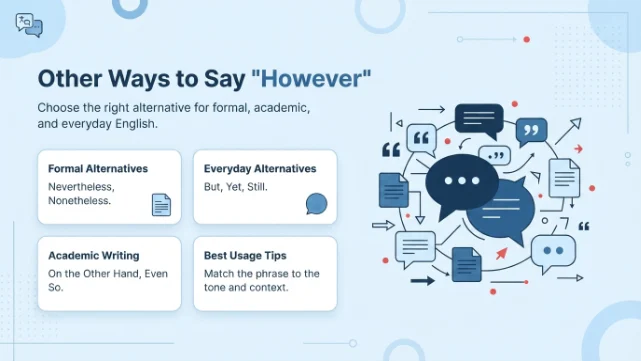
Looking for other ways to say however without repeating yourself? The fastest swaps are nevertheless, nonetheless, on the other hand, that said, and still. Each one signals contrast, but the tone shifts from formal writing to everyday conversation, so pick the one that matches your audience.
“However” is one of the most common transition words in English. It signals contrast between two ideas, showing that what follows goes against, qualifies, or contradicts what came before. Writers and speakers rely on it constantly in essays, emails, presentations, and casual chats.
The problem is repetition. Using “however” in every paragraph makes writing feel flat and mechanical. Learning alternatives to however helps you sound more fluent and varied, whether you are writing a formal report or trying to express excitement in English about a surprising turn of events.
This guide breaks down 30 alternatives by tone, so you always know which phrase fits the moment.
“The right tone makes your English sound professional and confident.”
Quick Categories
Formal Alternatives to “However”
- Nevertheless | used in academic and business writing
- Nonetheless| slightly more formal than however
- Notwithstanding | legal and formal contexts
- Be that as it may | formal spoken and written contrast
Pro Tip: Save these for essays, reports, and professional emails where precision matters more than casual flow.
Casual Alternatives
- But | the simplest everyday contrast word
- Still | softer, conversational contrast
- Yet | natural in speech and casual writing
- Then again | used when reconsidering a point
Pro Tip: Use these in texts, chats, and relaxed conversations, but avoid them in formal reports.
Professional Alternatives
- That said | common in meetings and professional emails
- That being said | polished, workplace-friendly
- Having said that | smooth transition in presentations
- In contrast | useful for comparing data or ideas
Pro Tip: These phrases work well in performance reviews, client emails, and business presentations because they sound thoughtful without being stiff.
Informal Expressions
- On the flip side | casual way to show contrast
- At the same time | everyday balancing phrase
- All the same | informal but still clear
- Just the same | relaxed spoken English
Pro Tip: These fit well in podcasts, vlogs, and informal writing like blog posts or social captions.
“Alternatives to however are not just synonyms, they are tone signals.”
Common Mistakes When Using “However”
- Starting every paragraph with it | Overuse makes writing repetitive.
- Example: “However, this happened. However, that changed things.”
- Example: “However, this happened. However, that changed things.”
- Missing the comma after it at the start of a sentence
- Example: “However the results were mixed.” (should be “However, the results were mixed.”)
- Example: “However the results were mixed.” (should be “However, the results were mixed.”)
- Using it to join two independent clauses without a semicolon
- Example: “It rained, however we still went out.” (needs a semicolon before however)
- Example: “It rained, however we still went out.” (needs a semicolon before however)
- Treating it as interchangeable with “but” in formal writing
- Example: Using “but” to open a formal paragraph instead of “however.”
- Example: Using “but” to open a formal paragraph instead of “however.”
- Overusing it in spoken English, where “still” or “though” sound more natural
- Example: Saying “However, I disagree” instead of the more natural “Still, I disagree.”
What Does “However” Mean?
“However” is a conjunctive adverb used to introduce a contrast or exception to a previous statement. Grammatically, it usually connects two independent clauses and requires a semicolon or period before it, and a comma after it.
Example Sentence: The plan looked solid; however, the budget was too tight.
When to Use “However”
- To introduce a contrasting idea after a statement
- To soften a disagreement in professional settings
- In written English more often than spoken English
- In both formal essays and semi-formal emails
- Rarely in casual texting or informal chats, where “but” or “still” feel more natural
Is It Professional or Polite to Say “However”?
“However” is both polite and professional in most written contexts. It softens contrast without sounding blunt, making it useful in business communication.
Business Example: “Sales increased this quarter; however, customer retention needs attention.”
Polite? Yes Professional? Yes
Pros and Cons of Using “However”
Pros:
- Simple and natural in formal writing
- Clear signal of contrast
- Common and widely understood usage
- Easy to understand across contexts
Cons:
- Overused in academic and business writing
- Limited emotional range compared to other transition words
- Can sound stiff in casual conversation
- Not ideal for expressing excitement in English or strong emotion
Other Ways to Say However
These alternatives will help you sound more fluent, confident, and natural in different situations. Use them according to tone, context, and audience to express contrast, contradiction, or a shift in perspective.
1. Phrase: Nevertheless
Meaning: Despite what was just said. Explanation: A formal transition word showing contrast. Example Sentence: The team was exhausted; nevertheless, they finished the project on time. Best Use: Reports, essays Worst Use: Texting friends Tone: Formal, firm, respectful Context Variability: professional, written
2. Phrase: Nonetheless
Meaning: In spite of that. Explanation: Similar to nevertheless, slightly smoother in flow. Example Sentence: It was raining; nonetheless, we continued the hike. Best Use: Academic writing Worst Use: Casual chat Tone: Formal, composed Context Variability: professional, written
3. Phrase: On the Other Hand
Meaning: Introduces an opposing viewpoint. Explanation: Common when comparing two ideas or options. Example Sentence: He wants to save money; on the other hand, he loves traveling. Best Use: Comparisons, debates Worst Use: Quick replies Tone: Balanced, thoughtful Context Variability: casual, professional, spoken
4. Phrase: That Said
Meaning: Even considering that. Explanation: A polished way to shift into a contrasting point. Example Sentence: The results were strong; that said, we should watch competitor pricing. Best Use: Meetings, emails Worst Use: Formal essays Tone: Professional, conversational Context Variability: professional, spoken
5. Phrase: Still
Meaning: Despite that. Explanation: A short, natural contrast word used in speech. Example Sentence: I was tired; still, I finished the report. Best Use: Everyday speech Worst Use: Formal reports Tone: Simple, casual Context Variability: casual, spoken
6. Phrase: Yet
Meaning: But, nevertheless. Explanation: A short conjunction showing contrast, common in speech. Example Sentence: The plan was risky, yet it worked. Best Use: Storytelling, speech Worst Use: Legal writing Tone: Natural, light Context Variability: casual, spoken
7. Phrase: Even So
Meaning: Despite that fact. Explanation: Used to acknowledge a point before contrasting it. Example Sentence: The traffic was bad; even so, we arrived early. Best Use: Conversations, essays Worst Use: Legal documents Tone: Neutral, thoughtful Context Variability: casual, professional
8. Phrase: In Contrast
Meaning: Showing an opposite comparison. Explanation: Common in academic and analytical writing. Example Sentence: Sales rose in the north; in contrast, the south saw a decline. Best Use: Data comparisons Worst Use: Casual talk Tone: Analytical, formal Context Variability: professional, written
9. Phrase: Conversely
Meaning: In an opposite way. Explanation: A formal academic transition word. Example Sentence: Costs went down; conversely, quality improved. Best Use: Research papers Worst Use: Texting Tone: Formal, precise Context Variability: professional, written
10. Phrase: But
Meaning: Introduces a contrast. Explanation: The most basic and common contrast word in English. Example Sentence: I wanted to go, but I was too tired. Best Use: Everyday speech Worst Use: Formal essays as a sentence starter Tone: Simple, direct Context Variability: casual, spoken
11. Phrase: Though
Meaning: However, despite that. Explanation: Often placed at the end of a sentence in speech. Example Sentence: I like the design. It’s expensive, though. Best Use: Casual speech Worst Use: Formal writing Tone: Relaxed, conversational Context Variability: casual, spoken
12. Phrase: Although
Meaning: Despite the fact that. Explanation: Introduces a contrasting clause within one sentence. Example Sentence: Although it rained, the event was a success. Best Use: Essays, speech Worst Use: Standalone contrast at sentence start Tone: Neutral, clear Context Variability: casual, professional, spoken
13. Phrase: Having Said That
Meaning: Considering what was just mentioned. Explanation: Used to pivot to a related but contrasting point. Example Sentence: The proposal is strong. Having said that, the timeline feels tight. Best Use: Presentations, meetings Worst Use: Academic essays Tone: Professional, smooth Context Variability: professional, spoken
14. Phrase: That Being Said
Meaning: With that in mind, but still. Explanation: A slightly more formal version of “that said.” Example Sentence: The market is competitive. That being said, our product stands out. Best Use: Business writing Worst Use: Texting Tone: Polished, professional Context Variability: professional, written
15. Phrase: Be That as It May
Meaning: Regardless of that fact. Explanation: A formal, slightly old-fashioned way to concede a point. Example Sentence: The plan has risks. Be that as it may, we should proceed. Best Use: Formal debates Worst Use: Casual conversation Tone: Formal, dignified Context Variability: professional, written
16. Phrase: Notwithstanding
Meaning: In spite of. Explanation: A formal, often legal term for contrast. Example Sentence: The delays, notwithstanding, the project met its deadline. Best Use: Legal and formal documents Worst Use: Everyday conversation Tone: Formal, technical Context Variability: professional, written
17. Phrase: Despite This
Meaning: Even with this fact. Explanation: Common in written English to introduce contrast. Example Sentence: The budget was cut. Despite this, the team delivered results. Best Use: Reports, articles Worst Use: Casual chat Tone: Neutral, formal Context Variability: professional, written
18. Phrase: In Spite of This
Meaning: Regardless of this. Explanation: Similar to “despite this,” slightly more emphatic. Example Sentence: Sales dropped. In spite of this, morale stayed high. Best Use: Articles, essays Worst Use: Quick replies Tone: Formal, steady Context Variability: professional, written
19. Phrase: On the Flip Side
Meaning: Looking at the opposite angle. Explanation: A casual way to introduce contrast. Example Sentence: The apartment is small. On the flip side, it’s affordable. Best Use: Casual talk, vlogs Worst Use: Formal essays Tone: Playful, relaxed Context Variability: casual, spoken
20. Phrase: Then Again
Meaning: But considering another angle. Explanation: Used when reconsidering or softening a previous statement. Example Sentence: I could drive. Then again, the train might be faster. Best Use: Everyday decisions Worst Use: Formal writing Tone: Reflective, casual Context Variability: casual, spoken
21. Phrase: All the Same
Meaning: Despite that, nonetheless. Explanation: A softer, slightly informal contrast phrase. Example Sentence: He was nervous. All the same, he gave a great speech. Best Use: Storytelling, casual writing Worst Use: Legal documents Tone: Warm, informal Context Variability: casual, spoken
22. Phrase: At the Same Time
Meaning: Considering both sides together. Explanation: Used to balance two contrasting ideas. Example Sentence: The job pays well. At the same time, the hours are long. Best Use: Balanced arguments Worst Use: Strong formal contrast Tone: Neutral, balanced Context Variability: casual, professional, spoken
23. Phrase: Regardless
Meaning: Without being affected by that. Explanation: Shows that something remains true despite other factors. Example Sentence: Ticket prices went up. Regardless, fans still attended. Best Use: Reports, speech Worst Use: Very formal legal writing Tone: Firm, confident Context Variability: casual, professional, spoken
24. Phrase: Alternatively
Meaning: As another option or possibility. Explanation: Introduces a different choice rather than a strict contrast. Example Sentence: You can pay online; alternatively, you can visit the office. Best Use: Instructions, options Worst Use: Emotional contrast Tone: Practical, clear Context Variability: professional, written
25. Phrase: In Any Case
Meaning: Whatever happens, regardless. Explanation: Used to conclude or move past a contrast. Example Sentence: The weather might change. In any case, the event will continue. Best Use: Conversations, planning Worst Use: Academic essays Tone: Practical, reassuring Context Variability: casual, spoken
26. Phrase: Contrarily
Meaning: In an opposing manner. Explanation: A formal, less common alternative to conversely. Example Sentence: He expected failure. Contrarily, the launch exceeded expectations. Best Use: Formal writing Worst Use: Everyday speech Tone: Formal, uncommon Context Variability: professional, written
27. Phrase: Whereas
Meaning: While, in contrast to the fact that. Explanation: Used to directly compare two contrasting facts. Example Sentence: She prefers mornings, whereas he works better at night. Best Use: Comparisons, formal writing Worst Use: Casual texting Tone: Formal, precise Context Variability: professional, written
28. Phrase: While
Meaning: Even though, at the same time. Explanation: A flexible word for contrast in both speech and writing. Example Sentence: While the idea is good, the timing is wrong. Best Use: Everyday and formal use Worst Use: Extremely casual slang contexts Tone: Neutral, versatile Context Variability: casual, professional, spoken
29. Phrase: Just the Same
Meaning: Nevertheless, in the same way despite differences. Explanation: An informal, warm way to show persistence despite contrast. Example Sentence: It was late. Just the same, she called to check on him. Best Use: Casual storytelling Worst Use: Business reports Tone: Gentle, informal Context Variability: casual, spoken
30. Phrase: For All That
Meaning: Despite everything mentioned. Explanation: A literary, slightly formal way to show contrast. Example Sentence: The critics were harsh. For all that, the film became a classic. Best Use: Literary writing Worst Use: Everyday conversation Tone: Literary, reflective Context Variability: professional, written
“Small word choices shape how confident and fluent you sound.”
Mini Quiz
- Which phrase is most appropriate in a legal document?
A) On the flip side B) Notwithstanding C) Then again D) Just the same
Answer: B - Which alternative fits best in a casual text message?
A) Nonetheless B) Contrarily C) Still D) Notwithstanding
Answer: C - Which phrase is best for a business email pivoting to a concern?
A) That said B) On the flip side C) For all that D) Just the same
Answer: A - Which sentence uses “however” correctly?
A) It rained, however we stayed. B) It rained; however, we stayed. C) However it rained we stayed. D) It rained however, we stayed.
Answer: B
Comparison Table: Top Alternatives
| Phrase | Tone | Best Use |
|---|---|---|
| Nevertheless | Formal | Reports, essays |
| Nonetheless | Formal | Academic writing |
| On the Other Hand | Balanced | Comparisons, debates |
| That Said | Professional | Meetings, emails |
| Still | Casual | Everyday speech |
| Yet | Casual | Storytelling |
| In Contrast | Analytical | Data comparisons |
| Conversely | Formal | Research papers |
| On the Flip Side | Playful | Casual talk, vlogs |
| Whereas | Formal | Comparisons, formal writing |
FAQs
What is the most formal way to say however?
Nevertheless, nonetheless, and notwithstanding are the most formal alternatives, ideal for academic or legal writing.
What can I say instead of however in a casual conversation?
Still, yet, and then again sound natural in everyday spoken English.
Is it okay to start a sentence with however?
Yes, but it must be followed by a comma, and it works best in formal or semi-formal writing.
What is a professional alternative to however for emails?
That said, that being said, and having said that all work well in professional emails and meetings.
Can however be used to express excitement in English?
Not directly. However signals contrast rather than emotion, so pairing it with excited language, like “however, the results were amazing,” works better than using it alone.
Conclusion
Learning alternatives to however gives your English more range, precision, and personality. Instead of repeating the same word in every paragraph, you can match your tone to the situation, whether that means sounding formal in a report or relaxed in a conversation.
Practice using a few of these phrases daily, paying attention to whether the moment calls for formal, professional, casual, or informal language. Over time, choosing the right contrast word will become instinctive, and your English will sound noticeably more fluent and confident.
Discover More Related Articles :
- Ways to Say On the Other Hand | With These Alternatives In 2026
- Other Ways to Say In Addition | Formal, Casual & Academic Alternatives In 2026

Laura Adams is a dedicated content writer and blogger known for crafting clear, informative, and engaging articles. As a contributor to Responary.com, she specializes in creating reader-friendly content that educates, inspires, and keeps audiences informed on a wide range of subjects.