Quick Answer
Looking for other ways to say but in English? The word “but” is useful, yet repeating it too often makes your writing sound flat and repetitive. Try these top five alternatives: however, nevertheless, on the other hand, that said, although.
“But” is one of the most common contrast words in English. It signals that the second part of a sentence goes against or qualifies the first part. People use it constantly in daily conversation, emails, essays, and presentations because it is short, simple, and instantly understood.
However, using “but” in every single sentence can make your English sound repetitive and less polished. Learning alternatives to “but” helps you vary your sentence structure, sound more fluent, and match your tone to the situation, whether you want to sound formal, professional, or casual. It also helps you express excitement in English or add nuance when you want to soften disagreement.
Quick Categories
Formal Alternatives to “But”
- However | used at the start or middle of a sentence to introduce contrast
- Nevertheless | used for a strong, formal contrast
- Nonetheless | similar to nevertheless, common in writing
- Notwithstanding | very formal, often used in legal or academic writing
Pro Tip: Place “however” after a comma or semicolon in formal writing, never directly after “and” or “but,” to avoid grammar errors.
Casual Alternatives to “But”
- Still | a light, everyday way to introduce contrast
- Though | often placed at the end of a sentence in speech
- Anyway | used to shift back to a main point after a side comment
- Then again| used when reconsidering a previous statement
Pro Tip: “Though” at the end of a sentence is extremely common in spoken English, so practice it in casual conversations to sound more natural.
Professional Alternatives to “But”
- That said | softens a contrasting point in meetings or emails
- Having said that | similar to “that said,” slightly more formal
- On the other hand | presents a balanced, alternative viewpoint
- That being said | commonly used before a final decision or recommendation
Pro Tip: Use “that said” or “on the other hand” in emails when you want to disagree politely without sounding blunt.
Informal Expressions
- The thing is | introduces a contrasting concern in casual speech
- Except | used when adding a small contrasting detail
- Mind you | British informal expression to add a contrasting reminder
- Just the same | a relaxed way to say something still applies
Pro Tip: Save expressions like “mind you” and “the thing is” for friendly conversations, not business writing.
“The right tone makes your English sound professional and confident.”
Common Mistakes When Using “But”
- Starting every sentence with “But” in formal writing.
- Example: But the results were disappointing. (Better: However, the results were disappointing.)
- Example: But the results were disappointing. (Better: However, the results were disappointing.)
- Using “however” without a comma.
- Example: However the team improved. (Correct: However, the team improved.)
- Example: However the team improved. (Correct: However, the team improved.)
- Placing “although” and “but” in the same sentence.
- Example: Although it rained, but we still went out. (Correct: Although it rained, we still went out.)
- Example: Although it rained, but we still went out. (Correct: Although it rained, we still went out.)
- Overusing “but” in academic writing.
- Example: The results were positive but not conclusive but need review. (Better: use “however” or “yet” for variety.)
- Example: The results were positive but not conclusive but need review. (Better: use “however” or “yet” for variety.)
- Confusing “though” placement.
- Example: Though, I liked it. (Better: I liked it, though.)
What Does “But” Mean?
“But” is a coordinating conjunction used to join two contrasting ideas in one sentence. Grammatically, it connects two independent clauses and does not require a comma before it in short sentences, though a comma is standard in longer ones.
Example: She studied hard, but she still felt nervous before the exam.
When to Use “But”
- To introduce a contrast or exception
- To correct or qualify a previous statement
- To connect two opposing ideas in one sentence
Spoken English: Very common, natural, and expected in everyday conversation.
Written English: Acceptable in casual and semi-formal writing, but formal writing often prefers alternatives like “however” or “nevertheless.”
Formal Context: Used sparingly; alternatives are usually preferred.
Informal Context: Used freely and frequently.
Is It Professional or Polite to Say “But”?
“But” is polite and completely natural in everyday communication. However, in professional writing such as reports, emails to senior management, or academic papers, it can sound abrupt or too casual.
Business Example: Instead of “The project was on time but over budget,” a more professional version is “The project was on time; however, it exceeded the budget.”
Polite? ✔️ Yes Professional? ❌ No (in most formal writing)
Pros and Cons of Using “But”
Pros:
- Simple and natural
- Friendly tone
- Common usage
- Easy to understand
Cons:
- Too informal for work
- Overused
- Limited emotional range
- Not suitable for formal writing
“Small word choices make a big difference in how confident you sound.”
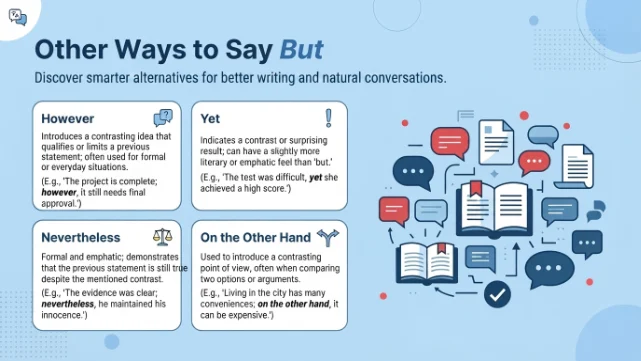
Other Ways to Say But
These alternatives will help you sound more fluent, confident, and natural in different situations. Use them according to tone, context, and audience to express excitement, admiration, or approval, as well as contrast and disagreement.
1. Phrase: However
Meaning: Introduces a contrast to the previous statement. Explanation: One of the most common formal alternatives to “but.” Example Sentence: The plan looked perfect; however, we found a small flaw later. Best Use: reports, essays Worst Use: casual chats Tone: formal, neutral, clear Context Variability: professional, written
2. Phrase: Nevertheless
Meaning: Despite what was just said, something still happens. Explanation: Adds a strong sense of persistence or contrast. Example Sentence: It was raining heavily; nevertheless, the match continued. Best Use: essays, speeches Worst Use: texting friends Tone: formal, strong, confident Context Variability: professional, spoken formal
3. Phrase: Nonetheless
Meaning: Similar to nevertheless; still true despite the contrast. Explanation: Slightly softer than nevertheless but equally formal. Example Sentence: The task was difficult; nonetheless, the team completed it on time. Best Use: business writing Worst Use: casual talk Tone: formal, composed, professional Context Variability: professional, written
4. Phrase: That said
Meaning: Introduces a contrasting point after agreeing with something. Explanation: Common in professional discussions to soften disagreement. Example Sentence: Your idea is great. That said, we need more data before deciding. Best Use: meetings, emails Worst Use: academic essays Tone: professional, balanced, polite Context Variability: professional, spoken
5. Phrase: Having said that
Meaning: A slightly more formal way to introduce a contrast after a point. Explanation: Frequently used to shift from praise to concern. Example Sentence: The report is thorough. Having said that, the conclusion needs work. Best Use: presentations, reviews Worst Use: short texts Tone: professional, thoughtful, measured Context Variability: professional, spoken
6. Phrase: On the other hand
Meaning: Presents an alternative or opposing viewpoint. Explanation: Useful for comparing two sides of an argument. Example Sentence: Working remotely offers flexibility. On the other hand, it can feel isolating. Best Use: essays, debates Worst Use: quick replies Tone: analytical, balanced, formal Context Variability: professional, academic
7. Phrase: On the contrary
Meaning: Directly opposes the previous statement. Explanation: Stronger than “but,” often used to correct a misunderstanding. Example Sentence: He is not lazy; on the contrary, he works harder than anyone. Best Use: debates, corrections Worst Use: friendly chats Tone: formal, assertive, precise Context Variability: professional, written
8. Phrase: Yet
Meaning: Introduces contrast, similar to “but” but slightly more literary. Explanation: Works well in short, punchy sentences. Example Sentence: The plan was risky, yet it worked perfectly. Best Use: storytelling, essays Worst Use: technical reports Tone: literary, contrastive, smooth Context Variability: casual, written
9. Phrase: Although
Meaning: Introduces a contrasting idea within the same sentence. Explanation: Placed at the start or middle of a sentence, unlike “but.” Example Sentence: Although it was late, she finished the assignment. Best Use: essays, conversation Worst Use: after “but” in the same sentence Tone: neutral, formal-leaning, clear Context Variability: professional, casual, spoken
10. Phrase: Even so
Meaning: Despite the previous fact, something remains true. Explanation: A natural, slightly formal transition phrase. Example Sentence: The odds were low; even so, they kept trying. Best Use: narratives, speeches Worst Use: technical documents Tone: reflective, formal, measured Context Variability: professional, spoken
11. Phrase: Still
Meaning: Indicates that something remains true despite a contrast. Explanation: A short, everyday alternative to “but.” Example Sentence: It was expensive. Still, we decided to buy it. Best Use: daily conversation Worst Use: formal reports Tone: casual, simple, natural Context Variability: casual, spoken
12. Phrase: Though
Meaning: Adds a contrasting thought, often at the end of a sentence. Explanation: Extremely common in spoken English. Example Sentence: I liked the movie. It was too long, though. Best Use: conversations Worst Use: academic writing Tone: casual, relaxed, conversational Context Variability: casual, spoken
13. Phrase: In spite of this
Meaning: Despite the situation just described. Explanation: A formal transition phrase for contrast. Example Sentence: Sales dropped last quarter. In spite of this, profits rose. Best Use: business reports Worst Use: texting Tone: formal, factual, professional Context Variability: professional, written
14. Phrase: Despite this
Meaning: Similar to “in spite of this,” showing contrast. Explanation: Slightly shorter and equally formal. Example Sentence: The team was short-staffed. Despite this, they met the deadline. Best Use: reports, summaries Worst Use: casual chats Tone: formal, direct, professional Context Variability: professional, written
15. Phrase: Notwithstanding
Meaning: Despite something, without being affected by it. Explanation: Very formal, common in legal and academic English. Example Sentence: The risks notwithstanding, the company moved forward with the merger. Best Use: legal writing, formal reports Worst Use: everyday speech Tone: highly formal, precise, academic Context Variability: professional, written
16. Phrase: Conversely
Meaning: Introduces an opposite point or perspective. Explanation: Common in academic and analytical writing. Example Sentence: Demand increased in the city. Conversely, rural sales declined. Best Use: research, analysis Worst Use: casual talk Tone: analytical, formal, precise Context Variability: professional, academic
17. Phrase: Be that as it may
Meaning: Accepts a point while still introducing a contrast. Explanation: A formal, slightly old-fashioned transition phrase. Example Sentence: He is talented. Be that as it may, he still needs more experience. Best Use: formal debates Worst Use: texting Tone: formal, diplomatic, thoughtful Context Variability: professional, spoken formal
18. Phrase: While this may be true
Meaning: Acknowledges a fact before introducing a contrasting point. Explanation: Common in professional disagreements. Example Sentence: While this may be true, the budget still needs approval. Best Use: meetings, negotiations Worst Use: casual conversation Tone: diplomatic, professional, careful Context Variability: professional, spoken
19. Phrase: All the same
Meaning: Something remains true or unchanged despite a contrast. Explanation: A natural, mildly formal expression. Example Sentence: The trip was tiring. All the same, it was worth it. Best Use: storytelling, conversation Worst Use: legal writing Tone: warm, reflective, natural Context Variability: casual, spoken
20. Phrase: At the same time
Meaning: Introduces a contrasting or balancing idea. Explanation: Useful when presenting two sides fairly. Example Sentence: The plan saves money. At the same time, it increases risk. Best Use: discussions, presentations Worst Use: short texts Tone: balanced, thoughtful, professional Context Variability: professional, spoken
21. Phrase: Then again
Meaning: Introduces a second thought that contrasts the first. Explanation: Common when reconsidering a decision. Example Sentence: I could take the train. Then again, driving might be faster. Best Use: casual conversation Worst Use: formal writing Tone: casual, reflective, informal Context Variability: casual, spoken
22. Phrase: Except
Meaning: Introduces an exception to the previous statement. Explanation: Focuses on one specific contrasting detail. Example Sentence: The plan was perfect, except for the tight deadline. Best Use: everyday explanations Worst Use: formal essays Tone: casual, specific, direct Context Variability: casual, spoken
23. Phrase: Only
Meaning: Introduces a small limiting contrast. Explanation: Softer and more conversational than “but.” Example Sentence: I would love to help, only I am busy today. Best Use: polite refusals Worst Use: formal reports Tone: soft, polite, casual Context Variability: casual, spoken
24. Phrase: Anyway
Meaning: Returns to a main point after a side comment or contrast. Explanation: Very common in spoken English to shift topics. Example Sentence: It was a tough week. Anyway, let’s focus on next steps. Best Use: casual conversation Worst Use: formal writing Tone: casual, easygoing, natural Context Variability: casual, spoken
25. Phrase: But then
Meaning: Introduces a contrasting realization or event. Explanation: Adds a storytelling feel to a contrast. Example Sentence: Everything was going well, but then the power went out. Best Use: storytelling, casual talk Worst Use: business reports Tone: casual, narrative, natural Context Variability: casual, spoken
26. Phrase: The thing is
Meaning: Introduces a concern or contrasting explanation. Explanation: Common in informal spoken English. Example Sentence: I want to join. The thing is, I already have plans. Best Use: friendly conversation Worst Use: formal emails Tone: informal, honest, conversational Context Variability: casual, spoken
27. Phrase: Mind you
Meaning: Adds a contrasting reminder or clarification. Explanation: A British informal expression used to soften a contrast. Example Sentence: He is strict, mind you, he is always fair. Best Use: informal storytelling Worst Use: professional writing Tone: informal, friendly, conversational Context Variability: casual, spoken
28. Phrase: Regardless
Meaning: Indicates something remains true without being affected by other factors. Explanation: A confident, professional transition word. Example Sentence: The weather was bad. Regardless, the event went ahead as planned. Best Use: professional updates Worst Use: casual texting Tone: confident, professional, firm Context Variability: professional, spoken
29. Phrase: That being said
Meaning: Introduces a contrasting conclusion or decision. Explanation: Often used before giving a final recommendation. Example Sentence: The costs are high. That being said, the long-term benefits are clear. Best Use: presentations, proposals Worst Use: casual chats Tone: professional, decisive, clear Context Variability: professional, spoken
30. Phrase: Just the same
Meaning: Something remains true despite the contrast mentioned. Explanation: A warm, conversational alternative to “but.” Example Sentence: It rained all day. Just the same, we had a great time. Best Use: personal stories Worst Use: legal or technical writing Tone: warm, casual, natural Context Variability: casual, spoken
“Learning alternatives to common words is one of the fastest ways to sound fluent.”
Mini Quiz:
- Which alternative is best for a formal business report?
a) Then again b) However c) Mind you - Which phrase is most natural at the end of a spoken sentence?
a) Notwithstanding b) Though c) Conversely - Which phrase softens disagreement in a professional meeting?
a) The thing is b) That said c) But then - Which alternative fits academic or research writing best?
a) Anyway b) Conversely c) Just the same
Answers: 1-b, 2-b, 3-b, 4-b
Comparison Table: Top Alternatives to “But”
| Phrase | Tone | Best Use |
|---|---|---|
| However | Formal | Reports, essays |
| Nevertheless | Formal | Speeches, essays |
| Nonetheless | Formal | Business writing |
| That said | Professional | Meetings, emails |
| On the other hand | Analytical | Debates, essays |
| Although | Neutral | Essays, conversation |
| Still | Casual | Daily conversation |
| Though | Casual | Spoken English |
| Anyway | Casual | Casual conversation |
| Regardless | Professional | Professional updates |
FAQs
1. What is a more formal way to say “but”?
Formal alternatives include however, nevertheless, nonetheless, and notwithstanding.
2. Is it correct to start a sentence with “but”?
Yes, it is grammatically acceptable in modern English, though formal writing often prefers “however” instead.
3. What is a casual way to say “but”?
Casual alternatives include still, though, anyway, and then again.
4. Can “however” replace “but” in every sentence?
No, “however” often requires different punctuation and sentence structure, so it cannot always be swapped directly.
5. Why should I learn other ways to say “but”?
Learning alternatives to “but” improves fluency, avoids repetition, and helps you match your tone to formal or informal situations.
Conclusion
Mastering different ways to say “but” instantly improves how natural and confident your English sounds, whether you are writing a professional email or having a casual conversation. Each alternative carries its own tone, so choosing the right one shows strong command of the language.
Practice using a few of these phrases every day in your speaking and writing. Pay attention to tone, context, and audience, and soon these alternatives will become a natural part of your English vocabulary.
Discover More Related Articles :
- Ways to Say On the Other Hand | With These Alternatives In 2026
- Other Ways to Say In Addition | Formal, Casual & Academic Alternatives In 2026

Richard Scott is an experienced author dedicated to creating compelling and well-researched content for online audiences. As a contributor to Responary.com, he enjoys sharing knowledge through clear, engaging, and informative articles that connect with readers worldwide.