Quick Answer
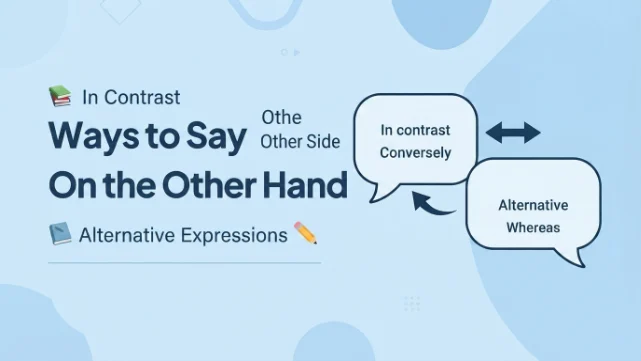
Looking for other ways to say on the other hand? This phrase is used to introduce a contrast or a different point of view. Top alternatives include: conversely, in contrast, that said, then again, and on the flip side.
“On the other hand” is one of the most common transition phrases in English. Speakers and writers use it to introduce a contrasting idea, a different perspective, or a balancing point after stating something else. It appears constantly in essays, debates, business reports, and everyday conversation.
Knowing several alternatives to on the other hand helps you avoid repetition and sound more fluent. Whether you are writing an academic paper or trying to express excitement in English about a new idea while still noting a downside, varied transition phrases make your language feel natural rather than mechanical.
Learning multiple ways to introduce contrast also builds confidence in both spoken and written English. It shows control over tone, structure, and logic, which is exactly what examiners, employers, and readers notice.
“Varying your transition words is one of the fastest ways to sound more fluent.”
Quick Categories
Formal alternatives to “on the other hand”
- Conversely
- In contrast
- By contrast
- Nevertheless
Pro Tip: Use formal alternatives in essays, reports, and academic writing where a professional tone is expected.
Casual alternatives
- Then again
- But still
- Having said that
- Mind you
Pro Tip: Casual alternatives work best in relaxed conversations with friends or informal emails.
Professional alternatives
- That said
- On the flip side
- In comparison
- Alternatively
Pro Tip: In meetings or presentations, pair these phrases with clear data or examples to sound credible.
Informal expressions
- Then again
- Flip side of that
- But hey
- Still though
Pro Tip: Save informal expressions for texting or casual chats, not for client-facing communication.
“The right tone makes your English sound professional and confident.”
Common Mistakes
- Overusing the same phrase.
Repeating “on the other hand” in every paragraph makes writing feel robotic. Example: “On the other hand, I like coffee. On the other hand, tea is healthier.” (incorrect repetition) - Using it without a prior contrasting point.
The phrase needs a first idea to contrast against. Example: “On the other hand, we should hire her.” (missing first viewpoint) - Mixing formal and informal tone in the same document.
Example: “On the other hand, the data indicates growth, but yeah, sales dropped too.” - Placing it incorrectly in a sentence.
Example: “The plan on the other hand failed.” (awkward placement) - Confusing it with “on the contrary.”
These are not always interchangeable. Example: “On the other hand, he is not wrong at all.” (should be “on the contrary”)
What Does “On the Other Hand” Mean?
“On the other hand” is an idiomatic transition phrase used to introduce a viewpoint that contrasts with, or balances, a previously stated idea.
Grammar note: It typically starts a new sentence or clause and is followed by a comma.
Example sentence: “The apartment is affordable; on the other hand, it is far from the city center.”
When to Use “On the Other Hand”
- Comparing two options or opinions
- Presenting a balanced argument in essays
- Softening a disagreement in conversation
- Highlighting pros and cons
Spoken vs Written: Common in both, though spoken English often prefers shorter alternatives like “then again.”
Formal vs Informal: Neutral to formal; works well in both academic writing and professional speech.
Is It Professional or Polite to Say “On the Other Hand”?
“On the other hand” is both polite and professional. It signals balanced thinking rather than blunt disagreement.
Business example: “Our current strategy increased traffic; on the other hand, conversion rates remain low.”
Polite? Yes Professional? Yes
Pros and Cons of Using “On the Other Hand”
Pros:
- Simple and natural
- Widely understood
- Common usage in writing and speech
- Easy to understand
Cons:
- Overused in essays
- Can feel repetitive without variation
- Limited emotional range
- Sometimes too formal for casual texting
“Balanced language builds trust with your reader or listener.”
Other Ways to Say On the Other Hand
These alternatives will help you sound more fluent, confident, and natural in different situations. Use them according to tone, context, and audience whether you want to express excitement, present professional reaction phrases, or use informal expressions in English.
1. Phrase: Conversely
Meaning: Used to introduce an opposite idea. Explanation: A formal academic transition word. Example Sentence: “The north region saw sales increase. Conversely, the south region declined.” Best Use: academic writing Worst Use: casual chat Tone: formal, precise Context Variability: professional, written
2. Phrase: In contrast
Meaning: Highlights a clear difference between two things. Explanation: Common in essays and comparisons. Example Sentence: “She prefers mornings; in contrast, her brother works better at night.” Best Use: essays, reports Worst Use: texting Tone: formal, clear Context Variability: professional, spoken
3. Phrase: By contrast
Meaning: Similar to “in contrast,” used to compare two ideas. Explanation: Slightly more formal and concise. Example Sentence: “The first design was colorful; by contrast, the second was minimal.” Best Use: presentations Worst Use: casual talk Tone: formal, direct Context Variability: professional, written
4. Phrase: Then again
Meaning: Introduces a reconsidered or opposing thought. Explanation: Common in relaxed spoken English. Example Sentence: “I could drive. Then again, the train might be faster.” Best Use: conversation Worst Use: formal essays Tone: casual, reflective Context Variability: casual, spoken
5. Phrase: That said
Meaning: Acknowledges a prior point before adding a contrast. Explanation: Popular in professional communication. Example Sentence: “The report is strong. That said, the timeline needs revisiting.” Best Use: business emails Worst Use: academic essays Tone: professional, balanced Context Variability: professional, spoken
6. Phrase: On the flip side
Meaning: Introduces a contrasting angle in a friendly tone. Explanation: Common in casual professional settings. Example Sentence: “The project finished early. On the flip side, quality suffered.” Best Use: team meetings Worst Use: formal writing Tone: friendly, casual Context Variability: casual, professional
7. Phrase: However
Meaning: A general contrast word used broadly in English. Explanation: Extremely common and versatile. Example Sentence: “The plan looked solid. However, the budget was too high.” Best Use: any writing Worst Use: none, very flexible Tone: neutral, common Context Variability: casual, professional, spoken
8. Phrase: Nevertheless
Meaning: Introduces a contrast despite the previous statement. Explanation: More formal and slightly stronger than “however.” Example Sentence: “It was raining. Nevertheless, they continued the hike.” Best Use: formal writing Worst Use: texting Tone: formal, firm Context Variability: professional, written
9. Phrase: Nonetheless
Meaning: Similar to “nevertheless,” expressing contrast despite conditions. Explanation: Interchangeable with “nevertheless” in most cases. Example Sentence: “Sales dropped. Nonetheless, the team stayed motivated.” Best Use: reports Worst Use: casual chat Tone: formal, steady Context Variability: professional, written
10. Phrase: Alternatively
Meaning: Presents another option or possibility. Explanation: Useful when suggesting a different choice. Example Sentence: “We can meet Monday. Alternatively, Tuesday also works.” Best Use: scheduling, planning Worst Use: emotional topics Tone: neutral, practical Context Variability: professional, spoken
11. Phrase: In comparison
Meaning: Points out a difference by comparing two things. Explanation: Useful in data-driven discussions. Example Sentence: “This model is fast. In comparison, the older version was slow.” Best Use: presentations Worst Use: casual talk Tone: formal, analytical Context Variability: professional, written
12. Phrase: On the contrary
Meaning: Directly opposes the previous statement. Explanation: Stronger than “on the other hand,” used for disagreement. Example Sentence: “He isn’t lazy. On the contrary, he works the hardest.” Best Use: debates Worst Use: neutral comparisons Tone: assertive, formal Context Variability: professional, spoken
13. Phrase: Having said that
Meaning: Introduces a balancing point after agreeing with something. Explanation: Common in professional and casual speech alike. Example Sentence: “The idea is risky. Having said that, it could pay off.” Best Use: discussions Worst Use: academic essays Tone: balanced, conversational Context Variability: casual, professional, spoken
14. Phrase: Yet
Meaning: A short word introducing contrast. Explanation: Simple and versatile, used in many contexts. Example Sentence: “The task was hard, yet rewarding.” Best Use: short sentences Worst Use: long formal reports Tone: neutral, concise Context Variability: casual, professional, spoken
15. Phrase: Still
Meaning: Introduces a contrast despite a previous condition. Explanation: Common in spoken English. Example Sentence: “It’s expensive. Still, it’s worth buying.” Best Use: everyday conversation Worst Use: formal essays Tone: casual, simple Context Variability: casual, spoken
16. Phrase: But then again
Meaning: Reintroduces doubt or a contrasting thought. Explanation: Slightly stronger version of “then again.” Example Sentence: “I want to go. But then again, I’m tired.” Best Use: casual conversation Worst Use: formal writing Tone: casual, reflective Context Variability: casual, spoken
17. Phrase: Whereas
Meaning: Compares two contrasting facts within one sentence. Explanation: Common in formal and academic writing. Example Sentence: “She enjoys reading, whereas he prefers sports.” Best Use: essays, comparisons Worst Use: casual texting Tone: formal, structured Context Variability: professional, written
18. Phrase: While that may be true
Meaning: Acknowledges a point before disagreeing. Explanation: Polite way to introduce a counterpoint. Example Sentence: “While that may be true, the results say otherwise.” Best Use: debates, meetings Worst Use: casual chat Tone: diplomatic, formal Context Variability: professional, spoken
19. Phrase: Even so
Meaning: Introduces a contrast despite a stated fact. Explanation: Slightly formal but flexible. Example Sentence: “The road was closed. Even so, they arrived on time.” Best Use: storytelling, reports Worst Use: casual texting Tone: formal, measured Context Variability: professional, written
20. Phrase: Mind you
Meaning: Adds a contrasting or clarifying point casually. Explanation: Common in British informal speech. Example Sentence: “He’s strict. Mind you, he’s also very fair.” Best Use: casual conversation Worst Use: formal writing Tone: casual, friendly Context Variability: casual, spoken
21. Phrase: In another light
Meaning: Suggests viewing the same situation differently. Explanation: Useful for offering a fresh perspective. Example Sentence: “It seems risky. In another light, it’s an opportunity.” Best Use: discussions, coaching Worst Use: technical reports Tone: thoughtful, reflective Context Variability: professional, spoken
22. Phrase: Looking at it differently
Meaning: Introduces a new angle on the same topic. Explanation: Friendly way to reframe an idea. Example Sentence: “It’s a setback. Looking at it differently, it’s a lesson.” Best Use: coaching, conversation Worst Use: academic writing Tone: friendly, reflective Context Variability: casual, professional
23. Phrase: From another perspective
Meaning: Introduces a different viewpoint on the topic. Explanation: Common in discussions and debates. Example Sentence: “It looks costly. From another perspective, it saves time.” Best Use: meetings, essays Worst Use: texting Tone: formal, analytical Context Variability: professional, written
24. Phrase: But on the flip side
Meaning: Casual version of introducing a contrasting point. Explanation: Slightly more emphatic than “on the flip side.” Example Sentence: “The house is beautiful. But on the flip side, it’s tiny.” Best Use: casual talk Worst Use: formal essays Tone: casual, expressive Context Variability: casual, spoken
25. Phrase: On the other side of things
Meaning: Introduces a contrasting viewpoint casually. Explanation: Common in relaxed spoken English. Example Sentence: “Work is stressful. On the other side of things, I love my team.” Best Use: conversation Worst Use: academic writing Tone: casual, warm Context Variability: casual, spoken
26. Phrase: Contrarily
Meaning: Introduces an opposing idea formally. Explanation: Less common but useful in formal writing. Example Sentence: “The theory suggests growth. Contrarily, the data shows decline.” Best Use: academic writing Worst Use: everyday speech Tone: formal, precise Context Variability: professional, written
27. Phrase: Be that as it may
Meaning: Acknowledges a fact before introducing contrast. Explanation: Formal and slightly old-fashioned but still used. Example Sentence: “He apologized. Be that as it may, the damage was done.” Best Use: formal discussions Worst Use: casual chat Tone: formal, firm Context Variability: professional, written
28. Phrase: In opposition to that
Meaning: Directly contrasts a previous statement. Explanation: Strong and formal transition phrase. Example Sentence: “The board approved the plan. In opposition to that, employees raised concerns.” Best Use: formal reports Worst Use: casual conversation Tone: formal, direct Context Variability: professional, written
29. Phrase: On another note
Meaning: Shifts to a different, sometimes contrasting point. Explanation: Common when changing topics smoothly. Example Sentence: “The event was a success. On another note, next year needs more funding.” Best Use: presentations, emails Worst Use: academic essays Tone: neutral, professional Context Variability: professional, spoken
30. Phrase: Still though
Meaning: A casual way to introduce a lingering contrast. Explanation: Very informal, common in texting and chat. Example Sentence: “It’s late. Still though, let’s finish this.” Best Use: texting, casual chat Worst Use: formal writing Tone: informal, relaxed Context Variability: casual, spoken
“Small changes in vocabulary create big improvements in fluency.”
Mini Quiz
- Which phrase is most appropriate for an academic essay?
a) Then again b) Conversely c) Mind you d) Still though - Which phrase directly opposes a previous statement, stronger than a simple contrast?
a) On the contrary b) That said c) Alternatively d) On another note - Which phrase fits best in a casual conversation with a friend?
a) Nevertheless b) Then again c) In opposition to that d) Contrarily - Which phrase works well in a professional email to soften disagreement?
a) Still though b) That said c) But hey d) Flip side of that
Answers: 1-b, 2-a, 3-b, 4-b
“Context and tone decide whether a phrase sounds fluent or forced.”
Comparison Table: Top Alternatives
| Phrase | Tone | Best Use |
|---|---|---|
| Conversely | Formal | Academic writing |
| In contrast | Formal | Essays, reports |
| That said | Professional | Business emails |
| On the flip side | Casual | Team meetings |
| However | Neutral | Any writing |
| Nevertheless | Formal | Formal writing |
| Alternatively | Neutral | Planning, scheduling |
| On the contrary | Assertive | Debates |
| Having said that | Balanced | Discussions |
| Then again | Casual | Conversation |
FAQs
What is the most formal way to say “on the other hand”?
“Conversely” and “in contrast” are among the most formal alternatives, ideal for academic and business writing.
Can “on the other hand” be used to start a sentence?
Yes, it commonly starts a sentence and is followed by a comma to introduce a contrasting idea.
Is “then again” the same as “on the other hand”?
They are similar, but “then again” is more casual and often used in spoken English.
What is a professional alternative for meetings?
“That said” and “on the flip side” work well in professional meetings while keeping a natural tone.
Why should I avoid repeating “on the other hand” too often?
Repetition makes writing sound mechanical; using varied alternatives to on the other hand improves fluency and readability.
Conclusion
Learning multiple ways to introduce contrast makes your English more expressive, precise, and natural. Instead of relying only on “on the other hand,” you can now choose from formal, professional, casual, and informal expressions in English depending on your audience.
Practice using a few new alternatives every day in your writing and conversations. Paying attention to tone and context will help you sound more confident, fluent, and professional in every situation.
Try using three of these alternatives in your next email or essay and notice how much more natural your writing sounds.
Discover More Related Articles:
- Other Ways to Say In Other Words | For Better English In 2026
- Other Ways to Say In Conclusion in an Essay | Formal Writing In 2026

Jennifer Wilson is an experienced writer and content creator with over 20 years of expertise in digital publishing, lifestyle, and informative content. Holding a degree in English Literature, she contributes to Responary.Com, where she shares engaging, well-researched articles that help readers stay informed and inspired.