Quick Answer
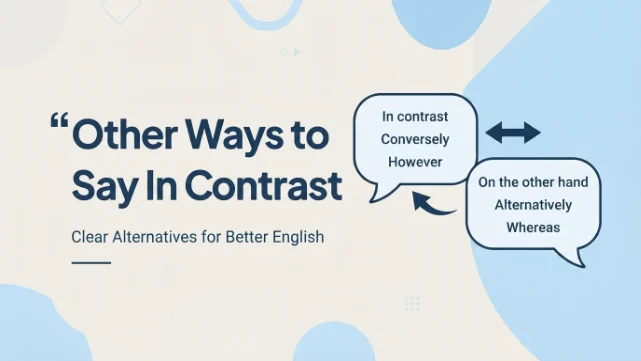
Looking for other ways to say in contrast? The most natural alternatives are on the other hand, conversely, by contrast, whereas, and however. Each of these carries a slightly different tone, so choosing the right one depends on whether you are writing an essay, a business report, or having a casual conversation.
In contrast is one of the most common transition phrases in English. It signals a difference or opposite point between two ideas, facts, or situations. Writers and speakers use it to compare two things clearly, so the reader instantly understands where the contrast begins.
People use this phrase in essays, business writing, presentations, and everyday conversation. It helps organize ideas logically and makes arguments easier to follow. Learning alternatives to in contrast allows you to avoid repetition and sound more fluent, especially in longer pieces of writing where the same phrase repeated too often feels flat.
Knowing several ways to show contrast also helps you express excitement in English or emphasis when a difference is surprising or important. A varied vocabulary signals strong command of the language, whether you are a student, a professional writer, or someone preparing for an interview.
“Variety in transition words is what separates good writing from great writing.”
Quick Categories
Formal alternatives to “in contrast”
- On the other hand
- Conversely
- Whereas
- By contrast
- Nevertheless
Pro Tip: Use formal alternatives like conversely or whereas in academic essays, reports, and official emails to sound polished and precise.
Casual alternatives
- Then again
- But
- Still
- Yet
- Meanwhile
Pro Tip: Save casual options like but or then again for conversations and informal messages, not formal documents.
Professional alternatives
- In comparison
- Compared to
- As opposed to
- Nonetheless
- That said
Pro Tip: Phrases like as opposed to work well in presentations and workplace writing when comparing data, strategies, or results.
Informal expressions
- Looking at it differently
- From another perspective
- Instead
- Rather
- Even so
Pro Tip: Informal expressions are great for blogs, chats, and social captions, but avoid them in resumes or formal reports.
Common Mistakes
- Using “in contrast” without a clear second idea.
Wrong: “In contrast, the results were interesting.” This leaves the reader unsure what is being compared. - Confusing “in contrast” with “in contrast to.”
Correct: “In contrast to last year, sales rose sharply.” - Overusing the phrase in one paragraph.
Repeating “in contrast” three times in one section weakens the writing. - Placing it in the wrong sentence position.
Wrong: “The team, in contrast performed better.” Correct: “In contrast, the team performed better.” - Mixing formal and informal tone inconsistently.
Wrong: “In contrast, the boss was like, totally different.”
What Does “In Contrast” Mean?
In contrast means to show a clear difference between two people, things, ideas, or situations. It is typically used as a transitional phrase at the start of a sentence or clause.
Grammatically, it functions as a prepositional phrase and is usually followed by a comma when it begins a sentence.
Example Sentence: The first design was colorful and bold; in contrast, the second design was minimal and quiet.
When to Use “In Contrast”
- Comparing two opposing ideas in an essay
- Highlighting differences in data or statistics
- Describing opposite characteristics of two people or objects
- Structuring a persuasive argument
- Writing academic or business reports
Spoken vs Written: More common in written English, especially academic and professional writing. In speech, people often prefer but or on the other hand.
Formal vs Informal: Considered a neutral-to-formal phrase, appropriate for both academic and professional contexts.
Is It Professional or Polite to Say “In Contrast”?
“In contrast” is both polite and professional. It is a clear, neutral phrase that works well in business writing, reports, and presentations.
Business Example: “In contrast to last quarter’s decline, this quarter shows a 12 percent increase in revenue.”
Polite? Yes Professional? Yes
Pros and Cons of Using “In Contrast”
Pros
- Clear and easy to understand
- Works in both formal and semi-formal writing
- Common and widely recognized
- Adds structure to comparisons
Cons
- Can feel repetitive if overused
- Sounds slightly stiff in casual conversation
- Limited emotional tone
- Not ideal for very informal writing
“Choosing the right contrast word instantly upgrades the clarity of your writing.”
Other Ways to Say In Contrast
These alternatives will help you sound more fluent, confident, and natural in different situations. Use them according to tone, context, and audience to express excitement, admiration, or a clear point of difference.
1. Phrase: On the other hand
Meaning: Introduces an opposing idea or viewpoint. Explanation: A balanced way to show two sides of an argument. Example Sentence: She loves the city life; on the other hand, her husband prefers the countryside. Best Use: essays, discussions Worst Use: legal documents Tone: balanced, formal-neutral Context Variability: casual, professional, spoken
2. Phrase: Conversely
Meaning: Shows the exact opposite of a previous statement. Explanation: A strong academic transition word for contrast. Example Sentence: Sales increased in the north region; conversely, they dropped in the south. Best Use: academic writing Worst Use: texting, chats Tone: formal, precise Context Variability: professional, academic
3. Phrase: Whereas
Meaning: Highlights a direct difference between two clauses. Explanation: Often used within a single sentence to compare two facts. Example Sentence: He enjoys quiet evenings, whereas she loves going out. Best Use: formal writing Worst Use: casual speech Tone: formal, structured Context Variability: professional, academic
4. Phrase: By contrast
Meaning: Emphasizes a noticeable difference between two subjects. Explanation: A slightly stronger version of “in contrast.” Example Sentence: The old model was slow; by contrast, the new one is remarkably fast. Best Use: reports, essays Worst Use: casual chats Tone: formal, emphatic Context Variability: professional, spoken
5. Phrase: However
Meaning: Introduces a contrasting fact or exception. Explanation: One of the most common contrast words in English. Example Sentence: The plan sounded perfect; however, it failed in execution. Best Use: all writing types Worst Use: none Tone: neutral, flexible Context Variability: casual, professional, spoken
6. Phrase: On the contrary
Meaning: Directly denies or opposes a previous statement. Explanation: Used to correct a misconception strongly. Example Sentence: I am not upset; on the contrary, I am thrilled. Best Use: debates, arguments Worst Use: neutral comparisons Tone: assertive, formal Context Variability: professional, spoken
7. Phrase: Unlike
Meaning: Points out a specific difference between two subjects. Explanation: Used before a noun or noun phrase to show contrast. Example Sentence: Unlike her sister, she loves spicy food. Best Use: comparisons, essays Worst Use: long formal reports Tone: simple, direct Context Variability: casual, spoken
8. Phrase: Then again
Meaning: Introduces a second thought that contrasts the first. Explanation: Common in relaxed, conversational contexts. Example Sentence: I could stay home; then again, a walk sounds nice. Best Use: conversations Worst Use: formal writing Tone: casual, thoughtful Context Variability: casual, spoken
9. Phrase: In opposition
Meaning: Shows a strong conflict between two ideas or positions. Explanation: Often used in debates or formal disagreements. Example Sentence: The committee voted in favor; the union stood in opposition. Best Use: debates, politics Worst Use: friendly chats Tone: formal, strong Context Variability: professional
10. Phrase: Alternatively
Meaning: Presents a different option or possibility. Explanation: Useful when offering another choice, not just a difference. Example Sentence: You can take the train; alternatively, you could drive. Best Use: instructions, suggestions Worst Use: emotional contrasts Tone: neutral, practical Context Variability: professional, spoken
11. Phrase: Nevertheless
Meaning: Introduces a contrasting point despite what was just said. Explanation: Shows contrast while acknowledging the first idea. Example Sentence: The task was difficult; nevertheless, she finished it on time. Best Use: formal writing Worst Use: texting Tone: formal, respectful Context Variability: professional, academic
12. Phrase: Nonetheless
Meaning: Similar to nevertheless, showing contrast despite a fact. Explanation: Slightly more common in spoken professional English. Example Sentence: It rained heavily; nonetheless, the event continued. Best Use: presentations, reports Worst Use: casual texts Tone: formal, confident Context Variability: professional, spoken
13. Phrase: That said
Meaning: Introduces a contrasting point after agreeing with something. Explanation: Common in professional and semi-formal discussions. Example Sentence: The report looks solid. That said, a few numbers need review. Best Use: meetings, feedback Worst Use: academic essays Tone: balanced, professional Context Variability: professional, spoken
14. Phrase: Yet
Meaning: Shows a surprising or unexpected contrast. Explanation: A short, punchy word for contrast. Example Sentence: The plan was risky, yet it worked perfectly. Best Use: storytelling, essays Worst Use: formal reports Tone: natural, expressive Context Variability: casual, spoken
15. Phrase: Still
Meaning: Introduces a contrasting idea despite a previous fact. Explanation: Common in everyday speech to soften disagreement. Example Sentence: He was tired; still, he kept working. Best Use: conversations Worst Use: academic writing Tone: casual, gentle Context Variability: casual, spoken
16. Phrase: Compared to
Meaning: Directly measures one thing against another. Explanation: Useful for statistics and factual comparisons. Example Sentence: Compared to last year, expenses have dropped significantly. Best Use: business reports Worst Use: emotional writing Tone: neutral, factual Context Variability: professional
17. Phrase: As opposed to
Meaning: Highlights a clear choice or preference between two things. Explanation: Slightly more formal than “compared to.” Example Sentence: She prefers remote work, as opposed to a daily commute. Best Use: professional writing Worst Use: casual chats Tone: formal, precise Context Variability: professional
18. Phrase: Differing from
Meaning: Describes how one thing is not the same as another. Explanation: Common in analytical or descriptive writing. Example Sentence: Her approach, differing from the standard method, produced faster results. Best Use: analysis, essays Worst Use: everyday speech Tone: formal, analytical Context Variability: academic, professional
19. Phrase: In a different vein
Meaning: Introduces a topic or idea from a fresh angle. Explanation: Useful when shifting tone or subject slightly. Example Sentence: In a different vein, let us look at customer feedback. Best Use: presentations, articles Worst Use: short messages Tone: creative, formal Context Variability: professional
20. Phrase: Contrarily
Meaning: Shows an opposite result or idea. Explanation: A less common but formal alternative. Example Sentence: The forecast predicted rain; contrarily, the sky stayed clear. Best Use: formal writing Worst Use: daily conversation Tone: formal, uncommon Context Variability: academic
21. Phrase: Meanwhile
Meaning: Shows a contrasting event happening at the same time. Explanation: Often used in storytelling and news writing. Example Sentence: Prices rose steadily; meanwhile, demand kept falling. Best Use: narratives, news Worst Use: formal essays Tone: neutral, narrative Context Variability: casual, professional
22. Phrase: But
Meaning: A simple, direct word to introduce contrast. Explanation: The most common contrast word in everyday English. Example Sentence: I wanted to go, but I was too tired. Best Use: conversations Worst Use: formal essays Tone: simple, natural Context Variability: casual, spoken
23. Phrase: Even so
Meaning: Introduces a contrast despite a previous fact. Explanation: Softer alternative to “nevertheless.” Example Sentence: The traffic was heavy; even so, they arrived early. Best Use: spoken English Worst Use: technical reports Tone: conversational, mild Context Variability: casual, spoken
24. Phrase: Despite this
Meaning: Shows contrast after mentioning an obstacle or fact. Explanation: Commonly used to connect two contrasting sentences. Example Sentence: The budget was tight. Despite this, the project succeeded. Best Use: reports, essays Worst Use: casual chats Tone: formal, confident Context Variability: professional, academic
25. Phrase: Rather
Meaning: Suggests a preference or correction over another option. Explanation: Often used to clarify or replace a previous idea. Example Sentence: He is not lazy; rather, he is simply exhausted. Best Use: clarifications Worst Use: casual small talk Tone: thoughtful, precise Context Variability: professional, spoken
26. Phrase: Instead
Meaning: Replaces one idea, action, or choice with another. Explanation: Common when describing an alternative action. Example Sentence: She did not call; instead, she sent a message. Best Use: everyday writing Worst Use: academic argumentation Tone: neutral, simple Context Variability: casual, professional
27. Phrase: Contrastingly
Meaning: Highlights a strong, noticeable difference. Explanation: A formal, less common word for emphasis. Example Sentence: Contrastingly, the second experiment produced opposite results. Best Use: academic papers Worst Use: everyday speech Tone: formal, technical Context Variability: academic
28. Phrase: Looking at it differently
Meaning: Introduces a new perspective or angle. Explanation: Useful when softening a contrasting opinion. Example Sentence: Looking at it differently, this delay might actually help us. Best Use: discussions, coaching Worst Use: formal reports Tone: friendly, reflective Context Variability: casual, professional
29. Phrase: From another perspective
Meaning: Offers a contrasting viewpoint on the same topic. Explanation: Common in discussions, debates, and coaching conversations. Example Sentence: From another perspective, this challenge is really an opportunity. Best Use: meetings, debates Worst Use: short messages Tone: thoughtful, professional Context Variability: professional, spoken
30. Phrase: From a different angle
Meaning: Suggests viewing the same situation with a contrasting lens. Explanation: Similar to “from another perspective,” but slightly more casual. Example Sentence: From a different angle, the low turnout could mean less competition. Best Use: brainstorming, chats Worst Use: legal writing Tone: casual, creative Context Variability: casual, professional
“The right tone makes your English sound professional and confident.”
Mini Quiz:
1. Which phrase is most appropriate in an academic essay?
A) But B) Conversely C) Then again D) Looking at it differently
2. Choose the correct sentence.
A) In contrast, the boss was like, totally different. B) In contrast to last year, revenue increased by 10 percent.
3. Which phrase is best for a casual conversation?
A) Contrastingly B) Then again C) As opposed to D) In opposition
4. Which sentence correctly uses “whereas”?
A) Whereas, she loves reading. B) He enjoys sports, whereas she prefers art.
(Answers: 1-B, 2-B, 3-B, 4-B)
Comparison Table: Top Alternatives
| Phrase | Tone | Best Use |
|---|---|---|
| On the other hand | Balanced, formal-neutral | Essays, discussions |
| Conversely | Formal, precise | Academic writing |
| Whereas | Formal, structured | Formal writing |
| By contrast | Formal, emphatic | Reports, essays |
| However | Neutral, flexible | All writing types |
| Nevertheless | Formal, respectful | Formal writing |
| That said | Balanced, professional | Meetings, feedback |
| Compared to | Neutral, factual | Business reports |
| As opposed to | Formal, precise | Professional writing |
| Instead | Neutral, simple | Everyday writing |
FAQs
1. What is the most formal way to say “in contrast”?
“Conversely” and “whereas” are among the most formal alternatives, ideal for academic and business writing.
2. Can I use “but” instead of “in contrast” in essays?
“But” is grammatically correct but too casual for formal essays; use “however” or “on the other hand” instead.
3. Is “on the other hand” the same as “in contrast”?
They are very similar, but “on the other hand” often introduces a balanced second viewpoint rather than a strict opposition.
4. What are professional reaction phrases similar to “in contrast”?
Phrases like “that said,” “nonetheless,” and “as opposed to” work well in professional reaction and comparison statements.
5. Are there informal expressions in English for showing contrast?
Yes, expressions like “then again,” “still,” and “even so” are common informal expressions in English for contrast.
Conclusion
Learning multiple alternatives to in contrast helps you communicate with more precision, confidence, and fluency. Whether you are writing an academic essay, a business report, or having a casual conversation, choosing the right contrast word instantly improves clarity and tone.
Practice using a few of these phrases daily, and pay attention to formality, audience, and context each time you write or speak. Over time, this awareness will make your English sound more natural, professional, and polished.
Discover More Related Articles:
- Other Ways to Say In Other Words | For Better English In 2026
- Other Ways to Say In Conclusion in an Essay | Formal Writing In 2026

Laura Adams is a dedicated content writer and blogger known for crafting clear, informative, and engaging articles. As a contributor to Responary.com, she specializes in creating reader-friendly content that educates, inspires, and keeps audiences informed on a wide range of subjects.