Quick Answer
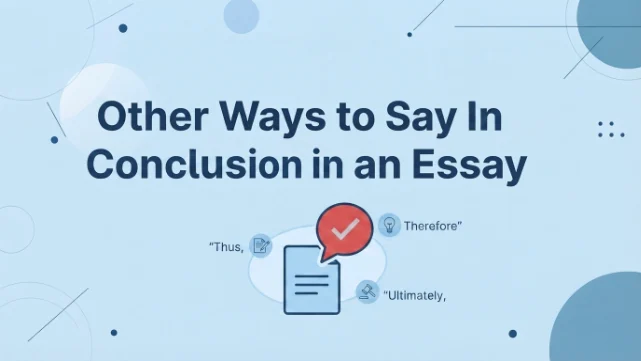
Looking for alternatives to “in conclusion” for your essay? The best options include to conclude, in summary, to sum up, overall, and ultimately. Using varied transition phrases makes your writing sound more academic, polished, and less repetitive.
Top 5 alternatives: to conclude, in summary, to sum up, overall, ultimately
“The right tone makes your English sound professional and confident.”
“In conclusion” is one of the most common transition phrases used to close an essay, report, or academic paper. It signals to the reader that the writer is about to summarize the main points and deliver a final judgment or takeaway.
While the phrase is grammatically correct and widely accepted, overusing it can make writing sound repetitive and mechanical, especially in academic and professional contexts. Learning alternatives to “in conclusion” helps students and professionals express excitement in English writing conclusions with more variety, precision, and fluency.
Whether you are writing a formal academic essay, a business report, or a casual blog post, having a range of closing transitions available will make your writing feel more natural and confident.
Quick Categories
Formal alternatives to “in conclusion”
- To conclude
- In the final analysis
- On the whole
- As has been demonstrated
Pro Tip: Formal alternatives work best in academic essays, research papers, and thesis writing where precise, objective language is expected.
Casual alternatives
- All in all
- In short
- To wrap up
- Bottom line
Pro Tip: Casual alternatives suit blog posts, personal essays, or informal writing assignments where a conversational tone is acceptable.
Professional alternatives
- In summary
- To summarize
- Taking everything into account
- In light of the above
Pro Tip: Professional alternatives are ideal for business reports, cover letters, and workplace emails where clarity and structure matter most.
Informal expressions
- To sum things up
- Long story short
- At the end of the day
- Basically
Pro Tip: Informal expressions are best reserved for spoken English or casual writing, not formal academic essays.
“Varying your transitions shows the reader you have full control of your argument.”
Common Mistakes
- Overusing “in conclusion” in every essay
Repeating the same phrase in multiple paragraphs makes writing feel robotic. Example: “In conclusion, the study shows… In conclusion, we can also see…” - Using informal phrases in academic essays
Phrases like “long story short” feel out of place in formal writing. Example: “Long story short, climate change is a serious issue.” (too casual for an essay) - Placing the transition mid-argument instead of at the end
Concluding phrases should introduce the final summary, not appear too early. Example: “In conclusion, before we discuss the third point…” (incorrect placement) - Simply restating the introduction word-for-word
A conclusion should synthesize ideas, not copy the opening paragraph. Example: Repeating the thesis statement exactly as written in the introduction. - Forgetting a strong closing statement
Ending with only a transition phrase and no real insight weakens the essay. Example: “In conclusion, that is all.” (lacks substance)
What Does “In Conclusion” Mean?
“In conclusion” is a transitional phrase used at the beginning of the final paragraph of an essay to signal that the writer is about to summarize the main argument and provide closing thoughts.
Grammar note: It functions as an introductory adverbial phrase and is typically followed by a comma.
Example sentence: “In conclusion, the evidence strongly supports the need for renewable energy policies.”
When to Use “In Conclusion”
- At the start of the final paragraph of an academic essay
- When summarizing key arguments before a final statement
- In written formal essays and research papers
- Spoken English: Rarely used; sounds overly formal in conversation
- Written English: Common in academic and business writing
- Formal contexts: Essays, reports, theses
- Informal contexts: Best avoided; use lighter alternatives instead
Is It Professional or Polite to Say “In Conclusion”?
“In conclusion” is considered both polite and professional. It is a neutral, respected transition widely accepted in academic and business writing.
Business-style example: “In conclusion, our team recommends moving forward with the proposed marketing strategy.”
Polite? Yes Professional? Yes (in most academic and business contexts)
Pros and Cons of Using “In Conclusion”
Pros:
- Simple and clear
- Widely recognized and understood
- Appropriate for formal writing
- Easy to use correctly
Cons:
- Overused in student essays
- Can sound repetitive across multiple paragraphs
- Limited stylistic variation
- May feel mechanical in creative writing
“A strong conclusion is remembered longer than a strong introduction.”
Other Ways to Say “In Conclusion”
These alternatives will help you sound more fluent, confident, and natural in different types of essays and reports.
Use them according to tone, context, and audience to strengthen your closing arguments and improve overall essay structure.
1. Phrase: To conclude
Meaning: Signals the final summarizing statement of an essay. Explanation: A formal, direct way to introduce the closing paragraph. Example Sentence: “To conclude, the data confirms a clear link between diet and health.” Best Use: Academic essays Worst Use: Casual conversation Tone: Formal, direct Context Variability: professional, academic writing
2. Phrase: In summary
Meaning: Introduces a brief recap of the main points. Explanation: Common in both academic and business writing to condense key ideas. Example Sentence: “In summary, three factors contributed to the company’s growth.” Best Use: Reports, essays Worst Use: Fiction writing Tone: Neutral, professional Context Variability: professional, spoken examples
3. Phrase: To sum up
Meaning: A shorter way to introduce a final summary. Explanation: Slightly less formal than “to conclude” but still appropriate for essays. Example Sentence: “To sum up, the benefits of exercise outweigh the risks.” Best Use: Essays, presentations Worst Use: Highly formal theses Tone: Balanced, clear Context Variability: casual, professional
4. Phrase: Overall
Meaning: Indicates a general summary of everything discussed. Explanation: Useful when summarizing broad trends or overall impressions. Example Sentence: “Overall, the research supports the proposed hypothesis.” Best Use: Analytical essays Worst Use: Narrative essays Tone: General, concise Context Variability: professional, casual
5. Phrase: Ultimately
Meaning: Emphasizes the final and most important point. Explanation: Adds weight to the final conclusion by highlighting its importance. Example Sentence: “Ultimately, the evidence points toward one clear solution.” Best Use: Persuasive essays Worst Use: Simple summaries Tone: Strong, emphatic Context Variability: professional, academic
6. Phrase: In the final analysis
Meaning: Introduces the final, most considered judgment. Explanation: A sophisticated phrase used in higher-level academic writing. Example Sentence: “In the final analysis, both theories share more similarities than differences.” Best Use: Advanced essays Worst Use: Short essays Tone: Formal, analytical Context Variability: academic writing
7. Phrase: On the whole
Meaning: Summarizes the general outcome or impression. Explanation: Suggests weighing multiple points before reaching a general conclusion. Example Sentence: “On the whole, the policy has produced positive results.” Best Use: Balanced arguments Worst Use: Strong opinion essays Tone: Measured, neutral Context Variability: professional, academic
8. Phrase: In essence
Meaning: Highlights the core idea behind the argument. Explanation: Useful for distilling complex arguments into a simple statement. Example Sentence: “In essence, the argument centers on personal responsibility.” Best Use: Philosophical essays Worst Use: Data-heavy reports Tone: Reflective, concise Context Variability: academic, spoken examples
9. Phrase: All in all
Meaning: A general, casual summary of the discussion. Explanation: Slightly informal but still acceptable in less formal essays. Example Sentence: “All in all, the experiment achieved its intended goal.” Best Use: Informal essays Worst Use: Formal theses Tone: Casual, friendly Context Variability: casual, spoken examples
10. Phrase: To wrap up
Meaning: Signals the closing of an essay or discussion. Explanation: Common in presentations and informal written work. Example Sentence: “To wrap up, let’s revisit the key takeaways from this study.” Best Use: Presentations Worst Use: Formal academic papers Tone: Casual, conversational Context Variability: casual, spoken examples
11. Phrase: In brief
Meaning: Introduces a short, condensed summary. Explanation: Useful when space is limited or brevity is required. Example Sentence: “In brief, the results confirm our initial predictions.” Best Use: Short essays Worst Use: Detailed research papers Tone: Concise, direct Context Variability: professional, academic
12. Phrase: As a final point
Meaning: Introduces the last idea before the summary. Explanation: Useful for transitioning into the last supporting argument. Example Sentence: “As a final point, education remains the most effective solution.” Best Use: Argumentative essays Worst Use: Narrative writing Tone: Direct, formal Context Variability: academic writing
13. Phrase: In short
Meaning: A brief way to summarize the main idea. Explanation: Works well for quick, clear conclusions. Example Sentence: “In short, the benefits far outweigh the costs.” Best Use: Concise essays Worst Use: Long, detailed reports Tone: Simple, clear Context Variability: casual, professional
14. Phrase: Given these points
Meaning: Introduces a conclusion based on the evidence presented. Explanation: Reinforces that the conclusion follows logically from the essay’s body. Example Sentence: “Given these points, the proposal should be approved.” Best Use: Argumentative essays Worst Use: Casual writing Tone: Logical, formal Context Variability: academic, professional
15. Phrase: With this in mind
Meaning: Transitions to a conclusion based on prior discussion. Explanation: Connects the summary directly to earlier arguments. Example Sentence: “With this in mind, further research is clearly necessary.” Best Use: Research essays Worst Use: Short summaries Tone: Thoughtful, formal Context Variability: academic writing
16. Phrase: To bring things to a close
Meaning: A descriptive way to introduce the final paragraph. Explanation: Slightly more expressive than standard academic transitions. Example Sentence: “To bring things to a close, let’s consider the broader implications.” Best Use: Reflective essays Worst Use: Technical reports Tone: Expressive, formal Context Variability: academic, spoken examples
17. Phrase: In light of the above
Meaning: Signals a conclusion drawn from previously stated evidence. Explanation: Common in legal, academic, and business writing. Example Sentence: “In light of the above, the committee recommends approval.” Best Use: Formal reports Worst Use: Creative writing Tone: Formal, precise Context Variability: professional, academic
18. Phrase: As has been shown
Meaning: Refers back to evidence already presented in the essay. Explanation: Reinforces the credibility of the argument before concluding. Example Sentence: “As has been shown, the correlation is statistically significant.” Best Use: Research papers Worst Use: Informal essays Tone: Analytical, formal Context Variability: academic writing
19. Phrase: Drawing this to a close
Meaning: A stylistic way to signal the essay’s ending. Explanation: Adds variety to standard academic transitions. Example Sentence: “Drawing this to a close, the evidence clearly favors reform.” Best Use: Longer essays Worst Use: Short paragraphs Tone: Formal, descriptive Context Variability: academic writing
20. Phrase: In the end
Meaning: Suggests a final outcome after considering everything. Explanation: Slightly conversational but still usable in essays. Example Sentence: “In the end, both approaches lead to similar outcomes.” Best Use: Reflective essays Worst Use: Highly formal theses Tone: Casual, reflective Context Variability: casual, spoken examples
21. Phrase: As demonstrated above
Meaning: References prior evidence before the final conclusion. Explanation: Common in scientific and analytical essays. Example Sentence: “As demonstrated above, the hypothesis holds true under testing.” Best Use: Scientific essays Worst Use: Personal essays Tone: Formal, evidence-based Context Variability: academic writing
22. Phrase: To finalize
Meaning: Introduces the last stage of the argument or discussion. Explanation: Slightly less common but useful for variety. Example Sentence: “To finalize, the recommendations should be implemented immediately.” Best Use: Business essays Worst Use: Literary analysis Tone: Formal, direct Context Variability: professional writing
23. Phrase: In closing remarks
Meaning: Signals a formal final statement, often used in speeches or essays. Explanation: Common in presentations and formal written conclusions. Example Sentence: “In closing remarks, the author reaffirms the importance of empathy.” Best Use: Formal essays Worst Use: Short reports Tone: Formal, respectful Context Variability: academic, spoken examples
24. Phrase: Bringing this together
Meaning: Suggests uniting multiple points into one final idea. Explanation: Useful when synthesizing several arguments into a conclusion. Example Sentence: “Bringing this together, it is clear that both factors matter equally.” Best Use: Comparative essays Worst Use: Single-argument essays Tone: Synthesizing, formal Context Variability: academic writing
25. Phrase: As a final thought
Meaning: Introduces a personal or reflective closing idea. Explanation: Works well for essays with a more reflective or personal tone. Example Sentence: “As a final thought, change begins with individual responsibility.” Best Use: Personal essays Worst Use: Technical writing Tone: Reflective, warm Context Variability: casual, academic
26. Phrase: All things considered
Meaning: Suggests a conclusion reached after weighing multiple factors. Explanation: Common in balanced or argumentative essays. Example Sentence: “All things considered, the benefits justify the investment.” Best Use: Balanced essays Worst Use: One-sided arguments Tone: Balanced, formal Context Variability: professional, academic
27. Phrase: Long story short
Meaning: A casual way to summarize a longer discussion. Explanation: Best suited for spoken English or informal writing. Example Sentence: “Long story short, the plan needs more funding.” Best Use: Informal writing Worst Use: Academic essays Tone: Casual, conversational Context Variability: casual, spoken examples
28. Phrase: At the end of the day
Meaning: Suggests a final, practical takeaway. Explanation: Common in spoken English and informal essays. Example Sentence: “At the end of the day, results matter more than intentions.” Best Use: Informal essays Worst Use: Formal reports Tone: Casual, practical Context Variability: casual, spoken examples
29. Phrase: Bottom line
Meaning: Introduces the most essential takeaway. Explanation: Direct and effective, though informal for academic writing. Example Sentence: “Bottom line, the strategy requires immediate revision.” Best Use: Business writing Worst Use: Academic essays Tone: Direct, informal Context Variability: professional, casual
30. Phrase: Taking everything into account
Meaning: Signals a conclusion based on a full review of all points. Explanation: Useful for essays that weigh multiple perspectives before concluding. Example Sentence: “Taking everything into account, the proposal appears well-supported.” Best Use: Argumentative essays Worst Use: Short summaries Tone: Formal, thorough Context Variability: academic, professional
“Great writers don’t just conclude, they leave a lasting impression.”
Mini Quiz
1. Which phrase is most appropriate for a formal academic essay?
A) Long story short B) To conclude C) Bottom line D) At the end of the day
2. True or False: “In conclusion” should be used in every paragraph to reinforce ideas.
3. Which phrase best fits a business report recommending action?
A) All things considered B) In light of the above C) Long story short D) Both A and B
4. Scenario: You are writing a personal reflective essay. Which closing phrase fits best?
A) As demonstrated above B) As a final thought C) In light of the above D) Bringing this together
(Answers: 1-B, 2-False, 3-D, 4-B)
Comparison Table: Top Alternatives
| Phrase | Tone | Best Use |
|---|---|---|
| To conclude | Formal | Academic essays |
| In summary | Neutral | Reports, essays |
| To sum up | Balanced | Essays, presentations |
| Overall | General | Analytical essays |
| Ultimately | Strong | Persuasive essays |
| In the final analysis | Formal | Advanced essays |
| On the whole | Measured | Balanced arguments |
| All things considered | Balanced | Argumentative essays |
| In light of the above | Formal | Formal reports |
| To wrap up | Casual | Presentations |
FAQs
1. What is the best alternative to “in conclusion” in a formal essay?
“To conclude” or “in the final analysis” are strong formal alternatives suited for academic writing.
2. Is it wrong to use “in conclusion” in an essay?
No, it is grammatically correct, but overusing it can make writing feel repetitive.
3. What phrase should I avoid using in a college essay?
Avoid overly casual expressions like “long story short” or “bottom line” in formal academic essays.
4. Can I use more than one closing phrase in an essay?
Yes, but only one should introduce the final paragraph; avoid repeating multiple transitions in the same conclusion.
5. What is a professional way to end a business report?
Phrases like “in light of the above” or “taking everything into account” work well in professional reports.
Conclusion
Learning other ways to say in conclusion helps writers avoid repetition and sound more fluent, confident, and professional. Whether writing an academic essay, a business report, or a personal reflection, choosing the right closing phrase strengthens the overall impact of your writing.
Practice using these alternatives daily and pay close attention to tone and context. Small changes in transition phrases can significantly improve the clarity, professionalism, and readability of your essays.
Which alternative will you try in your next essay? Share your favorite in the comments below.
Discover More Related Articles:
- Other Ways to Say This Shows in an Essay | Without Repeating Yourself In 2026
- Other Ways to Say This Quote Shows | In Literary Analysis For 2026

Laura Adams is a dedicated content writer and blogger known for crafting clear, informative, and engaging articles. As a contributor to Responary.com, she specializes in creating reader-friendly content that educates, inspires, and keeps audiences informed on a wide range of subjects.