Quick Answer
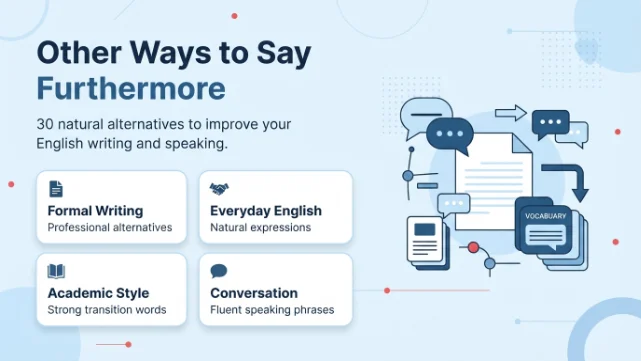
Looking for other ways to say furthermore? The most natural alternatives are moreover, in addition, additionally, besides, and what’s more. Each carries a slightly different tone, so choosing the right one depends on whether you are writing a formal report or having a casual conversation.
Furthermore is a linking word used to add extra information to a point you have already made. It signals that another idea, fact, or argument is coming, and it helps your writing or speech flow logically from one point to the next. People use it in essays, business emails, presentations, and academic writing whenever they want to strengthen an argument with additional evidence.
Learning alternatives to furthermore is one of the fastest ways to sound more fluent and avoid repeating the same connector over and over. Repetition can make writing feel flat, while a varied vocabulary helps you express excitement in English and enthusiasm when a point genuinely excites you, while still sounding precise in more neutral contexts.
This guide breaks down alternatives to furthermore, grouped by tone, so you can pick the right word for the right situation, whether that is a formal report, a friendly email, or a spoken conversation.
“The right tone makes your English sound professional and confident.”
Quick Categories
Formal alternatives to “furthermore”
- Moreover | common in essays and reports
- In addition | clear and widely accepted in formal writing
- Additionally | a slightly more academic tone
- Over and above that | used in detailed formal analysis
Pro Tip: In formal writing, place these words at the start of a new sentence, followed by a comma, to keep your structure clean and professional.
Casual alternatives
- Plus
- On top of that
- Also
- And another thing
Pro Tip: Casual connectors like “plus” work best in speech or informal messages, not in reports or academic essays.
Professional alternatives
- In addition to this
- Building on this
- Coupled with this
- Along the same lines
Pro Tip: Use professional alternatives in emails and meetings when you want to sound polished without being overly academic.
Informal expressions
- What’s more
- Not to mention
- To top it all off
- Another point is that
Pro Tip: Informal expressions add personality to spoken English, but save them for conversations with friends or colleagues you know well.
Common Mistakes
- Using “furthermore” in casual conversation.
- Example: “Furthermore, wanna grab lunch?” sounds unnatural. Use “also” or “plus” instead.
- Starting every new sentence with “furthermore.”
- Example: Repeating it three times in one paragraph makes writing feel robotic and repetitive.
- Forgetting the comma after the connector.
- Example: “Furthermore the results were positive” should be “Furthermore, the results were positive.”
- Using “furthermore” to introduce a contrasting idea.
- Example: “Furthermore, the results were disappointing” is wrong if the previous sentence was positive; use “however” instead.
- Overusing it in spoken English.
- Example: Saying “furthermore” repeatedly in a casual meeting can sound stiff; “also” or “on top of that” flows better.
What Does “Furthermore” Mean?
Furthermore is an adverb used to introduce an additional point that supports or extends a previous statement. Grammatically, it usually appears at the beginning of a sentence, followed by a comma, and connects two related ideas across sentences rather than within a single sentence.
Example Sentence: The proposal is cost-effective. Furthermore, it can be implemented within two months.
When to Use “Furthermore”
- Academic essays and research papers
- Business reports and formal proposals
- Persuasive writing where you are building an argument
- Formal presentations and speeches
Spoken vs Written: In written English, “furthermore” is common in essays, reports, and emails. In spoken English, it can sound stiff, so alternatives like “also” or “plus” are more natural in everyday conversation.
Formal vs Informal: “Furthermore” belongs firmly in the formal category. For informal speech or texting, lighter connectors such as “plus” or “on top of that” fit better.
Is It Professional or Polite to Say “Furthermore”?
“Furthermore” is both polite and professional, making it a safe choice for business writing, academic work, and formal correspondence. It rarely causes offense and signals a structured, logical way of thinking.
Business Example: “The new software reduces processing time by 20 percent. Furthermore, it integrates seamlessly with our existing systems.”
Polite? ✔️ Yes Professional? ✔️ Yes
“Learning alternatives to furthermore keeps formal writing sharp instead of repetitive.”
Pros and Cons of Using “Furthermore”
Pros:
- Clear and easy to understand
- Signals logical structure in an argument
- Widely accepted in academic and business writing
- Adds credibility to formal writing
Cons:
- Can sound repetitive if overused
- Too formal for casual conversation
- Limited emotional range compared to other connectors
- May feel outdated in modern, conversational writing
Other Ways to Say Furthermore
These alternatives will help you sound more fluent, confident, and natural in different situations. Use them according to tone, context, and audience to express excitement, admiration, or approval, or simply to keep your writing varied and engaging.
1. Phrase: Moreover
Meaning: Used to add a further, often stronger, point to a previous statement. Explanation: A close formal match for “furthermore,” common in essays and reports. Example Sentence: The plan reduces costs. Moreover, it improves customer satisfaction. Best Use: essays, reports Worst Use: casual chats Tone: formal, academic Context Variability: professional, written
2. Phrase: In addition
Meaning: Introduces an extra point related to what was just said. Explanation: One of the most versatile and widely used alternatives. Example Sentence: In addition, the team completed the project ahead of schedule. Best Use: emails, essays Worst Use: slang contexts Tone: neutral, clear Context Variability: professional, spoken, written
3. Phrase: Additionally
Meaning: Adds another fact or idea to support the main point. Explanation: Slightly more formal and academic than “in addition.” Example Sentence: Additionally, the survey revealed strong customer loyalty. Best Use: reports, essays Worst Use: texting friends Tone: formal, precise Context Variability: professional, written
4. Phrase: Besides
Meaning: Adds a further reason or point, often with a conversational feel. Explanation: Works in both semi-formal writing and everyday speech. Example Sentence: Besides, we already have the budget approved. Best Use: conversation, semi-formal writing Worst Use: legal documents Tone: casual, direct Context Variability: spoken, casual
5. Phrase: What’s more
Meaning: Introduces a surprising or emphatic additional point. Explanation: Adds emphasis and works well when the new point strengthens your argument. Example Sentence: What’s more, the results exceeded our expectations. Best Use: persuasive writing Worst Use: legal writing Tone: emphatic, engaging Context Variability: spoken, casual, professional
6. Phrase: On top of that
Meaning: Adds another point, often something extra or unexpected. Explanation: A conversational way to pile on additional information. Example Sentence: On top of that, the client extended the contract. Best Use: conversation, informal emails Worst Use: academic essays Tone: casual, energetic Context Variability: spoken, casual
7. Phrase: Further
Meaning: Signals an additional point that continues the same line of thought. Explanation: A shorter, formal alternative often used in legal or academic writing. Example Sentence: Further, the data confirms our initial hypothesis. Best Use: legal writing, reports Worst Use: casual speech Tone: formal, concise Context Variability: professional, written
8. Phrase: Not only that, but also
Meaning: Emphasizes that an additional point is just as important as the first. Explanation: Useful for building a strong, layered argument. Example Sentence: Not only that, but also the new system saved us time. Best Use: persuasive speech Worst Use: short formal notes Tone: emphatic, expressive Context Variability: spoken, professional
9. Phrase: Also
Meaning: A simple word used to add another point or detail. Explanation: The most neutral and commonly used connector in English. Example Sentence: Also, the meeting has been moved to Friday. Best Use: everyday speech, writing Worst Use: highly formal essays Tone: neutral, simple Context Variability: spoken, casual, professional
10. Phrase: Plus
Meaning: Adds an extra point in a light, informal way. Explanation: Common in casual conversation and informal writing. Example Sentence: Plus, it’s cheaper than the other option. Best Use: texting, casual talk Worst Use: formal reports Tone: casual, friendly Context Variability: spoken, casual
11. Phrase: Along with this
Meaning: Connects an additional point to the one just made. Explanation: A smooth transition phrase for structured writing. Example Sentence: Along with this, the company launched a new website. Best Use: reports, presentations Worst Use: quick texts Tone: professional, smooth Context Variability: professional, written
12. Phrase: In the same vein
Meaning: Introduces a related point that follows a similar theme. Explanation: Useful when the new point matches the tone of the previous one. Example Sentence: In the same vein, our competitors are also investing in AI. Best Use: analysis, discussions Worst Use: casual texting Tone: thoughtful, formal Context Variability: professional, spoken
13. Phrase: To add to this
Meaning: Introduces one more supporting detail. Explanation: A friendly, semi-formal way to build on a previous statement. Example Sentence: To add to this, sales increased by ten percent last quarter. Best Use: meetings, presentations Worst Use: legal documents Tone: professional, approachable Context Variability: spoken, professional
14. Phrase: Similarly
Meaning: Introduces a point that resembles or aligns with the previous one. Explanation: Best used when the new point shares a clear similarity with the last. Example Sentence: Similarly, other departments reported improved efficiency. Best Use: comparisons, reports Worst Use: unrelated additions Tone: formal, analytical Context Variability: professional, written
15. Phrase: Likewise
Meaning: Signals that the same pattern or idea applies again. Explanation: A formal way to show agreement or a matching point. Example Sentence: Likewise, our second office saw a rise in productivity. Best Use: essays, formal speech Worst Use: casual conversation Tone: formal, structured Context Variability: professional, written
16. Phrase: As well as this
Meaning: Adds another point alongside the one already mentioned. Explanation: A clear, neutral connector suitable for most writing styles. Example Sentence: As well as this, the team received positive client feedback. Best Use: emails, reports Worst Use: highly casual chats Tone: neutral, clear Context Variability: professional, written
17. Phrase: Over and above that
Meaning: Emphasizes an additional point that goes beyond what was already said. Explanation: Useful for highlighting extra value or effort. Example Sentence: Over and above that, the vendor offered free training sessions. Best Use: detailed reports Worst Use: short messages Tone: formal, emphatic Context Variability: professional, written
18. Phrase: Not to mention
Meaning: Adds an important point almost as an afterthought, though it is often significant. Explanation: Common in conversation to highlight an additional benefit. Example Sentence: Not to mention, the new office is closer to public transport. Best Use: casual talk, informal writing Worst Use: formal essays Tone: casual, expressive Context Variability: spoken, casual
19. Phrase: Another point is that
Meaning: Directly introduces a new supporting point in an argument. Explanation: Useful in debates, essays, and structured discussions. Example Sentence: Another point is that the new policy saves administrative time. Best Use: debates, essays Worst Use: casual texting Tone: formal, structured Context Variability: professional, spoken
20. Phrase: Building on this
Meaning: Introduces a point that develops or expands on the previous idea. Explanation: Common in presentations when connecting ideas logically. Example Sentence: Building on this, we plan to expand into two new markets. Best Use: presentations, meetings Worst Use: casual messages Tone: professional, constructive Context Variability: professional, spoken
21. Phrase: In addition to this
Meaning: A slightly longer version of “in addition” used for extra emphasis. Explanation: Common in formal writing when listing multiple supporting points. Example Sentence: In addition to this, the report includes updated financial projections. Best Use: reports, essays Worst Use: casual conversation Tone: formal, thorough Context Variability: professional, written
22. Phrase: Coupled with this
Meaning: Shows that an additional factor combines with the previous one. Explanation: Useful when two points work together to strengthen an argument. Example Sentence: Coupled with this, customer demand has grown steadily. Best Use: analysis, business writing Worst Use: everyday speech Tone: formal, analytical Context Variability: professional, written
23. Phrase: To add further
Meaning: Introduces an additional detail to strengthen a point. Explanation: A flexible connector for both speech and writing. Example Sentence: To add further, the app now supports three new languages. Best Use: presentations, reports Worst Use: very casual chats Tone: professional, clear Context Variability: professional, spoken
24. Phrase: On another note
Meaning: Introduces a related but slightly different additional point. Explanation: Useful when shifting slightly within the same broader topic. Example Sentence: On another note, the team also updated the user interface. Best Use: meetings, casual reports Worst Use: strict academic writing Tone: conversational, professional Context Variability: spoken, professional
25. Phrase: In tandem with this
Meaning: Shows that an additional action or fact happens alongside the first. Explanation: Useful for describing simultaneous developments. Example Sentence: In tandem with this, marketing efforts also increased. Best Use: business analysis Worst Use: casual speech Tone: formal, precise Context Variability: professional, written
26. Phrase: Along the same lines
Meaning: Introduces a point that follows a similar direction or theme. Explanation: Works well when linking two related but separate ideas. Example Sentence: Along the same lines, other regions saw similar growth. Best Use: discussions, reports Worst Use: quick messages Tone: professional, connective Context Variability: professional, spoken
27. Phrase: To further this point
Meaning: Introduces additional evidence that reinforces the original claim. Explanation: Common in persuasive or academic writing. Example Sentence: To further this point, independent research supports our findings. Best Use: essays, arguments Worst Use: casual conversation Tone: formal, persuasive Context Variability: professional, written
28. Phrase: And another thing
Meaning: Introduces one more point, often with a slightly emphatic tone. Explanation: Very casual, often used when someone feels strongly about a point. Example Sentence: And another thing, the delivery was late again. Best Use: informal complaints, conversation Worst Use: formal writing Tone: casual, emphatic Context Variability: spoken, casual
29. Phrase: To top it all off
Meaning: Introduces a final additional point, often the most significant or surprising one. Explanation: Great for storytelling or emphasizing a strong final detail. Example Sentence: To top it all off, the client signed a two-year contract. Best Use: storytelling, casual writing Worst Use: formal reports Tone: casual, expressive Context Variability: spoken, casual
30. Phrase: Adding to this
Meaning: Introduces a further supporting point in a smooth, connected way. Explanation: A flexible phrase suitable for both speech and writing. Example Sentence: Adding to this, our support team reduced response times significantly. Best Use: presentations, emails Worst Use: very casual texting Tone: professional, smooth Context Variability: professional, spoken
“Varying your connectors instantly makes your English sound more advanced.”
Mini Quiz
- Which alternative is best for a formal academic essay?
a) Plus b) Moreover c) On top of that d) And another thing - Which phrase fits best in a casual conversation with a friend?
a) In addition to this b) Coupled with this c) Plus d) To further this point - Which sentence uses “furthermore” correctly?
a) Furthermore wanna eat lunch b) Furthermore, the results were excellent c) Furthermore, but the results were bad d) The furthermore results were good - Which alternative best suits a business presentation?
a) Not to mention b) Building on this c) To top it all off d) And another thing
Answers: 1-b, 2-c, 3-b, 4-b
Comparison Table: Top Alternatives
| Phrase | Tone | Best Use |
|---|---|---|
| Moreover | Formal | Essays, reports |
| In addition | Neutral | Emails, essays |
| Additionally | Formal | Reports, academic writing |
| Besides | Casual | Conversation |
| What’s more | Emphatic | Persuasive writing |
| On top of that | Casual | Conversation, informal emails |
| Further | Formal | Legal writing, reports |
| Also | Neutral | Everyday speech and writing |
| Plus | Casual | Texting, casual talk |
| Building on this | Professional | Presentations, meetings |
FAQs
1. What is the most formal way to say furthermore?
“Moreover” and “additionally” are the most formal alternatives, commonly used in essays and academic writing.
2. What is a casual way to say furthermore?
“Plus” and “on top of that” work well in everyday conversation and informal messages.
3. Can I use “furthermore” in spoken English?
Yes, but it can sound stiff. Alternatives like “also” or “besides” feel more natural when speaking.
4. What is the difference between “furthermore” and “moreover”?
Both add extra information, but “moreover” often introduces a stronger or more important point.
5. Is “furthermore” the same as “however”?
No. “Furthermore” adds supporting information, while “however” introduces a contrast.
Conclusion
Learning other ways to say furthermore helps you avoid repetition and choose the right tone for every situation, whether you are writing a formal report or chatting casually with a colleague. These alternatives give your English more variety, precision, and confidence.
Practice using a few new alternatives each day, paying close attention to tone and context. Over time, this awareness will make both your spoken and written English sound noticeably more natural and professional.
Discover More Related Articles:

Jennifer Wilson is an experienced writer and content creator with over 20 years of expertise in digital publishing, lifestyle, and informative content. Holding a degree in English Literature, she contributes to Responary.Com, where she shares engaging, well-researched articles that help readers stay informed and inspired.