Quick Answer
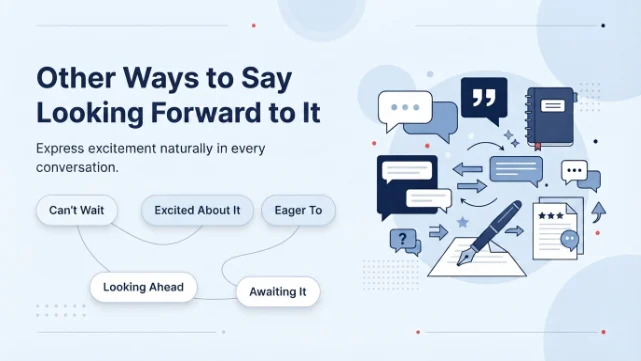
Need a fresh way to express anticipation without repeating the same phrase? Here are five go-to alternatives you can use right away: can’t wait, excited for, eagerly anticipating, counting down the days, and looking ahead to.
“Looking forward to it” is one of the most common phrases in English for expressing anticipation about a future event, meeting, or experience. People use it in emails, casual conversations, business communication, and even small talk to signal genuine interest or excitement about something upcoming.
Relying on the same expression too often can make your English sound repetitive or flat. Learning alternatives to looking forward to it helps you sound more natural, confident, and fluent, whether you are writing a professional email or chatting with a friend. It also gives you more tools to express excitement in English depending on the tone of the situation.
Whether you want something formal for a business email or something casual for a text message, this guide breaks down 30 alternatives by tone and context, so you always know exactly which phrase fits.
“The right tone makes your English sound professional and confident.”
Quick Categories
Formal Alternatives to “Looking Forward to It”
- I anticipate this with great interest
- I await this with enthusiasm
- I am eager for the opportunity
- This is something I hold in high anticipation
Pro Tip: Use formal alternatives in emails to clients, senior management, or anyone you do not know well. They signal professionalism without sounding cold.
Casual Alternatives
- Can’t wait
- So pumped for this
- Counting down the days
- This is going to be great
Pro Tip: Save casual phrases for friends, family, or informal team chats. They add warmth but can feel unprofessional in formal writing.
“Casual doesn’t mean careless. Match your words to your audience.”
Professional Alternatives
- I look forward to our collaboration
- I am eager to move forward with this
- I welcome the opportunity ahead
- I am optimistic about what’s next
Pro Tip: Professional alternatives work best in emails, proposals, and meetings where you want to sound engaged but composed.
Informal Expressions
- Stoked for this
- Buzzing for it
- Can’t stop thinking about it
- This is gonna be awesome
Pro Tip: Informal expressions are great for social media captions or texts, but avoid them in any written business communication.
Common Mistakes
- Overusing the phrase in every email
Repeating “looking forward to it” in every message makes writing feel robotic. Example: “Looking forward to it. Looking forward to it again next week.” - Using casual alternatives in formal writing
Phrases like “can’t wait” can feel too relaxed for business contexts. Example: “Can’t wait to discuss the merger terms with the board.” - Mismatching tone and context
Using overly formal phrases with friends can sound distant or awkward. Example: “I await this with enthusiasm, see you at brunch!” - Incorrect grammar structure
Forgetting the gerund form after “looking forward to.” Example: “I am looking forward to see you” (incorrect) instead of “I am looking forward to seeing you.” - Using it when the event is uncertain
The phrase implies confidence about something happening. Example: “I’m looking forward to it” about a meeting that hasn’t been confirmed yet.
What Does “Looking Forward to It” Mean?
“Looking forward to it” means feeling happy or excited about something that will happen in the future. It expresses positive anticipation.
Grammar Note: The phrase is always followed by a noun or a gerund (verb + -ing), never a base verb. For example: “looking forward to the party” or “looking forward to seeing you,” not “looking forward to see you.”
Example Sentence: “I’m really looking forward to it, the trip sounds amazing.”
When to Use “Looking Forward to It”
- Closing an email before a meeting or event
- Responding to an invitation
- Expressing enthusiasm about future plans with friends
- Ending a job interview or professional conversation politely
Spoken vs Written: In speech, it often appears casually as “I’m really looking forward to it.” In writing, especially emails, it commonly appears at the closing line before the sign-off.
Formal vs Informal: The phrase itself sits in a neutral zone, it works in both formal and informal settings, which is part of why it is so widely used and also why alternatives help you sound more precise.
Is It Professional or Polite to Say “Looking Forward to It”?
The phrase is both polite and professional in most contexts, which makes it a safe default. However, using the same closing line repeatedly across all your professional emails can start to feel generic.
Business Example: “Thank you for the update. I’m looking forward to it and will confirm my availability by Friday.”
Polite? Yes Professional? Yes (though variety strengthens your professional tone)
Pros and Cons of Using “Looking Forward to It”
Pros:
- Simple and natural
- Friendly tone
- Common usage
- Easy to understand
Cons:
- Overused in emails and conversation
- Limited emotional range
- Can sound generic in formal writing
- Doesn’t always match higher-stakes professional tone
“Fluency isn’t about knowing more words, it’s about knowing the right word for the moment.”
Other Ways to Say Looking Forward to It
These alternatives will help you sound more fluent, confident, and natural in different situations. Use them according to tone, context, and audience to express excitement, admiration, or approval.
1. Phrase: Can’t wait
Meaning: Expresses strong, immediate excitement. Explanation: A casual, high-energy way to show anticipation. Example Sentence: “Can’t wait to see you this weekend!” Best Use: Friends, texts Worst Use: Formal emails Tone: Casual, enthusiastic, warm Context Variability: casual, spoken
2. Phrase: Excited for
Meaning: Shows genuine enthusiasm about something upcoming. Explanation: Slightly more expressive than “looking forward to.” Example Sentence: “I’m excited for the product launch next month.” Best Use: Team chats, social posts Worst Use: Very formal writing Tone: Upbeat, friendly, direct Context Variability: casual, professional
3. Phrase: Eagerly anticipating
Meaning: Waiting for something with strong, positive expectation. Explanation: A formal, polished way to express anticipation. Example Sentence: “We are eagerly anticipating the results of the trial.” Best Use: Formal reports, emails Worst Use: Texting friends Tone: Formal, composed, precise Context Variability: professional
4. Phrase: Counting down the days
Meaning: Marking time until an event arrives. Explanation: Implies strong excitement and active anticipation. Example Sentence: “I’m counting down the days until the concert.” Best Use: Personal events Worst Use: Business proposals Tone: Playful, eager, personal Context Variability: casual, spoken
5. Phrase: Looking ahead to
Meaning: Focusing positively on a future event or period. Explanation: A neutral, slightly formal alternative. Example Sentence: “We’re looking ahead to a strong quarter.” Best Use: Business updates Worst Use: Casual chats Tone: Neutral, forward-thinking, calm Context Variability: professional
6. Phrase: I await this with enthusiasm
Meaning: A formal declaration of anticipation. Explanation: Sounds polished and slightly elevated. Example Sentence: “I await this with enthusiasm and full preparation.” Best Use: Formal letters Worst Use: Everyday conversation Tone: Formal, refined, confident Context Variability: professional
7. Phrase: So pumped for this
Meaning: Feeling very excited about something. Explanation: A high-energy, informal expression. Example Sentence: “So pumped for this trip, it’s going to be epic.” Best Use: Social media, friends Worst Use: Client emails Tone: Energetic, informal, playful Context Variability: casual, spoken
8. Phrase: This is going to be great
Meaning: A confident, positive statement about the future. Explanation: Focuses on the outcome rather than the waiting. Example Sentence: “This is going to be great, thanks for organizing it.” Best Use: Casual conversation Worst Use: Formal writing Tone: Positive, casual, warm Context Variability: casual, spoken
9. Phrase: I anticipate this with great interest
Meaning: Expresses formal curiosity and positive expectation. Explanation: Common in academic or corporate contexts. Example Sentence: “I anticipate this with great interest given its impact on the industry.” Best Use: Reports, academic writing Worst Use: Texting Tone: Formal, analytical, composed Context Variability: professional
10. Phrase: I am eager for the opportunity
Meaning: Shows motivation and readiness for something upcoming. Explanation: Common in interviews and professional emails. Example Sentence: “I am eager for the opportunity to contribute to the team.” Best Use: Interviews, cover letters Worst Use: Casual chats Tone: Professional, motivated, polished Context Variability: professional
11. Phrase: This is something I hold in high anticipation
Meaning: A formal way to express strong future excitement. Explanation: Sounds elevated and slightly literary. Example Sentence: “This is something I hold in high anticipation after months of planning.” Best Use: Formal speeches Worst Use: Everyday texting Tone: Formal, elegant, thoughtful Context Variability: professional
12. Phrase: Stoked for this
Meaning: Very excited, energetic anticipation. Explanation: A slang term popular in casual and youth culture. Example Sentence: “Stoked for this weekend’s trip!” Best Use: Friends, informal texts Worst Use: Workplace communication Tone: Slang, energetic, youthful Context Variability: casual, spoken
13. Phrase: Buzzing for it
Meaning: Feeling excited and energized about something. Explanation: A British informal expression of excitement. Example Sentence: “I’m buzzing for it, this event has been months in the making.” Best Use: Casual British English Worst Use: Formal writing Tone: Informal, energetic, regional Context Variability: casual, spoken
14. Phrase: Can’t stop thinking about it
Meaning: Shows persistent excitement or anticipation. Explanation: Implies the event is constantly on your mind. Example Sentence: “Honestly, I can’t stop thinking about it since we booked the tickets.” Best Use: Personal conversations Worst Use: Business emails Tone: Personal, enthusiastic, expressive Context Variability: casual, spoken
15. Phrase: This is gonna be awesome
Meaning: An informal statement of confident excitement. Explanation: Very casual, often used in speech. Example Sentence: “This is gonna be awesome, I can already tell.” Best Use: Friends, informal speech Worst Use: Professional writing Tone: Casual, upbeat, relaxed Context Variability: casual, spoken
16. Phrase: I look forward to our collaboration
Meaning: Expresses positive anticipation about working together. Explanation: A polished, professional variation. Example Sentence: “I look forward to our collaboration on this project.” Best Use: Business emails Worst Use: Casual chats Tone: Professional, warm, respectful Context Variability: professional
17. Phrase: I am eager to move forward with this
Meaning: Shows readiness and enthusiasm to proceed. Explanation: Common in negotiations and proposals. Example Sentence: “I am eager to move forward with this partnership.” Best Use: Negotiations, proposals Worst Use: Personal texts Tone: Confident, professional, direct Context Variability: professional
18. Phrase: I welcome the opportunity ahead
Meaning: Expresses openness and enthusiasm for what’s coming. Explanation: A diplomatic, professional phrase. Example Sentence: “I welcome the opportunity ahead and appreciate your trust.” Best Use: Formal acceptance letters Worst Use: Informal speech Tone: Formal, gracious, composed Context Variability: professional
19. Phrase: I am optimistic about what’s next
Meaning: Expresses hopeful anticipation about the future. Explanation: Balances professionalism with warmth. Example Sentence: “I am optimistic about what’s next for the team.” Best Use: Team updates Worst Use: Very formal legal writing Tone: Hopeful, professional, balanced Context Variability: professional, spoken
20. Phrase: Thrilled about what’s coming
Meaning: Expresses strong excitement about a future event. Explanation: More expressive than standard professional phrases. Example Sentence: “We’re thrilled about what’s coming next quarter.” Best Use: Announcements Worst Use: Very formal reports Tone: Enthusiastic, warm, expressive Context Variability: professional, casual
21. Phrase: Ready and excited for this
Meaning: Combines preparedness with anticipation. Explanation: Shows both confidence and enthusiasm. Example Sentence: “I’m ready and excited for this new chapter.” Best Use: Personal announcements Worst Use: Formal correspondence Tone: Confident, warm, direct Context Variability: casual, professional
22. Phrase: Keen to see how it goes
Meaning: Shows curiosity and positive anticipation. Explanation: Common in British English, slightly understated. Example Sentence: “I’m keen to see how it goes next week.” Best Use: Workplace conversation Worst Use: Very formal writing Tone: Curious, calm, understated Context Variability: professional, spoken
23. Phrase: Anxiously awaiting
Meaning: Waiting with a mix of excitement and nervous energy. Explanation: Slightly more intense than standard anticipation phrases. Example Sentence: “I’m anxiously awaiting the exam results.” Best Use: High-stakes situations Worst Use: Light, casual topics Tone: Tense, expressive, formal Context Variability: professional, spoken
24. Phrase: Really hyped for this
Meaning: Strongly excited about an upcoming event. Explanation: Slang, popular among younger speakers. Example Sentence: “I’m really hyped for this concert.” Best Use: Social settings Worst Use: Workplace emails Tone: Slang, energetic, youthful Context Variability: casual, spoken
25. Phrase: Delighted at the prospect
Meaning: Expresses formal happiness about a future possibility. Explanation: Elegant and polished phrasing. Example Sentence: “I am delighted at the prospect of joining your team.” Best Use: Cover letters, formal replies Worst Use: Texting Tone: Formal, gracious, elevated Context Variability: professional
26. Phrase: Really looking forward to what’s ahead
Meaning: A slightly extended version emphasizing the future in general. Explanation: Useful when referring to a broader period, not one event. Example Sentence: “I’m really looking forward to what’s ahead this year.” Best Use: Year-end messages Worst Use: Very formal reports Tone: Warm, hopeful, reflective Context Variability: casual, professional
27. Phrase: Itching to get started
Meaning: Feeling impatient in a positive, eager way. Explanation: Implies strong motivation to begin. Example Sentence: “I’m itching to get started on the new project.” Best Use: Team settings Worst Use: Formal client letters Tone: Eager, informal, energetic Context Variability: casual, professional
28. Phrase: Full of anticipation
Meaning: Describes a strong internal feeling of excitement. Explanation: Slightly literary and descriptive. Example Sentence: “She was full of anticipation before the interview.” Best Use: Storytelling, descriptive writing Worst Use: Direct business emails Tone: Descriptive, formal, expressive Context Variability: professional, written
29. Phrase: Can hardly wait
Meaning: A slightly stronger version of “can’t wait.” Explanation: Common in both speech and writing. Example Sentence: “I can hardly wait to visit the new office.” Best Use: Personal and semi-formal contexts Worst Use: Legal or highly formal writing Tone: Enthusiastic, warm, expressive Context Variability: casual, professional
30. Phrase: Set to be a great experience
Meaning: Frames the future event positively before it happens. Explanation: Focuses on the outcome rather than personal feeling. Example Sentence: “This trip is set to be a great experience for everyone.” Best Use: Group announcements Worst Use: Personal, emotional messages Tone: Confident, neutral, positive Context Variability: professional, casual
“Every phrase carries a tone. Choose yours with intention.”
Mini Quiz:
- Which phrase is best for a formal cover letter?
A) So pumped for this B) Delighted at the prospect C) Buzzing for it - Which phrase would sound too casual in a client email?
A) I look forward to our collaboration B) Can’t wait C) I am eager for the opportunity - True or False: “Looking forward to it” is always followed by a base verb.
- Which phrase fits best in a text to a friend?
A) I anticipate this with great interest B) Really hyped for this C) I welcome the opportunity ahead
Answers: 1-B, 2-B, 3-False (it takes a gerund or noun), 4-B
“Small word choices create big impressions.”
Comparison Table: Top Alternatives
| Phrase | Tone | Best Use |
|---|---|---|
| Can’t wait | Casual, enthusiastic | Friends, texts |
| Excited for | Upbeat, friendly | Team chats |
| Eagerly anticipating | Formal, precise | Reports, emails |
| Counting down the days | Playful, personal | Personal events |
| Looking ahead to | Neutral, calm | Business updates |
| I await this with enthusiasm | Formal, refined | Formal letters |
| I am eager for the opportunity | Professional, polished | Interviews, cover letters |
| Thrilled about what’s coming | Warm, expressive | Announcements |
| Keen to see how it goes | Curious, understated | Workplace conversation |
| Delighted at the prospect | Formal, elevated | Cover letters |
FAQs
1. What is a formal way to say “looking forward to it”?
“I await this with enthusiasm” or “I anticipate this with great interest” are strong formal alternatives.
2. Can I use “can’t wait” in a professional email?
It is best avoided in formal writing since it can sound too casual for business tone.
3. What is the grammar rule for “looking forward to”?
It must be followed by a noun or a gerund, such as “looking forward to seeing you,” never a base verb.
4. What are some professional reaction phrases for showing enthusiasm?
Phrases like “I welcome the opportunity ahead” and “I am optimistic about what’s next” work well professionally.
5. Why should I learn alternatives to “looking forward to it”?
Using varied expressions helps you avoid repetition and sound more fluent and natural in both speech and writing.
Conclusion
Learning alternatives to “looking forward to it” gives you the flexibility to match your tone to any situation, whether formal, professional, or casual. Instead of relying on one phrase repeatedly, you can now choose from 30 different expressions that fit your audience and context precisely.
Practice using a few of these phrases daily in your emails, conversations, and messages. Paying attention to tone will not only expand your vocabulary but also make your English sound more confident, natural, and professional.
If this guide helped you speak and write with more confidence, share it with someone learning English too.
Discover More Related Articles:
- Other Ways to Say I Believe | For Clear Communication In 2026
- Other Ways to Say I Agree| Upgrade Your English In 2026

Laura Adams is a dedicated content writer and blogger known for crafting clear, informative, and engaging articles. As a contributor to Responary.com, she specializes in creating reader-friendly content that educates, inspires, and keeps audiences informed on a wide range of subjects.