Quick Answer
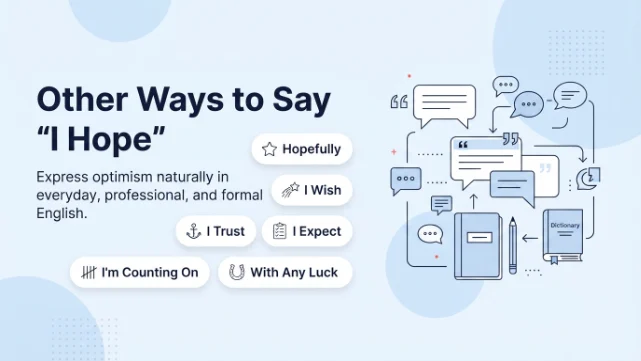
Looking for other ways to say I hope? Try alternatives like I trust, I’m confident, fingers crossed, here’s hoping, and I anticipate. These phrases help you sound more fluent, natural, and emotionally precise depending on the situation.
Top 5 alternatives: I trust, I’m confident, fingers crossed, here’s hoping, I anticipate
“The right tone makes your English sound professional and confident.”
“I hope” is one of the most common phrases in English, used to express a wish, expectation, or desire for a positive outcome. People use it in emails, conversations, prayers, and everyday small talk to soften requests or express optimism about the future.
However, repeating “I hope” too often can make your English sound repetitive or emotionally flat. Learning alternatives to I hope allows you to match your tone to the situation, whether you want to sound formal in a business email or casual with a friend.
Exploring different ways to express excitement in English, confidence, or concern also helps you build a richer vocabulary. This guide breaks down 30 alternatives across formal, casual, professional, and informal categories, along with usage tips, common mistakes, and a quiz to test your understanding.
Quick Categories
Formal Alternatives to “I Hope”
- I trust
- It is my hope that
- I have every confidence that
- I anticipate
Pro Tip: Use formal alternatives in emails, reports, and official documents where a professional tone is expected.
Casual Alternatives
- Fingers crossed
- Here’s hoping
- I’m wishing for
- I have a feeling that
Pro Tip: Casual alternatives work best in text messages, chats with friends, or informal conversations.
Professional Alternatives
- I’m confident that
- I look forward to
- I’m optimistic that
- I anticipate that
Pro Tip: In workplace communication, pair these phrases with clear next steps to sound proactive rather than uncertain.
Informal Expressions
- I’m crossing my fingers that
- God willing
- I’m banking on
- I’m praying that
Pro Tip: Informal expressions add personality to your speech but should be avoided in formal writing or business settings.
“Alternatives to a phrase are not just synonyms, they are tone adjustments.”
Common Mistakes People Make With “I Hope”
- Overusing “I hope” in every sentence
Example: “I hope you’re well. I hope we can meet. I hope it works out.” - Using “I hope” when certainty is needed
Example: “I hope the report is due tomorrow” (should be a fact, not a hope). - Mixing tenses incorrectly
Example: “I hope you was there” instead of “I hope you were there.” - Using “I hope” in place of “I wish” for regrets
Example: “I hope I had studied more” (should be “I wish I had studied more”). - Sounding uncertain in professional messages
Example: “I hope this makes sense” in a formal report weakens authority.
What Does “I Hope” Mean?
“I hope” expresses a wish or desire that something will happen or be true, usually with a positive expectation. Grammatically, it is often followed by a clause in present or future tense, such as “I hope you succeed” or “I hope it rains tomorrow.”
Example Sentence: I hope the meeting goes smoothly tomorrow.
When to Use “I Hope”
- To express a wish about a future event
- To soften a request or suggestion
- To show optimism or good intentions
- To close emails or messages politely
Spoken vs Written: Common in both, but spoken use is often more casual (“Hope it works out!”), while written use in emails tends to be slightly more structured (“I hope this email finds you well”).
Formal vs Informal: Acceptable in both registers, though formal writing often pairs it with more precise alternatives like “I trust” or “I anticipate.”
“Small phrase changes create big tone differences.”
Is It Professional or Polite to Say “I Hope”?
“I hope” is polite and widely accepted in everyday communication, but it can sound slightly passive or uncertain in high-stakes professional writing.
Business Example: “I hope we can finalize the contract by Friday” sounds polite, but “I trust we can finalize the contract by Friday” sounds more confident and professional.
Polite? Yes Professional? Not always, in most formal contexts a stronger alternative is preferred.
Pros and Cons of Using “I Hope”
Pros:
- Simple and natural
- Friendly tone
- Common usage
- Easy to understand
Cons:
- Too informal for work in some contexts
- Overused
- Limited emotional range
- Not suitable for formal writing when certainty is needed
Other Ways to Say I Hope
These alternatives will help you sound more fluent, confident, and natural in different situations. Use them according to tone, context, and audience to express excitement, optimism, or professional reassurance.
1. Phrase: I trust
Meaning: Expresses confidence that something will happen as expected. Explanation: Sounds formal and assured, common in professional writing. Example Sentence: I trust the shipment will arrive on time. Best Use: Business emails Worst Use: Casual chats Tone: Formal, confident, assured Context Variability: professional, written
2. Phrase: I’m hoping
Meaning: A softer, ongoing version of “I hope.” Explanation: Adds a conversational, in-progress feel to a wish. Example Sentence: I’m hoping we can reschedule the call. Best Use: Everyday conversation Worst Use: Legal documents Tone: Neutral, gentle, natural Context Variability: casual, spoken
3. Phrase: I’m confident that
Meaning: Expresses strong belief in a positive outcome. Explanation: Sounds assertive and professional compared to “I hope.” Example Sentence: I’m confident that the project will succeed. Best Use: Presentations, reports Worst Use: Casual texts Tone: Assertive, professional, positive Context Variability: professional, spoken
4. Phrase: Fingers crossed
Meaning: An idiom expressing hope for good luck. Explanation: Very casual and playful, often used with friends. Example Sentence: Fingers crossed the weather stays nice for the picnic. Best Use: Friendly chats Worst Use: Formal emails Tone: Playful, casual, hopeful Context Variability: casual, spoken
5. Phrase: Here’s hoping
Meaning: An informal way to express a wish for something good. Explanation: Common in speech, adds warmth and optimism. Example Sentence: Here’s hoping the traffic clears up soon. Best Use: Casual speech Worst Use: Business reports Tone: Warm, informal, hopeful Context Variability: casual, spoken
6. Phrase: I wish
Meaning: Expresses a desire, sometimes for something less likely. Explanation: Slightly different nuance, often used for unlikely outcomes. Example Sentence: I wish the flight arrives early. Best Use: Personal wishes Worst Use: Certain facts Tone: Wistful, sincere, personal Context Variability: casual, spoken, written
7. Phrase: With any luck
Meaning: Suggests a hopeful outcome depends partly on chance. Explanation: Adds a light, optimistic tone to a statement. Example Sentence: With any luck, we’ll finish the project early. Best Use: Informal updates Worst Use: Formal contracts Tone: Light, hopeful, casual Context Variability: casual, spoken
8. Phrase: I’m optimistic that
Meaning: Expresses a positive outlook about the future. Explanation: Sounds professional while still conveying hope. Example Sentence: I’m optimistic that sales will improve next quarter. Best Use: Business updates Worst Use: Very casual talk Tone: Positive, professional, forward-looking Context Variability: professional, written
9. Phrase: I have faith that
Meaning: Expresses strong trust in a positive result. Explanation: Carries emotional depth, often used in personal contexts. Example Sentence: I have faith that things will work out. Best Use: Personal encouragement Worst Use: Technical reports Tone: Sincere, warm, trusting Context Variability: casual, spoken
10. Phrase: I anticipate
Meaning: Expresses an expectation of a future event. Explanation: Formal and precise, common in professional writing. Example Sentence: I anticipate a strong response to the campaign. Best Use: Reports, forecasts Worst Use: Casual conversation Tone: Formal, precise, professional Context Variability: professional, written
11. Phrase: I’m counting on
Meaning: Expresses reliance on a hoped-for outcome. Explanation: Adds a sense of dependency or expectation. Example Sentence: I’m counting on good weather this weekend. Best Use: Everyday speech Worst Use: Formal writing Tone: Hopeful, dependent, casual Context Variability: casual, spoken
12. Phrase: I believe
Meaning: Expresses personal conviction about a future outcome. Explanation: Sounds confident and can replace “I hope” in many contexts. Example Sentence: I believe the plan will succeed. Best Use: Speeches, discussions Worst Use: Purely factual statements Tone: Confident, sincere, assertive Context Variability: professional, spoken
13. Phrase: I’m banking on
Meaning: Expresses strong reliance on a hoped-for result. Explanation: Informal and slightly risk-implying tone. Example Sentence: I’m banking on a good turnout for the event. Best Use: Informal planning Worst Use: Formal documents Tone: Informal, hopeful, confident Context Variability: casual, spoken
14. Phrase: I’m crossing my fingers that
Meaning: A playful way to express hope for luck. Explanation: Adds humor and warmth to everyday speech. Example Sentence: I’m crossing my fingers that we get the approval. Best Use: Friendly conversation Worst Use: Business proposals Tone: Playful, warm, casual Context Variability: casual, spoken
15. Phrase: It is my hope that
Meaning: A formal restatement of “I hope.” Explanation: Common in official speeches and formal writing. Example Sentence: It is my hope that this agreement benefits both parties. Best Use: Formal speeches Worst Use: Casual chats Tone: Formal, diplomatic, polished Context Variability: professional, written
16. Phrase: I look forward to
Meaning: Expresses positive anticipation of a future event. Explanation: Professional and polite, common in emails. Example Sentence: I look forward to hearing from you soon. Best Use: Email closings Worst Use: Casual texting Tone: Polite, professional, warm Context Variability: professional, written
17. Phrase: I’m keeping my fingers crossed
Meaning: An extended, casual version of hoping for luck. Explanation: Slightly more expressive than the shorter idiom. Example Sentence: I’m keeping my fingers crossed for good news. Best Use: Personal conversation Worst Use: Formal reports Tone: Hopeful, casual, expressive Context Variability: casual, spoken
18. Phrase: I’m confident
Meaning: A shorter version expressing certainty about an outcome. Explanation: Direct and assertive, useful in professional speech. Example Sentence: I’m confident everything will go as planned. Best Use: Meetings Worst Use: Uncertain situations Tone: Assertive, professional, direct Context Variability: professional, spoken
19. Phrase: Hopefully
Meaning: An adverb expressing a wish for a positive outcome. Explanation: Very common and flexible across tones. Example Sentence: Hopefully, the delay won’t affect the launch date. Best Use: General conversation Worst Use: Legal writing Tone: Neutral, flexible, hopeful Context Variability: casual, professional, spoken
20. Phrase: I’m praying that
Meaning: Expresses a deep, often emotional hope. Explanation: Carries spiritual or heartfelt weight. Example Sentence: I’m praying that everything turns out fine. Best Use: Personal, emotional talk Worst Use: Business writing Tone: Emotional, sincere, personal Context Variability: casual, spoken
21. Phrase: I’m expecting
Meaning: Expresses anticipation of a likely outcome. Explanation: Sounds more certain than “I hope.” Example Sentence: I’m expecting good feedback from the client. Best Use: Professional updates Worst Use: Uncertain predictions Tone: Confident, neutral, professional Context Variability: professional, spoken
22. Phrase: I have a feeling that
Meaning: Expresses an instinctive hope or belief. Explanation: Casual and personal, based on intuition. Example Sentence: I have a feeling that things will improve soon. Best Use: Personal conversation Worst Use: Formal reports Tone: Intuitive, casual, warm Context Variability: casual, spoken
23. Phrase: I’m holding out hope that
Meaning: Expresses persistent hope despite uncertainty. Explanation: Adds emotional resilience to the statement. Example Sentence: I’m holding out hope that the situation improves. Best Use: Emotional support Worst Use: Business emails Tone: Resilient, sincere, hopeful Context Variability: casual, spoken
24. Phrase: I’m rooting for
Meaning: Expresses support and hope for someone’s success. Explanation: Encouraging and friendly tone. Example Sentence: I’m rooting for you in the interview. Best Use: Encouragement Worst Use: Formal writing Tone: Supportive, warm, casual Context Variability: casual, spoken
25. Phrase: I dare say
Meaning: Expresses a confident, slightly formal assumption. Explanation: Adds a polished, old-fashioned tone. Example Sentence: I dare say the results will surprise everyone. Best Use: Formal speech Worst Use: Casual texting Tone: Formal, confident, polished Context Variability: professional, written
26. Phrase: I’m sure
Meaning: Expresses strong confidence in an outcome. Explanation: Direct and simple, works across many contexts. Example Sentence: I’m sure the team will handle it well. Best Use: General reassurance Worst Use: Highly uncertain topics Tone: Confident, direct, neutral Context Variability: casual, professional, spoken
27. Phrase: I have every confidence that
Meaning: A stronger, more formal way to express trust. Explanation: Adds emphasis and professionalism to the statement. Example Sentence: I have every confidence that you will succeed. Best Use: Formal encouragement Worst Use: Casual small talk Tone: Formal, strong, reassuring Context Variability: professional, written
28. Phrase: I’m wishing for
Meaning: A gentle expression of desire for something good. Explanation: Soft and emotional, often used informally. Example Sentence: I’m wishing for a peaceful weekend. Best Use: Personal reflection Worst Use: Business reports Tone: Gentle, sincere, casual Context Variability: casual, spoken
29. Phrase: God willing
Meaning: Expresses hope with a spiritual or fate-based tone. Explanation: Common in cultures where faith influences daily speech. Example Sentence: God willing, we will meet again soon. Best Use: Personal, cultural speech Worst Use: Corporate writing Tone: Spiritual, sincere, warm Context Variability: casual, spoken
30. Phrase: Here’s to hoping
Meaning: A toast-like, upbeat expression of hope. Explanation: Adds a celebratory, optimistic tone to a statement. Example Sentence: Here’s to hoping next year is even better. Best Use: Celebratory speech Worst Use: Formal documents Tone: Upbeat, optimistic, casual Context Variability: casual, spoken
“Every phrase carries a tone, choose wisely and speak with intention.”
Mini Quiz: Test Your Understanding
- Which phrase is most appropriate in a formal business email?
a) Fingers crossed b) I trust c) God willing d) Here’s to hoping - Which alternative works best when comforting a friend before their exam?
a) I anticipate b) I’m rooting for you c) It is my hope that d) I dare say - Which phrase sounds most confident and assertive in a meeting?
a) I’m wishing for b) I’m confident that c) Fingers crossed d) I’m praying that - Which phrase would suit a professional email closing?
a) I look forward to b) I’m banking on c) Here’s hoping d) I’m holding out hope
Answers: 1-b, 2-b, 3-b, 4-a
Comparison Table: Top Alternatives
| Phrase | Tone | Best Use |
|---|---|---|
| I trust | Formal, confident | Business emails |
| I’m confident that | Assertive, professional | Presentations |
| Fingers crossed | Playful, casual | Friendly chats |
| Here’s hoping | Warm, informal | Casual speech |
| I anticipate | Formal, precise | Reports, forecasts |
| I look forward to | Polite, professional | Email closings |
| I believe | Confident, sincere | Speeches |
| Hopefully | Neutral, flexible | General conversation |
| I’m rooting for | Supportive, warm | Encouragement |
| I have every confidence that | Formal, strong | Formal encouragement |
FAQs
1. What is the most professional way to say “I hope”?
“I trust” or “I anticipate” are the most professional alternatives, especially in business emails and reports.
2. Is “I hope” grammatically correct in all tenses?
It is typically followed by present or future tense clauses, such as “I hope you succeed” rather than past tense forms.
3. What is a casual way to say “I hope” with friends?
“Fingers crossed” or “Here’s hoping” are casual, friendly alternatives common in everyday speech.
4. Can “I hope” and “I wish” be used interchangeably?
Not always. “I wish” often implies something unlikely or regretful, while “I hope” implies genuine possibility.
5. Why should I learn other ways to say “I hope”?
Learning alternatives to “I hope” helps you sound more fluent, adjust your tone appropriately, and avoid repetition in speech and writing.
Conclusion
Learning other ways to say I hope gives you the flexibility to match your tone to any situation, whether formal, professional, casual, or emotional. Instead of repeating the same phrase, you can choose words that reflect confidence, warmth, or optimism depending on your audience.
Practice using these alternatives daily in conversations, emails, and writing. Paying attention to tone and context will help you sound more natural, confident, and fluent in English over time.
Try using one new phrase from this list today and notice how it changes the tone of your message.
Discover More Related Articles:

Richard Scott is an experienced author dedicated to creating compelling and well-researched content for online audiences. As a contributor to Responary.com, he enjoys sharing knowledge through clear, engaging, and informative articles that connect with readers worldwide.