Quick Answer
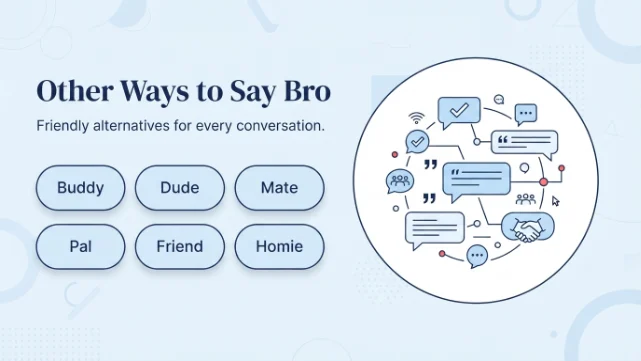
Looking for other ways to say bro that still sound friendly and casual? Try dude, man, buddy, pal, or homie. Each carries a slightly different tone, from laid-back to affectionate, so picking the right one depends on who you are talking to and how close you are.
Top 5 alternatives: dude, man, buddy, pal, homie
“Bro” is one of the most common informal words in English used to address a close friend, usually a male friend, in a casual and friendly way. It shows familiarity, warmth, and closeness between people, and it is used constantly in spoken conversation, texting, and social media.
Learning alternatives to bro helps you sound more natural and versatile in everyday English. It also helps you understand when a word is appropriate for friends versus when it would sound out of place in professional settings. If you want to express excitement in English or greet a friend casually, knowing several options keeps your speech fresh instead of repetitive.
This guide breaks down alternatives, when to use them, and how to avoid common mistakes non-native speakers make with this word.
“The right tone makes your English sound natural and confident, not just correct.”
Quick Categories
Formal alternatives to “bro”
Because “bro” is inherently informal, there are no true formal equivalents. Instead, formal English replaces it with neutral terms of address:
- Sir / Ma’am | respectful address to someone unfamiliar
- Colleague | used in workplace contexts
- Friend | neutral and safe in semi-formal writing
- Associate | used in professional or business tone
Pro Tip: Never use “bro” in emails, interviews, or formal documents. Replace it entirely with a person’s name or title instead.
Casual alternatives
- Dude
- Man
- Buddy
- Pal
Pro Tip: “Dude” and “man” work well in almost any casual conversation, regardless of regional accent or English variety.
Professional alternatives
- Colleague
- Teammate
- Partner
- Associate
Pro Tip: In workplace chats or team messages, “teammate” keeps a friendly tone without sounding unprofessional.
Informal expressions
- Homie
- Fam
- Bruh
- Mate
Pro Tip: “Mate” is common in British, Australian, and New Zealand English, while “homie” and “bruh” are more common in American slang.
“Slang words carry culture. Learn where they come from before you use them.”
Common Mistakes
- Using “bro” with strangers or elders
Incorrect: “Bro, can you tell me the time?” (to an unknown older person) - Using “bro” in professional emails
Incorrect: “Hey bro, please review the attached report.” - Overusing “bro” in every sentence
Incorrect: “Bro, I bro went to the bro store, bro.” - Using “bro” with someone who dislikes informal language
Incorrect: Calling a strict teacher “bro” in class. - Mixing regional slang incorrectly
Incorrect: Using “bruh” in a formal British business meeting.
What Does “Bro” Mean?
Bro is an informal noun, short for “brother,” used to address a close male friend or peer in a friendly and casual way. It is also used more broadly today to address friends of any gender in some casual social groups.
Grammar note: “Bro” functions as a form of direct address (a vocative), similar to calling someone by name. It is not typically used as a formal noun in a sentence structure.
Example sentence: “Hey bro, are you coming to the game tonight?”
When to Use “Bro”
- Talking to close friends
- Greeting someone casually
- Texting or messaging informally
- Sports, gaming, or social settings
Spoken vs Written
- Very common in spoken English and casual texting
- Rare in formal written English
Formal vs Informal
- Strictly informal
- Should be avoided in business or academic writing
Is It Professional or Polite to Say “Bro”?
“Bro” is friendly, but it is not considered professional in workplace or formal communication. It can sound too casual, and in some contexts, even disrespectful if used with someone of higher authority.
Business-style example: Incorrect: “Bro, I finished the report.” Correct: “Hi John, I’ve finished the report.”
Polite? ✔️ Yes Professional? ❌ No (in most cases)
Pros and Cons of Using “Bro”
Pros
- Simple and natural to say
- Friendly and warm tone
- Common usage among peers
- Easy to understand across casual settings
Cons
- Too informal for work
- Overused in daily conversation
- Limited emotional range
- Not suitable for formal writing
Other Ways to Say Bro
These alternatives will help you sound more fluent, confident, and natural in different situations. Use them according to tone, context, and audience to express excitement, admiration, or approval when greeting a friend.
“Choosing the right word for the right audience is what fluency really means.”
1. Phrase: Dude
Meaning: A casual term used to address a friend, regardless of gender in modern usage. Explanation: One of the most universal informal terms in American English. Example Sentence: “Dude, that movie was amazing!” Best Use: Friends, casual talk Worst Use: Formal meetings Tone: Relaxed, friendly, casual Context Variability: casual, spoken
2. Phrase: Man
Meaning: An informal way to address a friend or express emphasis. Explanation: Common across many English dialects for friendly emphasis. Example Sentence: “Man, I can’t believe we won!” Best Use: Excitement, friends Worst Use: Business writing Tone: Casual, energetic Context Variability: casual, spoken
3. Phrase: Buddy
Meaning: A friendly term for a close companion or friend. Explanation: Slightly warmer and softer than “bro.” Example Sentence: “Thanks for helping me out, buddy.” Best Use: Friendly gratitude Worst Use: Formal settings Tone: Warm, affectionate Context Variability: casual, spoken
4. Phrase: Pal
Meaning: An informal word for a friend, often used lightly or playfully. Explanation: Sometimes used with a hint of sarcasm depending on tone. Example Sentence: “Nice try, pal, but that’s not going to work.” Best Use: Playful teasing Worst Use: Serious formal talk Tone: Playful, light Context Variability: casual, spoken
5. Phrase: Homie
Meaning: A close friend, often from the same neighborhood or social circle. Explanation: Rooted in American urban slang, expresses loyalty and closeness. Example Sentence: “What’s up, homie? Long time no see!” Best Use: Close friends Worst Use: Workplace, strangers Tone: Casual, affectionate Context Variability: casual, spoken
6. Phrase: Fam
Meaning: Short for “family,” used to describe very close friends. Explanation: Implies a friend is as close as family. Example Sentence: “You always got my back, fam.” Best Use: Close friend groups Worst Use: Professional contexts Tone: Warm, loyal Context Variability: casual, spoken
7. Phrase: Bruh
Meaning: A casual variation of “bro,” often used for emphasis or reaction. Explanation: Popular in internet slang and youth culture. Example Sentence: “Bruh, did you really do that?” Best Use: Reacting, texting Worst Use: Formal writing Tone: Humorous, casual Context Variability: casual, spoken
8. Phrase: Mate
Meaning: A common British, Australian, and New Zealand term for friend. Explanation: Used broadly across ages and genders in these regions. Example Sentence: “Cheers, mate, I appreciate it.” Best Use: British/Australian casual talk Worst Use: American formal writing Tone: Friendly, easygoing Context Variability: casual, spoken
9. Phrase: Chief
Meaning: A playful, informal term used to address a friend. Explanation: Adds a humorous or respectful nickname feel. Example Sentence: “What’s the plan, chief?” Best Use: Playful conversation Worst Use: Serious discussions Tone: Light, humorous Context Variability: casual, spoken
10. Phrase: Boss
Meaning: A casual, friendly nickname implying respect or admiration. Explanation: Not related to workplace hierarchy in this slang context. Example Sentence: “You handled that perfectly, boss.” Best Use: Compliments, casual praise Worst Use: Actual workplace hierarchy talk Tone: Playful, respectful Context Variability: casual, spoken
11. Phrase: Champ
Meaning: A friendly term implying admiration, like calling someone a winner. Explanation: Often used encouragingly or affectionately. Example Sentence: “Good job today, champ.” Best Use: Encouragement Worst Use: Professional writing Tone: Encouraging, warm Context Variability: casual, spoken
12. Phrase: Big Guy
Meaning: An affectionate, casual nickname for a close friend. Explanation: Often used regardless of the person’s actual size. Example Sentence: “Hey big guy, ready for tonight?” Best Use: Friendly greetings Worst Use: Formal contexts Tone: Friendly, playful Context Variability: casual, spoken
13. Phrase: Amigo
Meaning: A borrowed Spanish word meaning “friend,” used casually in English. Explanation: Common in informal American English, especially in the southwest. Example Sentence: “Good to see you, amigo!” Best Use: Casual friendly greetings Worst Use: Business writing Tone: Warm, friendly Context Variability: casual, spoken
14. Phrase: Homeboy
Meaning: A close male friend, especially from the same area. Explanation: Similar to “homie” but slightly more traditional in usage. Example Sentence: “This is my homeboy from college.” Best Use: Introducing close friends Worst Use: Formal introductions Tone: Casual, loyal Context Variability: casual, spoken
15. Phrase: Brotha
Meaning: A relaxed pronunciation variant of “brother,” used like “bro.” Explanation: Common in African American Vernacular English and hip-hop culture. Example Sentence: “What’s good, brotha?” Best Use: Close friend greetings Worst Use: Formal writing Tone: Warm, casual Context Variability: casual, spoken
16. Phrase: G
Meaning: Slang for a close friend, short for “gangster” in origin but now used casually. Explanation: Common in urban and hip-hop influenced slang. Example Sentence: “What’s up, G?” Best Use: Very casual friend groups Worst Use: Professional or unfamiliar settings Tone: Cool, casual Context Variability: casual, spoken
17. Phrase: Sport
Meaning: An old-fashioned but still used friendly nickname. Explanation: Often used by older speakers or in a playful, retro tone. Example Sentence: “How’s it going, sport?” Best Use: Light, playful talk Worst Use: Serious conversations Tone: Playful, nostalgic Context Variability: casual, spoken
18. Phrase: Bud
Meaning: A shortened, friendly version of “buddy.” Explanation: Common in both American and Canadian English. Example Sentence: “Thanks for the ride, bud.” Best Use: Everyday friendly talk Worst Use: Formal writing Tone: Warm, casual Context Variability: casual, spoken
19. Phrase: Homeslice
Meaning: A playful, slightly outdated slang term for a close friend. Explanation: Used humorously today, often for comedic effect. Example Sentence: “What’s up, homeslice?” Best Use: Joking around Worst Use: Serious or formal contexts Tone: Humorous, playful Context Variability: casual, spoken
20. Phrase: Cuz
Meaning: Short for “cousin,” used loosely to mean a close friend. Explanation: Common in American slang, especially West Coast culture. Example Sentence: “I got you, cuz, don’t worry.” Best Use: Close friend circles Worst Use: Formal or unfamiliar settings Tone: Loyal, casual Context Variability: casual, spoken
21. Phrase: Homey
Meaning: An alternate spelling of “homie,” meaning a close friend. Explanation: Interchangeable with homie in most contexts. Example Sentence: “Good seeing you, homey.” Best Use: Casual reunions Worst Use: Professional writing Tone: Warm, familiar Context Variability: casual, spoken
22. Phrase: Compadre
Meaning: A borrowed Spanish term meaning close friend or companion. Explanation: Used affectionately in casual American English. Example Sentence: “Long time, compadre!” Best Use: Friendly reunions Worst Use: Formal contexts Tone: Warm, friendly Context Variability: casual, spoken
23. Phrase: Boy
Meaning: A casual term used in some dialects to mean friend. Explanation: Common in Caribbean and some American English varieties. Example Sentence: “Wah gwaan, boy?” Best Use: Regional casual talk Worst Use: Formal or unfamiliar audiences Tone: Casual, regional Context Variability: casual, spoken
24. Phrase: Homedog
Meaning: A slang variation of “homie,” meaning close friend. Explanation: Less common today but still recognized in casual slang. Example Sentence: “That’s my homedog right there.” Best Use: Playful, casual talk Worst Use: Serious or formal talk Tone: Playful, casual Context Variability: casual, spoken
25. Phrase: Bro-Bro
Meaning: An affectionate, doubled form of “bro” for emphasis. Explanation: Often used with younger friends or siblings playfully. Example Sentence: “Come on, bro-bro, let’s go!” Best Use: Playful, affectionate talk Worst Use: Formal contexts Tone: Playful, affectionate Context Variability: casual, spoken
26. Phrase: Blood
Meaning: Slang for a close, loyal friend, similar to family. Explanation: Common in British urban slang and grime culture. Example Sentence: “You’re solid, blood, thanks for that.” Best Use: Close friend circles, UK slang Worst Use: Formal or unfamiliar settings Tone: Loyal, casual Context Variability: casual, spoken
27. Phrase: Homegirl
Meaning: The female equivalent of “homie,” meaning a close friend. Explanation: Common in casual American slang. Example Sentence: “This is my homegirl from work.” Best Use: Introducing close friends Worst Use: Formal introductions Tone: Warm, casual Context Variability: casual, spoken
28. Phrase: Playa
Meaning: A casual, playful slang term for a friend. Explanation: Also historically used to mean someone charming or smooth, but often used simply as a greeting. Example Sentence: “What’s good, playa?” Best Use: Playful greetings Worst Use: Formal contexts Tone: Playful, cool Context Variability: casual, spoken
29. Phrase: Bossman
Meaning: A playful, respectful nickname for a friend. Explanation: Often used humorously, not related to actual authority. Example Sentence: “What’s the move, bossman?” Best Use: Playful respect Worst Use: Serious business talk Tone: Playful, respectful Context Variability: casual, spoken
30. Phrase: Friendo
Meaning: A humorous, informal variation of “friend.” Explanation: Often used jokingly, popularized by internet culture. Example Sentence: “Hey there, friendo, ready to go?” Best Use: Joking, lighthearted talk Worst Use: Formal writing Tone: Humorous, playful Context Variability: casual, spoken
“Every slang word tells you something about the culture it comes from.”
Mini Quiz:
1. Which word is most appropriate in a British casual conversation?
A) Mate B) Colleague C) Sir D) Associate
2. True or False: “Bro” is appropriate to use in a formal business email.
A) True B) False
3. Which word would you avoid using with someone you just met at a job interview?
A) Homie B) Sir C) Ma’am D) Colleague
4. Which of these is a female-specific casual alternative?
A) Homegirl B) Bruh C) Cuz D) Sport
Answers: 1-A, 2-B, 3-A, 4-A
Comparison Table: Top Alternatives
| Phrase | Tone | Best Use |
|---|---|---|
| Dude | Relaxed, friendly | Casual talk with friends |
| Man | Casual, energetic | Expressing excitement |
| Buddy | Warm, affectionate | Friendly gratitude |
| Pal | Playful, light | Light teasing |
| Homie | Casual, affectionate | Close friend greetings |
| Fam | Warm, loyal | Close friend groups |
| Bruh | Humorous, casual | Reacting in texts |
| Mate | Friendly, easygoing | British/Australian talk |
| Amigo | Warm, friendly | Casual greetings |
| Bud | Warm, casual | Everyday friendly talk |
FAQs
1. What is another word for “bro” in professional English?
There is no direct professional equivalent, but “colleague,” “teammate,” or the person’s name is the appropriate replacement.
2. Is “bro” used only for male friends?
Traditionally yes, but in modern casual usage it is often used for friends of any gender.
3. What is the British equivalent of “bro”?
“Mate” is the most common British, Australian, and New Zealand equivalent.
4. Can “bro” be used to express excitement in English?
Yes, “bro” and words like “dude” or “man” are often used to add emphasis or excitement in casual sentences.
5. Is it rude to call a stranger “bro”?
It can come across as overly familiar or disrespectful, especially with elders or strangers in formal situations.
Conclusion
Learning other ways to say bro gives you more flexibility and confidence in casual English conversations. Instead of repeating the same word, you can choose from dude, buddy, mate, homie, and many more depending on your audience, region, and tone.
Practice using these alternatives daily in conversation or texting to build natural fluency. Remember that tone awareness matters just as much as vocabulary. Knowing when a word fits a casual chat versus a professional setting is what truly makes your English sound fluent and confident.
Discover More Related Articles:
- Other Ways to Say Looking Forward to It | That Sound Professional In 2026
- Other Ways to Say In My Opinion| For IELTS & TOEFL In 2026

Laura Adams is a dedicated content writer and blogger known for crafting clear, informative, and engaging articles. As a contributor to Responary.com, she specializes in creating reader-friendly content that educates, inspires, and keeps audiences informed on a wide range of subjects.