Quick Answer
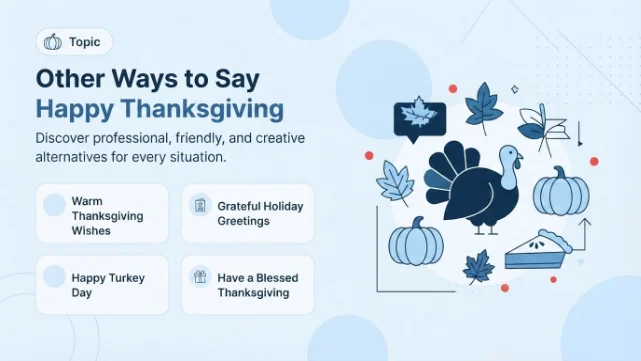
Looking for fresh alternatives to “Happy Thanksgiving”? Try phrases like “Happy Turkey Day,” “Wishing You a Blessed Thanksgiving,” “Have a Wonderful Thanksgiving,” “Grateful for You This Thanksgiving,” or “Wishing You a Season of Gratitude.” Each option carries a slightly different tone, so picking the right one helps your greeting feel more personal and natural.
“The right tone makes your English sound professional and confident.”
“Happy Thanksgiving” is the most common way to greet someone during the Thanksgiving holiday in the United States and Canada. People use it in texts, cards, emails, social media posts, and face-to-face conversations to wish others joy, gratitude, and good company during the season.
Learning alternatives to “Happy Thanksgiving” helps you avoid repeating the same phrase in cards, speeches, or messages to coworkers, friends, and family. It also allows you to match your tone to the occasion, whether that means a formal note to a client or a casual text to a close friend.
Building a wider vocabulary of seasonal greetings is also a great way to express excitement in English naturally. The more variety you use, the more fluent and confident you will sound, both in writing and in spoken conversation.
Quick Categories
Formal Alternatives to “Happy Thanksgiving”
- Wishing You a Blessed Thanksgiving
- May Your Thanksgiving Be Filled with Joy
- Wishing You Peace and Plenty This Thanksgiving
- Sending Thanksgiving Blessings Your Way
Pro Tip: Use formal alternatives in client emails, official cards, or messages to senior colleagues to keep a respectful and polished tone.
Casual Alternatives
- Happy Turkey Day
- Gobble Till You Wobble
- Happy Gobble Day
- Have a Delicious Thanksgiving
Pro Tip: Save casual phrases for close friends, family group chats, or social media captions where a playful tone fits.
Professional Alternatives
- Wishing You and Your Family a Happy Thanksgiving
- Have a Grateful Thanksgiving
- Grateful for You This Thanksgiving
- Wishing You a Restful Thanksgiving
Pro Tip: Professional greetings work well in workplace emails or team messages because they stay warm without becoming too personal.
Informal Expressions
- Happy Friendsgiving
- Cheers to Gratitude and Good Food
- Happy Fall Feast Day
- Happy Turkey Day to You and Yours
Pro Tip: Informal expressions add humor and warmth, but they should be reserved for people you already know well.
“Choosing the right greeting shows cultural awareness and emotional intelligence.”
Common Mistakes
- Using overly casual phrases in professional emails. Example: Writing “Gobble Till You Wobble” to a client instead of a formal greeting.
Using overly casual phrases in professional emails. Example: Writing “Gobble Till You Wobble” to a client instead of a formal greeting. - Repeating the same phrase in every message.
Example: Sending “Happy Thanksgiving” to ten different people without any variation. - Mixing formal and informal tone in one sentence.
Example: “Wishing you peace, plenty, and gobble gobble” sounds inconsistent. - Forgetting the audience’s relationship to you.
Example: Telling your boss “Happy Turkey Day” when a more formal tone is expected. - Overusing exclamation marks to sound enthusiastic.
Example: “Happy Thanksgiving!!!!” can look unprofessional in written communication.
What Does “Happy Thanksgiving” Mean?
“Happy Thanksgiving” is a greeting used to wish someone a joyful and meaningful Thanksgiving holiday. Grammatically, it functions as an exclamatory phrase, combining the adjective “happy” with the noun “Thanksgiving” to express a warm wish.
Example Sentence: “Happy Thanksgiving! I hope you enjoy the day with your family.”
When to Use “Happy Thanksgiving”
- Greeting cards and holiday letters
- Text messages to friends and family
- Social media posts and captions
- Workplace emails before the holiday break
- Spoken greetings at gatherings or dinners
Spoken vs Written: In spoken conversation, it is often shortened or paired with a smile and a handshake or hug. In writing, it usually appears at the start or end of a message.
Formal vs Informal: The phrase itself sits in a neutral zone, making it appropriate for both formal and informal settings, though the alternatives around it can shift the tone.
Is It Professional or Polite to Say “Happy Thanksgiving”?
“Happy Thanksgiving” is both polite and widely accepted in professional settings, unlike many casual expressions on this list.
Business Example: “Happy Thanksgiving to you and your team. We appreciate your partnership this year.”
Polite? ✔️ Yes Professional? ✔️ Yes
Pros and Cons of Using “Happy Thanksgiving”
Pros:
- Simple and natural
- Friendly tone
- Common usage
- Easy to understand
Cons:
- Can feel repetitive after frequent use
- Lacks personalization
- Limited emotional range
- May sound generic in personal messages
“Variety in language turns a generic greeting into a memorable one.”
Other Ways to Say “Happy Thanksgiving” (With Examples)
These alternatives will help you sound more fluent, confident, and natural in different situations. Use them according to tone, context, and audience to express excitement, gratitude, or warmth.
1. Phrase: Happy Turkey Day
Meaning: A playful, informal way to wish someone a good Thanksgiving. Explanation: Refers to the traditional Thanksgiving turkey dinner. Example Sentence: “Happy Turkey Day! Save me some pie.” Best Use: friends, family Worst Use: business emails Tone: playful, casual, warm Context Variability: casual, spoken
2. Phrase: Wishing You a Blessed Thanksgiving
Meaning: A formal wish for a meaningful and spiritually fulfilling holiday. Explanation: Often used in religious or traditional family contexts. Example Sentence: “Wishing you a blessed Thanksgiving filled with love and peace.” Best Use: cards, formal notes Worst Use: casual texting Tone: formal, warm, respectful Context Variability: formal, written
3. Phrase: Have a Wonderful Thanksgiving
Meaning: A general wish for an enjoyable holiday experience. Explanation: Neutral and versatile, suitable for almost any audience. Example Sentence: “Have a wonderful Thanksgiving with your loved ones.” Best Use: coworkers, acquaintances Worst Use: none, very safe Tone: neutral, friendly, polite Context Variability: professional, casual, written
4. Phrase: Enjoy Your Thanksgiving Feast
Meaning: A wish focused on enjoying the holiday meal. Explanation: Highlights the food and gathering aspect of the day. Example Sentence: “Enjoy your Thanksgiving feast with the whole family.” Best Use: friends, family Worst Use: formal business cards Tone: warm, casual, food-focused Context Variability: casual, spoken
5. Phrase: Wishing You and Your Family a Happy Thanksgiving
Meaning: Extends good wishes to the person and their household. Explanation: Adds a personal touch by including family members. Example Sentence: “Wishing you and your family a happy Thanksgiving this year.” Best Use: coworkers, clients Worst Use: strangers Tone: professional, warm, inclusive Context Variability: professional, written
6. Phrase: Gobble Till You Wobble
Meaning: A humorous way to wish someone an enjoyable, food-filled day. Explanation: A pun on the turkey’s “gobble” sound and overeating. Example Sentence: “Gobble till you wobble this Thanksgiving!” Best Use: close friends Worst Use: professional settings Tone: funny, playful, silly Context Variability: casual, spoken
7. Phrase: Happy Gobble Day
Meaning: A lighthearted nickname for Thanksgiving. Explanation: Uses “gobble” as a playful stand-in for “Thanksgiving.” Example Sentence: “Happy Gobble Day, everyone!” Best Use: social media, texts Worst Use: formal writing Tone: fun, casual, quirky Context Variability: casual, spoken
8. Phrase: Wishing You Warmth and Gratitude This Thanksgiving
Meaning: A heartfelt wish focused on emotional connection. Explanation: Emphasizes gratitude as the core theme of the holiday. Example Sentence: “Wishing you warmth and gratitude this Thanksgiving season.” Best Use: cards, speeches Worst Use: quick texts Tone: heartfelt, formal, reflective Context Variability: formal, written
9. Phrase: Have a Grateful Thanksgiving
Meaning: Encourages the person to focus on thankfulness during the day. Explanation: Combines the emotion of gratitude with the holiday name. Example Sentence: “Have a grateful Thanksgiving surrounded by people you love.” Best Use: coworkers, clients Worst Use: none, versatile Tone: warm, professional, sincere Context Variability: professional, casual
10. Phrase: Cheers to a Joyful Thanksgiving
Meaning: A celebratory way to wish someone happiness on the holiday. Explanation: Uses “cheers” to add a toast-like, celebratory feel. Example Sentence: “Cheers to a joyful Thanksgiving with good food and great company.” Best Use: parties, gatherings Worst Use: formal emails Tone: celebratory, upbeat, social Context Variability: casual, spoken
11. Phrase: Sending Thanksgiving Blessings Your Way
Meaning: A warm, formal wish sent from a distance. Explanation: Common in cards or messages to people not physically present. Example Sentence: “Sending Thanksgiving blessings your way from our family to yours.” Best Use: cards, long-distance messages Worst Use: in-person greetings Tone: formal, sincere, heartfelt Context Variability: formal, written
12. Phrase: Wishing You a Season of Gratitude
Meaning: Extends the wish beyond a single day to the whole season. Explanation: Focuses on the broader theme of thankfulness in autumn. Example Sentence: “Wishing you a season of gratitude and joyful moments.” Best Use: newsletters, formal notes Worst Use: casual chats Tone: reflective, formal, warm Context Variability: formal, written
13. Phrase: Happy Harvest Season
Meaning: Refers to the autumn harvest tradition connected to Thanksgiving. Explanation: A more general seasonal greeting than a holiday-specific one. Example Sentence: “Happy Harvest Season to you and your loved ones.” Best Use: community events, cards Worst Use: business emails Tone: rustic, warm, seasonal Context Variability: casual, written
14. Phrase: Enjoy This Day of Thanks
Meaning: Encourages the person to appreciate the holiday’s meaning. Explanation: Focuses on gratitude rather than food or festivities. Example Sentence: “Enjoy this day of thanks with the people who matter most.” Best Use: speeches, cards Worst Use: quick texts Tone: reflective, sincere, gentle Context Variability: formal, spoken
15. Phrase: Wishing You Peace and Plenty This Thanksgiving
Meaning: A traditional wish for calm and abundance. Explanation: A classic phrase often seen on holiday greeting cards. Example Sentence: “Wishing you peace and plenty this Thanksgiving season.” Best Use: cards, formal notes Worst Use: casual texting Tone: traditional, formal, poetic Context Variability: formal, written
16. Phrase: May Your Thanksgiving Be Filled with Joy
Meaning: A formal blessing-style wish for happiness during the holiday. Explanation: Uses “may” to create a hopeful, formal tone. Example Sentence: “May your Thanksgiving be filled with joy and laughter.” Best Use: cards, speeches Worst Use: casual chats Tone: formal, poetic, warm Context Variability: formal, written
17. Phrase: Happy Friendsgiving
Meaning: A greeting for a Thanksgiving gathering celebrated with friends. Explanation: Combines “friends” and “Thanksgiving” into one popular term. Example Sentence: “Happy Friendsgiving! Thanks for hosting us all.” Best Use: friend groups, social events Worst Use: formal business context Tone: fun, casual, social Context Variability: casual, spoken
18. Phrase: Wishing You a Cozy Thanksgiving
Meaning: A wish focused on comfort and relaxation. Explanation: Highlights the cozy, homey feeling associated with the season. Example Sentence: “Wishing you a cozy Thanksgiving by the fire with loved ones.” Best Use: friends, family Worst Use: formal emails Tone: warm, comforting, casual Context Variability: casual, written
19. Phrase: Sending You Thanksgiving Cheer
Meaning: A friendly way to share holiday spirit with someone. Explanation: Uses “cheer” to emphasize a joyful, upbeat mood. Example Sentence: “Sending you Thanksgiving cheer all the way from our home.” Best Use: cards, social posts Worst Use: formal reports Tone: cheerful, warm, friendly Context Variability: casual, written
20. Phrase: Have a Delicious Thanksgiving
Meaning: A lighthearted wish focused on enjoying the holiday food. Explanation: Playfully centers the greeting around the Thanksgiving meal. Example Sentence: “Have a delicious Thanksgiving, and don’t forget the pie.” Best Use: friends, family Worst Use: professional emails Tone: playful, casual, food-focused Context Variability: casual, spoken
21. Phrase: Wishing You Abundance This Thanksgiving
Meaning: A formal wish for prosperity and fullness in life. Explanation: Extends beyond food to include general life abundance. Example Sentence: “Wishing you abundance this Thanksgiving and throughout the year.” Best Use: formal cards, business notes Worst Use: casual texts Tone: formal, sincere, elevated Context Variability: formal, written
22. Phrase: Happy Turkey Day to You and Yours
Meaning: A casual greeting extended to the person’s entire family. Explanation: Adds inclusivity to the popular “Happy Turkey Day” phrase. Example Sentence: “Happy Turkey Day to you and yours this year.” Best Use: friends, extended family Worst Use: formal business settings Tone: casual, warm, playful Context Variability: casual, spoken
23. Phrase: Grateful for You This Thanksgiving
Meaning: Expresses personal appreciation for the specific recipient. Explanation: Shifts the focus from the holiday to the relationship itself. Example Sentence: “Grateful for you this Thanksgiving and always.” Best Use: close friends, family, clients Worst Use: mass messages Tone: sincere, personal, warm Context Variability: professional, casual
24. Phrase: Wishing You a Heartwarming Thanksgiving
Meaning: A wish for emotional connection and warmth during the holiday. Explanation: Emphasizes feeling rather than food or festivities. Example Sentence: “Wishing you a heartwarming Thanksgiving surrounded by family.” Best Use: cards, formal messages Worst Use: quick texts Tone: sincere, warm, formal Context Variability: formal, written
25. Phrase: Enjoy Time with Loved Ones This Thanksgiving
Meaning: Encourages the person to value togetherness during the holiday. Explanation: Focuses on relationships rather than the holiday itself. Example Sentence: “Enjoy time with loved ones this Thanksgiving season.” Best Use: coworkers, friends Worst Use: none, very versatile Tone: warm, neutral, sincere Context Variability: professional, casual
26. Phrase: Wishing You a Thanksgiving Full of Blessings
Meaning: A formal wish emphasizing gratitude and good fortune. Explanation: Common in religious or traditional greeting cards. Example Sentence: “Wishing you a Thanksgiving full of blessings and joy.” Best Use: cards, formal notes Worst Use: casual texting Tone: formal, sincere, traditional Context Variability: formal, written
27. Phrase: Happy Thanks-Giving Season
Meaning: Extends the greeting to cover the broader holiday season. Explanation: Slightly formal variation that highlights the full season. Example Sentence: “Happy Thanks-Giving Season to you and your family.” Best Use: newsletters, formal emails Worst Use: casual chats Tone: formal, seasonal, warm Context Variability: professional, written
28. Phrase: Cheers to Gratitude and Good Food
Meaning: A celebratory way to combine thankfulness with the Thanksgiving meal. Explanation: Uses “cheers” to add a toast-style, festive tone. Example Sentence: “Cheers to gratitude and good food this Thanksgiving!” Best Use: dinner parties, gatherings Worst Use: formal emails Tone: festive, upbeat, social Context Variability: casual, spoken
29. Phrase: Wishing You a Restful Thanksgiving
Meaning: A wish for relaxation and downtime during the holiday. Explanation: Focuses on rest rather than celebration or food. Example Sentence: “Wishing you a restful Thanksgiving away from work stress.” Best Use: coworkers, professional contacts Worst Use: festive social posts Tone: calm, professional, sincere Context Variability: professional, written
30. Phrase: Happy Fall Feast Day
Meaning: A playful nickname for Thanksgiving centered on the autumn meal. Explanation: Combines “fall” and “feast” for a fun, seasonal twist. Example Sentence: “Happy Fall Feast Day! Enjoy every bite.” Best Use: social media, casual texts Worst Use: formal business emails Tone: playful, seasonal, fun Context Variability: casual, spoken
“Small changes in wording can completely shift how warm or formal your message feels.”
Mini Quiz
1. Which phrase is most appropriate in a formal client email?
A) Gobble Till You Wobble B) Wishing You a Blessed Thanksgiving C) Happy Gobble Day
2. Your close friend is hosting a casual dinner. Which greeting fits best?
A) Wishing You Abundance This Thanksgiving B) Happy Turkey Day C) Wishing You a Season of Gratitude
3. You want to thank a coworker personally. Which phrase works best?
A) Grateful for You This Thanksgiving B) Happy Fall Feast Day C) Gobble Till You Wobble
4. Which phrase focuses on rest rather than food or festivities?
A) Have a Delicious Thanksgiving B) Wishing You a Restful Thanksgiving C) Cheers to Gratitude and Good Food
(Answers: 1-B, 2-B, 3-A, 4-B)
Comparison Table: Top Alternatives
| Phrase | Tone | Best Use |
|---|---|---|
| Happy Turkey Day | Playful, casual | Friends, family |
| Wishing You a Blessed Thanksgiving | Formal, sincere | Cards, formal notes |
| Have a Wonderful Thanksgiving | Neutral, friendly | Coworkers, general use |
| Wishing You and Your Family a Happy Thanksgiving | Professional, warm | Clients, coworkers |
| Gobble Till You Wobble | Funny, playful | Close friends |
| Grateful for You This Thanksgiving | Sincere, personal | Clients, close contacts |
| Wishing You Peace and Plenty This Thanksgiving | Traditional, formal | Cards, letters |
| Happy Friendsgiving | Fun, social | Friend groups |
| Wishing You a Restful Thanksgiving | Calm, professional | Coworkers |
| Cheers to Gratitude and Good Food | Festive, upbeat | Dinner parties |
FAQs
Q1: What is another way to say “Happy Thanksgiving” formally?
“Wishing You a Blessed Thanksgiving” or “May Your Thanksgiving Be Filled with Joy” are strong formal alternatives.
Q2: Is “Happy Turkey Day” appropriate for work emails?
No, it is a casual phrase best suited for friends and family rather than professional communication.
Q3: What are some professional reaction phrases for Thanksgiving greetings?
Phrases like “Have a Grateful Thanksgiving” or “Wishing You a Restful Thanksgiving” work well in professional settings.
Q4: Can I use “Happy Friendsgiving” instead of “Happy Thanksgiving”?
Yes, but only in casual, friend-based contexts, since it refers specifically to celebrating with friends.
Q5: How can I sound more fluent when greeting people during Thanksgiving?
Practice using a variety of alternatives to “Happy Thanksgiving” based on tone, audience, and context.
Conclusion
Learning multiple ways to say “Happy Thanksgiving” gives you the flexibility to match your tone to any audience, whether it is a client, coworker, or close friend. This variety makes your English sound more natural, thoughtful, and fluent across both spoken and written communication.
Practice using these alternatives daily, paying close attention to formality and context. Over time, this awareness of tone will help you communicate with more confidence and warmth during every holiday season.
Discover More Related Articles:

Richard Scott is an experienced author dedicated to creating compelling and well-researched content for online audiences. As a contributor to Responary.com, he enjoys sharing knowledge through clear, engaging, and informative articles that connect with readers worldwide.