Quick Answer
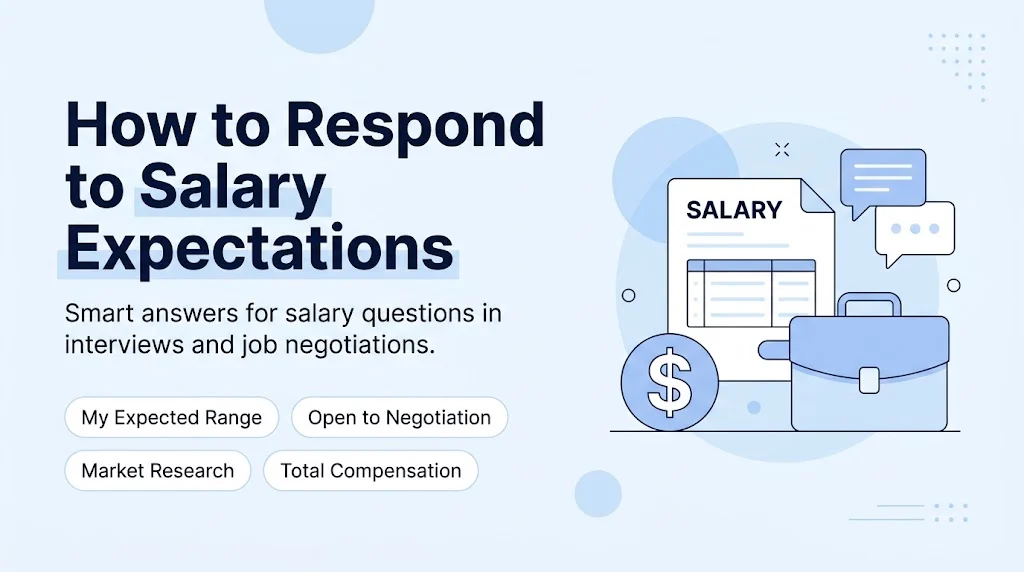
The best way to respond to salary expectations is to provide a realistic salary range based on your skills, experience, and market rates while remaining open to negotiation. You can sound professional, confident, and flexible without underselling yourself.
- Based on my experience, I am looking for a salary between $60,000 and $70,000 annually.
- I am open to discussing a competitive compensation package.
- I would love to learn more about the responsibilities before settling on a number.
- My expectations are flexible depending on the overall benefits and opportunities.
- I am looking for compensation that reflects my skills and the value I bring.
Few interview questions make candidates overthink quite like salary expectations. You are excited about the job, your answers are going smoothly, and then the recruiter asks, “What are your salary expectations?” Suddenly, you are wondering whether to give a number, ask about the budget, or say you are flexible. One wrong move can feel like it might cost you the opportunity.
The good news is that you do not need a perfect script to handle this question. You need a clear strategy and a response that matches your experience, the role, and your financial goals.
Professional Responses
- My salary expectations are aligned with the responsibilities and requirements of this position.
Use this when you want to demonstrate professionalism without naming a specific amount.
Meaning: You are connecting your compensation expectations to the value and demands of the role. - I am looking for a competitive salary that reflects my experience and qualifications.
Use this during an initial screening interview.
Meaning: You expect fair compensation based on your professional background. - I would be happy to discuss a salary range that fits your budget for this position.
Use this when you want the employer to share their range first.
Meaning: You are inviting a practical discussion about compensation. - My expectations are flexible, depending on the complete compensation package.
Use this when benefits, bonuses, and other perks matter to you.
Meaning: You are considering the overall employment offer rather than salary alone. - I am seeking compensation that reflects the scope of the role and my relevant skills.
Use this for a position with significant responsibilities.
Meaning: You want your pay to match your qualifications and duties. - I would appreciate learning more about the position before discussing a specific figure.
Use this early in the interview process.
Meaning: You want enough information to make a well-informed salary decision. - I am open to a fair and competitive offer based on the market rate for this role.
Use this when you have not finalized a specific salary target.
Meaning: You are prioritizing reasonable, market-aligned compensation. - I value the opportunity and would like to find a compensation arrangement that works for both sides.
Use this when you want to emphasize collaboration.
Meaning: You are approaching salary negotiations as a mutual agreement. - I am looking for a package that recognizes my experience and potential contribution.
Use this when your skills are especially relevant to the job.
Meaning: You want the employer to consider what you can bring to the organization. - I would be glad to discuss compensation once we have established that the role is a strong fit.
Use this when the interview is still focused on qualifications.
Meaning: You want to prioritize mutual suitability before negotiating pay. - I am comfortable discussing a reasonable range based on the role’s expectations.
Use this when the recruiter directly asks for a range.
Meaning: You are willing to negotiate using the position’s requirements as a guide. - I am seeking a salary that is competitive for this position and location.
Use this when regional pay differences are relevant.
Meaning: You are taking local compensation standards into account. - I would like to consider the full value of the offer, including benefits and growth opportunities.
Use this when the employer offers additional benefits.
Meaning: You are evaluating the entire employment package. - My goal is to agree on compensation that reflects the responsibilities and expectations of the role.
Use this in a formal interview.
Meaning: You want a fair agreement based on the actual job. - I am confident we can find a salary range that meets both our expectations.
Use this when the conversation is moving toward negotiation.
Meaning: You are expressing a positive and cooperative attitude.
Confident Responses
- Based on my qualifications, I am targeting a salary between $65,000 and $75,000 annually.
Use this when you have researched salaries and established a realistic range.
Meaning: You are clearly communicating your compensation target. - I believe my experience justifies a competitive offer within the market range.
Use this when your background closely matches the position.
Meaning: You are confidently connecting your experience to your pay expectations. - I am looking for compensation that reflects the results I can deliver.
Use this when you have a record of measurable achievements.
Meaning: You are emphasizing your ability to contribute value. - My target is $80,000 annually, depending on the overall benefits and responsibilities.
Use this when you have a specific salary goal.
Meaning: You are stating your target while leaving room for discussion. - I know the value of my skills, and I am looking for an offer that reflects them.
Use this when you want to sound assertive but respectful.
Meaning: You are demonstrating that you understand your professional worth. - I am targeting a competitive range based on my expertise and the current market.
Use this when your experience is in demand.
Meaning: You are grounding your expectations in relevant professional factors. - I am prepared to discuss a salary that matches the level of responsibility involved.
Use this for a senior or specialist position.
Meaning: You expect compensation to reflect the complexity of the role. - My expected salary is negotiable, but I do have a clear target based on my research.
Use this when you are open to negotiation without being uncertain.
Meaning: You are flexible while maintaining a well-considered goal. - I am looking for a package that recognizes both my current expertise and future contribution.
Use this when the job offers long-term growth.
Meaning: You want compensation that acknowledges your capabilities and potential. - I would be comfortable with an offer within the established market range for this position.
Use this when you have researched typical salaries.
Meaning: You are communicating confidence without insisting on an arbitrary figure. - My target range is $70,000 to $80,000, based on the scope of this role.
Use this when the position’s responsibilities justify your target.
Meaning: You are presenting a specific and reasoned salary expectation. - I am looking for a salary that fairly reflects the experience I bring to the team.
Use this when your experience is a key selling point.
Meaning: You are advocating for fair recognition of your background. - I would like to align my compensation with the impact I can make in this position.
Use this when the role involves measurable outcomes.
Meaning: You are linking pay to your anticipated contribution. - I am comfortable discussing a competitive offer that reflects my qualifications.
Use this when you want to remain flexible without sounding hesitant.
Meaning: You are communicating a clear expectation of fair pay. - I have a target in mind and would welcome a conversation about how it aligns with your budget.
Use this when you want to open a negotiation.
Meaning: You are inviting the employer to compare expectations openly.
Flexible Responses
- I am flexible and open to discussing a fair offer.
Use this when you have not settled on a specific range.
Meaning: You are willing to consider reasonable compensation options. - My expectations depend on the responsibilities and total benefits offered.
Use this when the package includes several components.
Meaning: You are considering more than the base salary. - I would like to understand the company’s salary range before sharing a specific number.
Use this when you want the recruiter to disclose the budget.
Meaning: You are seeking useful information before negotiating. - I am open to negotiation if the role offers a strong overall fit.
Use this when the position has attractive responsibilities or growth opportunities.
Meaning: You are willing to consider the broader value of the job. - I would consider a reasonable offer based on my experience and the job requirements.
Use this when you want to keep the conversation open.
Meaning: You are willing to evaluate a fair proposal. - I am happy to discuss a range that works for both the company and me.
Use this when you want a collaborative tone.
Meaning: You are aiming for a mutually acceptable agreement. - I would prefer to evaluate the complete offer before making a final decision.
Use this when benefits and other conditions have not been discussed.
Meaning: You want to consider all the terms before committing. - Compensation is important, but I am also considering the opportunity for growth.
Use this when professional development matters to you.
Meaning: You are balancing salary with long-term career benefits. - I am open to different structures, including base pay and performance bonuses.
Use this when the role may offer variable compensation.
Meaning: You are considering different ways the employer might structure pay. - I would be interested in learning what range you have budgeted for this role.
Use this when the recruiter asks for your expectations first.
Meaning: You are politely asking for the employer’s starting point. - I have some flexibility depending on the complete responsibilities and benefits.
Use this when you need more details about the position.
Meaning: You are willing to adjust your target based on the actual offer. - I am open to discussing an offer that reflects the market and my experience.
Use this when you want to avoid committing too early.
Meaning: You are keeping negotiations practical and evidence-based. - I would welcome a conversation about the available compensation range.
Use this in an initial recruiter call.
Meaning: You want to understand the available budget before deciding. - I am flexible within a reasonable range for the right opportunity.
Use this when the position fits your career goals.
Meaning: You are willing to negotiate while maintaining realistic boundaries. - I would like to find a balance between fair compensation and long-term opportunity.
Use this when you care about both pay and career development.
Meaning: You are evaluating the job from a broader career perspective.
Responses When You Do Not Want to Give a Number
- I would love to hear the budgeted range for this position first.
Use this when the recruiter asks for your target before explaining the budget.
Meaning: You are encouraging the employer to share its compensation range. - I am still learning about the role and would prefer to discuss a range after understanding the responsibilities.
Use this early in the interview process.
Meaning: You want more information before establishing a salary target. - Could you share the salary range allocated to this position?
Use this when you want a direct and professional response.
Meaning: You are asking the recruiter for a clear budget range. - I am open to a competitive offer based on the expectations of the role.
Use this when you do not yet have a reliable salary estimate.
Meaning: You are keeping the discussion open without naming an amount. - I would like to understand the full compensation structure before giving a specific figure.
Use this when bonuses or benefits may be significant.
Meaning: You want the complete financial picture before responding. - I have not finalized a number yet, but I am happy to discuss market-aligned compensation.
Use this when you are still researching.
Meaning: You are being honest while keeping the conversation professional. - I would prefer to focus on the fit and responsibilities before settling on compensation.
Use this when the interview is at an early stage.
Meaning: You want to understand the position before negotiating. - I am open to discussing a reasonable offer once I understand your expectations for the role.
Use this when the job description is broad.
Meaning: You are asking for more context before deciding on pay. - Could you tell me how compensation is structured for this position?
Use this when the role may include commissions or incentives.
Meaning: You want to understand the different elements of the package. - I would be glad to discuss salary after learning more about the team’s needs.
Use this when you want to emphasize your suitability first.
Meaning: You are prioritizing the role’s requirements before naming a target. - I am interested in a fair offer that reflects the position and my background.
Use this when you want to avoid an early number.
Meaning: You are setting a general expectation of fairness. - I am happy to consider the range you have established for this role.
Use this when the employer has a formal salary structure.
Meaning: You are inviting the recruiter to explain the available options. - Before I give a number, could you share the main components of the package?
Use this when benefits and bonuses may affect your decision.
Meaning: You want to evaluate total compensation rather than salary alone. - I would like to make sure we are aligned on the role before discussing a precise figure.
Use this when you need more clarity about the position.
Meaning: You are postponing the number until you understand the opportunity. - I am open to your guidance on the range budgeted for this position.
Use this when the recruiter may have more market information.
Meaning: You are asking the employer to establish a starting point for the discussion.
Responses for Entry-Level Candidates
- As an entry-level candidate, I am looking for a fair salary consistent with the market rate.
Use this when applying for your first professional role.
Meaning: You are showing that you understand entry-level compensation standards. - I am open to a competitive starting salary that reflects the responsibilities of the position.
Use this when you have limited professional experience.
Meaning: You are focusing on fair pay and job expectations. - My priority is finding the right opportunity to develop my skills while earning a fair salary.
Use this when the role offers valuable learning opportunities.
Meaning: You are balancing professional growth with compensation. - I would be comfortable discussing the company’s established range for new hires.
Use this when applying to a company with structured pay bands.
Meaning: You are inviting the employer to explain its entry-level salary range. - I have researched similar positions and would welcome a market-aligned offer.
Use this when you have checked salary information.
Meaning: You are demonstrating preparation despite limited experience. - I am looking for a starting salary that supports my contribution and continued development.
Use this when you want to sound motivated and practical.
Meaning: You expect fair compensation while recognizing that you are still learning. - I am flexible within the typical range for this type of entry-level position.
Use this when you do not have a precise target.
Meaning: You are open to an appropriate starting offer. - My expectations are based on the responsibilities, training, and growth opportunities offered.
Use this when the job includes formal training.
Meaning: You are considering both immediate pay and professional development. - I would appreciate learning the salary range for candidates entering this role.
Use this during an initial screening call.
Meaning: You are requesting useful information about entry-level compensation. - I am eager to contribute and would expect compensation consistent with the position’s market value.
Use this when you want to show enthusiasm without underselling yourself.
Meaning: You are combining motivation with reasonable salary expectations. - I am open to discussing a fair offer based on the skills I bring.
Use this when internships, projects, or education are relevant.
Meaning: You want your transferable skills to be considered. - I would be happy to discuss the standard starting package for this position.
Use this for graduate programs or structured recruitment.
Meaning: You are interested in the employer’s established compensation terms. - I am looking for a salary that reflects both the role and my relevant training.
Use this when you have completed relevant courses or certifications.
Meaning: You are explaining why your preparation matters to compensation. - I am open to a reasonable starting range and opportunities for salary progression.
Use this when career development is important.
Meaning: You are considering how compensation might grow over time. - I would welcome an offer that is fair for the role and supports long-term growth.
Use this when you want to emphasize career potential.
Meaning: You are looking for a balanced start to your career.
Responses for Experienced Professionals
- Based on my experience and achievements, I am targeting a competitive salary within the market range.
Use this when you have several years of relevant experience.
Meaning: You are connecting your salary target to your professional track record. - My expectations reflect the expertise and results I would bring to the position.
Use this when you have measurable accomplishments.
Meaning: You want your proven value to influence compensation. - Given my background, I am looking for a package that aligns with the seniority of this role.
Use this when applying for a senior position.
Meaning: You expect compensation appropriate to the role’s level. - I am targeting a range of $90,000 to $105,000, depending on the responsibilities and benefits.
Use this when you have researched comparable senior roles.
Meaning: You are setting a specific and negotiable expectation. - My salary expectations are based on my specialist knowledge and the contribution I can make.
Use this for technical or highly specialized roles.
Meaning: You are emphasizing expertise that can benefit the employer. - I would expect compensation that reflects the leadership responsibilities involved.
Use this for management or team-lead positions.
Meaning: You are accounting for the additional demands of leadership. - I am looking for a package that recognizes my experience managing complex projects.
Use this when project management is central to the role.
Meaning: You want your practical achievements to be reflected in the offer. - My target is based on the market value of my skills and the outcomes I can deliver.
Use this when your experience is highly relevant.
Meaning: You are grounding your target in market demand and results. - I would be comfortable discussing a senior-level package aligned with the position’s scope.
Use this when the job description includes broad responsibilities.
Meaning: You expect pay appropriate to the job’s complexity. - I am looking for a competitive base salary and a bonus structure tied to performance.
Use this for positions with measurable targets.
Meaning: You are considering both fixed and performance-based compensation. - My expectations reflect my years of experience and the value of my industry knowledge.
Use this when you have substantial industry expertise.
Meaning: You are explaining why your background supports your target. - I would like to discuss a package that matches the impact expected from this position.
Use this for strategic or leadership roles.
Meaning: You want compensation aligned with expected business outcomes. - I am open to negotiation, provided the overall package reflects the role’s seniority.
Use this when you have flexibility but clear standards.
Meaning: You are willing to negotiate without ignoring the position’s level. - I would expect my compensation to reflect the specialized skills required for this role.
Use this for niche or technical positions.
Meaning: You are highlighting the importance of specialized expertise. - I am seeking a package that is competitive for someone with my background and responsibilities.
Use this when moving into a more senior role.
Meaning: You are asking for compensation appropriate to your experience and duties.
Responses for Email and Recruiter Messages
- Thank you for asking. I am targeting a salary range of $60,000 to $70,000 annually, depending on the overall package.
Use this when a recruiter requests your expectations by email.
Meaning: You are giving a clear range while remaining open to discussion. - Thank you for reaching out. Could you please share the budgeted salary range for this position?
Use this before providing your own number.
Meaning: You are politely asking for the employer’s compensation range. - I appreciate the opportunity and am open to discussing compensation based on the responsibilities of the role.
Use this in an initial recruiter response.
Meaning: You are expressing interest without committing to a specific figure. - Based on my research, I am seeking a competitive package aligned with the market rate.
Use this when you want to keep your email concise.
Meaning: You are indicating that your expectations are informed by market research. - My expected range is $70,000 to $80,000, although I would consider the full benefits package.
Use this when you have a clear target but some flexibility.
Meaning: You are stating your target while acknowledging other forms of compensation. - Thank you for the question. I would welcome more information about the compensation structure before sharing a specific number.
Use this when the job may involve commissions or bonuses.
Meaning: You want to understand the package before setting expectations. - I am flexible and would be glad to consider a fair offer based on the role and my qualifications.
Use this when you are open to several possibilities.
Meaning: You are signaling flexibility without accepting any offer automatically. - I would be happy to discuss a salary range that aligns with your budget and my experience.
Use this when you want to keep negotiations collaborative.
Meaning: You are looking for a reasonable middle ground. - Thank you for considering my application. Could you share the compensation range and benefits associated with the position?
Use this when you need more information before proceeding.
Meaning: You are requesting details that will help you evaluate the opportunity. - I am seeking compensation that reflects my experience, qualifications, and the scope of the role.
Use this in a formal application email.
Meaning: You are explaining the factors behind your expectations. - My target is negotiable depending on the responsibilities, benefits, and opportunities for growth.
Use this when the employer asks for a written salary expectation.
Meaning: You are leaving room for a discussion about the full offer. - I would appreciate the opportunity to discuss a mutually suitable compensation range.
Use this when you want a formal and diplomatic tone.
Meaning: You are inviting further negotiation. - I am interested in learning more about the position and its approved salary band.
Use this when replying to an initial job inquiry.
Meaning: You want to understand the pay structure before deciding. - Thank you for the information. I am open to discussing an offer that reflects the role’s requirements.
Use this when the recruiter shares preliminary details.
Meaning: You are responding positively while keeping compensation open. - I look forward to discussing compensation and finding an arrangement that works for both sides.
Use this near the end of a recruiter email.
Meaning: You are expressing willingness to negotiate constructively.
Responses When the Employer’s Offer Is Too Low
- Thank you for the offer. Based on my experience and the role’s responsibilities, I was expecting a higher salary.
Use this when the initial offer is below your target.
Meaning: You are expressing appreciation while clearly communicating the gap. - I appreciate the offer. Is there flexibility to move closer to my target range?
Use this when you want to negotiate politely.
Meaning: You are asking whether the employer can improve the offer. - Thank you for considering me. I was hoping for a package closer to $75,000.
Use this when you have a researched target.
Meaning: You are providing a concrete figure for further discussion. - I am excited about the opportunity, but the proposed salary is below my expectations.
Use this when you want to remain enthusiastic but honest.
Meaning: You are separating your interest in the job from the compensation concern. - Could we explore whether the base salary can be adjusted to reflect the responsibilities?
Use this when the role involves more work than initially expected.
Meaning: You are asking for compensation to match the actual job scope. - I appreciate the offer and would like to discuss the possibility of a signing bonus.
Use this when the base salary is fixed.
Meaning: You are exploring another form of compensation. - Would there be an opportunity to review the salary after a successful probation period?
Use this when the employer cannot increase the starting amount.
Meaning: You are asking for a defined opportunity to revisit pay. - I am interested in the position, but I would need a stronger overall package to move forward.
Use this when salary and benefits together fall short.
Meaning: You are setting a boundary while leaving room for improvement. - Could we discuss additional benefits or performance incentives to bridge the gap?
Use this when the salary cannot change much.
Meaning: You are looking for alternative ways to improve the offer. - Thank you for the transparency. My target remains closer to $80,000, based on the market and my experience.
Use this when you want to restate your expectations.
Meaning: You are reinforcing your target with a professional explanation. - I would be more comfortable accepting if we could agree on a salary closer to my expected range.
Use this when you are interested but need better compensation.
Meaning: You are identifying what would make the offer workable. - Is there room to negotiate the compensation based on my relevant experience?
Use this when your qualifications exceed the minimum requirements.
Meaning: You are asking the employer to reconsider the offer. - I value the opportunity and hope we can find a compensation level that works for both sides.
Use this when you want to preserve a positive relationship.
Meaning: You are expressing interest in reaching an agreement. - Would you be open to discussing a review after six months with clear performance goals?
Use this when the employer proposes a lower starting salary.
Meaning: You are seeking a future salary review tied to measurable results. - Thank you for the offer. I would need to consider whether the current package meets my requirements.
Use this when you need time to decide.
Meaning: You are keeping your options open without making a rushed commitment.
Responses for Salary Negotiation
- Based on the responsibilities and my qualifications, I would like to propose a salary of $75,000.
Use this when you are ready to make a counteroffer.
Meaning: You are clearly stating your preferred compensation. - I appreciate the offer. Would you consider increasing the base salary to $70,000?
Use this when you want to negotiate a specific amount.
Meaning: You are making a direct and respectful request. - I believe a range of $75,000 to $85,000 would be appropriate for this position.
Use this when market research supports the range.
Meaning: You are proposing a range grounded in your assessment of the job. - Could we discuss how my relevant experience might support a higher offer?
Use this when your background is particularly valuable.
Meaning: You are inviting the employer to reconsider your compensation. - I am enthusiastic about joining the team and would like to explore some flexibility in the offer.
Use this when you want to negotiate without sounding confrontational.
Meaning: You are expressing enthusiasm while asking for better terms. - If the base salary is fixed, could we discuss a signing bonus or additional paid leave?
Use this when the employer cannot change the base amount.
Meaning: You are exploring alternative benefits. - Would it be possible to include a salary review after my first six months?
Use this when a future review would make the offer more attractive.
Meaning: You are seeking a clear opportunity for a pay adjustment. - I would be comfortable moving forward if we could agree on a package closer to my target.
Use this when you are close to accepting.
Meaning: You are communicating your condition for moving forward. - Could we review the benefits and bonus structure to see whether there is room for improvement?
Use this when total compensation matters.
Meaning: You are looking for flexibility across the complete package. - I understand the budget constraints and would appreciate exploring any available alternatives.
Use this when the employer says the budget is limited.
Meaning: You are remaining cooperative while seeking options. - Given the scope of the position, I believe a higher salary would be appropriate.
Use this when the responsibilities are substantial.
Meaning: You are explaining why you believe the offer should increase. - I am open to discussing the structure, provided the total compensation meets my needs.
Use this when the employer offers different salary and bonus combinations.
Meaning: You are flexible about the structure but clear about your overall requirements. - Would there be flexibility to increase the annual leave allowance if the salary cannot change?
Use this when paid time off is negotiable.
Meaning: You are considering non-salary benefits as part of the deal. - I would appreciate a revised offer that better reflects the experience I bring.
Use this when you want the employer to reconsider its proposal.
Meaning: You are requesting a stronger offer in a respectful way. - I am confident we can reach an agreement that recognizes my contribution and fits the budget.
Use this when negotiations are progressing positively.
Meaning: You are expressing confidence in finding a mutually beneficial outcome.
Funny Responses for Casual Conversations
- Enough to pay the bills and still afford my weekend plans.
Use this when a friend casually asks about your salary expectations.
Meaning: You are joking about wanting financial stability and a life outside work. - A salary that lets my bank account breathe a little.
Use this with friends who understand the cost of living.
Meaning: You are humorously asking for enough money to feel financially comfortable. - Enough to stop checking my account before ordering food.
Use this when discussing job goals with friends.
Meaning: You are joking about wanting greater financial freedom. - Competitive pay and absolutely no unpaid overtime, please.
Use this in a casual conversation about work.
Meaning: You are humorously emphasizing fair pay and reasonable boundaries. - Enough to make Monday mornings slightly less offensive.
Use this with a friend who dislikes workdays.
Meaning: You are joking that better pay could make work more bearable. - A salary that matches my skills and my coffee budget.
Use this with a coffee-loving colleague or friend.
Meaning: You are combining professional worth with a relatable expense. - Enough to save money without living like a monk.
Use this when chatting about financial goals.
Meaning: You want a balance between saving and enjoying life. - The kind of salary that makes payday feel exciting again.
Use this with a friend who jokes about work and money.
Meaning: You are expressing a desire for meaningful financial rewards. - Enough to fund my goals, not just my monthly expenses.
Use this when discussing career ambitions.
Meaning: You want your income to support future plans as well as everyday needs. - A number that makes the workload and the paycheck friends.
Use this when joking about demanding jobs.
Meaning: You are humorously asking for pay that matches the work. - Enough to afford groceries without a dramatic budget meeting.
Use this in a casual conversation about living costs.
Meaning: You are joking about wanting everyday expenses to feel manageable. - Fair pay, good benefits, and enough energy left to enjoy life.
Use this when friends ask what you want from a job.
Meaning: You are expressing a desire for both compensation and work-life balance. - Enough to make my savings account stop looking disappointed.
Use this with someone who shares your financial humor.
Meaning: You are joking about wanting to build your savings. - A salary that says my experience was worth the plot twist.
Use this with friends after a career change.
Meaning: You are humorously connecting your professional journey to better pay. - Enough to enjoy payday without immediately saying goodbye to it.
Use this when joking about bills.
Meaning: You want an income that leaves room after essential expenses.
Responses for Different Industries
- For technology roles: I am targeting a competitive range based on my technical expertise and the responsibilities involved.
Use this when applying for software or IT positions.
Meaning: You are connecting your pay expectations to technical skills and role complexity. - For marketing roles: I am looking for compensation that reflects my experience, campaign performance, and the scope of the position.
Use this when applying for marketing jobs.
Meaning: You want your experience and potential results to be considered. - For sales roles: I would like to understand the base salary, commission structure, and performance incentives.
Use this when applying for a sales position.
Meaning: You are considering both fixed pay and earning potential. - For teaching roles: I am seeking compensation aligned with the responsibilities, qualifications, and established pay scale.
Use this when applying to a school or educational institution.
Meaning: You are asking for pay that reflects the role and relevant standards. - For healthcare roles: I am looking for a competitive package that reflects my qualifications, responsibilities, and working schedule.
Use this when applying for a healthcare position.
Meaning: You are considering the demands and requirements of the job. - For finance roles: My expectations are based on the role’s scope, technical requirements, and current market compensation.
Use this when applying for a finance or accounting job.
Meaning: You are grounding your target in the job’s demands and market conditions. - For customer service roles: I am looking for a fair salary that reflects the responsibilities and customer-facing demands of the position.
Use this when applying for a support role.
Meaning: You want your pay to account for the work involved. - For remote roles: I would like to understand how compensation is determined for remote employees in my location.
Use this when applying to an international or distributed company.
Meaning: You are clarifying which location-based pay policy applies. - For design roles: I am seeking compensation that reflects my design experience, portfolio, and the expectations of the role.
Use this when applying for a creative position.
Meaning: You want your creative expertise to influence the offer. - For project management roles: My target reflects the level of project ownership, stakeholder management, and delivery expectations.
Use this when applying for a project manager position.
Meaning: You are accounting for the responsibility and complexity of the work. - For administrative roles: I am open to a competitive offer aligned with the duties and experience required.
Use this when applying for an office or administrative job.
Meaning: You are seeking fair compensation for the role. - For human resources roles: I am looking for compensation aligned with my HR experience and the scope of the position.
Use this when applying for an HR job.
Meaning: You are connecting your background to the role’s responsibilities. - For engineering roles: My expectations reflect the technical expertise, project requirements, and industry standards for this position.
Use this when applying for an engineering job.
Meaning: You are basing your target on specialized skills and responsibilities. - For content writing roles: I am seeking a fair package that reflects my writing experience, research skills, and content responsibilities.
Use this when applying for a writing or editorial position.
Meaning: You want your expertise and expected workload to be recognized. - For management roles: I am looking for a package that reflects the leadership responsibilities, business objectives, and expected results.
Use this when applying for a management position.
Meaning: You are emphasizing the demands and impact of the role.
Responses When You Are Asked About Current Salary
- I would prefer to focus on the compensation appropriate for this position and my qualifications.
Use this when you want to redirect the conversation toward the new role.
Meaning: You are focusing on the job’s value rather than your previous pay. - I am happy to discuss my salary expectations for this role. Could you share the budgeted range?
Use this when the recruiter asks about your current compensation.
Meaning: You are steering the discussion toward the prospective offer. - I am looking for a package that reflects the responsibilities and market value of this position.
Use this when you do not want to disclose your current salary.
Meaning: You are emphasizing the value of the new role. - My current compensation is specific to my existing role, so I would prefer to discuss expectations for this opportunity.
Use this when the positions have different responsibilities.
Meaning: You are explaining why your previous salary may not be relevant. - I would like to evaluate this opportunity based on its scope and overall package.
Use this when the recruiter asks about your pay history early in the process.
Meaning: You want to judge the new position on its own merits. - I am happy to share my target range, which is based on my research into similar roles.
Use this when you want to provide a forward-looking answer.
Meaning: You are presenting your expectations as market-informed. - I would prefer to discuss the value and requirements of this position rather than my previous compensation.
Use this when you want to set a polite boundary.
Meaning: You are redirecting attention to the role you are applying for. - My expectations for this position are based on the responsibilities and opportunities involved.
Use this when the new role represents a career change.
Meaning: You are making clear that the new job has its own compensation considerations. - I am focused on finding a fair package that matches the role and my experience.
Use this when you want a short and diplomatic response.
Meaning: You are emphasizing appropriate pay for the new opportunity. - Could you explain how the company determines salary offers for this position?
Use this when you want to understand the employer’s process.
Meaning: You are requesting information about the company’s compensation approach. - I would be glad to discuss my compensation expectations and how they fit your range.
Use this when the recruiter is open to negotiation.
Meaning: You are inviting a discussion about mutual expectations. - I am considering this opportunity based on the responsibilities, market rate, and total benefits.
Use this when you want to explain your decision-making criteria.
Meaning: You are focusing on the full value of the job. - I prefer to keep the discussion centered on the compensation for this role.
Use this when you need a concise boundary.
Meaning: You are politely declining to make your current pay the focus. - I am happy to discuss a reasonable range that reflects my qualifications and the role’s scope.
Use this when you want to move forward constructively.
Meaning: You are offering a practical alternative to sharing your salary history. - My priority is reaching a fair agreement based on the value I can bring to your team.
Use this when you want to end the topic positively.
Meaning: You are redirecting the conversation toward your future contribution.
FAQs
What is the best way to respond to salary expectations?
Give a researched salary range that reflects your experience, the job requirements, and the market rate.
Should I give a salary range or a specific number?
A range is often useful because it allows some flexibility. Make sure the lower end is still an amount you would genuinely accept, and base both figures on market research.
How do I answer salary expectations with no experience?
Explain that you are looking for a fair, market-aligned starting salary. You can also ask about the company’s established range for entry-level candidates.
How should I respond if the recruiter asks for my expected salary over email?
Keep your answer concise and professional. State your researched range, mention that the full compensation package matters, and express interest in discussing the details.
What if my salary expectations are higher than the employer’s budget?
Ask whether there is flexibility in the base salary or other benefits. If the gap remains too large, evaluate whether the position meets your financial needs before accepting.
Conclusion
Salary conversations can feel intimidating, but preparation makes them much easier. The goal is not to name the highest possible number or accept the first offer without question. It is to communicate your expectations clearly, understand what the employer can offer, and find a package that makes sense for both sides.
Choose a response that reflects your experience, career goals, and communication style. Research the market before your interview, decide on your minimum acceptable amount, and practice saying your target confidently. Remember, discussing compensation is a normal part of professional life.
Discover More Related Articles:
- Flirty Response to Thinking of You | That Will Make Them Smile In 2026
- How to Respond to Happy New Year | For Every Mood & Situation In 2026

Jennifer Wilson is an experienced writer and content creator with over 20 years of expertise in digital publishing, lifestyle, and informative content. Holding a degree in English Literature, she contributes to Responary.Com, where she shares engaging, well-researched articles that help readers stay informed and inspired.