Quick Answer
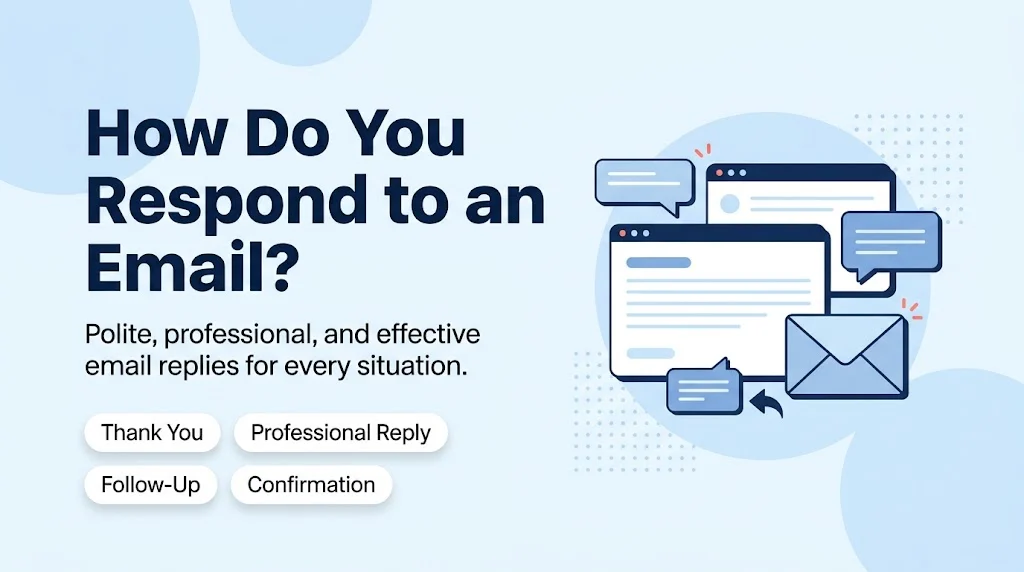
The best way to respond to an email depends on its purpose, tone, and sender. You can keep your reply professional, friendly, brief, or detailed depending on the situation.
Top email responses: Thank you for your email, I appreciate the update, Thanks for letting me know, I’ll review this and get back to you, Thank you for reaching out.
We have all opened an email, read it twice, and still wondered what to write back. Maybe your boss needs an update, a client has asked an important question, a colleague has shared some news, or a friend has sent a thoughtful message. Knowing how to respond to an email can save time, prevent misunderstandings, and help you make a positive impression.
The good news? You do not need to write a mini novel every time someone contacts you. A great email reply is clear, polite, and appropriate for the situation. Sometimes a simple thank-you is enough, while other messages deserve a more detailed response. Whether you are replying at work, handling customer inquiries, following up on a request, or answering a personal message, these ready-to-use examples will help you find the right words without staring at your screen for twenty minutes.
1. Professional Responses to an Email
- Thank you for your email.
Use this when acknowledging a message from a manager, client, or business contact.
Meaning: You are politely recognizing that you received their message. - Thank you for reaching out.
Use this when someone contacts you for the first time or asks for assistance.
Meaning: You appreciate their effort to get in touch. - I appreciate you sharing this information.
Use this when a colleague provides useful details or documents.
Meaning: You acknowledge the value of the information they provided. - Thank you for bringing this to my attention.
Use this when someone highlights an issue or important matter.
Meaning: You recognize their effort to inform you. - I appreciate your prompt response.
Use this when someone replies quickly to your earlier email.
Meaning: You are expressing gratitude for their timely communication. - Thank you for the update.
Use this when receiving project news or a work-related status report.
Meaning: You acknowledge the information and appreciate being kept informed. - I will review the details and respond accordingly.
Use this when you need time to consider the information.
Meaning: You are confirming that you will examine the matter before replying further. - Thank you for your consideration.
Use this when discussing a proposal, application, or business request.
Meaning: You appreciate the time and attention given to your request. - I appreciate your assistance with this matter.
Use this when someone helps you resolve a work issue.
Meaning: You are acknowledging their support professionally. - Thank you for your understanding.
Use this when explaining a delay, change, or inconvenience.
Meaning: You are expressing appreciation for their patience and cooperation. - I will keep you informed of any further developments.
Use this when an issue is still being resolved.
Meaning: You are promising to share relevant updates. - Please let me know if you require any additional information.
Use this when concluding a professional exchange.
Meaning: You are offering further assistance if needed. - I look forward to hearing from you.
Use this when awaiting a decision, response, or next step.
Meaning: You are politely inviting a follow-up. - Thank you for your continued support.
Use this when replying to a trusted colleague, client, or business partner.
Meaning: You are recognizing their ongoing help and cooperation. - I appreciate your time and attention to this matter.
Use this when discussing something that requires careful consideration.
Meaning: You are respectfully acknowledging their effort.
2. Short and Simple Email Responses
- Thanks for the update.
Use this when someone shares routine news.
Meaning: You acknowledge the information without adding unnecessary detail. - Got it, thank you.
Use this when confirming receipt of straightforward instructions.
Meaning: You confirm that you have received and understood the message. - Thanks for letting me know.
Use this when someone informs you about a change or decision.
Meaning: You appreciate being kept informed. - Understood.
Use this when confirming a clear instruction or explanation.
Meaning: You indicate that you understand the message. - That works for me.
Use this when agreeing to a proposed time or arrangement.
Meaning: You confirm that the suggestion is acceptable. - Sounds good, thank you.
Use this when agreeing to a plan or next step.
Meaning: You express agreement in a friendly way. - Received, thank you.
Use this when acknowledging an attachment or document.
Meaning: You confirm receipt of the material. - Absolutely, I’ll take care of it.
Use this when accepting a straightforward task.
Meaning: You confirm that you will handle the request. - Noted, thank you.
Use this when acknowledging information you may need later.
Meaning: You indicate that you have taken note of the details. - I’ll get back to you shortly.
Use this when you need a little time before responding fully.
Meaning: You are telling the sender to expect another reply soon. - Thanks, I appreciate it.
Use this when someone offers help or shares something useful.
Meaning: You express simple, genuine gratitude. - Will do, thanks.
Use this when agreeing to a clear request in a familiar workplace.
Meaning: You confirm that you will complete the requested action. - Perfect, thank you.
Use this when everything is settled or approved.
Meaning: You express satisfaction with the outcome. - I’ll keep that in mind.
Use this when someone offers advice or a helpful suggestion.
Meaning: You acknowledge their input and may consider it later. - Thanks for confirming.
Use this when someone verifies a date, detail, or arrangement.
Meaning: You appreciate their confirmation.
3. Friendly Responses to an Email
- Hey, thanks for the email!
Use this when replying to a friend or familiar colleague.
Meaning: You acknowledge their message in a relaxed way. - Thanks for reaching out. It’s great to hear from you!
Use this when someone contacts you after a while.
Meaning: You show that you appreciate reconnecting. - I’m glad you let me know.
Use this when someone shares useful or personal information.
Meaning: You appreciate their decision to keep you informed. - Thanks for thinking of me!
Use this when someone sends an invitation, recommendation, or opportunity.
Meaning: You recognize their thoughtfulness. - That sounds great! Thanks for sharing.
Use this when someone tells you about an exciting plan or idea.
Meaning: You respond with enthusiasm and appreciation. - I really appreciate the heads-up.
Use this when someone warns you about a change or potential issue.
Meaning: You are grateful for the advance notice. - Thanks for checking in!
Use this when someone asks how you are doing.
Meaning: You appreciate their concern and attention. - Happy to hear from you!
Use this when someone you like contacts you.
Meaning: You show that their message is welcome. - Thanks for sharing the details. That helps a lot.
Use this when someone explains a situation clearly.
Meaning: You acknowledge that their information is useful. - I appreciate you keeping me in the loop.
Use this when someone includes you in an ongoing discussion.
Meaning: You are glad to remain informed. - Thanks so much! You made that easy.
Use this when someone simplifies a task or provides helpful instructions.
Meaning: You recognize how helpful their effort was. - That makes sense. Thanks for explaining!
Use this when someone clears up a confusing point.
Meaning: You confirm understanding and appreciate their explanation. - Thanks for the reminder!
Use this when someone reminds you about a task or event.
Meaning: You acknowledge the reminder without making a fuss. - Really appreciate the quick reply.
Use this when a friend or colleague responds promptly.
Meaning: You thank them for getting back to you quickly. - Thanks again for your help!
Use this after someone has assisted you.
Meaning: You reinforce your appreciation for their support.
4. Formal Responses to an Email
- Dear [Name], thank you for your correspondence.
Use this when replying to a formal business message.
Meaning: You acknowledge the sender in a respectful, traditional style. - Thank you for your message regarding this matter.
Use this when discussing an official issue or request.
Meaning: You formally recognize the subject of their email. - I am writing to acknowledge receipt of your email.
Use this when you need to confirm that an important message arrived.
Meaning: You provide a formal record of receipt. - Thank you for providing the requested information.
Use this after receiving documents or details you requested.
Meaning: You acknowledge receipt and express appreciation. - I appreciate your attention to this matter.
Use this when someone is helping address an official concern.
Meaning: You recognize their effort and involvement. - Please accept my sincere thanks for your assistance.
Use this when someone has provided substantial help.
Meaning: You express formal and genuine gratitude. - Thank you for your prompt attention to my request.
Use this when someone responds quickly to an important matter.
Meaning: You appreciate their timely action. - I acknowledge receipt of the attached documents.
Use this when confirming that files arrived successfully.
Meaning: You formally confirm receipt of the attachments. - I would appreciate your clarification on the following point.
Use this when a formal message contains something unclear.
Meaning: You respectfully request additional explanation. - Thank you for your patience while this matter is being reviewed.
Use this when an issue requires additional time.
Meaning: You recognize the sender’s patience during the review. - Please let me know if further documentation is required.
Use this when responding to an official request.
Meaning: You offer to provide additional supporting material. - I will respond in greater detail once I have reviewed the information.
Use this when a full answer requires careful consideration.
Meaning: You set an expectation for a more complete reply later. - Thank you for bringing this issue to my attention.
Use this when responding to a formal complaint or concern.
Meaning: You acknowledge the issue without making premature commitments. - I look forward to your further guidance.
Use this when you need direction from a manager or official contact.
Meaning: You politely request guidance on the next steps. - Thank you for your time and consideration.
Use this when concluding a formal exchange.
Meaning: You show respect for the recipient’s time and effort.
5. Responses to an Email From Your Boss
- Thank you for the update. I’ll adjust my priorities accordingly.
Use this when your manager changes a deadline or task order.
Meaning: You acknowledge the change and show flexibility. - Understood. I’ll make sure this is completed by the deadline.
Use this when you can meet the requested deadline.
Meaning: You confirm your commitment to timely completion. - Thanks for the feedback. I’ll incorporate your suggestions.
Use this after receiving constructive feedback.
Meaning: You show that you are willing to improve your work. - I’ve received your instructions and will proceed accordingly.
Use this when your manager outlines a process.
Meaning: You confirm understanding and readiness to act. - Thank you for clarifying. I’ll move forward with that approach.
Use this when your boss resolves a question.
Meaning: You acknowledge the explanation and confirm your next step. - I’ll review this and share an update by [time/date].
Use this when your boss requests an update.
Meaning: You set a clear expectation for your response. - Thanks for flagging this. I’ll look into it right away.
Use this when your manager highlights a problem.
Meaning: You acknowledge the concern and indicate prompt action. - I appreciate the guidance.
Use this when your boss offers advice or direction.
Meaning: You recognize their support and expertise. - I’m working on this and will let you know if anything changes.
Use this when a task is underway.
Meaning: You communicate progress and a plan to share updates. - I can take this on. I’ll confirm the timeline shortly.
Use this when accepting a new assignment that needs scheduling.
Meaning: You show initiative while allowing time to establish a realistic deadline. - Thank you for the opportunity. I’ll give it my full attention.
Use this when receiving a new responsibility.
Meaning: You show appreciation and commitment. - I understand the concern and will work on a solution.
Use this when your manager raises an issue.
Meaning: You acknowledge the problem and demonstrate a constructive attitude. - Could you clarify the expected outcome so I can proceed correctly?
Use this when instructions are incomplete.
Meaning: You request the information needed to meet expectations. - I’ve completed the task and attached the requested file.
Use this when submitting finished work.
Meaning: You clearly confirm completion and identify the attachment. - Thanks for your support. I’ll keep you posted on progress.
Use this when your manager is helping with a project.
Meaning: You appreciate their support and commit to providing updates.
6. Responses to an Email From a Client
- Thank you for contacting us. We appreciate your interest.
Use this when responding to a potential customer.
Meaning: You welcome the inquiry and acknowledge their interest. - Thank you for sharing your requirements.
Use this when a client explains what they need.
Meaning: You recognize the details they have provided. - I’d be happy to help you with this.
Use this when a request falls within your responsibilities.
Meaning: You express willingness to assist. - Thank you for your feedback. We’ll review it carefully.
Use this when a client shares an opinion or suggestion.
Meaning: You acknowledge their feedback and indicate that it will be considered. - I understand your concern and appreciate you bringing it to us.
Use this when a client reports a problem.
Meaning: You recognize their concern without dismissing it. - Please find the requested information below.
Use this when answering a client’s question directly.
Meaning: You introduce the information they requested. - We appreciate your patience while we look into this.
Use this when resolving an issue takes time.
Meaning: You acknowledge their patience during the investigation. - I’ll confirm the details and get back to you by [date].
Use this when you need to verify information before answering.
Meaning: You set a clear follow-up expectation. - Thank you for your continued business.
Use this when communicating with an existing customer.
Meaning: You express appreciation for the ongoing relationship. - I’m happy to clarify any part of the proposal.
Use this when a client has questions about your offer.
Meaning: You invite further discussion and clarification. - We appreciate the opportunity to work with you.
Use this when starting or continuing a business project.
Meaning: You express gratitude for the professional relationship. - Thank you for your understanding. We’ll keep you updated.
Use this when a service or timeline changes.
Meaning: You acknowledge their cooperation and promise relevant updates. - I’ve attached the revised version for your review.
Use this when sending an updated document.
Meaning: You identify the attachment and explain what the client should do with it. - Please let us know if you have any questions or concerns.
Use this when concluding a client email.
Meaning: You encourage the client to seek clarification. - Thank you for the opportunity to address this issue.
Use this when responding to a customer complaint.
Meaning: You show a constructive willingness to resolve the concern.
7. Responses When You Need More Time
- Thank you for your email. I’ll review this and get back to you.
Use this when you need time to consider the request.
Meaning: You acknowledge the email and indicate that a fuller response will follow. - I’m reviewing the details and will respond by [date].
Use this when you can provide a realistic response deadline.
Meaning: You set a clear expectation for when the sender will hear from you. - Could I have a little more time to assess this properly?
Use this when you need additional time before making a decision.
Meaning: You politely request more time to evaluate the matter. - I’d like to verify a few details before confirming.
Use this when some information needs checking.
Meaning: You explain why you cannot provide a final answer immediately. - Thank you for your patience. I’m still looking into this.
Use this when someone is waiting for an update.
Meaning: You communicate that the matter remains under review. - I’ll need to check my schedule before confirming.
Use this when responding to an invitation or meeting request.
Meaning: You avoid committing before checking your availability. - I’m waiting for confirmation and will update you as soon as I can.
Use this when another person or team must respond first.
Meaning: You explain the dependency affecting your response. - I want to make sure I give you an accurate answer.
Use this when a question requires research or verification.
Meaning: You prioritize accuracy over a rushed reply. - I’ll review the proposal in detail and share my thoughts soon.
Use this when you receive a document that requires careful reading.
Meaning: You confirm that you intend to evaluate the proposal. - I appreciate your understanding while I work through the details.
Use this when the matter is more complex than expected.
Meaning: You thank the sender for allowing you time. - I haven’t forgotten about this. I’m still working on it.
Use this when someone follows up on a pending task.
Meaning: You reassure them that the matter remains on your radar. - I’ll send a complete response once I have all the necessary information.
Use this when important details are still missing.
Meaning: You explain that a reliable answer depends on receiving the information. - Would it be possible to extend the deadline to [date]?
Use this when you need a formal deadline extension.
Meaning: You request a specific and manageable amount of extra time. - I’m currently handling a few priorities and will respond by [date].
Use this when your workload affects your response time.
Meaning: You communicate your availability and provide a timeline. - Thank you for following up. I expect to have an update by [date].
Use this when replying to a reminder about a pending issue.
Meaning: You acknowledge the follow-up and give a clear update target.
8. Responses to an Email Asking a Question
- Thank you for your question. The answer is [answer].
Use this when the question has a straightforward answer.
Meaning: You acknowledge the inquiry and respond directly. - I’m happy to clarify that for you.
Use this when someone appears confused about a detail.
Meaning: You offer help without making the person feel uncomfortable. - Based on the information available, [answer].
Use this when your response depends on the current facts.
Meaning: You explain the basis for your answer. - To answer your question directly, [answer].
Use this when you want to avoid unnecessary details.
Meaning: You make the main point easy to understand. - The process works as follows: [brief explanation].
Use this when someone asks how something works.
Meaning: You introduce a clear explanation of the process. - I’ve included the relevant details below.
Use this when answering several related questions.
Meaning: You direct the reader to the information they need. - That’s a great question. Here’s what you need to know.
Use this when you want a friendly and informative tone.
Meaning: You validate the question before explaining the answer. - I’m not certain about that detail, but I’ll verify it.
Use this when you do not yet know the correct answer.
Meaning: You are honest about uncertainty and commit to checking. - Could you clarify which part you’re referring to?
Use this when the question is too broad or ambiguous.
Meaning: You request clarification before giving a potentially incorrect answer. - Yes, that is correct.
Use this when confirming an accurate statement.
Meaning: You provide a direct confirmation. - Not exactly. The main difference is [explanation].
Use this when someone has misunderstood a detail.
Meaning: You correct the misunderstanding respectfully. - The answer depends on [relevant factor].
Use this when different circumstances lead to different outcomes.
Meaning: You explain why more context is needed. - I’ve attached a document that explains this in more detail.
Use this when a separate resource contains the full answer.
Meaning: You direct the sender to additional information. - I hope this answers your question.
Use this when concluding a helpful explanation.
Meaning: You invite the reader to consider whether further clarification is needed. - Please feel free to ask if anything remains unclear.
Use this when you want to keep communication open.
Meaning: You encourage additional questions.
9. Responses to an Email Invitation
- Thank you for the invitation. I’d be happy to attend.
Use this when accepting a professional or personal invitation.
Meaning: You express appreciation and confirm your attendance. - Thank you for inviting me. Unfortunately, I won’t be able to attend.
Use this when declining an invitation politely.
Meaning: You appreciate the invitation while clearly communicating that you cannot attend. - I’d be delighted to join. Please send me the details.
Use this when accepting an invitation but needing further information.
Meaning: You show enthusiasm and request the necessary arrangements. - Thank you for thinking of me. I’m available at that time.
Use this when confirming your availability.
Meaning: You appreciate the invitation and indicate that the timing works. - I appreciate the invitation, but I have a prior commitment.
Use this when another obligation prevents you from attending.
Meaning: You politely decline without sharing unnecessary details. - That sounds wonderful. Count me in!
Use this for a casual invitation from someone you know well.
Meaning: You express enthusiastic acceptance. - Could you please confirm the date, time, and location?
Use this when the invitation does not include complete details.
Meaning: You request the information needed to plan your attendance. - Thank you for the invitation. I’ll confirm my availability shortly.
Use this when you need to check your schedule.
Meaning: You acknowledge the invitation without committing prematurely. - I’m sorry I can’t make it, but I hope everything goes wonderfully.
Use this when declining a celebration or event.
Meaning: You express regret and wish the host well. - Thank you for including me. I’m looking forward to it.
Use this after accepting an invitation.
Meaning: You show appreciation and anticipation. - Would it be possible to join remotely?
Use this when you cannot attend an event in person.
Meaning: You ask whether a virtual option is available. - I’d love to attend, but could you share the expected duration?
Use this when your schedule is tight.
Meaning: You show interest while checking the time commitment. - Thank you for the invitation. I’ll do my best to attend.
Use this when you are interested but cannot fully confirm.
Meaning: You express willingness without making a firm promise. - Unfortunately, I won’t be available on that date. Thank you for understanding.
Use this when you must decline due to scheduling conflicts.
Meaning: You communicate your unavailability respectfully. - Thank you for inviting me. Please keep me in mind for future events.
Use this when you cannot attend but want to maintain the connection.
Meaning: You show appreciation and interest in future opportunities.
10. Responses to an Email With an Attachment
- Thank you for sending the attachment.
Use this when someone shares a file with you.
Meaning: You acknowledge receipt of the attached material. - I’ve received the document and will review it shortly.
Use this when the file requires your attention.
Meaning: You confirm receipt and indicate your next step. - Thanks for sharing the file. I’ve downloaded it successfully.
Use this when you have verified that the file is accessible.
Meaning: You confirm that the document is available to you. - I’ve reviewed the attachment and have no further questions at this time.
Use this when you have checked the document and need no clarification.
Meaning: You confirm your review and indicate that no immediate follow-up is needed. - Could you please resend the attachment? It didn’t come through.
Use this when the email arrives without the expected file.
Meaning: You politely explain that the attachment is missing. - Thank you. I’ve attached the completed version for your review.
Use this when returning a finished document.
Meaning: You confirm that your version is attached and ready to be reviewed. - I noticed the attachment appears to be missing. Could you send it again?
Use this when the message mentions a file that was not included.
Meaning: You point out the omission and request the file. - I’ll review the document and share my feedback by [date].
Use this when the sender expects comments or revisions.
Meaning: You establish a deadline for your review. - The file opened successfully. Thank you for sending it.
Use this when confirming that a shared file works.
Meaning: You reassure the sender that the attachment is accessible. - Could you please share the file in PDF format?
Use this when you need a specific file format.
Meaning: You request a format that better suits your needs. - I’ve received both attachments. Thank you.
Use this when the sender shares multiple files.
Meaning: You confirm that all expected attachments arrived. - I have a quick question about the document you sent.
Use this when you need clarification about a file.
Meaning: You introduce a question related to the attachment. - The attachment seems to be corrupted. Would you mind sending another copy?
Use this when the file cannot be opened properly.
Meaning: You explain the technical problem and request a replacement. - Thanks for the revised file. I’ll use this version going forward.
Use this when someone sends an updated document.
Meaning: You confirm that the new version will replace the previous one. - I’ve made the requested changes and attached the updated document.
Use this when sending back a revised file.
Meaning: You explain that the attachment reflects the requested edits.
11. Responses to a Thank-You Email
- You’re very welcome. Happy to help!
Use this when someone thanks you for assistance.
Meaning: You respond warmly and show that helping was no trouble. - My pleasure!
Use this when you want a short and gracious reply.
Meaning: You indicate that you were glad to help. - You’re welcome. I’m glad it worked out.
Use this when your assistance helped resolve a problem.
Meaning: You express happiness about the positive outcome. - No problem at all. Let me know if you need anything else.
Use this when you are happy to offer further support.
Meaning: You reassure the sender and keep the door open for more help. - I’m happy I could help.
Use this when someone appreciates your effort.
Meaning: You express satisfaction that your assistance was useful. - Anytime! Glad we could get it sorted.
Use this with a colleague or friend after solving an issue.
Meaning: You respond casually and emphasize the successful outcome. - You’re most welcome.
Use this when you want a slightly more polished response.
Meaning: You offer a courteous acknowledgment of their thanks. - It was no trouble at all.
Use this when someone apologizes for asking for help.
Meaning: You reassure them that their request was not a burden. - I appreciate you saying that.
Use this when someone sends a particularly thoughtful thank-you.
Meaning: You acknowledge their gratitude and the kindness behind it. - Glad I could make things easier for you.
Use this when you have simplified a task.
Meaning: You express happiness that your help reduced their workload. - Of course! That’s what teamwork is all about.
Use this when helping a colleague.
Meaning: You emphasize cooperation and shared effort. - You would have done the same for me.
Use this with someone you know well.
Meaning: You recognize the mutual support in your relationship. - Happy to contribute. Thanks for the kind words.
Use this when someone publicly or professionally appreciates your work.
Meaning: You accept their appreciation graciously. - I’m glad everything worked out well.
Use this after helping someone reach a successful result.
Meaning: You focus on the positive outcome rather than your own effort. - You’re welcome, and thank you for your cooperation.
Use this when a task required effort from both sides.
Meaning: You acknowledge their thanks while appreciating their participation.
12. Responses to an Email When You Disagree
- Thank you for sharing your perspective. I see it a little differently.
Use this when you respectfully disagree with someone’s opinion.
Meaning: You acknowledge their viewpoint while introducing your own. - I understand your point, although I have a different view.
Use this during a professional discussion.
Meaning: You show that disagreement does not mean ignoring their argument. - I appreciate your feedback. Could we explore another approach?
Use this when you want to suggest an alternative.
Meaning: You keep the discussion constructive and solution-focused. - Thank you for explaining your reasoning. My concern is [specific concern].
Use this when you need to explain why you disagree.
Meaning: You recognize their explanation and clearly identify your concern. - I agree with part of your suggestion, but I would recommend a different option.
Use this when you see some merit in their idea.
Meaning: You acknowledge common ground while proposing a change. - I see the situation differently based on the information available.
Use this when your conclusion differs because of the facts you have.
Meaning: You explain your disagreement without attacking the other person. - Could we review the evidence together before making a decision?
Use this when a decision depends on disputed facts.
Meaning: You suggest a collaborative way to resolve the disagreement. - I appreciate your suggestion, but I’m not sure it addresses the main issue.
Use this when an idea does not solve the underlying problem.
Meaning: You raise a concern without dismissing the sender. - Would you be open to considering an alternative?
Use this when you want to offer a different solution.
Meaning: You invite discussion rather than demanding agreement. - I understand the reasoning behind your decision. My recommendation remains [recommendation].
Use this when you need to maintain your professional position.
Meaning: You acknowledge their reasoning while standing by your recommendation. - Thank you for clarifying. I still have a concern about [specific issue].
Use this when an explanation has not fully resolved your concern.
Meaning: You respectfully explain what remains unresolved. - Perhaps we can find a solution that addresses both concerns.
Use this when both parties have valid priorities.
Meaning: You encourage compromise and collaboration. - I would suggest revisiting this after reviewing the additional information.
Use this when more evidence could change the discussion.
Meaning: You recommend delaying a final decision until the facts are clearer. - I respect your perspective, even though we may not agree on this point.
Use this when you want to preserve a positive working relationship.
Meaning: You separate professional disagreement from personal respect. - Thank you for the discussion. I believe we can work toward a practical solution.
Use this when closing a difficult email exchange.
Meaning: You end on a constructive and cooperative note.
FAQs
1. How do you respond to an email professionally?
Start by acknowledging the sender’s message, answer their question or address their request, and end with an appropriate closing.
2. Should you reply to every email?
Not every email requires a response. However, messages containing questions, requests, decisions, deadlines, or important information generally deserve an acknowledgment or a clear answer.
3. How do you reply to an email when you don’t know what to say?
Keep it simple. Thank the sender, explain what you understand, and ask for clarification if necessary.
4. What is the best short email response?
Thank you for the update, got it, thanks, or I appreciate the information are useful options. Choose wording that matches the sender and the importance of the message.
5. How quickly should you respond to an email?
Respond as soon as reasonably possible, especially when a message is urgent or requires action.
Conclusion
Responding to emails becomes much easier when you know what you want to communicate and choose words that fit the situation. A short acknowledgment can keep a conversation moving, while a thoughtful reply can build trust, clarify expectations, and strengthen professional relationships.
You do not need to make every email sound perfect. Focus on being clear, respectful, and timely, and remember that the best reply is one that answers the sender’s actual need. Save these examples for your next busy inbox day, adapt them to your own voice, and share them with someone who spends too much time figuring out what to write. Your inbox just got a little easier!
Discover More Related Articles:

Richard Scott is an experienced author dedicated to creating compelling and well-researched content for online audiences. As a contributor to Responary.com, he enjoys sharing knowledge through clear, engaging, and informative articles that connect with readers worldwide.