Quick Answer
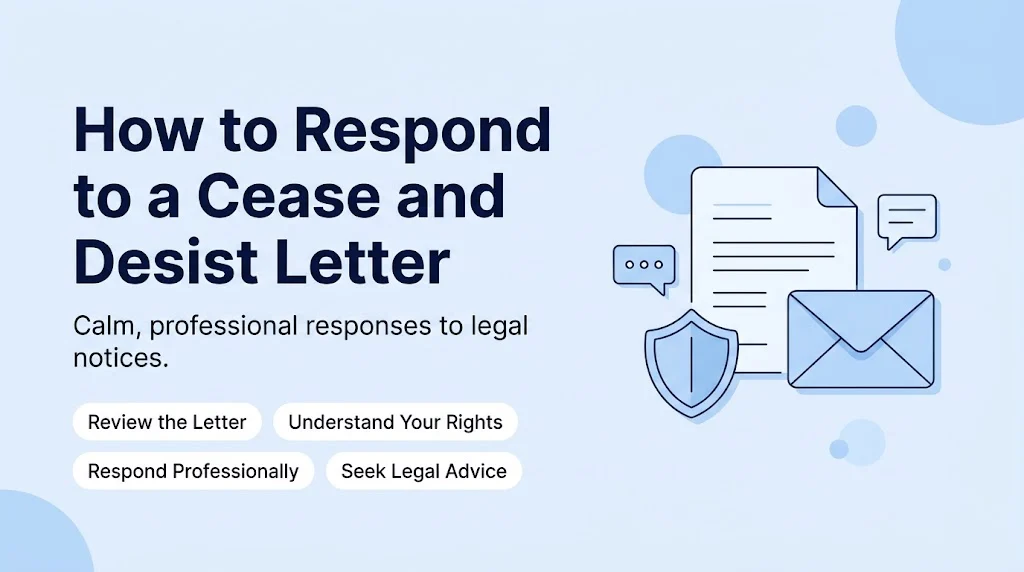
The best way to respond to a cease and desist letter is to stay calm, review the allegations, preserve relevant evidence, and avoid admitting fault before understanding your legal position. Your response should be professional, factual, and appropriate to the situation.
- Thank you for your letter. I am reviewing the allegations.
- Please provide the specific evidence supporting your claims.
- I acknowledge receipt of your letter without admitting liability.
- I will seek legal advice before providing a detailed response.
- Please direct future correspondence to my legal representative.
Receiving a cease and desist letter can feel intimidating, especially when it arrives unexpectedly in your email, mailbox, or business inbox. You might immediately wonder whether you need to stop an activity, respond to the sender, hire a lawyer, or defend yourself against an accusation. Before you send an angry email or agree to the demands, take a breath.
Important: These examples are general communication templates, not legal advice. A cease and desist letter can have serious consequences, so consult a qualified lawyer before responding to significant allegations, making admissions, signing an agreement, or ignoring a deadline.
Professional Responses
– Thank you for your letter. I am reviewing its contents and the allegations raised. Use this when you want to acknowledge receipt without rushing into a detailed response. Meaning: You are taking the matter seriously while allowing time to assess the claims.
– I acknowledge receipt of your correspondence and will respond after reviewing the relevant information. Use this for formal business or legal correspondence. Meaning: You are confirming receipt without agreeing with the sender’s position.
– I appreciate you bringing this matter to my attention. I am examining the issues identified in your letter. Use this when you want a neutral and professional tone. Meaning: You are recognizing the communication without admitting wrongdoing.
– Please allow me reasonable time to review the allegations and supporting documentation. Use this when you need more time to understand the letter. Meaning: You are requesting time before providing a substantive response.
– I will address the concerns raised once I have completed my review. Use this when you are not ready to discuss the details. Meaning: You are keeping the communication measured and focused.
– I have received your letter and am considering the matters described. Use this for a short acknowledgment. Meaning: You are confirming receipt without taking a position on the allegations.
– Please provide any additional documentation relevant to the allegations identified in your letter. Use this when the claims lack sufficient detail. Meaning: You are asking for information that may help you assess the dispute.
– I intend to address this matter through appropriate and professional channels. Use this when communication has become tense. Meaning: You are signaling that you want an orderly resolution.
– I am taking the allegations seriously and will consider the appropriate next steps. Use this when you need a calm, neutral response. Meaning: You are acknowledging the seriousness of the issue without conceding anything.
– Please confirm the specific conduct you believe requires corrective action. Use this when the demands are unclear. Meaning: You are asking the sender to identify the exact issue.
– I will review the relevant records before commenting further. Use this when documents or digital evidence may be important. Meaning: You are prioritizing an informed response over speculation.
– I have noted the requested actions and am assessing the matter. Use this when the sender has listed several demands. Meaning: You are acknowledging the requests without agreeing to fulfill them.
– Please communicate any further concerns in writing so they can be reviewed accurately. Use this when you want a clear written record. Meaning: You are encouraging documented and organized communication.
– I will provide an appropriate response once the relevant facts have been reviewed. Use this when you need to gather information first. Meaning: You are avoiding a premature position.
– Thank you for contacting me. I will handle this matter carefully and professionally. Use this for a courteous initial acknowledgment. Meaning: You are setting a respectful tone for future correspondence.
Firm and Assertive Responses
– I acknowledge receipt of your letter, but I do not accept its allegations as established facts. Use this when you dispute the accusations. Meaning: You are distinguishing receipt of the letter from acceptance of its claims.
– Please identify the specific conduct you allege violates your rights and the legal basis for that claim. Use this when the allegations are broad or vague. Meaning: You are requesting a clear explanation of the accusation.
– I reserve my position regarding the allegations until I have reviewed the relevant evidence. Use this when you need to avoid taking a premature position. Meaning: You are keeping your response open while gathering facts.
– I request that all further allegations be supported by relevant documentation. Use this when the sender has made claims without evidence. Meaning: You are asking for substantiation rather than unsupported assertions.
– I disagree with the characterization of my conduct in your letter. Use this when you believe the letter misrepresents what happened. Meaning: You are clearly disputing the sender’s description.
– Please clarify the scope of the restrictions you are requesting. Use this when the letter demands that you stop multiple activities. Meaning: You are asking for the precise boundaries of the requested restrictions.
– I will not make commitments until I have assessed the factual and legal issues involved. Use this when the sender wants an immediate promise. Meaning: You are declining to commit before understanding the consequences.
– Please direct any further formal demands to the appropriate written channel. Use this when communication has become scattered or aggressive. Meaning: You are establishing a more orderly process for communication.
– I expect future communications to remain factual and professional. Use this when the sender’s messages have become hostile. Meaning: You are setting a boundary around the tone of the discussion.
– I do not agree that the information provided establishes the alleged violation. Use this when the letter’s supporting information appears insufficient. Meaning: You are expressing disagreement without making unsupported counterclaims.
– Please specify the actions you believe are required to resolve this dispute. Use this when the requested remedy is unclear. Meaning: You are seeking concrete details about the proposed resolution.
– I will evaluate the request on its merits before determining how to proceed. Use this when you need to make an independent assessment. Meaning: You are indicating that the demand will not be accepted automatically.
– I request that you refrain from presenting disputed allegations as established facts. Use this when accusations are being shared publicly. Meaning: You are asking for careful and accurate communication.
– I am prepared to address legitimate concerns through an appropriate process. Use this when you want to remain firm but constructive. Meaning: You are open to a reasonable resolution without conceding the claims.
– My position will be based on the available evidence and applicable law. Use this when you want to emphasize a fact-based approach. Meaning: You are signaling that your decisions will not be driven by pressure.
Polite and Respectful Responses
– Thank you for bringing your concerns to my attention. Use this when you want to keep the exchange courteous. Meaning: You are acknowledging the sender’s concerns without accepting the allegations.
– I appreciate your correspondence and will review the issues you have raised. Use this for a respectful initial reply. Meaning: You are showing that you will consider the matter carefully.
– I understand that you have concerns and would appreciate further clarification. Use this when you want to understand the sender’s position. Meaning: You are inviting a more specific explanation.
– Please share any additional information that may help clarify this matter. Use this when important details are missing. Meaning: You are encouraging a more informed discussion.
– I would prefer to address this issue constructively and professionally. Use this when you hope to avoid unnecessary conflict. Meaning: You are expressing a preference for respectful communication.
– Thank you for outlining your position. I will consider the information provided. Use this after receiving a detailed letter. Meaning: You are acknowledging the sender’s explanation without agreeing to it.
– I would welcome clarification regarding the specific concerns identified. Use this when you need more precise information. Meaning: You are asking the sender to explain the issue clearly.
– I hope we can approach this matter in a fair and reasonable manner. Use this when you want to encourage cooperation. Meaning: You are expressing a preference for a balanced resolution.
– I will give your correspondence the attention it requires. Use this when you want a brief, formal acknowledgment. Meaning: You are indicating that you will review the matter seriously.
– Please let me know which specific materials or actions are at issue. Use this when the complaint does not identify everything clearly. Meaning: You are requesting details that may help define the dispute.
– I appreciate the opportunity to understand your concerns more fully. Use this when additional discussion could help clarify the disagreement. Meaning: You are showing willingness to understand the other party’s perspective.
– I would like to ensure that any response is based on accurate information. Use this when you need time to verify facts. Meaning: You are prioritizing accuracy over a rushed reply.
– I have received your concerns and will consider them carefully. Use this when you want to keep the response simple. Meaning: You are acknowledging the issue without taking a definitive position.
– Thank you for your patience while I review this matter. Use this when you have requested additional time. Meaning: You are politely asking the sender to allow you time to respond.
– I hope any outstanding concerns can be addressed through clear communication. Use this when you want to keep the door open to resolution. Meaning: You are encouraging a constructive approach to the dispute.
Responses When You Disagree With the Allegations
– I respectfully disagree with the allegations outlined in your letter. Use this when you believe the claims are incorrect. Meaning: You are clearly expressing disagreement without using hostile language.
– The circumstances described in your letter do not reflect my understanding of the events. Use this when you believe the sender has misunderstood what happened. Meaning: You are indicating that the account may be inaccurate or incomplete.
– I do not believe the information provided adequately supports the allegations. Use this when the letter contains insufficient evidence. Meaning: You are questioning whether the claims have been substantiated.
– Please identify the evidence on which each allegation is based. Use this when you need specific supporting information. Meaning: You are asking the sender to explain the factual basis of the claims.
– I dispute the assertion that my actions violated your rights. Use this only when you have a reasonable basis for disputing the allegation. Meaning: You are directly challenging the claimed violation.
– I would appreciate a detailed explanation of the conduct you consider improper. Use this when the letter uses general or unclear accusations. Meaning: You are requesting a more precise description of the alleged misconduct.
– I do not agree with the conclusions drawn from the facts presented. Use this when you accept some facts but dispute the interpretation. Meaning: You are separating the underlying events from the sender’s conclusions.
– My understanding of the relevant circumstances differs from the account in your letter. Use this when the two parties have different versions of events. Meaning: You are signaling a factual disagreement without escalating the tone.
– Please explain how the identified conduct allegedly infringes your rights. Use this when the legal connection between the conduct and the claim is unclear. Meaning: You are asking the sender to explain the basis of the allegation.
– I am unable to agree to your demands on the information currently available. Use this when you lack sufficient information to accept the requests. Meaning: You are declining the demand for now without making a final legal determination.
– I request that you reconsider your position in light of the relevant facts. Use this when you believe important information has been overlooked. Meaning: You are asking the sender to reassess the allegations.
– The materials referenced in your letter require further examination before I can comment. Use this when the claim relies on documents or other evidence. Meaning: You are avoiding an uninformed response.
– I dispute the accuracy of the statements identified in your correspondence. Use this when specific statements appear factually incorrect. Meaning: You are challenging the accuracy of the sender’s account.
– Please distinguish between the facts you can substantiate and the conclusions you have drawn. Use this when a letter mixes evidence with assumptions. Meaning: You are asking for a clearer separation between facts and interpretations.
– I will respond to the substantive allegations after reviewing the supporting evidence. Use this when you want to avoid a premature denial or admission. Meaning: You are reserving a detailed position until the facts are clearer.
Responses Requesting More Information
– Please provide the specific dates and details of the alleged conduct. Use this when the letter does not identify when the issue occurred. Meaning: You are requesting information needed to understand the claim.
– Could you identify the exact content, product, or activity referenced in your letter? Use this when the subject of the complaint is unclear. Meaning: You are asking the sender to identify what they want addressed.
– Please provide copies of the materials you rely on to support your allegations. Use this when the letter refers to evidence you have not received. Meaning: You are requesting the documents underlying the claims.
– Please explain which specific rights you believe have been infringed. Use this when the legal basis is not clearly stated. Meaning: You are asking the sender to identify the rights at issue.
– Could you clarify the precise changes or actions you are requesting? Use this when the requested remedy is ambiguous. Meaning: You are seeking a clear list of the requested actions.
– Please identify the relevant provisions of law supporting your position. Use this when you need to understand the legal basis cited by the sender. Meaning: You are asking for the legal reasoning behind the demand.
– Please specify the material you believe should be removed or modified. Use this for online content, publications, or product listings. Meaning: You are requesting an exact identification of the disputed material.
– I would appreciate clarification regarding the scope of your requested restrictions. Use this when the letter seems to cover more activity than necessary. Meaning: You are asking how broadly the requested restrictions are intended to apply.
– Please provide the documentation establishing your claimed ownership or authority. Use this when ownership or the right to make the demand is unclear. Meaning: You are asking for information supporting the sender’s authority, where relevant.
– Could you identify the specific statements you believe are objectionable? Use this when the dispute involves written or published statements. Meaning: You are requesting the precise language at issue.
– Please explain how the requested remedy relates to each allegation. Use this when the demands seem disconnected from the stated claims. Meaning: You are seeking a clearer explanation of the requested resolution.
– I would appreciate an itemized list of the concerns raised in your letter. Use this when the letter contains multiple allegations. Meaning: You are asking for the issues to be organized clearly.
– Please clarify whether your request applies to existing material, future activity, or both. Use this when the letter’s scope is uncertain. Meaning: You are seeking clarity about what conduct the sender wants addressed.
– Could you provide the relevant reference numbers or records associated with this matter? Use this when the dispute involves transactions, registrations, or formal records. Meaning: You are requesting identifiers that can help verify the claim.
– Please provide sufficient detail for me to understand and evaluate each allegation. Use this when the letter lacks the information needed for a meaningful response. Meaning: You are asking for a complete explanation before proceeding.
Responses When You Need More Time
– I request additional time to review the allegations and supporting materials. Use this when the stated deadline is approaching. Meaning: You are formally requesting more time to assess the matter.
– Given the nature of the issues raised, I need time to obtain appropriate advice. Use this when legal or specialist advice may be necessary. Meaning: You are explaining why an immediate substantive response may not be appropriate.
– Please confirm whether an extension of the response deadline would be acceptable. Use this when you want the sender to agree to a later date. Meaning: You are requesting an extension rather than assuming one has been granted.
– I am gathering the relevant records and will need additional time to review them. Use this when documents or communications need to be collected. Meaning: You are explaining that a careful review requires more time.
– I would appreciate a reasonable extension to prepare a considered response. Use this when you want to avoid replying hastily. Meaning: You are asking for time to respond accurately.
– I am currently reviewing the information and request that the deadline be extended until [date]. Use this when you have a specific proposed date. Meaning: You are making a concrete request for additional time.
– The issues raised require further investigation before I can respond fully. Use this when the facts are not yet established. Meaning: You are explaining why additional review is necessary.
– I need to consult the relevant records before providing a detailed response. Use this when you must verify what happened. Meaning: You are prioritizing accuracy and completeness.
– Please let me know whether you will agree to a short extension. Use this when the deadline is close and you need a quick answer. Meaning: You are requesting the sender’s agreement to more time.
– I am taking steps to review this matter and request time to complete that process. Use this when you want a neutral explanation. Meaning: You are indicating that the matter is being addressed.
– I cannot provide a considered response until I have reviewed the relevant documentation. Use this when the sender expects an immediate answer. Meaning: You are explaining the need for a proper review.
– Please confirm the current deadline and whether an extension can be arranged. Use this when the deadline or its calculation is uncertain. Meaning: You are seeking clarity about the timeline.
– I am seeking advice on the issues raised and will respond as appropriate. Use this when you are consulting a lawyer or qualified adviser. Meaning: You are explaining that advice is being sought before proceeding.
– I request that no further action be taken while the requested extension is being considered. Use this when you want the sender to pause escalation. Meaning: You are asking for a temporary pause, although the sender is not obliged to agree.
– Please confirm in writing whether the proposed extension has been accepted. Use this after requesting a new deadline. Meaning: You are seeking written confirmation rather than relying on an assumption.
Responses About Copyright or Trademark Claims
– Please identify the specific work or mark that you believe is being infringed. Use this when the letter concerns a logo, brand name, photograph, article, or design. Meaning: You are asking the sender to identify the intellectual property involved.
– Please provide details of your claimed ownership or authorization to act on behalf of the rights holder. Use this when the sender’s authority is unclear. Meaning: You are requesting information supporting their claim to represent the rights holder.
– I am reviewing the material identified in your letter and the circumstances of its use. Use this when you need to investigate how the content or mark was used. Meaning: You are examining the issue without admitting infringement.
– Please identify the exact URL, image, publication, or product listing at issue. Use this for online copyright or trademark complaints. Meaning: You are asking for precise identification of the disputed material.
– I would appreciate clarification regarding the specific intellectual property rights you claim have been violated. Use this when the letter does not clearly explain the rights involved. Meaning: You are asking for a clearer description of the legal claim.
– I am examining the relevant licensing records and permissions. Use this when you may have a license or authorization. Meaning: You are checking whether the material was used with appropriate permission.
– Please provide the registration details or other records relevant to your claim, where applicable. Use this when registration or ownership information may be relevant. Meaning: You are requesting records that may help establish the sender’s position.
– I will review the history and source of the material before commenting further. Use this when you need to establish where an image, text, or design originated. Meaning: You are investigating the material’s background before taking a position.
– Please specify which uses you believe exceed the scope of any applicable permission. Use this when permission may exist but its limits are disputed. Meaning: You are asking the sender to identify the alleged overreach.
– I am assessing whether the identified material falls within the scope of any applicable license or authorization. Use this when the dispute involves licensed content. Meaning: You are checking the terms governing the material’s use.
– Please clarify whether your complaint concerns ownership, attribution, licensing, or another issue. Use this when the letter combines several intellectual property concerns. Meaning: You are asking the sender to distinguish between different types of claims.
– I am reviewing the disputed material and will consider the appropriate next steps. Use this when you need time to investigate. Meaning: You are keeping the response neutral while assessing the situation.
– Please identify the specific changes you believe are necessary to address your concerns. Use this when the sender requests corrections or removals. Meaning: You are asking for a clear description of the requested remedy.
– I would like to understand the basis for your requested restrictions on the identified material. Use this when the demand appears broad. Meaning: You are requesting an explanation of why those restrictions are being sought.
– I will consider the claim after reviewing the relevant ownership, licensing, and usage information. Use this when the dispute involves several records or permissions. Meaning: You are taking a fact-based approach before deciding how to respond.
Responses for Online Content and Website Owners
– I have received your complaint regarding the content published on my website. Use this when a letter concerns a blog post or website page. Meaning: You are acknowledging the complaint without accepting its validity.
– Please identify the specific page and passages you believe require attention. Use this when the complaint refers generally to website content. Meaning: You are asking the sender to pinpoint the material in question.
– I am reviewing the content and the circumstances surrounding its publication. Use this when you need to investigate an article or page. Meaning: You are checking the facts before making a decision.
– Please provide the exact URLs associated with the allegations. Use this when the sender has not provided direct links. Meaning: You are requesting the information needed to locate the disputed pages.
– I am checking the source, publication history, and permissions associated with the material. Use this when an image, article, or other asset is involved. Meaning: You are investigating where the content came from and how it was used.
– Please clarify whether your concerns relate to the wording, images, branding, or another element of the page. Use this when the complaint is vague. Meaning: You are asking the sender to specify what they object to.
– I am preserving relevant records while reviewing the complaint. Use this when you need to maintain an accurate record of the dispute. Meaning: You are keeping potentially important information available for review.
– Please identify the specific website activity you believe must cease. Use this when the demand appears to cover your entire website. Meaning: You are asking for a more precise explanation of the requested restriction.
– I will review the relevant publication and related documentation before responding further. Use this when the dispute involves several pages or sources. Meaning: You are taking time to establish the facts.
– Please explain the basis for requesting removal of the identified material. Use this when the sender wants a page taken down. Meaning: You are seeking an explanation of the requested removal.
– I am evaluating the complaint and will determine the appropriate response after review. Use this when you are not ready to commit to changes. Meaning: You are keeping your options open while investigating.
– Please specify whether the concern involves current content, archived material, or future publications. Use this when the scope of the complaint is unclear. Meaning: You are asking which parts of your online activity are affected.
– I would appreciate copies of any screenshots or records supporting the reported issue. Use this when the sender refers to online evidence. Meaning: You are requesting material that may help verify the complaint.
– I am reviewing the matter in accordance with the relevant website policies and applicable law. Use this when you need a measured, formal response. Meaning: You are indicating that the issue will be assessed against relevant requirements.
– Please direct future correspondence about this claim to the designated contact at [email address]. Use this when you have an appropriate business or legal contact for the dispute. Meaning: You are organizing future communication through a specified channel.
Responses When You Want to Resolve the Dispute
– I am open to discussing a reasonable resolution after reviewing the relevant facts. Use this when you want to explore a practical solution. Meaning: You are expressing willingness to discuss resolution without accepting liability.
– Please outline the specific outcome you believe would resolve this matter. Use this when the sender has not explained what would satisfy their concerns. Meaning: You are asking for a clear proposal.
– I would welcome a constructive discussion about the issues identified in your letter. Use this when both sides may be able to communicate productively. Meaning: You are inviting a professional discussion.
– I am willing to consider reasonable proposals that address the concerns raised. Use this when you want to keep potential solutions open. Meaning: You are showing flexibility without making a commitment.
– Please provide your proposed terms for resolving the dispute in writing. Use this when the sender has suggested a settlement. Meaning: You are requesting a documented proposal for review.
– I believe a clear explanation of the disputed issues may help identify a practical way forward. Use this when the disagreement may stem from misunderstanding. Meaning: You are encouraging clarification before escalation.
– I am prepared to consider appropriate options once the relevant information has been reviewed. Use this when you need more facts before discussing a solution. Meaning: You are keeping the discussion open without agreeing to a specific outcome.
– Would you be willing to discuss a mutually acceptable resolution through appropriate representatives? Use this when direct communication may be difficult. Meaning: You are suggesting a structured discussion through representatives.
– Please clarify whether you would consider an alternative remedy to the one requested. Use this when the demand seems excessive or difficult to meet. Meaning: You are exploring whether another solution could be considered.
– I would prefer to focus on the specific issues that can be addressed constructively. Use this when the correspondence has become argumentative. Meaning: You are redirecting the conversation toward practical concerns.
– I am willing to review a written proposal with the benefit of appropriate advice. Use this when a settlement offer requires careful consideration. Meaning: You are open to reviewing terms without accepting them immediately.
– Please allow me to evaluate the proposed resolution before providing a final position. Use this when you need time to consider an offer. Meaning: You are avoiding a rushed commitment.
– I hope we can identify a fair and proportionate way to address the concerns raised. Use this when you want a balanced outcome. Meaning: You are expressing a preference for a reasonable resolution.
– I am open to considering mediation or another appropriate dispute-resolution process. Use this when informal discussions have not resolved the issue. Meaning: You are suggesting a structured alternative to continued disagreement.
– Please send any proposed resolution terms for review before expecting a commitment. Use this when the sender wants immediate acceptance of an offer. Meaning: You are establishing that the terms need to be reviewed first.
Responses When You Have Consulted a Lawyer
– I am seeking legal advice regarding the allegations and requested actions. Use this when you have decided to consult a lawyer. Meaning: You are indicating that you are obtaining advice before proceeding.
– My legal representative will review the correspondence and advise me on the appropriate response. Use this when your lawyer is reviewing the letter. Meaning: You are explaining that the matter is being assessed with professional assistance.
– Please direct further correspondence to my legal representative at the contact details provided. Use this when your lawyer has authorized you to direct communications to them. Meaning: You are establishing a designated channel for future correspondence.
– I am not in a position to provide a substantive response until I have received legal advice. Use this when you need to wait before addressing the allegations. Meaning: You are avoiding a premature response while seeking guidance.
– I will respond to the matters raised in accordance with the advice I receive. Use this when you want to keep your reply brief. Meaning: You are indicating that your next steps will follow an informed review.
– Please provide any supporting documents that have not already been included in your correspondence. Use this when your lawyer or you need further records. Meaning: You are requesting relevant documentation for review.
– I acknowledge receipt of your letter and am obtaining advice concerning its contents. Use this as a neutral acknowledgment. Meaning: You are confirming receipt while keeping your substantive position open.
– I will not comment further on the merits of the allegations until I have obtained appropriate advice. Use this when the sender is pressing for immediate answers. Meaning: You are setting a boundary around substantive discussion.
– Please allow the appropriate representatives to communicate about the issues raised. Use this when both parties have legal representatives. Meaning: You are encouraging communication through the designated professionals.
– I am reviewing the letter with counsel and will consider the appropriate next steps. Use this when you are still deciding how to proceed. Meaning: You are taking time to assess the matter with legal guidance.
– Any response concerning the allegations will be provided through the appropriate channel. Use this when you want to avoid discussing the matter informally. Meaning: You are directing the dispute toward a formal communication process.
– I have forwarded your correspondence for legal review. Use this when you have actually sent the letter to your lawyer. Meaning: You are confirming that the letter is being reviewed professionally.
– Please communicate any proposed resolution terms to my representative for consideration. Use this when settlement discussions may occur. Meaning: You are routing proposals through the appropriate professional.
– I am following the advice provided to me regarding this matter. Use this only when you have actually received and are following such advice. Meaning: You are explaining that your actions are informed by legal guidance.
– I will address further communications through the agreed legal process. Use this when formal communication arrangements are in place. Meaning: You are emphasizing an organized approach to the dispute.
Short Email Responses to a Cease and Desist Letter
– Subject: Acknowledgment of Receipt Thank you for your correspondence. I acknowledge receipt and am reviewing its contents. Use this when you need a brief initial acknowledgment. Meaning: You are confirming receipt without admitting liability or accepting the demands.
– Subject: Request for Further Information I have received your letter. Please provide the specific details and supporting documentation for the allegations raised. Use this when the letter lacks important details. Meaning: You are requesting information before deciding how to respond.
– Subject: Request for Additional Time I am reviewing your correspondence and request an extension until [date] to prepare a considered response. Please confirm in writing whether this extension is acceptable. Use this when you need more time. Meaning: You are making a clear request for a new deadline.
– Subject: Disputed Allegations I acknowledge receipt of your letter. I do not agree with the characterization of the events described and am reviewing the relevant information. Use this when you disagree with the sender’s account. Meaning: You are expressing disagreement without making unsupported counterclaims.
– Subject: Request for Clarification Please identify the specific conduct at issue and explain the basis for the requested actions. Use this when the demands are unclear. Meaning: You are asking the sender to define the dispute more precisely.
– Subject: Review of Copyright Complaint I am reviewing the identified material and the circumstances of its use. Please provide the specific URLs and supporting information relevant to your claim. Use this for a website or content dispute. Meaning: You are seeking the information needed to investigate the complaint.
– Subject: Legal Review I acknowledge receipt of your correspondence and am seeking legal advice regarding the matters raised. Use this when you are consulting a lawyer. Meaning: You are acknowledging the letter while obtaining professional guidance.
– Subject: Request for Supporting Documentation Please provide the records and other materials on which you rely to support the allegations in your letter. Use this when the evidence is missing or incomplete. Meaning: You are asking the sender to substantiate the claims.
– Subject: Proposed Resolution I am willing to consider a reasonable proposal after reviewing the relevant facts and obtaining any necessary advice. Use this when you are open to resolving the matter. Meaning: You are expressing willingness to consider options without accepting a settlement.
– Subject: Confirmation of Requested Actions Please clarify the specific actions you are requesting and the basis for each requirement. Use this when the sender lists several demands. Meaning: You are seeking a precise explanation of what they want.
– Subject: Formal Correspondence I have received your letter and will address the issues through appropriate written channels. Use this when you want a formal communication record. Meaning: You are setting a professional tone for future correspondence.
– Subject: Review of Allegations I am gathering the relevant records and will review the allegations before providing a substantive response. Use this when you need to investigate first. Meaning: You are explaining that your response will follow a factual review.
– Subject: Request to Discuss Resolution I would be willing to consider a constructive discussion about the concerns raised, subject to reviewing the relevant information. Use this when a practical resolution may be possible. Meaning: You are opening the door to discussion without making a commitment.
– Subject: Receipt of Formal Notice I confirm receipt of your notice. This acknowledgment does not indicate agreement with the allegations or demands. Use this when you want to distinguish acknowledgment from acceptance. Meaning: You are clarifying that receipt is not an admission.
– Subject: Further Communication Please send any additional information relevant to your allegations in writing for review. Use this when you want all relevant communication documented. Meaning: You are requesting a written record for careful consideration.
Responses to Avoid Escalating the Situation
– I would like to keep our communication focused on the specific issues raised. Use this when the discussion becomes personal or argumentative. Meaning: You are redirecting attention toward the actual dispute.
– I prefer to address this matter through clear, factual communication. Use this when the other party makes emotional accusations. Meaning: You are encouraging a fact-based discussion.
– I will review the information before drawing any conclusions. Use this when you feel pressured to respond immediately. Meaning: You are avoiding an impulsive or uninformed reply.
– Please keep further communications relevant to the issues identified in your letter. Use this when messages include unrelated accusations. Meaning: You are setting a reasonable boundary for the discussion.
– I would appreciate an opportunity to review the facts before discussing potential next steps. Use this when the sender expects an immediate decision. Meaning: You are asking for time to understand the situation.
– I do not wish to speculate about matters that have not yet been verified. Use this when you do not know whether an allegation is accurate. Meaning: You are avoiding unsupported statements.
– I will address the relevant concerns once I have sufficient information. Use this when you need more documentation. Meaning: You are keeping the conversation focused on verified facts.
– Please clarify any remaining questions in writing. Use this when verbal discussions are creating confusion. Meaning: You are requesting a written record of the outstanding issues.
– I would prefer to avoid assumptions and focus on the available evidence. Use this when both sides appear to be making unsupported claims. Meaning: You are promoting a more objective approach.
– I am considering the matter carefully and will communicate when appropriate. Use this when you need a pause before responding. Meaning: You are setting expectations without making unnecessary promises.
– I understand your position, although I have not reached the same conclusion. Use this when you disagree but want to remain civil. Meaning: You are acknowledging the other party’s perspective without accepting it.
– I would appreciate a professional and respectful approach from both sides. Use this when the exchange is becoming hostile. Meaning: You are requesting a more constructive tone.
– I am not prepared to make a commitment without reviewing the relevant details. Use this when the sender wants an immediate agreement. Meaning: You are avoiding a decision before assessing the facts.
– I will consider the information provided and determine the appropriate next steps. Use this when you want to close an unproductive exchange. Meaning: You are ending the immediate discussion without conceding the dispute.
– I believe further communication should focus on resolving the specific issues in question. Use this when you want to move away from personal conflict. Meaning: You are encouraging a practical and focused discussion.
FAQs
What is the best way to respond to a cease and desist letter?
Start by reviewing the allegations, demands, supporting evidence, and stated deadline. =
Do I have to respond to a cease and desist letter?
Not every cease and desist letter creates a legal obligation to respond, but ignoring one can carry risks depending on the circumstances.
Can I ignore a cease and desist letter if the claims are false?
Do not assume that ignoring the letter is the safest choice just because you believe the claims are false.
Should I admit fault in my response?
Avoid making admissions before you understand the facts and legal implications.
Can I respond to a cease and desist letter myself?
You can sometimes send a basic acknowledgment yourself, but a detailed response may require legal expertise.
Conclusion
Receiving a cease and desist letter can be stressful, but your response does not need to be emotional or confrontational. Focus on understanding the allegations, protecting relevant evidence, checking deadlines, and communicating carefully. A short acknowledgment may be enough to begin the process, while a complicated dispute may require a lawyer’s guidance.
Choose wording that reflects your actual position instead of copying a response that does not fit your circumstances. Avoid threats, unsupported accusations, and unnecessary admissions. The goal is to protect your interests while keeping your communication clear and professional.
Discover More Related Articles:
- Flirty Response to Thinking of You | That Will Make Them Smile In 2026
- How to Respond to Happy New Year | For Every Mood & Situation In 2026

Laura Adams is a dedicated content writer and blogger known for crafting clear, informative, and engaging articles. As a contributor to Responary.com, she specializes in creating reader-friendly content that educates, inspires, and keeps audiences informed on a wide range of subjects.