Quick Answer
Response to Intervention, often called RTI, is a school-based framework used to identify students who need extra academic or behavioral support and provide increasingly targeted help based on their progress. It focuses on early intervention, regular progress monitoring, and adjusting support when needed.
Top alternatives: RTI meaning, what does RTI mean, Response to Intervention explained, RTI in education, RTI example.
Ever wondered why a student who is struggling in class might receive extra support before anyone starts talking about special education? That is where Response to Intervention, commonly known as RTI, comes in. It is a structured approach schools use to notice learning difficulties early, provide appropriate support, monitor progress, and adjust instruction when necessary.
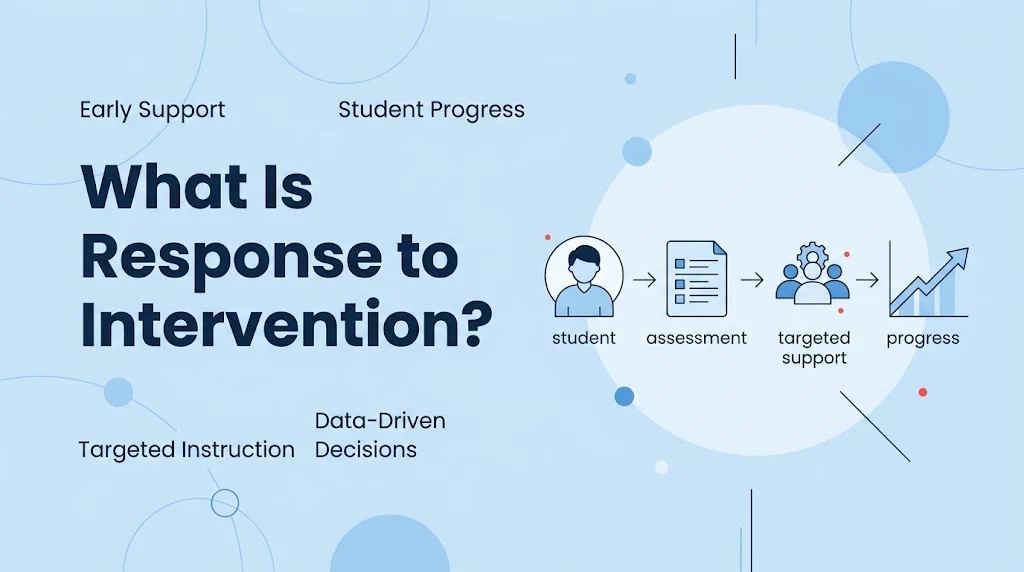
You may hear about RTI during parent-teacher meetings, school conferences, education courses, or conversations about reading and math support. It can sound complicated at first, but the basic idea is surprisingly simple: identify a student’s needs, provide help, see whether that help works, and make informed decisions based on progress.
Understanding RTI can help parents, teachers, students, and education professionals communicate more confidently. The following guide breaks down the concept, levels, examples, benefits, challenges, and common questions in a simple, practical way.
Simple Meaning of Response to Intervention
- RTI is a support framework.
Example: Use this explanation when someone asks for a basic definition during an education discussion.
Meaning: RTI organizes academic support around a student’s specific needs and progress. - It focuses on early help.
Example: Use this when explaining why schools monitor struggling students before problems become more serious.
Meaning: The approach aims to address difficulties as early as possible. - It uses student progress to guide decisions.
Example: Use this when describing how teachers decide whether additional support is working.
Meaning: Instruction can be changed based on measurable progress. - RTI is commonly associated with education.
Example: Use this when explaining the term to someone unfamiliar with school support systems.
Meaning: It is primarily used as a framework for supporting students in school settings. - It can address academic difficulties.
Example: Use this when discussing students struggling with reading, writing, or mathematics.
Meaning: RTI can provide targeted academic assistance. - It can involve different levels of support.
Example: Use this when introducing the tiered structure to a parent.
Meaning: Students may receive increasingly intensive intervention depending on their needs. - Progress monitoring is important.
Example: Use this when explaining how teachers evaluate intervention effectiveness.
Meaning: Student performance is tracked over time. - RTI is not simply extra homework.
Example: Use this when someone assumes intervention means giving a struggling student more assignments.
Meaning: Intervention should be targeted, purposeful, and responsive to specific needs. - It involves adjusting instruction.
Example: Use this when describing what happens when a student does not improve sufficiently.
Meaning: Teachers can modify the type or intensity of support. - The framework is based on individual student needs.
Example: Use this when discussing why two students may receive different interventions.
Meaning: Support is not necessarily identical for every learner. - RTI encourages data-informed decisions.
Example: Use this in a teacher-training discussion.
Meaning: Student performance information helps guide educational decisions. - It can involve teachers and other school professionals.
Example: Use this when explaining who may participate in intervention planning.
Meaning: Support can involve collaboration among several members of a school team. - Parents may be involved in the process.
Example: Use this during a parent-school conversation about academic concerns.
Meaning: Families can be informed about concerns, interventions, and progress. - RTI is designed to provide support before failure becomes entrenched.
Example: Use this when explaining the preventive purpose of intervention.
Meaning: Early support can address difficulties before they become harder to overcome. - The main question is whether the student is responding to support.
Example: Use this when summarizing the framework in one sentence.
Meaning: Student response helps determine what support should happen next.
How RTI Works
- The process often begins with identifying a concern.
Example: Use this when describing the first step for a student who is falling behind.
Meaning: A teacher or school team notices that a student may need additional support. - Teachers gather information about performance.
Example: Use this when explaining how a concern is investigated.
Meaning: Existing classroom information and assessments can help clarify the student’s needs. - Appropriate intervention is selected.
Example: Use this when discussing the planning stage.
Meaning: Support is chosen according to the student’s particular difficulty. - The student receives additional instruction or support.
Example: Use this when explaining what intervention looks like in practice.
Meaning: The student gets targeted help beyond ordinary instruction when appropriate. - Progress is monitored regularly.
Example: Use this when describing how teachers determine whether support is helping.
Meaning: Performance is checked at planned intervals. - Teachers review the results.
Example: Use this during an explanation of data-based decision-making.
Meaning: Progress information is examined to determine whether the intervention is effective. - Support may continue when progress is satisfactory.
Example: Use this when a student is improving with targeted instruction.
Meaning: Effective intervention can remain in place while the student continues developing. - Support may be changed when progress is limited.
Example: Use this when explaining why an intervention might be modified.
Meaning: The school can adjust its approach when the current strategy is not producing enough improvement. - Intervention may become more intensive.
Example: Use this when describing what can happen after insufficient progress.
Meaning: Students with greater needs may receive more focused or frequent support. - Teams communicate about student progress.
Example: Use this when discussing collaboration among educators.
Meaning: Shared information helps schools make more consistent decisions. - Parents can receive updates.
Example: Use this when preparing for a school meeting.
Meaning: Families can be kept informed about intervention and student progress. - The process is intended to be responsive.
Example: Use this when explaining why RTI is not a one-size-fits-all program.
Meaning: Support can change as student needs change. - Instruction remains connected to student goals.
Example: Use this when explaining intervention planning.
Meaning: Support should address specific skills or areas of concern. - Schools use evidence to guide next steps.
Example: Use this when discussing intervention decisions.
Meaning: Decisions should be informed by student performance rather than assumptions alone. - The process can involve multiple cycles of support.
Example: Use this when explaining why intervention is ongoing rather than a single event.
Meaning: Schools may provide, evaluate, and adjust support repeatedly.
RTI Examples in Math
- A student struggles with basic number facts.
Example: Use this when giving a simple math intervention example.
Meaning: Targeted practice can strengthen foundational calculation skills. - A small group practices multiplication strategies.
Example: Use this when discussing targeted math support.
Meaning: Students can receive focused instruction on a particular skill. - A teacher provides additional instruction on place value.
Example: Use this when describing support for foundational number concepts.
Meaning: Intervention can directly address a specific mathematical misunderstanding. - A student receives extra fraction practice.
Example: Use this when discussing difficulty understanding fractions.
Meaning: Focused practice can strengthen conceptual understanding. - A teacher monitors math fluency regularly.
Example: Use this when explaining how progress can be tracked.
Meaning: Repeated measurement can show whether calculation skills are improving. - Students use visual models to understand equations.
Example: Use this when discussing students who need concrete representations.
Meaning: Visual strategies can make abstract mathematical concepts easier to understand. - A student practices solving one problem type at a time.
Example: Use this when describing targeted problem-solving support.
Meaning: Narrowing the skill focus can make intervention more manageable. - A teacher reteaches a misunderstood concept.
Example: Use this when discussing a student who has a specific conceptual gap.
Meaning: Intervention can directly revisit a skill that was not mastered. - A student receives additional practice with word problems.
Example: Use this when discussing difficulty translating language into mathematical operations.
Meaning: Targeted practice can strengthen mathematical reasoning. - A small group works on addition and subtraction strategies.
Example: Use this when discussing foundational calculation support.
Meaning: Focused group instruction can reinforce essential skills. - Progress is checked after several intervention sessions.
Example: Use this when explaining how teachers determine effectiveness.
Meaning: Performance data can guide the next instructional decision. - The teacher changes the strategy when progress is limited.
Example: Use this when describing intervention adjustment.
Meaning: Support can be modified rather than continuing an ineffective method. - A student gets more explicit instruction in mathematical vocabulary.
Example: Use this when discussing language-related barriers in math.
Meaning: Understanding mathematical terms can improve problem solving. - A teacher breaks complex problems into smaller steps.
Example: Use this when explaining structured support.
Meaning: Smaller steps can help students manage difficult tasks. - The intervention targets the exact skill causing difficulty.
Example: Use this when summarizing effective math support.
Meaning: Focused intervention addresses the student’s specific learning need.
RTI and Special Education
- RTI is not automatically the same as special education.
Example: Use this when explaining the difference to a parent.
Meaning: Receiving intervention does not by itself mean a student has been placed in special education. - RTI can help identify students who need additional evaluation.
Example: Use this when discussing persistent learning difficulties.
Meaning: Progress information can contribute to decisions about further assessment. - Intervention data can provide useful information about learning needs.
Example: Use this during a school support meeting.
Meaning: Student response to instruction can help educators understand the difficulty. - A student can receive intervention without special education eligibility.
Example: Use this when correcting a common misconception.
Meaning: General education support and special education services are not identical. - Special education eligibility involves additional requirements.
Example: Use this when explaining why intervention alone does not determine eligibility.
Meaning: Formal eligibility decisions typically require appropriate evaluation and applicable criteria. - RTI can be part of a broader problem-solving process.
Example: Use this when discussing school support systems.
Meaning: Intervention information can contribute to broader educational decision-making. - Parents should ask what data the school is collecting.
Example: Use this before a meeting about a struggling student.
Meaning: Understanding the evidence can make discussions more productive. - Parents can ask what intervention is being provided.
Example: Use this when a school mentions additional support.
Meaning: Families can seek clarity about the actual assistance their child receives. - Parents can ask how often progress is monitored.
Example: Use this when discussing intervention effectiveness.
Meaning: Monitoring frequency helps families understand how progress is being evaluated. - Parents can ask what happens if progress remains limited.
Example: Use this during an intervention meeting.
Meaning: Families should understand the possible next steps. - Intervention should be documented appropriately.
Example: Use this when discussing school records and support planning.
Meaning: Clear documentation can help teams understand what was tried and what happened. - RTI does not replace professional judgment.
Example: Use this when discussing data-based decisions.
Meaning: Student information should be interpreted thoughtfully by qualified professionals. - The framework can support earlier problem identification.
Example: Use this when explaining why schools may use intervention before formal evaluation.
Meaning: Early support can help reveal persistent learning concerns. - A lack of progress can be important information.
Example: Use this when discussing a student who does not improve despite targeted support.
Meaning: Limited response may signal the need for additional investigation or support. - RTI and special education should be discussed carefully.
Example: Use this when explaining the topic to families.
Meaning: The relationship between intervention and eligibility can depend on school procedures and applicable education requirements.
Benefits of RTI
- It encourages early intervention.
Example: Use this when explaining one major reason schools use the framework.
Meaning: Students can receive help before difficulties become more severe. - It promotes targeted instruction.
Example: Use this when discussing personalized academic support.
Meaning: Intervention can focus on specific skills rather than general repetition. - It encourages regular progress monitoring.
Example: Use this when discussing accountability in intervention.
Meaning: Schools can evaluate whether support is producing improvement. - It supports data-informed decisions.
Example: Use this when discussing educational planning.
Meaning: Student performance information can guide instructional choices. - It can encourage collaboration.
Example: Use this when discussing teamwork among teachers and specialists.
Meaning: Multiple professionals can contribute to supporting a student. - It can provide more focused support.
Example: Use this when discussing small-group intervention.
Meaning: Students can receive instruction targeted to their specific needs. - It can help schools respond more quickly.
Example: Use this when discussing early identification.
Meaning: Concerns can be addressed instead of simply waiting for students to catch up independently. - It gives teachers information about intervention effectiveness.
Example: Use this when discussing progress data.
Meaning: Teachers can determine whether a strategy is helping. - It can reduce reliance on guesswork.
Example: Use this when explaining why progress data matters.
Meaning: Decisions can be based more heavily on observed student performance. - It can help identify persistent difficulties.
Example: Use this when discussing students who continue struggling despite targeted support.
Meaning: Ongoing difficulties can become clearer over time. - It can support differentiated instruction.
Example: Use this when discussing classroom responses to varied learning needs.
Meaning: Instruction can be adjusted to accommodate different students. - It can create clearer intervention goals.
Example: Use this when discussing targeted learning plans.
Meaning: Specific goals make it easier to evaluate progress. - It encourages continuous adjustment.
Example: Use this when describing the flexible nature of intervention.
Meaning: Support can change when student performance changes. - It can help families understand the support process.
Example: Use this during parent-school communication.
Meaning: Clear intervention information can make school support easier to understand. - It focuses attention on student outcomes.
Example: Use this when summarizing the framework’s overall purpose.
Meaning: The effectiveness of support is judged partly by how the student responds.
Challenges of RTI
- Implementation can vary between schools.
Example: Use this when explaining why two schools may use different intervention procedures.
Meaning: Local systems and practices can influence how the framework operates. - Progress monitoring requires time.
Example: Use this when discussing practical challenges for teachers.
Meaning: Collecting and reviewing student data requires planning and resources. - Teachers need appropriate training.
Example: Use this when discussing successful implementation.
Meaning: Staff need knowledge and skills to provide and evaluate interventions effectively. - Intervention quality matters.
Example: Use this when discussing why simply providing extra instruction is not enough.
Meaning: Support should be appropriate, structured, and aligned with student needs. - Data can be misunderstood.
Example: Use this when discussing assessment results.
Meaning: Numbers should be interpreted carefully rather than treated as automatic answers. - Students may need different kinds of support.
Example: Use this when discussing individual differences.
Meaning: A single intervention will not work equally well for every learner. - Scheduling intervention can be difficult.
Example: Use this when discussing school logistics.
Meaning: Schools must find time for additional instruction without unnecessarily disrupting learning. - Staff collaboration can take coordination.
Example: Use this when discussing team-based intervention.
Meaning: Effective communication requires time and organization. - Parents may not understand the terminology.
Example: Use this during a parent meeting.
Meaning: Schools should explain educational terms in accessible language. - Interventions need consistent implementation.
Example: Use this when discussing why intervention fidelity matters.
Meaning: A strategy cannot be evaluated fairly if it is applied inconsistently. - Some students may need more intensive support.
Example: Use this when discussing persistent learning difficulties.
Meaning: Initial interventions may not be enough for every student. - Schools need sufficient resources.
Example: Use this when discussing implementation challenges.
Meaning: Staff, time, materials, and expertise can affect the quality of support. - Progress may not always be immediate.
Example: Use this when explaining why patience can be necessary.
Meaning: Some skills require sustained instruction and practice. - The framework should not become a paperwork exercise.
Example: Use this when discussing meaningful implementation.
Meaning: Documentation should support student learning rather than replace actual intervention. - Decisions require professional judgment.
Example: Use this when discussing the limits of data alone.
Meaning: Student information needs thoughtful interpretation and context.
RTI for Parents
- Ask what specific skill your child is struggling with.
Example: Use this before a meeting with a teacher.
Meaning: Identifying the exact difficulty makes the support plan easier to understand. - Ask what intervention your child is receiving.
Example: Use this when the school says additional help has started.
Meaning: You want to know what the support actually involves. - Ask how progress will be measured.
Example: Use this during an intervention planning meeting.
Meaning: You want to understand how improvement will be evaluated. - Ask how often progress will be reviewed.
Example: Use this when discussing monitoring schedules.
Meaning: You want clarity about when the school will assess results. - Ask what happens if the intervention does not work.
Example: Use this when preparing for possible next steps.
Meaning: You want to understand the school’s plan for limited progress. - Request clear explanations instead of educational jargon.
Example: Use this when school terminology becomes confusing.
Meaning: Parents have a right to understand what educators are communicating. - Keep copies of important school communication.
Example: Use this when organizing information about intervention.
Meaning: Written records can make future discussions easier. - Share relevant information about your child’s learning.
Example: Use this when meeting with educators.
Meaning: Parents can provide useful context about strengths and difficulties. - Ask what your child does well.
Example: Use this when a meeting focuses heavily on problems.
Meaning: Understanding strengths can help create a more balanced support plan. - Ask whether the intervention is happening consistently.
Example: Use this when progress appears limited.
Meaning: Consistency can affect how fairly an intervention is evaluated. - Ask what you can practice at home.
Example: Use this when you want to reinforce school support.
Meaning: Appropriate home activities can complement classroom intervention. - Avoid assuming intervention means failure.
Example: Use this when explaining the process to another parent.
Meaning: Receiving extra support can be a normal part of responding to learning needs. - Celebrate small improvements.
Example: Use this when your child makes gradual progress.
Meaning: Recognizing improvement can encourage continued effort. - Stay involved without trying to become the teacher.
Example: Use this when supporting a child at home.
Meaning: Parents can encourage learning while relying on educators for specialized instruction. - Keep communication open with the school.
Example: Use this throughout an intervention period.
Meaning: Regular communication can help everyone respond to changes in student needs.
RTI for Teachers
- Start with a clear description of the concern.
Example: Use this when documenting why a student may need additional support.
Meaning: Specific concerns make intervention planning more focused. - Choose an intervention that matches the skill gap.
Example: Use this when planning support for a struggling learner.
Meaning: The intervention should address the actual difficulty rather than provide random extra work. - Set measurable goals.
Example: Use this when creating an intervention plan.
Meaning: Specific goals make progress easier to evaluate. - Monitor progress consistently.
Example: Use this when discussing intervention implementation.
Meaning: Regular data collection helps show whether the student is improving. - Document what intervention was provided.
Example: Use this when maintaining school records.
Meaning: Documentation helps teams understand what strategies were attempted. - Record the student’s response.
Example: Use this when reviewing intervention results.
Meaning: The student’s performance provides evidence about effectiveness. - Adjust instruction when necessary.
Example: Use this when progress remains below expectations.
Meaning: Teachers should respond to data rather than continue an ineffective strategy indefinitely. - Collaborate with colleagues.
Example: Use this when a student has persistent difficulties.
Meaning: Other educators may offer useful expertise or perspectives. - Communicate clearly with families.
Example: Use this when explaining intervention to parents.
Meaning: Clear communication builds understanding and collaboration. - Avoid using intervention as punishment.
Example: Use this when planning additional support.
Meaning: Intervention should be instructional and supportive rather than punitive. - Use student strengths when planning support.
Example: Use this when designing individualized instruction.
Meaning: Strengths can provide useful pathways for addressing weaknesses. - Keep the intervention focused.
Example: Use this when deciding which skill to target.
Meaning: A narrow focus can make intervention more effective and measurable. - Review data instead of relying only on impressions.
Example: Use this during team meetings.
Meaning: Objective information can strengthen instructional decisions. - Consider the student’s classroom context.
Example: Use this when interpreting progress data.
Meaning: Performance can be influenced by instructional, behavioral, language, or environmental factors. - Remember that progress is the goal.
Example: Use this when intervention planning becomes overly focused on paperwork.
Meaning: The ultimate purpose is helping the student learn and succeed.
RTI vs. MTSS
- RTI is often discussed as a tiered intervention framework.
Example: Use this when introducing the relationship between RTI and broader school support systems.
Meaning: RTI commonly emphasizes intervention and student response. - MTSS is a broader framework.
Example: Use this when explaining the basic distinction.
Meaning: Multi-Tiered System of Supports can encompass academic, behavioral, and other student needs. - Both approaches use multiple levels of support.
Example: Use this when comparing their structures.
Meaning: Both organize support according to intensity and student need. - Both emphasize early intervention.
Example: Use this when discussing a shared principle.
Meaning: Both aim to provide appropriate support before difficulties become more serious. - Both can use progress monitoring.
Example: Use this when explaining similarities.
Meaning: Student data can guide decisions in both frameworks. - MTSS may address more than academics.
Example: Use this when explaining the broader scope of MTSS.
Meaning: MTSS can incorporate behavioral and social-emotional supports along with academic assistance. - RTI is commonly associated with academic intervention.
Example: Use this when discussing reading or mathematics support.
Meaning: The term is frequently used for targeted academic assistance. - The terminology can vary by school system.
Example: Use this when explaining why educators use the terms differently.
Meaning: Local policies and practices influence terminology. - The two frameworks can overlap.
Example: Use this when comparing school support models.
Meaning: Many practices associated with RTI can also exist within MTSS. - Both require thoughtful implementation.
Example: Use this when discussing effective school support.
Meaning: A framework only works well when schools have appropriate practices and resources. - Both focus on student needs.
Example: Use this when summarizing their shared purpose.
Meaning: Student response and needs influence support decisions. - Neither framework should be reduced to paperwork.
Example: Use this when discussing meaningful implementation.
Meaning: The purpose is effective student support, not simply completing forms. - Both can involve collaboration.
Example: Use this when discussing school teams.
Meaning: Educators can work together to support students. - Both can use targeted interventions.
Example: Use this when explaining intervention practices.
Meaning: Students may receive focused support based on identified needs. - The exact distinction depends on context.
Example: Use this when someone asks which term their school should use.
Meaning: Definitions and implementation can differ across educational systems.
FAQs
What is Response to Intervention?
Response to Intervention (RTI) is a school-based approach that provides targeted support to students who need extra academic or behavioral help.
What are the three tiers of RTI?
RTI typically includes three levels of support, ranging from classroom instruction to more intensive, individualized interventions.
Who benefits from Response to Intervention?
RTI can help any student who is struggling academically or behaviorally, regardless of whether they have a diagnosed learning disability.
How does RTI work in schools?
Teachers identify student needs, provide targeted interventions, monitor progress, and adjust support based on the student’s response.
Is RTI part of special education?
RTI is not the same as special education, but it can help identify students who may need further evaluation or specialized educational services.
Conclusion
Understanding Response to Intervention does not have to feel like decoding a secret school language. At its core, the framework is about noticing when a student needs additional help, providing targeted support, monitoring progress, and using that information to decide what should happen next. The tiered approach can help schools organize different levels of assistance while keeping student needs at the center.
For parents, the most useful step is asking clear questions about the intervention, goals, progress, and next steps. For teachers, focused instruction and meaningful progress monitoring are key. Whether you are studying education, preparing for a school meeting, or simply trying to understand the terminology, knowing the basics makes the whole conversation much easier.
Discover More Related Articles:
- How to Respond to I Appreciate You | From Someone You Love In 2026
- How to Set Up Automatic Reply in Gmail | Easy Guide In 2026

Richard Scott is an experienced author dedicated to creating compelling and well-researched content for online audiences. As a contributor to Responary.com, he enjoys sharing knowledge through clear, engaging, and informative articles that connect with readers worldwide.