Quick Answer
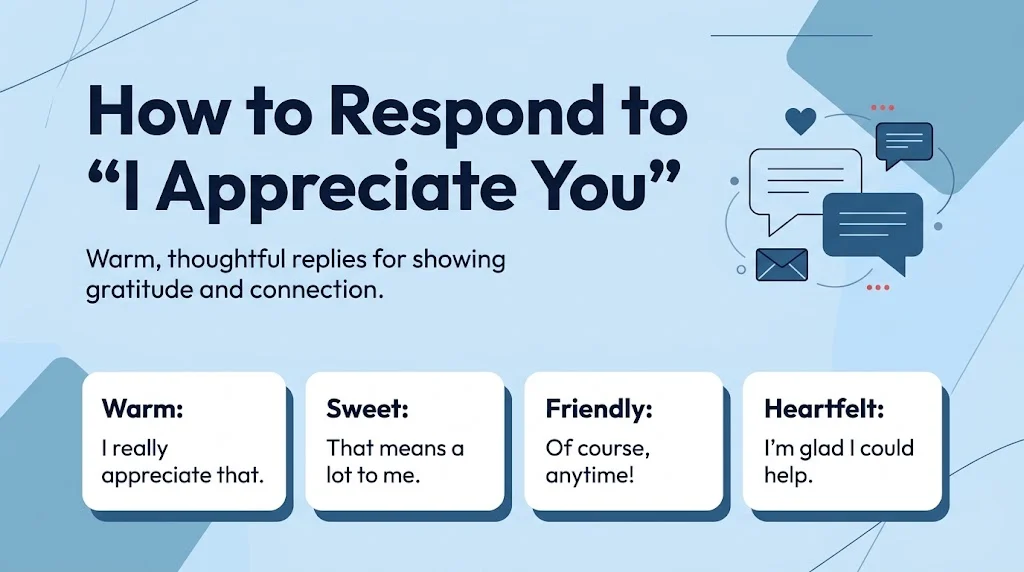
When someone says “I appreciate you,” respond based on your relationship and the mood. You can keep it sweet, funny, professional, flirty, or heartfelt without making things awkward.
Top alternatives: I appreciate you too, That means a lot, Anytime, You’re so sweet, I’m glad I could help
Ever get a text that says “I appreciate you” and suddenly your brain forgets how words work? It is such a simple sentence, but the right reply can mean a lot. Whether a friend sends it after you showed up for them, a coworker thanks you for helping with something, your crush gets unexpectedly sweet, or someone sends it in a heartfelt DM, your response can shape the whole moment.
Knowing how to respond to I appreciate you is really about matching the energy. You do not need a dramatic paragraph every time someone expresses gratitude. Sometimes “Anytime!” is perfect. Other times, a warm “That means more than you know” says exactly what you feel. From funny and casual replies to flirty, emotional, confident, and professional options, these responses give you plenty of ways to answer naturally while keeping the conversation genuine.
Sweet Responses
- “I appreciate you too.”
Example: Use this when you genuinely want to return the kindness without overcomplicating the moment.
Meaning: You are letting them know their presence and effort matter to you too. - “That means so much to me.”
Example: Use this when their appreciation feels especially meaningful.
Meaning: You are showing that their words genuinely touched you. - “You’re so sweet for saying that.”
Example: Use this when someone sends you a heartfelt message unexpectedly.
Meaning: You are warmly acknowledging their kindness. - “I’m really glad I could be there for you.”
Example: Use this after supporting someone through a difficult moment.
Meaning: You are saying their gratitude makes your support feel worthwhile. - “That honestly made my day.”
Example: Use this when their message arrives at exactly the right time.
Meaning: Their appreciation genuinely lifted your mood. - “You deserve all the support.”
Example: Use this when someone thanks you for helping them.
Meaning: You believe they are worthy of being supported. - “Always happy to be there for you.”
Example: Use this with a close friend or someone you care about.
Meaning: You are reassuring them that your support is sincere. - “You never have to thank me.”
Example: Use this when helping someone feels completely natural to you.
Meaning: You are saying your kindness was given freely. - “That’s really kind of you to say.”
Example: Use this when you want a warm but simple response.
Meaning: You appreciate their appreciation. - “You’re worth showing up for.”
Example: Use this when someone thanks you for being there during an important moment.
Meaning: You are emphasizing how much you value them. - “I’m just happy I could help.”
Example: Use this after assisting someone with a personal or practical problem.
Meaning: Their gratitude is nice, but helping them was enough reward. - “Your words mean more than you know.”
Example: Use this when their appreciation genuinely affects you emotionally.
Meaning: Their message has deeper significance for you. - “I’m grateful for you too.”
Example: Use this when the relationship is meaningful and mutual.
Meaning: You are returning their appreciation with sincere affection. - “That was really nice to hear.”
Example: Use this when you want to keep a heartfelt moment simple.
Meaning: Their words made you feel valued. - “I’m lucky to have you too.”
Example: Use this with a close friend, partner, or important person in your life.
Meaning: You are expressing mutual appreciation and affection.
Funny Responses
- “Stop, I’m trying not to get emotional.”
Example: Use this when someone suddenly becomes heartfelt in a normally playful friendship.
Meaning: You are jokingly pretending their kindness has overwhelmed you. - “Finally, my unpaid emotional labor is recognized.”
Example: Use this with a close friend who appreciates all your support.
Meaning: You are playfully exaggerating how much you have helped them. - “I accept this appreciation in cash too.”
Example: Use this after helping someone with a favor.
Meaning: You are turning their gratitude into a playful joke. - “Put it in writing for the records.”
Example: Use this when someone rarely gives compliments.
Meaning: You are teasing them about finally acknowledging you. - “Wow, look at me being appreciated.”
Example: Use this when a friend sends an unusually sweet message.
Meaning: You are playfully celebrating the compliment. - “My ego just got a tiny upgrade.”
Example: Use this when someone gives you a sincere compliment.
Meaning: Their appreciation made you feel good about yourself. - “Screenshotting this for future arguments.”
Example: Use this when someone who usually teases you suddenly compliments you.
Meaning: You are joking that you will use their kind words as evidence later. - “Careful, I might start expecting compliments now.”
Example: Use this after receiving unexpected praise.
Meaning: You are playfully asking them to keep the compliments coming. - “And suddenly I’m employee of the month.”
Example: Use this after helping a coworker or friend.
Meaning: You are jokingly treating their gratitude like an award. - “I’ll be adding this to my résumé.”
Example: Use this after someone praises your help or effort.
Meaning: You are humorously exaggerating the importance of their compliment. - “Okay, who gave you permission to be this nice?”
Example: Use this when someone sends an unexpectedly sweet message.
Meaning: You are playfully surprised by their kindness. - “My heart just did a little backflip.”
Example: Use this when the appreciation feels adorable or touching.
Meaning: Their message made you genuinely happy. - “Well, now I have to live up to the hype.”
Example: Use this when someone praises you highly.
Meaning: You are joking about the pressure created by their compliment. - “Not me smiling at my phone like a fool.”
Example: Use this when a sweet text makes you unexpectedly happy.
Meaning: Their appreciation genuinely made you smile. - “10/10 compliment, would receive again.”
Example: Use this when you want a playful internet-style response.
Meaning: You enjoyed the appreciation and would happily hear it again.
Flirty Responses
- “I appreciate you more than you know.”
Example: Use this when you want to return the affection while keeping things romantic.
Meaning: You are hinting that your feelings may be deeper than the words suggest. - “Careful, keep talking like that and I might fall for you.”
Example: Use this when the conversation already has playful romantic energy.
Meaning: You are teasingly revealing attraction. - “I was hoping you’d say that.”
Example: Use this when someone you like gives you a sincere compliment.
Meaning: Their appreciation confirms something you wanted to hear. - “And I appreciate having you around.”
Example: Use this when you want a subtle romantic response.
Meaning: You are expressing mutual affection without being overly intense. - “You’re making it very hard not to smile.”
Example: Use this after receiving a sweet message from someone you like.
Meaning: Their words are having a romantic emotional effect on you. - “You know I like hearing that from you.”
Example: Use this when you already have comfortable chemistry.
Meaning: You are encouraging more affectionate communication. - “I appreciate you too, maybe a little too much.”
Example: Use this when you want to add playful romantic tension.
Meaning: You are hinting that your feelings are stronger than ordinary friendship. - “That’s cute. I might have to appreciate you back.”
Example: Use this when the conversation is light and flirtatious.
Meaning: You are playfully returning the affection. - “Keep being this sweet and see what happens.”
Example: Use this when you want to tease someone you are attracted to.
Meaning: You are inviting them to continue the romantic energy. - “Now you’re making me blush.”
Example: Use this when their appreciation feels especially personal.
Meaning: Their words are making you feel shy and flattered. - “I think I appreciate you a little too.”
Example: Use this when you want to reveal interest without going all in.
Meaning: You are subtly returning their affection. - “That sounds dangerously close to a compliment.”
Example: Use this when someone unexpectedly says something sweet.
Meaning: You are playfully acknowledging the romantic undertone. - “You have no idea how good it is hearing that from you.”
Example: Use this when you have strong feelings for the person.
Meaning: Their appreciation carries special emotional weight. - “I’ll take that as my excuse to keep talking to you.”
Example: Use this when you want to extend a flirty conversation.
Meaning: You are using their message as an opening for more connection. - “I appreciate you saying that, handsome.”
Example: Use this when you already have an openly flirtatious relationship.
Meaning: You are returning gratitude with a direct romantic compliment.
Cute Responses
- “Aww, I appreciate you too.”
Example: Use this when someone sends you a sweet message out of nowhere.
Meaning: You are responding with warmth and affection. - “That just made my little heart happy.”
Example: Use this when their message genuinely brightens your mood.
Meaning: Their appreciation made you feel emotionally warm. - “You’re adorable for saying that.”
Example: Use this with a close friend or romantic interest.
Meaning: You find their gratitude especially endearing. - “Big hug coming your way.”
Example: Use this when someone thanks you after a meaningful moment.
Meaning: You are expressing affection through playful physical imagery. - “You just made me smile.”
Example: Use this when their message catches you at a good emotional moment.
Meaning: Their kindness genuinely made you happy. - “Sending you the biggest virtual hug.”
Example: Use this when you cannot physically be there for them.
Meaning: You are offering warmth and emotional support from a distance. - “You’re too precious.”
Example: Use this when someone says something especially sweet.
Meaning: You are affectionately praising their kindness. - “Okay, that was ridiculously sweet.”
Example: Use this after receiving an unexpectedly heartfelt message.
Meaning: You were pleasantly surprised by their affection. - “My heart says thank you too.”
Example: Use this when you want a soft, affectionate response.
Meaning: You are expressing genuine emotional appreciation. - “You’re making this friendship extra wholesome.”
Example: Use this with a close friend.
Meaning: You appreciate the positive and caring dynamic. - “Sending you all the good vibes right back.”
Example: Use this when someone expresses appreciation warmly.
Meaning: You are returning their positive energy. - “You’re officially making me emotional.”
Example: Use this when the message feels unexpectedly touching.
Meaning: Their words affected you more deeply than expected. - “That deserves a giant smile.”
Example: Use this when their appreciation makes you genuinely happy.
Meaning: You are responding with cheerful affection. - “You’re such a sweetheart.”
Example: Use this when someone expresses sincere gratitude.
Meaning: You are complimenting their kindness. - “Okay, now we’re both appreciated.”
Example: Use this when you want to make the moment mutual and playful.
Meaning: You are celebrating the shared affection between you.
Casual Responses
- “Anytime!”
Example: Use this when someone thanks you for a simple favor.
Meaning: You are saying you were happy to help. - “Of course!”
Example: Use this when helping someone feels natural.
Meaning: You are casually reassuring them that it was no trouble. - “No worries at all.”
Example: Use this after helping with something small or practical.
Meaning: You want them to know they did not inconvenience you. - “You got it.”
Example: Use this when someone appreciates you for handling a task.
Meaning: You are casually confirming that you were happy to help. - “Always.”
Example: Use this with someone close to you.
Meaning: You are promising consistent support. - “For sure!”
Example: Use this when you want a cheerful and relaxed response.
Meaning: You are confirming your willingness to help. - “Glad I could help.”
Example: Use this after assisting someone with a task.
Meaning: You are happy that your help made a difference. - “You know I’ve got you.”
Example: Use this with a close friend who thanks you for showing up.
Meaning: You are reassuring them that they can rely on you. - “No biggie.”
Example: Use this when the favor was easy and you do not want praise.
Meaning: You are minimizing the effort involved. - “Of course, anytime you need me.”
Example: Use this when offering ongoing support to a friend.
Meaning: You are letting them know your help is available again. - “Happy to help.”
Example: Use this in casual personal or work situations.
Meaning: You are pleased that your effort was useful. - “You’re good!”
Example: Use this when someone seems worried about thanking you enough.
Meaning: You are telling them there is no problem. - “All good over here.”
Example: Use this when you want to keep the response relaxed.
Meaning: You are reassuring them that everything is fine. - “You don’t owe me anything.”
Example: Use this when you helped someone without expecting repayment.
Meaning: You want them to know your support was genuine. - “That’s what friends are for.”
Example: Use this with a close friend after doing them a favor.
Meaning: You see mutual support as a natural part of friendship.
Professional Responses
- “I’m glad I could help.”
Example: Use this when a coworker appreciates your assistance with a project.
Meaning: You are responding warmly while remaining professional. - “Thank you, I appreciate that.”
Example: Use this when a colleague recognizes your contribution.
Meaning: You are politely accepting their appreciation. - “It was my pleasure.”
Example: Use this after assisting a client, colleague, or professional contact.
Meaning: You are expressing courteous satisfaction with helping. - “I’m happy to support the team.”
Example: Use this when your work helped colleagues complete an important task.
Meaning: You are emphasizing teamwork and cooperation. - “I’m glad the support was useful.”
Example: Use this when someone appreciates your professional assistance.
Meaning: You are focusing on the positive outcome of your help. - “Thank you for saying that.”
Example: Use this when receiving sincere workplace recognition.
Meaning: You are graciously acknowledging their words. - “I appreciate the feedback.”
Example: Use this when someone combines gratitude with professional recognition.
Meaning: You value their acknowledgment and perspective. - “Happy to contribute.”
Example: Use this when your work helped a larger project succeed.
Meaning: You are showing a collaborative attitude. - “I’m pleased I could make a difference.”
Example: Use this after completing a task that helped a colleague or client.
Meaning: You are emphasizing the positive impact of your work. - “It was a team effort.”
Example: Use this when someone gives you too much credit for a shared accomplishment.
Meaning: You are recognizing everyone’s contribution. - “Thank you, that means a lot.”
Example: Use this when a professional compliment feels particularly meaningful.
Meaning: You are accepting the appreciation sincerely. - “I’m always glad to assist where I can.”
Example: Use this when responding to a professional contact.
Meaning: You are offering continued support politely. - “I appreciate your kind words.”
Example: Use this when receiving formal recognition.
Meaning: You are professionally acknowledging their compliment. - “It was great working together.”
Example: Use this when someone appreciates your contribution to a shared project.
Meaning: You are reinforcing a positive professional relationship. - “Thank you for recognizing the effort.”
Example: Use this when someone specifically acknowledges your hard work.
Meaning: You are expressing gratitude for being noticed.
Confident Responses
- “I’m glad you noticed.”
Example: Use this when someone recognizes effort you intentionally put into something.
Meaning: You confidently accept their appreciation. - “I know I bring good energy.”
Example: Use this when a friend compliments your presence or support.
Meaning: You are confidently owning your positive qualities. - “I’ll happily take that compliment.”
Example: Use this when someone praises you unexpectedly.
Meaning: You are comfortable receiving appreciation. - “You’re not wrong.”
Example: Use this when someone praises something you did well.
Meaning: You are playfully agreeing with their compliment. - “I do my best.”
Example: Use this when someone appreciates your effort.
Meaning: You are acknowledging your work without sounding arrogant. - “Glad my effort showed.”
Example: Use this when someone notices something you worked hard on.
Meaning: You are confident that your effort had a visible impact. - “I’m happy you recognize that.”
Example: Use this when someone acknowledges your value.
Meaning: You are confidently accepting their recognition. - “I know my people know my worth.”
Example: Use this with close friends in a playful context.
Meaning: You are confidently celebrating being valued. - “I appreciate the appreciation.”
Example: Use this when you want a clever and self-assured response.
Meaning: You are playfully acknowledging their gratitude. - “I’ll consider that official recognition.”
Example: Use this after someone praises your contribution.
Meaning: You are humorously treating the compliment as an achievement. - “Glad I could make an impact.”
Example: Use this when your support clearly helped someone.
Meaning: You are confidently recognizing the value of your contribution. - “I knew the effort would be worth it.”
Example: Use this when someone appreciates something you worked hard to accomplish.
Meaning: You are showing confidence in your decision to help. - “That’s exactly what I was going for.”
Example: Use this when someone recognizes the result you intended.
Meaning: You are confidently confirming that your effort achieved its purpose. - “I’m always happy to bring value.”
Example: Use this in a professional or personal setting when someone praises your contribution.
Meaning: You are confidently emphasizing your usefulness. - “I’ll take that as a win.”
Example: Use this when someone appreciates something you did successfully.
Meaning: You are celebrating the positive feedback in a relaxed way.
Emotional Responses
- “I really needed to hear that today.”
Example: Use this when their appreciation arrives during a difficult or tiring day.
Meaning: Their words provided meaningful emotional encouragement. - “You have no idea how much that means to me.”
Example: Use this when their message touches you deeply.
Meaning: Their appreciation carries significant emotional weight. - “Thank you for seeing me.”
Example: Use this when someone recognizes effort that others overlooked.
Meaning: You feel genuinely understood and valued. - “That honestly touched my heart.”
Example: Use this after receiving an especially heartfelt message.
Meaning: Their appreciation created a strong emotional response. - “I’m really grateful you said that.”
Example: Use this when you have been wondering whether your efforts mattered.
Meaning: Their words gave you reassurance. - “Sometimes we all need to hear that.”
Example: Use this when their appreciation feels particularly comforting.
Meaning: You recognize how powerful genuine acknowledgment can be. - “I’m glad you feel that way because you matter to me too.”
Example: Use this with someone who has an important place in your life.
Meaning: You are expressing mutual emotional value. - “That made me a little emotional, honestly.”
Example: Use this when their gratitude unexpectedly moves you.
Meaning: Their words affected you deeply. - “I didn’t realize how much I needed that reminder.”
Example: Use this when their message gives you emotional reassurance.
Meaning: Their appreciation helped you recognize your own value. - “Thank you for noticing the little things.”
Example: Use this when someone appreciates details others usually overlook.
Meaning: You value their attentiveness and recognition. - “Your words will stay with me.”
Example: Use this after receiving especially meaningful appreciation.
Meaning: Their message made a lasting emotional impression. - “I’m grateful we found each other.”
Example: Use this with a close friend or loved one.
Meaning: You feel thankful that this person is part of your life. - “That means more than a simple thank you can explain.”
Example: Use this when ordinary words do not feel sufficient.
Meaning: Their appreciation has significant emotional importance. - “I appreciate being appreciated by you.”
Example: Use this when the relationship itself feels deeply meaningful.
Meaning: Being recognized by this particular person matters greatly. - “I’ll remember that on the hard days.”
Example: Use this when their appreciation gives you encouragement during a challenging period.
Meaning: Their words provide emotional strength that you can carry forward.
Playful Responses
- “Well, now I’m legally required to smile.”
Example: Use this when someone sends a sweet message unexpectedly.
Meaning: Their appreciation made you happy. - “Okay, who taught you to be this wholesome?”
Example: Use this when someone suddenly becomes very heartfelt.
Meaning: You are playfully surprised by their kindness. - “Adding that to my emotional support folder.”
Example: Use this when you want to jokingly save their compliment mentally.
Meaning: Their appreciation feels comforting and memorable. - “My confidence just got a free upgrade.”
Example: Use this after receiving unexpected praise.
Meaning: Their words boosted your confidence. - “BRB, processing this compliment.”
Example: Use this when you are playfully pretending to be overwhelmed.
Meaning: Their appreciation caught you off guard. - “That was suspiciously wholesome.”
Example: Use this with someone who normally jokes around.
Meaning: Their sudden sincerity surprised you. - “You’re making this friendship look suspiciously healthy.”
Example: Use this with a close friend after a heartfelt exchange.
Meaning: You are joking about how positive the relationship feels. - “Noted. Compliment successfully received.”
Example: Use this when you want a short, playful reply.
Meaning: You are humorously confirming that you heard and enjoyed the appreciation. - “Okay, I’ll stop pretending I’m not touched.”
Example: Use this when a sweet message genuinely affects you.
Meaning: You are admitting their words made you emotional. - “That compliment just unlocked a new personality.”
Example: Use this when praise makes you unusually cheerful.
Meaning: Their appreciation noticeably changed your mood. - “You really know how to keep someone humble.”
Example: Use this when someone praises you heavily.
Meaning: You are joking about enjoying their compliments. - “I’ll be thinking about this compliment for the next six business days.”
Example: Use this when you receive a particularly nice message.
Meaning: You enjoyed the appreciation enough to joke about remembering it for a long time. - “My inner child just did a happy dance.”
Example: Use this after receiving unexpectedly kind words.
Meaning: Their message brought you genuine joy. - “Okay, that was actually adorable.”
Example: Use this when someone expresses appreciation in a cute way.
Meaning: You found their message genuinely endearing. - “You just made being a decent human feel very rewarding.”
Example: Use this after helping someone and receiving sincere appreciation.
Meaning: Their gratitude made your effort feel especially worthwhile.
FAQS
What does “I appreciate you” mean?
It usually means someone values you, your effort, your support, or your presence. It is often warmer and more personal than simply saying “thank you.”
How should I respond to “I appreciate you” from a friend?
A simple “I appreciate you too,” “Always,” or “That means a lot” works beautifully. Match the level of closeness you share.
What if my crush says “I appreciate you”?
You can keep it subtle with “I appreciate you too” or make it playful with “Careful, keep talking like that and I might fall for you.” Your response can gently test the romantic energy.
What is a professional response?
Try “I’m glad I could help,” “Thank you, I appreciate that,” or “It was my pleasure.” These sound warm while staying workplace appropriate.
Can “I appreciate you” be romantic?
Yes. The phrase itself is not automatically romantic, but context, tone, relationship, and what comes before or after it can make it feel affectionate or flirty.
Conclusion
A simple “I appreciate you” can carry a surprising amount of emotion. Your reply does not have to be complicated. The best response is the one that sounds like you and matches the relationship. Keep it casual with “Anytime,” make it sweet with “I appreciate you too,” add humor when the moment calls for it, or go deeper when someone genuinely touches your heart.
Knowing how to respond to I appreciate you gives you options for everything from everyday friendships to workplace messages and romantic moments. Save your favorites, share them with someone who always needs the perfect comeback, and come back whenever your brain decides to go completely blank at the worst possible moment. Keep it genuine, keep it natural, and let the good vibes continue.
Discover More Related Articles:

Jennifer Wilson is an experienced writer and content creator with over 20 years of expertise in digital publishing, lifestyle, and informative content. Holding a degree in English Literature, she contributes to Responary.Com, where she shares engaging, well-researched articles that help readers stay informed and inspired.