Quick Answer
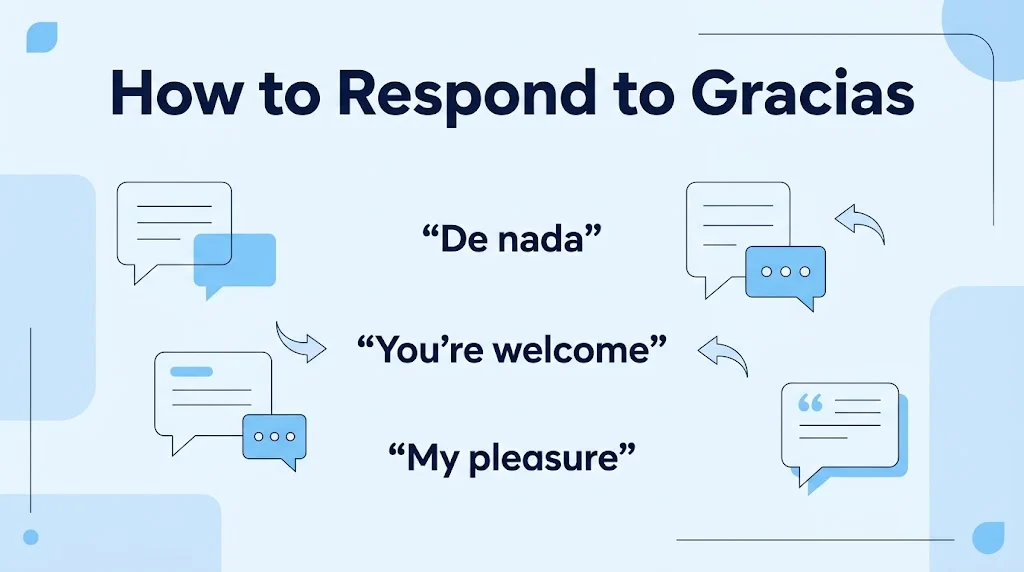
When someone says “gracias,” the best reply depends on the situation. You can keep it simple with “de nada,” make it warm with “con mucho gusto,” or add personality with a funny or playful response.
Top alternatives: de nada, con gusto, no hay problema, cuando quieras, para eso estamos
Someone says “gracias,” and suddenly you have a tiny decision to make: do you keep it simple, sound sweet, make them laugh, or turn the moment into a little flirt? “Gracias” means “thank you” in Spanish, and it appears everywhere, from casual texts and DMs to travel conversations, friendships, dating, customer service, and everyday interactions.
Knowing how to respond can make even a two-second exchange feel more natural. A basic “de nada” works almost everywhere, but sometimes you want something warmer, funnier, more confident, or more memorable. Maybe your crush thanked you for helping them, a friend appreciated a favor, or someone sent a polite thank-you message. The right response depends on your relationship, mood, and setting. These ready-to-use replies give you plenty of options without making a simple thank-you feel like a formal interview.
Funny Responses
- “Anything for the plot.”
Example: Use this when a friend thanks you for doing something slightly chaotic together.
Meaning: You are joking that the favor was part of an entertaining story. - “You’re welcome, your honor.”
Example: Use this with a friend who enjoys dramatic humor.
Meaning: You are playfully making a normal exchange unnecessarily formal. - “I accept payment in snacks.”
Example: Use this after helping someone with a small favor.
Meaning: You are joking that food is your preferred reward. - “No applause, please.”
Example: Use this when someone gives you an enthusiastic thank-you.
Meaning: You are humorously pretending your favor was a major performance. - “My work here is done.”
Example: Use this after solving a friend’s problem.
Meaning: You are playfully acting like a hero completing a mission. - “Glad to be of service, citizen.”
Example: Use this with a friend during a silly conversation.
Meaning: You are turning a normal favor into a superhero-style moment. - “You’re welcome. I’ll invoice you later.”
Example: Use this after doing a small task for someone close to you.
Meaning: You are joking about charging for your help. - “Consider it your lucky day.”
Example: Use this when teasing a friend after helping them.
Meaning: You are playfully exaggerating your generosity. - “I expect a five-star review.”
Example: Use this when someone thanks you for helping them.
Meaning: You are jokingly treating the favor like a professional service. - “That’ll be one imaginary dollar.”
Example: Use this after a tiny favor between friends.
Meaning: You are keeping the exchange light and playful. - “No worries, I accept compliments too.”
Example: Use this when someone gives you a particularly sweet thank-you.
Meaning: You are teasing them while enjoying the appreciation. - “You’re welcome. Please contain your excitement.”
Example: Use this with someone who has a sarcastic sense of humor.
Meaning: You are playfully pretending their gratitude is overwhelming. - “Another successful mission.”
Example: Use this after helping someone accomplish something.
Meaning: You are making the favor sound like an adventure. - “I do what I do.”
Example: Use this when someone thanks you for something simple.
Meaning: You are giving a confident but humorous reply. - “Glad my extremely professional services helped.”
Example: Use this after doing something ordinary for a friend.
Meaning: You are jokingly exaggerating your expertise.
Sweet Responses
- “Always happy to help.”
Example: Use this when someone sincerely appreciates something you did.
Meaning: You are showing genuine warmth. - “Anytime, truly.”
Example: Use this when you want to reassure someone that helping them was no trouble.
Meaning: You are offering sincere support. - “It was my pleasure.”
Example: Use this when you want to sound warm and gracious.
Meaning: You are saying that helping them felt good rather than burdensome. - “You’re very welcome.”
Example: Use this in a friendly everyday exchange.
Meaning: You are responding politely with extra warmth. - “Of course, happy to help.”
Example: Use this after helping a friend or family member.
Meaning: You are making it clear that the favor was easy and welcome. - “Anything for you.”
Example: Use this with someone you care about.
Meaning: You are expressing affection and willingness to help. - “I’m glad I could make things easier.”
Example: Use this after helping someone through a stressful task.
Meaning: You are showing empathy and care. - “You never have to thank me.”
Example: Use this with someone close to you after helping them.
Meaning: You want them to know your support comes naturally. - “That means a lot to hear.”
Example: Use this when someone’s appreciation feels especially sincere.
Meaning: You are acknowledging the emotional value of their gratitude. - “I’m always here when you need me.”
Example: Use this when supporting a close friend.
Meaning: You are offering continued emotional support. - “Glad I could be there for you.”
Example: Use this after helping someone through a difficult moment.
Meaning: You are emphasizing care and presence. - “You deserve the help.”
Example: Use this when someone feels guilty about accepting your assistance.
Meaning: You are reassuring them that accepting support is okay. - “It genuinely made me happy to help.”
Example: Use this when you want to make your response especially heartfelt.
Meaning: You are saying their gratitude is not necessary because helping them was rewarding. - “Of course, with all my heart.”
Example: Use this with someone very close to you.
Meaning: You are expressing deep warmth and affection. - “Always, my friend.”
Example: Use this after helping someone you care about.
Meaning: You are reinforcing friendship and loyalty.
Flirty Responses
- “Anything for you.”
Example: Use this when someone you like thanks you for doing them a favor.
Meaning: You are adding a subtle romantic undertone. - “You’re welcome, but I might collect a smile later.”
Example: Use this when flirting casually through text.
Meaning: You are playfully asking for affection in return. - “You’re making it very hard to say no to you.”
Example: Use this when someone thanks you sweetly after asking for help.
Meaning: You are teasing them while showing attraction. - “For you? Always.”
Example: Use this when you want a short and confident romantic reply.
Meaning: You are implying that you would gladly help them again. - “That cute little thank-you almost made my day.”
Example: Use this when their message feels especially adorable.
Meaning: You are openly complimenting their sweetness. - “Careful, keep thanking me like that and I’ll get attached.”
Example: Use this with someone you already have playful chemistry with.
Meaning: You are jokingly hinting at growing affection. - “You owe me a coffee now.”
Example: Use this after doing a favor for someone you like.
Meaning: You are turning the thank-you into an opportunity to meet. - “You’re welcome, cutie.”
Example: Use this when your relationship already allows affectionate teasing.
Meaning: You are responding with a direct compliment. - “I’ll take that thank-you as a date invitation.”
Example: Use this when the conversation is clearly playful.
Meaning: You are jokingly turning gratitude into romantic interest. - “You’re adorable when you’re grateful.”
Example: Use this when you want a warm, teasing response.
Meaning: You are complimenting their personality while flirting. - “No thanks needed, just keep talking to me.”
Example: Use this during an ongoing flirty text conversation.
Meaning: You are suggesting that you enjoy their attention. - “I was hoping you’d notice.”
Example: Use this when someone thanks you for something thoughtful.
Meaning: You are playfully admitting that you wanted to impress them. - “I could get used to being your favorite helper.”
Example: Use this when flirting with someone who frequently asks for your help.
Meaning: You are playfully suggesting a closer connection. - “That thank-you was dangerously charming.”
Example: Use this after receiving a particularly sweet message.
Meaning: You are openly teasing them about their effect on you. - “You’re welcome, but I think you owe me that smile.”
Example: Use this when flirting face-to-face or over text.
Meaning: You are turning gratitude into a playful romantic moment.
Polite Responses
- “You’re very welcome.”
Example: Use this in almost any polite everyday interaction.
Meaning: You are acknowledging their gratitude respectfully. - “It was my pleasure.”
Example: Use this when someone thanks you for your assistance.
Meaning: You are politely saying that helping them was enjoyable. - “Not at all.”
Example: Use this when someone thanks you for a small favor.
Meaning: You are reassuring them that the favor was no inconvenience. - “My pleasure.”
Example: Use this in customer service or professional situations.
Meaning: You are giving a polished and courteous reply. - “Glad I could help.”
Example: Use this after providing useful assistance.
Meaning: You are responding positively while staying professional. - “Of course.”
Example: Use this when someone thanks you for something routine.
Meaning: You are showing that the help was natural and expected. - “Certainly.”
Example: Use this when you want a concise and formal response.
Meaning: You are acknowledging their gratitude with professionalism. - “It was no trouble at all.”
Example: Use this when someone worries that they inconvenienced you.
Meaning: You are reassuring them that everything was easy. - “Happy to assist.”
Example: Use this in a professional service setting.
Meaning: You are politely expressing willingness to help. - “I’m glad I could be of assistance.”
Example: Use this in a formal workplace or customer interaction.
Meaning: You are giving a polished professional response. - “You’re most welcome.”
Example: Use this when you want a slightly more elegant reply.
Meaning: You are warmly acknowledging their thanks. - “No problem at all.”
Example: Use this in casual but polite situations.
Meaning: You are saying their request caused no inconvenience. - “Always happy to help.”
Example: Use this when someone may need your support again.
Meaning: You are offering continued goodwill. - “It was nothing.”
Example: Use this after a small favor.
Meaning: You are modestly minimizing the effort you made. - “You’re welcome, and I’m glad it worked out.”
Example: Use this when your help led to a positive result.
Meaning: You are politely sharing their satisfaction.
Casual Responses
- “No worries!”
Example: Use this with friends or acquaintances after a simple thank-you.
Meaning: You are saying the favor was easy and stress-free. - “Anytime!”
Example: Use this when you would gladly help again.
Meaning: You are offering friendly support. - “Of course!”
Example: Use this in casual texts and everyday conversations.
Meaning: You are showing that helping was natural. - “No problem!”
Example: Use this after a small favor.
Meaning: You are reassuring them that there was no inconvenience. - “You got it!”
Example: Use this when you want an upbeat, friendly response.
Meaning: You are showing confidence and willingness to help. - “All good!”
Example: Use this when you want to keep the exchange relaxed.
Meaning: You are saying everything is fine. - “For sure!”
Example: Use this with friends or casual acquaintances.
Meaning: You are giving an easygoing acknowledgment. - “Don’t mention it!”
Example: Use this after doing something small for someone.
Meaning: You are saying their thanks are unnecessary. - “You bet!”
Example: Use this when you want a cheerful and casual tone.
Meaning: You are enthusiastically acknowledging their gratitude. - “Anytime, friend!”
Example: Use this with someone you know well.
Meaning: You are adding warmth to a casual reply. - “Got you!”
Example: Use this after helping someone with a task.
Meaning: You are showing that you have their back. - “No biggie!”
Example: Use this when the favor was very easy.
Meaning: You are minimizing the effort involved. - “You’re good!”
Example: Use this when someone seems worried about bothering you.
Meaning: You are reassuring them that everything is fine. - “Happy to help!”
Example: Use this when you want to sound friendly and positive.
Meaning: You are saying you enjoyed being useful. - “Anytime you need me.”
Example: Use this with someone you trust and care about.
Meaning: You are offering future support.
Professional Responses
- “You’re very welcome.”
Example: Use this in a workplace email or professional conversation.
Meaning: You are acknowledging appreciation courteously. - “My pleasure.”
Example: Use this when assisting a client, colleague, or customer.
Meaning: You are communicating professionalism and goodwill. - “Happy to help.”
Example: Use this after completing a workplace request.
Meaning: You are showing a positive attitude toward collaboration. - “Glad I could assist.”
Example: Use this when your support helped resolve an issue.
Meaning: You are politely confirming that you were pleased to help. - “Of course, anytime.”
Example: Use this with a colleague who may need assistance again.
Meaning: You are keeping the professional relationship warm. - “It was no trouble at all.”
Example: Use this when a coworker apologizes for asking for help.
Meaning: You are reassuring them that their request was reasonable. - “I’m pleased I could help.”
Example: Use this after supporting a client or colleague.
Meaning: You are giving a polished and professional acknowledgment. - “You’re most welcome.”
Example: Use this when you want a warm but professional tone.
Meaning: You are responding graciously to appreciation. - “Always happy to support.”
Example: Use this when working collaboratively with a team member.
Meaning: You are emphasizing teamwork and reliability. - “I’m glad we were able to resolve it.”
Example: Use this after helping solve a workplace problem.
Meaning: You are focusing on the successful outcome. - “It was a pleasure assisting you.”
Example: Use this in client-facing communication.
Meaning: You are maintaining a courteous service-oriented tone. - “Please feel free to reach out again.”
Example: Use this when you want to invite future professional communication.
Meaning: You are offering continued assistance. - “I’m happy the information was useful.”
Example: Use this after providing guidance to a colleague.
Meaning: You are emphasizing the usefulness of your support. - “Thank you for the kind acknowledgment.”
Example: Use this when responding to formal appreciation.
Meaning: You are politely recognizing their gratitude. - “It was my pleasure to assist.”
Example: Use this in a formal professional exchange.
Meaning: You are providing an especially polished acknowledgment.
Spanish-Inspired Responses
- “De nada.”
Example: Use this when someone says “gracias” in a normal Spanish conversation.
Meaning: It means “you’re welcome” and is the most common straightforward reply. - “Con gusto.”
Example: Use this when you want to sound warm and friendly.
Meaning: It communicates that you were happy to help. - “Por nada.”
Example: Use this in a casual Spanish-speaking interaction.
Meaning: It conveys that the favor was no big deal. - “No hay de qué.”
Example: Use this when you want a natural Spanish response to gratitude.
Meaning: It means there is no need to thank you. - “Cuando quieras.”
Example: Use this when offering help again in the future.
Meaning: It means you are happy to help whenever they need you. - “Un placer.”
Example: Use this when you want a warm and polite response.
Meaning: It communicates that helping was a pleasure. - “A ti.”
Example: Use this when the exchange is mutual and casual.
Meaning: It can convey “thank you too” depending on context. - “No te preocupes.”
Example: Use this when someone seems overly apologetic or concerned.
Meaning: It reassures them that everything is fine. - “Para servirte.”
Example: Use this in a warm, courteous interaction.
Meaning: It communicates willingness to be helpful. - “Claro que sí.”
Example: Use this when someone thanks you after asking for assistance.
Meaning: It reinforces that helping was completely fine. - “Con mucho gusto.”
Example: Use this when you want to sound especially warm.
Meaning: It communicates genuine pleasure in helping. - “No es nada.”
Example: Use this after a small favor.
Meaning: It means the effort was minor and does not require thanks. - “Siempre.”
Example: Use this with someone close to you.
Meaning: It implies you will gladly support them again. - “A la orden.”
Example: Use this in certain Spanish-speaking contexts when offering service or help.
Meaning: It communicates readiness to assist. - “Para eso estamos.”
Example: Use this with friends, family, or people you are helping.
Meaning: It means helping is part of what you are there for.
Confident Responses
- “You’re welcome. Glad I could help.”
Example: Use this when you want to sound composed and self-assured.
Meaning: You acknowledge the thanks without sounding overly modest. - “Happy to make it happen.”
Example: Use this after successfully helping someone.
Meaning: You are confidently taking ownership of your contribution. - “Consider it handled.”
Example: Use this when someone thanks you for solving something.
Meaning: You are communicating confidence and reliability. - “Always got it covered.”
Example: Use this with someone who appreciates your support.
Meaning: You are playfully highlighting your dependability. - “That’s what I do.”
Example: Use this after receiving praise for your help.
Meaning: You are confidently owning your strengths. - “Glad I could come through.”
Example: Use this after helping someone when they needed you.
Meaning: You are showing confidence while staying friendly. - “You can count on me.”
Example: Use this when someone thanks you for dependable support.
Meaning: You are reinforcing trust and reliability. - “Always ready when needed.”
Example: Use this in a supportive but confident context.
Meaning: You are emphasizing your willingness to help. - “No problem, I handled it.”
Example: Use this after resolving a straightforward issue.
Meaning: You are confidently confirming the task was completed. - “Happy to deliver.”
Example: Use this after accomplishing something someone requested.
Meaning: You are expressing confidence in your ability. - “That’s a win for both of us.”
Example: Use this after helping someone achieve a useful result.
Meaning: You are framing the favor as a shared success. - “I knew I could help.”
Example: Use this when someone expresses strong appreciation.
Meaning: You are confidently acknowledging your capability. - “Glad you trusted me with it.”
Example: Use this when someone thanks you for handling an important task.
Meaning: You value their confidence in you. - “Problem solved.”
Example: Use this after fixing something for someone.
Meaning: You are giving a concise, confident acknowledgment. - “You know where to find me next time.”
Example: Use this when offering future help.
Meaning: You are confidently inviting them to rely on you again.
Emotional And Heartfelt Responses
- “Your gratitude means more than you know.”
Example: Use this when someone’s appreciation genuinely touches you.
Meaning: You are expressing sincere emotional appreciation. - “I’m just glad I could be there.”
Example: Use this after supporting someone during a difficult time.
Meaning: You care more about their well-being than receiving thanks. - “You never have to thank me for being there.”
Example: Use this with a close friend or loved one.
Meaning: You see supporting them as a natural part of your relationship. - “Knowing I helped is enough for me.”
Example: Use this when someone feels they owe you something.
Meaning: You are saying their well-being is your real reward. - “I’m grateful I could make a difference.”
Example: Use this after helping someone through an important situation.
Meaning: You value the positive impact of your support. - “You matter to me, so of course I helped.”
Example: Use this with someone close to you.
Meaning: You are connecting your help with genuine care. - “I’d do it again without hesitation.”
Example: Use this when someone deeply appreciates your support.
Meaning: You are reassuring them that helping was never a burden. - “Your happiness is enough of a thank-you.”
Example: Use this when someone is extremely grateful.
Meaning: You are saying their positive outcome matters most to you. - “I’m glad you felt supported.”
Example: Use this after offering emotional or practical assistance.
Meaning: You are emphasizing the importance of being there for them. - “You deserve kindness too.”
Example: Use this when someone seems surprised by your generosity.
Meaning: You are reminding them that accepting kindness is okay. - “I hope you know you can always lean on me.”
Example: Use this with someone going through a difficult period.
Meaning: You are offering lasting emotional support.
FAQs
What does “gracias” mean?
“Gracias” is the Spanish word for “thank you.” It is commonly used to express appreciation, gratitude, or politeness.
What is the most common response to “gracias”?
“De nada” is the classic response and means “you’re welcome.” It works in many everyday situations.
What is a flirty way to respond?
Try something playful such as “For you? Always,” “You’re welcome, cutie,” or “You owe me a coffee now.”
What is a professional response?
“My pleasure,” “You’re very welcome,” and “Glad I could assist” are polished choices for workplace or customer-facing situations.
Can I respond in Spanish?
Absolutely. “De nada,” “con gusto,” “un placer,” and “no hay de qué” are useful options depending on the situation and region.
Conclusion
A simple thank-you can open the door to a surprisingly wide range of responses. You can keep things classic, add humor, show affection, sound professional, or switch into Spanish for a more natural touch. The key is matching your response to the person and the moment.
If you are texting a friend, replying to a crush, helping a coworker, or chatting with someone in Spanish, there is no need to overthink every word. A short response can still feel warm and genuine when it fits the situation. Try different styles until you find the ones that sound like you. Save this list for your next conversation, share your favorite replies, and never let a simple thank-you leave you stuck staring at the keyboard.
Discover More Related Articles:
- Professional Email Response Templates | for Every Situation In 2026
- How to Create an Automatic Reply in Outlook | Easy Guide & Examples In 2026

Richard Scott is an experienced author dedicated to creating compelling and well-researched content for online audiences. As a contributor to Responary.com, he enjoys sharing knowledge through clear, engaging, and informative articles that connect with readers worldwide.