Quick Answer
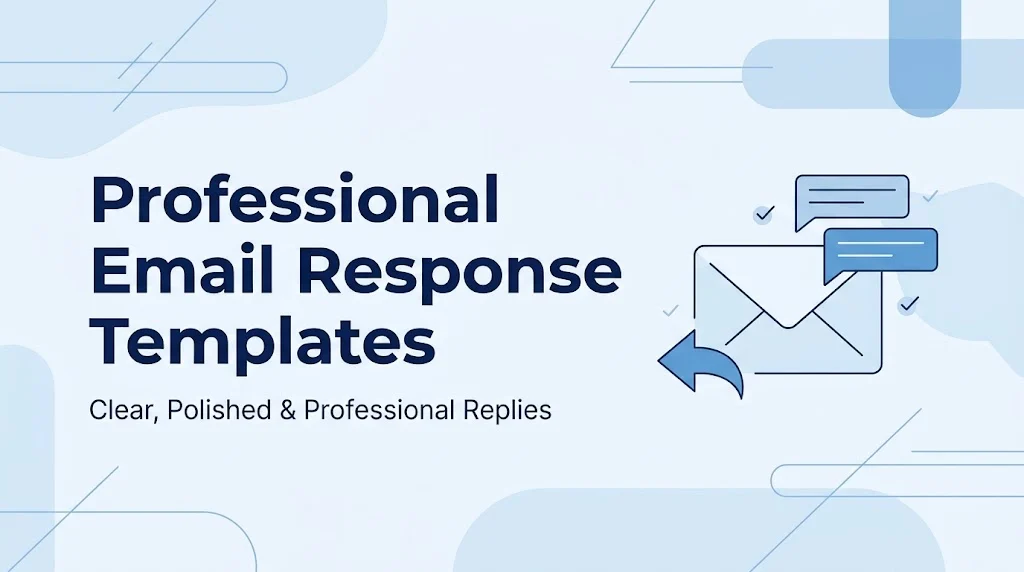
Professional email response templates help you reply clearly, politely, and confidently without spending 20 minutes wondering how to phrase one simple message. Use them for work updates, follow-ups, requests, apologies, meetings, clients, managers, and everyday workplace communication.
Top alternatives: professional email replies, business email templates, workplace email responses, formal email examples, professional reply examples
Ever stared at an email for ten minutes because you know what you want to say but have absolutely no idea how to say it professionally? You are not alone. Whether you are replying to a manager, responding to a client, following up with a coworker, confirming a meeting, handling a request, or writing back after a delay, the wording can make a huge difference.
A good email response should sound professional without sounding like it was written by a corporate robot. It needs to be clear, respectful, confident, and appropriate for the situation. The right words can make you sound organized, helpful, and easy to work with, while the wrong ones can accidentally sound cold, vague, or overly casual.
That is why having ready-to-use professional email response templates can be a serious productivity shortcut. Below, you will find practical replies organized by tone and situation, so you can quickly find a response that actually sounds natural.
Polite Email Responses
- Thank you for reaching out. I appreciate you getting in touch.
Example: Use this when responding to a new inquiry from a client, colleague, or professional contact.
Meaning: You are acknowledging the person’s message warmly and professionally. - Thank you for your email. I appreciate the information you shared.
Example: Use this when someone sends useful details that help you move forward.
Meaning: You are recognizing their effort and confirming that you received the information. - Thank you for bringing this to my attention.
Example: Use this when someone informs you about an issue or important matter.
Meaning: You are showing appreciation while acknowledging the concern. - I appreciate your quick response.
Example: Use this when someone replies faster than expected.
Meaning: You are politely recognizing their efficiency. - Thank you for the update. I appreciate your keeping me informed.
Example: Use this when a colleague provides progress information.
Meaning: You value their communication and transparency. - Thanks for clarifying this. That makes things much clearer.
Example: Use this after someone explains a confusing detail.
Meaning: You are acknowledging that their explanation resolved your uncertainty. - I appreciate your patience and understanding.
Example: Use this when a response or task has taken longer than expected.
Meaning: You are politely recognizing the other person’s patience. - Thank you for taking the time to explain this.
Example: Use this after receiving a detailed explanation.
Meaning: You are showing genuine appreciation for their effort. - I appreciate your assistance with this matter.
Example: Use this when someone helps you complete a workplace task.
Meaning: You are formally thanking them for their support. - Thank you for your prompt attention to this matter.
Example: Use this when you need to acknowledge someone’s quick handling of an issue.
Meaning: You are expressing professional appreciation for their responsiveness. - It was helpful to receive your perspective on this.
Example: Use this after a colleague shares an opinion or recommendation.
Meaning: You value their input. - Thank you for following up. I appreciate the reminder.
Example: Use this when someone politely reminds you about an outstanding item.
Meaning: You are accepting the reminder without sounding defensive. - I appreciate the clarification and will proceed accordingly.
Example: Use this after receiving instructions or additional context.
Meaning: You understand the information and intend to act on it. - Thank you again for your help. It is greatly appreciated.
Example: Use this when closing a conversation involving assistance.
Meaning: You are ending the exchange on a warm professional note. - Thank you for your time and consideration.
Example: Use this when communicating about a request, opportunity, or proposal.
Meaning: You are showing respect for the recipient’s attention.
Professional Acknowledgment Responses
- Received, thank you.
Example: Use this when you simply need to confirm that an email or document arrived.
Meaning: You are giving a concise confirmation. - Noted, thank you.
Example: Use this when someone provides information that you need to keep in mind.
Meaning: You have acknowledged the information. - I have received your email and will review the details.
Example: Use this when you need time before giving a complete response.
Meaning: You are confirming receipt while setting an expectation. - Thank you. I have noted the information provided.
Example: Use this when acknowledging instructions or an update.
Meaning: You have understood and recorded the information. - I confirm receipt of the documents.
Example: Use this when someone sends files or paperwork.
Meaning: You are formally confirming delivery. - I have received the requested information. Thank you.
Example: Use this when someone sends details you previously requested.
Meaning: You are confirming that the request has been fulfilled. - Thank you for sending this over. I will review it shortly.
Example: Use this when you need time to examine an attachment or proposal.
Meaning: You have received the material and will take action soon. - Understood. I will take the necessary next steps.
Example: Use this after receiving a clear workplace instruction.
Meaning: You understand what needs to happen next. - Thanks for the update. I have this on my radar.
Example: Use this with a familiar colleague in a moderately casual workplace setting.
Meaning: You are aware of the issue and will keep track of it. - I have reviewed your message and understand the request.
Example: Use this when confirming that you understand a task.
Meaning: You are acknowledging both receipt and comprehension. - Thank you for confirming. I will proceed as discussed.
Example: Use this after plans or instructions have been finalized.
Meaning: You are confirming your next action. - Understood. I will keep you updated as things progress.
Example: Use this when handling an ongoing task.
Meaning: You promise to maintain communication. - I have taken note of the changes.
Example: Use this when someone sends revisions or updated information.
Meaning: You acknowledge the changes and indicate awareness. - Thanks for sharing this. I will take a closer look.
Example: Use this when someone sends an article, proposal, report, or idea.
Meaning: You are acknowledging the material without giving an immediate opinion. - Received and understood. Thank you.
Example: Use this for short professional confirmations.
Meaning: You confirm both receipt and understanding.
Email Response Templates for Requests
- Certainly. I would be happy to help with this.
Example: Use this when accepting a reasonable request from a colleague or client.
Meaning: You are agreeing in a friendly professional way. - I can take care of this and will keep you updated.
Example: Use this when accepting responsibility for a task.
Meaning: You are confirming ownership and communication. - I will review the request and get back to you shortly.
Example: Use this when you need to evaluate a request before responding.
Meaning: You are avoiding a rushed answer while setting an expectation. - Yes, I can accommodate this request.
Example: Use this when you are able to meet someone’s requirement.
Meaning: You are clearly confirming that the request is possible. - I would be glad to assist. Please send over the relevant details.
Example: Use this when you need more information before proceeding.
Meaning: You are willing to help but need additional context. - I can handle this by the requested deadline.
Example: Use this when someone asks whether you can complete a task on time.
Meaning: You are confirming your availability and commitment. - I can help with that. Could you please provide a few additional details?
Example: Use this when a request is too vague to act on immediately.
Meaning: You are asking for clarification while remaining helpful. - I will look into this and let you know what I find.
Example: Use this when someone asks you to investigate an issue.
Meaning: You are accepting the task and promising an update. - I am happy to review this for you.
Example: Use this when a colleague asks you to check a document or proposal.
Meaning: You are offering professional assistance. - That should be manageable. I will confirm once I have reviewed the details.
Example: Use this when you believe you can help but need to verify the specifics.
Meaning: You are cautiously agreeing. - I can certainly take this forward.
Example: Use this when accepting responsibility for the next stage of a project.
Meaning: You are confidently agreeing to proceed. - Please send me the relevant files, and I will get started.
Example: Use this when you need attachments or documents before beginning.
Meaning: You are ready to act once the required materials arrive. - I will prioritize this and keep you informed of the progress.
Example: Use this when a request has a higher level of urgency.
Meaning: You are signaling that the task will receive prompt attention. - I can assist with this. Let me know if there are any specific requirements.
Example: Use this when accepting a flexible workplace task.
Meaning: You are offering help while inviting useful instructions. - Consider it handled. I will follow up once it is complete.
Example: Use this with a trusted colleague when you want a confident tone.
Meaning: You are taking ownership of the task.
Email Responses for Delayed Replies
- Apologies for the delayed response, and thank you for your patience.
Example: Use this when you are replying later than expected.
Meaning: You are acknowledging the delay and appreciating their patience. - Sorry for the delay in getting back to you.
Example: Use this for a straightforward workplace apology.
Meaning: You are briefly acknowledging the late response. - Thank you for your patience while I reviewed this.
Example: Use this when the delay happened because you needed time to investigate something.
Meaning: You frame the delay professionally without overexplaining. - Apologies for the late reply. I wanted to make sure I had the correct information before responding.
Example: Use this when accuracy caused the delay.
Meaning: You are explaining the reason without making excuses. - Thank you for following up. I apologize for not responding sooner.
Example: Use this when someone has sent a reminder.
Meaning: You take responsibility for the missed response. - I appreciate your patience. I am now able to provide an update.
Example: Use this when you finally have useful information.
Meaning: You are moving the conversation forward after a delay. - Apologies for the delay. I have reviewed the matter and can now confirm the following.
Example: Use this when you need to transition from an apology into an answer.
Meaning: You acknowledge the delay and immediately provide value. - Thank you for bearing with me.
Example: Use this when communicating with someone you have an established professional relationship with.
Meaning: You are expressing appreciation for their patience. - I am sorry for the delayed response. This required some additional review on my end.
Example: Use this when a task required more investigation than expected.
Meaning: You provide a concise explanation for the delay. - Thank you for your understanding. I appreciate your patience.
Example: Use this when a delay has affected another person.
Meaning: You are showing accountability and appreciation. - I apologize for the inconvenience caused by the delay.
Example: Use this when your late response created a practical problem.
Meaning: You recognize the impact of the delay. - Thank you for the reminder. I apologize for overlooking this earlier.
Example: Use this when you genuinely missed an email or task.
Meaning: You take responsibility without becoming overly apologetic. - I appreciate your follow-up and apologize for the slower response.
Example: Use this when the recipient had to contact you again.
Meaning: You recognize their effort and acknowledge your delay. - Thank you for waiting. I have completed my review and can confirm the next steps.
Example: Use this when your review is finally finished.
Meaning: You are closing the delay and providing a solution. - Apologies again for the delay. I appreciate your understanding.
Example: Use this as a brief closing after addressing a late reply.
Meaning: You acknowledge the issue without dwelling on it.
Email Responses to Your Manager
- Thank you for the guidance. I will take care of this and keep you updated.
Example: Use this after your manager gives you instructions.
Meaning: You acknowledge the direction and confirm ownership. - Understood. I will prioritize this and provide an update by the agreed deadline.
Example: Use this when your manager assigns an urgent task.
Meaning: You are confirming both priority and accountability. - Thank you for the feedback. I will incorporate your suggestions.
Example: Use this after receiving constructive criticism.
Meaning: You show that you are willing to improve. - I appreciate the direction. I will proceed as discussed.
Example: Use this after agreeing on an approach with your manager.
Meaning: You confirm alignment. - Thanks for the clarification. I have a clear understanding of the next steps.
Example: Use this when your manager explains expectations.
Meaning: You confirm that the instructions are understood. - I will review this and come back to you with an update.
Example: Use this when your manager asks for analysis or research.
Meaning: You are accepting the responsibility. - Understood. I will make the requested changes.
Example: Use this after receiving revisions on your work.
Meaning: You are confirming that you will act on the feedback. - Thank you for the opportunity. I am looking forward to working on this.
Example: Use this when your manager assigns you an interesting project.
Meaning: You express enthusiasm professionally. - I have completed the task and attached the updated version for your review.
Example: Use this when submitting completed work.
Meaning: You are clearly communicating completion. - I am on track to complete this by the requested date.
Example: Use this when your manager asks about progress.
Meaning: You are reassuring them that the deadline remains realistic. - I have encountered an issue that may affect the timeline. I wanted to flag it early.
Example: Use this when a problem could delay your work.
Meaning: You are demonstrating proactive communication. - Could we briefly discuss the priorities so I can make sure I am focusing on the right areas?
Example: Use this when several tasks compete for your attention.
Meaning: You want clarification before proceeding. - I appreciate the feedback and will use it to strengthen the final version.
Example: Use this after receiving suggestions on your work.
Meaning: You respond positively to constructive input. - I will keep you informed if anything changes.
Example: Use this when managing a task independently.
Meaning: You are promising appropriate updates. - Thanks for trusting me with this. I will make sure it receives the attention it needs.
Example: Use this when taking responsibility for an important assignment.
Meaning: You are expressing appreciation and commitment.
Client Email Responses
- Thank you for reaching out. We would be happy to assist.
Example: Use this when responding to a new customer inquiry.
Meaning: You are welcoming the client and offering assistance. - Thank you for sharing these details. I will review them and respond with the next steps.
Example: Use this when a client provides project information.
Meaning: You confirm receipt and establish what happens next. - We appreciate your feedback and take your concerns seriously.
Example: Use this when responding to a client complaint.
Meaning: You acknowledge their concern respectfully. - Thank you for bringing this issue to our attention. We are looking into it.
Example: Use this when a customer reports a problem.
Meaning: You show that the issue is being addressed. - I understand your concern and appreciate the opportunity to clarify.
Example: Use this when a client misunderstands part of a service or process.
Meaning: You respond empathetically while preparing to explain. - We can certainly accommodate your request.
Example: Use this when the client’s request is feasible.
Meaning: You clearly confirm that you can meet their need. - I will coordinate with the relevant team and update you as soon as possible.
Example: Use this when you need another department to resolve an issue.
Meaning: You are taking responsibility for coordination. - Thank you for your patience while we work through this.
Example: Use this when a client is waiting for a resolution.
Meaning: You acknowledge the inconvenience and appreciate their patience. - I am pleased to confirm that your request has been completed.
Example: Use this after successfully resolving a client request.
Meaning: You provide a clear completion update. - Please let me know if you have any additional questions.
Example: Use this when closing a customer support or service email.
Meaning: You keep the door open for further assistance. - We appreciate your continued business and support.
Example: Use this when communicating with a long-term client.
Meaning: You express appreciation for the professional relationship. - I will make sure your feedback is shared with the appropriate team.
Example: Use this when a client offers a suggestion or complaint.
Meaning: You confirm that their feedback will be passed along. - Thank you for your understanding. We are working to resolve this as quickly as possible.
Example: Use this during a service delay.
Meaning: You acknowledge the inconvenience and communicate urgency. - I am happy to clarify any part of the process that may be unclear.
Example: Use this when a client has questions about procedures.
Meaning: You offer additional support without sounding defensive. - Thank you again for choosing to work with us.
Example: Use this as a warm closing for client communication.
Meaning: You reinforce appreciation for the business relationship.
Follow-Up Email Responses
- I wanted to follow up regarding my previous email.
Example: Use this when you have not received a response to an earlier message.
Meaning: You are politely bringing attention back to the request. - I am following up to see whether you have had a chance to review this.
Example: Use this when waiting for feedback or approval.
Meaning: You are requesting an update without sounding demanding. - Just checking in on the status of this request.
Example: Use this with a colleague or professional contact in a moderately casual setting.
Meaning: You want a progress update. - I wanted to check whether there are any updates on the matter below.
Example: Use this when waiting for a decision or action.
Meaning: You are politely asking for progress information. - Following up on our previous conversation, I wanted to confirm the next steps.
Example: Use this after a meeting or phone call.
Meaning: You are seeking clarity about what happens next. - I would appreciate an update when you have a moment.
Example: Use this when the matter is important but not immediately urgent.
Meaning: You are requesting a response politely. - Please let me know if you need anything further from me.
Example: Use this when waiting for someone else to complete their part of a task.
Meaning: You are offering help while keeping the process moving. - I wanted to make sure my previous message did not get lost in your inbox.
Example: Use this for a friendly follow-up with someone you know.
Meaning: You are reminding them without sounding accusatory. - Could you please provide an update when convenient?
Example: Use this for a formal follow-up.
Meaning: You are politely requesting information. - I am checking in regarding the timeline we discussed.
Example: Use this when a deadline or delivery date has not been confirmed.
Meaning: You want to ensure expectations remain aligned. - I wanted to circle back on the request below.
Example: Use this in a familiar professional environment.
Meaning: You are reopening a previous topic. - Have you had an opportunity to review the information I sent?
Example: Use this when waiting for someone to evaluate documents or a proposal.
Meaning: You are politely asking whether they have reviewed it. - I would be grateful for an update at your earliest convenience.
Example: Use this in formal business correspondence.
Meaning: You are requesting a response respectfully. - Please let me know where things currently stand.
Example: Use this when you need a straightforward status update.
Meaning: You want clarity about progress. - I look forward to hearing from you when you have an update.
Example: Use this as a polite closing to a follow-up message.
Meaning: You are ending the request positively.
Meeting Email Responses
- Thank you for the invitation. I confirm that I will attend.
Example: Use this when accepting a meeting invitation.
Meaning: You are formally confirming attendance. - Thank you for the invitation. Unfortunately, I will not be available at that time.
Example: Use this when declining a meeting professionally.
Meaning: You are clearly communicating that you cannot attend. - I would be happy to attend the meeting.
Example: Use this when accepting a professional meeting.
Meaning: You are expressing willingness to participate. - Could we please move the meeting to another time?
Example: Use this when the scheduled time conflicts with another commitment.
Meaning: You are requesting a reschedule politely. - Would it be possible to schedule this for another day?
Example: Use this when you cannot attend on the proposed date.
Meaning: You are asking for an alternative without sounding demanding. - The proposed time works well for me. Thank you.
Example: Use this when confirming a suitable meeting time.
Meaning: You are confirming availability. - I have added the meeting to my calendar.
Example: Use this after accepting an invitation.
Meaning: You confirm that you have recorded the appointment. - I look forward to discussing this with you.
Example: Use this when preparing for a professional meeting.
Meaning: You express positive anticipation. - Thank you for sending the agenda. I will review it before the meeting.
Example: Use this when the organizer provides meeting materials.
Meaning: You show preparation and professionalism. - Could you please share the agenda when available?
Example: Use this when you want to prepare before attending.
Meaning: You are requesting useful meeting information. - I will be available during the proposed time.
Example: Use this when confirming your schedule.
Meaning: You clearly communicate availability. - I may be a few minutes late due to a prior commitment.
Example: Use this when you expect a small delay.
Meaning: You are proactively managing expectations. - I am unable to attend, but I would appreciate receiving the meeting notes afterward.
Example: Use this when you cannot participate but still need the information.
Meaning: You decline while remaining engaged. - Please let me know if there is anything you would like me to prepare beforehand.
Example: Use this before an important meeting.
Meaning: You are showing initiative. - Thank you. I look forward to connecting with everyone.
Example: Use this after accepting a team meeting invitation.
Meaning: You are ending the confirmation on a positive note.
Email Responses for Apologies
- I sincerely apologize for the inconvenience.
Example: Use this when your mistake or delay has caused a problem.
Meaning: You are taking responsibility professionally. - I apologize for the oversight and appreciate your understanding.
Example: Use this when you accidentally missed a detail.
Meaning: You acknowledge the mistake without making excuses. - I am sorry for the confusion caused by my earlier message.
Example: Use this when your wording created misunderstanding.
Meaning: You take responsibility for unclear communication. - Please accept my apologies for the error.
Example: Use this in formal professional communication.
Meaning: You are directly acknowledging the mistake. - I take responsibility for the oversight and will make sure it is addressed.
Example: Use this when you want to demonstrate accountability.
Meaning: You are accepting responsibility and focusing on correction. - I apologize for missing this earlier. I have now addressed the issue.
Example: Use this when you overlooked a task but have corrected it.
Meaning: You acknowledge the mistake and show that action has been taken. - I regret the inconvenience this may have caused.
Example: Use this in formal client or business communication.
Meaning: You recognize the impact of the problem. - Thank you for pointing this out. I apologize for the oversight.
Example: Use this when someone identifies your mistake.
Meaning: You respond graciously instead of becoming defensive. - I apologize for the misunderstanding. Let me clarify the situation.
Example: Use this when communication has gone wrong.
Meaning: You want to correct the issue constructively. - I am sorry for the delay and appreciate your patience.
Example: Use this when an answer or deliverable arrives late.
Meaning: You acknowledge the delay and thank the recipient. - I apologize for any confusion my previous email may have caused.
Example: Use this when your earlier wording was unclear.
Meaning: You are addressing possible misunderstanding professionally. - Thank you for your understanding while we resolve this.
Example: Use this when a mistake requires additional time to fix.
Meaning: You appreciate the recipient’s patience. - I recognize the issue and am taking steps to prevent it from happening again.
Example: Use this after a significant workplace mistake.
Meaning: You demonstrate accountability and improvement. - I appreciate you bringing the matter to my attention.
Example: Use this when someone identifies a problem.
Meaning: You respond positively to corrective feedback. - Again, I apologize and appreciate your understanding.
Example: Use this as a concise closing after resolving an issue.
Meaning: You close the apology respectfully.
Email Responses for Difficult Situations
- I understand your concern, and I would like to work toward a solution.
Example: Use this when a client or colleague is unhappy.
Meaning: You acknowledge the concern and shift the conversation toward resolution. - I appreciate you raising this issue. Let me look into it carefully.
Example: Use this when someone reports a serious problem.
Meaning: You show that you are taking the matter seriously. - I understand the urgency and will prioritize this accordingly.
Example: Use this when a situation requires immediate attention.
Meaning: You recognize the priority and intend to act. - Let me review the details before I provide a final answer.
Example: Use this when you do not yet have enough information.
Meaning: You want to avoid giving an inaccurate response. - I understand that this is frustrating. I will do what I can to help resolve it.
Example: Use this when someone is upset about a service or workplace issue.
Meaning: You acknowledge their feelings while offering assistance. - I appreciate your patience while we work through the situation.
Example: Use this when resolution requires additional time.
Meaning: You recognize that the issue is taking longer than expected. - I would like to clarify a few points so we can resolve this efficiently.
Example: Use this when conflicting information is causing a problem.
Meaning: You want clarification before taking action. - I understand the concern, but I would like to review the facts before drawing a conclusion.
Example: Use this when a disagreement involves disputed information.
Meaning: You are staying calm and evidence-focused. - Thank you for your direct feedback. I will take it into consideration.
Example: Use this when receiving strong criticism.
Meaning: You respond professionally without becoming defensive. - I believe there may have been a misunderstanding, and I would be happy to clarify.
Example: Use this when someone appears to have misunderstood your actions.
Meaning: You want to resolve confusion respectfully. - Let us focus on what we can do to move this forward.
Example: Use this when a discussion becomes stuck on blame.
Meaning: You want a solution-oriented conversation. - I understand your position, although I may see the situation differently.
Example: Use this when handling a disagreement.
Meaning: You acknowledge another viewpoint while maintaining your own. - I will review the matter and provide a clear update as soon as possible.
Example: Use this when you need to investigate before responding.
Meaning: You are taking responsibility for follow-up. - Thank you for your patience while I work through the details.
Example: Use this when you need additional time.
Meaning: You are requesting patience without ignoring the issue. - I appreciate your concern, and I am committed to finding a practical resolution.
Example: Use this when a professional relationship needs reassurance.
Meaning: You are combining empathy with a solution-focused approach.
Confident And Concise Responses
- I can confirm that this has been completed.
Example: Use this when you need to communicate completion clearly.
Meaning: You are giving a direct status update. - I have reviewed the request and can confirm that we can proceed.
Example: Use this after evaluating a proposal or task.
Meaning: You are providing a clear approval. - I will take ownership of this and provide an update by Friday.
Example: Use this when committing to a task and deadline.
Meaning: You are demonstrating accountability. - I have reviewed the details and recommend moving forward.
Example: Use this when giving a professional recommendation.
Meaning: You are confidently stating your conclusion. - I can confirm that everything is on track.
Example: Use this when someone asks about project progress.
Meaning: You are providing reassurance. - I will handle this from here.
Example: Use this when taking over a task.
Meaning: You are clearly accepting responsibility. - The requested changes have been completed.
Example: Use this when reporting that revisions are finished.
Meaning: You are confirming completion without unnecessary detail. - I have reviewed the issue and identified the next steps.
Example: Use this when reporting progress after investigating a problem.
Meaning: You are showing that the situation has moved forward. - I can meet the proposed deadline.
Example: Use this when confirming that a deadline is realistic.
Meaning: You are confidently committing to the timeline. - I recommend that we proceed with the proposed approach.
Example: Use this when giving a professional opinion.
Meaning: You are clearly supporting a specific direction. - I have everything I need to proceed.
Example: Use this after receiving all required information.
Meaning: You are confirming readiness. - I will follow up once the review is complete.
Example: Use this when someone is waiting for your assessment.
Meaning: You are establishing the next communication point. - I agree with the proposed approach and am ready to proceed.
Example: Use this after discussing a plan with colleagues.
Meaning: You are confirming alignment and readiness. - I have noted the priority and will act accordingly.
Example: Use this when responding to an urgent request.
Meaning: You acknowledge the importance and intend to act. - Understood. I will take care of it.
Example: Use this for a simple task assignment from a colleague or manager.
Meaning: You provide a confident and concise confirmation.
FAQs
What are professional email response templates?
They are ready-to-adapt examples that help you reply to workplace emails clearly, politely, and appropriately for different situations.
How do I start a professional email response?
Start with a polite acknowledgment such as “Thank you for your email,” “Thank you for reaching out,” or “I appreciate the update.”
How long should a professional email response be?
Keep it as short as the situation allows. Include the necessary information, action, deadline, and next step without adding unnecessary details.
What is a good professional response to “Thank you”?
You can say “You are very welcome,” “Happy to help,” “My pleasure,” or “Glad I could assist,” depending on how formal the situation is.
How do I respond professionally when I disagree?
A useful approach is to acknowledge the other person’s point and then state your position clearly. For example, “I understand your perspective, although I have a different view on this.”
Conclusion
A great workplace email does not need to sound complicated. The strongest responses are usually clear, respectful, specific, and easy to understand. Whether you are answering a manager, updating a client, confirming a meeting, handling a difficult situation, or simply acknowledging a message, the words you choose can shape how professional and reliable you appear.
Keep these examples nearby when your inbox gets busy. Adapt the wording to your personality, workplace culture, and relationship with the recipient instead of copying every sentence word for word. A little preparation can save you a surprising amount of time and help you communicate with more confidence. Save this collection, share it with a coworker, and come back whenever your inbox decides to test your patience again.
Discover More Related Articles:

Jennifer Wilson is an experienced writer and content creator with over 20 years of expertise in digital publishing, lifestyle, and informative content. Holding a degree in English Literature, she contributes to Responary.Com, where she shares engaging, well-researched articles that help readers stay informed and inspired.