Quick Answer
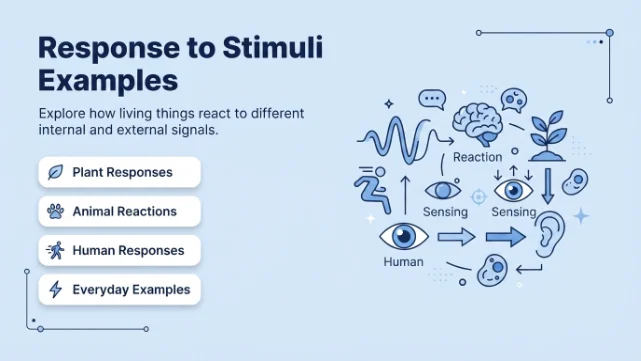
Response to stimuli examples are real life reactions to internal or external events, situations, or triggers. They can be verbal, emotional, physical, or behavioral depending on the context.
You’re studying psychology, biology, healthcare, or simply looking for practical examples, understanding different responses helps explain how people and living organisms react to the world around them.
Top examples: Reflex actions, Emotional reactions, Behavioral responses, Verbal responses, Physiological responses
Have you ever jumped after hearing a loud noise, smiled when someone complimented you, or instantly reached for an umbrella when it started raining? These everyday moments are all examples of how humans respond to different kinds of stimuli. From classroom lessons and science assignments to real life situations at work, with friends, or even while scrolling social media, understanding response to stimuli examples helps explain why we react the way we do.
The human body and mind constantly receive information from the environment. Some reactions happen automatically, while others involve careful thinking and decision making. Knowing different types of responses makes learning easier and helps you recognize how behavior, emotions, and physical actions are connected in everyday life.
Funny Response To Stimuli Examples
- Burst into laughter
Example: Someone hears an unexpected joke during a meeting and laughs before realizing everyone else stayed serious.
Meaning: A humorous stimulus triggered an uncontrollable reaction. - Jump like a cartoon character
Example: A balloon pops unexpectedly at a birthday party.
Meaning: A sudden sound caused a startled physical response. - Dance without thinking
Example: A favorite song starts playing in the grocery store.
Meaning: Music automatically triggered excitement. - Freeze with a funny face
Example: Ice cold water splashes unexpectedly.
Meaning: The body reacted instantly to temperature. - Drop the spoon
Example: Someone hears shocking gossip while eating.
Meaning: Surprise interrupted normal behavior. - Giggle uncontrollably
Example: A baby makes a silly expression.
Meaning: The visual stimulus created amusement. - Hide behind a friend
Example: A harmless spider appears nearby.
Meaning: Fear caused a playful defensive reaction. - Clap without realizing
Example: A magician finishes an impressive trick.
Meaning: Appreciation became an automatic response. - Pretend nothing happened
Example: Someone almost slips in public.
Meaning: Embarrassment influenced behavior. - Look around dramatically
Example: A mysterious sound comes from another room.
Meaning: Curiosity guided the reaction. - Do a double take
Example: Someone spots a celebrity look alike.
Meaning: Surprise required another look. - Laugh at yourself
Example: You wave back to someone who was greeting another person.
Meaning: Humor softened an awkward moment. - Make a goofy face
Example: Tasting an extremely sour candy.
Meaning: Taste instantly affected facial muscles. - Celebrate too early
Example: Thinking you answered correctly before hearing the full question.
Meaning: Excitement led to a premature reaction. - Strike a victory pose
Example: Winning a simple game with friends.
Meaning: Success inspired playful confidence.
Emotional Response To Stimuli Examples
- Smile warmly
Example: Receiving kind words from a close friend.
Meaning: Happiness appeared naturally. - Cry quietly
Example: Watching an emotional movie ending.
Meaning: Strong feelings created tears. - Feel nervous
Example: Waiting for exam results.
Meaning: Uncertainty triggered anxiety. - Relax completely
Example: Listening to ocean waves.
Meaning: Calm surroundings reduced stress. - Blush instantly
Example: Receiving unexpected praise.
Meaning: Embarrassment mixed with happiness. - Feel inspired
Example: Reading an uplifting success story.
Meaning: Motivation grew from positive information. - Become frustrated
Example: Technology stops working before a deadline.
Meaning: Obstacles triggered irritation. - Show gratitude
Example: Someone offers unexpected help.
Meaning: Kindness encouraged appreciation. - Feel proud
Example: Completing a difficult project.
Meaning: Achievement boosted confidence. - Become hopeful
Example: Hearing encouraging news.
Meaning: Optimism replaced doubt. - Feel disappointed
Example: Plans get canceled unexpectedly.
Meaning: Expectations were not met. - Experience excitement
Example: Booking a dream vacation.
Meaning: Positive anticipation increased energy. - Feel comforted
Example: Receiving a supportive hug.
Meaning: Care reduced emotional stress. - Become curious
Example: Discovering a mysterious clue.
Meaning: Interest encouraged exploration. - Feel relieved
Example: Learning that everything turned out fine.
Meaning: Worry disappeared after reassurance.
Physical Response To Stimuli Examples
- Blink quickly
Example: Bright light shines into the eyes.
Meaning: Eyes protect themselves automatically. - Pull your hand away
Example: Touching a hot pan.
Meaning: A reflex prevents injury. - Shiver
Example: Walking outside on a cold morning.
Meaning: The body tries to stay warm. - Sweat more
Example: Running during exercise.
Meaning: Cooling mechanisms activate. - Heart beats faster
Example: Seeing something frightening.
Meaning: The body prepares for action. - Pupils become larger
Example: Entering a dark room.
Meaning: Eyes adjust to low light. - Sneeze suddenly
Example: Dust enters the nose.
Meaning: The body removes irritation. - Cough immediately
Example: Water goes down the wrong way.
Meaning: Airways protect themselves. - Yawn
Example: Feeling tired late at night.
Meaning: Fatigue affects the body. - Goosebumps appear
Example: Feeling cold or emotional.
Meaning: Skin reacts to temperature or feelings. - Tremble slightly
Example: Standing in freezing weather.
Meaning: Muscles generate heat. - Tear up
Example: Cutting onions.
Meaning: Eyes protect themselves from irritation. - Salivate
Example: Smelling fresh pizza.
Meaning: Digestion begins automatically. - Stretch naturally
Example: Waking up after sleeping.
Meaning: Muscles respond to rest. - Flinch instantly
Example: A loud object crashes nearby.
Meaning: The body reacts to sudden danger.
Behavioral Response To Stimuli Examples
- Walk away
Example: Hearing a fire alarm.
Meaning: Safety becomes the priority. - Raise your hand
Example: A teacher asks a question.
Meaning: Participation follows instruction. - Run faster
Example: Rain suddenly begins.
Meaning: Weather changes influence behavior. - Open an umbrella
Example: Dark clouds start pouring rain.
Meaning: The environment guides action. - Drink water
Example: Feeling thirsty after exercise.
Meaning: The body signals hydration needs. - Wear a jacket
Example: Temperature drops outside.
Meaning: Cold weather changes choices. - Answer the phone
Example: Hearing your ringtone.
Meaning: Sound prompts communication. - Check notifications
Example: Phone vibrates.
Meaning: Technology captures attention. - Move into the shade
Example: Strong sunlight becomes uncomfortable.
Meaning: Comfort influences behavior. - Close the window
Example: Wind becomes too strong.
Meaning: Environmental changes affect decisions. - Stop talking
Example: A presentation begins.
Meaning: Social cues shape behavior. - Offer help
Example: Someone drops heavy bags.
Meaning: Empathy inspires action. - Cover your ears
Example: Loud construction starts nearby.
Meaning: Protection reduces discomfort. - Wash your hands
Example: Touching something dirty.
Meaning: Hygiene habits respond to contamination. - Look both ways
Example: Reaching a busy road.
Meaning: Safety awareness influences action.
Positive Response To Stimuli Examples
- Celebrate success
Example: Passing an important exam.
Meaning: Achievement creates happiness. - Thank someone sincerely
Example: Receiving unexpected support.
Meaning: Appreciation strengthens relationships. - Share good news
Example: Landing a dream job.
Meaning: Joy encourages connection. - Encourage others
Example: Seeing a friend struggle.
Meaning: Compassion inspires kindness. - Volunteer to help
Example: Community members need assistance.
Meaning: Care motivates action. - Stay optimistic
Example: Facing a challenge.
Meaning: Hope shapes perspective. - Practice gratitude
Example: Reflecting on daily blessings.
Meaning: Appreciation improves mindset. - Smile confidently
Example: Meeting new people.
Meaning: Positivity creates connection. - Stay calm
Example: Minor problems appear unexpectedly.
Meaning: Emotional control guides behavior. - Celebrate progress
Example: Completing a personal goal.
Meaning: Small victories deserve recognition. - Cheer for others
Example: Watching a teammate succeed.
Meaning: Support builds stronger relationships. - Keep learning
Example: Making a mistake.
Meaning: Growth comes from experience. - Forgive quickly
Example: A friend apologizes sincerely.
Meaning: Understanding strengthens trust. - Stay curious
Example: Discovering something new.
Meaning: Interest encourages lifelong learning. - Choose kindness
Example: Meeting someone having a difficult day.
Meaning: Compassion becomes the response.
Negative Response To Stimuli Examples
- Become angry
Example: Facing repeated unfair treatment.
Meaning: Frustration builds emotional tension. - Shout loudly
Example: Feeling startled unexpectedly.
Meaning: Strong emotions become vocal. - Ignore the situation
Example: Receiving unwanted criticism.
Meaning: Avoidance becomes the chosen response. - Walk away upset
Example: Experiencing disrespect.
Meaning: Emotions influence behavior. - Feel anxious
Example: Waiting for important news.
Meaning: Uncertainty causes worry. - Become impatient
Example: Standing in a very long line.
Meaning: Delays reduce tolerance. - Lose focus
Example: Constant distractions interrupt work.
Meaning: Attention becomes divided. - Overreact emotionally
Example: Misunderstanding a simple comment.
Meaning: Feelings become stronger than necessary. - Stay silent
Example: Feeling overwhelmed.
Meaning: Processing emotions takes priority. - Avoid eye contact
Example: Feeling embarrassed.
Meaning: Discomfort changes body language. - Procrastinate
Example: Feeling stressed about a project.
Meaning: Pressure delays action. - Become defensive
Example: Receiving criticism.
Meaning: Self protection influences reactions. - Complain repeatedly
Example: Facing ongoing inconvenience.
Meaning: Frustration seeks expression. - Give up temporarily
Example: A difficult task feels impossible.
Meaning: Discouragement reduces motivation. - Feel discouraged
Example: Missing an important opportunity.
Meaning: Disappointment affects confidence.
Verbal Response To Stimuli Examples
- Thank you!
Example: Someone holds the door open.
Meaning: Appreciation is expressed politely. - Wow!
Example: Seeing breathtaking fireworks.
Meaning: Surprise becomes verbal. - Congratulations!
Example: A friend announces good news.
Meaning: Happiness is shared. - I’m sorry.
Example: Accidentally bumping into someone.
Meaning: Responsibility is acknowledged. - That’s amazing!
Example: Hearing an inspiring achievement.
Meaning: Admiration is expressed. - Good luck!
Example: A coworker starts an interview.
Meaning: Encouragement is offered. - Please help.
Example: Facing an emergency.
Meaning: Assistance is requested. - I understand.
Example: Listening to someone’s concern.
Meaning: Empathy is communicated. - Let’s do it!
Example: Friends plan an adventure.
Meaning: Excitement encourages action. - Take care.
Example: Saying goodbye.
Meaning: Concern is expressed warmly. - Well done!
Example: A child completes a puzzle.
Meaning: Achievement deserves praise. - No problem.
Example: Someone thanks you for a favor.
Meaning: Kindness is given freely. - I’m impressed.
Example: Seeing exceptional work.
Meaning: Respect is communicated. - Absolutely!
Example: Agreeing enthusiastically.
Meaning: Confidence strengthens the response. - That makes sense.
Example: Hearing a clear explanation.
Meaning: Understanding is confirmed.
Animal Response To Stimuli Examples
- A dog barks
Example: A stranger approaches the house.
Meaning: The animal responds to unfamiliar sounds or people. - A cat arches its back
Example: Another animal gets too close.
Meaning: Defense behavior appears. - Birds fly away
Example: A loud noise occurs.
Meaning: Fear triggers escape. - Fish swim deeper
Example: A shadow appears overhead.
Meaning: Protection becomes the priority. - A turtle hides
Example: Someone touches its shell.
Meaning: Safety response activates. - A rabbit runs
Example: Hearing movement nearby.
Meaning: Survival instincts react quickly. - A horse neighs
Example: Seeing another horse.
Meaning: Social communication occurs. - Bees swarm
Example: Their hive is disturbed.
Meaning: Colony defense begins. - A frog jumps
Example: Feeling vibrations nearby.
Meaning: Escape protects the animal. - Owls turn their heads
Example: Hearing distant sounds.
Meaning: Attention shifts toward the stimulus. - A squirrel climbs a tree
Example: A dog approaches.
Meaning: Instinct guides safety. - A duck flaps its wings
Example: Water splashes unexpectedly.
Meaning: Movement creates balance. - A deer freezes
Example: Hearing unfamiliar noises.
Meaning: Remaining still reduces danger. - A snake hisses
Example: Feeling threatened.
Meaning: Warning behavior discourages predators. - Penguins huddle together
Example: Extremely cold weather arrives.
Meaning: Cooperation helps survival.
Plant Response To Stimuli Examples
- Flowers open in sunlight
Example: Morning sunlight reaches the petals.
Meaning: Plants respond to light. - Leaves turn toward the sun
Example: Sunlight changes direction.
Meaning: Growth follows available light. - Roots grow downward
Example: Water and gravity influence development.
Meaning: Plants seek stability and moisture. - Seeds begin to sprout
Example: Moist soil becomes available.
Meaning: Water activates growth. - Leaves droop
Example: The plant lacks water.
Meaning: Dehydration affects appearance. - Vines wrap around supports
Example: A nearby pole is available.
Meaning: Touch guides climbing. - Sunflowers rotate
Example: The sun moves across the sky.
Meaning: Light influences direction. - Plants shed leaves
Example: Autumn temperatures arrive.
Meaning: Seasonal changes affect growth. - Cactus stores water
Example: Dry weather continues.
Meaning: Adaptation supports survival. - Buds bloom
Example: Spring temperatures increase.
Meaning: Warm weather stimulates flowering. - Grass grows faster
Example: Rainfall increases.
Meaning: Moisture encourages growth. - Leaves close at night
Example: Darkness arrives.
Meaning: Natural cycles control movement. - Plants slow growth
Example: Winter begins.
Meaning: Cold temperatures reduce activity. - Roots spread wider
Example: Nutrients become scarce.
Meaning: Plants search for resources. - New shoots appear
Example: Healthy growing conditions continue.
Meaning: Favorable stimuli encourage development.
Everyday Response To Stimuli Examples
- Answer the door
Example: Hearing the doorbell ring.
Meaning: Sound prompts action. - Look at your phone
Example: Receiving a notification.
Meaning: Digital alerts attract attention. - Put on sunglasses
Example: Bright sunshine appears.
Meaning: Eyes need protection. - Wash your face
Example: Feeling tired in the morning.
Meaning: Freshness improves alertness. - Turn on the fan
Example: The room becomes hot.
Meaning: Temperature changes influence behavior. - Drink coffee
Example: Feeling sleepy before work.
Meaning: Fatigue affects daily choices. - Lock the door
Example: Leaving home.
Meaning: Safety habits become automatic. - Wear gloves
Example: Cold weather arrives.
Meaning: Comfort guides preparation. - Turn down the volume
Example: Music becomes too loud.
Meaning: Noise influences decisions. - Charge your phone
Example: Battery becomes low.
Meaning: Technology signals action. - Reach for tissues
Example: Allergies start acting up.
Meaning: Physical discomfort guides behavior. - Take notes
Example: Hearing important information.
Meaning: Learning encourages action. - Move closer
Example: Someone speaks quietly.
Meaning: Communication influences behavior. - Step aside
Example: Emergency vehicles approach.
Meaning: Awareness promotes safety. - Open a window
Example: The room feels stuffy.
Meaning: Fresh air improves comfort.
FAQs
What does response to stimuli mean?
It refers to the way a person, animal, or plant reacts to changes in the environment or to internal signals.
Are response to stimuli examples only used in biology?
No. They are also common in psychology, healthcare, education, and everyday life.
Can emotional reactions be responses to stimuli?
Yes. Happiness, fear, anger, excitement, and sadness can all be responses to different stimuli.
Are reflex actions considered responses to stimuli?
Yes. Reflexes are some of the fastest and most automatic responses to external stimuli.
Why are response to stimuli examples important?
They help explain how living organisms survive, communicate, adapt, and interact with their surroundings.
Conclusion
Learning response to stimuli examples makes it much easier to understand how people, animals, and plants react to the world around them. From simple reflexes and emotional reactions to everyday decisions and complex behaviors, every response tells a story about how living things adapt and survive.
You’re preparing for a science class, exploring psychology, or simply satisfying your curiosity, these examples provide practical insights you can recognize in daily life. Save this guide for future reference, share it with classmates or friends, and revisit it whenever you need clear, real world examples to strengthen your understanding.
Discover More Related Articles:
- How to Respond to an Apology | With Grace, Honesty & Respect In 2026
- How to Respond to Negative Reviews | Without Losing Customers In 2026

Laura Adams is a dedicated content writer and blogger known for crafting clear, informative, and engaging articles. As a contributor to Responary.com, she specializes in creating reader-friendly content that educates, inspires, and keeps audiences informed on a wide range of subjects.