Quick Answer
Knowing how to respond to an apology can help you handle awkward, emotional, or meaningful moments with confidence. Whether the apology comes from a friend, partner, coworker, or family member, your response can strengthen trust, set boundaries, or simply help both of you move forward.
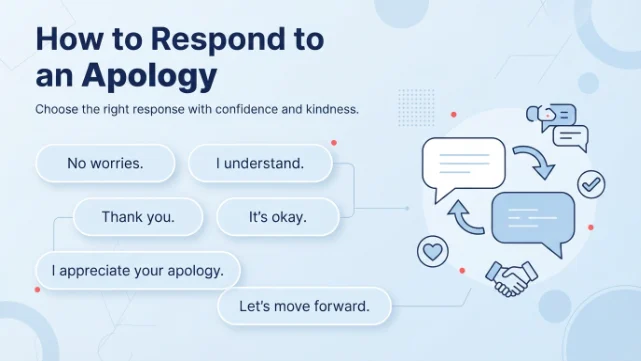
Top replies: It’s okay, I appreciate your apology, Thank you for saying that, Let’s move forward, I forgive you.
Everyone makes mistakes, and sooner or later, you’ll need to decide how to respond to an apology. Maybe it’s a late-night text from your best friend, a heartfelt DM from your crush, an email from a coworker, or a sincere conversation with a family member. The words you choose can change the direction of the relationship.
Sometimes you want to forgive right away. Other times, you need honesty, boundaries, or even a little humor to lighten the moment. There isn’t one perfect response for every situation, which is why having different options matters. This collection gives you ready-to-send replies for every mood, helping you sound genuine, confident, thoughtful, and natural without overthinking your next message.
Funny Responses
- I’ll let this slide… this time.
Example: Great for forgiving a close friend after a harmless mistake.
Meaning: Shows forgiveness while adding playful humor. - You’re lucky I like you.
Example: Perfect after a small misunderstanding with someone close.
Meaning: Accepts the apology with light teasing. - Fine, but you owe me snacks.
Example: Works after a minor inconvenience between friends.
Meaning: Keeps things fun while moving on. - Crisis officially canceled.
Example: Good after resolving a tiny disagreement.
Meaning: Signals that everything is okay now. - I’ll pretend that never happened.
Example: Best for harmless mistakes.
Meaning: Lets both people move forward. - Your apology has been approved.
Example: Funny after a casual mistake.
Meaning: Playfully accepts responsibility. - We’ll call it even.
Example: Great after both people made mistakes.
Meaning: Suggests a fresh start. - You’re off the hook.
Example: Good for close friendships.
Meaning: Says there’s no hard feelings. - Next mistake costs extra.
Example: Perfect among playful friends.
Meaning: Forgives while joking. - My dramatic era is over.
Example: After both people laughed about the issue.
Meaning: Signals the conflict is finished. - You survived the apology test.
Example: Great for texting.
Meaning: Accepts the apology in a funny way. - I expected better… kidding.
Example: For close friends only.
Meaning: Softens the situation with humor. - Now we’re back to normal.
Example: After clearing up a misunderstanding.
Meaning: Shows everything is okay. - I’ll spare you this time.
Example: Works in playful conversations.
Meaning: Forgives with mock seriousness. - You’re forgiven… don’t make me regret it.
Example: Perfect for lighthearted chats.
Meaning: Accepts the apology while joking.
Polite Responses
- Thank you for apologizing.
Example: Suitable in almost any situation.
Meaning: Acknowledges the effort. - I appreciate your honesty.
Example: When someone sincerely admits their mistake.
Meaning: Values accountability. - I accept your apology.
Example: Formal yet warm.
Meaning: Clearly communicates forgiveness. - Thank you for taking responsibility.
Example: Professional or personal settings.
Meaning: Recognizes maturity. - It’s okay.
Example: For small mistakes.
Meaning: Reassures the other person. - No worries.
Example: Casual situations.
Meaning: Shows the issue wasn’t serious. - Let’s move forward.
Example: After resolving a disagreement.
Meaning: Focuses on the future. - I understand.
Example: When you see their perspective.
Meaning: Offers empathy. - We’re good.
Example: Friendly conversations.
Meaning: Confirms everything is fine. - Thank you for being sincere.
Example: Heartfelt apologies.
Meaning: Appreciates authenticity. - I value your apology.
Example: Meaningful conversations.
Meaning: Recognizes their effort. - Let’s put this behind us.
Example: After resolving conflict.
Meaning: Encourages closure. - I respect your honesty.
Example: Professional settings.
Meaning: Shows appreciation. - I appreciate you saying that.
Example: Personal conversations.
Meaning: Accepts their words kindly. - We’re okay now.
Example: Between friends or family.
Meaning: Reassures the relationship.
Heartfelt Responses
- I forgive you.
Example: After a genuine apology.
Meaning: Offers complete forgiveness. - Thank you for being honest.
Example: Emotional conversations.
Meaning: Appreciates vulnerability. - That means a lot to me.
Example: When the apology feels sincere.
Meaning: Shows emotional appreciation. - I’m glad we talked.
Example: After resolving conflict.
Meaning: Values communication. - We all make mistakes.
Example: Comforting someone who feels guilty.
Meaning: Shows compassion. - Let’s grow from this.
Example: In close relationships.
Meaning: Focuses on improvement. - I know you didn’t mean to hurt me.
Example: After accidental mistakes.
Meaning: Recognizes good intentions. - Thank you for caring enough to apologize.
Example: Deep conversations.
Meaning: Appreciates the effort. - I believe we can move forward.
Example: Rebuilding trust.
Meaning: Expresses hope. - This helps more than you know.
Example: Genuine emotional moments.
Meaning: Shows the apology mattered. - I’m ready to move on.
Example: After healing.
Meaning: Welcomes a fresh start. - We’re stronger because we talked.
Example: Relationships and friendships.
Meaning: Finds growth in conflict. - I appreciate your courage.
Example: Difficult apologies.
Meaning: Recognizes vulnerability. - Thank you for making things right.
Example: After sincere effort.
Meaning: Values accountability. - Let’s keep being honest with each other.
Example: Close relationships.
Meaning: Encourages healthy communication.
Professional Responses
- Thank you for your apology.
Example: Ideal after a coworker admits to a mistake during a project.
Meaning: A polite and respectful way to acknowledge their apology. - I appreciate your honesty.
Example: Useful when someone takes full responsibility at work.
Meaning: Shows that you value accountability. - Let’s move forward professionally.
Example: Best after resolving a workplace misunderstanding.
Meaning: Focuses on maintaining a positive working relationship. - I respect you for addressing it.
Example: Appropriate after a colleague openly apologizes.
Meaning: Recognizes maturity and responsibility. - Thank you for taking ownership.
Example: Great when someone accepts their mistake without excuses.
Meaning: Appreciates their accountability. - I understand, and I appreciate your explanation.
Example: Suitable during a professional discussion.
Meaning: Shows empathy while accepting the apology. - Let’s focus on the solution.
Example: Helpful after a project setback.
Meaning: Keeps the conversation productive. - I accept your apology.
Example: Appropriate for formal situations.
Meaning: Clearly communicates forgiveness. - Thank you for clearing that up.
Example: After a misunderstanding is resolved.
Meaning: Appreciates the clarification. - We’re on the same page now.
Example: After resolving confusion with a teammate.
Meaning: Confirms mutual understanding. - No hard feelings.
Example: After a small workplace disagreement.
Meaning: Shows you’re ready to move on. - I appreciate your professionalism.
Example: When someone apologizes respectfully.
Meaning: Recognizes their respectful attitude. - Let’s leave this behind us.
Example: After resolving an issue with a client or coworker.
Meaning: Encourages a fresh start. - Thank you for making things right.
Example: When someone fixes their mistake.
Meaning: Appreciates both the apology and the effort. - I value your sincerity.
Example: Suitable for formal and business settings.
Meaning: Acknowledges the genuine apology.
Chill And Casual Responses
- It’s all good.
Example: Perfect after a friend apologizes over text.
Meaning: Shows there are no hard feelings. - Don’t stress about it.
Example: Great for small mistakes.
Meaning: Reassures the other person. - We’re cool.
Example: After a minor misunderstanding.
Meaning: Confirms everything is fine. - No worries at all.
Example: Casual everyday situations.
Meaning: Lets them know it’s okay. - Forget about it.
Example: Best for harmless mistakes.
Meaning: Encourages moving on. - It’s in the past now.
Example: After resolving an issue.
Meaning: Focuses on the future. - You’re good.
Example: Friendly conversations.
Meaning: Reassures the person. - Stuff happens.
Example: Minor accidents or mistakes.
Meaning: Normalizes the situation. - We’re all human.
Example: Someone feels guilty.
Meaning: Shows understanding. - No big deal.
Example: Small inconveniences.
Meaning: Downplays the mistake. - Let’s move on.
Example: After clearing the air.
Meaning: Ends the conflict positively. - You don’t have to keep apologizing.
Example: When someone repeats their apology.
Meaning: Encourages them to relax. - All good now.
Example: Everyday texting.
Meaning: Everything is okay again. - It happens.
Example: Minor misunderstandings.
Meaning: Accepts that mistakes are normal. - We’re fine.
Example: Friends or family.
Meaning: Reassures the relationship.
Clever Responses
- Growth starts with accountability.
Example: After a thoughtful apology.
Meaning: Appreciates personal growth. - Owning mistakes is never a weakness.
Example: Someone sincerely apologizes.
Meaning: Praises honesty. - The apology matters more than perfection.
Example: Meaningful conversations.
Meaning: Values effort over being flawless. - Lesson learned, chapter closed.
Example: After resolving conflict.
Meaning: Encourages moving forward. - Respect earned.
Example: When someone owns up.
Meaning: Shows admiration. - Actions after this will matter most.
Example: Serious situations.
Meaning: Emphasizes future behavior. - Mistakes happen, character responds.
Example: Reflective conversations.
Meaning: Highlights integrity. - You handled that better than most people would.
Example: Genuine apology.
Meaning: Appreciates maturity. - That’s a solid apology.
Example: Casual but meaningful.
Meaning: Recognizes sincerity. - Let’s write a better next chapter.
Example: Close relationships.
Meaning: Focuses on moving forward. - I appreciate the courage it took.
Example: Difficult conversations.
Meaning: Values vulnerability. - Progress beats perfection.
Example: Personal growth situations.
Meaning: Encourages learning. - Apology accepted, wisdom gained.
Example: Reflective moments.
Meaning: Suggests both learned something. - That says a lot about your character.
Example: Honest apologies.
Meaning: Compliments integrity. - Let’s make this a turning point.
Example: Rebuilding trust.
Meaning: Encourages positive change.
Confident Responses
- I appreciate the apology, but I also value consistency.
Example: After repeated mistakes.
Meaning: Sets expectations. - Thank you. Let’s do better moving forward.
Example: Personal or professional situations.
Meaning: Accepts while expecting improvement. - I’m ready to move on.
Example: After resolving conflict.
Meaning: Shows emotional confidence. - I hear you.
Example: Calm conversations.
Meaning: Acknowledges without overreacting. - I accept your apology.
Example: Serious situations.
Meaning: Clear and confident forgiveness. - Let’s focus on what comes next.
Example: After disagreements.
Meaning: Looks ahead. - I appreciate your honesty.
Example: Meaningful apologies.
Meaning: Recognizes sincerity. - We can rebuild from here.
Example: Repairing relationships.
Meaning: Shows optimism. - I’m glad you spoke up.
Example: Honest conversations.
Meaning: Appreciates communication. - Thank you for acknowledging it.
Example: Formal settings.
Meaning: Accepts gracefully. - This doesn’t define you.
Example: Someone feels guilty.
Meaning: Offers reassurance. - Let’s keep growing.
Example: Close friendships.
Meaning: Encourages progress. - I know my worth.
Example: When setting boundaries.
Meaning: Shows self-respect. - Trust can be rebuilt.
Example: Serious apologies.
Meaning: Leaves room for improvement. - I choose peace over resentment.
Example: Emotional situations.
Meaning: Prioritizes healing.
FAQs
What does an apology mean?
An apology is someone acknowledging they made a mistake and expressing regret for their actions.
What’s the best way to respond to an apology?
The best response depends on the situation. You can forgive, thank them for apologizing, or honestly say you need more time.
Can I respond professionally to an apology?
Yes. Simple replies like “Thank you for your apology” or “I appreciate your accountability” work well in professional settings.
What if I don’t forgive them yet?
It’s okay to say you appreciate the apology but need time to process your feelings.
Is humor appropriate when responding to an apology?
Yes, but only if the situation is minor and both people are comfortable joking about it.
Conclusion
Learning how to respond to an apology isn’t about finding one perfect answer. It’s about choosing words that fit the relationship, the situation, and your feelings. Sometimes a simple “Thank you” is enough. Other times, forgiveness, honesty, or healthy boundaries are the better choice.
The more comfortable you become with different replies, the easier it is to handle emotional conversations with confidence and kindness. Save your favorite responses, share them with friends, and keep this list handy whenever you need inspiration. The right reply can turn an uncomfortable moment into the beginning of a stronger, healthier connection.

Laura Adams is a dedicated content writer and blogger known for crafting clear, informative, and engaging articles. As a contributor to Responary.com, she specializes in creating reader-friendly content that educates, inspires, and keeps audiences informed on a wide range of subjects.