Quick Answer
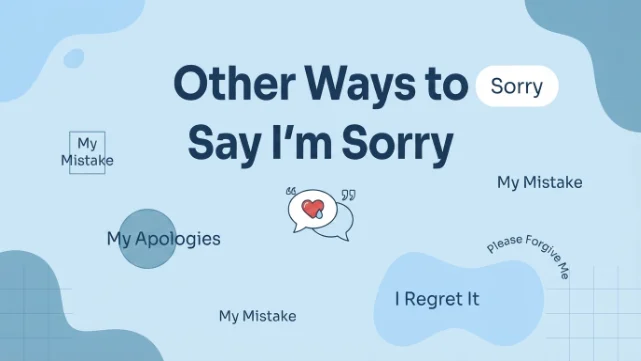
Looking for other ways to say I’m sorry? The most common alternatives are: my apologies, I apologize, please forgive me, my bad, and I take full responsibility. Each one fits a different tone, from formal business writing to casual everyday conversation.
“I’m sorry” is one of the first phrases English learners memorize, but relying on it too often can make your speech sound repetitive and flat. Finding alternatives to I’m sorry helps you match your tone to the situation, whether you are writing a formal email, comforting a friend, or apologizing to a manager.
People use this phrase to admit a mistake, show empathy, or acknowledge an inconvenience. Learning new expressions also helps you express excitement in English communication styles more broadly, because tone control is a skill that transfers across emotions, not just apologies.
Mastering these variations makes you sound more fluent, confident, and natural. It shows native-level awareness of formality, emotion, and professional nuance rather than relying on one default phrase in every context.
“The right tone makes your English sound professional and confident.”
Quick Categories
Formal alternatives to “I’m sorry”
- My apologies
- I apologize
- Please accept my apologies
- I sincerely apologize
Pro Tip: Use formal alternatives in emails, business meetings, and written correspondence where a polished tone matters.
Casual alternatives
- My bad
- Sorry about that
- My mistake
- Oops, sorry about that
Pro Tip: Save casual phrases for friends, family, or relaxed conversations to avoid sounding stiff.
Professional alternatives
- I take full responsibility
- I regret any inconvenience caused
- Please accept my apologies for the delay
- I understand the impact of this error
Pro Tip: Pair professional apologies with a brief solution or next step to sound accountable rather than just polite.
Informal expressions
- My bad
- Excuse me
- Oops
- Sorry
Pro Tip: Informal expressions work well in texting and spoken English, but avoid them in reports or client communication.
“Tone awareness is the difference between sounding polite and sounding professional.”
Common Mistakes When Using “I’m Sorry”
- Overusing it in professional writing | “I’m sorry, I’m sorry, I know this is late again.”
- Using casual forms in formal emails | “My bad for the delayed report, boss.”
- Apologizing without offering a solution | “I’m sorry” (with no follow-up action).
- Mixing formal and informal tone in one message | “I sincerely apologize, my bad.”
- Using “sorry” as filler rather than genuine apology | “Sorry, sorry, anyway, moving on.”
What Does “I’m Sorry” Mean?
“I’m sorry” is a short expression used to acknowledge regret, admit fault, or show empathy for someone else’s situation. Grammatically, it functions as an adjective phrase (“I am sorry”) and is often followed by “for” or “about” plus a noun or gerund.
Example Sentence: I’m sorry for missing your call earlier today.
When to Use “I’m Sorry”
- Apologizing for a personal mistake
- Expressing sympathy for someone’s misfortune
- Acknowledging a minor social error, like interrupting someone
- Spoken English: casual, quick apologies in daily conversation
- Written English: often expanded into more formal alternatives for clarity and tone
Is It Professional or Polite to Say “I’m Sorry”?
“I’m sorry” is polite in almost every context, but it is not always professional enough for business communication, where accountability and solutions matter more than the phrase itself.
Business Example: Instead of “I’m sorry the report is late,” a more professional version is “I apologize for the delay and will send the finalized report by 3 PM.”
Polite? Yes Professional? No (in most formal business contexts, on its own)
Pros and Cons of Using “I’m Sorry”
Pros:
- Simple and natural
- Friendly tone
- Common usage
- Easy to understand
Cons:
- Too informal for work
- Overused
- Limited emotional range
- Not suitable for formal writing
“Confident English speakers choose their words based on context, not habit.”
Other Ways to Say “I’m Sorry”
These alternatives will help you sound more fluent, confident, and natural in different situations. Use them according to tone, context, and audience to express genuine regret, professionalism, or empathy.
1. Phrase: My apologies
Meaning: A short, formal way to express regret. Explanation: Common in professional emails and workplace conversations. Example Sentence: My apologies for the confusion earlier in the meeting. Best Use: business emails Worst Use: close friendships Tone: formal, polished Context Variability: professional, written
2. Phrase: I apologize
Meaning: A direct and respectful admission of fault. Explanation: Slightly more formal than “I’m sorry” and widely accepted in speech and writing. Example Sentence: I apologize for the late response to your email. Best Use: workplace, customer service Worst Use: casual texting Tone: formal, respectful Context Variability: professional, spoken, written
3. Phrase: Please forgive me
Meaning: A heartfelt request for pardon. Explanation: Carries emotional weight, often used for serious mistakes. Example Sentence: Please forgive me for forgetting your birthday. Best Use: personal relationships Worst Use: minor errors Tone: emotional, sincere Context Variability: spoken, personal
4. Phrase: I regret that
Meaning: Expresses formal sorrow over an action or outcome. Explanation: Common in official statements and written apologies. Example Sentence: I regret that the shipment arrived damaged. Best Use: official statements Worst Use: casual chats Tone: formal, distant Context Variability: written, professional
5. Phrase: Pardon me
Meaning: A polite phrase for minor social mistakes. Explanation: Often used for small interruptions or physical bumps. Example Sentence: Pardon me, I didn’t realize you were speaking. Best Use: public settings Worst Use: serious apologies Tone: polite, light Context Variability: spoken, casual
6. Phrase: My bad
Meaning: An informal way to admit a small mistake. Explanation: Very casual and common among peers. Example Sentence: My bad, I forgot to save the file. Best Use: friends, casual chats Worst Use: formal writing Tone: casual, relaxed Context Variability: casual, spoken
7. Phrase: Oops, sorry about that
Meaning: A lighthearted acknowledgment of a small error. Explanation: Used when the mistake is minor and not serious. Example Sentence: Oops, sorry about that, wrong document attached. Best Use: everyday conversation Worst Use: professional emails Tone: playful, casual Context Variability: spoken, informal
8. Phrase: I owe you an apology
Meaning: Acknowledges that an apology is deserved. Explanation: Sounds thoughtful and sincere, often used before explaining. Example Sentence: I owe you an apology for how I reacted yesterday. Best Use: personal conflicts Worst Use: minor mistakes Tone: sincere, reflective Context Variability: spoken, personal
9. Phrase: I’m really sorry
Meaning: An intensified version of a standard apology. Explanation: Adds emotional emphasis to show genuine regret. Example Sentence: I’m really sorry for missing your presentation. Best Use: close relationships Worst Use: formal reports Tone: sincere, warm Context Variability: spoken, casual
10. Phrase: Forgive me
Meaning: A brief request for pardon. Explanation: Slightly poetic or dramatic, often used in writing or speeches. Example Sentence: Forgive me for the harsh words earlier. Best Use: letters, speeches Worst Use: everyday small talk Tone: dramatic, sincere Context Variability: written, spoken
11. Phrase: I sincerely apologize
Meaning: A strong, formal expression of regret. Explanation: Used when the mistake has significant consequences. Example Sentence: I sincerely apologize for the miscommunication with the client. Best Use: business, official letters Worst Use: minor slips Tone: formal, serious Context Variability: professional, written
12. Phrase: That’s on me
Meaning: Admits personal fault for an error. Explanation: Common in casual and semi-professional settings among peers. Example Sentence: That’s on me, I should have checked the numbers. Best Use: team settings Worst Use: formal documents Tone: casual, accountable Context Variability: casual, professional
13. Phrase: My mistake
Meaning: A short admission of error. Explanation: Neutral in tone, works in both casual and semi-formal talk. Example Sentence: My mistake, I sent the wrong file earlier. Best Use: everyday work Worst Use: legal writing Tone: neutral, direct Context Variability: casual, professional
14. Phrase: I take full responsibility
Meaning: Shows ownership of a mistake without excuses. Explanation: Common in leadership and professional accountability. Example Sentence: I take full responsibility for the project delay. Best Use: workplace leadership Worst Use: minor personal issues Tone: professional, accountable Context Variability: professional, spoken
15. Phrase: Please accept my apologies
Meaning: A formal, polite request for forgiveness. Explanation: Often used in customer service and business writing. Example Sentence: Please accept my apologies for the delayed shipment. Best Use: customer communication Worst Use: casual friendships Tone: formal, courteous Context Variability: written, professional
16. Phrase: I feel terrible about this
Meaning: Expresses genuine emotional regret. Explanation: Shows empathy and personal concern for the impact caused. Example Sentence: I feel terrible about this, I know it caused you stress. Best Use: personal relationships Worst Use: formal business emails Tone: emotional, empathetic Context Variability: spoken, personal
17. Phrase: I didn’t mean for that to happen
Meaning: Clarifies that the mistake was unintentional. Explanation: Useful when explaining context behind an error. Example Sentence: I didn’t mean for that to happen, I misread the schedule. Best Use: clarifying misunderstandings Worst Use: serious offenses Tone: explanatory, sincere Context Variability: spoken, casual
18. Phrase: Excuse me
Meaning: A polite phrase for minor interruptions. Explanation: Common for small, everyday social situations. Example Sentence: Excuse me, I didn’t mean to cut you off. Best Use: public interactions Worst Use: serious mistakes Tone: polite, light Context Variability: spoken, casual
19. Phrase: I’m sorry for the inconvenience
Meaning: Acknowledges disruption caused to someone else. Explanation: Extremely common in customer service and professional replies. Example Sentence: I’m sorry for the inconvenience this delay has caused. Best Use: customer service Worst Use: personal apologies Tone: professional, courteous Context Variability: written, professional
20. Phrase: I hope you can forgive me
Meaning: Expresses hope for reconciliation after a mistake. Explanation: Adds vulnerability and emotional openness to an apology. Example Sentence: I hope you can forgive me for the misunderstanding. Best Use: close relationships Worst Use: workplace emails Tone: vulnerable, sincere Context Variability: spoken, personal
21. Phrase: That was wrong of me
Meaning: A direct admission of poor judgment. Explanation: Shows self-awareness and accountability clearly. Example Sentence: That was wrong of me, I shouldn’t have raised my voice. Best Use: personal conflicts Worst Use: minor errors Tone: honest, accountable Context Variability: spoken, personal
22. Phrase: I should have known better
Meaning: Expresses regret over a preventable mistake. Explanation: Often used when the person recognizes their own oversight. Example Sentence: I should have known better than to skip the review. Best Use: reflective apologies Worst Use: formal writing Tone: reflective, honest Context Variability: spoken, casual
23. Phrase: I let you down, I’m sorry
Meaning: Acknowledges failing someone’s expectations. Explanation: Common when trust or responsibility is involved. Example Sentence: I let you down, I’m sorry, I’ll do better next time. Best Use: personal, mentorship Worst Use: minor slip-ups Tone: sincere, emotional Context Variability: spoken, personal
24. Phrase: My apologies for the delay
Meaning: A formal acknowledgment of late response or action. Explanation: Standard phrase in professional email communication. Example Sentence: My apologies for the delay in replying to your message. Best Use: business emails Worst Use: casual conversation Tone: formal, professional Context Variability: written, professional
25. Phrase: I deeply regret this
Meaning: A strong formal expression of sorrow. Explanation: Used for serious mistakes with lasting consequences. Example Sentence: I deeply regret this error and its impact on the team. Best Use: formal statements Worst Use: small talk Tone: serious, formal Context Variability: written, professional
26. Phrase: Sorry about that
Meaning: A casual, quick apology. Explanation: Common in everyday spoken English for small issues. Example Sentence: Sorry about that, I meant to reply sooner. Best Use: daily conversation Worst Use: formal reports Tone: casual, friendly Context Variability: spoken, casual
27. Phrase: My apologies for the confusion
Meaning: Acknowledges a misunderstanding caused by unclear communication. Explanation: Common in workplace clarifications and emails. Example Sentence: My apologies for the confusion regarding the meeting time. Best Use: professional clarification Worst Use: personal conflicts Tone: formal, clear Context Variability: written, professional
28. Phrase: I’m sorry, that was my fault
Meaning: A direct and honest admission of error. Explanation: Clear and accountable, common in both casual and work settings. Example Sentence: I’m sorry, that was my fault, I misread the instructions. Best Use: teamwork Worst Use: legal documents Tone: honest, direct Context Variability: spoken, professional
29. Phrase: Please excuse my error
Meaning: A formal request for understanding after a mistake. Explanation: Slightly old-fashioned but still used in polished writing. Example Sentence: Please excuse my error in the earlier invoice. Best Use: formal letters Worst Use: casual texting Tone: formal, polite Context Variability: written, professional
30. Phrase: I want to apologize for my behavior
Meaning: Acknowledges regret over one’s actions or attitude. Explanation: Common after conflicts or emotional outbursts. Example Sentence: I want to apologize for my behavior during the call. Best Use: personal, workplace Worst Use: minor mistakes Tone: sincere, reflective Context Variability: spoken, professional
“Small changes in wording create big changes in how people perceive your tone.”
Mini Quiz:
1. Which phrase is most appropriate in a formal business email?
A) My bad B) I sincerely apologize C) Oops, sorry about that
2. Which phrase best fits a casual conversation with a friend?
A) Please accept my apologies B) I deeply regret this C) My bad
3. Which phrase shows leadership accountability at work?
A) Excuse me B) I take full responsibility C) Sorry about that
4. True or False: “Pardon me” is best used for serious apologies.
A) True B) False
(Answers: 1-B, 2-C, 3-B, 4-B)
Comparison Table: Top Alternatives
| Phrase | Tone | Best Use |
|---|---|---|
| My apologies | Formal | Business emails |
| I apologize | Formal | Workplace |
| Please forgive me | Emotional | Personal relationships |
| I regret that | Formal | Official statements |
| Pardon me | Polite | Public settings |
| My bad | Casual | Friends |
| I owe you an apology | Sincere | Personal conflicts |
| I take full responsibility | Professional | Leadership |
| I’m sorry for the inconvenience | Professional | Customer service |
| I sincerely apologize | Formal | Business, official letters |
FAQs
1. What is a professional way to say I’m sorry?
“I apologize” or “I take full responsibility” are strong professional alternatives that show accountability.
2. What is a casual way to say I’m sorry?
“My bad” or “Sorry about that” work well in relaxed, everyday conversations.
3. How do I apologize formally in writing?
Use phrases like “Please accept my apologies” or “I sincerely apologize” in emails and letters.
4. Is “my bad” acceptable in the workplace?
It is too informal for most workplace writing but can work in casual conversations with close colleagues.
5. Why should I learn other ways to say I’m sorry?
Learning alternatives improves fluency, helps match tone to context, and builds confident, natural-sounding English.
Conclusion
Learning other ways to say I’m sorry helps you communicate with more precision, warmth, and professionalism. Instead of repeating the same phrase, you can now choose the right tone for personal apologies, workplace mistakes, or formal business communication.
Practice using these alternatives daily in conversations, emails, and writing exercises. Paying attention to tone and context will make your English sound more fluent, confident, and naturally professional over time.
Which alternative will you try in your next conversation? Share your favorite phrase in the comments below.
Discover More Related Articles:
- Other Ways to Say Sorry for Your Loss | Professionally In 2026
- Other Ways to Say Rest in Peace | For Condolences In 2026

Laura Adams is a dedicated content writer and blogger known for crafting clear, informative, and engaging articles. As a contributor to Responary.com, she specializes in creating reader-friendly content that educates, inspires, and keeps audiences informed on a wide range of subjects.