Quick Answer
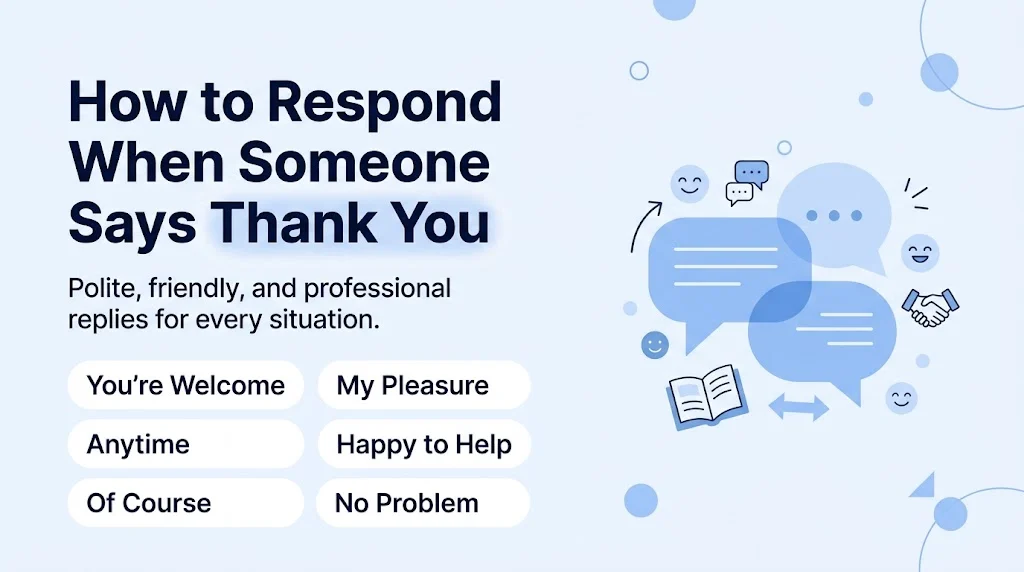
The best way to respond when someone says thank you depends on the situation, your relationship, and the tone of the conversation. You can keep it simple, sound professional, or add a little humor with replies like You’re welcome, No problem, Anytime, Happy to help, Don’t mention it, My pleasure, and Of course!
Someone says thank you, and suddenly your brain forgets every response except “You’re welcome.” Sound familiar? Whether you’re texting a friend, replying to a coworker, chatting with your crush, or responding to a customer, having a few natural replies ready can make every conversation feel smoother.
The good news is that you don’t always need a formal response. Sometimes a quick “No worries!” is perfect, while other situations call for something warmer, funnier, or more professional. Your reply can show kindness, confidence, appreciation, or even a little personality without making a simple exchange awkward.
In this guide, you’ll find ready-to-use responses for different moods and situations, from casual conversations and funny comebacks to professional emails and heartfelt moments. Pick the one that sounds like you, and never overthink a simple thank-you again.
1. Simple and Casual Responses
These everyday replies work well with friends, acquaintances, classmates, and people you interact with regularly.
– You’re welcome! Use this when you want a classic, friendly response. Meaning: You are politely acknowledging their gratitude.
– No problem! Use this when helping someone was easy. Meaning: You are letting them know the favor was not a burden.
– Of course! Use this when helping someone feels natural. Meaning: You are showing that you were happy to help.
– Anytime! Use this with friends or people you are happy to help again. Meaning: You are expressing your willingness to help in the future.
– No worries! Use this in relaxed conversations. Meaning: You are reassuring them that everything is fine.
– Sure thing! Use this when you want a quick, upbeat reply. Meaning: You are responding positively and casually.
– You got it! Use this after completing a small favor. Meaning: You are confirming that helping them was no trouble.
– Don’t mention it! Use this when someone thanks you for a minor favor. Meaning: You are suggesting that the favor was not a big deal.
– Happy to help! Use this when you genuinely enjoyed helping. Meaning: You are expressing a positive attitude toward their request.
– All good! Use this when you want to keep things relaxed. Meaning: You are reassuring them that there is nothing to worry about.
– Absolutely! Use this when you want to sound enthusiastic. Meaning: You are confidently acknowledging their gratitude.
– It’s all good! Use this with friends or familiar coworkers. Meaning: You are keeping the interaction easygoing.
– Glad I could help! Use this after solving a problem. Meaning: You are expressing satisfaction that your help was useful.
– Of course, no worries! Use this when someone seems overly apologetic or grateful. Meaning: You are reassuring them that helping was perfectly fine.
– You’re all good! Use this in an informal conversation. Meaning: You are letting them know everything is fine between you.
2. Funny Responses
Want to make someone smile instead of giving the same old reply? These playful responses work best with people who appreciate your sense of humor.
– I’ll accept payment in snacks. Use this when a friend thanks you for helping them. Meaning: You are jokingly suggesting a snack is a suitable reward.
– Just doing my unpaid internship in kindness. Use this after doing a small favor for a friend. Meaning: You are humorously describing your helpfulness as a job.
– You’re welcome. My award is in the mail. Use this when you want to exaggerate a tiny achievement. Meaning: You are playfully pretending your favor deserves recognition.
– I do accept compliments, by the way. Use this with someone who knows your humor. Meaning: You are jokingly inviting them to praise you more.
– Don’t tell anyone. I have a reputation to maintain. Use this after doing something unexpectedly nice. Meaning: You are teasingly pretending kindness is unusual for you.
– That’s what my superhero cape is for. Use this when you save someone from a minor problem. Meaning: You are comparing your helpfulness to a superhero’s actions.
– You’re welcome. I expect a statue eventually. Use this with a close friend. Meaning: You are exaggerating your contribution for comic effect.
– Kindness level: unlocked. Use this as a playful text reply. Meaning: You are jokingly celebrating your helpful moment.
– It’s okay. I charge in good vibes. Use this when someone thanks you for a favor. Meaning: You are playfully suggesting positive energy is your reward.
– Just another day saving the world. Use this after fixing a small issue. Meaning: You are humorously exaggerating the importance of your help.
– You’re welcome. Please hold your applause. Use this when teasing a friend. Meaning: You are pretending your favor deserves a dramatic celebration.
– I live to serve. Mostly myself, but still. Use this with someone who enjoys dry humor. Meaning: You are jokingly mixing exaggerated helpfulness with self-awareness.
– Consider this your free trial of my greatness. Use this when you have a playful friendship. Meaning: You are mock-confidently presenting your help as a special offer.
– No worries. My kindness subscription is active. Use this in a funny group chat. Meaning: You are turning your willingness to help into a humorous subscription joke.
– You’re welcome. Invoice coming never. Use this after helping someone with a task. Meaning: You are joking that they owe you nothing.
3. Polite and Respectful Responses
These replies are suitable for acquaintances, older relatives, teachers, neighbors, and people you want to treat with extra courtesy.
– You’re very welcome. Use this when you want a warm, respectful reply. Meaning: You are acknowledging their gratitude politely.
– It’s my pleasure. Use this after helping someone with something important. Meaning: You are communicating that helping them was enjoyable.
– I’m glad I could help. Use this when your assistance made a difference. Meaning: You are expressing happiness that you were useful.
– You’re most welcome. Use this in a courteous conversation. Meaning: You are warmly accepting their thanks.
– It was no trouble at all. Use this when someone worries they inconvenienced you. Meaning: You are reassuring them that helping was easy.
– I’m happy to be of assistance. Use this in a respectful or semi-formal setting. Meaning: You are expressing willingness to help in a courteous way.
– Please don’t mention it. Use this when someone thanks you for a small favor. Meaning: You are suggesting that the favor does not require much acknowledgment.
– I’m glad everything worked out. Use this after helping someone resolve a problem. Meaning: You are expressing relief that the outcome was positive.
– It was the least I could do. Use this when helping someone you care about. Meaning: You are showing humility and genuine concern.
– You’re very welcome, anytime. Use this when you want to sound especially approachable. Meaning: You are welcoming future requests for help.
– I’m pleased I could assist. Use this in a more formal exchange. Meaning: You are expressing satisfaction in a polished way.
– Of course, I’m happy to help. Use this when someone thanks you sincerely. Meaning: You are reassuring them that your help was willingly offered.
– It was nothing, really. Use this when you want to downplay a small favor. Meaning: You are indicating that the task felt easy to you.
– I’m glad I could make things easier for you. Use this when you have relieved someone’s stress. Meaning: You are showing that their comfort matters to you.
– You’re welcome, and I wish you all the best. Use this when closing a respectful conversation. Meaning: You are responding graciously and extending goodwill.
4. Professional Responses
When replying to clients, managers, customers, or colleagues, choose language that sounds courteous, confident, and appropriate for the workplace.
– You’re welcome. Happy to assist. Use this in a workplace chat or email. Meaning: You are acknowledging their thanks while remaining professional.
– My pleasure. Use this after completing a work-related request. Meaning: You are communicating that you were glad to help.
– Glad I could help with this. Use this after solving a colleague’s problem. Meaning: You are emphasizing that your contribution was useful.
– You’re welcome. Please let me know if you need anything else. Use this when assisting a client. Meaning: You are remaining available for further support.
– Happy to support the team. Use this when a coworker thanks you for contributing to a project. Meaning: You are showing a collaborative attitude.
– Of course. I’m glad we got it sorted out. Use this after resolving a workplace issue. Meaning: You are highlighting the successful outcome.
– It was a pleasure working on this with you. Use this after collaborating with a colleague. Meaning: You are expressing appreciation for the collaboration.
– You’re welcome, and thank you for the kind words. Use this when a client praises your work. Meaning: You are acknowledging both their gratitude and their compliment.
– I’m pleased the information was helpful. Use this after answering a professional question. Meaning: You are confirming that your response served its purpose.
– Always happy to assist where I can. Use this when responding to a professional contact. Meaning: You are showing a helpful and approachable attitude.
– I’m glad we could make progress on this. Use this after a team effort. Meaning: You are focusing on shared progress rather than individual credit.
– You’re welcome. It was a team effort. Use this when someone thanks you for a group achievement. Meaning: You are sharing recognition with everyone involved.
– Thank you for the acknowledgment. Use this when a supervisor recognizes your contribution. Meaning: You are graciously accepting their appreciation.
– I’m happy the solution worked for you. Use this after troubleshooting an issue. Meaning: You are expressing satisfaction with the result.
– You’re welcome. I appreciate the opportunity to help. Use this with a client or business partner. Meaning: You are responding professionally while expressing goodwill.
5. Sweet and Heartfelt Responses
Use these replies when someone you care about thanks you for emotional support, a thoughtful gesture, or a meaningful favor.
– Anything for you. Use this with someone very close to you. Meaning: You are expressing affection and willingness to help.
– You never have to thank me for being there for you. Use this when supporting a close friend. Meaning: You are reassuring them that your care is unconditional.
– I’m just glad I could be there. Use this after helping someone through a difficult time. Meaning: You are showing that their wellbeing matters more than recognition.
– You mean a lot to me. Of course I’d help. Use this with a loved one. Meaning: You are connecting your helpfulness to the value you place on the relationship.
– Always, with all my heart. Use this after doing something meaningful for someone. Meaning: You are expressing sincere affection and commitment.
– Seeing you happy is enough for me. Use this when your help has made someone feel better. Meaning: You are saying their happiness is your reward.
– I’m just returning some of the kindness you’ve shown me. Use this with someone who has supported you before. Meaning: You are expressing gratitude for the kindness they have given you.
– You deserve all the help and love in the world. Use this when comforting a loved one. Meaning: You are affirming their worth and encouraging them to accept support.
– You don’t owe me anything. I’m happy I could help. Use this when someone feels indebted to you. Meaning: You are reassuring them that your kindness comes without conditions.
– That’s what people who care about each other do. Use this with a close friend or family member. Meaning: You are framing your help as a natural part of caring relationships.
– I’d do it again in a heartbeat. Use this when someone thanks you for a significant favor. Meaning: You are emphasizing that you would gladly help again.
– Your smile makes it worth it. Use this when you have cheered someone up. Meaning: You are expressing happiness about their positive reaction.
– I’m grateful I could make a difference. Use this after offering meaningful support. Meaning: You are acknowledging the emotional value of your help.
– We’ve got each other. Always remember that. Use this with someone who needs reassurance. Meaning: You are reinforcing a sense of trust and mutual support.
– You’d do the same for me. Use this with someone you share a close bond with. Meaning: You are emphasizing mutual care rather than obligation.
6. Short Text and Chat Responses
Sometimes you are replying on WhatsApp, Instagram, Messenger, or SMS and want something quick that still sounds natural.
– Ofc! Use this when chatting with a friend. Meaning: You are casually saying that helping was natural.
– Np! Use this in a quick, informal message. Meaning: You are shortening “no problem” to keep the reply brief.
– Anytime 😊 Use this when you want a friendly text response. Meaning: You are offering future help with warmth.
– No worries! Use this when someone thanks you for a small favor. Meaning: You are keeping the conversation relaxed.
– Gotchu! Use this with friends who enjoy casual internet language. Meaning: You are saying you have their back.
– You got it 🙌 Use this after helping someone finish a task. Meaning: You are responding positively and enthusiastically.
– Always! ❤️ Use this with a close friend or loved one. Meaning: You are showing that your support is ongoing.
– All good 😊 Use this after someone thanks you or apologizes. Meaning: You are reassuring them that everything is fine.
– For sure! Use this when you want an upbeat, casual reply. Meaning: You are confirming your willingness to help.
– Happy to! Use this after doing something for a friend. Meaning: You are showing that helping was enjoyable.
– Of courseee! Use this when texting someone you know well. Meaning: You are adding playful enthusiasm to a simple response.
– Anytime, friend! Use this with someone you want to encourage. Meaning: You are offering friendly support.
– No biggie! Use this after a small favor. Meaning: You are saying the task was not a big deal.
– You know it! Use this with someone who appreciates your confidence. Meaning: You are casually affirming your willingness to help.
– Glad I could! Use this when you want a short but thoughtful response. Meaning: You are expressing happiness that you were useful.
7. Flirty Responses
When someone you like thanks you, your response can be a little more charming. Use these when the other person is comfortable with playful or romantic messages.
– Anything for you 😉 Use this when your crush thanks you for a favor. Meaning: You are hinting that they receive special treatment from you.
– You’re welcome, cutie. Use this when you already have a flirty connection. Meaning: You are adding a direct, affectionate compliment.
– Just trying to impress you. Use this after doing something thoughtful for someone you like. Meaning: You are playfully admitting that their opinion matters to you.
– Your thank-you is pretty cute, not gonna lie. Use this when their message makes you smile. Meaning: You are turning their gratitude into a light compliment.
– I’ll help you anytime, especially you. Use this when you want to show someone they are special. Meaning: You are suggesting that you are particularly willing to help them.
– No need to thank me, just keep smiling. Use this when you want a sweet, flirty reply. Meaning: You are showing that their happiness makes you happy.
– I might start charging in coffee dates. Use this when you want to hint at meeting up. Meaning: You are playfully suggesting a date as your reward.
– You’re welcome. I like being your favorite helper. Use this with someone who regularly asks for your help. Meaning: You are teasing them while showing interest.
– Anything to earn that smile. Use this when you have done something to cheer them up. Meaning: You are telling them their happiness matters to you.
– You’re making it hard not to spoil you. Use this with someone who appreciates romantic teasing. Meaning: You are hinting that you enjoy doing thoughtful things for them.
– Don’t tempt me. I’ll keep helping you. Use this when playful banter is already part of your conversations. Meaning: You are joking that you might become their regular helper.
– You can thank me over coffee sometime. Use this when you want to suggest a casual date. Meaning: You are turning the moment into an invitation to spend time together.
– For you? Always. Use this when you want a short, romantic response. Meaning: You are emphasizing that the person is special to you.
– You’re welcome, but that smile deserves a thank-you too. Use this when you want to flirt through a compliment. Meaning: You are playfully suggesting that they make you happy as well.
– I was just looking for an excuse to talk to you. Use this when the favor gave you a reason to connect. Meaning: You are openly hinting that you enjoy their company.
8. Witty and Clever Responses
These replies add personality without relying on a full joke. They are great for quick banter with friends and colleagues you know well.
– Gratitude accepted. Use this when you want a mock-formal response. Meaning: You are playfully acknowledging their thanks.
– You’re welcome. Case closed. Use this after helping someone solve a problem. Meaning: You are jokingly presenting the matter as settled.
– And just like that, balance has been restored. Use this after completing a favor. Meaning: You are turning an ordinary exchange into a dramatic little moment.
– No thanks necessary, but compliments are welcome. Use this with a friend who enjoys banter. Meaning: You are playfully inviting praise.
– Service delivered successfully. Use this after helping with a task. Meaning: You are humorously describing your help as a completed service.
– You’re welcome. Efficiency is my middle name. Use this after solving something quickly. Meaning: You are jokingly highlighting your efficiency.
– Another satisfied customer! Use this when helping a friend with a small issue. Meaning: You are pretending your helpfulness is a business.
– Glad to be part of the solution. Use this when someone thanks you for practical help. Meaning: You are emphasizing the positive outcome.
– The pleasure was mutual. Use this after helping someone you enjoy spending time with. Meaning: You are suggesting that you also benefited from the interaction.
– You’re welcome. Teamwork makes the dream work. Use this when working together on a task. Meaning: You are recognizing collaboration.
– I aim to please. Use this when you want a short, confident reply. Meaning: You are playfully saying you like being helpful.
– Consider it handled. Use this after taking care of a request. Meaning: You are confidently confirming that the task is complete.
– A little help goes a long way. Use this after doing something meaningful. Meaning: You are emphasizing how small acts of kindness can matter.
– You’re welcome. That’s a win for both of us. Use this when your help also benefited you. Meaning: You are framing the outcome as mutually positive.
– Happy to contribute to the success story. Use this after helping someone achieve a goal. Meaning: You are celebrating their progress while acknowledging your role.
9. Sarcastic Responses
Sarcasm works best when you already share a teasing relationship. Avoid these replies when someone is being vulnerable or when the conversation is formal.
– Wow, gratitude? What a plot twist. Use this with a friend who rarely says thank you. Meaning: You are teasing them about their unusual show of appreciation.
– I’ll remember this historic moment forever. Use this when someone thanks you for a tiny favor. Meaning: You are exaggerating the importance of the occasion for humor.
– Finally, my hard work is recognized. Use this after doing something simple for a friend. Meaning: You are jokingly acting as if you deserve an award.
– You’re welcome. Please update my employee record. Use this after helping someone repeatedly. Meaning: You are pretending your favor should count as professional work.
– I knew my greatness would be noticed eventually. Use this with someone who understands your humor. Meaning: You are mockingly praising yourself.
– About time someone appreciated me. Use this when you have a playful friendship. Meaning: You are joking about being underappreciated.
– I’ll add that to my list of achievements. Use this after a small accomplishment. Meaning: You are exaggerating the significance of helping them.
– Please hold the applause. Use this after fixing a minor problem. Meaning: You are pretending the favor deserves a dramatic celebration.
– You’re welcome. My public relations team will be in touch. Use this with a friend who enjoys absurd humor. Meaning: You are making a joke about receiving recognition.
– Don’t make me emotional with all this appreciation. Use this when a friend unexpectedly thanks you sincerely. Meaning: You are playfully acting overwhelmed by their gratitude.
– I do occasionally perform acts of kindness. Use this when you are usually the sarcastic friend. Meaning: You are humorously admitting that you can be helpful.
– This kindness will be remembered in the history books. Use this after a very small favor. Meaning: You are exaggerating your contribution for comic effect.
– You’re welcome. My invoice is still processing. Use this when teasing someone about owing you a favor. Meaning: You are pretending your help comes with a bill.
– I expect a five-star review. Use this after helping someone with a task. Meaning: You are jokingly asking for positive feedback.
– Well, someone raised you right. Use this with a friend who finally shows appreciation. Meaning: You are teasing them while acknowledging their good manners.
10. Responses to Thank You From Friends
When friends thank you, the best replies usually feel relaxed, supportive, and personal rather than overly formal.
– That’s what friends are for! Use this when you help a friend with a problem. Meaning: You are showing that friendship naturally includes support.
– I’ve got your back. Use this when your friend appreciates your help. Meaning: You are reassuring them that they can count on you.
– You’d do the same for me. Use this when you have a mutual friendship. Meaning: You are emphasizing that your support goes both ways.
– Always here for you. Use this when a friend needs emotional or practical support. Meaning: You are expressing ongoing care.
– Anything for my favorite troublemaker. Use this with a friend who loves playful teasing. Meaning: You are showing affection through a humorous nickname.
– Don’t even worry about it. Use this when your friend feels guilty about asking for help. Meaning: You are reassuring them that the favor was fine.
– We’ve all got to help each other out. Use this after doing a friend a favor. Meaning: You are highlighting the value of mutual support.
– You know I wouldn’t leave you hanging. Use this when your friend thanks you for showing up. Meaning: You are reinforcing trust and reliability.
– It’s what besties do. Use this with your closest friend. Meaning: You are treating the favor as a normal part of your bond.
– Glad I could save the day. Use this when you fix a friend’s problem. Meaning: You are adding a playful touch to your helpfulness.
– You can always count on me. Use this when you want to reassure a close friend. Meaning: You are communicating dependability.
– No need for thanks between us. Use this with someone you have known for a long time. Meaning: You are emphasizing how comfortable and close the friendship is.
– Friendship perks! Use this after doing something nice for a friend. Meaning: You are framing your help as one of the benefits of friendship.
– Happy to make your life a little easier. Use this when your friend is dealing with a busy day. Meaning: You are expressing care through practical support.
– We’ve got each other, always. Use this when your friend thanks you for being there. Meaning: You are reinforcing a strong sense of loyalty.
11. Responses to Thank You From a Crush
If someone you like thanks you, a warm reply can keep the conversation going without making things awkward.
– You’re welcome! Glad I could help you. Use this when you want to be friendly without revealing too much. Meaning: You are showing interest while keeping things natural.
– Anytime, you know that. Use this when you already talk regularly. Meaning: You are suggesting they can comfortably reach out again.
– No worries, happy to help you. Use this after doing them a small favor. Meaning: You are keeping the exchange warm and relaxed.
– You’re welcome. Hope I earned a little smile. Use this when your conversations are playful. Meaning: You are hinting that their happiness matters to you.
– Of course! What are friends for? Use this when you want to keep the mood casual. Meaning: You are offering support without putting pressure on the relationship.
– Always happy to make your day easier. Use this when they have had a busy day. Meaning: You are showing thoughtful interest in their wellbeing.
– You don’t have to thank me twice. Use this when they are being especially appreciative. Meaning: You are playfully encouraging them to relax.
– You’re welcome. I like being useful around you. Use this with someone who enjoys light teasing. Meaning: You are expressing that you enjoy spending time with them.
– Anything to make you smile. Use this when you have cheered them up. Meaning: You are offering a gentle hint of affection.
– You make helping look easy. Use this when they thank you for something you enjoyed doing. Meaning: You are keeping the conversation charming and playful.
– No need to thank me, just remember me next time. Use this when you want a teasing response. Meaning: You are playfully suggesting you want to stay on their mind.
– Glad I could come through for you. Use this when you helped them meet a deadline or solve a problem. Meaning: You are showing that you are reliable and supportive.
– You’re welcome! I owe you a conversation now. Use this when you want to keep chatting. Meaning: You are creating an easy opening for more interaction.
– Happy to help my favorite person. Use this only if your connection is already affectionate. Meaning: You are making your fondness for them more obvious.
– You’re welcome. Let me know when I can see you again. Use this when you want to suggest meeting up. Meaning: You are turning the exchange into an invitation to reconnect.
12. Gracious Responses That Keep the Conversation Going
Sometimes you want to acknowledge the thanks and naturally move the conversation forward. These replies are useful when you want to build rapport or avoid ending the exchange abruptly.
– You’re welcome! How did everything turn out? Use this after helping someone with a task. Meaning: You are showing continued interest in the outcome.
– Happy to help! Did it work out the way you hoped? Use this when you have helped solve a problem. Meaning: You are checking whether your assistance was effective.
– No problem! Let me know how it goes. Use this when someone is trying something new. Meaning: You are leaving the door open for a future update.
– You’re welcome. Anything else you need? Use this when you are helping a customer or colleague. Meaning: You are offering additional support.
– Of course! How are things going now? Use this after helping someone through a stressful situation. Meaning: You are showing concern beyond the immediate favor.
– Glad I could help. Keep me posted! Use this when the situation is still developing. Meaning: You are inviting them to share future progress.
– Anytime! Hope the rest goes smoothly. Use this when someone is working toward a goal. Meaning: You are offering encouragement for the next steps.
– You’re welcome! Let me know if you have any questions. Use this after sharing information or instructions. Meaning: You are making it easy for them to ask for clarification.
– Happy to help. Hope that takes some pressure off. Use this when someone is overwhelmed. Meaning: You are recognizing their stress and wishing them relief.
– No worries! I hope it all works out. Use this when someone is waiting for an outcome. Meaning: You are expressing support for their situation.
– You’re welcome! We make a pretty good team. Use this after working together successfully. Meaning: You are building rapport through shared achievement.
– Of course. Tell me how it goes later. Use this when you are interested in the result. Meaning: You are expressing genuine curiosity and care.
– My pleasure! Hope the rest of your day goes well. Use this when ending a pleasant conversation. Meaning: You are closing the exchange with goodwill.
– You’re welcome. I’m rooting for you! Use this when someone is facing a challenge. Meaning: You are expressing encouragement and confidence in them.
– Anytime! You’ve got this. Use this when someone needs a little motivation. Meaning: You are reassuring them that they can handle what comes next.
FAQs
What Is the Best Way to Respond When Someone Says Thank You?
The best response is one that matches the situation. “You’re welcome” is suitable almost anywhere, while “No worries” feels casual and “My pleasure” sounds more polished.
Is It Okay to Say No Problem Instead of You’re Welcome?
Yes. “No problem” is a natural response in everyday conversations because it reassures the other person that helping them was not inconvenient.
How Do You Respond When Someone Says Thank You in a Professional Email?
You can write “You’re welcome. I’m glad I could assist” or “My pleasure. Please let me know if you need any further assistance.”
How Do You Respond When Your Crush Says Thank You?
Keep it natural and add a little warmth if it feels appropriate. Try “Anytime, you know that” or “Happy to make your day easier.”
How Do You Respond When Someone Says Thank You for Something Big?
Acknowledge their gratitude sincerely. You might say, “I’m really glad I could be there for you” or “You don’t owe me anything.
Conclusion
Knowing how to respond when someone says thank you is a small social skill that can make your conversations feel more natural and meaningful. You don’t need a clever comeback every time. A simple “You’re welcome” works perfectly, while “Anytime,” “Happy to help,” or a funny reply can add personality when the situation calls for it.
The key is to consider who you are talking to and how you want them to feel. Choose warmth with loved ones, professionalism at work, and humor with friends who appreciate it. Save your favorite responses, try a few new ones, and share this list with someone who always runs out of words at the wrong moment.
Discover More Related Articles:
- How to Respond to =� | In Texts & Messages In 2026
- How to Respond to Salary Expectations | Without Underselling Yourself In 2026

Jennifer Wilson is an experienced writer and content creator with over 20 years of expertise in digital publishing, lifestyle, and informative content. Holding a degree in English Literature, she contributes to Responary.Com, where she shares engaging, well-researched articles that help readers stay informed and inspired.