Quick Answer
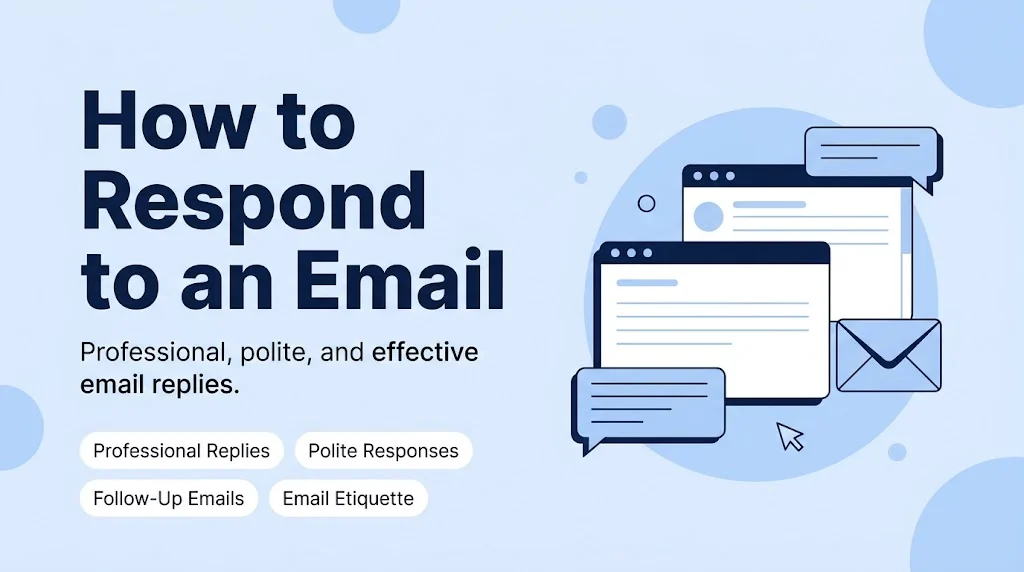
To respond to an email, acknowledge the sender, address their message, provide any necessary information, and close with an appropriate sign-off. Your reply should match the situation, whether you’re answering a work request, thanking someone, confirming details, or following up.
Top alternatives: Thank you for your email, I appreciate the update, Thanks for reaching out, I’ll look into it, Looking forward to your response
Ever open an email, read it three times, and still wonder how to reply without sounding awkward? You’re definitely not alone. Whether you’re answering your boss, responding to a client, thanking a colleague, replying to a friend, or following up on an important request, finding the right words can take longer than writing the actual email. A good response doesn’t need to be complicated. It just needs to be clear, polite, and appropriate for the situation.
Sometimes a quick “Thanks for the update” is enough, while other messages need a more thoughtful or professional answer. Knowing how to respond to an email helps you communicate confidently, avoid misunderstandings, and leave a positive impression.
Professional Responses
– “Thank you for your email. I’ll review the details and get back to you shortly.”
Example: Use this when a colleague sends information that requires your review.
Meaning: It acknowledges the email and sets an expectation for a follow-up.
– “Thank you for reaching out. I appreciate the information.”
Example: Use this when a client shares useful details.
Meaning: It communicates professionalism and appreciation.
– “I’ve received your message and will follow up as needed.”
Example: Use this when acknowledging an important workplace email.
Meaning: It confirms receipt without promising an unnecessary action.
– “Thank you for bringing this to my attention.”
Example: Use this when someone highlights an issue or concern.
Meaning: It shows that you recognize the matter’s importance.
– “I appreciate the update and will take the necessary next steps.”
Example: Use this when a manager provides new information.
Meaning: It communicates awareness and a willingness to act.
– “I’ll review the information and respond with my feedback.”
Example: Use this when someone requests your opinion on a document.
Meaning: It explains what the sender can expect next.
– “Thank you for your patience while I look into this.”
Example: Use this when a response requires additional research.
Meaning: It acknowledges the sender’s patience.
– “I’ve noted the details and will proceed accordingly.”
Example: Use this when confirming workplace instructions.
Meaning: It confirms that you understand the requested action.
– “Thank you for sharing these details. They’re very helpful.”
Example: Use this when receiving information for a project.
Meaning: It expresses appreciation for the information provided.
– “I’ll keep you informed of any further developments.”
Example: Use this when managing an ongoing task.
Meaning: It promises relevant updates when appropriate.
– “Thank you for the clarification. That answers my question.”
Example: Use this after someone explains a confusing point.
Meaning: It confirms that the issue is resolved.
– “I appreciate your prompt response.”
Example: Use this when someone replies quickly to your request.
Meaning: It recognizes their efficiency.
– “Please let me know if you need any additional information from me.”
Example: Use this when responding to a project coordinator.
Meaning: It offers further assistance.
– “Thank you for your consideration. I look forward to hearing from you.”
Example: Use this when replying about a job application or proposal.
Meaning: It expresses respect and interest in the next step.
– “I confirm receipt of your email and appreciate the update.”
Example: Use this when a formal acknowledgment is required.
Meaning: It clearly confirms that the message arrived.
Polite Responses
– “Thank you for letting me know.”
Example: Use this when someone shares an update.
Meaning: It politely acknowledges the information.
– “I appreciate you taking the time to explain.”
Example: Use this when someone provides a detailed answer.
Meaning: It shows gratitude for their effort.
– “Thanks for getting back to me.”
Example: Use this when someone replies to your earlier email.
Meaning: It acknowledges their response warmly.
– “That’s very helpful. Thank you.”
Example: Use this when receiving useful instructions.
Meaning: It expresses appreciation clearly.
– “Thank you for your understanding.”
Example: Use this when explaining a delay or change.
Meaning: It recognizes the other person’s patience.
– “I appreciate your help with this matter.”
Example: Use this when someone assists you with a problem.
Meaning: It communicates sincere gratitude.
– “Thank you for the quick clarification.”
Example: Use this when someone answers a follow-up question.
Meaning: It appreciates their timely explanation.
– “I’m grateful for your assistance.”
Example: Use this when someone helps with an important task.
Meaning: It conveys respectful appreciation.
– “Thank you for keeping me informed.”
Example: Use this when receiving regular updates.
Meaning: It recognizes their communication.
– “I understand, and I appreciate the explanation.”
Example: Use this when someone explains a decision you may not have expected.
Meaning: It acknowledges their reasoning respectfully.
– “Thanks for sharing your perspective.”
Example: Use this when responding to feedback or an opinion.
Meaning: It shows openness to another viewpoint.
– “I appreciate you bringing this up.”
Example: Use this when someone raises a concern.
Meaning: It acknowledges their willingness to communicate.
– “Thank you for your thoughtful message.”
Example: Use this when someone sends a considerate email.
Meaning: It expresses appreciation for their care.
– “Thanks for the reminder. I’ll take care of it.”
Example: Use this when someone reminds you about a task.
Meaning: It acknowledges the reminder and confirms your intended action.
– “Thank you again for your time and support.”
Example: Use this when wrapping up a helpful exchange.
Meaning: It closes the interaction on a positive note.
Funny Responses
– “Thanks for the email. My inbox and I appreciate you.”
Example: Use this with a colleague who enjoys light office humor.
Meaning: It adds a playful touch to a routine acknowledgment.
– “Received loud and clear, minus the actual loud part.”
Example: Use this when confirming an ordinary message to a friend.
Meaning: It humorously confirms that you understood.
– “Email successfully landed in my very busy brain.”
Example: Use this with a familiar coworker in a casual exchange.
Meaning: It playfully confirms receipt.
– “Thanks for the update. The inbox gods have delivered.”
Example: Use this when a long-awaited update finally arrives.
Meaning: It makes receiving the email sound amusingly dramatic.
– “Message received. Brain processing in progress.”
Example: Use this when you need time to think about a request.
Meaning: It humorously signals that you are considering the information.
– “Thanks! My reply speed is improving, allegedly.”
Example: Use this with someone who knows you sometimes reply late.
Meaning: It jokes about your email habits.
– “Consider this email officially acknowledged.”
Example: Use this when confirming a simple message to a friend.
Meaning: It turns a basic acknowledgment into a mock-formal announcement.
– “Inbox zero remains a dream, but I saw this.”
Example: Use this when joking with a colleague about a crowded inbox.
Meaning: It acknowledges the email while poking fun at email overload.
– “Thanks for keeping the email universe running.”
Example: Use this when a teammate sends an important update.
Meaning: It playfully appreciates their communication.
– “I’ve read it, processed it, and avoided replying with an emoji.”
Example: Use this with a friend who enjoys digital humor.
Meaning: It jokes about the difference between casual texts and emails.
– “Replying before my coffee gets cold. A personal record.”
Example: Use this when you respond unusually quickly.
Meaning: It celebrates your speed humorously.
– “Thanks for the message. My notification finally feels useful.”
Example: Use this when receiving helpful information.
Meaning: It jokes about constant notifications.
– “Email received. Panic level: manageable.”
Example: Use this when a request initially looks intimidating but is manageable.
Meaning: It lightens the mood around a task.
– “Thank you. I’ll add this to my collection of important emails.”
Example: Use this when joking with a colleague about record-keeping.
Meaning: It humorously acknowledges the message.
– “Your email has officially survived my inbox.”
Example: Use this when replying after a busy day.
Meaning: It jokes about the challenge of keeping up with messages.
Friendly Responses
– “Hey, thanks for reaching out!”
Example: Use this when a friend or familiar colleague emails you.
Meaning: It creates a warm, approachable tone.
– “Thanks for the update! Hope everything is going well.”
Example: Use this when someone shares personal or work news.
Meaning: It combines acknowledgment with friendly interest.
– “Great to hear from you!”
Example: Use this when someone contacts you after a while.
Meaning: It communicates genuine enthusiasm.
– “Thanks for thinking of me.”
Example: Use this when someone shares an opportunity or invitation.
Meaning: It shows appreciation for being included.
– “I appreciate the heads-up!”
Example: Use this when someone warns you about a change.
Meaning: It thanks them for keeping you informed.
– “Thanks for sending this over. Super helpful!”
Example: Use this when a teammate shares a useful resource.
Meaning: It expresses appreciation in a relaxed way.
– “That sounds good to me!”
Example: Use this when agreeing with a suggested plan.
Meaning: It confirms agreement warmly.
– “Thanks for checking in. I really appreciate it.”
Example: Use this when someone asks how you are doing.
Meaning: It acknowledges their thoughtfulness.
– “Absolutely, that works for me.”
Example: Use this when confirming a proposed arrangement.
Meaning: It communicates easy agreement.
– “Thanks for keeping me in the loop.”
Example: Use this when someone includes you in a project update.
Meaning: It appreciates being informed.
– “Sounds like a plan!”
Example: Use this when confirming an informal arrangement.
Meaning: It signals enthusiasm and agreement.
– “Good to know. Thanks for the update!”
Example: Use this when receiving information that does not require action.
Meaning: It acknowledges the message casually.
– “Thanks a bunch for your help.”
Example: Use this when someone assists you with a small task.
Meaning: It expresses friendly gratitude.
– “I’ll take a look and let you know what I think.”
Example: Use this when a friend shares a recommendation.
Meaning: It shows interest and offers a follow-up.
– “Thanks again. Talk soon!”
Example: Use this when ending a friendly email exchange.
Meaning: It closes the conversation warmly.
Formal Responses
– “Dear [Name], thank you for your email.”
Example: Use this when replying to a formal business message.
Meaning: It opens your response respectfully.
– “Thank you for your correspondence regarding this matter.”
Example: Use this when responding to an official inquiry.
Meaning: It acknowledges the message in a formal style.
– “I am writing to confirm receipt of your message.”
Example: Use this when an official acknowledgment is required.
Meaning: It clearly confirms receipt.
– “I appreciate the information you have provided.”
Example: Use this when receiving details from an organization.
Meaning: It expresses formal gratitude.
– “Please accept my thanks for your assistance.”
Example: Use this when responding to formal support.
Meaning: It communicates respectful appreciation.
– “I will review the matter and respond accordingly.”
Example: Use this when an inquiry requires further consideration.
Meaning: It explains that you will evaluate the issue.
– “Thank you for your consideration of this request.”
Example: Use this when replying about a proposal or application.
Meaning: It acknowledges the recipient’s time and attention.
– “I would appreciate any further clarification you can provide.”
Example: Use this when an official message is unclear.
Meaning: It politely requests additional information.
– “Please let me know if any further documentation is required.”
Example: Use this when submitting information for review.
Meaning: It offers to provide additional materials.
– “I acknowledge receipt of the attached documents.”
Example: Use this when confirming that files arrived.
Meaning: It formally confirms receipt of attachments.
– “Thank you for your prompt attention to this matter.”
Example: Use this when someone addresses a request quickly.
Meaning: It appreciates their timely action.
– “I look forward to your further guidance.”
Example: Use this when awaiting instructions from a supervisor.
Meaning: It respectfully invites the next steps.
– “Please do not hesitate to contact me if additional information is needed.”
Example: Use this when closing an official response.
Meaning: It invites further communication.
– “Thank you for your time and consideration.”
Example: Use this when responding to a formal decision or request.
Meaning: It expresses professional appreciation.
– “Yours sincerely, [Your Name].”
Example: Use this when signing a formal email to a named recipient in a context where this closing is customary.
Meaning: It provides a respectful formal sign-off.
Short And Simple Responses
– “Thanks for the update!”
Example: Use this when someone shares straightforward information.
Meaning: It acknowledges the message quickly.
– “Got it, thank you.”
Example: Use this when confirming instructions.
Meaning: It shows understanding and appreciation.
– “Understood. Thanks!”
Example: Use this when confirming a simple request.
Meaning: It confirms that you understand.
– “Sounds good.”
Example: Use this when agreeing with a suggestion.
Meaning: It communicates acceptance.
– “Received, thank you.”
Example: Use this when confirming receipt of a file or message.
Meaning: It acknowledges delivery.
– “Will do, thanks.”
Example: Use this when someone assigns you a straightforward task.
Meaning: It confirms your intention to act.
– “Thanks for letting me know.”
Example: Use this when receiving a routine update.
Meaning: It politely acknowledges the information.
– “That works for me.”
Example: Use this when agreeing on a meeting time.
Meaning: It confirms that the arrangement suits you.
– “Absolutely!”
Example: Use this when agreeing to a friendly request.
Meaning: It conveys enthusiastic agreement.
– “Noted, thank you.”
Example: Use this when acknowledging a brief workplace instruction.
Meaning: It confirms that you have taken note of the information.
– “Thanks, I appreciate it.”
Example: Use this when someone provides assistance.
Meaning: It expresses concise gratitude.
– “I’ll take care of it.”
Example: Use this when accepting responsibility for a task.
Meaning: It communicates ownership.
– “Thanks for the heads-up.”
Example: Use this when someone alerts you to a change.
Meaning: It appreciates the advance notice.
– “Perfect, thank you.”
Example: Use this when a question or issue has been resolved.
Meaning: It communicates satisfaction.
– “Looking forward to it!”
Example: Use this when confirming an upcoming event.
Meaning: It expresses positive anticipation.
Responses To A Work Email
– “Thanks for the update. I’ll adjust my priorities accordingly.”
Example: Use this when your manager changes project priorities.
Meaning: It confirms that you will account for the update.
– “I’ve reviewed the request and will begin working on it.”
Example: Use this when receiving a new assignment.
Meaning: It communicates readiness to proceed.
– “Could you clarify the expected deadline?”
Example: Use this when a task arrives without a due date.
Meaning: It requests information needed for planning.
– “I’ll share a progress update by [date].”
Example: Use this when agreeing to report on a task.
Meaning: It establishes a clear follow-up point.
– “Thank you for the feedback. I’ll incorporate it into the next draft.”
Example: Use this when a supervisor reviews your work.
Meaning: It acknowledges feedback and explains your next action.
– “I’ve completed the requested changes. Please let me know if anything else is needed.”
Example: Use this when submitting a revised document.
Meaning: It confirms completion and invites further feedback.
– “I’m working on this and will keep you updated.”
Example: Use this when a task is underway.
Meaning: It communicates progress without overpromising.
– “Could we schedule a brief meeting to discuss the details?”
Example: Use this when an email raises several complex questions.
Meaning: It suggests a conversation to clarify the issue.
– “I’ve attached the requested file for your review.”
Example: Use this when sending a document to a coworker.
Meaning: It points the recipient to the attachment.
– “I agree with the proposed approach.”
Example: Use this when supporting a team decision.
Meaning: It communicates agreement directly.
– “I have a slightly different perspective I’d like to share.”
Example: Use this when respectfully disagreeing with a proposal.
Meaning: It opens space for an alternative viewpoint.
– “Could you confirm which version we should use?”
Example: Use this when multiple document versions exist.
Meaning: It prevents confusion and unnecessary rework.
– “I may need additional time to complete this accurately.”
Example: Use this when a deadline is difficult to meet.
Meaning: It communicates a timing concern honestly.
– “Thanks for flagging this. I’ll investigate and report back.”
Example: Use this when a teammate identifies a problem.
Meaning: It acknowledges the issue and describes your intended response.
– “The task is complete, and the final version is ready for review.”
Example: Use this when submitting finished work.
Meaning: It communicates completion and the next step.
Responses To An Email From Your Boss
– “Thank you for the guidance. I’ll follow these steps.”
Example: Use this when your manager explains how to complete a task.
Meaning: It acknowledges the instructions and confirms your plan.
– “Understood. I’ll prioritize this accordingly.”
Example: Use this when your boss identifies an urgent task.
Meaning: It shows that you understand the priority.
– “Thanks for the feedback. I’ll work on those improvements.”
Example: Use this when receiving constructive criticism.
Meaning: It demonstrates openness to improvement.
– “I’ll have this ready by [date].”
Example: Use this when agreeing to a realistic deadline.
Meaning: It sets a clear delivery expectation.
– “Could you clarify the main priority so I can proceed correctly?”
Example: Use this when several tasks compete for your attention.
Meaning: It requests direction before committing resources.
– “Thank you for the opportunity. I’m happy to take this on.”
Example: Use this when assigned a new responsibility.
Meaning: It expresses appreciation and willingness.
– “I’ve completed the task and shared the results below.”
Example: Use this when reporting finished work.
Meaning: It provides a clear status update.
– “I wanted to flag a potential issue before proceeding.”
Example: Use this when identifying a risk in an assignment.
Meaning: It raises a concern before it becomes a larger problem.
– “I’ll review this and let you know if I have any questions.”
Example: Use this when receiving a new project brief.
Meaning: It confirms that you will review the details.
– “Thank you for your support and direction.”
Example: Use this after receiving useful guidance.
Meaning: It shows appreciation for your manager’s help.
– “I can complete this by [date], provided the remaining information arrives on time.”
Example: Use this when your deadline depends on another person.
Meaning: It sets a realistic expectation with a clear condition.
– “Would you prefer a brief summary or a detailed report?”
Example: Use this when the expected format is unclear.
Meaning: It seeks clarification to deliver the right output.
– “I’ll make the requested revisions and send an updated version.”
Example: Use this when your boss requests changes.
Meaning: It confirms the planned revision.
– “I appreciate you bringing this to my attention.”
Example: Use this when your boss points out an important issue.
Meaning: It acknowledges their feedback respectfully.
– “I’ll keep you posted as the work progresses.”
Example: Use this when managing a longer assignment.
Meaning: It promises appropriate progress updates.
Responses To A Client Email
– “Thank you for your inquiry. I’d be happy to assist.”
Example: Use this when a potential customer contacts your business.
Meaning: It welcomes the inquiry professionally.
– “Thank you for sharing your requirements.”
Example: Use this when a client explains what they need.
Meaning: It acknowledges their project details.
– “I’ve received your request and will review it carefully.”
Example: Use this when a client asks for a proposal.
Meaning: It confirms receipt and signals a thoughtful review.
– “Please find the requested information below.”
Example: Use this when answering a client’s questions.
Meaning: It introduces the information they requested.
– “I’d be happy to arrange a call to discuss your needs.”
Example: Use this when a client’s request needs more detailed discussion.
Meaning: It offers a practical next step.
– “Thank you for your patience while we resolve this issue.”
Example: Use this when a client is waiting for a solution.
Meaning: It recognizes the delay and their patience.
– “I understand your concern and will look into it.”
Example: Use this when a client reports a problem.
Meaning: It acknowledges the concern and commits to reviewing it.
– “Could you share a few additional details so I can assist more effectively?”
Example: Use this when the client’s request lacks key information.
Meaning: It asks for the details needed to help.
– “I’ve attached the proposal for your consideration.”
Example: Use this when sending a business proposal.
Meaning: It directs the client to the attached document.
– “Thank you for your feedback. We appreciate the opportunity to improve.”
Example: Use this when a client shares constructive criticism.
Meaning: It responds positively to feedback.
– “We can offer the following options based on your requirements.”
Example: Use this when presenting solutions to a client.
Meaning: It introduces possible next steps.
– “I’ll confirm the details and follow up by [date].”
Example: Use this when you need to verify a client’s request.
Meaning: It sets an expectation for a response.
– “Please let me know if you have any questions about the proposal.”
Example: Use this after sending a quote or proposal.
Meaning: It invites further discussion.
– “Thank you for choosing to work with us.”
Example: Use this when a client approves a project.
Meaning: It expresses appreciation for their business.
– “We look forward to working with you.”
Example: Use this when beginning a new client relationship.
Meaning: It conveys enthusiasm about the collaboration.
Responses To A Thank-You Email
– “You’re very welcome!”
Example: Use this when someone thanks you for a small favor.
Meaning: It warmly acknowledges their gratitude.
– “Happy to help!”
Example: Use this when you assisted a colleague.
Meaning: It shows that helping them was no trouble.
– “My pleasure.”
Example: Use this when replying to a formal thank-you.
Meaning: It communicates courteous appreciation.
– “I’m glad I could help.”
Example: Use this when your assistance solved a problem.
Meaning: It expresses satisfaction that you were useful.
– “Of course. Anytime!”
Example: Use this when someone thanks you for friendly support.
Meaning: It conveys warmth and willingness to help again.
– “You’re welcome, and thank you for your kind words.”
Example: Use this when someone sends a thoughtful appreciation email.
Meaning: It acknowledges both the thanks and the compliment.
– “I’m happy everything worked out.”
Example: Use this when your help contributed to a positive outcome.
Meaning: It expresses relief and happiness.
– “It was no trouble at all.”
Example: Use this when someone apologizes for asking for help.
Meaning: It reassures them that the assistance was easy to provide.
– “I’m glad the information was useful.”
Example: Use this when someone thanks you for sharing resources.
Meaning: It confirms that the help served its purpose.
– “Thanks for taking the time to say that.”
Example: Use this when receiving a thoughtful message of appreciation.
Meaning: It appreciates the sender’s acknowledgment.
– “I appreciate your kind message.”
Example: Use this when someone thanks you formally.
Meaning: It responds with reciprocal gratitude.
– “Always glad to support the team.”
Example: Use this when a coworker thanks you for contributing to a project.
Meaning: It emphasizes teamwork.
– “I’m happy we could get it sorted out.”
Example: Use this after resolving an issue together.
Meaning: It recognizes the successful outcome.
– “You’re welcome. Let me know if anything else comes up.”
Example: Use this when someone may need further help.
Meaning: It offers continued assistance.
– “It was great working through this with you.”
Example: Use this when wrapping up a shared task.
Meaning: It appreciates the collaboration.
Responses When You Need More Time
– “Thank you for your email. I’ll need a little more time to review everything.”
Example: Use this when a request requires careful consideration.
Meaning: It communicates the delay politely.
– “I’m reviewing the details and will respond by [date].”
Example: Use this when you can provide a realistic follow-up date.
Meaning: It establishes a clear timeline.
– “I appreciate your patience while I gather the necessary information.”
Example: Use this when you need information from several sources.
Meaning: It acknowledges the sender’s patience.
– “Could I get back to you tomorrow with a complete answer?”
Example: Use this when you need an extra day to respond.
Meaning: It requests a specific extension.
– “I want to make sure I give you an accurate response.”
Example: Use this when the question requires research.
Meaning: It explains why you are taking additional time.
– “I’m still working through the details and will update you soon.”
Example: Use this when a task is not yet finished.
Meaning: It communicates progress without claiming completion.
– “Thank you for following up. I haven’t forgotten about your request.”
Example: Use this when someone checks on a pending matter.
Meaning: It reassures them that the request remains on your radar.
– “I need to confirm a few details before I can answer fully.”
Example: Use this when some information remains uncertain.
Meaning: It explains the need for verification.
– “Would it be alright if I responded by the end of the week?”
Example: Use this when requesting additional time for a nonurgent task.
Meaning: It asks for a reasonable extension.
– “I’m waiting on one final detail before confirming.”
Example: Use this when your answer depends on another person’s input.
Meaning: It explains what is delaying the response.
– “I’ll send you an update as soon as I have a confirmed answer.”
Example: Use this when the outcome depends on verification.
Meaning: It promises an update once reliable information is available.
– “I appreciate the deadline. I’ll let you know promptly if anything changes.”
Example: Use this when working toward a specified due date.
Meaning: It acknowledges the deadline and encourages transparency.
– “I want to give this the attention it deserves.”
Example: Use this when a detailed request cannot be answered immediately.
Meaning: It explains the need for careful consideration.
– “Thank you for your patience. I’ll follow up once my review is complete.”
Example: Use this when reviewing a lengthy document.
Meaning: It communicates the intended next step.
– “I’ll confirm the timeline once I’ve assessed the remaining work.”
Example: Use this when the completion date is not yet certain.
Meaning: It avoids promising a deadline before you can estimate it.
Responses When You Disagree With An Email
– “Thank you for sharing your perspective. I see this a little differently.”
Example: Use this when you disagree with a colleague’s suggestion.
Meaning: It expresses disagreement respectfully.
– “I understand your point, although I have a different view.”
Example: Use this when responding to an opposing opinion.
Meaning: It recognizes the other person’s position while maintaining yours.
– “I appreciate the suggestion. Could we also consider another approach?”
Example: Use this when proposing an alternative solution.
Meaning: It invites collaboration rather than confrontation.
– “I agree with part of your assessment, but I have one concern.”
Example: Use this when you support the general idea but see a potential problem.
Meaning: It balances agreement with constructive disagreement.
– “Based on the information available, I would recommend a different option.”
Example: Use this when the facts support an alternative.
Meaning: It presents your position as reasoned and practical.
– “Could we revisit this point before making a final decision?”
Example: Use this when a decision seems premature.
Meaning: It requests further discussion.
– “I see the benefits, but there may be a few drawbacks to consider.”
Example: Use this when evaluating a proposal.
Meaning: It raises concerns without dismissing the idea.
– “Thank you for explaining your reasoning. Here’s my concern.”
Example: Use this when responding to a detailed argument.
Meaning: It acknowledges the explanation before stating your objection.
– “I think we may be working from different assumptions.”
Example: Use this when two people interpret the situation differently.
Meaning: It suggests clarifying the underlying disagreement.
– “Could you help me understand how you reached that conclusion?”
Example: Use this when a decision seems unclear.
Meaning: It asks for reasoning without sounding accusatory.
– “I’d suggest reviewing the available evidence before deciding.”
Example: Use this when the discussion lacks sufficient information.
Meaning: It encourages an evidence-based decision.
– “I respect your view, but I can’t fully agree.”
Example: Use this when you need to state a firm disagreement politely.
Meaning: It preserves respect while being honest.
– “Perhaps there’s a middle ground that addresses both concerns.”
Example: Use this when negotiating a shared solution.
Meaning: It encourages compromise.
– “I would be more comfortable proceeding after we clarify this issue.”
Example: Use this when an unresolved concern affects your decision.
Meaning: It sets a reasonable condition before moving forward.
– “Let’s focus on the outcome we’re both trying to achieve.”
Example: Use this when an email exchange becomes tense.
Meaning: It redirects the discussion toward a shared goal.
Responses To A Follow-Up Email
– “Thank you for following up. I appreciate the reminder.”
Example: Use this when someone checks on a pending request.
Meaning: It acknowledges the follow-up politely.
– “Apologies for the delay. I’m reviewing this now.”
Example: Use this when you have not responded as quickly as expected.
Meaning: It recognizes the delay and communicates progress.
– “Thanks for checking in. I’ll send an update by [date].”
Example: Use this when you can provide a realistic response deadline.
Meaning: It sets a clear expectation.
– “I appreciate your patience. Here’s the current status.”
Example: Use this when explaining where a task stands.
Meaning: It acknowledges the wait and provides an update.
– “Your message is on my radar, and I’ll follow up shortly.”
Example: Use this when a request is pending.
Meaning: It reassures the sender that you are aware of it.
– “Thanks for the reminder. I’ve been gathering the remaining details.”
Example: Use this when your response depends on additional information.
Meaning: It explains the reason for the delay.
– “I haven’t finalized this yet, but I’ll update you once I do.”
Example: Use this when a decision is still in progress.
Meaning: It provides an honest status update.
– “Apologies for missing your earlier email.”
Example: Use this when you overlooked a message.
Meaning: It takes responsibility for the missed communication.
– “Thank you for bringing this back to my attention.”
Example: Use this when a follow-up helps you revisit a pending matter.
Meaning: It acknowledges the reminder.
– “I’m still waiting for confirmation and will let you know once it arrives.”
Example: Use this when a third party has not replied.
Meaning: It explains the dependency.
– “Thanks for checking in. The next step is [action].”
Example: Use this when you know exactly what happens next.
Meaning: It provides a useful progress update.
– “I understand the timing is important, and I’m working to resolve this.”
Example: Use this when the sender is waiting on a time-sensitive issue.
Meaning: It recognizes urgency and communicates action.
– “I’ll prioritize the outstanding items and update you.”
Example: Use this when several tasks remain incomplete.
Meaning: It signals renewed attention.
– “Thank you for your patience. Could you confirm whether the request is still current?”
Example: Use this when a delayed request may have changed.
Meaning: It checks that the original need remains relevant.
– “I’ve now completed the review. Please see my response below.”
Example: Use this when replying after a delay.
Meaning: It provides a clear transition to your answer.
FAQs
How Do You Respond To An Email Professionally?
Start with a suitable greeting, acknowledge the sender’s message, answer their questions, explain any next steps, and close with a professional sign-off.
What Is The Best Way To Reply To A Thank-You Email?
A simple response such as “You’re very welcome” or “Happy to help” usually works well. For formal business communication, “My pleasure” is another appropriate choice.
How Do You Respond To An Email When You Don’t Know What To Say?
Acknowledge the message and ask for clarification if needed. For example, “Thank you for sharing this. Could you clarify what you’d like me to do next?”
How Do You Reply To An Email From Your Boss?
Be respectful, direct, and clear about what you understand or plan to do. If the email contains instructions, acknowledge them and mention any important deadlines or questions.
Is It Okay To Use Humor In An Email?
Yes, when you know the recipient and the situation is appropriate. For clients, senior managers, or sensitive topics, a neutral professional tone is usually safer.
Conclusion
A great email response does more than answer a question. It shows that you value the sender’s time, understand their message, and can communicate clearly. Whether you’re replying to your boss, helping a client, thanking a colleague, or answering a casual message, the right words can make the exchange smoother and more productive. You don’t need to make every reply sound perfect or overly formal.
Choose wording that fits your relationship with the recipient, the purpose of the message, and the action required. Save these examples for your next busy inbox day, adapt them to your own voice, and share your favorite replies with anyone who needs a little email-writing inspiration.
Discover More Related Articles:
- How to Respond to Tell Me About Yourself | In Any Situation 2026
- How to Respond to RSVP | for Any Situation In 2026

Jennifer Wilson is an experienced writer and content creator with over 20 years of expertise in digital publishing, lifestyle, and informative content. Holding a degree in English Literature, she contributes to Responary.Com, where she shares engaging, well-researched articles that help readers stay informed and inspired.