Quick Answer
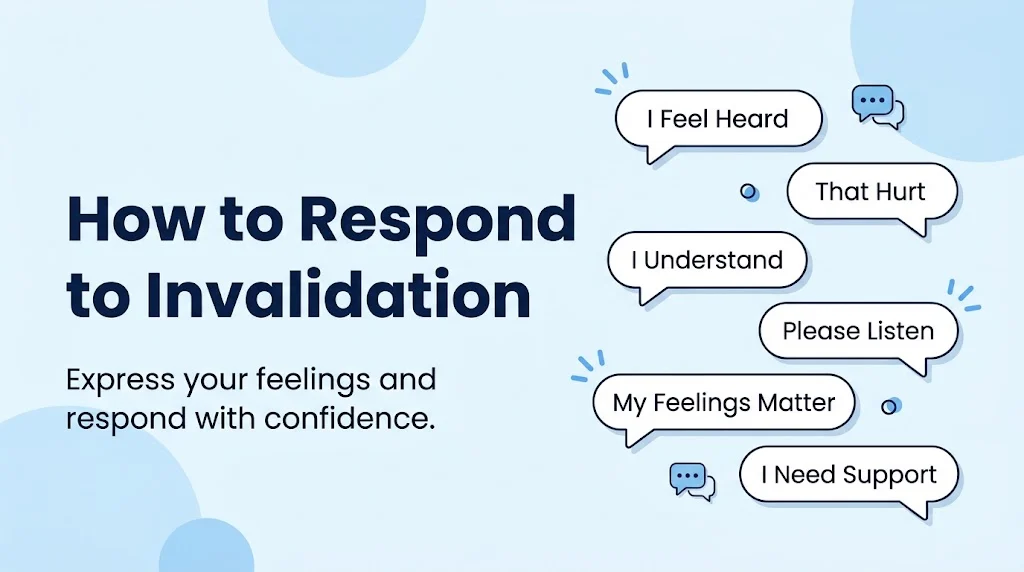
The best response to invalidation depends on how someone dismisses your feelings and whether you want to stay calm, set boundaries, or stand up for yourself. Try these replies: My feelings are valid, I need you to listen instead of dismissing me, You don’t have to agree to understand, Please don’t minimize what I’m feeling, I deserve to be heard too.
Ever shared something personal with someone, only to hear “You’re overreacting,” “It’s not that serious,” or “You’re too sensitive”? Yeah, that feeling when someone dismisses your emotions instead of listening can be frustrating. Knowing how to respond to invalidation can help you protect your peace, communicate clearly, and avoid turning every conversation into an emotional debate.
Whether it’s a partner brushing off your concerns, a friend minimizing your feelings, a family member refusing to understand, or a coworker dismissing your experience, the right words can make a difference. Sometimes you need a calm response, sometimes a firm boundary, and occasionally a little sass. The goal isn’t to win an argument or prove your emotions are real. It’s to express yourself confidently without losing your voice, your dignity, or your peace.
Calm Responses
– I understand you see it differently, but this is how I feel.
Use this when someone disagrees with your emotional experience.
Meaning: You are acknowledging their perspective without abandoning your own.
– I’m not asking you to agree, just to listen.
Use this when someone keeps arguing instead of hearing you.
Meaning: You are requesting understanding rather than approval.
– Can we talk about this without dismissing my feelings?
Use this when a conversation starts becoming frustrating.
Meaning: You are inviting respectful communication.
– I want to explain what I’m feeling without being judged.
Use this when you need emotional safety.
Meaning: You are asking for an open-minded conversation.
– Let’s slow down and actually hear each other.
Use this when both people are getting defensive.
Meaning: You are encouraging a calmer discussion.
– My feelings aren’t an argument I’m trying to win.
Use this when someone treats your emotions like a debate.
Meaning: You are explaining that emotional understanding matters more than being right.
– I’m sharing my experience, not accusing you.
Use this when someone becomes defensive after you express hurt.
Meaning: You are clarifying your intention to communicate rather than attack.
– Please let me finish before responding.
Use this when someone interrupts or dismisses your explanation.
Meaning: You are requesting space to express yourself fully.
– I think we’re missing each other’s point right now.
Use this when the conversation feels unproductive.
Meaning: You are recognizing a communication gap without blaming anyone.
– I need understanding more than advice right now.
Use this when someone immediately tries to fix or criticize your feelings.
Meaning: You are communicating what kind of support you need.
– Can you hear me out before deciding how I should feel?
Use this when someone tells you your emotions are wrong.
Meaning: You are asking them to listen without making assumptions.
– I’m trying to communicate, not create a conflict.
Use this when someone assumes your honesty means an argument.
Meaning: You are expressing a desire for peaceful communication.
– I appreciate your perspective, but mine matters too.
Use this when someone dominates the conversation.
Meaning: You are reminding them that both perspectives deserve consideration.
– Let’s focus on understanding instead of dismissing each other.
Use this when a conversation becomes emotionally exhausting.
Meaning: You are redirecting the discussion toward mutual respect.
– I think we can disagree without invalidating each other.
Use this when someone confuses disagreement with dismissal.
Meaning: You are promoting respectful differences.
Assertive Responses
– My feelings are valid, even if you don’t understand them.
Use this when someone questions whether you should feel upset.
Meaning: You are confidently affirming your emotional experience.
– I know what I experienced, and I won’t pretend otherwise.
Use this when someone denies your personal experience.
Meaning: You are standing firmly behind your reality.
– You don’t get to decide whether something hurt me.
Use this when someone tells you their behavior shouldn’t have affected you.
Meaning: You are asserting ownership of your emotions.
– I’m allowed to feel differently than you do.
Use this when someone expects you to share their emotional perspective.
Meaning: You are defending your right to individual feelings.
– I won’t minimize my feelings just to make this conversation easier.
Use this when someone pressures you to stay quiet.
Meaning: You are refusing to sacrifice emotional honesty for convenience.
– Please stop telling me how I should feel.
Use this when someone repeatedly dictates your emotional response.
Meaning: You are setting a clear communication boundary.
– I deserve to be heard without being dismissed.
Use this when someone ignores your concerns.
Meaning: You are asserting your need for respectful attention.
– My emotions don’t need your permission to exist.
Use this when someone questions the legitimacy of your feelings.
Meaning: You are affirming your emotional independence.
– I can respect your opinion without accepting your judgment of my feelings.
Use this when someone criticizes your emotional reaction.
Meaning: You are separating respect from agreement.
– I’m not going to argue about whether my feelings are real.
Use this when someone repeatedly challenges your emotional experience.
Meaning: You are refusing an unnecessary debate.
– You can disagree with me without making me feel ridiculous.
Use this when someone mocks your concerns.
Meaning: You are asking for respectful disagreement.
– I know my experience matters, and I’m standing by that.
Use this when someone tries to make you doubt yourself.
Meaning: You are expressing confidence in your own perspective.
– I’m not asking for permission to be upset.
Use this when someone treats your emotions as unreasonable.
Meaning: You are asserting emotional autonomy.
– I won’t accept being made to feel guilty for expressing myself.
Use this when someone turns your honesty into a personal fault.
Meaning: You are protecting yourself from emotional blame.
– My perspective deserves the same respect as yours.
Use this when someone acts as though their feelings matter more.
Meaning: You are asking for equal consideration.
Boundary-Setting Responses
– I’m not continuing this conversation if my feelings keep getting dismissed.
Use this when someone repeatedly invalidates you.
Meaning: You are setting a limit on disrespectful communication.
– We can talk when you’re ready to listen respectfully.
Use this when the discussion has become unproductive.
Meaning: You are offering another opportunity for healthier communication.
– Please don’t speak to me that way.
Use this when someone mocks or belittles your emotions.
Meaning: You are clearly communicating unacceptable behavior.
– I’m taking a break because this conversation isn’t helping.
Use this when you feel overwhelmed or unheard.
Meaning: You are prioritizing emotional regulation over conflict.
– I need space from conversations that make me question myself.
Use this when repeated dismissal leaves you emotionally drained.
Meaning: You are protecting your emotional wellbeing.
– If you can’t respect my feelings, we need to pause this discussion.
Use this when someone refuses to communicate respectfully.
Meaning: You are making respect a condition for continuing.
– I’m happy to talk, but not if I’m being belittled.
Use this when someone uses insults or condescending language.
Meaning: You are allowing discussion while rejecting disrespect.
– This conversation needs to be respectful for me to participate.
Use this in personal or professional disagreements.
Meaning: You are establishing expectations for communication.
– I won’t keep explaining myself to someone who refuses to listen.
Use this when your concerns have repeatedly been ignored.
Meaning: You are choosing not to exhaust yourself seeking understanding.
– Let’s revisit this when we’re both willing to listen.
Use this when emotions are running high.
Meaning: You are postponing the discussion until communication improves.
– I’m stepping away, not because I’m wrong, but because I need peace.
Use this when you need to disengage from an exhausting argument.
Meaning: You are choosing emotional peace over unnecessary conflict.
– I need you to respect this boundary.
Use this when someone continues crossing a clearly stated limit.
Meaning: You are reinforcing your expectations for respectful treatment.
– My emotional wellbeing matters more than winning this argument.
Use this when a disagreement becomes emotionally draining.
Meaning: You are prioritizing wellbeing over proving a point.
– I’m not available for conversations that turn my feelings against me.
Use this when someone uses your emotions to criticize or shame you.
Meaning: You are refusing emotionally harmful communication.
– We can disagree, but disrespect is not part of the deal.
Use this when someone repeatedly crosses conversational boundaries.
Meaning: You are allowing differences while firmly rejecting disrespect.
Funny Responses
– Oh, I didn’t realize my feelings needed your approval.
Use this with someone who acts like your emotions require permission.
Meaning: You are sarcastically highlighting their unnecessary judgment.
– Breaking news: I’m still allowed to have emotions.
Use this when someone repeatedly tells you to calm down.
Meaning: You are humorously reminding them that emotions are normal.
– My feelings called, and they said they’re staying.
Use this with a friend who jokingly dismisses your emotions.
Meaning: You are playfully refusing to pretend you feel nothing.
– Sorry, my emotions didn’t receive your memo.
Use this when someone expects you to stop feeling something immediately.
Meaning: You are joking about the unrealistic expectation to control emotions on command.
– I’ll let my feelings know they’re apparently inconvenient.
Use this when someone acts annoyed by your emotional honesty.
Meaning: You are sarcastically pointing out their discomfort with your emotions.
– My emotional subscription is still active, thanks.
Use this when someone jokes that you’re too emotional.
Meaning: You are playfully defending your right to feel.
– Feelings aren’t a software update I can uninstall.
Use this with someone who expects instant emotional control.
Meaning: You are joking about the impossibility of simply deleting emotions.
– I didn’t know we were holding auditions for Emotion Police.
Use this when someone tries to regulate every emotional reaction.
Meaning: You are humorously criticizing their controlling attitude.
– My feelings are not taking customer complaints today.
Use this when you want a cheeky response.
Meaning: You are playfully refusing criticism of your emotional experience.
– Thanks for the feedback, Emotion Manager.
Use this with someone who constantly tells you how to feel.
Meaning: You are teasing them for acting like an emotional authority.
– Apparently, my feelings missed the group vote.
Use this when someone assumes everyone should feel the same.
Meaning: You are joking about having an independent emotional perspective.
– I would uninstall my feelings, but the app won’t let me.
Use this when you want a funny response to emotional criticism.
Meaning: You are humorously acknowledging that emotions cannot simply be switched off.
– My emotions are not on airplane mode.
Use this when someone expects you to stop reacting.
Meaning: You are jokingly reminding them that feelings remain active.
– Sorry, I forgot feelings were against the community guidelines.
Use this with a friend who understands sarcastic humor.
Meaning: You are playfully pointing out how unreasonable emotional censorship sounds.
– I’ll schedule my feelings for a more convenient time.
Use this when someone expects you to hide your emotions.
Meaning: You are sarcastically challenging the idea that feelings should follow someone else’s schedule.
Short And Direct Responses
– That hurt, actually.
Use this when you want to express the impact of someone’s words immediately.
Meaning: You are directly communicating emotional hurt.
– Please hear me out.
Use this when someone interrupts your explanation.
Meaning: You are asking for attention and understanding.
– I don’t feel understood right now.
Use this when the conversation leaves you feeling dismissed.
Meaning: You are naming the emotional disconnect.
– That’s not what I meant.
Use this when someone misinterprets your feelings.
Meaning: You are correcting their understanding.
– My feelings matter too.
Use this when someone focuses only on their perspective.
Meaning: You are reminding them that your emotions deserve attention.
– Please don’t minimize this.
Use this when someone makes your concern seem insignificant.
Meaning: You are asking them to take your experience seriously.
– I need empathy, not criticism.
Use this when someone responds to vulnerability with judgment.
Meaning: You are expressing your need for emotional support.
– You don’t have to agree with me.
Use this when someone thinks understanding means agreement.
Meaning: You are separating empathy from approval.
– I’m allowed to feel this way.
Use this when someone questions your emotional reaction.
Meaning: You are affirming your right to your feelings.
– That doesn’t make my experience less real.
Use this when someone dismisses something they haven’t experienced.
Meaning: You are defending the validity of your personal experience.
– I need you to listen, not dismiss me.
Use this when you want to make your expectations clear.
Meaning: You are requesting genuine attention.
– Let’s not make my feelings the problem.
Use this when the discussion shifts toward criticizing your emotions.
Meaning: You are redirecting attention to the actual concern.
– I’m trying to be honest with you.
Use this when someone reacts negatively to your vulnerability.
Meaning: You are explaining that openness is your intention.
– That response makes me feel unheard.
Use this when someone brushes aside your explanation.
Meaning: You are identifying the impact of their response.
– I think you misunderstood what I’m expressing.
Use this when someone responds to the wrong emotional point.
Meaning: You are inviting clarification without escalating.
Responses to Gaslighting or Denial
– I remember what happened, and I trust my experience.
Use this when someone repeatedly denies an event you remember.
Meaning: You are maintaining confidence in your recollection.
– We may remember things differently, but my experience still matters.
Use this when someone disputes your version of events.
Meaning: You are acknowledging disagreement without erasing your perspective.
– Please don’t tell me something didn’t happen when I experienced it.
Use this when someone dismisses an event you personally experienced.
Meaning: You are asking them to stop denying your reality.
– I know what I felt in that moment.
Use this when someone questions your emotional reaction.
Meaning: You are asserting confidence in your own feelings.
– Your disagreement doesn’t automatically make my memory wrong.
Use this when someone insists their recollection is the only correct one.
Meaning: You are challenging the assumption that disagreement proves you are mistaken.
– I don’t need to prove every detail to explain how it affected me.
Use this when someone demands evidence before acknowledging your hurt.
Meaning: You are distinguishing emotional impact from factual debate.
– Let’s focus on what happened instead of questioning my sanity.
Use this when someone makes personal attacks during a disagreement.
Meaning: You are redirecting the discussion away from harmful accusations.
– I can reconsider details without dismissing my entire experience.
Use this when you want to remain open-minded without surrendering your perspective.
Meaning: You are balancing reflection with self-trust.
– I don’t appreciate having my reality repeatedly questioned.
Use this when someone persistently undermines your recollection.
Meaning: You are identifying a pattern that feels disrespectful.
– We don’t have to agree on every detail for you to acknowledge my feelings.
Use this when someone refuses empathy because of a disagreement.
Meaning: You are explaining that emotional acknowledgment can exist without total agreement.
– I am willing to discuss facts, but not personal attacks.
Use this when a conversation becomes insulting.
Meaning: You are setting a boundary around respectful discussion.
– Please stop turning my concerns into questions about my character.
Use this when someone labels you instead of addressing the issue.
Meaning: You are asking them to discuss the concern rather than criticize you.
– I can hear your perspective without erasing my own.
Use this when someone pressures you to accept their interpretation.
Meaning: You are maintaining emotional independence.
– I won’t pretend something was okay just because you see it differently.
Use this when someone minimizes hurtful behavior.
Meaning: You are refusing to deny the impact of an experience.
– I deserve a conversation that doesn’t make me doubt myself.
Use this when repeated denial leaves you confused or distressed.
Meaning: You are expressing a need for emotionally respectful communication.
Responses to Invalidation in Relationships
– I need my partner to understand my feelings, not dismiss them.
Use this when a romantic partner brushes off your concerns.
Meaning: You are expressing the emotional support you expect in a relationship.
– You don’t have to feel the same way to care about how I feel.
Use this when your partner struggles to empathize.
Meaning: You are separating emotional agreement from emotional care.
– When you dismiss my feelings, I feel more distant from you.
Use this when explaining how invalidation affects closeness.
Meaning: You are communicating the relationship impact of their behavior.
– I want us to feel safe sharing difficult emotions.
Use this when emotional conversations become uncomfortable.
Meaning: You are expressing a desire for mutual vulnerability.
– Please don’t make me regret opening up to you.
Use this when your vulnerability is met with criticism.
Meaning: You are asking for emotional care and trust.
– I need reassurance, not a reminder that I’m overthinking.
Use this when your partner repeatedly minimizes your concerns.
Meaning: You are explaining what support would actually help.
– Can you try understanding my side before defending yours?
Use this when every emotional conversation becomes an argument.
Meaning: You are asking for empathy before defensiveness.
– I want to feel heard, especially by someone I love.
Use this when emotional connection feels missing.
Meaning: You are expressing the importance of listening in intimacy.
– My feelings shouldn’t have to compete with your perspective.
Use this when your partner makes every discussion about themselves.
Meaning: You are asking for equal emotional consideration.
– I’m sharing this because our relationship matters to me.
Use this when someone mistakes vulnerability for criticism.
Meaning: You are explaining that honesty comes from caring.
– I want us to solve the issue without dismissing the hurt.
Use this when a partner focuses only on fixing the problem.
Meaning: You are emphasizing emotional acknowledgment alongside solutions.
– You can love me and still need to learn how to hear me.
Use this when someone struggles with emotional communication.
Meaning: You are encouraging growth without denying affection.
– I don’t want to fight. I want to feel understood.
Use this when the conversation becomes tense.
Meaning: You are clarifying your emotional goal.
– Being close to me means making room for my feelings too.
Use this when you need to explain emotional reciprocity.
Meaning: You are asking for mutual care and openness.
– I hope we can make emotional honesty feel safe for both of us.
Use this when you want to repair communication.
Meaning: You are encouraging a healthier relationship dynamic.
Responses to Invalidation From Friends and Family
– I know you mean well, but that comment hurt me.
Use this when someone close unintentionally dismisses your feelings.
Meaning: You are acknowledging their intention while explaining the impact.
– Please don’t compare my experience to someone else’s.
Use this when family or friends tell you others have it worse.
Meaning: You are asking them to respect your individual experience.
– Just because you’ve handled it differently doesn’t mean I should.
Use this when someone compares your emotional response with theirs.
Meaning: You are affirming that people respond differently to situations.
– I need support from you, not another lecture.
Use this when someone responds to vulnerability with criticism.
Meaning: You are clearly expressing your need for empathy.
– You may not understand, but I hope you can respect it.
Use this when someone close doesn’t relate to your feelings.
Meaning: You are requesting respect despite differences.
– Please don’t turn this into a competition about who has it worse.
Use this when someone compares hardships.
Meaning: You are keeping the conversation focused on your experience.
– I came to you because I trusted you with this.
Use this when someone dismisses a personal disclosure.
Meaning: You are reminding them that vulnerability requires trust.
– I need you to be my support system, not my critic.
Use this when a friend or relative repeatedly judges you.
Meaning: You are asking for supportive rather than critical communication.
– Our experiences are different, and that’s okay.
Use this when someone expects you to react exactly like them.
Meaning: You are acknowledging differences without conflict.
– I don’t need you to fix it. I just need you to understand.
Use this when family members jump straight into advice.
Meaning: You are asking for emotional presence instead of solutions.
– Please take my concerns seriously, even if they seem small to you.
Use this when someone minimizes your worries.
Meaning: You are asking for consideration without comparison.
– I love you, but I don’t agree with how you’re treating my feelings.
Use this when addressing a close family member respectfully.
Meaning: You are maintaining affection while expressing disagreement.
– I wish you would listen before telling me what I should do.
Use this when someone gives unsolicited advice.
Meaning: You are requesting understanding before recommendations.
– Being family doesn’t mean my feelings should be ignored.
Use this when relatives assume emotional concerns are unimportant.
Meaning: You are affirming that family relationships still require respect.
– I want us to understand each other better, not hurt each other more.
Use this when a family disagreement becomes emotional.
Meaning: You are expressing a desire for healthier communication.
Responses to Invalidation at Work
– I’d appreciate it if you took my concern seriously.
Use this when a coworker dismisses a workplace issue.
Meaning: You are professionally requesting respectful consideration.
– I understand the priority, but this concern still deserves attention.
Use this when a manager minimizes your feedback.
Meaning: You are acknowledging workplace priorities while maintaining your point.
– I’m raising this because I believe it matters.
Use this when someone questions why you brought up an issue.
Meaning: You are explaining your professional intention.
– Could we discuss the concern without dismissing it?
Use this when workplace communication becomes dismissive.
Meaning: You are asking for a constructive discussion.
– I’d like my feedback to be considered on its merits.
Use this when your ideas are brushed aside.
Meaning: You are requesting fair evaluation rather than judgment.
– I don’t think labeling the concern solves the problem.
Use this when someone calls your feedback dramatic or unnecessary.
Meaning: You are redirecting the discussion toward practical solutions.
– I’m open to feedback, but I’d appreciate respectful communication.
Use this when someone criticizes you dismissively.
Meaning: You are accepting constructive feedback while setting expectations.
– Let’s focus on the issue rather than my reaction to it.
Use this when someone makes your emotions the workplace problem.
Meaning: You are redirecting attention toward the actual concern.
– I would like to finish explaining before we move on.
Use this when you are interrupted in a meeting.
Meaning: You are professionally requesting time to communicate.
– I believe this deserves a more thoughtful response.
Use this when a serious concern receives a careless answer.
Meaning: You are asking for more consideration.
– My concern is about the impact, not creating unnecessary tension.
Use this when someone assumes your feedback is confrontational.
Meaning: You are clarifying your professional motivation.
– Could we acknowledge the concern before discussing solutions?
Use this when someone immediately dismisses the problem.
Meaning: You are asking for recognition before action planning.
– I want to make sure my perspective is included in this discussion.
Use this when you feel overlooked in a meeting.
Meaning: You are confidently asking for participation.
– Respectful disagreement is fine, but dismissing feedback isn’t constructive.
Use this when a coworker rejects your input without consideration.
Meaning: You are distinguishing healthy disagreement from unproductive dismissal.
– I’d prefer we address the concern directly and professionally.
Use this when a conversation becomes personal or dismissive.
Meaning: You are redirecting workplace communication toward professionalism.
Responses When You Want to Keep the Peace
– I hear your point, and I hope you can hear mine too.
Use this when you want to avoid escalating a disagreement.
Meaning: You are encouraging mutual understanding.
– We don’t have to settle this right now.
Use this when a discussion is becoming emotionally exhausting.
Meaning: You are giving both people permission to pause.
– I respect your perspective, even though I feel differently.
Use this when you want to acknowledge disagreement calmly.
Meaning: You are showing respect without changing your position.
– Let’s agree that we see this differently.
Use this when further discussion is unlikely to help.
Meaning: You are accepting differences without forcing agreement.
– I don’t want this conversation to become hurtful.
Use this when tensions are rising.
Meaning: You are prioritizing respectful communication.
– I think we both need a little space to process this.
Use this when emotions are running high.
Meaning: You are suggesting a pause for emotional clarity.
– I understand what you’re saying, even if I disagree.
Use this when you want to keep the exchange peaceful.
Meaning: You are acknowledging their perspective without surrendering yours.
– Let’s leave room for both of our experiences.
Use this when both people feel misunderstood.
Meaning: You are encouraging mutual recognition.
– I appreciate you listening, even if we don’t see eye to eye.
Use this when someone finally acknowledges your feelings.
Meaning: You are reinforcing constructive communication.
– We can revisit this when it feels easier to talk.
Use this when the discussion needs a break.
Meaning: You are leaving room for a calmer conversation later.
– I’m choosing not to argue about how I feel.
Use this when you want to disengage without hostility.
Meaning: You are refusing an unnecessary emotional debate.
– I think we can move forward without dismissing what happened.
Use this when you want resolution but not denial.
Meaning: You are encouraging progress while acknowledging the issue.
– I want peace, but I also want to be understood.
Use this when you need to balance harmony and honesty.
Meaning: You are expressing both emotional needs clearly.
– Let’s focus on what we can understand about each other.
Use this when a conversation feels stuck.
Meaning: You are encouraging cooperation instead of conflict.
– I’m willing to listen when we’re both ready to do that.
Use this when you want to leave the door open.
Meaning: You are offering a future conversation without forcing one.
FAQs
What does invalidation mean?
Invalidation happens when someone dismisses, minimizes, or rejects another person’s feelings or experiences instead of acknowledging them.
What is the best response to invalidation?
A helpful response is My feelings are valid, even if you don’t understand them. It calmly affirms your emotions without requiring the other person to agree.
How do you respond to someone who says you’re overreacting?
Try I understand you see it differently, but this matters to me. It communicates your feelings without turning the conversation into a fight.
How do you respond to emotional invalidation in a relationship?
Explain the impact of the behavior and what support you need. For example, I need you to listen before telling me I’m overthinking.
Can you respond humorously to invalidation?
Yes, if the relationship is safe and the person understands your humor. A playful line can work with friends, but serious emotional conversations usually benefit from direct communication.
Conclusion
Responding to invalidation isn’t about having the perfect comeback or winning every conversation. It’s about knowing your feelings matter and expressing them with confidence, clarity, and self-respect. Sometimes a calm explanation can help someone understand you better. Other times, a firm boundary or stepping away is the healthiest choice.
You don’t need to make everyone understand your emotions to recognize their importance. Choose replies that match your situation, protect your peace, and reflect the way you want to communicate. Save this list for difficult conversations, share it with someone who needs a little encouragement, and remember that your voice deserves space. Being heard should never feel like asking for too much.
Discover More Related Articles:
- How Respond to Ghosting | Funny, Classy & Confident Replies In 2026
- How Respond to I Miss You | Cute, Funny, Flirty & Witty Replies In 2026

Laura Adams is a dedicated content writer and blogger known for crafting clear, informative, and engaging articles. As a contributor to Responary.com, she specializes in creating reader-friendly content that educates, inspires, and keeps audiences informed on a wide range of subjects.