Quick Answer
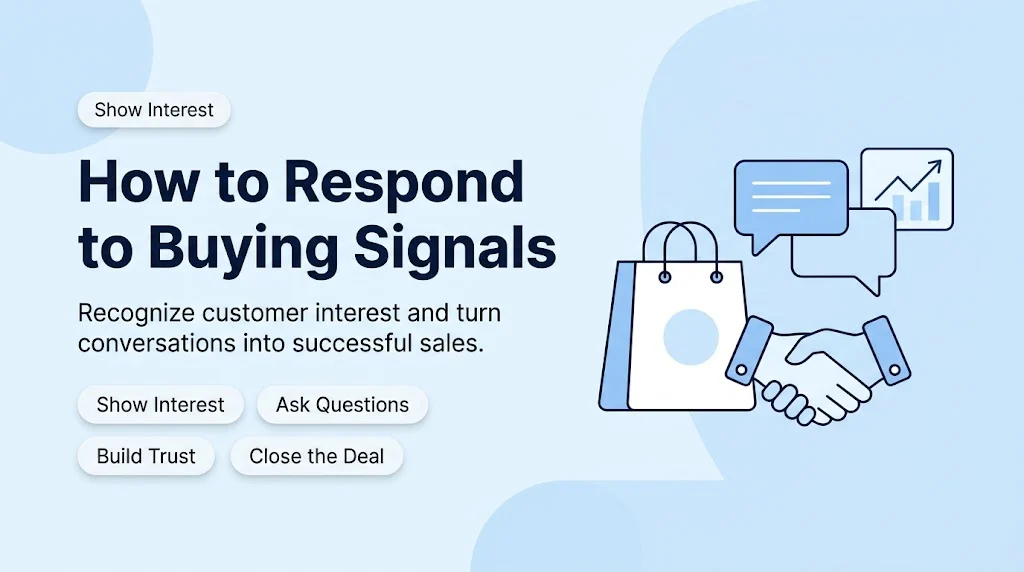
The best way to respond to buying signals is to acknowledge the customer’s interest, ask thoughtful questions, address concerns, and confidently guide them toward the next step without sounding pushy.
Ever notice when a customer starts asking about pricing, delivery dates, product features, or payment options? Those little questions might be more than casual curiosity. They could be buying signals, and knowing how to respond can make a big difference in closing a sale. Whether you’re chatting with a potential customer, answering emails, handling sales calls, or following up with a lead, your response matters. A good reply shows that you’re listening, builds trust, and helps customers feel comfortable making a decision.
The trick is to recognize their interest without jumping straight into a hard sell. In this guide, you’ll discover practical ways to respond to buying signals with confidence, professionalism, and a little personality. Because nobody likes a salesperson who sounds like they’re chasing a commission!
1. Professional Responses to Buying Signals
When a customer shows genuine interest, a professional response helps build confidence and moves the conversation forward naturally.
– I’m glad this option aligns with what you’re looking for.
Use this when a prospect says your product meets their requirements.
Meaning: You acknowledge their interest and reinforce the product’s suitability.
– I’d be happy to walk you through the next steps.
Use this when a customer asks how to proceed with a purchase.
Meaning: You are offering clear guidance without applying pressure.
– That’s great to hear. Let’s explore how we can make this work for you.
Use this when a prospect responds positively to your proposal.
Meaning: You are showing enthusiasm and encouraging further discussion.
– We can certainly help you get started.
Use this when someone expresses readiness to purchase.
Meaning: You are reassuring the customer that support is available.
– Would you like me to prepare a detailed proposal?
Use this when a potential client requests more information.
Meaning: You are turning their interest into a practical next step.
– I’m pleased this solution fits your business needs.
Use this during a professional sales meeting.
Meaning: You are connecting the product’s value with the customer’s goals.
– Let’s make sure everything meets your expectations before moving forward.
Use this when a customer seems interested but wants confirmation.
Meaning: You prioritize customer satisfaction before closing.
– I can help you compare the available options.
Use this when a prospect is evaluating different packages.
Meaning: You are offering helpful guidance to support their decision.
– Would you like to schedule a conversation to discuss the details?
Use this when a customer wants to explore the offer further.
Meaning: You are suggesting a structured next step.
– We’d be happy to support you throughout the process.
Use this when a prospect asks about implementation or onboarding.
Meaning: You are communicating reliability and ongoing support.
– That sounds like a good fit based on what you’ve shared.
Use this when a customer’s needs match your offering.
Meaning: You are confirming that the solution addresses their requirements.
– I can provide everything you need to make an informed decision.
Use this when a prospect requests additional details.
Meaning: You are positioning yourself as a helpful and transparent advisor.
– Let’s review the final details together.
Use this when the prospect is close to making a decision.
Meaning: You are preparing to move the discussion toward completion.
– Thank you for considering our solution. What would you like to clarify before proceeding?
Use this when a customer expresses serious interest.
Meaning: You are inviting questions and removing potential barriers.
– Whenever you’re ready, we can take the next step together.
Use this when a customer appears interested but wants control over the timing.
Meaning: You are offering support without creating pressure.
2. Confident Responses to Buying Signals
Confidence helps customers feel that they’re dealing with someone who understands the product and can deliver on promises.
– Based on your needs, I believe this is the right solution.
Use this when your product directly addresses the customer’s requirements.
Meaning: You are confidently recommending an appropriate option.
– I think you’ll find this option delivers exactly what you’re looking for.
Use this when a prospect likes the product’s features.
Meaning: You are reinforcing the value of the offering.
– We can definitely help you achieve that goal.
Use this when a customer explains what they want to accomplish.
Meaning: You are expressing confidence in your ability to help.
– Let’s get the details finalized.
Use this when the customer is ready to proceed.
Meaning: You are confidently directing the conversation toward a purchase.
– You’re looking at one of our strongest solutions.
Use this when a prospect asks about a popular product or service.
Meaning: You are highlighting the option’s strengths.
– I’m confident we can find an option that works for you.
Use this when the prospect has specific expectations.
Meaning: You are reassuring them that their needs can be addressed.
– This could be exactly what your business needs right now.
Use this when the product solves a current business challenge.
Meaning: You are connecting the offer to an immediate need.
– We have a clear path to getting this started.
Use this when the customer asks about implementation.
Meaning: You are making the purchasing process feel manageable.
– I can show you how this solution delivers value.
Use this when a prospect wants evidence before buying.
Meaning: You are confidently offering a demonstration of benefits.
– Let’s focus on getting you the results you’re looking for.
Use this when a customer discusses expected outcomes.
Meaning: You are keeping attention on the customer’s goals.
– Everything you’ve mentioned points toward this being a strong fit.
Use this when several customer requirements match your product.
Meaning: You are summarizing why the option makes sense.
– We can move forward whenever you’re comfortable.
Use this when the prospect shows strong purchase intent.
Meaning: You are showing confidence while respecting their decision.
– I’m ready to help you make this happen.
Use this when a customer asks about getting started.
Meaning: You are communicating readiness and commitment.
– Let’s turn your interest into a practical solution.
Use this when the customer wants to understand the next steps.
Meaning: You are encouraging action through a helpful approach.
– I believe you’ll appreciate the value this brings.
Use this when a prospect asks about the product’s advantages.
Meaning: You are expressing confidence in its benefits.
3. Friendly and Conversational Responses
A friendly tone makes customers feel comfortable asking questions and exploring their options.
– That’s exciting! What would you like to know next?
Use this when a customer expresses enthusiasm.
Meaning: You are matching their excitement and keeping the conversation open.
– Absolutely! Let’s figure out what works best for you.
Use this when someone asks about available options.
Meaning: You are offering personalized assistance.
– Happy to help! Do you have a particular option in mind?
Use this when a prospect starts comparing products.
Meaning: You are encouraging them to share their preferences.
– Great question! Let me break it down for you.
Use this when a customer asks about pricing or features.
Meaning: You are making the buying process easier to understand.
– Sounds like we’re getting closer to what you need!
Use this when a prospect responds positively to your recommendation.
Meaning: You are acknowledging progress in the conversation.
– Of course! I’d love to help you explore that option.
Use this when a customer wants to learn more about a particular product.
Meaning: You are showing genuine interest in helping.
– That’s a popular choice for customers with similar needs.
Use this when a prospect likes a commonly selected option.
Meaning: You are providing reassurance through relevant customer experience.
– No worries! We can go through everything together.
Use this when a prospect has questions before purchasing.
Meaning: You are making the interaction feel comfortable and supportive.
– I think we’re on the right track!
Use this when a customer responds positively to your suggestions.
Meaning: You are encouraging the conversation without rushing it.
– Let’s find something that checks all your boxes.
Use this when a customer has several requirements.
Meaning: You are focusing on finding the right match.
– I’d be happy to show you how it works.
Use this when someone asks about product functionality.
Meaning: You are offering a practical demonstration.
– That’s definitely worth exploring!
Use this when a prospect shows interest in an additional feature.
Meaning: You are encouraging further consideration.
– Perfect! Let’s take a closer look.
Use this when a customer wants more information.
Meaning: You are keeping the discussion active and positive.
– I’m glad you brought that up.
Use this when a customer asks an important purchasing question.
Meaning: You are making them feel heard and appreciated.
– Let’s make this as easy as possible for you.
Use this when a prospect wants a straightforward buying experience.
Meaning: You are emphasizing convenience and customer support.
4. Responses When Customers Ask About Pricing
Pricing questions are often strong buying signals because customers may be evaluating whether they can afford the product.
– I’d be happy to walk you through our pricing options.
Use this when someone asks how much your product costs.
Meaning: You are responding transparently and offering useful information.
– We have a few packages depending on what you need.
Use this when multiple pricing plans are available.
Meaning: You are introducing flexibility and choice.
– Would you like a breakdown of what’s included in the price?
Use this when a customer wants to understand the cost.
Meaning: You are helping them evaluate the value of the purchase.
– The price includes everything needed to get started.
Use this only when the quoted price genuinely covers all required components.
Meaning: You are clarifying what the customer receives.
– I can help you find an option within your budget.
Use this when a prospect mentions financial limitations.
Meaning: You are showing flexibility and understanding.
– Would you prefer to explore monthly or annual pricing?
Use this when both payment structures are available.
Meaning: You are helping the customer compare payment arrangements.
– Let me show you what makes this package worth considering.
Use this when a prospect questions the price.
Meaning: You are explaining the value behind the cost.
– We can compare the features at each price point.
Use this when a customer is considering different packages.
Meaning: You are helping them make an informed financial decision.
– Are you working with a particular budget?
Use this when you need to recommend an affordable option.
Meaning: You are identifying the customer’s financial expectations.
– I’ll make sure you understand the full cost before proceeding.
Use this when a prospect wants pricing transparency.
Meaning: You are building trust by avoiding unexpected charges.
– Would you like me to send you a personalized quote?
Use this when the customer wants an exact price.
Meaning: You are turning their interest into a concrete sales opportunity.
– We can look at the option that offers the best value for your needs.
Use this when a customer is comparing costs.
Meaning: You are focusing on value rather than price alone.
– There may be a plan that better matches your budget.
Use this when your business offers different price levels.
Meaning: You are suggesting a practical alternative.
– Would it help if I explained the payment options?
Use this when the customer asks about affordability.
Meaning: You are addressing a possible purchasing concern.
– If the pricing works for you, we can discuss getting started.
Use this when a customer seems comfortable with the quoted price.
Meaning: You are suggesting a natural next step toward purchasing.
5. Responses to Customers Asking About Product Features
Questions about specific features often indicate that a customer is imagining how the product will fit into their daily life or business.
– Absolutely! Let me show you how that feature works.
Use this when a prospect asks about a particular function.
Meaning: You are offering a practical explanation.
– That’s one of the key benefits of this product.
Use this when someone notices an important feature.
Meaning: You are reinforcing the product’s strengths.
– Yes, this option includes that functionality.
Use this when the requested feature is available.
Meaning: You are directly confirming that the product meets their requirement.
– Would you like to see a quick demonstration?
Use this when a customer wants to understand a feature visually.
Meaning: You are helping them experience the product before buying.
– I can explain how this feature benefits your specific situation.
Use this when the prospect wants practical information.
Meaning: You are connecting product functionality to their needs.
– That’s a great feature to consider when making your decision.
Use this when the customer focuses on an important capability.
Meaning: You are validating their purchasing priorities.
– We can compare this feature across our available models.
Use this when different products offer different capabilities.
Meaning: You are helping the customer evaluate their options.
– This feature is designed to make that process easier.
Use this when the customer identifies a problem the feature solves.
Meaning: You are explaining its practical value.
– Let me share a few examples of how customers use it.
Use this when someone wants real-world context.
Meaning: You are making the feature easier to understand.
– Would you like to know how it compares with similar products?
Use this when the prospect is researching competitors.
Meaning: You are offering a useful comparison.
– I can help you decide whether that feature is essential for your needs.
Use this when a customer is unsure which package to choose.
Meaning: You are helping them avoid paying for unnecessary features.
– Yes, and I can walk you through the setup process.
Use this when someone asks about getting the feature working.
Meaning: You are addressing potential implementation concerns.
– Let’s look at how it would work in your situation.
Use this when a customer wants a personalized explanation.
Meaning: You are making the conversation relevant to their circumstances.
– That capability is available in our [specific package].
Use this when a customer asks about a feature limited to a certain plan.
Meaning: You are clearly connecting functionality to the appropriate package.
– I can help you explore the features that matter most to you.
Use this when the customer has several questions.
Meaning: You are making the buying process more focused.
6. Responses When Customers Ask About Delivery or Availability
Questions about stock, delivery, and availability can suggest that a customer is thinking about when they can receive their purchase.
– Let me check the current availability for you.
Use this when a customer asks whether an item is in stock.
Meaning: You are offering to verify availability before making a commitment.
– We can confirm the expected delivery date before you order.
Use this when someone wants to know when their purchase will arrive.
Meaning: You are addressing delivery expectations.
– Would you like me to reserve one if reservations are available?
Use this when the customer wants a product that may sell out.
Meaning: You are offering a way to secure the item.
– I can share the available delivery options.
Use this when a prospect asks about shipping methods.
Meaning: You are helping them choose a convenient delivery arrangement.
– Let’s check which option gets to you most conveniently.
Use this when delivery timing matters to the customer.
Meaning: You are focusing on their convenience.
– That model is currently available.
Use this only after confirming stock.
Meaning: You are reassuring the customer about product availability.
– Would you prefer standard or express delivery?
Use this when both shipping options are offered.
Meaning: You are helping the customer choose a delivery speed.
– I can confirm the delivery charges before we proceed.
Use this when someone asks about shipping costs.
Meaning: You are providing transparency about the total price.
– We can arrange the next steps once availability is confirmed.
Use this when a customer is ready to purchase.
Meaning: You are connecting availability with the purchasing process.
– Would you like to know which models are available right now?
Use this when a specific item may be unavailable.
Meaning: You are helping the customer explore alternatives.
– I’ll help you find the most convenient delivery option.
Use this when the customer has a specific delivery preference.
Meaning: You are making the purchase experience easier.
– We can check whether your location is covered by our delivery service.
Use this when someone asks about shipping to their area.
Meaning: You are verifying whether delivery is possible.
– Would you like an update as soon as the product becomes available?
Use this when the item is temporarily out of stock.
Meaning: You are keeping the potential customer engaged.
– Let’s confirm the stock and delivery details before finalizing your order.
Use this when the customer is close to purchasing.
Meaning: You are ensuring that important details are clear.
– I can help you complete the order once you’ve selected your preferred option.
Use this when a prospect has chosen a product.
Meaning: You are guiding them toward the final purchasing step.
7. Responses When Customers Ask About Discounts
Discount questions may indicate that the customer is interested but wants to make sure they are getting the best possible deal.
– I’d be happy to check which promotions are currently available.
Use this when someone asks whether a discount is offered.
Meaning: You are showing willingness to explore available savings.
– We do have different offers depending on the package.
Use this when multiple promotions are available.
Meaning: You are introducing legitimate purchasing options.
– Would you like me to explain our current special offers?
Use this when a customer wants to save money.
Meaning: You are offering relevant promotional information.
– Let me see which available offer gives you the best value.
Use this when someone is comparing discounts.
Meaning: You are focusing on overall value.
– I can check whether you’re eligible for any additional savings.
Use this when special customer discounts may apply.
Meaning: You are offering to verify their eligibility.
– We occasionally offer discounts on selected packages.
Use this when promotions vary by product or service.
Meaning: You are explaining the availability of promotional pricing.
– Would a bundle option be more suitable for your needs?
Use this when bundled products offer better value.
Meaning: You are suggesting an alternative way to save.
– Let’s compare the regular price with the promotional offer.
Use this when a prospect wants to understand the savings.
Meaning: You are making the financial benefits clear.
– I’ll make sure you know about any applicable discounts before ordering.
Use this when the customer is preparing to buy.
Meaning: You are building trust through pricing transparency.
– We can explore the most affordable option without compromising your needs.
Use this when a customer is price-conscious.
Meaning: You are balancing affordability and product suitability.
– Would you like to hear about our seasonal offers?
Use this when seasonal promotions are available.
Meaning: You are introducing relevant ways to reduce costs.
– I can check whether a larger order qualifies for better pricing.
Use this during a bulk-purchase discussion.
Meaning: You are exploring possible volume-based savings.
– Let’s see which package gives you the most for your budget.
Use this when the customer wants a better deal.
Meaning: You are prioritizing value over unnecessary spending.
– If an eligible offer is available, I’ll gladly help you apply it.
Use this when a customer wants a discount code.
Meaning: You are offering practical help without promising an unverified discount.
– Would you like me to prepare a quote with the available savings included?
Use this when a customer is seriously considering an order.
Meaning: You are turning their interest into a purchase-ready proposal.
8. Responses When Customers Compare Competitors
When prospects compare your product with competitors, they are often evaluating which option deserves their money. Respond with facts rather than criticism.
– That’s a fair comparison. Let’s look at the differences.
Use this when a customer mentions another brand.
Meaning: You are acknowledging their research and offering a balanced comparison.
– I’d be happy to explain what makes our solution different.
Use this when a prospect wants to understand your competitive advantage.
Meaning: You are highlighting your product’s unique value.
– Which features matter most when you’re comparing the two?
Use this when you need to understand the customer’s priorities.
Meaning: You are shifting the conversation toward their actual needs.
– Let’s compare the overall value rather than just the price.
Use this when another product appears cheaper.
Meaning: You are encouraging a broader evaluation of cost and benefits.
– Both options may have advantages, depending on what you need.
Use this when the competitor has genuine strengths.
Meaning: You are showing honesty and objectivity.
– I can walk you through our key differences.
Use this when the customer requests a comparison.
Meaning: You are offering information that supports their decision.
– What did you like most about the other option?
Use this when the prospect seems undecided.
Meaning: You are discovering which features influence their choice.
– Let’s see which solution better matches your long-term goals.
Use this when the customer is thinking beyond the initial purchase.
Meaning: You are focusing on lasting value.
– Our strongest advantage is [verified benefit].
Use this when you can identify a genuine competitive strength.
Meaning: You are communicating a specific and supportable advantage.
– Would you like a side-by-side comparison?
Use this when the customer is considering multiple providers.
Meaning: You are simplifying their evaluation process.
– I understand why that alternative caught your attention.
Use this when a prospect expresses interest in a competitor.
Meaning: You are respecting their perspective rather than becoming defensive.
– Let’s identify what you would gain from each option.
Use this when a customer is struggling to decide.
Meaning: You are helping them evaluate practical benefits.
– I can clarify any differences you’re unsure about.
Use this when a customer has questions about competing products.
Meaning: You are positioning yourself as a helpful resource.
– The right choice depends on what matters most to you.
Use this when there is no obvious winner between products.
Meaning: You are keeping the customer’s needs at the center.
– Let’s make sure you have all the information before deciding.
Use this when the prospect is comparing several options.
Meaning: You are encouraging an informed and confident purchase.
9. Responses When Customers Ask About Payment Options
Payment-related questions can be a strong indication that a customer is considering how to complete a purchase.
– We offer several payment methods for your convenience.
Use this when someone asks how they can pay.
Meaning: You are introducing the available payment choices.
– Would you like me to explain the available payment plans?
Use this when a prospect asks about installments.
Meaning: You are helping them understand their financial options.
– I can walk you through the payment process.
Use this when a customer wants to know how checkout works.
Meaning: You are making the transaction easier to complete.
– Let’s find a payment option that works for you.
Use this when a prospect has specific payment preferences.
Meaning: You are offering flexibility where available.
– You can review all payment details before confirming your order.
Use this when someone is concerned about the checkout process.
Meaning: You are reassuring them about transparency.
– Would you prefer to pay online or explore another available method?
Use this when several payment methods are supported.
Meaning: You are helping the customer select a convenient option.
– I can explain any additional charges before you proceed.
Use this when a prospect asks about fees.
Meaning: You are addressing possible financial concerns.
– We can review the payment schedule together.
Use this when installment payments are offered.
Meaning: You are clarifying the financial commitment.
– Would you like me to send the secure payment instructions?
Use this when a customer is ready to pay.
Meaning: You are guiding them toward completing the transaction safely.
– I can help you understand the terms before making a commitment.
Use this when someone asks about payment conditions.
Meaning: You are encouraging an informed purchase.
– Let’s confirm the total amount so there are no surprises.
Use this when a customer is close to checking out.
Meaning: You are emphasizing clarity about the final cost.
– We can discuss the available financing options, if applicable.
Use this when a prospect asks about spreading out payments.
Meaning: You are introducing possible financing arrangements.
– Would you like to proceed with the payment setup?
Use this when the customer has selected their preferred option.
Meaning: You are inviting them to take the next step.
– I’m happy to guide you through checkout.
Use this when someone needs assistance placing an order.
Meaning: You are offering support during the purchase.
– Once you’re comfortable with the payment details, we can finalize everything.
Use this when the customer wants reassurance before paying.
Meaning: You are respecting their decision-making process.
10. Responses to Strong Buying Signals
Some customer statements make their purchasing interest especially clear. At this point, a helpful and direct response can move the sale forward.
– Would you like to go ahead and place the order?
Use this when the customer says they want the product.
Meaning: You are directly inviting them to purchase.
– Great! Shall we get your order started?
Use this when the prospect has selected their preferred item.
Meaning: You are encouraging them to begin the purchasing process.
– I can prepare everything for you right away.
Use this when the customer asks how to proceed.
Meaning: You are communicating readiness to assist.
– Which option would you like to move forward with?
Use this when a customer has narrowed down their choices.
Meaning: You are helping them make a final selection.
– Would you like me to send over the order details?
Use this when the prospect wants to purchase but needs instructions.
Meaning: You are providing a practical next step.
– Perfect! Let’s confirm your selection.
Use this when the customer has chosen a product or package.
Meaning: You are moving toward order confirmation.
– Shall we take care of the registration process?
Use this when someone is ready to sign up for a service.
Meaning: You are guiding them toward enrollment.
– I can reserve your selected option, subject to availability.
Use this when reservations are possible and the customer is ready.
Meaning: You are helping them secure their preferred choice.
– Would you like to complete the purchase today?
Use this when the customer has addressed their main concerns.
Meaning: You are asking for a clear purchasing decision.
– Let’s get your account set up.
Use this when a prospect is ready to subscribe or register.
Meaning: You are moving the conversation into onboarding.
– Great choice! I’ll help you with the next steps.
Use this when the customer confirms their selection.
Meaning: You are reinforcing their decision and offering assistance.
– Are you comfortable moving forward with this option?
Use this when you want to confirm their readiness.
Meaning: You are checking their confidence before proceeding.
– I can send the confirmation details once your order is placed.
Use this when the customer asks what happens after purchasing.
Meaning: You are explaining the final stages of the process.
– Everything is ready on our end. Would you like to proceed?
Use this when all required details have been confirmed.
Meaning: You are giving the customer a straightforward opportunity to buy.
– Wonderful! Let’s make your purchase official.
Use this when the prospect clearly says they are ready.
Meaning: You are celebrating their decision and guiding them toward completion.
11. Responses When Customers Show Interest but Hesitate
Not every buying signal means someone is ready to purchase immediately. A little reassurance can help customers work through uncertainty.
– Is there anything you’d like me to clarify before deciding?
Use this when a customer seems interested but uncertain.
Meaning: You are inviting them to share unanswered questions.
– Take your time. I’m happy to help whenever you need me.
Use this when someone wants to think things over.
Meaning: You are respecting their decision-making process.
– What would help you feel more confident about moving forward?
Use this when a prospect has concerns.
Meaning: You are identifying what is preventing a decision.
– Would it help to compare the available options again?
Use this when the customer seems confused between packages.
Meaning: You are offering additional clarity.
– I completely understand wanting to make the right choice.
Use this when someone needs more time.
Meaning: You are validating their hesitation.
– Let’s go through your main concerns one at a time.
Use this when a prospect has several objections.
Meaning: You are breaking down the decision into manageable questions.
– Would a product demonstration help you decide?
Use this when the customer wants to see the product in action.
Meaning: You are offering practical reassurance.
– I can share more details so you can compare everything comfortably.
Use this when a prospect is still researching.
Meaning: You are supporting their evaluation without rushing them.
– Is there a particular concern holding you back?
Use this when the customer seems close to buying but has not committed.
Meaning: You are encouraging honest communication about their hesitation.
– We can look at a simpler option if that feels more suitable.
Use this when the original package seems overwhelming.
Meaning: You are offering an alternative that may better fit their needs.
– You don’t need to decide until you’re comfortable.
Use this when the prospect feels pressured.
Meaning: You are reassuring them that the decision remains theirs.
– Would customer reviews help you understand the experience better?
Use this when someone wants reassurance from other buyers.
Meaning: You are offering relevant social proof.
– Let’s revisit the benefits that matter most to you.
Use this when a prospect loses sight of their original goals.
Meaning: You are bringing the discussion back to their priorities.
– I’m happy to answer any questions before you make a decision.
Use this when the customer is still evaluating the purchase.
Meaning: You are remaining available and approachable.
– Whenever you’re ready, we can pick up right where we left off.
Use this when a prospect needs additional time.
Meaning: You are keeping the relationship open without applying pressure.
12. Responses to Buying Signals in Emails and Follow-Ups
Email replies require a slightly more polished tone. The goal is to acknowledge interest, provide useful information, and make the next action clear.
– Thank you for your interest. I’d be happy to share additional details.
Use this when a prospect emails asking about your offering.
Meaning: You are professionally acknowledging their inquiry.
– I’m glad to hear you’re considering our solution.
Use this when someone expresses interest in an email.
Meaning: You are recognizing their purchase consideration.
– I’ve attached the requested pricing information for your review.
Use this when a customer requests a quotation.
Meaning: You are providing the information needed to evaluate the offer.
– Would you be available for a brief call to discuss the next steps?
Use this when an email conversation needs further discussion.
Meaning: You are suggesting a convenient way to continue the sales process.
– Please let me know which option best matches your requirements.
Use this when presenting several packages.
Meaning: You are inviting the customer to identify their preferred choice.
– I’m happy to arrange a demonstration at a time that suits you.
Use this when someone requests a product demo.
Meaning: You are offering a practical opportunity to explore the product.
– Thank you for considering us. I look forward to hearing your thoughts.
Use this after sending a proposal.
Meaning: You are encouraging feedback while remaining professional.
– I’ve included the next steps below for your convenience.
Use this when explaining how to complete a purchase.
Meaning: You are making the process clear and organized.
– Would you like me to prepare a customized proposal based on your needs?
Use this when a lead wants a tailored solution.
Meaning: You are offering a personalized sales opportunity.
– I’m following up to see whether you had a chance to review the details.
Use this after sending product information or pricing.
Meaning: You are politely checking the customer’s progress.
– Please feel free to share any questions or concerns.
Use this when you want to encourage a response.
Meaning: You are keeping communication open.
– If everything looks good, we can arrange the next step.
Use this when the prospect has reviewed your proposal.
Meaning: You are inviting them to move forward.
– I’d be happy to help you complete the ordering process.
Use this when a customer indicates readiness to buy.
Meaning: You are offering assistance with the final transaction.
– Thank you for your time. I look forward to helping you get started.
Use this when concluding a positive sales discussion.
Meaning: You are expressing enthusiasm about the potential customer relationship.
– Please let me know how you’d like to proceed, and I’ll be happy to assist.
Use this as a closing line in a sales follow-up email.
Meaning: You are giving the prospect control over the next step.
FAQs
1. What are buying signals in sales?
Buying signals are verbal or nonverbal signs that a potential customer is interested in purchasing a product or service.
2. What is the best way to respond to buying signals?
The best approach is to acknowledge the customer’s interest, ask relevant questions, and guide them toward the next step.
3. What are some verbal buying signals?
Common verbal buying signals include asking about prices, requesting product demonstrations, checking availability, discussing payment methods, and asking when delivery can happen.
4. Should you close a sale immediately after noticing a buying signal?
Not always. Some signals indicate curiosity rather than readiness. Ask a follow-up question to understand the customer’s intentions before suggesting a purchase.
5. How do you respond to buying signals without sounding pushy?
Use helpful language such as Would you like to explore the next steps? or Is there anything else you’d like to know? These replies show interest while allowing customers to make their own decisions.
Conclusion
Knowing how to respond to buying signals can turn ordinary customer conversations into meaningful sales opportunities. Whether someone asks about pricing, checks product availability, requests a demonstration, or discusses payment options, your response should feel natural, helpful, and confident. The secret is to listen carefully, understand what the customer actually needs, and guide them toward the next step without creating unnecessary pressure.
Remember, successful selling is not about pushing someone into a purchase. It’s about helping them make the right decision. Save these ready-to-use replies for your next sales call, email, or customer conversation, and practice using the ones that match your communication style.
Discover More Related Articles:

Jennifer Wilson is an experienced writer and content creator with over 20 years of expertise in digital publishing, lifestyle, and informative content. Holding a degree in English Literature, she contributes to Responary.Com, where she shares engaging, well-researched articles that help readers stay informed and inspired.