Quick Answer
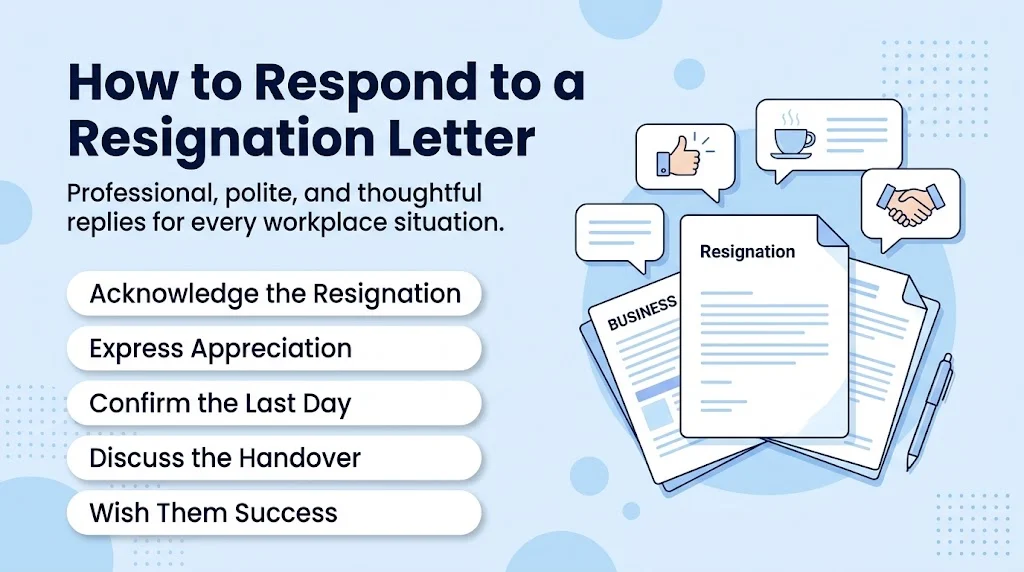
The best way to respond to a resignation letter is to acknowledge the employee’s decision, thank them for their contributions, confirm their last working day, and explain the next steps. Your reply should remain professional, respectful, and supportive.
Here are five ready-to-use responses: Thank you for your contributions, We accept your resignation, Wishing you success in your next chapter, Please coordinate the handover, We appreciate your time with our team.
Receiving a resignation letter can bring mixed feelings. Maybe a valued employee is moving toward an exciting opportunity, a team member is ready for a career change, or a colleague has decided it is time for something new. Whatever the reason, your response matters more than you might think.
Knowing how to respond to a resignation letter helps you maintain professionalism, preserve positive working relationships, and make the transition smoother for everyone involved. Whether you are a manager, HR professional, business owner, or team leader, the right words can show appreciation without making the situation awkward.
1. Professional Responses to a Resignation Letter
Use these replies when you want to acknowledge an employee’s decision while maintaining a respectful workplace tone.
– Thank you for your resignation letter. We appreciate your contributions to the team. Use this when acknowledging a standard resignation from an employee. Meaning: You recognize their decision and express appreciation for their work.
– We acknowledge receipt of your resignation and appreciate your professionalism. Use this when confirming that you have received the formal letter. Meaning: You are providing a professional acknowledgment without unnecessary details.
– Thank you for informing us of your decision. We wish you success in your future endeavors. Use this when an employee is leaving for another opportunity. Meaning: You are responding respectfully and wishing them well.
– We appreciate your service and the positive impact you have made during your time here. Use this when an employee has contributed meaningfully to the organization. Meaning: You are recognizing their value to the team.
– Your resignation has been noted. We will coordinate the next steps regarding your departure. Use this when you need to move the process forward. Meaning: You are acknowledging the letter and preparing for the transition.
– Thank you for your written notice. We will review the details and confirm the transition arrangements. Use this when the departure date or handover details require confirmation. Meaning: You are keeping the process organized and professional.
– We respect your decision and appreciate the opportunity to have worked with you. Use this when you want to maintain a positive relationship. Meaning: You are accepting the employee’s decision graciously.
– Thank you for your dedication and commitment throughout your employment. Use this when responding to a dependable team member. Meaning: You are recognizing their efforts and commitment.
– We acknowledge your resignation and will discuss the appropriate handover process with you. Use this when responsibilities must be transferred before departure. Meaning: You are focusing on a smooth transition.
– We appreciate your contributions and will work with you to ensure an orderly transition. Use this when the employee holds important responsibilities. Meaning: You are combining appreciation with practical planning.
– Thank you for your service. We wish you continued growth and success in your career. Use this when an employee is moving into a new role. Meaning: You are offering a professional and encouraging farewell.
– We have received your resignation letter and appreciate your timely communication. Use this when an employee provides the required notice. Meaning: You are acknowledging their communication and planning ahead.
– Thank you for your contribution to our workplace. We wish you all the best moving forward. Use this for a straightforward resignation acknowledgment. Meaning: You are expressing appreciation and goodwill.
– We value the work you have done here and appreciate your efforts during your tenure. Use this when you want to emphasize the employee’s work history. Meaning: You are recognizing their contribution to the organization.
– Thank you for your letter. We will confirm your final working day and any outstanding transition requirements. Use this when administrative details remain unresolved. Meaning: You are clarifying the next steps before the employee leaves.
2. Formal Responses to a Resignation Letter
Formal replies are useful for official HR correspondence, senior employees, and organizations that require documented communication.
– Dear [Employee Name], we acknowledge receipt of your resignation letter dated [Date]. Use this as the opening of an official acknowledgment email. Meaning: You are formally recording receipt of the resignation.
– This email confirms that we have received your notice of resignation. Use this when you need a concise written record. Meaning: You are confirming the letter has reached the appropriate person.
– We appreciate your service to [Company Name] and thank you for your contributions. Use this in a formal letter from a manager or HR representative. Meaning: You are professionally acknowledging the employee’s service.
– Your proposed last working day is noted as [Date], subject to confirmation. Use this when the departure date still needs approval or verification. Meaning: You are recognizing the proposed date without treating it as finalized.
– Please coordinate with your manager and HR regarding the required exit procedures. Use this when the organization has a standard offboarding process. Meaning: You are directing the employee toward the necessary administrative steps.
– We request that all outstanding responsibilities be addressed before your final working day. Use this when the employee must complete pending work. Meaning: You are setting expectations for the remaining employment period.
– Please ensure that all company property and relevant documentation are returned before your departure. Use this when equipment or records must be handed back. Meaning: You are clarifying the practical requirements for leaving.
– We will provide further information regarding the completion of your exit formalities. Use this when HR needs to coordinate the process. Meaning: You are informing the employee that additional instructions will follow.
– We thank you for your cooperation during the transition period. Use this when responsibilities need to be transferred carefully. Meaning: You are emphasizing the importance of a cooperative departure.
– Please contact the HR department if you require clarification regarding the resignation process. Use this when the employee may have procedural questions. Meaning: You are directing them to the appropriate source of assistance.
– Your resignation will be processed in accordance with the applicable company policies and procedures. Use this when a policy-based response is appropriate. Meaning: You are confirming that the organization will follow its established process.
– We appreciate your professionalism and wish you success in your future career. Use this in a formal closing paragraph. Meaning: You are ending the exchange respectfully.
– Kindly confirm your availability to discuss the handover arrangements. Use this when a transition meeting needs to be scheduled. Meaning: You are requesting cooperation to organize the handover.
– Please review any outstanding assignments with your supervisor before your departure. Use this when work continuity is important. Meaning: You are encouraging the employee to close out responsibilities.
– Sincerely, [Your Name], [Your Position], [Company Name]. Use this as the closing of an official resignation acknowledgment. Meaning: You are ending the letter with a standard professional sign-off.
3. Short Responses to a Resignation Letter
Sometimes, a brief acknowledgment is all you need, especially when the resignation letter already explains the employee’s plans.
– Thank you for letting us know. Use this as a quick acknowledgment. Meaning: You are recognizing the employee’s communication.
– We acknowledge receipt of your resignation. Use this for a concise formal reply. Meaning: You are confirming that the letter has been received.
– Thank you for your contributions to the team. Use this when you want to express appreciation briefly. Meaning: You are recognizing the employee’s work.
– We appreciate your time with us. Use this when acknowledging an employee’s departure. Meaning: You are expressing gratitude for their service.
– Wishing you all the best in your next chapter. Use this for a friendly but brief farewell. Meaning: You are wishing them success in the future.
– Thank you for your service and dedication. Use this when responding to a committed employee. Meaning: You are acknowledging their effort and commitment.
– Your resignation letter has been received. Use this when only receipt needs to be confirmed. Meaning: You are providing a simple administrative acknowledgment.
– We respect your decision and wish you well. Use this when you want a gracious response. Meaning: You are accepting the decision without judgment.
– Thank you for your notice. We will follow up shortly. Use this when more details need to be discussed. Meaning: You are confirming receipt and signaling further communication.
– We appreciate your professionalism throughout this process. Use this when the employee has handled the resignation appropriately. Meaning: You are recognizing their respectful conduct.
– Best wishes for your future endeavors. Use this for a short professional farewell. Meaning: You are expressing goodwill toward their next opportunity.
– Thank you for your hard work and commitment. Use this when the employee has been a valued team member. Meaning: You are acknowledging their efforts.
– We will coordinate the necessary handover arrangements. Use this when transition planning is the immediate priority. Meaning: You are confirming that practical next steps will be organized.
– Your proposed final working day is noted. Use this when the employee has included a departure date. Meaning: You are acknowledging the date without necessarily confirming approval.
– Thank you, and best wishes for what comes next. Use this for a concise, warm closing. Meaning: You are ending the exchange on a positive note.
4. Empathetic Responses to a Resignation Letter
These replies are suitable when an employee is leaving for personal reasons, family responsibilities, wellbeing, or a major life change.
– Thank you for sharing your decision with us. We wish you peace and happiness in the next chapter. Use this when the employee is leaving for personal reasons. Meaning: You are responding with compassion and respect.
– We understand that career decisions can be personal, and we respect your choice. Use this when an employee has made a difficult decision. Meaning: You are recognizing that their circumstances deserve consideration.
– Thank you for your contributions. We hope your next journey brings fulfillment and success. Use this when the employee is moving toward a different lifestyle or career. Meaning: You are expressing gratitude and sincere encouragement.
– We appreciate your openness and wish you the very best moving forward. Use this when the employee has explained their circumstances honestly. Meaning: You are acknowledging their communication without judgment.
– Your work has been valued, and we are grateful for the time you spent with us. Use this when the employee has been part of the team for a long time. Meaning: You are reassuring them that their contribution mattered.
– We respect your priorities and appreciate the notice you have provided. Use this when personal circumstances influence the resignation. Meaning: You are showing understanding while acknowledging their communication.
– Thank you for your dedication. We hope this next step brings you the balance you are looking for. Use this when an employee is leaving to focus on personal priorities. Meaning: You are wishing them a more suitable balance in life.
– We are sorry to see you leave, but we respect your decision and wish you well. Use this when you genuinely value the employee. Meaning: You are expressing sadness about their departure without pressuring them to stay.
– We appreciate everything you have contributed and hope the future brings you happiness. Use this when you want to give a heartfelt acknowledgment. Meaning: You are recognizing their contribution and wishing them well.
– Thank you for being part of our team. We hope your next chapter is rewarding. Use this for a supportive farewell. Meaning: You are expressing appreciation and encouragement.
– We understand that circumstances change, and we wish you the best with your decision. Use this when the employee is leaving because their situation has changed. Meaning: You are responding without criticism or pressure.
– Please let us know how we can make the transition as smooth as possible. Use this when you want to provide practical support. Meaning: You are offering help during the departure process.
– Your wellbeing matters, and we respect the decision you have made. Use this when the employee has voluntarily shared wellbeing-related reasons. Meaning: You are showing care without demanding personal details.
– Thank you for your honesty and for the time you have dedicated to the organization. Use this when the employee has been transparent about their plans. Meaning: You are appreciating their communication and service.
– We wish you comfort, confidence, and success in whatever comes next. Use this when the employee is starting an uncertain new chapter. Meaning: You are offering encouragement for their future.
5. Responses When You Are Sad to See an Employee Leave
A valued employee’s resignation can be disappointing. These examples help you express that feeling without making the employee uncomfortable.
– We are genuinely sorry to see you go, but we wish you every success. Use this when you have enjoyed working with the employee. Meaning: You are expressing sadness while respecting their decision.
– Your contributions will be missed, and we are grateful for your time here. Use this when the employee has made a noticeable impact. Meaning: You are letting them know their work mattered.
– It has been a pleasure working with you, and we wish you the very best. Use this when you have built a positive professional relationship. Meaning: You are expressing appreciation for the time you worked together.
– Although we are sad to see you leave, we are excited for your next opportunity. Use this when the employee is moving to a promising role. Meaning: You are balancing your disappointment with encouragement.
– You have been a valued member of the team, and your absence will be felt. Use this when the employee has supported colleagues consistently. Meaning: You are recognizing their importance to the workplace.
– Thank you for the memories, teamwork, and dedication you brought to the organization. Use this when the employee has spent considerable time with the team. Meaning: You are appreciating both their work and their relationships.
– We have appreciated working with you and will remember your contributions fondly. Use this when you want a warm farewell. Meaning: You are emphasizing the positive impression they leave behind.
– Your decision is respected, even though we will miss having you on the team. Use this when you want to be honest but supportive. Meaning: You are acknowledging your feelings without challenging their choice.
– It will not be the same without you, but we wish you a wonderful future. Use this for a close and well-liked colleague. Meaning: You are conveying affection and goodwill.
– You have helped make this team stronger, and we are thankful for that. Use this when the employee has supported team development. Meaning: You are recognizing the lasting value of their work.
– We are grateful for the time we have worked together. Use this when you want a sincere and simple farewell. Meaning: You are expressing appreciation for the professional relationship.
– Your presence has made a difference here, and we wish you continued success. Use this for a respected team member. Meaning: You are recognizing their impact and wishing them well.
– While we would have loved to keep working with you, we respect your plans. Use this when you want to express regret without applying pressure. Meaning: You are showing that the employee is valued while respecting their choice.
– Thank you for being such an important part of our journey. Use this when the employee has helped the organization grow. Meaning: You are recognizing their place in the team’s history.
– We will miss your contribution, but we hope your next chapter is even better. Use this when offering a supportive final message. Meaning: You are expressing appreciation and optimism for their future.
6. Responses to a Resignation Letter From a Long-Term Employee
Long-term employees deserve acknowledgment that reflects their experience, loyalty, and contribution.
– Thank you for your many years of dedication and service to our organization. Use this when an employee has worked for the company for several years. Meaning: You are recognizing their sustained commitment.
– Your years with us have made a lasting difference, and we are sincerely grateful. Use this when the employee has contributed to the company’s development. Meaning: You are acknowledging their long-term impact.
– It has been a privilege to have you as part of our team. Use this when you want a respectful and personal acknowledgment. Meaning: You are expressing appreciation for the professional relationship.
– Your experience, knowledge, and dedication have been invaluable to us. Use this when the employee has extensive institutional knowledge. Meaning: You are recognizing the practical value of their expertise.
– Thank you for the commitment you have shown throughout your tenure. Use this in a formal farewell to a longtime employee. Meaning: You are appreciating their consistency and dedication.
– You have played an important role in our journey, and we will always appreciate it. Use this when the employee has witnessed major company changes. Meaning: You are acknowledging their role in the organization’s history.
– Your professionalism and loyalty have set a positive example for the team. Use this when the employee has been a role model. Meaning: You are recognizing their influence on workplace culture.
– We are grateful for the knowledge and experience you have shared with your colleagues. Use this when the employee has mentored or trained others. Meaning: You are appreciating their contribution to team development.
– Thank you for helping shape the team into what it is today. Use this when the employee has contributed to long-term progress. Meaning: You are highlighting their lasting influence.
– Your dedication over the years has not gone unnoticed. Use this when you want to reassure them that their work was appreciated. Meaning: You are recognizing their consistent efforts.
– We wish you a rewarding and fulfilling next chapter after your time with us. Use this when the employee is retiring or pursuing a new direction. Meaning: You are encouraging them as they move into a new stage of life.
– Thank you for the trust, teamwork, and commitment you have brought to this organization. Use this when the employee has been a dependable colleague. Meaning: You are appreciating the broader value of their service.
– Your legacy here will remain part of the team’s story. Use this when the employee has had a significant impact. Meaning: You are recognizing that their contributions will be remembered.
– We have learned a great deal from working with you and wish you every success. Use this when you want to acknowledge mutual professional growth. Meaning: You are appreciating the experience and wishing them well.
– Thank you for being an important part of our organization for so many years. Use this as a closing message to a longtime employee. Meaning: You are giving a sincere acknowledgment of their service.
7. Responses to a Resignation Letter From a Valued Employee
When a strong performer resigns, your response should show appreciation while keeping the transition constructive.
– Your contributions have been exceptional, and we are grateful for your work. Use this when a high-performing employee is leaving. Meaning: You are recognizing the quality of their contribution.
– You have brought considerable value to the team, and we appreciate everything you have done. Use this when the employee has made a strong impact. Meaning: You are emphasizing their value to the organization.
– Thank you for your dedication and the high standards you have maintained. Use this when the employee consistently delivers excellent work. Meaning: You are recognizing their commitment to quality.
– We appreciate your leadership and the positive example you have set. Use this when the employee has mentored others or led projects. Meaning: You are acknowledging their professional influence.
– Your work has made a meaningful difference, and we wish you continued success. Use this when their departure affects the wider team. Meaning: You are recognizing their impact and encouraging future growth.
– We are grateful for the expertise you have shared with the organization. Use this when the employee has specialist knowledge. Meaning: You are appreciating the skills they brought to the team.
– Thank you for the initiative and reliability you have demonstrated throughout your role. Use this when the employee has consistently taken ownership. Meaning: You are recognizing their dependability and proactive attitude.
– Your achievements here are appreciated, and we wish you the best in your next role. Use this when they are leaving for career advancement. Meaning: You are acknowledging past success and supporting future opportunities.
– You have helped strengthen our team, and we are thankful for your efforts. Use this when the employee has supported colleagues and collaboration. Meaning: You are recognizing their contribution to team performance.
– We value the commitment you have shown and will work with you on a smooth handover. Use this when they own important projects. Meaning: You are expressing appreciation while focusing on continuity.
– Thank you for the thoughtful work and professionalism you have brought to every project. Use this when the employee has a strong record of delivery. Meaning: You are recognizing their professional standards.
– Your talent will be an asset wherever you go, and we wish you well. Use this when you want to encourage an employee’s future development. Meaning: You are expressing confidence in their abilities.
– We appreciate the positive influence you have had on your colleagues. Use this when they have strengthened team morale. Meaning: You are recognizing their impact beyond individual tasks.
– Thank you for your outstanding service and commitment to our shared goals. Use this in a formal acknowledgment for a respected employee. Meaning: You are appreciating their efforts toward organizational success.
– We wish you continued growth and success in the opportunities ahead. Use this when closing a supportive resignation response. Meaning: You are encouraging their professional progress.
8. Responses When an Employee Gives Short Notice
Short notice may require additional planning. Keep the response factual and avoid sounding confrontational.
– Thank you for your letter. We will review the proposed departure date in line with your employment terms. Use this when the notice period needs to be checked. Meaning: You are acknowledging the resignation while verifying the applicable requirements.
– We have received your resignation and would like to discuss the proposed timeline. Use this when the departure date creates scheduling concerns. Meaning: You are requesting a conversation about timing.
– Thank you for informing us. Please arrange a meeting with your manager to discuss the handover. Use this when responsibilities need immediate planning. Meaning: You are directing the employee toward transition coordination.
– We note your requested final working day and will confirm the next steps after review. Use this when the date is not yet approved. Meaning: You are acknowledging the request without promising approval.
– Given the short notice, we need to prioritize the transfer of your outstanding responsibilities. Use this when important work remains unfinished. Meaning: You are explaining the immediate operational priority.
– Please share a list of pending tasks and their current status as soon as possible. Use this when the team needs a clear overview of ongoing work. Meaning: You are requesting information to reduce disruption.
– We would appreciate your assistance in documenting key processes before your departure. Use this when the employee holds important knowledge. Meaning: You are asking them to help preserve essential information.
– Thank you for the update. We will discuss whether the requested timeline can be accommodated. Use this when flexibility may be possible. Meaning: You are leaving room for a practical discussion.
– Please coordinate with HR to review any notice-period requirements. Use this when policy or contractual obligations may apply. Meaning: You are directing the employee to the appropriate department.
– We understand your request and will assess the transition needs before confirming arrangements. Use this when the team needs to consider operational impact. Meaning: You are acknowledging the request while reviewing its implications.
– Please identify any urgent deliverables that need to be reassigned. Use this when deadlines are approaching. Meaning: You are focusing on protecting work continuity.
– We appreciate your cooperation in helping the team prepare for your departure. Use this when you need the employee’s assistance during a compressed transition. Meaning: You are encouraging constructive cooperation.
– Your proposed departure date requires further discussion, and we will contact you shortly. Use this when the date cannot yet be confirmed. Meaning: You are communicating that a follow-up is necessary.
– Please ensure that essential files and project updates are accessible to the relevant team members. Use this when project documentation is important. Meaning: You are helping prevent information gaps.
– We will work together to identify the most practical transition plan. Use this when you want to keep the conversation collaborative. Meaning: You are emphasizing problem-solving rather than blame.
9. Responses to a Resignation Letter for Personal Reasons
When an employee shares personal circumstances, acknowledge their message without asking for unnecessary private information.
– Thank you for letting us know. We respect your decision and wish you well. Use this when an employee provides limited details. Meaning: You are respecting their privacy and choice.
– We understand that personal priorities can change, and we appreciate your communication. Use this when the employee needs to focus on matters outside work. Meaning: You are responding with understanding.
– Thank you for your contributions. We wish you and your family the very best. Use this when family circumstances are mentioned. Meaning: You are expressing goodwill without intruding.
– We appreciate your honesty and hope everything goes well for you. Use this when the employee shares a difficult decision. Meaning: You are offering sincere support.
– Your decision is respected. Please let us know how we can support a smooth transition. Use this when you want to offer practical help. Meaning: You are combining respect with assistance.
– Thank you for your service. We wish you peace and happiness in the next stage of life. Use this when the employee is leaving to focus on personal goals. Meaning: You are giving them a thoughtful farewell.
– We appreciate the time you have spent with us and wish you the best moving forward. Use this when personal circumstances require a departure. Meaning: You are recognizing their contribution while wishing them well.
– Thank you for communicating your decision. We will help clarify the next steps. Use this when the employee may be uncertain about exit arrangements. Meaning: You are offering clarity and practical support.
– We respect your priorities and appreciate the work you have done here. Use this when the employee is making a personal life change. Meaning: You are acknowledging both their decision and contribution.
– Wishing you strength and success as you move forward. Use this when the employee is facing a major transition. Meaning: You are offering encouragement without making assumptions.
– Thank you for the dedication you have shown during your employment. Use this in a neutral and supportive reply. Meaning: You are recognizing their efforts.
– We appreciate your message and wish you all the best in your personal and professional life. Use this when you want a balanced farewell. Meaning: You are expressing broad goodwill.
– Please let us know if you need clarification about the exit process. Use this when practical support is appropriate. Meaning: You are keeping the communication open.
– We are grateful for your contributions and hope the future brings positive opportunities. Use this when you want to close warmly. Meaning: You are appreciating their work and encouraging their next steps.
– Thank you for being part of the team. We wish you well in everything ahead. Use this as a final message to an employee leaving for personal reasons. Meaning: You are giving a respectful and supportive farewell.
10. Responses When You Want to Ask for a Handover
A clear handover helps protect business continuity and gives the departing employee a defined set of responsibilities.
– Thank you for your resignation letter. Please prepare a handover plan for your current responsibilities. Use this when the employee manages ongoing work. Meaning: You are asking them to organize the transfer of their duties.
– Please schedule a meeting with your replacement or designated colleague to review pending tasks. Use this when another person will take over their work. Meaning: You are arranging a structured knowledge transfer.
– We would appreciate a written summary of all active projects before your final working day. Use this when project continuity is important. Meaning: You are requesting documentation of current work.
– Please identify key deadlines, outstanding issues, and the next actions for each project. Use this when several projects need transferring. Meaning: You are asking for the information necessary to continue the work.
– Kindly document any essential procedures that your colleagues will need to follow. Use this when the employee manages recurring processes. Meaning: You are helping ensure their knowledge remains available.
– Please coordinate with your manager to agree on handover priorities. Use this when the workload needs to be divided carefully. Meaning: You are asking the employee and manager to set priorities together.
– Thank you for your cooperation in preparing the team for your departure. Use this when you want a positive handover request. Meaning: You are acknowledging their role in making the transition successful.
– Please ensure relevant work files are stored in approved company systems. Use this when documentation must remain accessible. Meaning: You are emphasizing proper file management.
– We request that you brief the team on any unresolved matters before leaving. Use this when colleagues need to understand outstanding issues. Meaning: You are asking for a clear explanation of unfinished work.
– Please share the status of any client commitments with the appropriate team members. Use this when the employee handles client relationships. Meaning: You are helping ensure clients receive consistent support.
– Let’s agree on a handover schedule that allows sufficient time for knowledge transfer. Use this when the departure involves specialized responsibilities. Meaning: You are encouraging advance planning.
– Please list any upcoming deadlines that require attention after your departure. Use this when the team must prepare for future obligations. Meaning: You are requesting information to prevent missed deadlines.
– Kindly return company equipment and complete the relevant exit checklist. Use this when offboarding tasks need completion. Meaning: You are clarifying the administrative requirements.
– Please work with HR to confirm that all exit formalities are completed. Use this when a formal offboarding process applies. Meaning: You are directing the employee to complete the required steps.
– Thank you for helping us ensure a smooth and organized transition. Use this after outlining handover expectations. Meaning: You are ending the request on a cooperative note.
11. Responses When You Want to Retain the Employee
If you genuinely hope the employee will reconsider, invite a conversation without making promises or pressuring them to withdraw their resignation.
– Thank you for sharing your decision. If you are open to it, we would appreciate a conversation before finalizing the next steps. Use this when you want to understand the employee’s concerns. Meaning: You are respectfully asking for a discussion.
– We value your contributions and would welcome the opportunity to discuss your experience with us. Use this when you want honest feedback. Meaning: You are showing that their perspective matters.
– We appreciate your work and would be happy to discuss any concerns you would like to share. Use this when workplace issues may have influenced the decision. Meaning: You are opening a constructive conversation without assuming the reason.
– Before we proceed, would you be available for a conversation about your plans and priorities? Use this when the employee may be willing to discuss alternatives. Meaning: You are asking for a meeting while respecting their autonomy.
– Your work has been valuable to us, and we would welcome the chance to explore whether any concerns can be addressed. Use this when improvements might make staying attractive. Meaning: You are signaling a willingness to consider practical solutions.
– Thank you for your honesty. If appropriate, we would like to understand what led to your decision. Use this when you want feedback for improvement. Meaning: You are inviting the employee to share their reasons voluntarily.
– We respect your decision and would appreciate the opportunity to discuss any options you may wish to consider. Use this when alternative arrangements could be possible. Meaning: You are offering discussion without applying pressure.
– Your skills and experience are appreciated, and we would be glad to hear any suggestions you have. Use this when you want a candid conversation. Meaning: You are recognizing their value and inviting feedback.
– If there are workplace concerns you would like to discuss, we are willing to listen. Use this when the employee may be leaving because of dissatisfaction. Meaning: You are offering an opportunity for open communication.
– Would you be open to a brief meeting to discuss your decision and any possible alternatives? Use this when a retention conversation is appropriate. Meaning: You are requesting a meeting without presuming the employee will change their mind.
– We value your contribution and would like to understand what matters most in your next step. Use this when you want to learn about the employee’s priorities. Meaning: You are focusing on their needs rather than making assumptions.
– Thank you for letting us know. We would welcome an honest conversation if you feel comfortable having one. Use this when you want to leave the door open. Meaning: You are inviting dialogue while respecting their comfort.
– We appreciate your work and will respect whatever decision you make after our discussion. Use this when you want to remove pressure from the conversation. Meaning: You are affirming that the employee remains free to choose.
– If there is a practical change that would make a difference, we are open to hearing your thoughts. Use this when flexibility may be possible. Meaning: You are inviting specific feedback without promising a solution.
– Thank you for your contributions. Whatever you decide, we wish you the best. Use this when you want to close a retention discussion respectfully. Meaning: You are showing that goodwill does not depend on their decision.
12. Warm Farewell Responses to a Resignation Letter
Use these messages when the decision is settled and you want the employee to leave with a positive impression.
– Thank you for everything you have brought to the team. We wish you every success. Use this when the employee has been a supportive colleague. Meaning: You are expressing gratitude and goodwill.
– It has been a pleasure working with you. Best wishes for your next adventure. Use this for a friendly professional farewell. Meaning: You are celebrating their next opportunity.
– Your time here has been appreciated, and we hope the future brings exciting opportunities. Use this when closing a professional relationship. Meaning: You are recognizing their service and encouraging future growth.
– Thank you for your hard work, teamwork, and dedication. You will be missed. Use this for a well-liked employee. Meaning: You are acknowledging their efforts and positive relationships.
– Wishing you success, happiness, and fulfillment in the next chapter of your career. Use this when the employee is moving to a new role. Meaning: You are offering an encouraging farewell.
– We are grateful to have worked with you and hope our paths cross again. Use this when you want to maintain the professional relationship. Meaning: You are expressing appreciation and openness to future contact.
– Thank you for sharing your talents with us. We wish you all the best. Use this when you want a sincere but simple farewell. Meaning: You are recognizing the skills they contributed.
– Your contributions have been meaningful, and we hope you continue to thrive. Use this for an employee whose work made a difference. Meaning: You are appreciating their work and encouraging their future.
– We appreciate the time we have spent working together. Best wishes for what lies ahead. Use this when ending a positive professional relationship. Meaning: You are expressing gratitude and optimism.
– Thank you for being part of our journey. May your next chapter be rewarding. Use this for a warm and memorable farewell. Meaning: You are recognizing their place in the organization and wishing them well.
– We wish you continued success in your career and happiness in your personal life. Use this when you want a well-rounded farewell. Meaning: You are expressing goodwill across different areas of their life.
– Thank you for the positive energy and commitment you have brought to the workplace. Use this when the employee has helped team morale. Meaning: You are recognizing their interpersonal contribution.
– May your next opportunity bring growth, satisfaction, and new achievements. Use this when the employee is pursuing a fresh challenge. Meaning: You are wishing them professional development and fulfillment.
– We are thankful for your service and wish you nothing but the best. Use this for a respectful closing message. Meaning: You are offering a simple and sincere farewell.
– Thank you for your time with us. Stay in touch, and best wishes for the future. Use this when you would like to maintain contact. Meaning: You are closing warmly and leaving the door open for future communication.
FAQs
What is the best way to respond to a resignation letter?
Acknowledge receipt, thank the employee for their contributions, confirm or discuss the proposed final working day, and explain the next steps for the handover and exit process.
Should you accept or acknowledge a resignation letter?
You should acknowledge receipt promptly. Whether you formally accept the resignation, confirm the departure date, or discuss the notice period depends on the employment terms, company policies, and applicable law.
How do you respond to a resignation letter professionally by email?
Use a clear subject line, address the employee by name, acknowledge the letter, express appreciation, and outline the next steps.
What should you say when a good employee resigns?
Thank them for their contributions, acknowledge the value they brought to the team, and wish them success.
How do you respond when an employee resigns immediately?
Acknowledge the letter and review the relevant employment terms, notice requirements, and local laws.
Conclusion
Responding to a resignation letter is an opportunity to demonstrate professionalism, respect, and appreciation. Even when an employee’s departure creates challenges, a thoughtful response can help preserve trust and keep the transition organized. Choose wording that fits the situation, whether you need a formal acknowledgment, a compassionate reply, a retention conversation, or a warm farewell.
Remember to confirm important dates, communicate handover expectations, and follow your organization’s procedures and applicable employment requirements. Most importantly, avoid taking the resignation personally or making the employee feel guilty for moving forward. Save these examples for future workplace emails, adapt them to your circumstances, and use them to make difficult professional conversations a little easier.
Discover More Related Articles:
- How do You Respond to an Email | When Someone Says Sorry In 2026
- How to Respond to a Pre-Adverse Action Letter | Professional Templates In 2026

Jennifer Wilson is an experienced writer and content creator with over 20 years of expertise in digital publishing, lifestyle, and informative content. Holding a degree in English Literature, she contributes to Responary.Com, where she shares engaging, well-researched articles that help readers stay informed and inspired.