Quick Answer
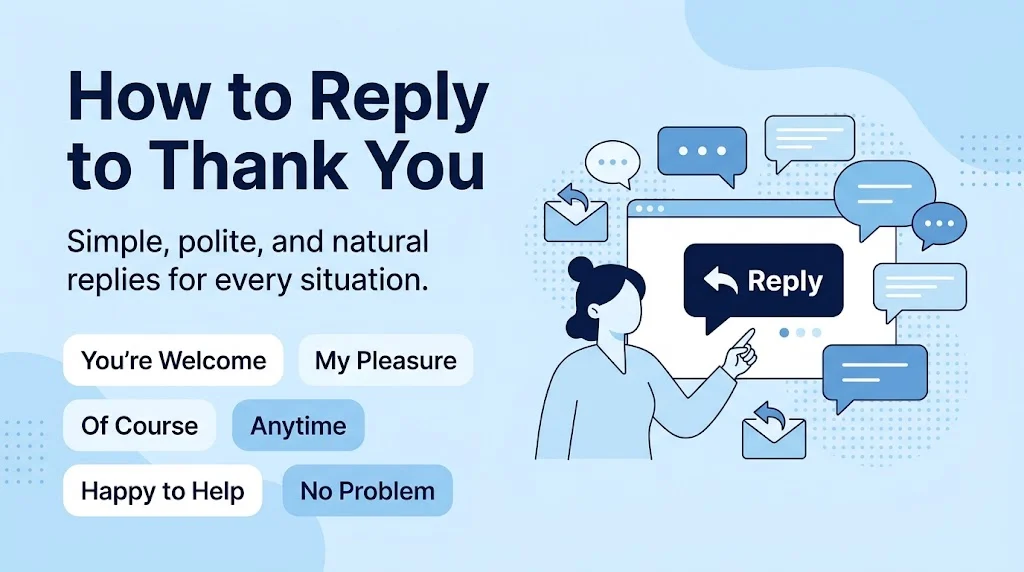
Knowing how to reply thank you depends on the mood and relationship. You can keep it simple with You’re welcome, Anytime, My pleasure, No problem, Happy to help, or choose something funny, sweet, professional, or casual.
Someone says “Thank you,” and suddenly your brain forgets every response you have ever known. Do you say “You’re welcome”? “No worries”? “Anytime”? Or something a little more natural that does not sound like you copied it from a customer-service script? Knowing how to reply thank you can make even a tiny conversation feel smoother and more genuine.
Whether you are texting a friend, replying to a coworker, responding to a crush, answering a family member, or chatting in a group, the best response depends on the situation. A professional message needs a different vibe from a playful DM.
Polite Responses
- You’re very welcome.
Use this when someone thanks you for something thoughtful or helpful.
Meaning: You are politely acknowledging their gratitude. - My pleasure.
Use this when you genuinely enjoyed helping someone.
Meaning: You are saying that helping them was enjoyable rather than inconvenient. - You’re welcome!
Use this as an easy response in almost any everyday situation.
Meaning: You are warmly accepting their thanks. - It was my pleasure to help.
Use this when someone appreciates something meaningful you did.
Meaning: You are emphasizing that you were happy to assist. - Of course!
Use this with someone you know well or when the favor felt natural.
Meaning: You are showing that helping them was easy and expected. - Not at all.
Use this when someone seems especially grateful.
Meaning: You are reassuring them that their request was no trouble. - Happy to help!
Use this when you want to sound friendly and positive.
Meaning: You are showing that you were glad to assist. - Anytime.
Use this when you want to let someone know they can count on you.
Meaning: You are offering your help again in the future. - It’s absolutely fine.
Use this when someone seems worried about bothering you.
Meaning: You are reassuring them that their request caused no problem. - Glad I could help.
Use this after solving a problem for someone.
Meaning: You are expressing satisfaction that your help was useful. - You’re most welcome.
Use this when you want a slightly more polished reply.
Meaning: You are responding warmly and respectfully. - No trouble at all.
Use this when someone apologizes while thanking you.
Meaning: You are making it clear that helping them was not difficult. - It was nothing.
Use this for a small favor between friends or family members.
Meaning: You are modestly saying that the favor was easy. - I’m glad it worked out.
Use this when your help contributed to a successful result.
Meaning: You are showing happiness about the outcome. - Always happy to help.
Use this with someone you regularly support.
Meaning: You are offering ongoing goodwill and support.
Casual Responses
- No worries!
Use this with friends, classmates, or casual acquaintances.
Meaning: You are saying there was no problem. - No problem!
Use this for an easygoing everyday response.
Meaning: You are reassuring the person that their request was fine. - Anytime!
Use this when you want to keep the interaction friendly and relaxed.
Meaning: You are letting them know you are happy to help again. - Of course!
Use this when helping someone felt completely natural.
Meaning: You are saying they did not need to worry about asking. - Sure thing!
Use this after helping with something simple.
Meaning: You are responding in a cheerful and informal way. - All good!
Use this when someone thanks you for a small favor.
Meaning: You are keeping the exchange relaxed. - You got it!
Use this with friends or casual contacts.
Meaning: You are confirming that helping them was easy. - No biggie!
Use this with someone who is being overly apologetic.
Meaning: You are telling them not to worry about the favor. - Don’t mention it!
Use this when you want to dismiss the need for thanks.
Meaning: You are saying the favor was not important enough to worry about. - For sure!
Use this in casual texts or DMs.
Meaning: You are responding positively without making the exchange formal. - Yep, anytime!
Use this with someone you regularly help.
Meaning: You are showing easygoing willingness to help again. - You’re good!
Use this when someone thanks you after a small favor.
Meaning: You are reassuring them that everything is fine. - Absolutely!
Use this when you want a confident but casual reply.
Meaning: You are enthusiastically confirming that helping was no issue. - No stress!
Use this when someone seems concerned about asking for help.
Meaning: You are telling them not to worry. - Glad to help!
Use this when you want something casual but still warm.
Meaning: You are showing that helping them made you happy.
Funny Responses
- You’re welcome, payment accepted in snacks.
Use this with a friend who owes you a small favor.
Meaning: You are joking that snacks are the only payment you need. - No need for applause, please.
Use this after doing something helpful for a close friend.
Meaning: You are playfully exaggerating your contribution. - You’re welcome. I accept compliments in cash too.
Use this when your friendship includes playful teasing.
Meaning: You are jokingly pretending their gratitude should come with payment. - Anytime, superhero services are available daily.
Use this after helping someone solve a minor problem.
Meaning: You are humorously presenting yourself as their personal hero. - Consider it my good deed for the day.
Use this after doing a small favor.
Meaning: You are joking about earning imaginary good-person points. - You’re welcome. My work here is done.
Use this after solving something quickly.
Meaning: You are humorously acting like you completed an important mission. - I accept your gratitude.
Use this with someone who enjoys dramatic humor.
Meaning: You are playfully making their simple thanks sound official. - No worries, I’ll invoice you later.
Use this after helping a friend with something time-consuming.
Meaning: You are jokingly pretending your help comes with a bill. - Thank you for thanking me. Very thoughtful.
Use this with a friend who enjoys dry humor.
Meaning: You are playfully turning their gratitude back around. - Another successful mission completed.
Use this after helping someone accomplish a task.
Meaning: You are making an ordinary favor sound like an epic achievement. - You’re welcome. Please hold the applause.
Use this when joking about doing something impressive.
Meaning: You are humorously pretending your favor deserves a standing ovation. - Glad to be of extremely dramatic assistance.
Use this when your help was actually very simple.
Meaning: You are exaggerating the importance of your favor for comedic effect. - Your gratitude has been received and processed.
Use this in a playful text conversation.
Meaning: You are pretending to handle their thanks like an official request. - I’ll add that thank-you to my résumé.
Use this after helping someone with a task.
Meaning: You are joking that their appreciation is another professional achievement. - You’re welcome. I expect a trophy by Friday.
Use this with a close friend who understands your humor.
Meaning: You are playfully exaggerating how impressive your help was.
Professional Responses
- You’re very welcome.
Use this in emails or workplace conversations.
Meaning: You are responding politely and professionally. - My pleasure.
Use this with clients, colleagues, or business contacts.
Meaning: You are communicating that helping them was genuinely welcome. - Happy to assist.
Use this after helping with a professional request.
Meaning: You are showing willingness and professionalism. - Glad I could help.
Use this after resolving a workplace issue.
Meaning: You are acknowledging the successful outcome. - It was my pleasure to assist.
Use this in a formal email or professional message.
Meaning: You are offering a polished response to their appreciation. - You’re most welcome.
Use this when you want to sound courteous and polished.
Meaning: You are warmly accepting their thanks. - Always happy to help.
Use this with a colleague or client you support regularly.
Meaning: You are communicating ongoing willingness to assist. - I’m glad I could be of assistance.
Use this in a more formal workplace exchange.
Meaning: You are emphasizing that your support was useful. - It was no trouble at all.
Use this when someone seems concerned about taking your time.
Meaning: You are reassuring them that their request was manageable. - Of course, happy to help.
Use this in friendly professional communication.
Meaning: You are combining warmth with workplace-appropriate language. - You’re welcome, and please feel free to reach out anytime.
Use this after assisting someone who may need future support.
Meaning: You are keeping communication open for future requests. - I’m pleased I could help.
Use this when responding to a client or senior colleague.
Meaning: You are showing professional satisfaction with the outcome. - Absolutely, glad to assist.
Use this for a concise workplace reply.
Meaning: You are expressing confidence and willingness to help. - It was a pleasure working with you.
Use this after completing a collaborative task.
Meaning: You are showing appreciation for the professional interaction. - Thank you for your kind words.
Use this when someone’s gratitude is especially detailed or complimentary.
Meaning: You are acknowledging their appreciation graciously.
Sweet Responses
- Always happy to help you.
Use this with someone close to you.
Meaning: You are showing that supporting them makes you happy. - You never have to thank me.
Use this when you genuinely enjoy helping someone.
Meaning: You are telling them that their gratitude is not necessary. - Anything for you.
Use this with someone special in your life.
Meaning: You are showing affection and willingness to support them. - I’m just glad I could make things easier.
Use this after helping someone through a stressful situation.
Meaning: You care more about their wellbeing than receiving thanks. - You’re worth helping.
Use this with someone you deeply care about.
Meaning: You are reassuring them that they deserve support. - Always, with a smile.
Use this for a warm and affectionate message.
Meaning: You are saying that helping them brings positive feelings. - It means a lot that you appreciate it.
Use this when someone’s gratitude feels especially sincere.
Meaning: You are acknowledging the emotional value of their thanks. - I’m just happy I could be there for you.
Use this when supporting someone emotionally.
Meaning: You are emphasizing your care and presence. - You know I’ve got you.
Use this with a close friend or loved one.
Meaning: You are promising dependable support. - Always here when you need me.
Use this for someone who may need future support.
Meaning: You are offering continued care and availability. - Helping you is never a burden.
Use this when someone feels guilty for asking for help.
Meaning: You are reassuring them that supporting them is not a problem. - You deserve all the help and kindness in the world.
Use this when comforting someone important to you.
Meaning: You are expressing genuine care and appreciation. - I’m glad it brought you some peace.
Use this after helping someone through a difficult moment.
Meaning: You care about the emotional result of your support. - No thanks needed, seriously.
Use this when you want to make someone feel comfortable.
Meaning: You are saying your support was given freely. - I’ll always be in your corner.
Use this for a close friend, partner, or family member.
Meaning: You are promising loyalty and emotional support.
Flirty Responses
- Anything for you.
Use this when someone you like thanks you for a favor.
Meaning: You are adding a subtle romantic undertone to your reply. - For you? Always.
Use this when you want a confident, flirty text.
Meaning: You are suggesting that they are special to you. - You’re welcome, cutie.
Use this with someone you already flirt with.
Meaning: You are accepting their thanks while adding affection. - No need to thank me, just keep smiling.
Use this when you want to be charming without being too direct.
Meaning: You are saying their happiness is enough for you. - Anytime, especially if it means hearing from you.
Use this when you want to turn a simple exchange into flirting.
Meaning: You are hinting that you enjoy talking to them. - Helping you is becoming my favorite habit.
Use this when you want playful romantic energy.
Meaning: You are implying that you enjoy being involved in their life. - You’re welcome, but I might collect a smile as payment.
Use this with someone who enjoys playful flirting.
Meaning: You are asking for affection in a teasing way. - I’d do it again just to get that thank-you.
Use this when their message was especially sweet.
Meaning: You are playfully suggesting that their attention motivates you. - You make saying yes way too easy.
Use this after agreeing to help someone you like.
Meaning: You are subtly admitting that you have a soft spot for them. - Anytime, but I might start expecting your texts.
Use this when you want to keep the conversation going.
Meaning: You are revealing that you enjoy hearing from them. - You’re welcome. Now you owe me a coffee.
Use this when you want to turn a favor into a casual meetup.
Meaning: You are playfully suggesting spending time together. - For you, I can make an exception.
Use this when teasing someone you like.
Meaning: You are making them feel special. - No problem, your smile is enough payment.
Use this when you want a sweet romantic reply.
Meaning: You are saying their happiness matters more than repayment. - You’re welcome, favorite person.
Use this when your relationship is already affectionate.
Meaning: You are giving the reply a clear personal touch. - Anytime, just give me an excuse to see you.
Use this when you want a bolder romantic response.
Meaning: You are turning the exchange into an invitation for more time together.
Cute Responses
- Aww, you’re welcome!
Use this when someone thanks you in a sweet message.
Meaning: You are responding with warmth and affection. - Of course, happy to help!
Use this with a close friend or loved one.
Meaning: You are making your support feel natural and cheerful. - You got it, always!
Use this when you want a cute but confident reply.
Meaning: You are letting them know they can rely on you. - Anytime, sunshine!
Use this with someone who enjoys affectionate nicknames.
Meaning: You are adding warmth and friendliness to the reply. - No worries, sweetie.
Use this with someone close to you.
Meaning: You are reassuring them in a gentle way. - Happy to make your day a little easier.
Use this after doing something helpful.
Meaning: You are expressing care for their happiness. - You’re welcome, lovely!
Use this for a close friend or affectionate conversation.
Meaning: You are returning their gratitude with a warm compliment. - Always got your back!
Use this with a close friend.
Meaning: You are promising dependable support. - Anything to make you smile.
Use this when helping someone you care about.
Meaning: You are showing that their happiness matters to you. - Glad I could help your day!
Use this after doing something thoughtful.
Meaning: You are happy that your action improved their day. - No thanks needed, you’re adorable.
Use this with someone you have a playful relationship with.
Meaning: You are combining reassurance with a cute compliment. - Always and forever!
Use this playfully with someone very close to you.
Meaning: You are exaggerating your willingness to help in an affectionate way. - You’re too sweet!
Use this when someone gives you especially heartfelt thanks.
Meaning: You are complimenting their kindness. - A tiny favor for a wonderful person.
Use this when helping someone special.
Meaning: You are making the favor sound small while complimenting them. - Anything that puts that smile on your face.
Use this for a warm and affectionate exchange.
Meaning: You are showing that their happiness matters to you.
Sarcastic Responses
- You’re welcome, I’ll be accepting awards later.
Use this when joking about a very small favor.
Meaning: You are exaggerating your achievement for comedic effect. - Finally, someone appreciates my greatness.
Use this with a close friend who understands your humor.
Meaning: You are playfully pretending your favor proves you are amazing. - About time you thanked me.
Use this when teasing a friend who usually forgets to show appreciation.
Meaning: You are jokingly complaining about their delayed gratitude. - I’ll treasure this moment forever.
Use this after receiving a simple thank-you.
Meaning: You are humorously exaggerating the importance of their gratitude. - Your gratitude has been noted.
Use this for dry humor in a text.
Meaning: You are pretending their thanks is an official record. - You’re welcome. Please contain your excitement.
Use this with a friend who likes sarcasm.
Meaning: You are jokingly acting like your help was extraordinary. - I accept your appreciation.
Use this when you want a dramatic sarcastic tone.
Meaning: You are humorously treating their thanks like a formal tribute. - Glad you finally noticed.
Use this after doing something helpful for a friend.
Meaning: You are teasing them about recognizing your effort. - No need to thank me. I already know I’m amazing.
Use this with someone who enjoys confident jokes.
Meaning: You are making fun of yourself by exaggerating your confidence. - You’re welcome. Invoice coming soon.
Use this after helping someone with a big task.
Meaning: You are joking that your favor has a hidden price. - I expect a statue in my honor.
Use this after doing something very minor.
Meaning: You are dramatically exaggerating your contribution. - I shall add your gratitude to my collection.
Use this for playful dry humor.
Meaning: You are making their simple thanks sound like a collectible item. - Another person successfully impressed by me.
Use this when teasing a friend.
Meaning: You are jokingly presenting the favor as proof of your greatness. - Your thanks have been approved.
Use this when you want a mock-official response.
Meaning: You are making the interaction humorously bureaucratic. - You may now return to your regularly scheduled life.
Use this after solving a small problem.
Meaning: You are jokingly presenting yourself as having completed an important mission.
Confident Responses
- Absolutely, anytime.
Use this when you want to sound assured and helpful.
Meaning: You are confidently showing that you are willing to help again. - You can always count on me.
Use this when someone thanks you for meaningful support.
Meaning: You are communicating reliability and confidence. - Happy to handle it.
Use this after taking care of a task.
Meaning: You are showing confidence in your ability to help. - Consider it done.
Use this when someone thanks you for completing something.
Meaning: You are confidently confirming that the matter is handled. - No problem, I had it covered.
Use this after solving an issue for someone.
Meaning: You are reassuring them that everything was under control. - Anytime you need me.
Use this when you want to sound dependable.
Meaning: You are confidently offering future support. - Glad I could make it happen.
Use this after achieving a useful result.
Meaning: You are showing satisfaction and confidence in your contribution. - Of course, that’s what I’m here for.
Use this in work or support situations.
Meaning: You are confidently framing your help as part of your role. - Done and dusted.
Use this after finishing a task quickly.
Meaning: You are saying the issue is completely handled. - You know where to find me.
Use this with someone who may need your help again.
Meaning: You are confidently keeping yourself available. - Happy to make things happen.
Use this after helping someone reach a goal.
Meaning: You are showing initiative and positive confidence. - No worries, I’ve got this.
Use this when someone thanks you while a task is still ongoing.
Meaning: You are reassuring them that you can handle the situation. - Always ready to help.
Use this with a friend, colleague, or teammate.
Meaning: You are presenting yourself as dependable and prepared. - Glad I could come through.
Use this after helping someone at the right moment.
Meaning: You are confidently acknowledging that you delivered when needed. - Anytime, consider me your go-to person.
Use this with someone you regularly support.
Meaning: You are confidently offering yourself as a reliable resource.
Emotional Responses
- You really don’t have to thank me.
Use this when you helped someone you deeply care about.
Meaning: You are saying your support came from genuine care. - I’m just glad I could be there for you.
Use this after supporting someone through a difficult moment.
Meaning: You are emphasizing emotional presence rather than recognition. - It means a lot that you appreciate it.
Use this when someone’s gratitude genuinely touches you.
Meaning: You are acknowledging the emotional importance of their words. - I’d do it again in a heartbeat.
Use this when you would willingly support the person again.
Meaning: You are showing deep willingness and care. - You matter to me, so helping was easy.
Use this for someone very important to you.
Meaning: You are connecting your help directly to your feelings for them. - I’m grateful I could be there when you needed me.
Use this after supporting someone during a challenging situation.
Meaning: You value being present for them. - You never have to face things alone.
Use this when reassuring someone you care about.
Meaning: You are offering emotional support and companionship. - Your happiness is enough thanks for me.
Use this when someone expresses deep gratitude.
Meaning: You are saying their wellbeing matters more than recognition. - I’m always in your corner.
Use this with a close friend or loved one.
Meaning: You are promising loyalty and emotional support. - I’m thankful I could make things a little easier.
Use this after helping someone through stress.
Meaning: You care about easing their burden. - You mean more to me than you know.
Use this when the relationship is emotionally significant.
Meaning: You are expressing deeper affection and appreciation. - I’ll always be here when you need me.
Use this when someone has been vulnerable with you.
Meaning: You are offering dependable long-term support. - Helping you never feels like a burden.
Use this when someone worries they ask for too much.
Meaning: You are reassuring them that their needs do not bother you. - I’m just happy you’re okay.
Use this after helping someone through a difficult situation.
Meaning: Their wellbeing matters more to you than receiving thanks. - You have my support, always.
Use this when someone needs reassurance.
Meaning: You are expressing steady emotional commitment.
Clever Responses
- No thanks needed, just good vibes.
Use this when you want a modern and memorable response.
Meaning: You are saying their gratitude is less important than positive energy. - Consider the favor officially handled.
Use this after completing a task.
Meaning: You are confidently confirming the situation is resolved. - Happy to turn problems into solutions.
Use this when your help involved fixing an issue.
Meaning: You are highlighting your practical support. - Your appreciation is appreciated.
Use this when you want a playful twist.
Meaning: You are humorously returning their gratitude. - One favor down, friendship points earned.
Use this with a close friend.
Meaning: You are joking that helping them strengthens your friendship. - That’s what good friends are for.
Use this after helping someone you care about.
Meaning: You are presenting your support as a natural part of friendship. - Glad we turned that into an easy win.
Use this after solving a problem together.
Meaning: You are celebrating a successful outcome. - You’re welcome, mission accomplished.
Use this when you want a short playful response.
Meaning: You are framing your help as a completed mission. - Happy to make life slightly less complicated.
Use this after helping someone with a stressful task.
Meaning: You are acknowledging that your support made things easier. - No problem, teamwork makes the dream work.
Use this with a friend, teammate, or colleague.
Meaning: You are emphasizing cooperation and shared success. - Your thanks have been successfully received.
Use this for playful digital humor.
Meaning: You are treating their gratitude like an official notification. - Glad I could add some value to your day.
Use this in a professional or clever casual context.
Meaning: You are saying your contribution was useful. - A small favor, a big thank-you. Fair trade.
Use this when someone is especially grateful for a simple favor.
Meaning: You are playfully balancing the size of the favor and gratitude. - Happy to be part of the solution.
Use this when helping someone overcome an issue.
Meaning: You are emphasizing usefulness and cooperation. - You’re welcome, and I’ll take that as a five-star review.
Use this when a friend gives you enthusiastic thanks.
Meaning: You are humorously treating their gratitude as positive feedback.
Chill And Short Responses
- Sure!
Use this when you want a very quick casual reply.
Meaning: You are acknowledging their thanks without making the exchange formal. - Yep!
Use this in a relaxed text conversation.
Meaning: You are keeping the interaction brief and friendly. - Anytime!
Use this when you are happy to help again.
Meaning: You are offering future availability. - No worries!
Use this for everyday conversations.
Meaning: You are saying there was no inconvenience. - All good!
Use this after a small favor.
Meaning: You are reassuring them that everything is fine. - Of course!
Use this when helping them felt natural.
Meaning: You are saying their request was completely okay. - You got it!
Use this with friends or casual contacts.
Meaning: You are keeping the response positive and relaxed. - No problem!
Use this as an easy everyday reply.
Meaning: You are reassuring them that the favor was not an issue. - For sure!
Use this in informal texting.
Meaning: You are responding enthusiastically without being formal. - Sure thing!
Use this when you want a cheerful casual tone.
Meaning: You are confirming that helping was easy. - Glad to!
Use this when someone thanks you for doing something helpful.
Meaning: You are saying you were happy to assist. - Always!
Use this with someone close to you.
Meaning: You are suggesting they can rely on you. - No stress!
Use this when someone feels bad about asking for help.
Meaning: You are telling them not to worry. - All yours!
Use this when you are casually handing something over after helping.
Meaning: You are keeping the exchange playful and informal. - You’re good!
Use this when someone is worried about inconveniencing you.
Meaning: You are reassuring them that everything is fine.
FAQs
What is the best reply to thank you?
You’re welcome, no problem, my pleasure, anytime, and happy to help are all natural choices. Pick one based on your relationship and the situation.
What can I say instead of you’re welcome?
Try my pleasure, anytime, no worries, happy to help, of course, glad I could help, or no problem for a more varied response.
How do I reply to thank you from a crush?
A playful answer such as For you? Always, Anything for you, or Anytime, especially if it means hearing from you can add a subtle flirty tone.
What is a professional response to thank you?
My pleasure, happy to assist, glad I could help, and you’re very welcome work well in professional emails, workplace chats, and client conversations.
What should I say if I do not want to sound too formal?
Use no worries, anytime, of course, sure thing, all good, or you got it. These sound natural in casual conversations.
Conclusion
A good response does not need to be complicated. Sometimes a quick “anytime” is perfect, while another situation deserves something warmer, funnier, or more professional. The key is to match your reply to the person, the favor, and the overall vibe of the conversation.
Your response can quietly show kindness, confidence, humor, affection, or professionalism without turning a simple exchange into a long conversation. So next time someone thanks you, choose a line that sounds natural to you instead of automatically reaching for the same old phrase.
Discover More Related Articles:

Richard Scott is an experienced author dedicated to creating compelling and well-researched content for online audiences. As a contributor to Responary.com, he enjoys sharing knowledge through clear, engaging, and informative articles that connect with readers worldwide.