Quick Answer
Responding to a spam text can confirm that your number is active, which may lead to more unwanted messages or scam attempts. Avoid clicking links, sharing personal information, or continuing the conversation, and block or report suspicious messages.
Top alternatives: spam text risks, replying to spam messages, what happens after answering spam, how to handle spam texts, should you reply to spam
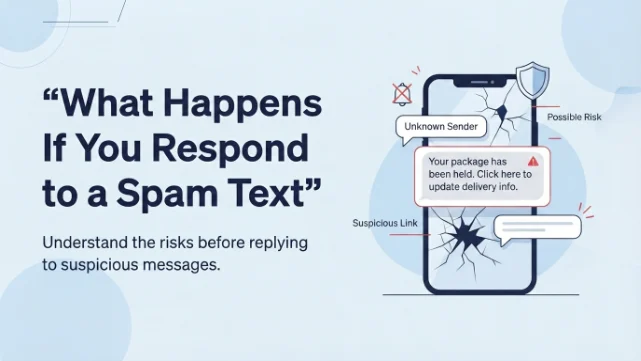
Getting a random text from an unknown number can be surprisingly convincing. Maybe it says “Hey, are you free today?” Maybe it looks like a delivery update, a job opportunity, a bank alert, or someone casually asking, “Is this Sarah?” Then comes the tiny question: what happens if you respond to a spam text?
Sometimes, nothing happens. Other times, replying can tell a scammer that your number is active and being monitored. That can make your number more attractive for future spam, phishing attempts, or scam conversations. The bigger danger is usually not the simple act of sending “Who is this?” but what can happen if you continue chatting, click a link, open an attachment, or share personal information.
Whether you are texting from your phone, checking messages during work, or trying to figure out whether a suspicious text is legitimate, knowing when to stop responding can save you a major headache.
What Happens Right Away
- Your reply may confirm that your number is active.
Example: Use this information when deciding whether to answer an unfamiliar message.
Meaning: A response can signal that a real person is receiving and reading messages at that number. - You may receive more spam afterward.
Example: Consider this possibility when an unknown sender suddenly continues messaging after you reply.
Meaning: A responsive number may attract additional unwanted messages. - The sender may try to start a longer conversation.
Example: This can happen after you answer a simple “Hello” from an unknown number.
Meaning: The initial message may be an attempt to get you engaged rather than the real scam. - You could receive a follow-up link.
Example: Be cautious if the sender immediately sends a website after you respond.
Meaning: The conversation may be moving toward phishing or another scam attempt. - The sender may ask personal questions.
Example: Watch for questions about your name, location, job, or account details.
Meaning: The scammer may be trying to collect information about you. - The conversation can become more convincing.
Example: A scammer may change their story after learning how you respond.
Meaning: Your replies can give them information to personalize their approach. - You might be targeted with a different scam later.
Example: A spammer could eventually send fake delivery, banking, employment, or investment messages.
Meaning: Your response may lead to additional attempts using different themes. - The sender may test whether you trust them.
Example: Notice this when someone starts with harmless small talk before making a request.
Meaning: Casual conversation can be used to build credibility before a scam. - You may accidentally reveal useful details.
Example: Even saying “Yes, this is Maria” can provide information to an unknown sender.
Meaning: Small replies can give scammers clues they did not have before. - You could become part of an automated spam campaign.
Example: This is a concern when the same type of message keeps appearing from different numbers.
Meaning: Your response may indicate that the number is worth targeting. - The sender may ask you to move the conversation elsewhere.
Example: Be suspicious if they suggest switching to another messaging app immediately.
Meaning: Moving platforms can make the scam harder to identify or report. - You may get pressured to respond quickly.
Example: Watch for phrases claiming your account or delivery is urgently at risk.
Meaning: Urgency is often used to reduce careful thinking. - The message may become more threatening.
Example: Be cautious if a harmless conversation suddenly turns into warnings about fines, accounts, or legal trouble.
Meaning: Fear can be used to pressure you into taking action. - You might receive a fake verification request.
Example: Be alert if the sender asks for a code supposedly sent to your phone.
Meaning: The scammer may be attempting to gain access to an account. - Nothing may happen at all.
Example: This can occur when you reply once and the sender never continues.
Meaning: Replying does not automatically mean your phone or accounts have been hacked.
Why Spam Texts Want a Response
- “Your number is active.”
Example: Think about this when an unknown sender keeps responding after your first message.
Meaning: Your reply may confirm that a real person uses the number. - “Someone is reading this.”
Example: This matters when deciding whether to continue a suspicious conversation.
Meaning: A response shows the message reached an engaged recipient. - “This person might be reachable.”
Example: Spammers may use replies to identify numbers worth contacting again.
Meaning: Engagement can make your number more valuable to scammers. - “This person may be curious.”
Example: A scammer may intentionally send an unusual opening message to trigger a reply.
Meaning: Curiosity can become the entry point for further manipulation. - “This person may trust the conversation.”
Example: Notice this when the sender gradually shifts from casual chat to requests.
Meaning: Continued replies can indicate growing engagement. - “This number might respond to future messages.”
Example: Consider this when multiple suspicious messages arrive after one reply.
Meaning: Your response may encourage further attempts. - “The conversation can continue.”
Example: This often happens after someone responds to a simple greeting from an unknown number.
Meaning: The scammer has achieved their first goal of getting engagement. - “We have a live target.”
Example: Think of this as the risk behind responding to suspicious messages.
Meaning: The sender may now know the number is actively monitored. - “We can try another angle.”
Example: A scammer might change from a delivery story to an investment pitch.
Meaning: They may adapt their approach based on your reactions. - “This person might click.”
Example: Be especially cautious when a sender follows a conversation with a link.
Meaning: Engagement may be used to move you toward a malicious destination. - “This person might provide information.”
Example: Avoid answering questions about your identity or accounts.
Meaning: Personal details can help scammers make later attacks more convincing. - “This person may be worth targeting again.”
Example: Keep this in mind if spam increases after you answer.
Meaning: Engagement can potentially lead to repeated targeting. - “This conversation has potential.”
Example: A scammer may continue chatting instead of immediately asking for money.
Meaning: The goal may be to build trust before making a larger request. - “We can create urgency.”
Example: Watch for sudden warnings about payments, packages, or accounts.
Meaning: The sender may use pressure to make you act quickly. - “We can see how they react.”
Example: Notice when a sender keeps changing their story based on your replies.
Meaning: Your reactions can help them tailor the scam.
What If You Reply “Who Is This?”
- “Who is this?”
Example: People often send this when an unknown number appears to know them.
Meaning: You are asking for identification, but you are still engaging with the sender. - “Sorry, who are you?”
Example: Use this when you genuinely think the message may be from someone you know.
Meaning: You are requesting clarification without sharing information. - “I don’t recognize this number.”
Example: Use this when you receive an unexpected message from an unfamiliar contact.
Meaning: You are clearly communicating that the sender is unknown to you. - “Who were you trying to reach?”
Example: Use this when a message appears to have been sent to the wrong person.
Meaning: You are asking for context without confirming your identity. - “Can you identify yourself?”
Example: Use this when the message seems suspicious but could potentially be legitimate.
Meaning: You are requesting basic identification before continuing. - “I think you have the wrong number.”
Example: Use this when someone claims to know you but you do not recognize them.
Meaning: You are offering a simple explanation without providing personal details. - “Which person are you trying to contact?”
Example: Use this when the sender has not clearly identified their intended recipient.
Meaning: You are asking them to explain the purpose of the message. - “Please clarify who this is.”
Example: Use this when the message appears important but lacks identifying information.
Meaning: You want more context before responding further. - “I do not recognize the sender.”
Example: Use this when documenting a suspicious message for yourself or a workplace report.
Meaning: You are noting that the contact is unfamiliar. - “What is this regarding?”
Example: Use this when the sender claims the message concerns an important matter.
Meaning: You are asking for the subject without revealing anything about yourself. - “Can you provide more context?”
Example: Use this when the message is vague and unexpected.
Meaning: You are asking the sender to explain why they contacted you. - “Please tell me why you are contacting me.”
Example: Use this when an unknown sender continues messaging.
Meaning: You are requesting a clear reason for the contact. - “I am not sure who this is.”
Example: Use this when you want a neutral response.
Meaning: You are acknowledging the message without confirming personal information. - “Wrong number?”
Example: Use this when a suspicious message looks like an accidental contact.
Meaning: You are briefly checking whether the sender made a mistake. - “I do not know this contact.”
Example: Use this when you want to keep your response extremely simple.
Meaning: You are indicating that the sender is unfamiliar.
What If You Already Replied?
- “Stop responding now.”
Example: Use this as your personal rule after realizing the message is suspicious.
Meaning: Ending the conversation limits further engagement. - “Do not panic.”
Example: Remember this if you already sent a harmless reply.
Meaning: A simple response does not automatically mean your device or accounts were compromised. - “Block the number.”
Example: Do this when the sender is clearly unwanted or suspicious.
Meaning: Blocking prevents further direct messages from that number. - “Report the message.”
Example: Use your phone’s reporting option when available.
Meaning: Reporting can help your carrier or platform identify unwanted messages. - “Delete the conversation.”
Example: Consider this after preserving any information you may need for reporting.
Meaning: Removing the message can reduce accidental interaction with suspicious content. - “Do not click anything.”
Example: Follow this rule if the sender sends a link after you reply.
Meaning: Avoiding suspicious links reduces the risk of phishing or malware exposure. - “Do not send another explanation.”
Example: Use this rule when you feel tempted to tell the sender why you are not interested.
Meaning: More replies simply create additional engagement. - “Check your accounts if you shared information.”
Example: Do this if you accidentally provided sensitive account details.
Meaning: Monitoring accounts can help you spot suspicious activity quickly. - “Change a password if necessary.”
Example: Consider this if you disclosed a password or entered credentials through a suspicious link.
Meaning: Updating compromised credentials can reduce account risk. - “Contact the legitimate company separately.”
Example: Do this when a text claims to be from your bank, delivery service, or another organization.
Meaning: Independent verification avoids trusting the suspicious message itself. - “Do not trust the sender’s next explanation.”
Example: Keep this in mind when the sender suddenly claims they are legitimate.
Meaning: Scammers may use reassurance to keep conversations going. - “Take a screenshot if needed.”
Example: Save evidence before deleting a suspicious message if you may need to report it.
Meaning: A record can help document the attempted scam. - “Watch for follow-up attempts.”
Example: Pay attention if similar messages appear from new numbers.
Meaning: Scammers may try different approaches after an initial interaction. - “Secure any account you may have exposed.”
Example: Take action if you accidentally shared sensitive credentials.
Meaning: Account security becomes more important after information exposure. - “Learn from the close call.”
Example: Use the experience to recognize similar messages in the future.
Meaning: The goal is to become more cautious without panicking.
What If You Clicked the Link?
- “Stop interacting with the page.”
Example: Do this immediately if the website looks suspicious.
Meaning: Ending the interaction limits further exposure. - “Do not enter additional information.”
Example: Follow this rule if a page asks for your name, password, or card details.
Meaning: Avoiding data entry can prevent information theft. - “Close the webpage.”
Example: Do this when you realize a text message link may be fraudulent.
Meaning: Closing the page ends the immediate interaction. - “Do not download anything.”
Example: Follow this if the website asks you to install an app or file.
Meaning: Unexpected downloads can create additional security risks. - “Check what information you entered.”
Example: Review your actions if you interacted with a suspicious site.
Meaning: Knowing what was exposed helps determine your next steps. - “Change exposed passwords.”
Example: Do this if you entered a password into a suspicious website.
Meaning: A compromised password should no longer be trusted. - “Use the official website instead.”
Example: Follow this when a text claims to be from a bank or company.
Meaning: Typing the legitimate website yourself avoids relying on the suspicious link. - “Monitor your accounts.”
Example: Pay closer attention after entering sensitive information.
Meaning: Unusual activity may indicate that your information was misused. - “Do not trust a warning that appears on the page.”
Example: Be cautious if a suspicious website claims your device is infected.
Meaning: Fake security warnings are a common tactic used to create panic. - “Avoid calling numbers shown on suspicious pages.”
Example: Follow this when a website displays an urgent support number.
Meaning: The number may connect you directly to a scammer. - “Run your normal security checks.”
Example: Use trusted security tools if you downloaded something suspicious.
Meaning: Checking the device can help identify potential problems. - “Verify the sender independently.”
Example: Do this when the message claims to represent a legitimate organization.
Meaning: Independent verification helps separate real alerts from impersonation. - “Do not assume the message is legitimate because the website looks professional.”
Example: Remember this when a linked page closely copies a real company website.
Meaning: Visual appearance alone does not prove authenticity. - “Take extra care if financial information was involved.”
Example: Act quickly if you entered payment or banking details.
Meaning: Financial information can create higher risks if exposed. - “When in doubt, stop and verify.”
Example: Use this rule whenever a message creates pressure or confusion.
Meaning: Pausing can prevent an impulsive mistake.
What If You Shared Personal Information?
- “Stop the conversation immediately.”
Example: Do this after realizing you shared information with an unknown sender.
Meaning: Ending contact prevents further information gathering. - “Do not share anything else.”
Example: Follow this if the sender asks another personal question.
Meaning: Limiting additional disclosure reduces exposure. - “Review exactly what you shared.”
Example: Make a quick list if you provided multiple details.
Meaning: Knowing what was exposed helps determine appropriate protective action. - “Secure any affected account.”
Example: Take action if the information included account credentials.
Meaning: Protecting the account can reduce the chance of unauthorized access. - “Watch for suspicious follow-ups.”
Example: Pay attention to unexpected emails, calls, or texts afterward.
Meaning: Exposed information may be used for additional scam attempts. - “Be careful with verification codes.”
Example: Never forward an account verification code to an unknown person.
Meaning: Such codes can sometimes be used to gain access to accounts. - “Verify unexpected account alerts independently.”
Example: Contact your bank or service through its official app or website.
Meaning: Independent verification avoids relying on the suspicious sender. - “Consider whether the information can be changed.”
Example: Review passwords, security settings, or other changeable details.
Meaning: Replacing exposed information can reduce risk. - “Do not let embarrassment delay action.”
Example: Remember this if you feel bad about falling for a convincing message.
Meaning: Acting quickly is more useful than blaming yourself. - “Document what happened.”
Example: Save relevant screenshots and details if the message appears fraudulent.
Meaning: Documentation can help with reporting and future account checks. - “Be extra cautious with future messages.”
Example: Pay closer attention to messages mentioning information you recently disclosed.
Meaning: Scammers may use exposed details to make future messages sound legitimate. - “Check your account security settings.”
Example: Review login activity and security notifications after an exposure.
Meaning: Unusual activity may reveal an attempted account takeover. - “Use official contact channels.”
Example: Contact a company through its verified website rather than replying to the suspicious text.
Meaning: Trusted channels provide safer verification. - “Do not negotiate with the scammer.”
Example: Avoid trying to convince a suspicious sender to leave you alone.
Meaning: Continued conversation gives them more opportunities to manipulate you. - “Treat the experience as a warning sign.”
Example: Use the incident to become more cautious with unexpected texts.
Meaning: The experience can help you recognize future scams earlier.
Funny Responses To Spam Texts
- “Wrong number, right audacity.”
Example: Use this as a humorous caption when an obvious spammer messages you.
Meaning: You are joking about the sender’s confidence. - “My phone did not order this conversation.”
Example: Use this after receiving an unexpected promotional or scam message.
Meaning: You are humorously rejecting the unsolicited interaction. - “Nice try, mysterious stranger.”
Example: Use this privately as a funny reaction before blocking the sender.
Meaning: You recognize the message as suspicious. - “Not today, internet villain.”
Example: Use this when deleting an obvious scam message.
Meaning: You are jokingly treating the spammer as an antagonist. - “My scam detector just screamed.”
Example: Use this after spotting obvious warning signs.
Meaning: You are humorously saying the message looks suspicious. - “Thank you, but I already have enough chaos.”
Example: Use this as a funny caption when deleting spam.
Meaning: You have no interest in the unexpected conversation. - “Absolutely not, mystery number.”
Example: Use this as a playful reaction before blocking the contact.
Meaning: You are rejecting the message without engaging. - “Plot twist: I am not the person you want.”
Example: Use this when a spammer appears to have contacted the wrong person.
Meaning: You are humorously pointing out the failed approach. - “The audacity arrived via SMS.”
Example: Use this as a social caption after receiving an outrageous scam message.
Meaning: You are joking about the unexpected intrusion. - “My inbox has chosen chaos.”
Example: Use this when several suspicious messages arrive.
Meaning: You are humorously describing a sudden spam attack. - “Congratulations, you found my block button.”
Example: Use this as a playful personal reaction before blocking a sender.
Meaning: You are ending the interaction immediately. - “This text has suspicious main-character energy.”
Example: Use this when a message sounds oddly confident or dramatic.
Meaning: You are joking about the message’s unusual behavior. - “Nice scam attempt. Zero stars.”
Example: Use this as a humorous reaction after identifying an obvious scam.
Meaning: You are dismissing the attempt. - “My phone says absolutely not.”
Example: Use this when rejecting a suspicious message.
Meaning: You are humorously expressing a firm refusal. - “And that is going straight to the digital trash.”
Example: Use this before deleting an unwanted spam message.
Meaning: You are choosing not to engage.
Professional Responses
- “I do not respond to unsolicited messages from unknown numbers.”
Example: Use this as a workplace-friendly boundary when an unfamiliar number contacts you.
Meaning: You are clearly declining unexpected communication. - “Please contact me through an established communication channel.”
Example: Use this when someone claims to represent an organization.
Meaning: You want verification through a trusted method. - “I cannot verify the identity of this sender.”
Example: Use this when documenting a suspicious message at work.
Meaning: You are explaining why the communication cannot be trusted. - “I will verify this request independently.”
Example: Use this when a text asks you to take action on a business matter.
Meaning: You will confirm the request through a trusted source. - “Please provide official contact information.”
Example: Use this when someone claims to represent a company.
Meaning: You are requesting information that can be independently verified. - “I do not share sensitive information through unsolicited text messages.”
Example: Use this when a stranger requests confidential details.
Meaning: You are establishing a clear security boundary. - “I will not continue this conversation by text.”
Example: Use this when a suspicious business-related message continues.
Meaning: You are ending the interaction professionally. - “For security reasons, I will verify this request separately.”
Example: Use this when a message involves payments, accounts, or credentials.
Meaning: You are prioritizing independent verification. - “Please send the request through the appropriate official channel.”
Example: Use this when someone sends an unexpected workplace request.
Meaning: You are directing them toward a safer communication method. - “I cannot confirm this request based on this message alone.”
Example: Use this when an unknown sender asks for immediate action.
Meaning: You need more reliable evidence before proceeding. - “I will not provide account information through this conversation.”
Example: Use this when a text asks for sensitive account details.
Meaning: You are refusing to disclose confidential information. - “I have ended this conversation because the sender could not be verified.”
Example: Use this when documenting why you stopped responding.
Meaning: You are giving a professional security-based explanation. - “Please use the official contact details listed on your website.”
Example: Use this when someone claims to represent a business.
Meaning: You want to verify the identity independently. - “I am unable to assist through an unsolicited text message.”
Example: Use this when an unknown person asks for work-related assistance.
Meaning: You are politely declining an unverified request. - “For security purposes, I will not continue this exchange.”
Example: Use this as a final response before blocking a suspicious contact.
Meaning: You are ending the conversation clearly and professionally.
Chill And Casual Responses
- “I think you have the wrong number.”
Example: Use this when an unfamiliar sender appears to have contacted you accidentally.
Meaning: You are offering a simple explanation without creating unnecessary drama. - “Not sure who this is.”
Example: Use this when you want a short and casual clarification.
Meaning: You are asking the sender to identify themselves. - “Hey, I do not recognize this number.”
Example: Use this when the message could possibly be legitimate.
Meaning: You are casually asking for context. - “Who am I texting?”
Example: Use this when the sender has not introduced themselves.
Meaning: You want to know who is behind the message. - “Wrong person, I think.”
Example: Use this when the message seems unrelated to you.
Meaning: You are suggesting the sender may have contacted the wrong person. - “Not familiar with this number.”
Example: Use this when you want to keep your response brief.
Meaning: You are indicating that the sender is unknown. - “Can you remind me who this is?”
Example: Use this when you think it might be someone you know.
Meaning: You are asking for identification without assuming who they are. - “Hey, what is this about?”
Example: Use this when the message is vague.
Meaning: You want the sender to explain their reason for contacting you. - “I may have the wrong contact saved.”
Example: Use this when the sender seems familiar but you cannot place them.
Meaning: You are casually suggesting a contact mix-up. - “Do we know each other?”
Example: Use this when an unfamiliar person starts a conversation.
Meaning: You are asking whether there is a legitimate connection. - “I do not think I know this number.”
Example: Use this when responding cautiously to a vague message.
Meaning: You are asking for clarification. - “Hey, can you give me some context?”
Example: Use this when the sender’s message is confusing.
Meaning: You want an explanation before continuing. - “Not sure how you got my number.”
Example: Use this when an unknown person claims to know you.
Meaning: You are questioning how the contact happened. - “I think this message was meant for someone else.”
Example: Use this when the content clearly does not match your situation.
Meaning: You believe the sender made a mistake. - “I am going to pass on this one.”
Example: Use this when a conversation starts feeling suspicious.
Meaning: You are politely ending the interaction.
FAQs
1. What happens if you respond to a spam text?
Responding to a spam text may confirm that your phone number is active. This can lead to more spam messages, scam attempts, or phishing messages.
2. Can someone hack my phone if I reply to a spam text?
Simply replying to a spam text usually does not give someone direct access to your phone. However, scammers may try to convince you to click malicious links or share personal information.
3. What should I do if I accidentally replied to a spam text?
Stop responding, avoid clicking any links, block the number, and report the message as spam. If you shared sensitive information, take additional steps to protect your accounts.
4. Does replying to spam confirm that my number is active?
Yes, a response can signal to scammers that your number is active and monitored. This may make you a more attractive target for future spam or scam messages.
5. Should I reply STOP to a spam text?
Avoid replying STOP to suspicious or clearly fraudulent messages because it can confirm that your number is active. Use your phone’s spam-reporting feature or your carrier’s reporting option instead.
Conclusion
Knowing what happens if you respond to a spam text can help you avoid turning one random message into a much bigger problem. A harmless reply does not automatically mean your phone has been hacked, but continuing the conversation can give an unknown sender more opportunities to identify, persuade, or target you. The safest approach is simple: do not click suspicious links, avoid sharing personal information, verify unexpected claims independently, and block or report messages that look fraudulent.
If you already replied, do not panic. Stop engaging and take sensible security steps based on what you shared or clicked. Save this guide for the next suspicious text, share it with someone who needs it, and remember the golden rule: when a message feels wrong, you do not owe it a reply.
Discover More Related Articles:

Jennifer Wilson is an experienced writer and content creator with over 20 years of expertise in digital publishing, lifestyle, and informative content. Holding a degree in English Literature, she contributes to Responary.Com, where she shares engaging, well-researched articles that help readers stay informed and inspired.