Quick Answer
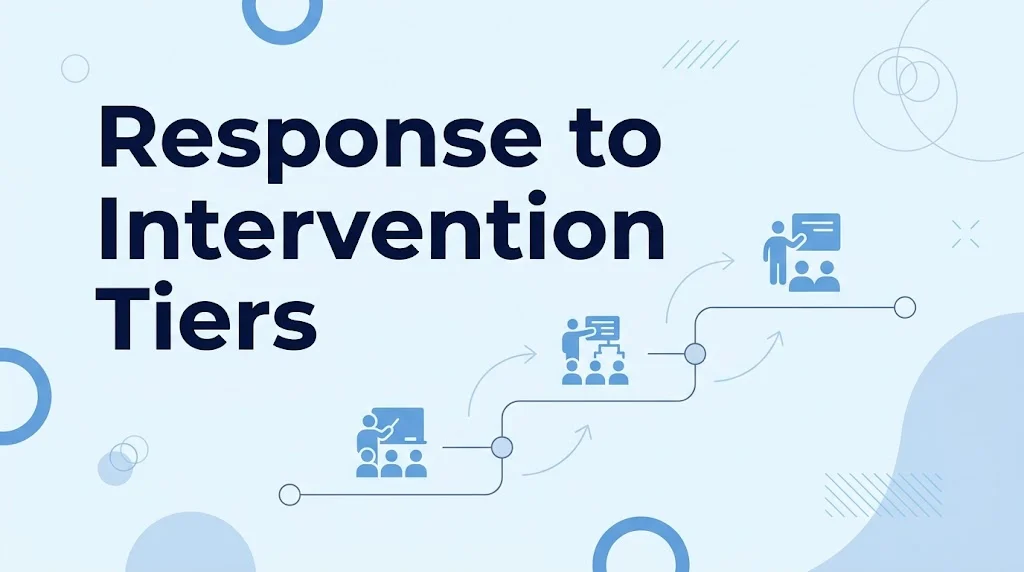
Response to intervention tiers are the levels of support used in an RTI framework to help students who need additional academic or behavioral assistance. The three common tiers are Tier 1, Tier 2, and Tier 3, with support becoming increasingly targeted and individualized.
Tier 1 universal support, Tier 2 targeted support, Tier 3 intensive individualized support, academic interventions, progress monitoring
Trying to understand school intervention systems can sometimes feel like decoding a secret education language. Terms like Tier 1, Tier 2, Tier 3, intervention, progress monitoring, and targeted support can quickly turn a simple question into a full-on research project.
Response to intervention, commonly called RTI, is designed to provide students with different levels of support based on their learning needs. Teachers may use classroom instruction, small-group interventions, individualized strategies, and regular progress checks to determine whether additional help is needed.
Understanding the different tiers makes it easier for parents, teachers, and students to see how support can increase when a student is not making enough progress. Whether you are researching RTI for school, preparing an education assignment, talking with a teacher, or simply trying to understand the terminology, the examples below break the concept into clear, practical pieces.
Simple Responses About Tier 1
- Tier 1 is the universal level of support.
Use this when explaining the starting point of an RTI framework to a parent or student.
Meaning: Tier 1 generally provides high-quality instruction and support to all students in the regular classroom. - Tier 1 supports all students.
Use this as a quick explanation during an education discussion.
Meaning: The first level is designed for the entire classroom rather than only students experiencing difficulties. - Most students begin with Tier 1 instruction.
Use this when explaining how support typically starts.
Meaning: Students generally receive core classroom instruction before more targeted interventions are considered. - Tier 1 focuses on strong core instruction.
Use this in a school assignment about RTI.
Meaning: The goal is to provide effective teaching strategies and appropriate learning opportunities for everyone. - Tier 1 is classroom-wide support.
Use this when someone asks what makes the first level different.
Meaning: The support is generally delivered as part of ordinary classroom instruction. - Universal screening can help identify students who need more support.
Use this when explaining how schools may identify learning concerns.
Meaning: Screening can provide information about which students may benefit from additional intervention. - Tier 1 can include differentiated instruction.
Use this when discussing classroom teaching strategies.
Meaning: Teachers may adjust instruction to address different learning needs within the same classroom. - Tier 1 does not mean every student receives identical instruction.
Use this to clarify a common misunderstanding.
Meaning: Teachers can vary instruction while still providing universal classroom support. - Progress is monitored at the classroom level.
Use this when describing how teachers evaluate learning.
Meaning: Student performance can be reviewed to determine whether current instruction is producing adequate progress. - Tier 1 is the foundation of the support system.
Use this when explaining the relationship between the levels.
Meaning: More targeted support builds on the core instruction provided at the first level. - Effective classroom instruction is an important part of Tier 1.
Use this in a teacher-training discussion.
Meaning: Strong teaching practices are central to supporting students before more intensive intervention is considered. - Tier 1 support is usually provided by the classroom teacher.
Use this when explaining who may deliver the initial support.
Meaning: The regular classroom is generally the primary setting for universal instruction. - Tier 1 can address academic and behavioral needs.
Use this when discussing the broader purpose of school support systems.
Meaning: Universal strategies may support learning, classroom behavior, engagement, and participation. - A student may need more than Tier 1 support.
Use this when explaining why additional tiers exist.
Meaning: Some students may not make enough progress with universal classroom instruction alone. - Tier 1 provides the starting point for intervention decisions.
Use this in an educational presentation.
Meaning: Student performance within core instruction can help educators determine whether additional support is appropriate.
Targeted Tier 2 Responses
- Tier 2 provides targeted support.
Use this as a basic definition for students or parents.
Meaning: Tier 2 is generally intended for students who need additional assistance beyond universal classroom instruction. - Tier 2 is often delivered in small groups.
Use this when explaining how targeted intervention may look.
Meaning: A small number of students with similar needs may receive additional instruction together. - Tier 2 provides more support than Tier 1.
Use this when comparing the first two levels.
Meaning: The intervention becomes more focused and typically provides additional opportunities for practice and instruction. - Students receiving Tier 2 still participate in core instruction.
Use this when correcting a common misconception.
Meaning: Targeted intervention usually supplements rather than completely replaces regular classroom learning. - Tier 2 interventions are based on identified needs.
Use this when explaining why students receive different interventions.
Meaning: The support is selected according to specific academic or behavioral concerns. - Small-group reading instruction is one possible Tier 2 example.
Use this in an example involving literacy difficulties.
Meaning: Students needing additional reading practice may receive focused instruction outside the general lesson. - Extra math practice can be part of Tier 2.
Use this when discussing mathematics intervention.
Meaning: A student struggling with a particular math skill may receive additional targeted instruction. - Tier 2 usually involves more frequent intervention.
Use this when comparing intervention intensity.
Meaning: Students may receive structured support more regularly than they do through ordinary classroom instruction. - Progress monitoring is important in Tier 2.
Use this when explaining how intervention effectiveness is evaluated.
Meaning: Student performance is tracked to determine whether the intervention is helping. - Tier 2 support can be temporary.
Use this when explaining what happens after improvement.
Meaning: Students may return to universal support when they demonstrate sufficient progress. - Tier 2 is more targeted than universal classroom support.
Use this in a comparison chart or school presentation.
Meaning: The intervention addresses a smaller group of students and more specific needs. - A student does not automatically need Tier 3 after Tier 2.
Use this when explaining movement between levels.
Meaning: Students can respond successfully to targeted support without requiring intensive intervention. - Tier 2 can focus on one specific skill.
Use this when giving a practical example.
Meaning: Intervention may concentrate on a particular weakness instead of addressing every academic area. - Teachers may collaborate when planning Tier 2 support.
Use this in a discussion about intervention teams.
Meaning: Educators can share information and coordinate strategies around a student’s needs. - Tier 2 helps identify how a student responds to additional support.
Use this when discussing intervention decisions.
Meaning: Progress during targeted intervention can provide useful information about the student’s learning needs.
Intensive Tier 3 Responses
- Tier 3 provides intensive individualized support.
Use this as a simple explanation of the highest common RTI level.
Meaning: Tier 3 is generally designed for students who need more intensive intervention than Tier 1 and Tier 2 provide. - Tier 3 is often highly individualized.
Use this when explaining how the third level differs from small-group support.
Meaning: Intervention can be tailored closely to a student’s specific learning needs. - Tier 3 may involve one-to-one instruction.
Use this as a practical example.
Meaning: An individual student may receive direct instruction focused on specific areas of difficulty. - Tier 3 generally involves greater intervention intensity.
Use this when comparing the three levels.
Meaning: The amount, frequency, or specialization of support may increase when students need more intensive assistance. - Progress monitoring remains important at Tier 3.
Use this in an education report.
Meaning: Student performance continues to be measured so educators can evaluate the intervention. - Tier 3 does not simply mean a student is failing.
Use this to address an emotional concern about intervention levels.
Meaning: The tier describes the intensity of support rather than defining a student’s abilities or potential. - Tier 3 can target specific academic skills.
Use this when explaining individualized intervention.
Meaning: Instruction may focus closely on a student’s particular areas of difficulty. - Tier 3 may require additional school personnel.
Use this when describing how intensive support can be delivered.
Meaning: Specialized staff may participate depending on the student’s needs and school resources. - Individualized intervention plans can guide Tier 3 support.
Use this in a professional education discussion.
Meaning: Educators can use specific goals and strategies to organize intensive intervention. - Tier 3 should be based on student data.
Use this when discussing intervention decisions.
Meaning: Performance information can help educators determine what type and intensity of support may be appropriate. - Tier 3 can involve frequent progress checks.
Use this when explaining monitoring practices.
Meaning: More frequent data collection can help educators evaluate whether intensive intervention is working. - Students may move between intervention levels.
Use this when explaining that tiers are not permanent labels.
Meaning: Support can change as a student’s progress and needs change. - Tier 3 is not necessarily a permanent placement.
Use this when reassuring families about the meaning of intensive support.
Meaning: A student’s intervention level can change when their needs or progress change. - Intensive support should match the student’s specific needs.
Use this in a teacher or parent discussion.
Meaning: The intervention should be focused rather than simply adding more work. - Tier 3 represents a higher level of intervention intensity.
Use this for a concise comparison of the tiers.
Meaning: It generally provides more individualized and intensive assistance than lower levels.
Funny Responses About RTI Tiers
- Tier 1 says, “Everyone gets support.”
Use this as a humorous classroom presentation line.
Meaning: You are simplifying the universal nature of the first tier. - Tier 2 says, “Okay, let us zoom in.”
Use this when explaining targeted intervention to students.
Meaning: You are humorously describing the shift toward more focused support. - Tier 3 says, “We are getting very specific now.”
Use this in an informal education presentation.
Meaning: You are highlighting the individualized nature of intensive intervention. - RTI is basically support with different levels of volume.
Use this as a playful analogy.
Meaning: The statement compares increasing intervention intensity to turning up the volume. - Tier 1 is the classroom buffet of support.
Use this when teaching the concept creatively.
Meaning: You are jokingly describing broad support available to everyone. - Tier 2 brings the small-group energy.
Use this in an informal explanation.
Meaning: You are highlighting the smaller and more targeted setting. - Tier 3 is where the support gets seriously customized.
Use this as a casual explanation for older students.
Meaning: You are emphasizing the individualized nature of intensive intervention. - Three tiers, one goal: helping students make progress.
Use this as a presentation slogan.
Meaning: You are focusing attention on the shared purpose of the intervention system. - RTI is not a video game, but the tiers do level up.
Use this with students who enjoy gaming references.
Meaning: You are comparing increasing support to moving through game levels. - Tier 1 starts broad, Tier 2 gets focused, Tier 3 gets personal.
Use this as a memorable study phrase.
Meaning: You are summarizing the increasing specificity of support. - When classroom support needs a sequel, Tier 2 enters.
Use this in a lighthearted presentation.
Meaning: You are joking about additional targeted support. - When the sequel needs a director’s cut, Tier 3 gets involved.
Use this as a humorous way to describe intensive support.
Meaning: You are emphasizing how individualized the third level can become. - Tier 1 is everyone, Tier 2 is targeted, Tier 3 is intensive.
Use this as a quick study reminder.
Meaning: You are reducing the three-tier model to its main distinctions. - Think of RTI as support with adjustable settings.
Use this when explaining the model to beginners.
Meaning: You are comparing changing intervention intensity with adjusting settings. - More support does not mean less potential.
Use this when discussing RTI respectfully.
Meaning: You are reminding people that intervention intensity does not determine a student’s potential.
Professional Responses About RTI
- RTI uses increasingly targeted levels of support.
Use this in a professional education document.
Meaning: The framework organizes intervention according to the intensity of student support needed. - Intervention decisions should be informed by student performance data.
Use this during a professional discussion.
Meaning: Educators can use evidence of progress to guide support decisions. - Tier 1 emphasizes high-quality core instruction.
Use this in a staff presentation.
Meaning: Universal instruction forms the foundation of the intervention framework. - Tier 2 provides targeted supplemental intervention.
Use this in an educational report.
Meaning: Additional support is directed toward students who need more than universal instruction. - Tier 3 involves intensive individualized intervention.
Use this when summarizing the highest common level.
Meaning: Support becomes more specialized and individualized at this level. - Progress monitoring informs intervention decisions.
Use this in professional educational writing.
Meaning: Ongoing performance information helps educators evaluate student response. - Intervention intensity should correspond to student needs.
Use this in a school meeting.
Meaning: Support should be appropriately matched to the level of difficulty demonstrated. - Tier placement should not be viewed as a permanent label.
Use this when speaking with families.
Meaning: Students can receive different levels of support as their needs change. - Collaborative planning can strengthen intervention delivery.
Use this during a teacher team discussion.
Meaning: Collaboration can help educators coordinate effective support. - Intervention goals should be clear and measurable.
Use this when discussing intervention planning.
Meaning: Specific goals make it easier to evaluate whether meaningful progress is occurring. - Data should guide adjustments to intervention.
Use this in a professional presentation.
Meaning: Educators can modify strategies when progress data indicate that changes are needed. - The goal is student progress, not simply tier movement.
Use this when explaining the purpose of RTI.
Meaning: The focus should remain on improving outcomes rather than moving students through levels. - Universal support provides the foundation for targeted intervention.
Use this in an academic report.
Meaning: More intensive interventions build upon the core support system. - Intervention effectiveness should be evaluated regularly.
Use this in a school improvement discussion.
Meaning: Regular review helps determine whether the selected support is producing progress. - RTI provides a structured approach to additional support.
Use this as a professional summary statement.
Meaning: The framework organizes how schools can respond to varying levels of student need.
Creative Ways To Explain The Three Tiers
- Tier 1 is the wide net.
Use this analogy when explaining universal support to beginners.
Meaning: The first level reaches a broad population of students. - Tier 2 is the focused lens.
Use this analogy in a classroom presentation.
Meaning: The second level concentrates on students with particular needs. - Tier 3 is the close-up view.
Use this when explaining intensive support.
Meaning: The third level examines individual needs much more closely. - Think wide, focused, individual.
Use this as a quick memory trick.
Meaning: The phrase summarizes the increasing specificity of the three levels. - Tier 1 supports the classroom, Tier 2 supports a smaller group, Tier 3 supports the individual.
Use this as a study sentence.
Meaning: The statement shows how the size of the supported group generally becomes smaller. - Imagine three circles of support.
Use this when creating an RTI infographic.
Meaning: Each circle can represent a different level of intervention intensity. - Start broad, then narrow the support when needed.
Use this to explain the general logic of RTI.
Meaning: Intervention can become more targeted when universal support is not enough. - Think of Tier 1 as the foundation.
Use this when explaining the relationship between the levels.
Meaning: Core classroom instruction forms the base of the support structure. - Think of Tier 2 as the extra boost.
Use this with younger students.
Meaning: Targeted intervention provides additional assistance beyond core instruction. - Think of Tier 3 as customized coaching.
Use this as an easy analogy for intensive support.
Meaning: Individualized intervention can be compared with highly personalized coaching. - Three levels, increasing focus.
Use this as a short infographic heading.
Meaning: The phrase captures the general movement from universal to intensive support. - Universal, targeted, intensive.
Use this as a three-word study guide.
Meaning: These words provide a quick way to remember the basic distinction among the levels. - Everyone, some, individual.
Use this as a simple visual memory aid.
Meaning: The phrase represents the progressively smaller groups typically receiving support. - Support changes when student needs change.
Use this when explaining flexibility within intervention systems.
Meaning: The level of support can be adjusted according to student progress. - The goal stays the same even when the support changes.
Use this as a closing statement in a presentation.
Meaning: Different tiers share the goal of helping students succeed.
Sarcastic Responses About RTI Tiers
- Because apparently one level of support was not enough.
Use this jokingly when introducing the three tiers.
Meaning: You are humorously pointing out that students have different support needs. - Tier 1: welcome everyone. Tier 2: let us get specific.
Use this as a playful study note.
Meaning: You are contrasting universal and targeted intervention. - Tier 3: yes, we are getting very specific.
Use this in an informal explanation.
Meaning: You are highlighting the individualized nature of intensive intervention. - One size fits all? Education said no thanks.
Use this in a presentation about differentiated support.
Meaning: You are emphasizing that students can require different approaches. - Tier 1 keeps it broad. Tier 2 grabs the magnifying glass.
Use this as a humorous comparison.
Meaning: You are showing how intervention becomes more focused. - Tier 3 has entered the chat.
Use this as a meme-style presentation line.
Meaning: You are playfully announcing the most intensive common intervention level. - More targeted support? Revolutionary.
Use this only in an informal educational setting.
Meaning: You are using sarcasm to emphasize the idea of individualized support. - Turns out students are not all running the same software.
Use this when explaining individual learning differences.
Meaning: You are humorously pointing out that students have different learning needs. - The tiers are basically support settings with better documentation.
Use this as a light joke among educators.
Meaning: You are comparing intervention levels with adjustable support settings. - Tier 1: everybody. Tier 2: some people. Tier 3: very specific people.
Use this as an informal memory trick.
Meaning: You are simplifying the general group differences. - RTI: because “try harder” was never a complete intervention plan.
Use this in a thoughtful but humorous presentation.
Meaning: You are emphasizing the importance of structured support. - Progress data have entered the conversation.
Use this when discussing monitoring.
Meaning: You are humorously highlighting the role of evidence in intervention decisions. - Tier 2 is where “extra help” gets an actual plan.
Use this when explaining targeted intervention.
Meaning: You are emphasizing the structured nature of additional support. - Tier 3: personalized support has left the group chat.
Use this as a playful description.
Meaning: You are emphasizing the shift toward individualized intervention. - Different students, different support. Wild concept.
Use this with an audience that appreciates dry humor.
Meaning: You are highlighting the value of recognizing individual needs.
Parent-Friendly Responses
- Tier 1 means your child receives regular classroom support.
Use this when explaining the framework to a parent.
Meaning: The child begins with the core instruction provided to students generally. - Tier 2 means your child may receive additional targeted help.
Use this during a parent-teacher conversation.
Meaning: The student may receive supplemental intervention for a particular area of need. - Tier 3 means support becomes more intensive and individualized.
Use this when explaining intensive intervention.
Meaning: The student may receive a more customized intervention based on specific needs. - Moving to a higher tier does not mean your child has failed.
Use this when addressing family concerns.
Meaning: A higher tier indicates a need for additional support rather than a judgment about the student. - The tiers describe support, not intelligence.
Use this when reassuring a parent.
Meaning: Intervention levels should not be interpreted as measures of ability or potential. - Teachers use information about progress to guide support.
Use this when explaining how decisions are made.
Meaning: Student performance helps educators determine whether additional intervention may be useful. - A student can receive additional help and continue regular classroom learning.
Use this when explaining Tier 2.
Meaning: Supplemental intervention does not necessarily replace core instruction. - Support can change over time.
Use this when explaining that tier placement is flexible.
Meaning: A student’s intervention needs may increase or decrease as progress changes. - Small-group intervention can provide extra practice.
Use this when discussing Tier 2 with families.
Meaning: Students can receive focused instruction with peers who have similar needs. - Individual support can focus closely on a specific skill.
Use this when describing Tier 3.
Meaning: Intensive intervention can be customized to address a particular difficulty. - Progress monitoring helps show whether support is working.
Use this when explaining data collection.
Meaning: Regular measurements provide evidence about changes in student performance. - The goal is to help your child make meaningful progress.
Use this during a family meeting.
Meaning: Intervention is intended to improve learning rather than simply assign a tier. - Parents can ask what intervention is being provided.
Use this when encouraging family involvement.
Meaning: Families can seek clear information about the type, frequency, and purpose of support. - Parents can ask how progress will be measured.
Use this when preparing for a school meeting.
Meaning: Understanding the measurement process helps families follow the student’s progress. - The best support depends on the student’s individual needs.
Use this as a parent-friendly summary.
Meaning: Intervention should be matched to the student’s particular learning situation.
Student-Friendly Responses
- Tier 1 means regular classroom support.
Use this when explaining RTI to a student.
Meaning: The student receives the standard instruction and support provided in the classroom. - Tier 2 means you may get some extra targeted help.
Use this with younger students.
Meaning: The student may receive additional practice or instruction in a specific area. - Tier 3 means the support becomes more personalized.
Use this when explaining intensive intervention.
Meaning: The intervention may be designed more closely around the student’s needs. - Getting extra help is not a bad thing.
Use this when a student feels embarrassed about intervention.
Meaning: Additional support is presented as a resource rather than a punishment. - The goal is progress, not perfection.
Use this as encouragement during intervention.
Meaning: Improvement is the main focus rather than immediate mastery. - Your support level can change.
Use this when explaining flexible intervention.
Meaning: Students can receive different levels of support as their needs change. - Asking for help is part of learning.
Use this to encourage students receiving intervention.
Meaning: Seeking support is framed as a normal part of education. - Extra practice can help strengthen a tricky skill.
Use this with elementary students.
Meaning: Additional instruction provides more opportunities to develop a difficult skill. - Your tier does not define you.
Use this when discussing student confidence.
Meaning: An intervention level does not determine a student’s identity or potential. - Different learners need different tools.
Use this as an easy analogy.
Meaning: Students can benefit from different instructional approaches. - More support simply means more support.
Use this when reducing anxiety about higher tiers.
Meaning: Intervention should be viewed as assistance rather than a negative label. - Your teacher is looking for what helps you learn best.
Use this when explaining intervention planning.
Meaning: Support should focus on finding effective learning strategies. - Progress checks show how things are going.
Use this to explain monitoring.
Meaning: Teachers use performance information to evaluate improvement. - Small groups can give you more practice time.
Use this when introducing Tier 2.
Meaning: A smaller instructional setting can provide additional focused practice. - Individual support can give you a strategy built around your needs.
Use this when explaining Tier 3.
Meaning: Intensive support can be customized to help with specific learning challenges.
Clever Responses About RTI Tiers
- Think of the tiers as a support ladder.
Use this as a memorable analogy.
Meaning: Each level represents a different degree of intervention intensity. - Tier 1 builds the base.
Use this as a study note.
Meaning: Universal classroom instruction provides the foundation. - Tier 2 narrows the focus.
Use this when comparing the first two levels.
Meaning: Targeted intervention addresses more specific needs. - Tier 3 personalizes the plan.
Use this as a quick reminder of intensive intervention.
Meaning: The highest common level focuses closely on individual needs. - Universal first, targeted next, intensive when needed.
Use this as a study sentence.
Meaning: The phrase summarizes the general progression of support. - More intensity does not automatically mean more difficulty.
Use this to clarify intervention terminology.
Meaning: Tier level describes support intensity rather than simply measuring how difficult a student’s situation is. - The tier follows the need, not the student’s identity.
Use this in a parent or teacher presentation.
Meaning: Intervention should be based on current support needs rather than permanent labels. - Data helps determine the next step.
Use this when explaining progress monitoring.
Meaning: Student performance information can guide intervention decisions. - Intervention is a response, not a label.
Use this as a memorable presentation statement.
Meaning: The framework focuses on responding to student needs. - Support should become more focused as needs become more specific.
Use this in an educational explanation.
Meaning: More individualized needs may require more targeted intervention. - Tier 1 asks, “How is everyone doing?”
Use this as a memory device.
Meaning: Universal support considers the performance of the broader student population. - Tier 2 asks, “Who needs extra targeted support?”
Use this when comparing levels.
Meaning: Targeted intervention focuses on students who need additional assistance. - Tier 3 asks, “What does this student specifically need?”
Use this to remember the third level.
Meaning: Intensive intervention is closely tailored to individual needs. - The tiers change the level of support, not the value of the student.
Use this in a student-centered presentation.
Meaning: Intervention intensity should never be treated as a measure of personal worth. - Three tiers can create multiple pathways to progress.
Use this as a concluding education statement.
Meaning: Different support levels allow educators to respond to varied student needs.
FAQs
What are the three tiers in response to intervention?
The three commonly described levels are Tier 1, Tier 2, and Tier 3. Tier 1 provides universal support, Tier 2 provides targeted intervention, and Tier 3 provides more intensive and individualized support.
What is Tier 1 in RTI?
Tier 1 is the universal level. It generally includes high-quality core instruction and classroom-wide support provided to students.
What is Tier 2 in RTI?
Tier 2 is targeted support for students who need additional assistance beyond core classroom instruction.
What is Tier 3 in RTI?
Tier 3 is generally the most intensive level of support in a three-tier model. Intervention may become highly individualized and may involve more frequent or specialized instruction.
Does moving to Tier 3 mean a student has a learning disability?
Not necessarily. Receiving intensive intervention does not by itself establish a diagnosis or disability.
Conclusion
Understanding the three levels of intervention does not have to feel complicated. The basic idea is straightforward: students receive support that matches their needs, beginning with universal classroom instruction and becoming more targeted or intensive when additional help is needed.
Tier 1 generally provides broad classroom support, Tier 2 focuses on targeted intervention, and Tier 3 offers more individualized assistance. Progress monitoring helps educators understand whether a student is responding to the support and whether adjustments may be appropriate.
You are a parent, teacher, student, or education professional, knowing these distinctions can make school conversations much easier. Save this guide as a quick reference, share it with someone studying education, and use the simple examples whenever the tier terminology gets confusing.
Discover More Related Articles:
- How do You Reply to a Comment on YouTube| Smart & Engaging Responses In 2026
- How to Respond to Feedback | Without Getting Defensive In 2026

Laura Adams is a dedicated content writer and blogger known for crafting clear, informative, and engaging articles. As a contributor to Responary.com, she specializes in creating reader-friendly content that educates, inspires, and keeps audiences informed on a wide range of subjects.