Quick Answer
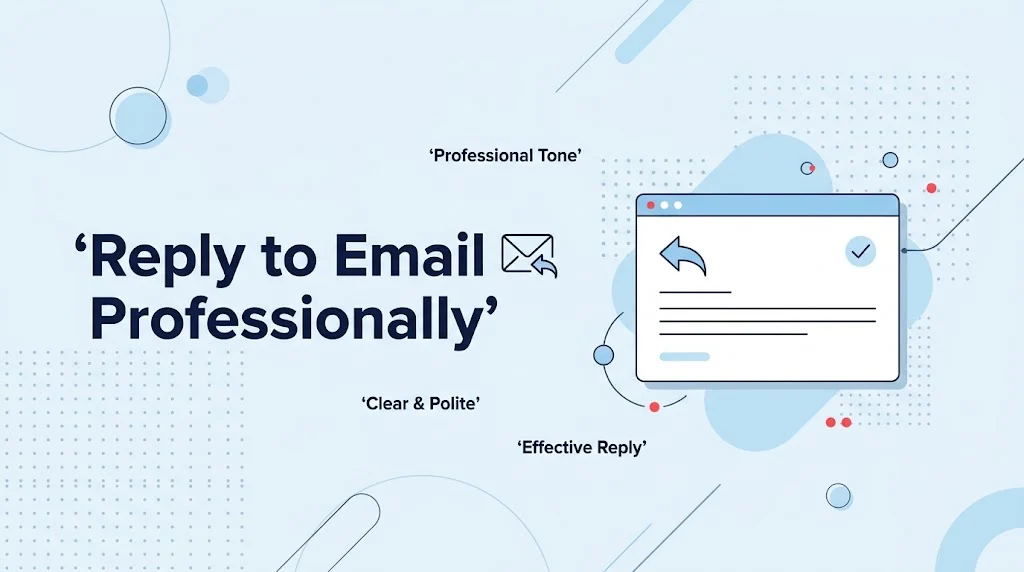
To reply to an email professionally, keep your message clear, polite, direct, and appropriate for the situation. A strong professional response acknowledges the sender, answers the main point, and ends with a helpful next step.
Top alternatives: professional email reply, formal email response, polite email reply, business email response, workplace email reply
Email can look simple until you open your inbox and see a message that requires the perfect response. Maybe your manager needs an update, a client has asked a question, a coworker needs information, or someone has sent a message that is just vague enough to make you stare at the screen for five minutes. Sound familiar?
Knowing how to reply to email professionally helps you communicate clearly without sounding robotic, cold, or unnecessarily formal. The right wording can make you sound confident, respectful, organized, and easy to work with. Whether you are responding to a request, confirming information, asking for clarification, following up, acknowledging a message, or handling a difficult situation, having ready-to-use phrases makes email much easier.
Polite And Professional Responses
- Thank you for your email. I appreciate you reaching out.
Example: Use this when responding to a new business inquiry or professional message.
Meaning: You are politely acknowledging the sender and showing appreciation. - Thank you for getting in touch. I would be happy to assist.
Example: Use this when someone contacts you for help or information.
Meaning: You are welcoming the request and showing willingness to help. - Thank you for sharing this information.
Example: Use this when someone provides documents, details, or an update.
Meaning: You are acknowledging receipt in a courteous way. - I appreciate your quick response.
Example: Use this when someone replies promptly to your previous email.
Meaning: You are recognizing their responsiveness. - Thank you for the update. I have taken note of the information.
Example: Use this when a colleague provides an important status update.
Meaning: You are confirming that you received and understood the message. - I appreciate you bringing this to my attention.
Example: Use this when someone points out an issue or important detail.
Meaning: You are responding professionally without sounding defensive. - Thank you for clarifying this. That makes the situation much clearer.
Example: Use this after someone answers your previous question.
Meaning: You are acknowledging that their explanation resolved your confusion. - Thank you for your patience. I appreciate your understanding.
Example: Use this when replying after a delay.
Meaning: You are politely recognizing the sender’s patience. - I appreciate the additional context.
Example: Use this when someone provides background information.
Meaning: You value the extra information and understand its usefulness. - Thank you for taking the time to explain this.
Example: Use this when someone gives you a detailed explanation.
Meaning: You are showing respect for their effort. - I am happy to help with this.
Example: Use this when accepting a reasonable workplace request.
Meaning: You are expressing willingness in a friendly professional tone. - Thank you for keeping me informed.
Example: Use this when someone regularly provides project updates.
Meaning: You appreciate being kept up to date. - I understand. Thank you for letting me know.
Example: Use this when someone informs you about a change or issue.
Meaning: You are acknowledging the information without unnecessary detail. - That sounds good to me. Thank you for confirming.
Example: Use this when you agree with a proposed plan.
Meaning: You are confirming your approval clearly. - I appreciate your assistance with this matter.
Example: Use this when someone helps resolve a professional issue.
Meaning: You are expressing formal gratitude.
Formal Business Responses
- Thank you for your message. I am writing to confirm that I have received it.
Example: Use this when acknowledging an important business communication.
Meaning: You are formally confirming receipt. - Thank you for providing the requested information.
Example: Use this when a client or colleague sends requested details.
Meaning: You are acknowledging that the requested material arrived. - I am pleased to confirm that we can proceed as discussed.
Example: Use this when formally approving the next stage of a project.
Meaning: You are giving clear professional confirmation. - Please accept my thanks for your prompt attention to this matter.
Example: Use this in formal business correspondence.
Meaning: You are professionally recognizing someone’s quick action. - I appreciate your consideration and look forward to hearing from you.
Example: Use this when awaiting a decision or response.
Meaning: You are ending the email politely while encouraging a reply. - I would be grateful if you could provide the requested details.
Example: Use this when formally requesting additional information.
Meaning: You are making a courteous professional request. - Please let me know if you require any additional information from my side.
Example: Use this near the end of a business email.
Meaning: You are offering further assistance. - I am writing to follow up regarding the matter discussed previously.
Example: Use this when reconnecting about an earlier business conversation.
Meaning: You are formally introducing a follow-up. - I appreciate your attention to this request.
Example: Use this when asking someone to review or complete something.
Meaning: You are maintaining a respectful tone while requesting action. - I look forward to working with you on this matter.
Example: Use this when beginning a new professional collaboration.
Meaning: You are expressing positive professional intent. - Thank you for your cooperation and understanding.
Example: Use this when handling a process that requires patience or coordination.
Meaning: You are recognizing the recipient’s cooperation. - I will review the information and respond accordingly.
Example: Use this when you need time before giving a complete answer.
Meaning: You are setting a professional expectation for the next step. - I can confirm that the requested information has been received.
Example: Use this when acknowledging documents or data.
Meaning: You are providing a formal receipt confirmation. - Please do not hesitate to contact me should you need further assistance.
Example: Use this as a formal closing for client-facing communication.
Meaning: You are offering continued support. - Thank you again for your time and consideration.
Example: Use this at the end of a formal business exchange.
Meaning: You are ending the message respectfully.
Short And Professional Responses
- Thank you. I have received your email.
Example: Use this when you only need to acknowledge receipt.
Meaning: You are confirming that the message reached you. - Understood. I will take care of it.
Example: Use this when someone assigns you a straightforward task.
Meaning: You are confirming responsibility. - Received, thank you.
Example: Use this for a brief workplace acknowledgment.
Meaning: You have received the information. - Thanks for the update. Noted.
Example: Use this when a colleague sends a simple project update.
Meaning: You are confirming awareness. - Thank you. I will review this shortly.
Example: Use this when someone sends a document that needs your attention.
Meaning: You are confirming that you will review it soon. - Understood. I will follow up once I have an update.
Example: Use this when additional work is needed before you can respond fully.
Meaning: You are setting expectations for your next communication. - Thanks. I will look into this.
Example: Use this when someone reports an issue or asks you to investigate.
Meaning: You are accepting responsibility for checking the matter. - Thank you for confirming.
Example: Use this when someone verifies a date, detail, or decision.
Meaning: You are acknowledging their confirmation. - Got it. I will proceed accordingly.
Example: Use this in an internal workplace email.
Meaning: You understand the instruction and will act on it. - Thanks for letting me know.
Example: Use this when someone provides a simple update.
Meaning: You are politely acknowledging the information. - I will keep you updated. Thank you.
Example: Use this when work is still in progress.
Meaning: You promise to provide future updates. - Noted. I will make the necessary changes.
Example: Use this after receiving revision requests.
Meaning: You confirm that you understand and will act. - Thank you. I will get back to you soon.
Example: Use this when you need additional time to prepare a response.
Meaning: You are postponing the full answer while maintaining communication. - Understood. Thank you for the clarification.
Example: Use this when a previous misunderstanding has been resolved.
Meaning: You now understand the situation. - Thanks. I will take it from here.
Example: Use this when you are taking ownership of the next step.
Meaning: You are politely confirming responsibility.
Responses To Requests
- Certainly. I would be happy to help with this request.
Example: Use this when accepting a professional request.
Meaning: You are agreeing in a positive and courteous way. - Yes, I can take care of that.
Example: Use this when a manager or colleague asks you to complete a task.
Meaning: You are confirming that you can handle it. - I can assist with that. I will begin working on it shortly.
Example: Use this when accepting a new assignment.
Meaning: You are confirming both willingness and action. - Absolutely. I will make sure this is completed.
Example: Use this when the requested task is clear and manageable.
Meaning: You are giving confident confirmation. - I can certainly provide that information.
Example: Use this when someone asks you for specific details.
Meaning: You are confirming that you can fulfill the request. - Thank you for the request. I will review it and get back to you.
Example: Use this when you need to evaluate the request first.
Meaning: You are acknowledging the request while avoiding an immediate commitment. - I would be glad to assist. Could you please provide a few additional details?
Example: Use this when the request is incomplete.
Meaning: You are willing to help but need clarification. - I can handle this by the requested deadline.
Example: Use this when confirming that you can meet a deadline.
Meaning: You are giving a clear commitment. - I will review the request and confirm the next steps.
Example: Use this when a request requires internal review.
Meaning: You are explaining what will happen next. - Yes, that works. I will proceed as requested.
Example: Use this when you agree with the sender’s instructions.
Meaning: You are confirming compliance. - I appreciate you reaching out. I can help with this.
Example: Use this when responding to a client or customer request.
Meaning: You are combining appreciation with willingness to assist. - I will take care of this and keep you informed of the progress.
Example: Use this when the request involves multiple steps.
Meaning: You are accepting responsibility and promising updates. - I can help with that. Please send the relevant files when convenient.
Example: Use this when you need documents before beginning the task.
Meaning: You are explaining the next requirement. - I am available to assist with this.
Example: Use this when offering support to a colleague.
Meaning: You are making your availability clear. - Consider it handled. I will follow up once it is complete.
Example: Use this in a friendly professional workplace setting.
Meaning: You are confidently taking ownership.
Responses When You Need More Information
- Could you please provide a little more detail about this request?
Example: Use this when the original email is too vague to act on.
Meaning: You need additional context before proceeding. - Could you clarify what you would like me to prioritize?
Example: Use this when several tasks are mentioned at once.
Meaning: You want to understand which task matters most. - Could you please confirm the deadline?
Example: Use this when the requested completion date is unclear.
Meaning: You need a specific timeframe. - Would you mind providing the relevant document or file?
Example: Use this when someone refers to material they did not attach.
Meaning: You are politely requesting the missing resource. - Could you clarify which version you would like me to use?
Example: Use this when multiple files or options exist.
Meaning: You want to avoid working with the wrong material. - Before I proceed, could you confirm the expected outcome?
Example: Use this when the goal of the task is unclear.
Meaning: You want to make sure your work matches expectations. - Could you please explain what you mean by this section?
Example: Use this when part of an email is confusing.
Meaning: You are requesting a clearer explanation. - Would you be able to share a few examples?
Example: Use this when you need examples to understand a request.
Meaning: You want practical guidance before proceeding. - Could you confirm who should be included in the next communication?
Example: Use this when recipient responsibility is unclear.
Meaning: You want to avoid leaving someone out or including unnecessary people. - I want to make sure I understand correctly. Could you clarify the request?
Example: Use this when accuracy matters.
Meaning: You are prioritizing understanding before taking action. - Could you please confirm whether this is the final version?
Example: Use this when reviewing documents.
Meaning: You want to ensure no further revisions are expected. - Could you provide the background information related to this issue?
Example: Use this when you need context before making a decision.
Meaning: You need more information to respond appropriately. - Would you clarify which option you would prefer?
Example: Use this when the sender has presented multiple choices.
Meaning: You are asking them to make the final selection. - Could you please specify what action you would like me to take?
Example: Use this when an email explains a problem but does not request a clear action.
Meaning: You need a defined next step. - Once I have those details, I can move forward.
Example: Use this after requesting missing information.
Meaning: You are explaining that the additional details are necessary.
Inspiring Responses To Delayed Emails
- Thank you for your patience while I looked into this.
Example: Use this when replying after taking longer than expected.
Meaning: You are acknowledging the delay respectfully. - Apologies for the delayed response. Thank you for your understanding.
Example: Use this when you missed an email deadline.
Meaning: You are taking responsibility while remaining professional. - Thank you for following up. I apologize for the delay.
Example: Use this when someone had to remind you to respond.
Meaning: You acknowledge both the follow-up and your delayed reply. - I apologize for not responding sooner. I have now reviewed the matter.
Example: Use this when you finally have enough information to answer.
Meaning: You are addressing the delay and moving the conversation forward. - Thank you for your patience. I wanted to make sure I had the correct information before responding.
Example: Use this when accuracy caused the delay.
Meaning: You are explaining the reason for waiting without making excuses. - Sorry for the delay. I appreciate your patience.
Example: Use this for a short professional apology.
Meaning: You are acknowledging the delay directly. - Thank you for the reminder. I have reviewed your message and can now provide an update.
Example: Use this after receiving a follow-up from a client or coworker.
Meaning: You are confirming that action has been taken. - I apologize for the inconvenience caused by the delay.
Example: Use this when your delayed response affected someone else’s work.
Meaning: You are recognizing the impact of the delay. - Thank you for waiting. I am now able to move forward with your request.
Example: Use this when an issue has finally been resolved.
Meaning: You are confirming progress. - I appreciate your patience while we worked through this issue.
Example: Use this when a delay involved a team or project.
Meaning: You are recognizing the recipient’s patience during a longer process. - Apologies for the late reply. Here is the information you requested.
Example: Use this when you now have the answer ready.
Meaning: You are pairing a brief apology with the requested information. - Thank you for following up. I am sorry this took longer than expected.
Example: Use this when a task exceeded its expected timeline.
Meaning: You are honestly acknowledging the delay. - I appreciate your understanding while I completed the necessary review.
Example: Use this when a response required careful checking.
Meaning: You are explaining the delay professionally. - Thank you for your patience. I have attached the completed information.
Example: Use this when sending material after a delay.
Meaning: You are acknowledging the wait and delivering the result. - I apologize for the delay and appreciate the opportunity to resolve this.
Example: Use this when responding to a delayed customer or business matter.
Meaning: You are taking responsibility and focusing on resolution.
Friendly Workplace Responses
- Thanks for sending this over. I will take a look.
Example: Use this with a coworker when the tone is professional but relaxed.
Meaning: You are acknowledging the message and promising to review it. - Sounds good. I will take care of it.
Example: Use this when accepting a straightforward task from a colleague.
Meaning: You are confirming responsibility casually but professionally. - Thanks for the heads-up. I will keep an eye on it.
Example: Use this when someone alerts you about a developing issue.
Meaning: You are acknowledging the warning and promising attention. - Got it. Thanks for flagging this.
Example: Use this when a colleague points out an issue.
Meaning: You appreciate being informed. - Thanks for checking in. Everything is on track from my side.
Example: Use this when someone asks about your progress.
Meaning: You are providing reassurance. - No problem. I will handle this.
Example: Use this when accepting a simple workplace task.
Meaning: You are confidently confirming that you will take care of it. - Thanks. I will keep you posted.
Example: Use this when a task is still underway.
Meaning: You promise to provide updates. - That works for me. Thanks for coordinating.
Example: Use this when a coworker organizes a schedule or meeting.
Meaning: You agree with the arrangement and appreciate their effort. - Perfect. I will move forward with that.
Example: Use this when a plan has been approved.
Meaning: You are confirming the next action. - Thanks for the update. I am aligned on my end.
Example: Use this during team communication.
Meaning: You are confirming that you understand and agree with the direction. - Absolutely. I can take this one.
Example: Use this when volunteering to handle a task.
Meaning: You are offering to take responsibility. - Thanks for clarifying. We are on the same page now.
Example: Use this after resolving a misunderstanding.
Meaning: You confirm shared understanding. - I will check this and circle back shortly.
Example: Use this when you need to investigate something before answering.
Meaning: You promise a follow-up. - Appreciate the update. I will factor this into the next step.
Example: Use this when new information affects your work.
Meaning: You are acknowledging the update and explaining that you will use it. - All good from my side. Thanks for keeping me posted.
Example: Use this when a project update does not require further action.
Meaning: You are confirming there is no issue on your end.
Professional Follow-Up Responses
- I wanted to follow up on my previous email regarding this matter.
Example: Use this when you have not received a response to an important email.
Meaning: You are politely bringing attention back to the previous message. - I am following up to see if you have had an opportunity to review my message.
Example: Use this when waiting for someone to review information.
Meaning: You are requesting an update without sounding demanding. - I wanted to check whether there has been any progress on this request.
Example: Use this when waiting for an outstanding task.
Meaning: You are politely asking for a status update. - Just following up to see where things currently stand.
Example: Use this for a friendly workplace follow-up.
Meaning: You want to know the current status. - I would appreciate an update when you have a moment.
Example: Use this when the matter is important but not immediately urgent.
Meaning: You are requesting a response politely. - Could you please let me know if there are any updates?
Example: Use this when waiting for information from a client or coworker.
Meaning: You are asking directly but courteously. - I am checking in regarding the information requested below.
Example: Use this when someone has not yet supplied requested details.
Meaning: You are reminding them about an outstanding item. - I wanted to make sure my previous message reached you.
Example: Use this when you are unsure whether your email was received.
Meaning: You are checking receipt without assuming they ignored you. - When you have a chance, could you please provide an update?
Example: Use this for a polite internal follow-up.
Meaning: You are asking for progress without applying unnecessary pressure. - I am following up because we are approaching the agreed deadline.
Example: Use this when timing has become important.
Meaning: You are explaining why a response is now needed. - Could you let me know the expected timeline from here?
Example: Use this when you need to plan around another person’s task.
Meaning: You want a realistic estimate. - I would appreciate any update you can provide.
Example: Use this when even a brief status update would help.
Meaning: You are keeping the request flexible and polite. - Please let me know if anything is needed from my side to move this forward.
Example: Use this when a project appears to be waiting on someone.
Meaning: You are offering help while checking for progress. - I wanted to revisit this in case there were any questions about my previous email.
Example: Use this when a recipient has not responded.
Meaning: You are reopening the conversation without sounding accusatory. - Thank you in advance for the update. I look forward to hearing from you.
Example: Use this as a polite closing for a professional follow-up.
Meaning: You are encouraging a response respectfully.
Responses To Difficult Emails
- Thank you for raising this concern. I would like to understand the situation fully before responding.
Example: Use this when someone sends an emotionally charged complaint.
Meaning: You are staying calm and avoiding an impulsive response. - I understand your concern, and I appreciate you bringing it to my attention.
Example: Use this when responding to a dissatisfied client or colleague.
Meaning: You acknowledge their concern without immediately accepting blame. - I am sorry to hear that this has caused frustration.
Example: Use this when someone is unhappy with a service or process.
Meaning: You are showing empathy without making unsupported admissions. - Let me review the details so I can provide an accurate response.
Example: Use this when an issue requires investigation.
Meaning: You are prioritizing accuracy before answering. - I understand why this situation is concerning. I will look into it.
Example: Use this when someone reports a serious workplace issue.
Meaning: You are acknowledging the concern and promising action. - Thank you for explaining your perspective.
Example: Use this when someone presents a disagreement or complaint.
Meaning: You are keeping the response respectful. - I appreciate your patience while we work toward a resolution.
Example: Use this when a problem cannot be fixed immediately.
Meaning: You are acknowledging the recipient’s patience. - I would like to resolve this as efficiently as possible.
Example: Use this when responding to a difficult customer or business matter.
Meaning: You are focusing the conversation on resolution. - I understand the concern, and I will make sure it is reviewed appropriately.
Example: Use this when you need to escalate or investigate a complaint.
Meaning: You are taking the issue seriously. - I do not want to make assumptions, so I will verify the details first.
Example: Use this when facts are unclear.
Meaning: You are choosing accuracy over speculation. - Thank you for your honesty. I will take your feedback into consideration.
Example: Use this when receiving constructive criticism.
Meaning: You are showing maturity and openness. - I appreciate you bringing this issue forward. Let us focus on the best way to resolve it.
Example: Use this when a disagreement needs a practical solution.
Meaning: You are redirecting the conversation toward action. - I understand your position, although I may need to review the circumstances further.
Example: Use this when you do not yet agree with the sender’s interpretation.
Meaning: You are acknowledging their view without conceding. - I will review what happened and follow up with you directly.
Example: Use this when investigating a complaint.
Meaning: You are taking ownership of the next step. - Thank you for bringing this to my attention. I will work to address the matter appropriately.
Example: Use this for a formal response to a workplace concern.
Meaning: You are acknowledging the issue and committing to appropriate action.
FAQs
What does it mean to reply to an email professionally?
It means responding clearly, respectfully, and appropriately while addressing the sender’s main question or request.
How should I start a professional email reply?
Start with a brief acknowledgment such as “Thank you for your email,” “Thank you for the update,” or “I appreciate you reaching out.”
How do I professionally say yes in an email?
Try “Certainly, I would be happy to help,” “Yes, I can take care of that,” or “I am pleased to confirm that.”
How do I professionally say no in an email?
Be direct but courteous. Try “Unfortunately, I am unable to accommodate this request at this time” or offer a realistic alternative.
How do I reply when I need more information?
Politely explain what you need, such as “Could you please provide a little more detail?” or “Could you confirm the deadline?”
Conclusion
A great professional email reply does not need to sound complicated. The goal is simple: acknowledge the message, answer what matters, provide the next step, and keep your tone respectful. Whether you are replying to a manager, client, coworker, recruiter, customer, or business partner, clear wording can make your communication feel more confident and organized.
Short replies can work perfectly when the situation is simple, while sensitive or formal messages may need a little more context. Keep your language natural, avoid unnecessary filler, and always check that your response answers the actual question. Save these examples for your inbox emergencies, reuse the wording that fits, and make your next email easier to write.
Discover More Related Articles:
- How to Respond to a Summons | Without Missing the Deadline In 2026
- Reply Stop to Opt Out | A Quick Beginner’s Guide In 2026

Laura Adams is a dedicated content writer and blogger known for crafting clear, informative, and engaging articles. As a contributor to Responary.com, she specializes in creating reader-friendly content that educates, inspires, and keeps audiences informed on a wide range of subjects.