Quick Answer
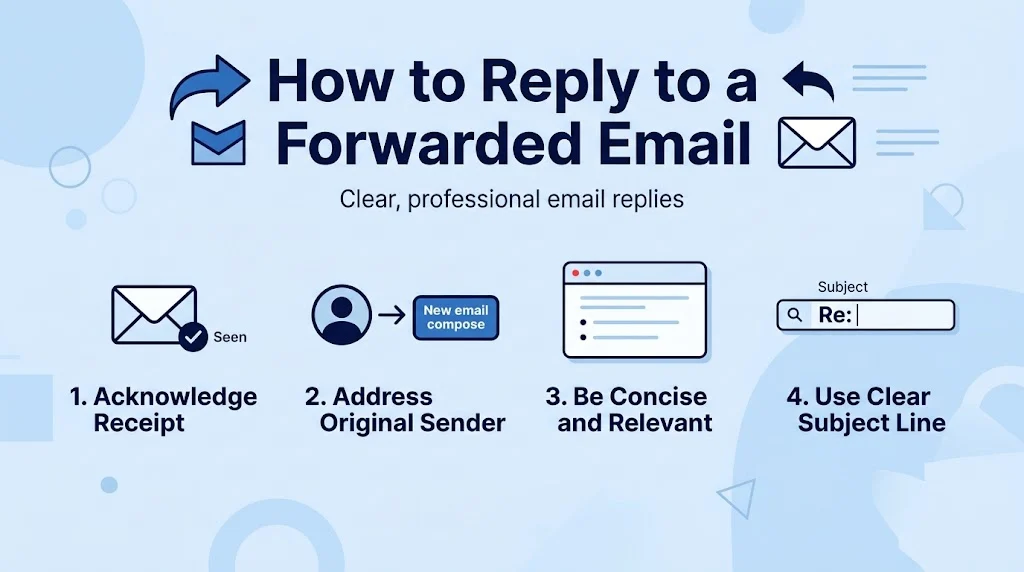
When someone forwards you an email, the best reply depends on why they sent it. You can acknowledge receipt, thank them, ask for clarification, confirm the next step, or respond professionally without making the email chain unnecessarily long.
Top alternatives: Thanks for forwarding this, I appreciate you sharing this, received and noted, thanks for the update, I’ll take a look
A forwarded email can mean anything from “FYI” to “Please handle this ASAP,” which is exactly why replying can feel oddly complicated. You might get one from your boss, coworker, client, friend, or someone you have never emailed before, and suddenly you are wondering whether a simple “Thanks” is enough or whether you need to write an entire corporate novel.
The good news is that most forwarded emails only need a short, clear response. Whether you are acknowledging information, asking what action is needed, confirming that you received an attachment, or letting someone know you will follow up, the right wording keeps communication smooth. This guide gives you practical replies for work emails, casual situations, follow-ups, unclear forwards, and urgent requests. Pick the tone that fits the sender, situation, and relationship, then hit send without overthinking it.
Professional Responses
- Thanks for forwarding this.
Example: Use this when a colleague sends you an email for your awareness.
Meaning: You are politely acknowledging receipt. - Thank you for sharing this with me.
Example: Use this when someone forwards information that may be useful to your work.
Meaning: You appreciate the information. - Thanks for sending this over.
Example: Use this for a natural workplace response to a forwarded message.
Meaning: You are confirming that you received it. - Received, thank you.
Example: Use this when you simply need to acknowledge the forwarded email.
Meaning: You have received and noted the message. - Thank you for bringing this to my attention.
Example: Use this when the forwarded email contains an issue you need to review.
Meaning: You appreciate being informed. - I appreciate you forwarding this.
Example: Use this when the information is particularly relevant to your responsibilities.
Meaning: You are expressing genuine appreciation. - Thanks for keeping me informed.
Example: Use this when the email contains an important project update.
Meaning: You value being kept up to date. - Thank you for the update. I’ll review it shortly.
Example: Use this when you need some time to read the forwarded content.
Meaning: You acknowledge receipt and indicate your next step. - Thanks for forwarding this. I’ll take a look.
Example: Use this when no immediate response to the original email is required.
Meaning: You will review the information. - Noted, thank you for sharing.
Example: Use this for a concise professional acknowledgment.
Meaning: You have registered the information. - Thanks for passing this along.
Example: Use this when a coworker forwards something relevant to your project.
Meaning: You appreciate them sharing it. - I’ve received the forwarded email. Thank you.
Example: Use this when you want to be especially clear about receipt.
Meaning: You are formally confirming delivery. - Thank you for sending this through.
Example: Use this in a professional workplace email chain.
Meaning: You are politely acknowledging the forwarded information. - I’ll review the details and get back to you.
Example: Use this when the forwarded email requires a considered response.
Meaning: You are promising a follow-up after reviewing it. - Thanks for sharing. I’ll follow up as needed.
Example: Use this when you are responsible for deciding the next action.
Meaning: You acknowledge the information and accept responsibility for follow-up.
Polite Responses
- Thanks for forwarding this to me.
Example: Use this when you want a simple and courteous reply.
Meaning: You are politely acknowledging the sender’s effort. - I appreciate you sending this along.
Example: Use this when someone forwards useful information.
Meaning: You are showing appreciation. - Thank you for letting me know.
Example: Use this when the forwarded email contains news or an update.
Meaning: You acknowledge the information. - Thanks for keeping me in the loop.
Example: Use this when someone forwards an email so you can stay updated.
Meaning: You appreciate being included. - Many thanks for sharing this.
Example: Use this when you want a slightly warmer professional tone.
Meaning: You are expressing polite gratitude. - I appreciate the heads-up.
Example: Use this when the forwarded email alerts you to something important.
Meaning: You appreciate receiving advance information. - Thank you for passing this along.
Example: Use this when someone forwards useful information from another person.
Meaning: You appreciate the information being shared. - Thanks for making me aware of this.
Example: Use this when the email concerns an issue you need to know about.
Meaning: You recognize the sender’s effort to inform you. - Thank you for the information.
Example: Use this when the forwarded email is mainly informational.
Meaning: You acknowledge what was shared. - I’m glad you shared this with me.
Example: Use this when the forwarded information is particularly useful.
Meaning: You genuinely value receiving it. - Thanks, I appreciate the update.
Example: Use this for a friendly but professional acknowledgment.
Meaning: You appreciate being updated. - Thank you for including me.
Example: Use this when the sender forwards something so you can stay involved.
Meaning: You appreciate being included in the communication. - I appreciate the update and will review it.
Example: Use this when you need to read the original message carefully.
Meaning: You acknowledge the update and indicate action. - Thanks for sharing this information.
Example: Use this when the forwarded email contains useful facts or details.
Meaning: You are politely recognizing the information. - Thank you for keeping me updated on this.
Example: Use this during an ongoing project or process.
Meaning: You appreciate continued communication.
Short And Simple Responses
- Thanks, received.
Example: Use this when the forwarded email needs only acknowledgment.
Meaning: You confirm receipt without adding unnecessary detail. - Received, thanks.
Example: Use this when responding quickly during a busy workday.
Meaning: You have received the email. - Got it, thanks.
Example: Use this for a friendly workplace relationship.
Meaning: You understand and acknowledge the information. - Thanks for sharing.
Example: Use this when no action is immediately required.
Meaning: You appreciate the forwarded message. - Noted, thanks.
Example: Use this when you need to acknowledge an important detail.
Meaning: You have taken note of it. - Thanks, I’ll check it.
Example: Use this when you need time to review the original email.
Meaning: You plan to look at the information. - Got it. I’ll review.
Example: Use this when the forwarded email requires your attention.
Meaning: You understand that review is needed. - Thanks for the heads-up.
Example: Use this when the email gives you advance notice.
Meaning: You appreciate the warning or update. - Understood, thank you.
Example: Use this when the forwarded message contains instructions.
Meaning: You understand what was communicated. - Thanks, I’ve seen this.
Example: Use this when you want to confirm you noticed the email.
Meaning: You are confirming awareness. - Thanks, noted.
Example: Use this when the forwarded email contains a detail you need to remember.
Meaning: You have registered the information. - Received and noted.
Example: Use this for a concise and professional response.
Meaning: You confirm both receipt and awareness. - Thanks, understood.
Example: Use this when the forwarded email includes a clear request.
Meaning: You understand the message. - All noted, thank you.
Example: Use this when several details have been included.
Meaning: You have taken note of everything relevant. - Thanks, I’ll take it from here.
Example: Use this when you are now responsible for the next step.
Meaning: You are accepting ownership of the task.
Formal Responses
- Thank you for forwarding this correspondence.
Example: Use this when communicating in a formal business environment.
Meaning: You formally acknowledge receipt. - I appreciate you bringing this matter to my attention.
Example: Use this when the forwarded email concerns a significant issue.
Meaning: You recognize the importance of the information. - Thank you for providing this information for my review.
Example: Use this when the sender expects you to examine the email.
Meaning: You acknowledge receipt and the need for review. - I confirm receipt of the forwarded email.
Example: Use this when a clear record of receipt is useful.
Meaning: You formally confirm delivery. - Thank you for keeping me informed regarding this matter.
Example: Use this in formal business communication.
Meaning: You appreciate receiving updates. - I appreciate you sharing these details with me.
Example: Use this when the forwarded message contains important information.
Meaning: You value the information provided. - Thank you for bringing this information to my attention.
Example: Use this when responding to a serious or important matter.
Meaning: You formally acknowledge the notification. - I will review the information and respond accordingly.
Example: Use this when you need to assess the forwarded email before responding.
Meaning: You will review it before deciding on the next step. - Thank you for forwarding the relevant correspondence.
Example: Use this when the email contains documentation needed for a matter.
Meaning: You acknowledge receiving relevant records. - I have received the information and will review it promptly.
Example: Use this when the matter requires timely attention.
Meaning: You confirm receipt and indicate urgency. - Thank you for the clarification provided in the forwarded message.
Example: Use this when the original email answers an earlier question.
Meaning: You appreciate the additional information. - I acknowledge receipt and will proceed as appropriate.
Example: Use this when you are expected to take action after reviewing the email.
Meaning: You confirm receipt and indicate responsibility. - Thank you for ensuring that I received this information.
Example: Use this when someone intentionally forwards an important message.
Meaning: You appreciate their effort to include you. - I will consider the information and follow up if necessary.
Example: Use this when no immediate action is required.
Meaning: You will assess whether further communication is needed. - Thank you for forwarding this for my consideration.
Example: Use this when the sender wants your opinion or review.
Meaning: You acknowledge the request thoughtfully.
Responses To A Boss Or Manager
- Thanks for forwarding this. I’ll review it and get back to you.
Example: Use this when your manager sends an email that requires your attention.
Meaning: You acknowledge the task and promise follow-up. - Received, thank you. I’ll take a look.
Example: Use this when your manager sends information for review.
Meaning: You confirm receipt and indicate action. - Thank you for sending this over. I’ll handle the next steps.
Example: Use this when the forwarded email relates to something assigned to you.
Meaning: You are taking responsibility. - Thanks for keeping me updated. I’ll review the details.
Example: Use this when your manager forwards a project update.
Meaning: You appreciate the information and will examine it. - Understood. I’ll follow up on this.
Example: Use this when the forwarded message implies a task.
Meaning: You understand the expectation. - Thanks for flagging this. I’ll look into it.
Example: Use this when your manager forwards a problem or concern.
Meaning: You acknowledge the issue and intend to investigate. - Received. I’ll prioritize this and follow up shortly.
Example: Use this when the forwarded matter is urgent.
Meaning: You understand that the issue needs prompt attention. - Thanks for sharing. I’ll review and let you know if I have any questions.
Example: Use this when the forwarded email contains detailed information.
Meaning: You will review it independently before asking questions. - Got it. I’ll take care of it.
Example: Use this for a straightforward task from your manager.
Meaning: You are accepting responsibility. - Thank you. I’ll review the original thread for context.
Example: Use this when the forwarded email refers to earlier discussions.
Meaning: You plan to understand the full background. - Thanks for forwarding this. I’ll follow up with the relevant team.
Example: Use this when another department needs to handle the issue.
Meaning: You will coordinate the next step. - Understood. I’ll keep you posted.
Example: Use this when your manager expects updates.
Meaning: You promise to communicate progress. - Thank you for the heads-up. I’ll look into it today.
Example: Use this when the forwarded email concerns a time-sensitive issue.
Meaning: You recognize the urgency. - Received, and I’ll take the necessary action.
Example: Use this when the forwarded email contains clear instructions.
Meaning: You understand and will act. - Thanks. I’ll review this and circle back with an update.
Example: Use this when your manager expects a later response.
Meaning: You will return with more information.
Responses To A Coworker
- Thanks for forwarding this.
Example: Use this when a colleague shares information relevant to your work.
Meaning: You acknowledge the email. - Thanks for the heads-up.
Example: Use this when a coworker alerts you to an issue.
Meaning: You appreciate the advance notice. - Got it, thanks for keeping me in the loop.
Example: Use this when your coworker wants you to stay informed.
Meaning: You appreciate being included. - Thanks, I’ll take a look.
Example: Use this when you need to review the original email.
Meaning: You plan to examine it. - Appreciate you sending this over.
Example: Use this for a friendly workplace response.
Meaning: You are showing appreciation. - Thanks for passing this along.
Example: Use this when the coworker forwards something from another department.
Meaning: You appreciate the information. - Received, thanks. I’ll check the details.
Example: Use this when the email contains information that needs verification.
Meaning: You confirm receipt and plan to review it. - Thanks. I’ll follow up if anything comes up.
Example: Use this when the forwarded email may require additional discussion.
Meaning: You will reach out if necessary. - Got it. I’ll handle my part.
Example: Use this when the email relates to a shared project.
Meaning: You accept responsibility for your portion. - Thanks for flagging this.
Example: Use this when your coworker points out a problem.
Meaning: You appreciate the warning. - I’ll review the thread and let you know.
Example: Use this when the forwarded email contains previous messages you need to understand.
Meaning: You will examine the context before responding. - Thanks for including me.
Example: Use this when you were added to an ongoing conversation.
Meaning: You appreciate being brought into the discussion. - Understood. I’ll keep an eye on it.
Example: Use this when the forwarded email concerns an ongoing issue.
Meaning: You will monitor the situation. - Thanks, that’s helpful.
Example: Use this when the forwarded information answers a question or provides context.
Meaning: You found the information useful. - Perfect, thanks for sending this.
Example: Use this when the forwarded email gives you exactly what you needed.
Meaning: You are satisfied with the information.
When You Need Clarification
- Thanks for forwarding this. What would you like me to do with it?
Example: Use this when the sender forwards an email without explaining why.
Meaning: You need clear instructions before taking action. - Thanks for sharing. Is there any action needed from my side?
Example: Use this when you are unsure whether the email requires work.
Meaning: You want to clarify your responsibility. - I’ve received this. Could you clarify what you need from me?
Example: Use this when the forwarded message does not contain an obvious request.
Meaning: You need the sender to explain the expected action. - Thanks. Should I follow up with the original sender?
Example: Use this when you are unsure who should handle the matter.
Meaning: You are asking whether direct follow-up is appropriate. - I’m happy to help. What would you like me to focus on?
Example: Use this when the forwarded email covers several topics.
Meaning: You want to understand the priority. - Thanks for sending this. Could you provide a little more context?
Example: Use this when the email thread is difficult to understand.
Meaning: You need background information. - Should I treat this as an FYI or an action item?
Example: Use this when the sender has not specified whether you need to act.
Meaning: You are clarifying expectations. - Thanks. Is there a deadline I should be aware of?
Example: Use this when the forwarded email may require timely action.
Meaning: You want to know the expected timeframe. - Could you let me know which part needs my attention?
Example: Use this when the forwarded thread is lengthy.
Meaning: You want to focus on the relevant section. - I’ve reviewed the email briefly. What would you like me to handle?
Example: Use this when the sender expects you to take responsibility.
Meaning: You are requesting a specific assignment. - Would you like me to respond directly to the original sender?
Example: Use this when the correct recipient is unclear.
Meaning: You want confirmation before contacting another person. - Thanks for forwarding this. Could you confirm the next step?
Example: Use this when the email suggests action but does not specify what happens next.
Meaning: You need direction. - Is there anything specific you want me to review?
Example: Use this when the forwarded content is broad.
Meaning: You are asking what deserves attention. - Could you clarify whether this requires an immediate response?
Example: Use this when urgency is uncertain.
Meaning: You want to establish priority. - Thanks. Once I know the priority, I can take it from there.
Example: Use this when several tasks are competing for your attention.
Meaning: You need prioritization before proceeding.
When The Forwarded Email Requires Action
- Thanks for forwarding this. I’ll take care of it.
Example: Use this when you clearly understand the task.
Meaning: You accept responsibility. - Received. I’ll follow up with the appropriate person.
Example: Use this when another person needs to be contacted.
Meaning: You will coordinate the next step. - I’ll review the details and take the necessary action.
Example: Use this when the exact next step depends on your review.
Meaning: You will assess and act accordingly. - Thanks for sending this. I’ll handle it from here.
Example: Use this when you have ownership of the issue.
Meaning: You are taking over the matter. - I’ll contact the original sender and follow up.
Example: Use this when clarification is needed from the person who sent the original email.
Meaning: You will communicate directly with them. - Got it. I’ll get started on this.
Example: Use this when the forwarded email contains a straightforward task.
Meaning: You intend to begin immediately. - Thanks for flagging this. I’ll look into it today.
Example: Use this when the issue needs prompt investigation.
Meaning: You recognize the urgency. - I’ll review the thread and take the next appropriate step.
Example: Use this when previous messages contain important context.
Meaning: You will assess the situation before acting. - Understood. I’ll make sure this gets addressed.
Example: Use this when the email concerns a problem that needs resolution.
Meaning: You are committing to addressing the issue. - Thanks. I’ll coordinate with the team and keep you updated.
Example: Use this when several people need to be involved.
Meaning: You will manage communication and provide updates. - I’ll take this forward and let you know how it goes.
Example: Use this when you are responsible for moving the matter ahead.
Meaning: You will handle the next stage. - I’ll review everything and send an update once I have more information.
Example: Use this when the issue requires investigation.
Meaning: You will report back after gathering information. - Thanks for forwarding this. I’ll prioritize it.
Example: Use this when the email appears urgent.
Meaning: You will give it immediate attention. - I’ll take care of the follow-up.
Example: Use this when the main task is contacting someone or checking something.
Meaning: You are accepting the follow-up responsibility. - Understood. I’ll keep you informed of the progress.
Example: Use this when the sender expects ongoing updates.
Meaning: You promise continued communication.
When You Need More Time
- Thanks for forwarding this. I’ll review it and get back to you.
Example: Use this when the email requires careful consideration.
Meaning: You need time before giving a complete response. - I’ve received it. I’ll take some time to review the details.
Example: Use this when the forwarded email is lengthy.
Meaning: You are setting an expectation that your response may not be immediate. - Thanks for sending this. I’ll get back to you once I’ve had a chance to go through it.
Example: Use this when you need to read the entire thread.
Meaning: You will respond after reviewing everything. - Received, thank you. I’ll review this shortly.
Example: Use this when you want a concise acknowledgment.
Meaning: You plan to examine it soon. - I appreciate you forwarding this. I’ll need a little time to look into it.
Example: Use this when the issue requires research or investigation.
Meaning: You need additional time to respond properly. - Thanks. I’ll review the information and follow up when I’m ready.
Example: Use this when you do not want to rush your response.
Meaning: You will respond after completing your review. - I’ll take a closer look and circle back.
Example: Use this for a natural workplace response.
Meaning: You intend to return with an informed response. - Thanks for sending this. I’ll review it as soon as I can.
Example: Use this when the matter matters but is not immediately urgent.
Meaning: You will address it when possible. - I’ve got it. Let me review the details first.
Example: Use this when someone expects an immediate opinion.
Meaning: You want to understand the information before responding. - Thanks. I’ll take some time to assess this properly.
Example: Use this for a serious or complicated forwarded email.
Meaning: You want to give the matter appropriate consideration. - Received. I’ll follow up after reviewing the full thread.
Example: Use this when multiple previous messages are included.
Meaning: You need context before responding. - I’ll review everything and come back with an update.
Example: Use this when the sender expects a later status report.
Meaning: You promise a future update. - Thanks for sharing. I’ll get back to you once I’ve gone through it.
Example: Use this when you cannot respond immediately.
Meaning: You are postponing the detailed response until review is complete. - I appreciate the information. I’ll review it before responding.
Example: Use this when accuracy matters.
Meaning: You want to understand the material before answering. - Thanks. I’ll take a closer look and follow up shortly.
Example: Use this when you need some time but expect to respond soon.
Meaning: You are acknowledging the email while managing expectations.
Friendly And Casual Responses
- Thanks for sending this over!
Example: Use this with a coworker or friend you communicate with casually.
Meaning: You are warmly acknowledging the email. - Got it, thanks!
Example: Use this when the forwarded message is straightforward.
Meaning: You understand and appreciate the information. - Thanks for the heads-up!
Example: Use this when someone forwards an important update.
Meaning: You appreciate being informed. - Perfect, thanks for sharing!
Example: Use this when the forwarded email contains exactly what you needed.
Meaning: You are happy with the information. - Awesome, thanks for passing this along!
Example: Use this when the sender has shared something useful.
Meaning: You are showing enthusiastic appreciation. - Thanks! I’ll check it out.
Example: Use this when you plan to read the forwarded message later.
Meaning: You will review it when you have time. - Got it! I’ll take a look.
Example: Use this for a relaxed workplace conversation.
Meaning: You acknowledge the email and plan to review it. - Thanks for keeping me posted!
Example: Use this when someone sends a project update.
Meaning: You appreciate staying informed. - Nice, thanks for sending this!
Example: Use this when the forwarded email contains helpful information.
Meaning: You are responding warmly and casually. - Appreciate the heads-up!
Example: Use this when the email warns you about something coming up.
Meaning: You appreciate the advance notice. - Thanks! This is helpful.
Example: Use this when the forwarded information answers a question.
Meaning: You found the information useful. - Gotcha, thanks for sharing.
Example: Use this with a colleague you know well.
Meaning: You understand the information and appreciate the share. - Thanks! I’ll keep this in mind.
Example: Use this when the email contains advice or information for later.
Meaning: You plan to remember the information. - Cool, thanks for forwarding it!
Example: Use this when the situation is informal.
Meaning: You are casually acknowledging the forwarded message. - Thanks! I’ll get back to you if I have any questions.
Example: Use this when you need to review the email independently.
Meaning: You will ask for help only if necessary.
When You Do Not Need To Reply
Sometimes the most professional response is no reply at all, especially when the forwarded email is clearly marked as FYI and contains no request. If you do need to acknowledge it, keep your response brief rather than creating another giant email thread.
- Thanks for sharing.
Example: Use this when the sender clearly only wants you to be informed.
Meaning: You acknowledge receipt without creating additional work. - Noted, thanks.
Example: Use this when the information simply needs to be recorded.
Meaning: You have taken note of it. - Received, thank you.
Example: Use this when you want to confirm the email arrived.
Meaning: You are acknowledging receipt. - Thanks, I’ll keep this on file.
Example: Use this when the forwarded email may be useful later.
Meaning: You plan to retain the information. - Thanks for keeping me informed.
Example: Use this when no action is expected from you.
Meaning: You appreciate being updated. - Got it, thanks.
Example: Use this for a quick informal acknowledgment.
Meaning: You understand the information. - Thanks, noted.
Example: Use this when the forwarded email contains an important detail.
Meaning: You have registered the information. - Appreciate the update.
Example: Use this when the message is purely informational.
Meaning: You value being updated. - Thanks for the information.
Example: Use this when no follow-up is necessary.
Meaning: You acknowledge what was shared. - Understood, thank you.
Example: Use this when the forwarded email communicates a decision or change.
Meaning: You understand the update. - All noted. Thanks.
Example: Use this when the email contains several useful details.
Meaning: You have taken note of the information. - Thanks for the FYI.
Example: Use this when the sender explicitly forwards something for awareness.
Meaning: You acknowledge the informational purpose. - Received and understood.
Example: Use this when you need to clearly confirm awareness.
Meaning: You understand the forwarded information. - Thanks, I’m aware now.
Example: Use this when the sender is simply making sure you know about something.
Meaning: You confirm that the information has reached you. - Thanks for keeping me in the loop.
Example: Use this when you are included for awareness rather than action.
Meaning: You appreciate being informed.
FAQs
What is the best way to reply to a forwarded email?
Keep your reply short and match the sender’s purpose. “Thanks for forwarding this. I’ll take a look” works well in most professional situations.
Do I always need to reply to a forwarded email?
No. If the email is clearly for your information and no acknowledgment is expected, you may not need to respond. When in doubt, a brief acknowledgment is safe.
How do I politely ask why someone forwarded an email?
Try, “Thanks for forwarding this. Is there any action needed from my side?” This asks for clarification without sounding annoyed.
How do I respond to a forwarded email from my boss?
Use a professional acknowledgment such as, “Thanks for forwarding this. I’ll review it and get back to you,” especially when the message requires action.
What if the forwarded email is urgent?
Acknowledge the urgency directly. “Received, I’ll prioritize this and follow up shortly” makes your next step clear.
Conclusion
Replying to a forwarded email does not need to become another inbox marathon. The best response is usually short, clear, and appropriate for the situation. A simple thank-you works for an FYI, while an email that requires action should confirm what you plan to do. If the sender’s intention is unclear, asking a quick question can prevent confusion and unnecessary back-and-forth.
Whether you are replying to a manager, coworker, client, friend, or business contact, matching your tone to the relationship makes your communication feel natural. Save these responses for the next time an unexpected email lands in your inbox. Pick the line that fits, personalize it when needed, and send it with confidence.
Discover More Related Articles:
- How to Respond to a Summons | Without Missing the Deadline In 2026
- Reply Stop to Opt Out | A Quick Beginner’s Guide In 2026

Richard Scott is an experienced author dedicated to creating compelling and well-researched content for online audiences. As a contributor to Responary.com, he enjoys sharing knowledge through clear, engaging, and informative articles that connect with readers worldwide.