Quick Answer
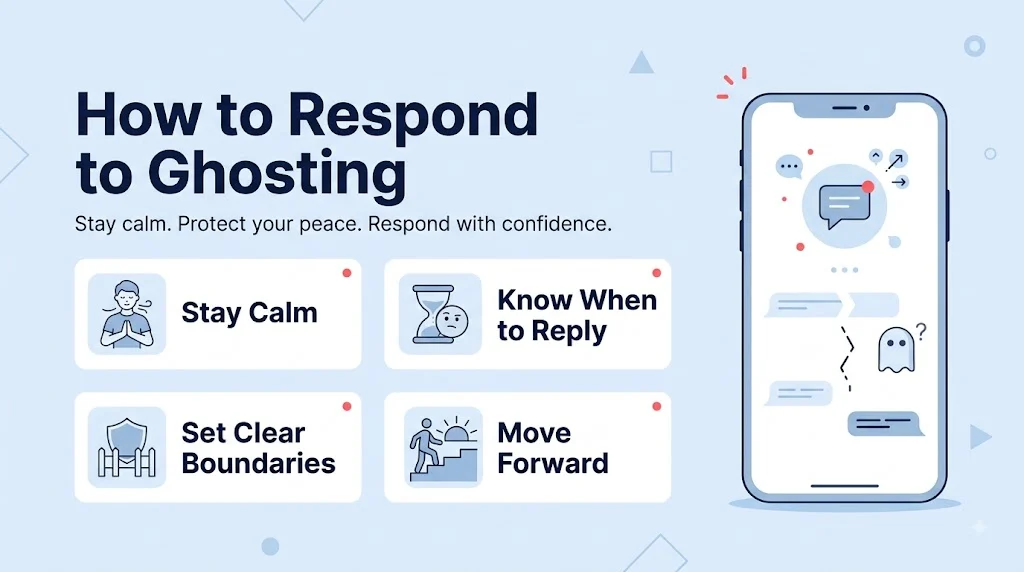
If someone ghosts you, the best response depends on how you feel and what you want next. You can stay calm, ask for clarity, set a boundary, make a joke, or simply move on without chasing them.
Top alternatives: calm ghosting replies, funny responses to being ghosted, what to text after ghosting, confident ghosting responses, how to respond when someone disappears
Getting ghosted can leave you staring at your phone like it personally betrayed you. One minute you are texting, flirting, making plans, or talking every day, and then suddenly… nothing. No explanation, no warning, just digital silence. Whether it happens with a crush, friend, date, coworker, or someone you thought was genuinely interested, knowing how to respond to ghosting can save you from sending the dreaded “hello???” followed by three more messages you immediately regret.
The good news is that you do not need to chase, beg, or write a five-paragraph emotional essay. Sometimes the strongest response is calm and direct. Other times, a little humor makes the situation easier. You might want closure, a second chance, or simply your dignity back. These ready-to-send responses cover different moods, from funny and sarcastic to mature, confident, caring, and completely unbothered.
Calm Responses
- “Hey, I noticed we stopped talking. Hope everything is okay.”
Example: Use this when you want to check in without sounding angry or demanding.
Meaning: You are opening the door to communication while staying composed. - “I noticed the silence, so I wanted to check in once.”
Example: Use this when you want clarity without repeatedly messaging.
Meaning: You are acknowledging what happened while respecting yourself. - “If you need space, I completely understand.”
Example: Use this when you suspect the person may be dealing with something personal.
Meaning: You are giving them room without pressuring them. - “No worries if your priorities have changed.”
Example: Use this when communication has suddenly become inconsistent.
Meaning: You are accepting the possibility that their interest has changed. - “I would rather have honesty than silence.”
Example: Use this when you want to communicate your preference clearly.
Meaning: You value direct communication over disappearing. - “I am not sure what happened, but I respect your choice.”
Example: Use this when you want to close the situation peacefully.
Meaning: You are acknowledging the silence without attacking them. - “Just checking in before I assume you are no longer interested.”
Example: Use this when you want one final clarification.
Meaning: You are giving them an opportunity to be honest. - “I noticed things got quiet, so I will leave the ball in your court.”
Example: Use this when you do not want to keep initiating contact.
Meaning: You are giving them responsibility for the next move. - “I hope everything is okay on your end.”
Example: Use this when you genuinely care about their well-being.
Meaning: You are showing concern without demanding an explanation. - “I am going to give you some space.”
Example: Use this when continued messages would feel unnecessary.
Meaning: You are choosing patience over pressure. - “I am not upset. I just prefer clear communication.”
Example: Use this when you want to explain your expectations calmly.
Meaning: You are setting a communication standard without creating drama. - “I enjoyed talking with you, but I will not force a conversation.”
Example: Use this when you want to end things respectfully.
Meaning: You appreciate the connection but refuse to chase. - “If you want to talk, you know where to find me.”
Example: Use this as a final message when you are ready to step back.
Meaning: You are leaving communication open without pursuing them. - “I will take the silence as a sign to step back.”
Example: Use this when the lack of response has continued for a while.
Meaning: You are protecting your peace by accepting the situation. - “Wishing you well either way.”
Example: Use this when you want to end contact on a positive note.
Meaning: You are choosing kindness and closure.
Funny Responses
- “Did your phone enter witness protection?”
Example: Use this with someone who disappeared after regularly texting you.
Meaning: You are playfully calling attention to their sudden silence. - “Should I send a search party or just take the hint?”
Example: Use this when you want humor with a little attitude.
Meaning: You are acknowledging the disappearance without sounding devastated. - “I was starting to think I got ghosted by an actual ghost.”
Example: Use this when joking with someone who suddenly disappeared.
Meaning: You are making the awkward silence playful. - “Blink twice if you are still alive.”
Example: Use this when someone has disappeared for an unusually long time.
Meaning: You are humorously checking whether they plan to respond. - “Wow, that disappearing act deserves an award.”
Example: Use this when you want a playful sarcastic jab.
Meaning: You are joking about how dramatically they vanished. - “I guess our conversation went on airplane mode.”
Example: Use this after a sudden communication blackout.
Meaning: You are turning the silence into a light joke. - “The silence is giving award-winning mystery series.”
Example: Use this as a playful text when someone disappears.
Meaning: You are joking about the unexplained disappearance. - “Did I accidentally subscribe to the silent treatment?”
Example: Use this when the silence feels intentional.
Meaning: You are humorously questioning their communication style. - “Your reply must be traveling by carrier pigeon.”
Example: Use this when someone takes an absurdly long time to answer.
Meaning: You are joking about the delayed response. - “I respect the commitment to disappearing.”
Example: Use this when someone has been silent for a long time.
Meaning: You are teasing them about their impressive vanishing act. - “Okay Houdini, I see you.”
Example: Use this when someone suddenly disappears from communication.
Meaning: You are playfully comparing them to an escape artist. - “My message is apparently taking the scenic route.”
Example: Use this when waiting for an unusually slow response.
Meaning: You are joking about the delay. - “This conversation really said goodbye without saying goodbye.”
Example: Use this when the interaction suddenly ends.
Meaning: You are humorously pointing out the lack of closure. - “Plot twist: the texter became the ghost.”
Example: Use this when someone who used to text constantly suddenly disappears.
Meaning: You are making the situation sound like an unexpected story twist. - “Well, that was a vanishing act worthy of a magic show.”
Example: Use this when you want a playful closing comment.
Meaning: You are acknowledging the disappearance with humor instead of anger.
Brutal Responses
- “Silence is an answer too.”
Example: Use this when you have decided to stop waiting for an explanation.
Meaning: You are accepting their lack of communication as a clear message. - “You could have just said you were not interested.”
Example: Use this when someone disappears instead of communicating honestly.
Meaning: You are calling out the lack of directness. - “No response received, so no response needed from me.”
Example: Use this when you are ready to move on.
Meaning: You are refusing to chase someone who ignores you. - “I do not chase people who choose distance.”
Example: Use this when you want to establish a firm boundary.
Meaning: You value yourself enough to step back. - “Ghosting tells me everything I need to know.”
Example: Use this when you no longer want an explanation.
Meaning: You see their behavior as enough information. - “You disappeared. I adjusted.”
Example: Use this as a short, confident response after moving on.
Meaning: You are showing that their absence did not stop your life. - “I wanted communication, not a disappearing act.”
Example: Use this when calling out immature behavior.
Meaning: You expected straightforward communication. - “No hard feelings, but no second chances either.”
Example: Use this when someone returns after ghosting you.
Meaning: You are setting a firm boundary. - “You had my attention. You lost it.”
Example: Use this when someone returns after ignoring you.
Meaning: You are making it clear that their behavior changed your interest. - “I am not an option you can pause and resume.”
Example: Use this when someone disappears and later returns casually.
Meaning: You expect consistency rather than convenience. - “You made your choice when you stopped communicating.”
Example: Use this when someone acts surprised that you moved on.
Meaning: You are holding them accountable for their silence. - “I do not compete with silence.”
Example: Use this when you want a short and powerful boundary.
Meaning: You refuse to keep pursuing someone who will not communicate. - “If disappearing was your answer, I got the message.”
Example: Use this when you want closure without another argument.
Meaning: You are accepting the behavior as a clear rejection. - “Respectfully, I have better things to do than decode silence.”
Example: Use this when someone expects you to guess their feelings.
Meaning: You refuse to waste energy analyzing their behavior. - “You ghosted. I moved on. Simple.”
Example: Use this when someone comes back after a long absence.
Meaning: You are making your position clear without overexplaining.
Flirty Responses
- “You disappeared, and somehow I still noticed.”
Example: Use this when you want to tease someone you still like.
Meaning: You are showing interest while playfully calling them out. - “So are you coming back, or was that your grand finale?”
Example: Use this when you want a playful romantic response.
Meaning: You are inviting them to reconnect without sounding desperate. - “I was wondering when you would reappear.”
Example: Use this when someone returns after disappearing.
Meaning: You are teasing them while acknowledging you noticed. - “Look who decided to return to civilization.”
Example: Use this when someone finally texts after going quiet.
Meaning: You are playfully teasing their absence. - “You ghosted me and somehow made yourself more mysterious.”
Example: Use this when you are still attracted to the person.
Meaning: You are turning their disappearance into flirtatious banter. - “Should I pretend I did not miss your messages?”
Example: Use this when someone returns after a short absence.
Meaning: You are admitting interest in a playful way. - “I thought you were trying to make me miss you.”
Example: Use this when you want to flirt after their silence.
Meaning: You are suggesting their absence had a romantic effect. - “Was that your way of keeping me curious?”
Example: Use this when someone disappears and then comes back.
Meaning: You are teasing them while keeping the tone light. - “You vanished, but unfortunately you are still cute.”
Example: Use this when you want playful honesty.
Meaning: You are admitting attraction despite being annoyed. - “I almost forgot how interesting you are.”
Example: Use this when someone returns after disappearing.
Meaning: You are flirting while lightly reminding them of their absence. - “So, are we continuing where we left off?”
Example: Use this when you are open to reconnecting.
Meaning: You are giving them a chance to restart the conversation. - “Your comeback needs a better explanation.”
Example: Use this when someone suddenly returns.
Meaning: You are teasing them while expecting some accountability. - “I was starting to think you were scared of the chemistry.”
Example: Use this when the connection felt romantic.
Meaning: You are playfully suggesting the attraction may have overwhelmed them. - “You really know how to make an entrance after disappearing.”
Example: Use this when someone returns dramatically.
Meaning: You are teasing their timing with flirtatious energy. - “Okay, mysterious stranger, what happened?”
Example: Use this when you want an explanation without sounding angry.
Meaning: You are combining curiosity with playful attraction.
Polite Responses
- “I hope you are doing well.”
Example: Use this when you want to reconnect without bringing immediate tension.
Meaning: You are showing kindness despite the silence. - “I noticed we lost touch, so I wanted to check in.”
Example: Use this when you want a polite explanation.
Meaning: You are acknowledging the distance respectfully. - “I understand that life can get busy.”
Example: Use this when you want to give someone the benefit of the doubt.
Meaning: You are allowing for circumstances beyond their control. - “If you are no longer interested, that is completely okay.”
Example: Use this when you want directness without confrontation.
Meaning: You are giving them permission to be honest. - “I would appreciate clarity when you have a moment.”
Example: Use this when the situation matters to you.
Meaning: You are politely requesting honest communication. - “No pressure to respond if you would rather not.”
Example: Use this when you want to avoid making someone uncomfortable.
Meaning: You are respecting their choice. - “I enjoyed getting to know you.”
Example: Use this when you are closing a connection respectfully.
Meaning: You are focusing on the positive part of the experience. - “I wish you the best either way.”
Example: Use this when you want a mature ending.
Meaning: You are choosing goodwill over resentment. - “Thank you for the time we shared.”
Example: Use this when you want to close the relationship gracefully.
Meaning: You are appreciating what happened without demanding more. - “I will respect the distance.”
Example: Use this when you realize the person does not want communication.
Meaning: You are accepting their boundary. - “I hope everything is okay on your side.”
Example: Use this when you are genuinely concerned.
Meaning: You are checking in without making accusations. - “I prefer direct communication, but I respect your decision.”
Example: Use this when you want to express your standard politely.
Meaning: You are communicating your preference without hostility. - “I will take the hint and give you space.”
Example: Use this when you no longer want to pursue contact.
Meaning: You are stepping away respectfully. - “Take care, and I hope things go well for you.”
Example: Use this as a final message.
Meaning: You are ending the interaction kindly. - “No resentment, just clarity.”
Example: Use this when you want to close the situation without drama.
Meaning: You are choosing understanding over anger.
Confident Responses
- “I know my worth, so I am not going to chase.”
Example: Use this as a personal reminder or social caption after being ignored.
Meaning: You are prioritizing self-respect. - “I do not need an explanation to move forward.”
Example: Use this when you have accepted the situation.
Meaning: You are choosing closure for yourself. - “Your silence does not determine my value.”
Example: Use this when ghosting has affected your confidence.
Meaning: You are separating another person’s behavior from your self-worth. - “I am interested in consistency, not confusion.”
Example: Use this when someone returns after disappearing.
Meaning: You want dependable communication. - “I do not force connections.”
Example: Use this when deciding whether to keep pursuing someone.
Meaning: You believe mutual interest should happen naturally. - “I am not waiting around for someone to decide.”
Example: Use this when someone keeps disappearing and returning.
Meaning: You are refusing to remain an uncertain option. - “If the energy is not mutual, I am out.”
Example: Use this when communication feels one-sided.
Meaning: You expect balanced effort. - “I would rather be single than constantly confused.”
Example: Use this when explaining why you are stepping away.
Meaning: You prioritize peace over an uncertain relationship. - “I do not take disappearing acts personally anymore.”
Example: Use this after developing stronger emotional boundaries.
Meaning: You understand that ghosting often reflects the other person’s behavior. - “I am choosing peace over unanswered questions.”
Example: Use this when you decide not to seek closure from someone.
Meaning: You are prioritizing emotional peace. - “I gave the connection a chance. That was enough.”
Example: Use this when you are ready to move on.
Meaning: You believe you have already done your part. - “I am not chasing someone who already walked away.”
Example: Use this when resisting the urge to send another message.
Meaning: You are standing firmly by your self-respect. - “My life does not pause because someone stopped texting.”
Example: Use this as a confident reminder after being ghosted.
Meaning: You are refusing to let another person’s silence control you. - “I want someone who communicates, not someone I have to decode.”
Example: Use this when describing your relationship standards.
Meaning: You value clarity and consistency. - “No reply is not going to stop me from moving forward.”
Example: Use this when you are ready to let go.
Meaning: You are choosing progress instead of waiting.
Emotional Responses
- “Honestly, the silence hurt more than an honest goodbye would have.”
Example: Use this when you want to explain the emotional impact of ghosting.
Meaning: You are expressing hurt without attacking the person. - “I wish you had trusted me enough to be honest.”
Example: Use this when you expected open communication.
Meaning: You are expressing disappointment about the lack of honesty. - “I cared about what we were building.”
Example: Use this when a connection ended without explanation.
Meaning: You are acknowledging that the relationship mattered to you. - “Not knowing what happened has been difficult.”
Example: Use this when you genuinely need to express your feelings.
Meaning: You are explaining how uncertainty affected you. - “I would have preferred the truth, even if it hurt.”
Example: Use this when discussing why ghosting was painful.
Meaning: You value honesty more than an easy disappearance. - “I thought we had enough connection for a conversation.”
Example: Use this when the ghosting feels especially unexpected.
Meaning: You are expressing disappointment about the way things ended. - “I am hurt, but I am learning to let go.”
Example: Use this when you are processing the experience.
Meaning: You are acknowledging pain while choosing healing. - “I deserved a goodbye, even if it was difficult.”
Example: Use this when you feel the ending lacked basic consideration.
Meaning: You believe honest closure would have been more respectful. - “I cannot pretend the silence did not affect me.”
Example: Use this when someone asks whether their disappearance mattered.
Meaning: You are honestly acknowledging your emotions. - “I cared, and that is why the silence mattered.”
Example: Use this when explaining why you are hurt.
Meaning: You are connecting your emotional response to genuine attachment. - “I hope someday you understand how confusing this felt.”
Example: Use this when you want the person to recognize the impact.
Meaning: You are expressing a desire for empathy. - “I wanted honesty, not perfection.”
Example: Use this when explaining your expectations.
Meaning: You did not need everything to work out, only straightforward communication. - “Some endings hurt because they never really got explained.”
Example: Use this as a reflective social-media caption.
Meaning: You are describing the emotional difficulty of unresolved endings. - “I am making peace with not getting the answers I wanted.”
Example: Use this when you have decided to stop waiting.
Meaning: You are creating your own sense of closure. - “I cared about you, but I also need to care about myself.”
Example: Use this when deciding to move on.
Meaning: You are balancing affection with self-respect.
Chill And Casual Responses
- “Hey stranger, what happened?”
Example: Use this when someone returns after a short disappearance.
Meaning: You are keeping the tone relaxed while acknowledging their absence. - “You disappeared on me lol.”
Example: Use this with someone you normally joke around with.
Meaning: You are casually pointing out the silence. - “So we just stopped talking? 😂”
Example: Use this when you want a lighthearted check-in.
Meaning: You are acknowledging the awkward ending without sounding angry. - “Well, that got quiet fast.”
Example: Use this when a conversation suddenly stops.
Meaning: You are casually pointing out the change. - “You good?”
Example: Use this when you are more concerned than annoyed.
Meaning: You are checking whether something happened. - “Guess life got busy.”
Example: Use this when you want to assume the best.
Meaning: You are giving them a harmless explanation for the silence. - “No worries, just noticed the vanishing act.”
Example: Use this when you want to keep things playful.
Meaning: You are acknowledging the ghosting without creating drama. - “All good, I figured you got busy.”
Example: Use this when you are willing to give them another chance.
Meaning: You are keeping the interaction relaxed. - “Hey, long time no text.”
Example: Use this when someone returns after disappearing.
Meaning: You are casually reopening communication. - “Did we accidentally pause the conversation?”
Example: Use this when the silence feels awkward.
Meaning: You are making the situation less serious with humor. - “You went quiet, so I gave you space.”
Example: Use this when someone asks why you stopped messaging.
Meaning: You are calmly explaining your reaction. - “I figured you would pop back up eventually.”
Example: Use this when someone returns after a long absence.
Meaning: You are teasing them without showing resentment. - “No drama, just checking in.”
Example: Use this when you want a simple conversation starter.
Meaning: You are signaling that you do not want conflict. - “Life happens. Hope you are good.”
Example: Use this when you want to be understanding.
Meaning: You are showing compassion while keeping things casual. - “Anyway, hope things are going well.”
Example: Use this when you want to end the interaction on a relaxed note.
Meaning: You are choosing friendliness instead of confrontation.
Mature Responses
- “I understand that people sometimes lose interest, but honesty matters.”
Example: Use this when explaining why ghosting bothered you.
Meaning: You accept changing feelings while expecting respectful communication. - “You did not owe me a relationship, but you did owe me basic honesty.”
Example: Use this when someone asks why ghosting felt wrong.
Meaning: You are distinguishing romantic obligation from respectful communication. - “I would rather accept an uncomfortable truth than live with confusion.”
Example: Use this when seeking closure.
Meaning: You prefer honesty over uncertainty. - “I am not angry, but I learned something from the experience.”
Example: Use this when reflecting after being ghosted.
Meaning: You are turning disappointment into personal growth. - “I respect your decision, even though I disliked how it was handled.”
Example: Use this when someone explains why they disappeared.
Meaning: You can accept their choice while criticizing their communication. - “We clearly wanted different things, and that is okay.”
Example: Use this when you realize the connection was not compatible.
Meaning: You are accepting incompatibility without blame. - “I appreciate the explanation. I wish you had said it sooner.”
Example: Use this when a ghoster eventually provides an explanation.
Meaning: You accept the answer while acknowledging the delay. - “I believe people should be honest even when the answer is uncomfortable.”
Example: Use this when discussing communication standards.
Meaning: You value honesty during difficult conversations. - “I am choosing to move forward without holding a grudge.”
Example: Use this when you have decided to let the situation go.
Meaning: You are releasing resentment. - “Not every connection is meant to last.”
Example: Use this when accepting that someone has moved away emotionally.
Meaning: You recognize that endings are a normal part of relationships. - “I do not need to villainize you to know this was not okay.”
Example: Use this when processing a painful ending.
Meaning: You can criticize behavior without demonizing the person. - “The experience changed what I expect from communication.”
Example: Use this when explaining what you learned.
Meaning: You are using the experience to establish healthier boundaries. - “I hope future conversations are easier for both of us.”
Example: Use this when ending things respectfully.
Meaning: You are choosing goodwill despite disappointment. - “I have accepted the ending, even without all the answers.”
Example: Use this when you no longer need closure from the other person.
Meaning: You have found peace independently. - “Sometimes closure is deciding you are done waiting.”
Example: Use this as a reflective message or personal reminder.
Meaning: You are recognizing that closure can come from your own decision.
Clever Responses
- “Ghosting is a communication style, just not a very good one.”
Example: Use this when making a clever observation about disappearing.
Meaning: You are criticizing ghosting without being overly aggressive. - “You left the conversation before the conversation could end.”
Example: Use this when describing an unexplained disappearance.
Meaning: You are pointing out the lack of a proper ending. - “Silence can be mysterious, but clarity is usually more attractive.”
Example: Use this when discussing dating communication.
Meaning: You are saying directness is more appealing than disappearing. - “A disappearing act is impressive until you realize you were the audience.”
Example: Use this as a clever social-media caption.
Meaning: You are humorously expressing disappointment. - “You gave me an answer without typing a single word.”
Example: Use this when you have decided their silence is enough information.
Meaning: You recognize ghosting as an indirect rejection. - “Consistency is underrated until someone suddenly has none.”
Example: Use this when reflecting on inconsistent communication.
Meaning: You are highlighting the importance of reliability. - “I do not need a detective license to recognize a disappearance.”
Example: Use this when someone expects you to investigate their silence.
Meaning: You refuse to overanalyze obvious behavior. - “The mystery was fun until there was no ending.”
Example: Use this when someone disappears during a promising connection.
Meaning: You are describing the frustration of unresolved communication. - “Communication should not require archaeological research.”
Example: Use this when someone takes an extremely long time to respond.
Meaning: You think basic communication should be straightforward. - “You disappeared so completely, even the conversation lost your location.”
Example: Use this as a playful caption.
Meaning: You are making fun of the unexplained silence. - “A simple goodbye would have saved everyone some detective work.”
Example: Use this when explaining why ghosting is frustrating.
Meaning: You believe direct communication would have been easier. - “You cannot leave someone on read and call it emotional maturity.”
Example: Use this when discussing repeated ghosting behavior.
Meaning: You are challenging the idea that avoidance is mature. - “The fastest way to create questions is to provide zero answers.”
Example: Use this when explaining why ghosting causes confusion.
Meaning: You are highlighting the connection between silence and uncertainty. - “Ghosting saves one uncomfortable conversation and creates ten uncomfortable questions.”
Example: Use this as a clever observation.
Meaning: You believe avoidance usually creates more problems. - “If communication is the bridge, ghosting is basically removing the bridge.”
Example: Use this when discussing healthy communication.
Meaning: You are saying that disappearing makes connection impossible.
Sweet Responses
- “I hope you are okay, genuinely.”
Example: Use this when you care about someone despite their silence.
Meaning: You are showing sincere concern without demanding anything. - “I enjoyed having you in my life, even for that chapter.”
Example: Use this when accepting that a connection has ended.
Meaning: You are appreciating the relationship while letting it go. - “I wish things had ended differently, but I still wish you well.”
Example: Use this when you want a kind goodbye.
Meaning: You are expressing disappointment without resentment. - “I hope life is treating you kindly.”
Example: Use this when sending a gentle final message.
Meaning: You are choosing warmth despite the situation. - “No bitterness, just a little sadness and a lot of acceptance.”
Example: Use this as a reflective caption.
Meaning: You are acknowledging your emotions while moving forward. - “I will remember the good parts.”
Example: Use this when closing a meaningful connection.
Meaning: You are choosing positive memories over anger. - “I hope you find whatever you were looking for.”
Example: Use this when someone decides not to continue the connection.
Meaning: You are wishing them well even though things did not work out. - “Thank you for the moments that were real.”
Example: Use this when the relationship had genuine positive moments.
Meaning: You are appreciating what mattered to you. - “I cared, and I am grateful I got to know you.”
Example: Use this when saying goodbye to someone meaningful.
Meaning: You are honoring the connection without holding on. - “I hope someday we both look back without hard feelings.”
Example: Use this when you want a peaceful ending.
Meaning: You are hoping for emotional closure. - “You mattered to me, and I will not pretend otherwise.”
Example: Use this when expressing honest feelings before moving on.
Meaning: You are acknowledging genuine attachment. - “I am letting go with kindness.”
Example: Use this when you want to move forward peacefully.
Meaning: You are choosing compassion instead of resentment. - “Some people are chapters, not entire stories.”
Example: Use this as a reflective social-media caption.
Meaning: You are accepting that some relationships are temporary. - “I hope your next chapter is a good one.”
Example: Use this when saying goodbye to someone.
Meaning: You are ending things with warmth and goodwill. - “Take care of yourself. Truly.”
Example: Use this as a final gentle message.
Meaning: You are showing sincere kindness while letting go.
FAQs
What does ghosting mean?
Ghosting means suddenly stopping communication with someone without giving an explanation or clear goodbye.
Should I text someone who ghosted me?
You can send one calm message if you genuinely want clarity. After that, it is usually healthier to stop chasing and let their response, or lack of response, speak for itself.
What is the best response to ghosting?
There is no single perfect response. A calm message such as “I noticed we lost touch, so I am going to give you space” works well when you want to protect your dignity.
What should I say if someone ghosts me and comes back?
You can ask directly what happened. Try, “Good to hear from you. What happened?” or “I am open to talking, but I would like some clarity about the disappearing act.”
Should I respond emotionally after being ghosted?
It is okay to express your feelings, especially if the connection mattered to you. Try to avoid sending messages you may regret later.
Conclusion
Being ghosted can sting, especially when you thought the connection was going somewhere. But one person’s silence does not define your worth, attractiveness, or ability to build meaningful relationships. The way you respond can protect your peace and show exactly what kind of communication you expect.
You can be funny without being bitter, emotional without losing control, or confident without becoming cold. Choose the response that matches your situation and, most importantly, your self-respect. Sometimes the best reply is one thoughtful message. Sometimes it is no message at all. Save these responses for the next unexpected disappearing act, share your favorite, and keep moving forward.
Discover More Related Articles:

Jennifer Wilson is an experienced writer and content creator with over 20 years of expertise in digital publishing, lifestyle, and informative content. Holding a degree in English Literature, she contributes to Responary.Com, where she shares engaging, well-researched articles that help readers stay informed and inspired.