Quick Answer
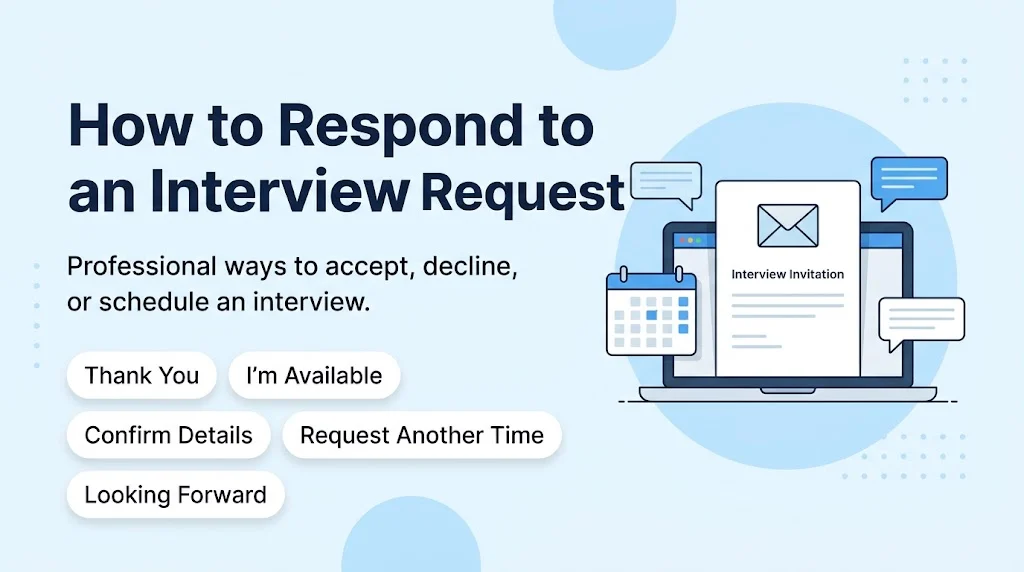
The best way to respond to an interview request is to thank the recruiter, express interest, and confirm your availability. Keep your message professional, friendly, and clear so you make a positive first impression.
Top alternatives: Thank you for the opportunity, I would love to interview, I am available at your suggested time, Looking forward to speaking with you, Please share the interview details.
Getting an interview request is exciting, but figuring out what to say next can feel surprisingly stressful. Whether a recruiter contacts you through email, LinkedIn, a phone call, or a job application platform, your response matters more than you might think. A simple message can show professionalism, confidence, and genuine interest in the position. But should you sound formal, friendly, enthusiastic, or straight to the point? It depends on who contacted you and how they approached you. Knowing how to respond to an interview request helps you make a strong first impression before you even enter the interview room. From accepting an invitation to requesting another time or declining politely, these ready-to-use replies will help you handle every situation without overthinking every word.
Professional Responses
– “Thank you for the interview invitation. I would be delighted to attend.”
Example: Use this when a recruiter formally invites you to interview.
Meaning: It expresses appreciation and genuine interest.
– “I appreciate the opportunity and look forward to discussing the position.”
Example: Use this when responding to a company representative by email.
Meaning: It communicates professionalism and enthusiasm.
– “Thank you for considering my application. I am available for the interview.”
Example: Use this when accepting an interview invitation.
Meaning: It confirms your interest and availability.
– “I would be happy to meet with your team.”
Example: Use this when invited to an interview with multiple team members.
Meaning: It shows a positive attitude toward the opportunity.
– “Thank you for reaching out. I look forward to learning more about the role.”
Example: Use this when a recruiter contacts you for the first time.
Meaning: It shows interest in the position.
– “I appreciate your consideration and would welcome the opportunity to interview.”
Example: Use this when replying to a formal invitation.
Meaning: It communicates respect and enthusiasm.
– “Thank you for the invitation. The proposed time works well for me.”
Example: Use this when the recruiter suggests a suitable time.
Meaning: It confirms your availability professionally.
– “I am pleased to accept the interview invitation.”
Example: Use this when formally confirming an interview.
Meaning: It provides a clear and positive acceptance.
– “Thank you for this opportunity. I look forward to our conversation.”
Example: Use this when confirming a scheduled meeting.
Meaning: It creates a professional and welcoming impression.
– “I would be glad to discuss how my experience aligns with the position.”
Example: Use this when you want to emphasize your qualifications.
Meaning: It shows confidence in your professional background.
– “Thank you for your email. I am interested in moving forward with the interview process.”
Example: Use this when replying to a hiring manager.
Meaning: It confirms your willingness to continue.
– “I appreciate the invitation and confirm my attendance.”
Example: Use this when responding to a scheduled interview.
Meaning: It provides a formal confirmation.
– “I look forward to discussing my qualifications in more detail.”
Example: Use this when accepting an interview for a professional role.
Meaning: It shows readiness to discuss your experience.
– “Thank you for considering me for this opportunity.”
Example: Use this when acknowledging an interview invitation.
Meaning: It expresses gratitude and professionalism.
– “I look forward to meeting with you and learning more about the team.”
Example: Use this when accepting an in-person interview.
Meaning: It shows enthusiasm about the company.
Polite Responses
– “Thank you so much for reaching out.”
Example: Use this when a recruiter contacts you about an opportunity.
Meaning: It acknowledges their message politely.
– “I appreciate the invitation and would be happy to attend.”
Example: Use this when accepting an interview request.
Meaning: It communicates gratitude and willingness.
– “Thank you for the opportunity. I look forward to speaking with you.”
Example: Use this when confirming an interview by email.
Meaning: It creates a warm and respectful impression.
– “That sounds wonderful. Thank you for considering me.”
Example: Use this when receiving positive interview news.
Meaning: It shows appreciation and enthusiasm.
– “I would be pleased to discuss the opportunity further.”
Example: Use this when a recruiter wants to arrange a meeting.
Meaning: It expresses polite interest.
– “Thank you for your time and consideration.”
Example: Use this when responding to a hiring manager.
Meaning: It acknowledges their effort.
– “I would appreciate the opportunity to meet your team.”
Example: Use this when invited to a team interview.
Meaning: It shows respect and interest.
– “Thank you for keeping me in consideration.”
Example: Use this when receiving an invitation after applying.
Meaning: It expresses gratitude.
– “I would be happy to provide any additional information before the interview.”
Example: Use this when the recruiter may need further details.
Meaning: It shows cooperation.
– “Thank you for the update. I am looking forward to the next steps.”
Example: Use this when the hiring team shares interview details.
Meaning: It communicates a positive attitude.
– “I appreciate you reaching out and would welcome the conversation.”
Example: Use this when responding to a recruiter on LinkedIn.
Meaning: It shows openness and professionalism.
– “Thank you for the invitation. I am grateful for the opportunity.”
Example: Use this when accepting an interview.
Meaning: It expresses sincere appreciation.
– “I would be delighted to discuss the role with you.”
Example: Use this when a company invites you to speak with its hiring manager.
Meaning: It communicates genuine interest.
– “Thank you for considering my application.”
Example: Use this when replying to an interview invitation.
Meaning: It acknowledges the company’s consideration.
– “I look forward to hearing more about the position.”
Example: Use this when accepting an initial recruiter call.
Meaning: It shows curiosity and interest.
Enthusiastic Responses
– “Absolutely! I would love the opportunity to interview.”
Example: Use this when you are genuinely excited about the position.
Meaning: It communicates strong enthusiasm.
– “Thank you! I am excited to discuss this opportunity.”
Example: Use this when a company you admire contacts you.
Meaning: It expresses excitement and appreciation.
– “I would be thrilled to meet with your team.”
Example: Use this when invited to a team interview.
Meaning: It shows excitement about meeting potential colleagues.
– “This sounds like a wonderful opportunity. I would love to learn more.”
Example: Use this when the position matches your career interests.
Meaning: It communicates curiosity and enthusiasm.
– “I am excited about the possibility of joining your organization.”
Example: Use this when interviewing with a company you admire.
Meaning: It shows interest in becoming part of the team.
– “Thank you for the invitation! I am looking forward to it.”
Example: Use this when accepting a scheduled interview.
Meaning: It sounds positive and friendly.
– “I would be very happy to discuss how I can contribute.”
Example: Use this when you believe your skills match the role.
Meaning: It communicates confidence and motivation.
– “Wonderful news! I would be glad to move forward.”
Example: Use this when a recruiter invites you to the next stage.
Meaning: It expresses excitement about progressing.
– “I appreciate this opportunity and cannot wait to learn more.”
Example: Use this when the position interests you greatly.
Meaning: It communicates eagerness.
– “Count me in! I would love to speak with you.”
Example: Use this for a friendly recruiter conversation.
Meaning: It shows enthusiasm in a casual way.
– “I am genuinely excited about this opportunity.”
Example: Use this when the role is a strong career match.
Meaning: It communicates sincere interest.
– “Thank you for reaching out. I would be excited to meet the team.”
Example: Use this when invited to a company interview.
Meaning: It shows a welcoming attitude.
– “I would love to take the next step in the hiring process.”
Example: Use this when a recruiter offers an initial interview.
Meaning: It confirms your motivation.
– “Looking forward to what sounds like a great conversation.”
Example: Use this when accepting a friendly interview invitation.
Meaning: It creates an enthusiastic impression.
– “I am excited to explore how my experience fits the role.”
Example: Use this when your background matches the job requirements.
Meaning: It shows interest and professional confidence.
Short And Simple Responses
– “Thank you! I would be happy to attend.”
Example: Use this for a quick email confirmation.
Meaning: It politely accepts the invitation.
– “Yes, that time works for me.”
Example: Use this when confirming the proposed interview time.
Meaning: It clearly confirms your availability.
– “Absolutely, looking forward to it!”
Example: Use this when replying to a friendly recruiter.
Meaning: It shows positive interest.
– “Thank you. I am available.”
Example: Use this when the recruiter asks about your availability.
Meaning: It gives a direct answer.
– “I would love to. Thank you!”
Example: Use this when accepting an interview invitation.
Meaning: It expresses appreciation and enthusiasm.
– “That works perfectly for me.”
Example: Use this when the suggested schedule suits you.
Meaning: It confirms the proposed timing.
– “Sounds good. See you then!”
Example: Use this when confirming an informal interview meeting.
Meaning: It sounds friendly and confident.
– “Thank you for the opportunity!”
Example: Use this when acknowledging an invitation.
Meaning: It expresses gratitude.
– “I am looking forward to speaking with you.”
Example: Use this when confirming a phone interview.
Meaning: It communicates interest.
– “Happy to move forward!”
Example: Use this when invited to the next interview stage.
Meaning: It shows willingness to continue.
– “Yes, I can make that time.”
Example: Use this when confirming availability.
Meaning: It gives a clear commitment.
– “Thank you, I look forward to meeting you.”
Example: Use this when accepting an in-person interview.
Meaning: It sounds polite and welcoming.
– “Certainly! Please send the details.”
Example: Use this when accepting but needing the meeting information.
Meaning: It requests the necessary arrangements.
– “I appreciate the invitation. See you soon!”
Example: Use this when confirming a friendly interview appointment.
Meaning: It combines appreciation with enthusiasm.
– “Yes, I would be interested.”
Example: Use this when responding to an initial interview inquiry.
Meaning: It clearly communicates interest.
Responses When You Are Available
– “Thank you for the invitation. I am available at the proposed time.”
Example: Use this when the suggested interview time suits your schedule.
Meaning: It confirms availability professionally.
– “That date and time work perfectly for me.”
Example: Use this when confirming a specific appointment.
Meaning: It accepts the proposed schedule.
– “I am available and would be happy to attend.”
Example: Use this when replying to a recruiter by email.
Meaning: It confirms your willingness to participate.
– “The suggested time works well. Thank you!”
Example: Use this when accepting a meeting invitation.
Meaning: It gives a friendly confirmation.
– “I have reserved that time for our interview.”
Example: Use this when confirming a scheduled meeting.
Meaning: It shows that you have made the appointment a priority.
– “I can confirm my availability for that date.”
Example: Use this when replying formally to an HR representative.
Meaning: It provides a professional confirmation.
– “I am available and look forward to our discussion.”
Example: Use this when accepting a recruiter call.
Meaning: It communicates both availability and interest.
– “That schedule works for me. I appreciate the opportunity.”
Example: Use this when the proposed timing is convenient.
Meaning: It combines confirmation with gratitude.
– “I will be available at the requested time.”
Example: Use this when responding to a formal invitation.
Meaning: It confirms your attendance.
– “Thank you for arranging this. The time is convenient.”
Example: Use this when a hiring manager schedules an interview.
Meaning: It acknowledges their effort.
– “I can make that appointment and look forward to meeting you.”
Example: Use this when confirming an in-person meeting.
Meaning: It shows commitment and enthusiasm.
– “That works well with my schedule.”
Example: Use this when accepting a proposed time.
Meaning: It provides a simple confirmation.
– “I am happy to confirm my attendance.”
Example: Use this when replying to an official interview email.
Meaning: It formally accepts the appointment.
– “Thank you. I have noted the interview details.”
Example: Use this after receiving the date and time.
Meaning: It acknowledges the scheduling information.
– “Looking forward to connecting at the scheduled time.”
Example: Use this when confirming an online interview.
Meaning: It communicates professionalism and readiness.
Responses When You Need To Reschedule
– “Thank you for the invitation. Would it be possible to schedule another time?”
Example: Use this when you have a scheduling conflict.
Meaning: It politely requests an alternative.
– “I appreciate the opportunity, but I am unavailable at that time.”
Example: Use this when the proposed interview conflicts with another commitment.
Meaning: It explains your availability respectfully.
– “Would you be available for an interview on another date?”
Example: Use this when you want to suggest a different day.
Meaning: It keeps the scheduling conversation open.
– “I apologize for the inconvenience. Could we arrange a different time?”
Example: Use this when you cannot attend the original appointment.
Meaning: It makes a polite rescheduling request.
– “I would still love to interview and would appreciate another available slot.”
Example: Use this when you remain interested in the position.
Meaning: It reassures the recruiter of your interest.
– “Unfortunately, I have a prior commitment at that time.”
Example: Use this when you have an existing appointment.
Meaning: It provides a brief and professional explanation.
– “Would another time later this week be convenient?”
Example: Use this when you prefer an interview within the same week.
Meaning: It suggests a practical alternative.
– “I am available on Thursday or Friday if either works for you.”
Example: Use this when offering alternative dates.
Meaning: It makes scheduling easier.
– “Thank you for understanding. I hope we can find another suitable time.”
Example: Use this when the original time does not work.
Meaning: It maintains a positive tone.
– “Could we possibly move the interview to the following morning?”
Example: Use this when you prefer a morning appointment.
Meaning: It requests a specific alternative.
– “I remain very interested in the opportunity and would appreciate rescheduling.”
Example: Use this when you want to make your interest clear.
Meaning: It prevents a scheduling conflict from sounding like rejection.
– “I am sorry, but I need to request a change to the scheduled time.”
Example: Use this when an unexpected commitment arises.
Meaning: It communicates the need for an adjustment.
– “Would a virtual interview at another time be possible?”
Example: Use this when attending in person is difficult.
Meaning: It suggests a flexible alternative.
– “I would be grateful if we could arrange a more convenient time.”
Example: Use this when requesting a schedule change formally.
Meaning: It politely asks for flexibility.
– “Thank you for your flexibility. I look forward to speaking with you.”
Example: Use this after the recruiter agrees to reschedule.
Meaning: It expresses appreciation and continued interest.
Responses When You Need More Details
– “Thank you for the invitation. Could you please share the interview details?”
Example: Use this when the recruiter has not provided enough information.
Meaning: It politely requests further details.
– “Could you please confirm whether the interview will be virtual or in person?”
Example: Use this when the interview format is not mentioned.
Meaning: It clarifies the meeting arrangement.
– “Would you mind sharing the expected duration of the interview?”
Example: Use this when planning your schedule.
Meaning: It asks how much time to reserve.
– “Could you please provide the meeting link?”
Example: Use this when accepting an online interview.
Meaning: It requests the necessary joining information.
– “May I know who will be conducting the interview?”
Example: Use this when you want to know who you will meet.
Meaning: It politely asks about the interviewer.
– “Could you share the job description before the meeting?”
Example: Use this when you need to review the role.
Meaning: It requests information to help you prepare.
– “Please let me know if I should bring any documents.”
Example: Use this when attending an in-person interview.
Meaning: It asks about preparation requirements.
– “Could you confirm the location and reporting time?”
Example: Use this when the interview is at the company’s office.
Meaning: It clarifies practical arrangements.
– “Would you please share the interview format?”
Example: Use this when you want to know whether it involves a panel or individual discussion.
Meaning: It asks what to expect.
– “Is there anything specific I should prepare beforehand?”
Example: Use this when you want to prepare effectively.
Meaning: It shows initiative.
– “Could you clarify which position the interview is for?”
Example: Use this when the recruiter has not clearly identified the vacancy.
Meaning: It requests clarification.
– “Thank you. I would appreciate the complete schedule.”
Example: Use this when multiple interview stages are involved.
Meaning: It asks for a clear overview.
– “Could you confirm whether this will be an initial screening or a technical interview?”
Example: Use this when the interview type is unclear.
Meaning: It helps you understand what to expect.
– “Please share any additional instructions for the meeting.”
Example: Use this when confirming an interview appointment.
Meaning: It requests relevant preparation information.
– “I look forward to receiving the remaining details.”
Example: Use this when accepting an invitation but waiting for confirmation.
Meaning: It keeps the conversation professional.
Friendly And Casual Responses
– “Thanks for reaching out! I’d love to chat.”
Example: Use this when a recruiter sends a friendly LinkedIn message.
Meaning: It shows interest in a relaxed way.
– “Sounds great! Looking forward to it.”
Example: Use this when accepting an informal interview invitation.
Meaning: It communicates enthusiasm.
– “Absolutely! Thanks for thinking of me.”
Example: Use this when someone recommends you for an interview.
Meaning: It expresses appreciation.
– “I’d be happy to connect and learn more.”
Example: Use this when a recruiter wants an introductory conversation.
Meaning: It shows openness.
– “Thanks! That sounds like a great opportunity.”
Example: Use this when receiving a message about an interesting role.
Meaning: It communicates positive interest.
– “Sure thing! Just send me the details.”
Example: Use this when agreeing to an informal interview arrangement.
Meaning: It invites the recruiter to share more information.
– “Definitely interested. Let’s make it happen!”
Example: Use this when the position strongly interests you.
Meaning: It shows confidence and enthusiasm.
– “Thanks for the message. I’d love to hear more.”
Example: Use this when a recruiter contacts you unexpectedly.
Meaning: It expresses curiosity.
– “That works for me. Talk soon!”
Example: Use this when confirming a phone interview.
Meaning: It sounds friendly and relaxed.
– “Happy to chat whenever works best.”
Example: Use this when you have a flexible schedule.
Meaning: It communicates availability.
– “Thanks for the invite. Count me in!”
Example: Use this when accepting an informal invitation.
Meaning: It shows excitement.
– “I’d love to explore this opportunity.”
Example: Use this when the role sounds interesting.
Meaning: It communicates genuine curiosity.
– “Great! Looking forward to meeting everyone.”
Example: Use this when invited to meet a team.
Meaning: It shows friendliness.
– “Sounds like a plan. See you then!”
Example: Use this when confirming a scheduled conversation.
Meaning: It gives a casual confirmation.
– “Thanks for getting in touch. I’m definitely interested.”
Example: Use this when responding to an initial recruitment message.
Meaning: It communicates clear interest.
Responses When You Are Nervous
– “Thank you for the opportunity. I am looking forward to speaking with you.”
Example: Use this when you feel nervous but want to sound professional.
Meaning: It keeps your response positive and composed.
– “I appreciate the invitation and look forward to learning more about the role.”
Example: Use this when you are unsure what to say.
Meaning: It provides a safe and professional response.
– “Thank you for considering me. I would be happy to attend.”
Example: Use this when you want a simple acceptance.
Meaning: It communicates gratitude without overthinking.
– “I am excited about the opportunity to discuss my experience.”
Example: Use this when you want to sound confident.
Meaning: It focuses attention on your qualifications.
– “I look forward to having a productive conversation.”
Example: Use this when confirming a formal interview.
Meaning: It creates a calm and professional impression.
– “Thank you for reaching out. I would be glad to connect.”
Example: Use this when responding to an unfamiliar recruiter.
Meaning: It sounds approachable and confident.
– “I appreciate the opportunity and am happy to move forward.”
Example: Use this when accepting an interview request.
Meaning: It communicates readiness.
– “I look forward to discussing how I can contribute to your team.”
Example: Use this when applying for a role you really want.
Meaning: It highlights your professional motivation.
– “Thank you. I am pleased to confirm my availability.”
Example: Use this when you want a straightforward reply.
Meaning: It provides a confident confirmation.
– “I would welcome the opportunity to learn more about your organization.”
Example: Use this when interviewing with a new company.
Meaning: It communicates curiosity and professionalism.
– “Thank you for the invitation. I am looking forward to our discussion.”
Example: Use this when replying to an interview email.
Meaning: It creates a reassuring impression.
– “I am glad to have the opportunity to speak with you.”
Example: Use this when you feel unsure but want to sound positive.
Meaning: It expresses appreciation.
– “I would be happy to discuss my background and experience.”
Example: Use this when invited to an initial interview.
Meaning: It shows readiness to talk about your qualifications.
– “Thank you for this opportunity. I look forward to connecting.”
Example: Use this when you want a polished response.
Meaning: It balances confidence and gratitude.
– “I appreciate your consideration and look forward to meeting you.”
Example: Use this when confirming an interview appointment.
Meaning: It communicates professionalism and calm enthusiasm.
Confident Responses
– “I would welcome the opportunity to discuss my qualifications.”
Example: Use this when your experience matches the job requirements.
Meaning: It demonstrates professional confidence.
– “I am confident that my experience would make this a valuable conversation.”
Example: Use this when interviewing for a position in your field.
Meaning: It shows belief in your professional abilities.
– “I look forward to sharing how my skills align with your needs.”
Example: Use this when accepting an interview invitation.
Meaning: It highlights your potential contribution.
– “Thank you. I am ready to discuss my experience in more detail.”
Example: Use this when invited to a formal interview.
Meaning: It communicates preparation and confidence.
– “I would be pleased to explore how I can contribute to your organization.”
Example: Use this when applying for a company you admire.
Meaning: It shows a contribution-focused mindset.
– “I appreciate the opportunity and look forward to the discussion.”
Example: Use this when confirming an interview.
Meaning: It expresses confidence without sounding boastful.
– “I believe my background aligns well with this position.”
Example: Use this when you have relevant experience.
Meaning: It communicates your suitability.
– “I am looking forward to discussing the value I can bring.”
Example: Use this when applying for a role with specific responsibilities.
Meaning: It emphasizes your potential impact.
– “I would be glad to demonstrate how my experience fits your requirements.”
Example: Use this when accepting an interview for a specialized position.
Meaning: It shows readiness to explain your qualifications.
– “Thank you for the invitation. I look forward to a productive discussion.”
Example: Use this when communicating with a senior hiring manager.
Meaning: It creates a mature impression.
– “I am interested in exploring this opportunity further.”
Example: Use this when the job description matches your goals.
Meaning: It communicates clear interest.
– “I look forward to learning about your expectations for the role.”
Example: Use this when interviewing for a new position.
Meaning: It shows a practical and confident attitude.
– “I appreciate your interest in my professional background.”
Example: Use this when a recruiter approaches you directly.
Meaning: It acknowledges their interest.
– “I would be happy to discuss my relevant achievements.”
Example: Use this when you have experience related to the position.
Meaning: It shows readiness to discuss your strengths.
– “I look forward to seeing whether this opportunity is a great mutual fit.”
Example: Use this when speaking with a recruiter about a potential role.
Meaning: It communicates confidence and a balanced professional outlook.
Responses When You Want To Decline
– “Thank you for considering me. Unfortunately, I will have to decline the interview.”
Example: Use this when you are no longer interested in the role.
Meaning: It politely communicates your decision.
– “I appreciate the invitation, but I have decided to pursue another opportunity.”
Example: Use this when you have accepted another job offer.
Meaning: It gives a respectful explanation.
– “Thank you for reaching out. I do not believe this position aligns with my current career goals.”
Example: Use this when the role is not suitable for you.
Meaning: It respectfully explains your decision.
– “I appreciate your time, but I will not be moving forward with the interview.”
Example: Use this when declining an interview invitation.
Meaning: It provides a clear and professional response.
– “Thank you for the opportunity. I have decided to withdraw my application.”
Example: Use this when you no longer want to be considered.
Meaning: It formally communicates your withdrawal.
– “I am grateful for your consideration, but I must respectfully decline.”
Example: Use this when you want a formal refusal.
Meaning: It communicates appreciation and a firm decision.
– “Thank you for thinking of me. I am focusing on other opportunities at this time.”
Example: Use this when a recruiter approaches you unexpectedly.
Meaning: It politely explains your current priorities.
– “I appreciate the invitation, but the timing is not right for me.”
Example: Use this when you cannot pursue the role right now.
Meaning: It gives a brief and respectful reason.
– “Thank you for your interest in my profile. I will have to pass on this opportunity.”
Example: Use this when responding to a LinkedIn recruiter.
Meaning: It communicates a polite refusal.
– “I appreciate your understanding and wish your team success.”
Example: Use this when ending a recruitment conversation.
Meaning: It closes the conversation positively.
– “After careful consideration, I have decided not to proceed.”
Example: Use this when you have reconsidered the position.
Meaning: It gives a thoughtful and professional refusal.
– “Thank you for the invitation. I am pursuing a different career direction.”
Example: Use this when the position does not match your plans.
Meaning: It explains your decision respectfully.
– “I am grateful for the opportunity, but I must decline at this time.”
Example: Use this when you want to keep your response brief.
Meaning: It expresses appreciation while setting a clear boundary.
– “Thank you for your consideration. I hope we can connect in the future.”
Example: Use this when you want to maintain a professional relationship.
Meaning: It leaves the door open for future opportunities.
– “I appreciate your time and wish you the best with the hiring process.”
Example: Use this when declining an interview professionally.
Meaning: It ends the conversation on a positive note.
FAQs
How Do You Respond To An Interview Request?
Thank the recruiter, express your interest, and confirm your availability. For example, say, “Thank you for the invitation.
How Do You Respond To An Interview Request By Email?
Keep your email professional and concise. Thank the recruiter, confirm the proposed date and time, and close with a polite sentence expressing enthusiasm.
How Do You Respond To An Interview Request On LinkedIn?
A friendly and professional response works best. You can say, “Thank you for reaching out. I am interested in learning more about the opportunity and would be happy to connect.”
How Do You Accept An Interview Request Professionally?
Use a clear confirmation such as, “Thank you for considering my application. I am pleased to accept the interview invitation and confirm my availability for the proposed time.”
What If You Are Not Available At The Suggested Time?
Politely explain that you have a scheduling conflict and suggest alternative dates or times. Make sure you also express continued interest in the position.
Conclusion
Knowing how to respond to an interview request can help you make a positive impression before the actual interview begins. Whether you want to accept confidently, request another time, ask for additional details, or politely decline, the right words can make your communication smoother and more professional. Remember that you do not need complicated sentences to sound impressive.
A genuine thank-you, clear confirmation, and friendly closing are often enough. Choose a response that matches your personality and the recruiter’s communication style. Save this list for your next job opportunity, share it with someone preparing for interviews, and walk into your next professional conversation with confidence!
Discover More Related Articles:
- How to Respond to Positive Reviews | Friendly, Funny & Grateful Replies In 2026
- How to Respond to an Email | Professional, Polite & Clever Replies In 2026

Richard Scott is an experienced author dedicated to creating compelling and well-researched content for online audiences. As a contributor to Responary.com, he enjoys sharing knowledge through clear, engaging, and informative articles that connect with readers worldwide.