Quick Answer
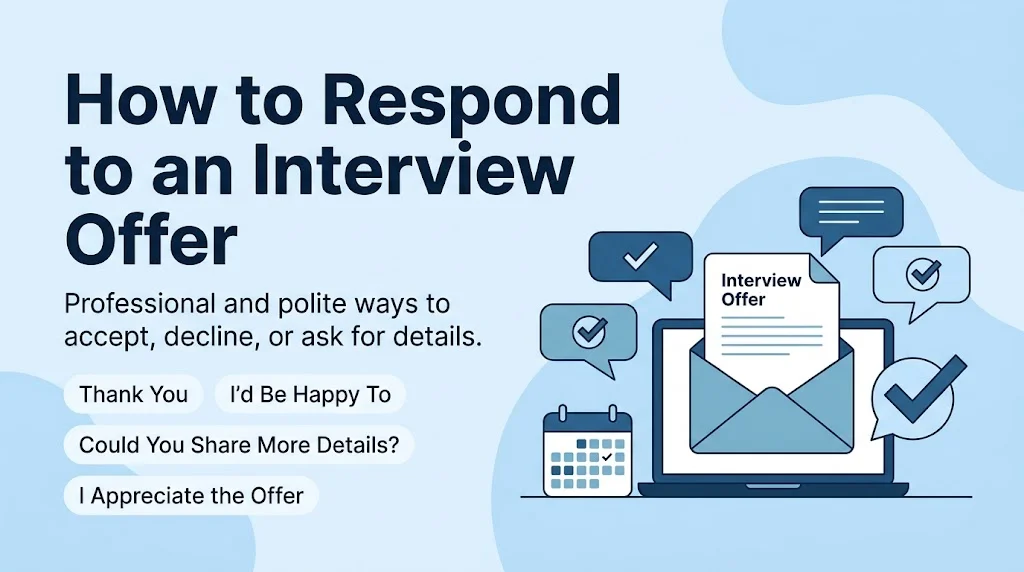
The best way to respond to an interview offer is to thank the employer, confirm your interest, and clearly acknowledge the interview details. Try these: Thank you for the opportunity, I’d be happy to interview, I appreciate the invitation, I’m looking forward to speaking with you, Thank you for considering my application
Getting an interview offer is exciting, but then comes the classic question: what exactly should you say back? Whether the message arrives by email, LinkedIn, phone, or a recruiting platform, your response creates an early impression. A polished reply can show enthusiasm, professionalism, and respect without sounding stiff or overly rehearsed.
That email just landed: “We’d like to invite you to an interview.” 🎉 Suddenly, the job search feels a little more real, and now you need to reply without sounding too excited, too casual, or like you copied a corporate template from 2009.
Knowing how to respond to an interview offer matters because your reply is often one of your first direct interactions with the employer or recruiter. Whether you are replying to a hiring manager, recruiter, HR representative, or potential employer, the tone should match the situation.
You might simply accept the proposed time, ask for another slot, request additional details, or express enthusiasm about the role. Below, you will find ready-to-use responses for emails, LinkedIn messages, scheduling changes, formal workplaces, and more.
Professional Responses
- Thank you for the interview invitation. I’m pleased to accept.
Use this when you want a polished response confirming your attendance.
Meaning: You are expressing appreciation and clearly accepting the interview. - Thank you for the opportunity. I look forward to speaking with you.
Use this when replying to a recruiter or hiring manager.
Meaning: You are showing appreciation and professional enthusiasm. - I appreciate the invitation and look forward to the interview.
Use this for a concise workplace email.
Meaning: You are politely acknowledging the invitation and confirming your interest. - Thank you for considering my application. I’m happy to accept the interview invitation.
Use this after receiving an invitation following an application.
Meaning: You are showing gratitude while confirming your acceptance. - Thank you for reaching out. I’m available for the proposed interview time.
Use this when the suggested time works for you.
Meaning: You are confirming your availability clearly. - I appreciate the opportunity and look forward to discussing the position.
Use this when you want a confident but professional tone.
Meaning: You are expressing interest in learning more about the role. - Thank you for the invitation. I’m looking forward to our conversation.
Use this for a recruiter or hiring manager.
Meaning: You are showing positive interest without overdoing it. - Thank you for the opportunity to interview for this position.
Use this when you want a formal response.
Meaning: You are acknowledging the opportunity respectfully. - I’m pleased to confirm my availability for the interview. Thank you.
Use this when the interview details have already been provided.
Meaning: You are confirming attendance in a professional way. - Thank you for inviting me to interview. I look forward to discussing my experience with you.
Use this for a role where your background is particularly relevant.
Meaning: You are showing confidence in the value you can bring. - I’m grateful for the opportunity and look forward to meeting the team.
Use this when the interview involves multiple team members.
Meaning: You are showing enthusiasm about the organization and people. - Thank you for the invitation. I’m excited to learn more about the role and your team.
Use this when you want a slightly warmer professional tone.
Meaning: You are communicating genuine interest in the position. - I appreciate the opportunity and confirm that I’ll be available as scheduled.
Use this when you want a direct confirmation.
Meaning: You are confirming your attendance without unnecessary detail. - Thank you for considering me for the position. I look forward to the discussion.
Use this for a formal hiring process.
Meaning: You are combining gratitude with professional confidence. - Thank you again for the opportunity. I look forward to speaking with you soon.
Use this as a polished closing line.
Meaning: You are ending the response warmly and professionally.
Short And Simple Responses
- Thank you! I’d be happy to interview.
Use this when you want a short and friendly reply.
Meaning: You are clearly accepting the opportunity. - Thank you for the invitation. I’m looking forward to it.
Use this for a quick email or message.
Meaning: You are expressing appreciation and enthusiasm. - I’d be delighted to interview. Thank you for the opportunity.
Use this when you want a warm but polished reply.
Meaning: You are showing strong interest in the interview. - Thank you. I’m happy to confirm my attendance.
Use this when the interview date and time are already set.
Meaning: You are confirming that you will attend. - Thanks for reaching out. I look forward to speaking with you.
Use this for a casual-professional recruiter message.
Meaning: You are acknowledging the invitation warmly. - Absolutely, thank you for the opportunity.
Use this for a short response to a recruiter.
Meaning: You are enthusiastically accepting. - Thank you! The proposed time works perfectly for me.
Use this when the suggested schedule is convenient.
Meaning: You are confirming the time without ambiguity. - I appreciate the invitation. I’ll be there.
Use this when you want a confident, concise reply.
Meaning: You are confirming your attendance directly. - Thank you for the opportunity. I’m looking forward to connecting.
Use this for a modern professional message.
Meaning: You are showing interest while keeping things natural. - Happy to accept. Thank you!
Use this for a brief recruiter message.
Meaning: You are accepting the invitation positively. - Thank you! I’m available and look forward to the interview.
Use this when confirming both interest and availability.
Meaning: You are making your response clear and useful. - I’d be glad to speak with you. Thank you for reaching out.
Use this for a friendly professional exchange.
Meaning: You are welcoming the opportunity. - Thanks so much. I’m looking forward to it.
Use this when the communication is friendly and informal.
Meaning: You are showing genuine enthusiasm. - Thank you for the invitation. I’m pleased to confirm.
Use this when you want something polished and brief.
Meaning: You are formally confirming your attendance. - Sounds great. Thank you for the opportunity!
Use this with a recruiter who has a conversational communication style.
Meaning: You are accepting in a relaxed but positive way.
Enthusiastic Responses
- Thank you for the opportunity! I’m excited to discuss the role with you.
Use this when you are genuinely enthusiastic about the position.
Meaning: You are communicating strong interest in the role. - I’m thrilled to receive the invitation and look forward to our conversation.
Use this when you want to express noticeable excitement professionally.
Meaning: You are showing enthusiasm while remaining polished. - Thank you for the invitation. I’m excited to learn more about the position and the team.
Use this when you want to highlight curiosity about the organization.
Meaning: You are showing enthusiasm for both the role and workplace. - I’m excited about the opportunity and look forward to speaking with you.
Use this when you want your interest to be obvious.
Meaning: You are communicating genuine excitement about the interview. - Thank you for considering me. I’m really looking forward to discussing the position.
Use this after receiving a competitive opportunity.
Meaning: You are expressing gratitude and enthusiasm. - I’m delighted to have the opportunity to interview and learn more about the team.
Use this for a formal but enthusiastic reply.
Meaning: You are showing strong interest without sounding casual. - Thank you for reaching out. I’m excited to connect and discuss how I can contribute.
Use this when you want to emphasize your potential value.
Meaning: You are expressing enthusiasm while focusing on contribution. - I’m very pleased to receive your invitation. I look forward to our discussion.
Use this for a polished email response.
Meaning: You are communicating enthusiasm in a restrained professional style. - Thank you! I’m excited to take the next step in the process.
Use this when moving forward after an application.
Meaning: You are showing enthusiasm about progressing in the hiring process. - I appreciate the opportunity and can’t wait to learn more about the role.
Use this for a friendly recruiter conversation.
Meaning: You are expressing strong curiosity and excitement. - Thank you for the invitation. I’m excited to meet the team and discuss the opportunity.
Use this when the interview includes several people.
Meaning: You are showing enthusiasm for the organization. - I’m genuinely excited about this opportunity and look forward to speaking with you.
Use this when the position is especially appealing.
Meaning: You are openly communicating strong interest. - Thank you for the opportunity. I’m looking forward to sharing more about my experience.
Use this when your background closely matches the role.
Meaning: You are confidently highlighting your qualifications. - I’m excited to connect and explore whether this role is a great fit.
Use this when the interview is conversational or exploratory.
Meaning: You are showing interest while recognizing that both sides are evaluating fit. - Thank you again. I’m excited for the conversation and the opportunity ahead.
Use this as an enthusiastic closing.
Meaning: You are ending on a positive and forward-looking note.
Confident Responses
- Thank you for the invitation. I look forward to discussing how my experience aligns with the role.
Use this when your qualifications strongly match the position.
Meaning: You are expressing confidence without making exaggerated claims. - I appreciate the opportunity and look forward to sharing how I can contribute to the team.
Use this for a role where you can clearly demonstrate relevant skills.
Meaning: You are confidently focusing on the value you can bring. - Thank you. I’m looking forward to discussing the position and my experience.
Use this when you want a balanced professional tone.
Meaning: You are confident and prepared without sounding arrogant. - I’m pleased to accept and look forward to discussing the role in more detail.
Use this when you want a polished acceptance.
Meaning: You are confirming interest and confidence. - Thank you for the opportunity. I’m looking forward to demonstrating how my background fits the position.
Use this when your previous experience is highly relevant.
Meaning: You are confidently connecting your background to the job. - I appreciate the invitation and look forward to discussing the value I can bring to the team.
Use this for a senior or competitive role.
Meaning: You are positioning yourself as a potential contributor. - Thank you for considering my application. I’m ready to discuss the role and my qualifications.
Use this when you want a direct, assured tone.
Meaning: You are signaling preparation and confidence. - I’m happy to accept the invitation and look forward to our discussion.
Use this for a straightforward professional confirmation.
Meaning: You are confidently accepting the opportunity. - Thank you. I’m looking forward to discussing how my skills match your needs.
Use this when the job description closely matches your expertise.
Meaning: You are expressing confidence in your relevance to the role. - I appreciate the opportunity and look forward to a productive conversation.
Use this for formal corporate communication.
Meaning: You are presenting yourself as prepared and professional. - Thank you for the invitation. I’m confident the conversation will be valuable for both of us.
Use this for a more senior professional exchange.
Meaning: You are recognizing that interviews are a two-way discussion. - I’m pleased to move forward and look forward to discussing the position.
Use this after advancing in the hiring process.
Meaning: You are confidently acknowledging the next step. - Thank you for the opportunity. I’m prepared to discuss my experience and qualifications.
Use this when you want a composed response.
Meaning: You are signaling readiness and professionalism. - I look forward to discussing how I can support your team’s goals.
Use this when applying for a results-focused position.
Meaning: You are emphasizing contribution and relevance. - Thank you for reaching out. I look forward to a meaningful conversation about the role.
Use this when you want a sophisticated but natural tone.
Meaning: You are showing confidence and genuine interest.
Friendly Responses
- Thanks so much for reaching out! I’d be happy to chat.
Use this with a friendly recruiter.
Meaning: You are accepting the invitation in a warm, conversational way. - Thanks for the invitation! I’m looking forward to talking with you.
Use this for a casual-professional message.
Meaning: You are expressing appreciation and enthusiasm. - Sounds great, thank you! I’m looking forward to it.
Use this when the recruiter has a relaxed communication style.
Meaning: You are accepting while keeping the tone natural. - Thanks for considering me! I’d be happy to interview.
Use this after receiving an interview request.
Meaning: You are showing appreciation and willingness to proceed. - Absolutely! Thanks for reaching out.
Use this for a short LinkedIn or recruiter reply.
Meaning: You are giving an enthusiastic acceptance. - Thank you! I’d love to learn more about the opportunity.
Use this when the interview invitation is exploratory.
Meaning: You are showing curiosity about the role. - Thanks! I’m excited to connect and hear more about the position.
Use this for a warm recruiter conversation.
Meaning: You are showing enthusiasm and openness. - I’d be happy to chat. Thanks for thinking of me!
Use this when a recruiter approaches you directly.
Meaning: You are appreciating the outreach while accepting the conversation. - Thanks so much! Looking forward to connecting.
Use this for LinkedIn or text-style communication.
Meaning: You are keeping the reply brief and friendly. - That works for me. Thanks for setting it up!
Use this when the proposed interview time is convenient.
Meaning: You are confirming the schedule in a friendly way. - Perfect, thank you! I’ll see you then.
Use this after all interview details are confirmed.
Meaning: You are confirming attendance casually. - Thanks for the opportunity! Looking forward to our conversation.
Use this for a warm professional reply.
Meaning: You are showing appreciation and interest. - I appreciate it! Happy to move forward.
Use this when you want something short and upbeat.
Meaning: You are accepting the next stage of the process. - Thank you! I’m excited to connect with everyone.
Use this when multiple interviewers are involved.
Meaning: You are showing enthusiasm about meeting the team. - Thanks again! I’m looking forward to learning more.
Use this when the interview is intended to introduce the opportunity.
Meaning: You are expressing friendly curiosity.
Clever Responses
- Thank you for the invitation. I’m looking forward to turning my application into a conversation.
Use this when you want a memorable but professional line.
Meaning: You are showing enthusiasm about moving beyond the application stage. - I appreciate the opportunity. Looking forward to putting some personality behind the résumé.
Use this with a recruiter who has a relaxed communication style.
Meaning: You are humorously acknowledging the difference between a résumé and a real conversation. - Thank you! Looking forward to discussing the role beyond the job description.
Use this when you want to sound curious and engaged.
Meaning: You are showing interest in understanding the real position. - Happy to connect. I’m looking forward to making the interview a two-way conversation.
Use this for a confident modern response.
Meaning: You are recognizing that both you and the employer are evaluating fit. - Thank you for the opportunity. I’m ready for the next chapter of the conversation.
Use this when you want something polished with personality.
Meaning: You are framing the interview as a positive next step. - I appreciate the invitation. Looking forward to bringing the résumé to life.
Use this for a friendly recruiter interaction.
Meaning: You are playfully saying you want to discuss your experience in person. - Thank you! I’m looking forward to putting names, faces, and experience together.
Use this when meeting a team virtually or in person.
Meaning: You are expressing enthusiasm about the human side of the interview. - I’m happy to accept. Let’s turn the application into a conversation.
Use this for a confident short message.
Meaning: You are showing readiness for the interview stage. - Thank you for reaching out. I’m looking forward to seeing where the conversation takes us.
Use this for an exploratory interview.
Meaning: You are expressing curiosity without making assumptions. - I appreciate the invitation. Time to trade the résumé for a real conversation.
Use this with a relaxed recruiter.
Meaning: You are adding personality while showing enthusiasm. - Thank you! I’m looking forward to discussing the role and everything that comes with it.
Use this when you want a natural but thoughtful response.
Meaning: You are expressing interest beyond the basic job title. - Happy to connect. I’m curious to hear what success looks like in this role.
Use this when you want to show thoughtful interest.
Meaning: You are demonstrating that you care about expectations and outcomes. - Thank you for the opportunity. I’m looking forward to exchanging ideas and learning more.
Use this for a collaborative workplace.
Meaning: You are presenting the interview as a meaningful professional discussion. - I appreciate the invitation. Looking forward to the questions, the conversation, and hopefully plenty of good answers.
Use this with a recruiter who appreciates humor.
Meaning: You are adding light humor while acknowledging the interview process. - Thank you! I’m looking forward to the conversation and the chance to show more than a résumé can.
Use this when you want a confident closing.
Meaning: You are emphasizing the value of discussing your experience directly.
Responses When You Are Unsure About The Offer
- Thank you for reaching out. I’d be interested in learning more about the role before scheduling an interview.
Use this when you need more information before committing.
Meaning: You are keeping the opportunity open while requesting details. - I appreciate the invitation. Could you share more information about the position and responsibilities?
Use this when the job description is unclear.
Meaning: You are requesting context before moving forward. - Thank you for considering me. I’d be happy to learn more about the opportunity and the team.
Use this when you are curious but not ready to commit.
Meaning: You are keeping the conversation open. - I appreciate the invitation. Could you provide more details about the role, schedule, and expectations?
Use this when important practical information is missing.
Meaning: You are gathering information before deciding. - Thank you for reaching out. I’m interested in hearing more about the position before confirming an interview time.
Use this when you want additional information first.
Meaning: You are showing interest without making an immediate commitment. - I appreciate the opportunity. Could we briefly discuss the role before scheduling the interview?
Use this when you have specific questions.
Meaning: You are requesting a preliminary conversation. - Thank you for the invitation. I’d like to understand the position and team structure a little better.
Use this when organizational details matter to you.
Meaning: You are asking for useful context. - Thank you. Could you share more about the day-to-day responsibilities of the role?
Use this when the job description feels too broad.
Meaning: You are seeking practical information about the work. - I appreciate you reaching out. I’d be interested in learning more about the opportunity and compensation range.
Use this when compensation information is important before proceeding.
Meaning: You are respectfully requesting relevant employment information. - Thank you for the invitation. Before scheduling, could you clarify the expected working arrangement?
Use this when remote, hybrid, or in-office status is unclear.
Meaning: You are requesting an important logistical detail. - I’m grateful for the opportunity. Could you provide additional details about the hiring process?
Use this when you want to understand the next stages.
Meaning: You are requesting clarity before moving forward. - Thank you for considering me. I’d appreciate a little more information about the position before confirming.
Use this when you need time to evaluate the opportunity.
Meaning: You are politely asking for additional context. - I appreciate the invitation. Could you tell me more about what you’re looking for in the ideal candidate?
Use this when you want to understand the employer’s priorities.
Meaning: You are seeking clarity about expectations. - Thank you for reaching out. I’m interested and would welcome more information about the role.
Use this when you want to keep the conversation moving.
Meaning: You are expressing interest without making an immediate commitment. - I appreciate the opportunity and look forward to learning more before we schedule the next step.
Use this for an exploratory recruiter conversation.
Meaning: You are maintaining interest while asking for more context.
FAQs
How should I respond to an interview offer?
Thank the employer, confirm your interest, acknowledge the proposed date and time, and ask for any missing details. Keep the response professional and concise.
What should I say if I want the interview?
A simple response such as Thank you for the opportunity. I’m happy to accept and look forward to speaking with you works well in most situations.
How do I accept an interview professionally by email?
Thank the sender, clearly confirm your availability, and mention that you look forward to discussing the position.
What if the interview time does not work for me?
Thank the employer for the invitation, explain briefly that the proposed time is unavailable, and offer one or more alternative times.
Should I sound excited when responding to an interview invitation?
Yes. Genuine enthusiasm can be appropriate, but keep it professional. Phrases such as I’m looking forward to speaking with you communicate interest without sounding excessive.
Conclusion
Responding to an interview offer does not need to feel like another interview. Keep your message clear, appreciative, and appropriate for the person contacting you. Whether you want to accept immediately, request another time, ask for more details, or simply show enthusiasm, the strongest replies make your intentions easy to understand.
Remember that your response is part of your professional communication style. You do not need complicated vocabulary or corporate buzzwords to make a good impression. A confident thank-you, a clear confirmation, and a positive closing can go a long way. Save these replies for your next recruiter email, LinkedIn message, or interview invitation, and choose the one that sounds most like you.
Discover More Related Articles:
- How to Set Up Automatic Text Reply on iPhone | Certain Text Messages In 2026
- Flirty Responses to How Was Your Day | That Keep the Conversation Going In 2026

Jennifer Wilson is an experienced writer and content creator with over 20 years of expertise in digital publishing, lifestyle, and informative content. Holding a degree in English Literature, she contributes to Responary.Com, where she shares engaging, well-researched articles that help readers stay informed and inspired.