Quick Answer
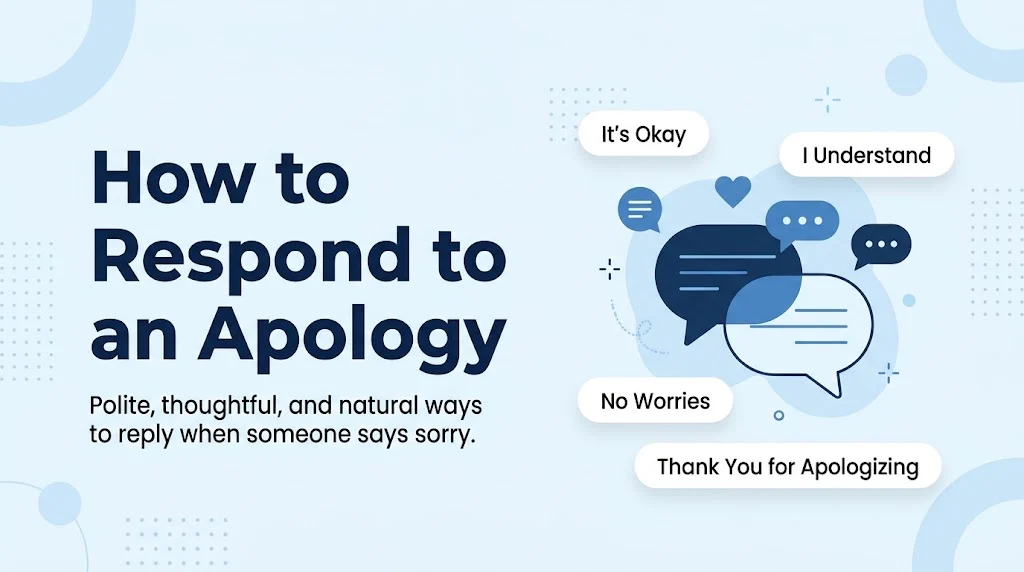
The best way to respond to an apology depends on how you feel and your relationship with the person. You can accept their apology, keep things casual, express your feelings, or set boundaries. Try these replies: It’s okay, I appreciate your apology, No worries, Thank you for saying that, Let’s move forward.
Someone finally says, “I’m sorry,” and now you are wondering what to say next. Maybe a friend hurt your feelings, your partner made a mistake, a coworker acted unfairly, or someone you care about is trying to make things right. Whatever the situation, knowing how to respond to an apology can make a big difference in what happens next.
You do not always have to say “It’s okay,” especially when it genuinely was not okay. Sometimes you want to forgive, sometimes you need time, and sometimes a little humor can make things less awkward. The trick is choosing words that match your feelings without making the situation more complicated.
Polite Responses to an Apology
– Thank you for apologizing. I appreciate it.
Use this when someone sincerely acknowledges their mistake.
Meaning: You appreciate their effort to make things right.
– It’s okay. Thank you for understanding.
Use this when you are comfortable moving past the situation.
Meaning: You are accepting their apology politely.
– I appreciate you taking the time to apologize.
Use this when someone makes a thoughtful effort to reach out.
Meaning: You recognize their willingness to take responsibility.
– No worries. We all make mistakes.
Use this for a minor misunderstanding or accidental mistake.
Meaning: You are showing understanding and letting go of the issue.
– Thank you for being honest with me.
Use this when someone openly admits they were wrong.
Meaning: You value their honesty and accountability.
– I understand. Thank you for saying that.
Use this when you want to acknowledge their apology respectfully.
Meaning: You are recognizing their effort without making a big deal of it.
– That’s very thoughtful of you. I appreciate it.
Use this when someone offers a sincere apology.
Meaning: You are responding with kindness and gratitude.
– I appreciate your kind words. Let’s move forward.
Use this when you are ready to leave the issue behind.
Meaning: You accept the apology and want to continue positively.
– Thank you. It means a lot that you acknowledged it.
Use this when the person recognizes how their actions affected you.
Meaning: You value their awareness and consideration.
– I understand that things happen. Thank you for apologizing.
Use this for an honest mistake or inconvenience.
Meaning: You are being understanding without ignoring the situation.
– I accept your apology. Thank you for reaching out.
Use this when you want a clear and respectful response.
Meaning: You are formally acknowledging their apology.
– It’s kind of you to say that.
Use this when you want a short, graceful reply.
Meaning: You appreciate their attempt to make amends.
– Thank you for clearing things up.
Use this when the apology also explains a misunderstanding.
Meaning: You appreciate the clarification.
– I appreciate your sincerity.
Use this when their apology feels genuine.
Meaning: You recognize the honesty behind their words.
– Thank you. I hope we can move forward positively.
Use this when you want to maintain a respectful relationship.
Meaning: You are accepting the apology and encouraging a fresh start.
Short and Simple Responses to an Apology
– It’s okay.
Use this when the mistake was small and you are not upset.
Meaning: You are letting the issue go.
– No worries!
Use this in casual conversations with friends or acquaintances.
Meaning: You are showing that everything is fine.
– All good!
Use this when you want a relaxed and friendly reply.
Meaning: You are communicating that there is no lingering problem.
– Don’t worry about it.
Use this when someone feels unnecessarily guilty about a small mistake.
Meaning: You are reassuring them.
– I appreciate it.
Use this when you want to acknowledge their apology briefly.
Meaning: You are recognizing their effort.
– Thanks for saying that.
Use this when you want a simple but thoughtful response.
Meaning: You appreciate their willingness to apologize.
– We’re good.
Use this with someone close to you after resolving an issue.
Meaning: You are confirming that there are no hard feelings.
– It’s all right.
Use this when you are ready to move on.
Meaning: You are accepting their apology calmly.
– No problem at all.
Use this for minor mistakes or accidental inconveniences.
Meaning: You are reassuring the person that the situation is not serious.
– I understand.
Use this when you recognize why the mistake happened.
Meaning: You are acknowledging their explanation.
– Thank you.
Use this when you prefer not to say much.
Meaning: You are acknowledging the apology without adding unnecessary detail.
– It’s fine now.
Use this when the situation has already been resolved.
Meaning: You are indicating that you are ready to move forward.
– No hard feelings.
Use this when you genuinely have moved past the issue.
Meaning: You are letting them know you are not holding a grudge.
– We can move past this.
Use this when you want to put the situation behind you.
Meaning: You are choosing to focus on the future.
– Thanks, I appreciate you owning it.
Use this when someone takes responsibility for their actions.
Meaning: You value their accountability.
Mature Responses to an Apology
– I appreciate your apology, and I hope we can learn from this.
Use this when the situation has taught both people something important.
Meaning: You value personal growth and accountability.
– Thank you for taking responsibility for your actions.
Use this when someone admits their mistake without making excuses.
Meaning: You respect their willingness to own their behavior.
– I accept your apology. Let’s try to communicate better moving forward.
Use this when the issue involved poor communication.
Meaning: You want a healthier way of handling disagreements.
– I understand mistakes happen, but I hope we can avoid this in the future.
Use this when you forgive someone but want improvement.
Meaning: You are accepting the apology while expressing an expectation.
– Thank you for acknowledging how your actions affected me.
Use this when someone recognizes your feelings.
Meaning: You appreciate their emotional awareness.
– I appreciate the apology. What matters now is how we move forward.
Use this after a serious disagreement.
Meaning: You believe actions after the apology are important.
– We cannot change what happened, but we can make better choices next time.
Use this when you want to focus on improvement.
Meaning: You are encouraging accountability and positive change.
– I respect that you came forward and apologized.
Use this when someone takes the initiative to make things right.
Meaning: You recognize their courage and honesty.
– Thank you. I hope we both take something positive from this experience.
Use this when you want a constructive ending.
Meaning: You are focusing on lessons rather than blame.
– I accept your apology, but rebuilding trust will take time.
Use this when the mistake affected your trust.
Meaning: You are willing to forgive but need consistency.
– I appreciate your honesty. Let’s make sure we communicate openly from now on.
Use this when misunderstandings have caused problems.
Meaning: You want healthier communication in the future.
– It’s important that we understand each other’s perspectives.
Use this when both people have different views of what happened.
Meaning: You want mutual understanding rather than another argument.
– Thank you for apologizing. I believe we can handle things better next time.
Use this when you want to give someone another chance.
Meaning: You are showing optimism while encouraging improvement.
– I appreciate the effort. Let’s focus on making things better.
Use this when you want to turn the situation into a positive change.
Meaning: You are prioritizing solutions over conflict.
– Your apology matters, and so does what happens next.
Use this when the issue was significant.
Meaning: You value sincere words supported by meaningful actions.
Funny Responses to an Apology
– Apology accepted. Friendship subscription renewed!
Use this with a close friend after a silly disagreement.
Meaning: You are playfully confirming that everything is okay.
– You’re lucky I’m such a forgiving person.
Use this when teasing someone you know well.
Meaning: You are accepting their apology with a little humor.
– Fine, but you owe me snacks.
Use this when a friend makes a small mistake.
Meaning: You are turning forgiveness into a playful bargain.
– Apology accepted. Case officially closed.
Use this when you want to end a minor disagreement humorously.
Meaning: You are jokingly declaring the issue resolved.
– I’ll forgive you, but my memory has screenshots.
Use this with someone who understands your sense of humor.
Meaning: You are playfully warning them that you remember everything.
– Okay, but don’t make this a regular episode.
Use this when someone repeats a small mistake.
Meaning: You are accepting the apology while teasing them about the behavior.
– Fine, your apology passed quality control.
Use this with a friend who appreciates silly jokes.
Meaning: You are humorously approving their apology.
– All right, drama season is officially over.
Use this after a playful argument.
Meaning: You are ready to return to normal without more drama.
– Apology accepted. Now bring back the good vibes.
Use this with someone close to you.
Meaning: You want to restore the fun atmosphere.
– I forgive you. Your punishment is buying coffee.
Use this when joking with a friend.
Meaning: You are turning the apology into a funny and harmless request.
– Well, well, look who discovered the word sorry!
Use this with someone who rarely apologizes.
Meaning: You are teasing them about finally admitting their mistake.
– Accepted, but the court reserves the right to complain later.
Use this with a friend who enjoys dramatic humor.
Meaning: You are pretending the matter is settled while keeping the joke alive.
– You’re forgiven. Don’t let it go to your head.
Use this after a small disagreement.
Meaning: You are accepting their apology in a cheeky way.
– Okay, peace treaty signed.
Use this when both of you are ready to stop arguing.
Meaning: You are humorously declaring an end to the conflict.
– Fine, but I’m charging emotional damages in chocolate.
Use this with someone who enjoys playful food jokes.
Meaning: You are jokingly asking for a sweet reward.
Sweet and Heartfelt Responses to an Apology
– Thank you for apologizing. You mean a lot to me.
Use this with someone you genuinely care about.
Meaning: You appreciate their apology and value the relationship.
– It’s okay. I care about you, and I don’t want this to come between us.
Use this when you want to preserve a close relationship.
Meaning: You are prioritizing your connection over the disagreement.
– I appreciate your apology. Let’s leave this behind with love.
Use this when you are ready for a fresh start.
Meaning: You want to move forward with affection and understanding.
– Thank you for being honest with me. That means a lot.
Use this when someone opens up sincerely.
Meaning: You value their honesty and emotional effort.
– We all make mistakes. What matters is that we care enough to make things right.
Use this with someone close to you.
Meaning: You believe genuine care is shown through accountability.
– I forgive you. Let’s make more beautiful memories together.
Use this when you want to reconnect.
Meaning: You are choosing to focus on the positive future of your relationship.
– Your apology means a lot, and I am glad we talked about it.
Use this after an honest conversation.
Meaning: You appreciate their willingness to resolve the issue.
– Thank you for understanding my feelings.
Use this when someone recognizes your emotional experience.
Meaning: You feel heard and appreciated.
– I never wanted us to be upset with each other. I’m glad we can move forward.
Use this after a disagreement with a loved one.
Meaning: You value peace and emotional closeness.
– It’s okay. Let’s choose understanding over misunderstanding.
Use this when you want to restore harmony.
Meaning: You are encouraging patience and better communication.
– I appreciate you making things right. Sending you love.
Use this with a partner, friend, or family member.
Meaning: You are accepting their apology with affection.
– Thank you for caring enough to apologize.
Use this when someone’s effort touches you.
Meaning: You recognize that apologizing can be an act of care.
– Let’s not let one difficult moment define our relationship.
Use this when you want to preserve a meaningful connection.
Meaning: You believe the relationship is bigger than one mistake.
– I forgive you, and I hope we keep growing together.
Use this when you want to strengthen a relationship.
Meaning: You are choosing forgiveness and shared growth.
– Your words brought me comfort. Thank you for reaching out.
Use this when their apology helps you feel better.
Meaning: You appreciate their effort to repair the emotional connection.
Responses When You Are Still Hurt
– Thank you for apologizing, but I’m still hurt.
Use this when you appreciate the apology but have not emotionally recovered.
Meaning: You acknowledge their effort without hiding your feelings.
– I hear you, but I need some time to process everything.
Use this after a painful disagreement.
Meaning: You are asking for space before making a decision.
– I appreciate your apology, but it doesn’t change how I feel right now.
Use this when the situation has deeply affected you.
Meaning: You are being honest about your emotional state.
– I’m not ready to move on just yet.
Use this when you need more time.
Meaning: You are setting a boundary around your healing process.
– Thank you for saying sorry. I need to see some changes too.
Use this when the same mistake has happened repeatedly.
Meaning: You want actions to support the apology.
– I understand your apology, but the situation really affected me.
Use this when someone needs to understand the impact of their behavior.
Meaning: You are communicating that the mistake was not insignificant.
– I need a little space before we talk about this again.
Use this when emotions are still running high.
Meaning: You are protecting your peace and avoiding another argument.
– I appreciate the apology, but rebuilding trust will take time.
Use this when someone has broken your trust.
Meaning: You are open to healing but not rushing the process.
– I’m glad you apologized, but I cannot pretend nothing happened.
Use this after a serious incident.
Meaning: You want your feelings and experience to be acknowledged.
– I need you to understand why this hurt me.
Use this when the person does not fully understand the impact.
Meaning: You want empathy rather than a quick resolution.
– I accept that you’re sorry, but I’m not okay yet.
Use this when you want to be direct about your emotions.
Meaning: You distinguish accepting an apology from feeling better.
– Let’s talk again when we’ve both had time to think.
Use this when you want to avoid an emotional argument.
Meaning: You are choosing a calmer time to resolve the issue.
– I appreciate your words, but I need consistency moving forward.
Use this when trust depends on future behavior.
Meaning: You want lasting improvement rather than temporary promises.
– I’m trying to move past this, but it’s not easy for me.
Use this when you are making an effort to forgive.
Meaning: You are expressing vulnerability and honesty.
– Please give me time. I’ll reach out when I’m ready.
Use this when you need distance after an apology.
Meaning: You are clearly communicating your need for personal space.
Responses When You Don’t Accept the Apology
– I appreciate your apology, but I cannot accept it right now.
Use this when the apology comes before you are ready to forgive.
Meaning: You are respectfully declining to accept it at this time.
– I’m glad you apologized, but the damage has already been done.
Use this when the consequences of their actions were significant.
Meaning: You are acknowledging the apology while expressing the lasting impact.
– Sorry is a start, but it doesn’t fix everything.
Use this when someone expects an immediate resolution.
Meaning: You believe meaningful change requires more than words.
– I need more than an apology to move forward.
Use this when the situation requires accountability or action.
Meaning: You expect practical steps toward making things right.
– I respect your apology, but I don’t feel ready to forgive.
Use this when you want to be honest without being disrespectful.
Meaning: You are setting an emotional boundary.
– I hear what you’re saying, but my feelings haven’t changed.
Use this when someone wants you to immediately change your mind.
Meaning: You are standing by your emotions.
– I don’t think an apology alone is enough in this situation.
Use this when the mistake had serious consequences.
Meaning: You are asking for accountability beyond verbal regret.
– Thank you, but I need to put my own well-being first.
Use this when continuing the relationship may be emotionally difficult.
Meaning: You are prioritizing your personal boundaries.
– I appreciate the apology, but I need to step away from this situation.
Use this when you need distance.
Meaning: You are choosing to protect your emotional space.
– I understand you’re sorry, but I cannot overlook what happened.
Use this when the issue is too serious to dismiss.
Meaning: You are making it clear that the impact still matters.
– I don’t want to argue, but I also don’t want to pretend everything is fine.
Use this when you want an honest conversation.
Meaning: You are choosing honesty over false peace.
– Your apology is acknowledged, but trust needs to be earned again.
Use this when someone has repeatedly disappointed you.
Meaning: You are making trust conditional on future behavior.
– I need actions that match your words.
Use this when promises have been broken before.
Meaning: You want visible accountability.
– I think it’s best if we keep some distance for now.
Use this when you need to establish a firm boundary.
Meaning: You are communicating that the relationship needs space.
– I wish you well, but I need to move forward separately.
Use this when you have decided to step away from the relationship.
Meaning: You are ending the situation respectfully.
Romantic Responses to an Apology
– It’s okay, babe. I just want us to understand each other better.
Use this when your partner apologizes for a misunderstanding.
Meaning: You want stronger communication and emotional connection.
– I forgive you, my love. Let’s not let this come between us.
Use this after a minor disagreement with your partner.
Meaning: You are choosing love and reconciliation.
– Thank you for apologizing. I love that we can talk things through.
Use this when your partner makes an effort to resolve conflict.
Meaning: You appreciate healthy communication in your relationship.
– It’s okay, sweetheart. Let’s start fresh.
Use this when you are ready to move on.
Meaning: You are offering forgiveness and a new beginning.
– I know you didn’t mean to hurt me. Thank you for saying sorry.
Use this when your partner makes an honest mistake.
Meaning: You recognize their intentions while appreciating their apology.
– Come here, we’re okay.
Use this after a small argument when affection feels appropriate.
Meaning: You are reassuring your partner that the connection is still strong.
– I appreciate your apology more than you know.
Use this when their words genuinely touch you.
Meaning: You are expressing gratitude and emotional appreciation.
– Let’s learn from this and love each other a little better.
Use this after a meaningful disagreement.
Meaning: You want your relationship to grow through understanding.
– Thank you for choosing to make things right with me.
Use this when your partner takes responsibility.
Meaning: You value their commitment to resolving the issue.
– I forgive you, but promise we’ll communicate better next time.
Use this when misunderstandings caused the argument.
Meaning: You want to prevent similar problems in the future.
– Your apology means a lot, and so does our relationship.
Use this when you want to reassure your partner.
Meaning: You are emphasizing the importance of your connection.
– I don’t want perfect. I just want honesty and effort.
Use this when discussing expectations in a relationship.
Meaning: You value genuine communication over unrealistic perfection.
– Thank you for hearing me and understanding my feelings.
Use this after an emotional conversation.
Meaning: You appreciate your partner’s empathy.
– We’re a team, and I want us to work through things together.
Use this when you want to strengthen your relationship.
Meaning: You see disagreements as something you can overcome together.
– I love you. Let’s make today better than yesterday.
Use this when you are ready for a fresh start.
Meaning: You are choosing affection and a positive future.
Professional Responses to an Apology
– Thank you for your apology. I appreciate your professionalism.
Use this when a colleague acknowledges a workplace mistake.
Meaning: You are recognizing their respectful approach.
– No problem. Let’s focus on the next steps.
Use this when a minor workplace issue has been resolved.
Meaning: You want to move the discussion toward productive work.
– Thank you for clarifying the situation.
Use this when a colleague explains what went wrong.
Meaning: You appreciate their effort to resolve confusion.
– I appreciate you taking responsibility. Let’s move forward.
Use this when a team member owns a mistake.
Meaning: You value accountability and want to continue working together.
– Thank you for addressing the issue.
Use this in professional email communication.
Meaning: You acknowledge their effort to resolve the matter.
– I understand. Let’s make sure we avoid this in the future.
Use this when a workplace mistake needs to be prevented.
Meaning: You accept the explanation while emphasizing improvement.
– I appreciate the apology and your commitment to resolving this.
Use this when someone offers a practical solution.
Meaning: You recognize both their apology and their willingness to act.
– Thank you for bringing this to my attention.
Use this when a colleague apologizes while explaining an oversight.
Meaning: You acknowledge their communication professionally.
– That’s understandable. Let’s work together to resolve it.
Use this when a team issue needs cooperation.
Meaning: You are focusing on teamwork rather than blame.
– I appreciate your message. We can discuss the next steps when convenient.
Use this in a formal email or workplace conversation.
Meaning: You are responding professionally while leaving room for further discussion.
– Thank you for your prompt response and apology.
Use this when someone quickly addresses a mistake.
Meaning: You appreciate their timely communication.
– I acknowledge your apology. Let’s ensure the matter is handled appropriately.
Use this for a more serious professional situation.
Meaning: You recognize the apology while maintaining a focus on resolution.
– I appreciate your honesty and willingness to improve.
Use this when an employee or colleague admits an error.
Meaning: You value transparency and professional growth.
– Thank you. I believe we can move forward constructively.
Use this when you want to end a workplace disagreement positively.
Meaning: You are encouraging a cooperative working relationship.
– Your apology is appreciated. Let’s focus on finding a practical solution.
Use this when a business issue requires action.
Meaning: You want to resolve the matter professionally.
Responses to a Late Apology
– Better late than never. I appreciate you reaching out.
Use this when someone apologizes after a long delay.
Meaning: You are acknowledging their effort despite the timing.
– Thank you. I was hoping we would eventually talk about this.
Use this when you wanted the person to address the issue.
Meaning: You are glad they finally opened the conversation.
– I appreciate the apology, even if it took some time.
Use this when the delay matters but you still value the gesture.
Meaning: You are recognizing the apology while acknowledging its timing.
– I’m glad you finally addressed it.
Use this when someone has avoided the conversation for a while.
Meaning: You appreciate that they are no longer ignoring the issue.
– It’s been a while, but I’m willing to hear you out.
Use this when you are open to discussing the past.
Meaning: You are allowing space for an honest conversation.
– Thank you for coming forward. I hope we can clear things up.
Use this when you want closure.
Meaning: You are welcoming an opportunity to resolve the situation.
– I wasn’t expecting this, but I appreciate it.
Use this when the apology arrives unexpectedly.
Meaning: You are expressing surprise and gratitude.
– I appreciate your message. I need some time to think about it.
Use this when you are unsure how you feel.
Meaning: You are giving yourself time before responding further.
– I’m glad you reached out. Let’s talk honestly about what happened.
Use this when you want to understand the person’s perspective.
Meaning: You are opening the door to meaningful communication.
– Thank you. I hope we can both find some closure.
Use this when the situation has been unresolved for a long time.
Meaning: You are expressing a desire to move forward emotionally.
– I appreciate the apology, but the time apart changed things.
Use this when the relationship has changed since the incident.
Meaning: You are being honest about the effect of the delay.
– It’s good to finally hear you acknowledge it.
Use this when someone has avoided taking responsibility.
Meaning: You value their eventual accountability.
– I hear you. Let’s take things one step at a time.
Use this when you are cautiously open to reconnecting.
Meaning: You do not want to rush the process.
– I appreciate you reaching out, but I have moved on.
Use this when you no longer want to revisit the situation.
Meaning: You are respectfully communicating that you have moved forward.
– Thank you for apologizing. I hope we can leave the past in the past.
Use this when you are ready for closure.
Meaning: You want to stop carrying the old disagreement into the future.
FAQs
1. What is the best way to respond to an apology?
The best response depends on your feelings and the situation. You can say Thank you for apologizing, I appreciate it if you accept their apology, or I need some time if you are not ready to move forward.
2. Should I always say it’s okay when someone apologizes?
No. You do not have to say something is okay when it genuinely hurt you. You can acknowledge the apology while explaining that you still need time to process what happened.
3. How do you respond to an apology from someone you love?
Be honest and affectionate. You can say I appreciate your apology, and I want us to understand each other better.
4. How do you respond to an apology without accepting it?
You can politely say I appreciate your apology, but I’m not ready to accept it right now. This allows you to acknowledge their effort without compromising your feelings.
5. Is it okay to respond to an apology with humor?
Yes, if the situation is minor and the other person enjoys your humor. A funny response can reduce awkwardness, but avoid jokes when someone is genuinely hurt or the situation is serious.
Conclusion
Knowing how to respond to an apology is about more than finding the perfect words. It is about understanding your feelings, respecting yourself, and communicating honestly. Sometimes a simple thank you is enough, while other situations require patience, boundaries, or a deeper conversation. Remember, accepting an apology does not mean you have to forget what happened or immediately rebuild trust.
Choose a response that feels natural and reflects what you genuinely want to communicate. Save this list for those unexpected conversations, share it with a friend who struggles to find the right words, and remember that honest communication always matters more than a perfect one-liner.
Discover More Related Articles:
- How to Respond to Positive Reviews | Friendly, Funny & Grateful Replies In 2026
- How to Respond to an Email | Professional, Polite & Clever Replies In 2026

Laura Adams is a dedicated content writer and blogger known for crafting clear, informative, and engaging articles. As a contributor to Responary.com, she specializes in creating reader-friendly content that educates, inspires, and keeps audiences informed on a wide range of subjects.