Quick Answer
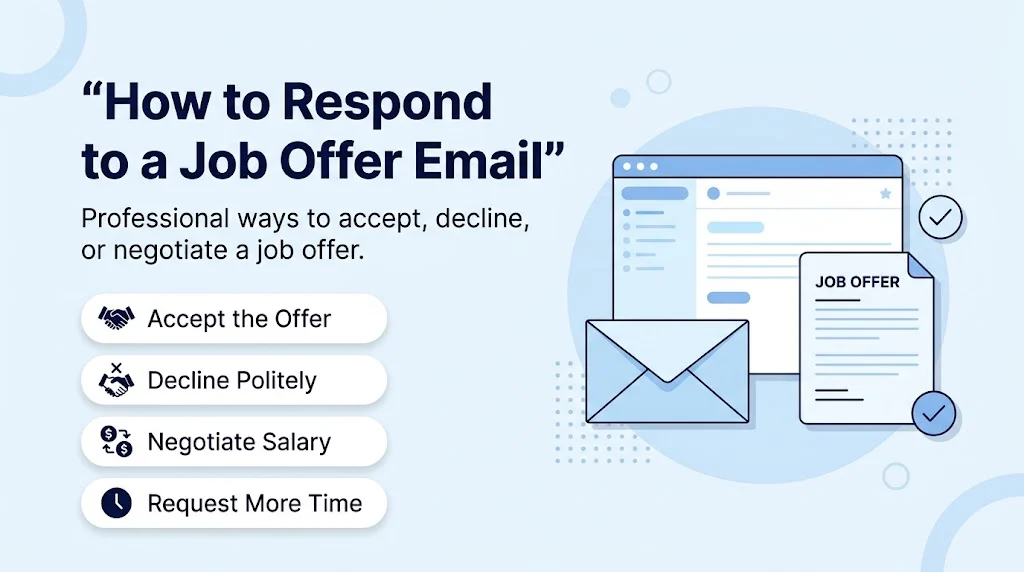
The best way to respond to a job offer email is to thank the employer, express your appreciation, and clearly explain whether you accept, decline, or need time to consider the offer. Keep your message professional, positive, and concise.
Top alternatives: Thank you for the job offer, I am pleased to accept, I appreciate the opportunity, I would like some time to consider, I look forward to joining your team.
Getting a job offer email is an exciting moment. Whether it comes from your dream company, a recruiter, or a hiring manager, knowing what to say next can make a big difference. You might be ready to accept immediately, need a little time to review the salary and benefits, or politely decline because another opportunity feels like a better fit. Whatever your situation, your reply should sound professional, confident, and appreciative.
Learning how to respond to a job offer email helps you make a positive impression while communicating your decision clearly. A good response does not need complicated business language or a five-paragraph speech. A simple thank-you, a clear answer, and a professional closing can do the job. Below, you will find ready-to-use responses for different situations, tones, and career decisions.
Professional Responses
– “Thank you for offering me this position. I sincerely appreciate the opportunity.”
Example: Use this when replying to a formal offer from a hiring manager.
Meaning: It communicates gratitude and professionalism.
– “I appreciate your confidence in my abilities and qualifications.”
Example: Use this when an employer selects you after several interview rounds.
Meaning: It acknowledges the employer’s trust in you.
– “Thank you for considering me for this exciting opportunity.”
Example: Use this when responding to a new job offer.
Meaning: It shows appreciation for being selected.
– “I am grateful for the opportunity to join your organization.”
Example: Use this when you intend to accept the position.
Meaning: It expresses enthusiasm and respect.
– “Thank you for sharing the offer details. I appreciate your time and consideration.”
Example: Use this when acknowledging an official offer email.
Meaning: It recognizes the employer’s effort.
– “I am pleased to receive your offer and look forward to discussing the next steps.”
Example: Use this when you want to continue the hiring process.
Meaning: It communicates interest and professionalism.
– “I appreciate the opportunity and look forward to reviewing the details.”
Example: Use this when you need to examine the employment terms.
Meaning: It shows interest without committing immediately.
– “Thank you for the formal offer. I look forward to your guidance regarding the onboarding process.”
Example: Use this when you have accepted the position.
Meaning: It shows readiness for the next stage.
– “I am honored to be considered for this role.”
Example: Use this when replying to a competitive job offer.
Meaning: It expresses respect and appreciation.
– “Thank you for this opportunity. I look forward to contributing to your team.”
Example: Use this when accepting a position.
Meaning: It communicates a positive attitude.
– “I appreciate your confidence and look forward to working together.”
Example: Use this when responding to your future manager.
Meaning: It builds a professional connection.
– “Thank you for the offer. I am excited about the possibility of working with your organization.”
Example: Use this when you are interested but still reviewing the terms.
Meaning: It expresses enthusiasm without confirming acceptance.
– “I appreciate the detailed offer and your continued communication.”
Example: Use this after receiving a detailed employment package.
Meaning: It acknowledges the employer’s communication.
– “Thank you for selecting me for this position. I value this opportunity.”
Example: Use this when a recruiter confirms your selection.
Meaning: It expresses sincere appreciation.
– “I look forward to the opportunity to contribute my skills and experience.”
Example: Use this when accepting a role related to your professional background.
Meaning: It shows confidence in your abilities.
Grateful Responses
– “Thank you so much for this wonderful opportunity.”
Example: Use this when receiving an offer you are genuinely excited about.
Meaning: It expresses heartfelt gratitude.
– “I am truly grateful for your confidence in me.”
Example: Use this when the employer appreciates your experience.
Meaning: It shows that you value their trust.
– “I sincerely appreciate the time your team invested throughout the interview process.”
Example: Use this after completing multiple interviews.
Meaning: It recognizes everyone’s effort.
– “Receiving this offer means a lot to me. Thank you for believing in my potential.”
Example: Use this when an opportunity feels especially meaningful.
Meaning: It communicates personal appreciation.
– “Thank you for making this opportunity possible.”
Example: Use this when a recruiter has supported your application.
Meaning: It acknowledges their assistance.
– “I appreciate the warm welcome and the confidence you have shown in me.”
Example: Use this when receiving an offer from a friendly company.
Meaning: It expresses gratitude and positivity.
– “I am thankful for the opportunity to become part of your team.”
Example: Use this when accepting an offer.
Meaning: It shows appreciation for joining the organization.
– “Thank you for recognizing my skills and experience.”
Example: Use this when the employer highlights your qualifications.
Meaning: It acknowledges their positive assessment.
– “I truly appreciate your thoughtful offer.”
Example: Use this when the employer provides a detailed package.
Meaning: It communicates genuine gratitude.
– “I am excited and grateful for this opportunity.”
Example: Use this when accepting a position you really wanted.
Meaning: It combines appreciation with enthusiasm.
– “Thank you for the encouraging news and your support.”
Example: Use this when a recruiter delivers the offer.
Meaning: It recognizes their positive communication.
– “I appreciate everyone who made this process such a positive experience.”
Example: Use this after meeting several team members.
Meaning: It thanks the people involved in hiring.
– “Your offer is greatly appreciated, and I am excited about this opportunity.”
Example: Use this when replying to a formal offer.
Meaning: It expresses gratitude and interest.
– “Thank you for giving me the chance to grow with your organization.”
Example: Use this when the position offers professional development.
Meaning: It appreciates the potential for career growth.
– “I am grateful for your consideration and look forward to the next chapter.”
Example: Use this when accepting a new career opportunity.
Meaning: It expresses optimism about the future.
Short And Simple Responses
– “Thank you for the offer. I really appreciate it.”
Example: Use this when you want a brief acknowledgment.
Meaning: It communicates gratitude directly.
– “I am happy to receive your offer.”
Example: Use this when replying to a positive hiring decision.
Meaning: It expresses happiness and appreciation.
– “Thank you. I look forward to the opportunity.”
Example: Use this when you want a concise professional reply.
Meaning: It communicates interest.
– “I appreciate the offer and your consideration.”
Example: Use this when acknowledging an employer’s email.
Meaning: It shows professional gratitude.
– “I am pleased to move forward.”
Example: Use this when you want to proceed with the hiring process.
Meaning: It communicates a positive decision.
– “Thank you for selecting me.”
Example: Use this when a recruiter confirms your selection.
Meaning: It acknowledges the employer’s decision.
– “I am excited about this opportunity.”
Example: Use this when accepting a role.
Meaning: It shows enthusiasm.
– “I appreciate your confidence in me.”
Example: Use this when responding to a hiring manager.
Meaning: It expresses appreciation for their trust.
– “Thank you for sharing the offer details.”
Example: Use this when you have received the official offer.
Meaning: It acknowledges the information.
– “I look forward to hearing about the next steps.”
Example: Use this when waiting for onboarding instructions.
Meaning: It shows readiness to continue.
– “I am delighted to receive this news.”
Example: Use this when the offer is unexpected and exciting.
Meaning: It communicates genuine happiness.
– “Thank you for this exciting opportunity.”
Example: Use this when responding to a recruiter.
Meaning: It expresses positive interest.
– “I look forward to joining the team.”
Example: Use this when you have decided to accept.
Meaning: It communicates enthusiasm about starting.
– “I appreciate the opportunity and your time.”
Example: Use this when sending a quick acknowledgment.
Meaning: It shows respect.
– “Thank you. I will review the details and respond soon.”
Example: Use this when you need time to consider the offer.
Meaning: It confirms receipt and sets expectations.
Enthusiastic Responses
– “I am thrilled to accept this opportunity and become part of your team.”
Example: Use this when accepting your dream job.
Meaning: It communicates excitement and commitment.
– “I am incredibly excited to begin this new chapter with your organization.”
Example: Use this when accepting a position at a company you admire.
Meaning: It expresses enthusiasm about your career journey.
– “This is wonderful news, and I am delighted to accept your offer.”
Example: Use this when confirming your acceptance.
Meaning: It combines happiness with a clear decision.
– “I cannot wait to contribute to the team’s success.”
Example: Use this when joining a collaborative workplace.
Meaning: It shows motivation and teamwork.
– “I am excited to bring my experience and ideas to this role.”
Example: Use this when accepting a position in your field.
Meaning: It communicates confidence and enthusiasm.
– “Joining your organization is an opportunity I genuinely look forward to.”
Example: Use this when accepting an offer from a respected company.
Meaning: It shows sincere interest.
– “I am delighted by the offer and eager to get started.”
Example: Use this when the employer has confirmed your start date.
Meaning: It expresses readiness and excitement.
– “I am looking forward to meeting the team and getting started.”
Example: Use this when preparing for your first day.
Meaning: It shows enthusiasm about joining colleagues.
– “I am excited about the challenges and opportunities this role offers.”
Example: Use this when accepting a position with new responsibilities.
Meaning: It demonstrates a growth mindset.
– “Thank you for this opportunity. I am ready to make a positive contribution.”
Example: Use this when accepting a position in a growing company.
Meaning: It expresses motivation.
– “I am genuinely excited about everything ahead.”
Example: Use this when confirming your acceptance.
Meaning: It communicates optimism.
– “I am pleased to accept and look forward to working with everyone.”
Example: Use this when replying to the hiring manager.
Meaning: It confirms your decision and excitement.
– “This opportunity aligns perfectly with my career goals.”
Example: Use this when the position matches your ambitions.
Meaning: It explains why you are enthusiastic.
– “I am excited to learn, grow, and contribute to the organization.”
Example: Use this when joining a role with development opportunities.
Meaning: It shows ambition and willingness to learn.
– “I look forward to making the most of this opportunity.”
Example: Use this when accepting an offer.
Meaning: It expresses a positive and committed attitude.
Responses When Accepting A Job Offer
– “I am pleased to formally accept your job offer.”
Example: Use this when confirming acceptance in writing.
Meaning: It clearly communicates your decision.
– “Thank you for the offer. I happily accept the position.”
Example: Use this when the salary and terms meet your expectations.
Meaning: It confirms acceptance with enthusiasm.
– “I am delighted to accept the role of [Job Title].”
Example: Use this when confirming a specific position.
Meaning: It clearly identifies the role you are accepting.
– “I accept the offer and look forward to joining on [Start Date].”
Example: Use this when the employer has provided a confirmed start date.
Meaning: It confirms your acceptance and joining date.
– “I am happy to confirm my acceptance of the employment offer.”
Example: Use this when responding to an official employment letter.
Meaning: It provides a formal confirmation.
– “I appreciate the opportunity and accept the terms outlined in your offer.”
Example: Use this when you agree with the complete employment package.
Meaning: It confirms agreement with the stated terms.
– “Thank you for selecting me. I am excited to officially join your team.”
Example: Use this when accepting a position after an interview.
Meaning: It expresses gratitude and excitement.
– “I am pleased to move forward and confirm my acceptance.”
Example: Use this when the recruiter requests written confirmation.
Meaning: It communicates a clear commitment.
– “I gladly accept the position and appreciate your confidence in me.”
Example: Use this when accepting an offer from a supportive employer.
Meaning: It combines acceptance with gratitude.
– “I look forward to starting this new professional journey.”
Example: Use this when accepting a career opportunity.
Meaning: It expresses optimism.
– “Please consider this email my formal acceptance of the offer.”
Example: Use this when the employer requires written confirmation.
Meaning: It makes your acceptance official.
– “I confirm my acceptance of the position and agreed employment terms.”
Example: Use this when the terms have been finalized.
Meaning: It confirms your agreement.
– “I am excited to accept and contribute to your organization’s goals.”
Example: Use this when joining a company with a clear mission.
Meaning: It demonstrates enthusiasm and commitment.
– “Thank you for this opportunity. I look forward to my first day.”
Example: Use this when your joining date is approaching.
Meaning: It expresses excitement about starting.
– “I am happy to accept and look forward to a successful working relationship.”
Example: Use this when accepting a professional role.
Meaning: It communicates a positive long-term outlook.
Responses When You Need Time To Consider
– “Thank you for the offer. I would appreciate a little time to review the details.”
Example: Use this when you need to examine the employment package.
Meaning: It politely requests time before making a decision.
– “I sincerely appreciate the opportunity. May I provide my decision by [Date]?”
Example: Use this when you need a specific decision deadline.
Meaning: It sets a clear expectation.
– “Thank you for considering me. I would like some time to evaluate the offer.”
Example: Use this when comparing multiple employment opportunities.
Meaning: It communicates thoughtful consideration.
– “I am excited about the possibility and would appreciate time to review the terms.”
Example: Use this when you are interested but not ready to accept.
Meaning: It expresses interest without rushing your decision.
– “Would it be possible to have a few additional days to consider the offer?”
Example: Use this when the employer has given you a short deadline.
Meaning: It politely requests an extension.
– “I appreciate the offer and want to make an informed decision.”
Example: Use this when you need to review responsibilities and benefits.
Meaning: It shows that you are taking the opportunity seriously.
– “Thank you for your patience while I review the employment details.”
Example: Use this when you have already received the offer documents.
Meaning: It acknowledges the employer’s understanding.
– “I would like to carefully consider the opportunity before confirming.”
Example: Use this when you need more time to decide.
Meaning: It communicates a responsible approach.
– “Could you please confirm the deadline for responding to the offer?”
Example: Use this when the email does not mention an acceptance deadline.
Meaning: It asks for clarity about the timeline.
– “I am very interested and would appreciate some time to make my decision.”
Example: Use this when you want the employer to know you remain interested.
Meaning: It balances enthusiasm with caution.
– “Thank you for the offer. I will review everything and get back to you shortly.”
Example: Use this when you need a little time to examine the details.
Meaning: It confirms that you will respond soon.
– “I appreciate the opportunity and would like to discuss it with my family before deciding.”
Example: Use this when you need to consider personal circumstances.
Meaning: It explains your reason for requesting time.
– “Would you be comfortable allowing me until [Date] to respond?”
Example: Use this when you need a clear extension.
Meaning: It makes a polite and specific request.
– “I am grateful for the offer and want to give it the consideration it deserves.”
Example: Use this when you do not want to rush a major career decision.
Meaning: It communicates respect for the opportunity.
– “I will carefully review the proposal and respond within the agreed timeframe.”
Example: Use this when the employer has already provided a response deadline.
Meaning: It shows responsibility and professionalism.
Responses When Negotiating Salary
– “Thank you for the offer. Would there be room to discuss the proposed salary?”
Example: Use this when you are interested but want to negotiate compensation.
Meaning: It opens a respectful salary discussion.
– “I am excited about the role and would like to discuss the compensation package.”
Example: Use this when the position interests you but the salary needs review.
Meaning: It communicates enthusiasm while raising compensation.
– “Based on my experience, I was hoping for a salary closer to [Amount].”
Example: Use this when presenting your preferred salary.
Meaning: It gives the employer a specific negotiation target.
– “Would you be open to reviewing the salary component of the offer?”
Example: Use this when you want to negotiate without sounding demanding.
Meaning: It politely requests a compensation review.
– “I appreciate the offer and would like to explore whether the compensation can be adjusted.”
Example: Use this when the initial salary is below your expectations.
Meaning: It introduces negotiation professionally.
– “I am enthusiastic about joining and hope we can find a mutually beneficial package.”
Example: Use this when discussing salary and additional benefits.
Meaning: It shows a collaborative attitude.
– “Could you share whether there is flexibility in the proposed salary?”
Example: Use this when you want to understand the employer’s salary range.
Meaning: It asks about negotiation possibilities.
– “I was expecting a package in the range of [Amount] based on the role’s responsibilities.”
Example: Use this when explaining your compensation expectations.
Meaning: It provides a reason for your request.
– “Would it be possible to discuss additional benefits as part of the offer?”
Example: Use this when salary flexibility is limited.
Meaning: It opens a discussion about other forms of compensation.
– “I appreciate the opportunity and would welcome a conversation about the overall package.”
Example: Use this when you want to negotiate several employment terms.
Meaning: It keeps the discussion open.
– “Could we discuss whether the starting salary reflects the responsibilities of the position?”
Example: Use this when the job involves significant responsibilities.
Meaning: It requests a review of compensation.
– “I am confident we can find terms that work well for both sides.”
Example: Use this during a positive salary negotiation.
Meaning: It communicates flexibility and confidence.
– “Thank you for the offer. I would like to propose [Amount] as my expected salary.”
Example: Use this when making a direct counteroffer.
Meaning: It clearly states your preferred compensation.
– “Is there an opportunity to review the benefits and bonus structure?”
Example: Use this when evaluating the full employment package.
Meaning: It requests additional compensation information.
– “I remain very interested in the position and appreciate your consideration of my request.”
Example: Use this after sending a salary counteroffer.
Meaning: It reinforces your interest and professionalism.
Responses When Declining A Job Offer
– “Thank you for the offer. After careful consideration, I have decided to decline.”
Example: Use this when another opportunity better suits your goals.
Meaning: It communicates your decision respectfully.
– “I sincerely appreciate the opportunity, but I must respectfully decline.”
Example: Use this when you want a formal and polite rejection.
Meaning: It expresses gratitude while making your decision clear.
– “Thank you for your time and consideration throughout the hiring process.”
Example: Use this when declining after multiple interviews.
Meaning: It recognizes the employer’s effort.
– “After reviewing the offer, I have decided to pursue another opportunity.”
Example: Use this when accepting a different job.
Meaning: It provides a brief and professional explanation.
– “I appreciate your confidence in me, but this position is not the right fit at this time.”
Example: Use this when the role does not match your career plans.
Meaning: It politely explains your decision.
– “Thank you for considering me. I have decided to move in a different professional direction.”
Example: Use this when changing your career plans.
Meaning: It communicates your decision without unnecessary details.
– “I am grateful for the offer but will not be moving forward.”
Example: Use this when you want a concise rejection.
Meaning: It clearly communicates your choice.
– “I appreciate the opportunity and wish your team continued success.”
Example: Use this when ending the hiring conversation positively.
Meaning: It leaves a respectful impression.
– “After careful thought, I have decided to withdraw from the hiring process.”
Example: Use this when you no longer want to pursue the role.
Meaning: It formally communicates your withdrawal.
– “Thank you for the generous offer. Unfortunately, I must decline at this time.”
Example: Use this when you appreciate the offer but cannot accept.
Meaning: It communicates a polite refusal.
– “I have decided to accept another position that better aligns with my current goals.”
Example: Use this when another employer has offered a better fit.
Meaning: It provides a professional reason.
– “I truly appreciate the time your team invested in my application.”
Example: Use this when declining after a detailed interview process.
Meaning: It recognizes the time and effort involved.
– “Thank you for the opportunity. I hope we can connect again in the future.”
Example: Use this when you want to maintain a professional relationship.
Meaning: It leaves the door open for future opportunities.
– “I am grateful for your offer, but I have decided not to proceed.”
Example: Use this when you want a direct but courteous response.
Meaning: It communicates a final decision.
– “It was a pleasure learning about your organization. Thank you again for the offer.”
Example: Use this when declining a company you respect.
Meaning: It ends the conversation on a positive note.
Friendly And Warm Responses
– “Thank you so much! I am really excited about this opportunity.”
Example: Use this when communicating with a friendly recruiter.
Meaning: It combines warmth with enthusiasm.
– “I truly appreciate the offer and cannot wait to get started.”
Example: Use this when accepting a position.
Meaning: It expresses genuine excitement.
– “I am grateful for the opportunity to work with such a wonderful team.”
Example: Use this when you enjoyed meeting the interview panel.
Meaning: It shows appreciation for the workplace.
– “Thank you for making this process such a positive experience.”
Example: Use this when the hiring team has been welcoming.
Meaning: It acknowledges their kindness.
– “I am looking forward to meeting everyone and getting started.”
Example: Use this when confirming your acceptance.
Meaning: It expresses excitement about your future colleagues.
– “This is exciting news. Thank you for believing in me.”
Example: Use this when receiving an offer after a long search.
Meaning: It communicates happiness and gratitude.
– “I am so pleased to be moving forward with your team.”
Example: Use this when accepting an offer from a friendly company.
Meaning: It shows positive expectations.
– “Thank you for the warm welcome. I am excited to join.”
Example: Use this when the employer sends a welcoming offer email.
Meaning: It returns their friendly tone.
– “I appreciate everything your team has done throughout this process.”
Example: Use this when the recruitment experience has been positive.
Meaning: It recognizes the team’s support.
– “I am looking forward to learning from everyone.”
Example: Use this when joining a new team.
Meaning: It shows openness and enthusiasm.
– “I am delighted to become part of the organization.”
Example: Use this when accepting the position.
Meaning: It expresses happiness about joining.
– “Thank you for this amazing opportunity. I am looking forward to what comes next.”
Example: Use this when confirming your acceptance.
Meaning: It communicates optimism.
– “I appreciate the trust you have placed in me.”
Example: Use this when a manager expresses confidence in your abilities.
Meaning: It acknowledges their support.
– “I am excited to start this journey with your team.”
Example: Use this when accepting a new role.
Meaning: It creates a warm and positive impression.
– “Thanks again for the opportunity. I am looking forward to working together.”
Example: Use this when replying to a recruiter or hiring manager.
Meaning: It closes the email warmly.
Responses Asking For More Job Details
– “Thank you for the offer. Could you please share the complete job responsibilities?”
Example: Use this when the offer does not include a detailed job description.
Meaning: It requests clarity about the role.
– “Would you mind confirming the expected working hours?”
Example: Use this when the schedule has not been explained.
Meaning: It asks for information about working hours.
– “Could you please provide more information about the benefits package?”
Example: Use this when reviewing employment benefits.
Meaning: It requests additional details.
– “I would appreciate clarification regarding the reporting structure.”
Example: Use this when you want to understand who you will report to.
Meaning: It seeks clarity about workplace responsibilities.
– “Could you confirm whether the position follows a remote, hybrid, or on-site arrangement?”
Example: Use this when the work arrangement is not mentioned.
Meaning: It clarifies the job location requirements.
– “Would it be possible to share more details about the probation period?”
Example: Use this when the employment terms mention probation.
Meaning: It requests information about the initial employment period.
– “Could you clarify the leave policy included in the offer?”
Example: Use this when reviewing paid leave and vacation terms.
Meaning: It seeks clarity about employee leave.
– “I would appreciate more information about the performance review process.”
Example: Use this when evaluating career development opportunities.
Meaning: It asks how performance is assessed.
– “Could you confirm the proposed start date?”
Example: Use this when the joining date is unclear.
Meaning: It requests confirmation of your start date.
– “Would you be able to share details about the onboarding process?”
Example: Use this when preparing to join the organization.
Meaning: It asks what happens after acceptance.
– “Could you clarify whether training will be provided for this role?”
Example: Use this when joining a position that requires new skills.
Meaning: It asks about training opportunities.
– “I would appreciate a copy of the complete employment agreement.”
Example: Use this when you want to review the formal contract.
Meaning: It requests the full written terms.
– “Could you provide additional details about the team structure?”
Example: Use this when you want to understand the department.
Meaning: It requests information about colleagues and responsibilities.
– “Would you please confirm the expected travel requirements for this position?”
Example: Use this when the job may involve business travel.
Meaning: It clarifies travel expectations.
– “Thank you for the offer. I would appreciate clarification on a few details before confirming.”
Example: Use this when several employment terms need explanation.
Meaning: It keeps the discussion open while requesting information.
Responses After Receiving An Offer From A Recruiter
– “Thank you for sharing the offer. I appreciate your assistance throughout the process.”
Example: Use this when a recruiter sends your official offer.
Meaning: It recognizes their support.
– “I am excited about the opportunity and appreciate your continued guidance.”
Example: Use this when the recruiter has helped you through interviews.
Meaning: It expresses enthusiasm and gratitude.
– “Thank you for keeping me updated and helping coordinate the next steps.”
Example: Use this when the recruiter has managed communication.
Meaning: It acknowledges their coordination.
– “I appreciate your support and look forward to reviewing the formal offer.”
Example: Use this when the recruiter shares preliminary offer information.
Meaning: It shows interest in the official details.
– “Thank you for making the recruitment process smooth and informative.”
Example: Use this when the recruiter has been helpful.
Meaning: It recognizes their professionalism.
– “I am pleased to receive the offer and excited about the next stage.”
Example: Use this when moving toward employment.
Meaning: It communicates positive expectations.
– “I appreciate your efforts in helping me reach this opportunity.”
Example: Use this when a recruiter has actively supported your application.
Meaning: It expresses gratitude for their assistance.
– “Could you please guide me through the remaining steps?”
Example: Use this when you are unsure what happens after receiving the offer.
Meaning: It requests guidance.
– “Thank you for the update. I will review the documents and get back to you.”
Example: Use this when receiving offer paperwork.
Meaning: It confirms that you will review the information.
– “I appreciate your communication and look forward to moving ahead.”
Example: Use this when you intend to continue with the opportunity.
Meaning: It communicates interest.
– “Thank you for connecting me with this opportunity.”
Example: Use this when a recruiter introduced you to the employer.
Meaning: It recognizes their role.
– “I am grateful for your support and pleased with the offer.”
Example: Use this when the recruiter shares good news.
Meaning: It expresses appreciation.
– “Please let me know if you need any additional documents from me.”
Example: Use this when preparing for the onboarding stage.
Meaning: It shows cooperation.
– “I look forward to receiving the final confirmation.”
Example: Use this when waiting for finalized employment paperwork.
Meaning: It expresses interest in completing the process.
– “Thank you again for your help. I look forward to staying in touch.”
Example: Use this when concluding a positive recruitment conversation.
Meaning: It maintains a professional relationship.
Responses When You Have Another Job Offer
– “Thank you for the offer. I am currently considering another opportunity as well.”
Example: Use this when you have received offers from multiple employers.
Meaning: It communicates your situation honestly.
– “I appreciate your offer and would like to understand the decision timeline.”
Example: Use this when comparing offers with different deadlines.
Meaning: It requests clarity about when you must respond.
– “I remain very interested in your position and appreciate your consideration.”
Example: Use this when you prefer one employer but need time to compare.
Meaning: It reassures the company that you are interested.
– “Would it be possible to receive a decision extension until [Date]?”
Example: Use this when another employer has a different response deadline.
Meaning: It requests additional time.
– “I am carefully reviewing both opportunities to make the right career decision.”
Example: Use this when comparing responsibilities and benefits.
Meaning: It explains your thoughtful approach.
– “Thank you for your flexibility while I consider my options.”
Example: Use this when the employer allows extra time.
Meaning: It expresses appreciation.
– “I would appreciate some additional time before making my final decision.”
Example: Use this when you are not ready to accept either offer.
Meaning: It politely requests more time.
– “Your opportunity is very appealing, and I am giving it serious consideration.”
Example: Use this when you want to maintain the employer’s interest.
Meaning: It expresses genuine interest.
– “Could you please confirm whether the offer deadline is flexible?”
Example: Use this when you need more time to compare options.
Meaning: It asks whether the response date can be extended.
– “I appreciate the opportunity and want to make a well-informed decision.”
Example: Use this when considering salary, benefits, and career growth.
Meaning: It communicates careful decision-making.
– “I am grateful for your offer and the time you have given me.”
Example: Use this when an employer is waiting for your response.
Meaning: It acknowledges their patience.
– “I would like to review the complete employment terms before deciding.”
Example: Use this when you have not received all offer documents.
Meaning: It requests the information needed for a decision.
– “I am interested in the position and appreciate your understanding.”
Example: Use this when explaining why you need more time.
Meaning: It maintains a positive relationship.
– “Thank you for allowing me time to evaluate this opportunity.”
Example: Use this after receiving an extension.
Meaning: It shows appreciation for the flexibility.
– “I will provide my final decision by [Date].”
Example: Use this when agreeing on a response deadline.
Meaning: It sets a clear expectation.
Responses Confirming Your Start Date
– “I am happy to confirm that [Start Date] works for me.”
Example: Use this when the employer proposes a suitable joining date.
Meaning: It confirms your availability.
– “Thank you for confirming the start date. I look forward to joining.”
Example: Use this when receiving your onboarding schedule.
Meaning: It acknowledges the information and expresses excitement.
– “I can confirm my availability to begin on [Start Date].”
Example: Use this when confirming your joining date formally.
Meaning: It provides a clear availability statement.
– “I look forward to starting my new role on [Start Date].”
Example: Use this when the joining date is finalized.
Meaning: It expresses readiness.
– “The proposed joining date works well with my schedule.”
Example: Use this when you have no scheduling conflicts.
Meaning: It confirms that the date is suitable.
– “I appreciate the confirmation and will be ready to begin.”
Example: Use this when responding to an onboarding email.
Meaning: It communicates preparedness.
– “I am looking forward to my first day with the team.”
Example: Use this when your start date is approaching.
Meaning: It expresses positive anticipation.
– “Could you please share the reporting time and first-day instructions?”
Example: Use this when preparing for your first day.
Meaning: It requests practical joining information.
– “Please let me know what documents I should bring on my first day.”
Example: Use this when the employer has not explained onboarding requirements.
Meaning: It shows preparation.
– “I confirm that I will be available on the agreed date.”
Example: Use this when finalizing employment arrangements.
Meaning: It formally confirms availability.
– “Thank you for arranging the onboarding schedule.”
Example: Use this when HR shares your joining details.
Meaning: It acknowledges their coordination.
– “I am excited to begin and meet the rest of the team.”
Example: Use this when joining a new department.
Meaning: It expresses enthusiasm about your colleagues.
– “The proposed start date is suitable. Thank you for confirming.”
Example: Use this when responding to HR.
Meaning: It gives a clear and professional confirmation.
– “I look forward to completing the onboarding process.”
Example: Use this when preparing employment documents.
Meaning: It communicates readiness for the next steps.
– “Thank you for the details. I will make sure everything is ready before joining.”
Example: Use this when preparing for your first day.
Meaning: It demonstrates responsibility.
FAQs
How Do You Respond To A Job Offer Email?
Start by thanking the employer for the opportunity. Then clearly state whether you accept, decline, or need additional time.
Should You Reply Immediately To A Job Offer Email?
You should acknowledge the offer promptly, but you do not have to accept immediately. Take reasonable time to review the salary, benefits, responsibilities, and employment terms.
How Do You Accept A Job Offer Professionally?
Write a clear acceptance message, mention the position title, confirm the agreed terms, and include your start date if available. End with a professional thank-you.
What Should You Say If You Need More Time To Consider A Job Offer?
Thank the employer and politely request an extension. Include a specific date when you expect to provide your final decision.
How Do You Respond To A Job Offer With A Low Salary?
Express appreciation for the offer and ask whether there is flexibility in the compensation package. Provide a reasonable salary expectation based on your experience and the role.
Conclusion
Knowing how to respond to a job offer email can help you make a confident and professional impression from the very beginning. Whether you are accepting your dream position, negotiating a better salary, requesting more time, or politely declining, the key is to communicate clearly and respectfully. You do not need complicated words to sound professional.
A thoughtful thank-you and a clear decision are often enough. Choose a response that matches your situation, personalize it with the employer’s name and job title, and double-check the details before sending. Save this collection for your next career opportunity, share it with someone job hunting, and make your next professional email count!
Discover More Related Articles:
- How to Respond to Positive Reviews | Friendly, Funny & Grateful Replies In 2026
- How to Respond to an Email | Professional, Polite & Clever Replies In 2026

Jennifer Wilson is an experienced writer and content creator with over 20 years of expertise in digital publishing, lifestyle, and informative content. Holding a degree in English Literature, she contributes to Responary.Com, where she shares engaging, well-researched articles that help readers stay informed and inspired.