Quick Answer
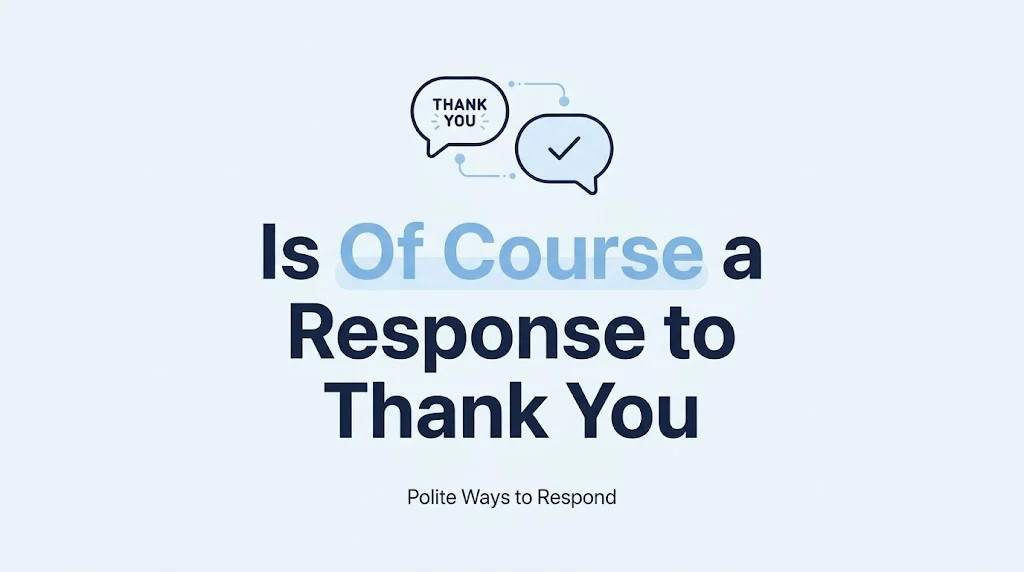
Yes, “of course” is a natural response to “thank you.” It usually means you were happy to help and do not consider the favor a burden. Depending on the situation, you can also say “you’re welcome,” “anytime,” “my pleasure,” “no problem,” or “happy to help.”
Top alternatives: You’re welcome, My pleasure, Anytime, No problem, Happy to help
When someone says “thank you,” replying with the right words can be surprisingly tricky. You might want to sound polite at work, warm with a friend, sweet with someone you love, or casually confident in a text. That is where “of course” fits in. It is short, natural, and friendly, and it often communicates that helping was never a big deal. But does that mean is of course a response to thank you in every situation? Not exactly.
Your tone, relationship, and setting can change how the phrase feels. In a casual text, “of course!” can sound warm and effortless. In a professional email, “you’re welcome” or “happy to help” may sound more polished. And with someone close to you, “always” can say much more than a basic thank-you reply. Here are plenty of ready-to-use responses for every vibe.
Friendly Responses
- “Of course!”
Example: Use this when a friend thanks you for doing them a small favor.
Meaning: You are saying that helping them felt natural and easy. - “You’re welcome!”
Example: Use this when someone thanks you after receiving your help.
Meaning: You are giving a classic, friendly acknowledgment. - “Anytime!”
Example: Use this when you want to let a friend know you are happy to help again.
Meaning: You are showing openness and friendliness. - “No problem!”
Example: Use this after helping someone with something simple.
Meaning: You are reassuring them that their request was not an inconvenience. - “Happy to help!”
Example: Use this when someone thanks you for helping them finish a task.
Meaning: You are emphasizing that you genuinely enjoyed being useful. - “Absolutely!”
Example: Use this when you want an upbeat response after someone thanks you.
Meaning: You are warmly confirming that helping was no trouble. - “Sure thing!”
Example: Use this in a casual text after helping someone out.
Meaning: You are keeping the interaction relaxed and approachable. - “My pleasure!”
Example: Use this when you want to sound especially warm and polite.
Meaning: You are saying that helping them was genuinely enjoyable. - “Anytime, seriously!”
Example: Use this when a close friend seems hesitant about asking for help again.
Meaning: You are encouraging them to feel comfortable coming to you. - “Glad I could help!”
Example: Use this after helping someone solve a small problem.
Meaning: You are expressing satisfaction that your help made a difference. - “Of course, no worries!”
Example: Use this when someone thanks you for doing something minor.
Meaning: You are making it clear that there is nothing to worry about. - “Don’t mention it!”
Example: Use this when someone is repeatedly thanking you for a simple favor.
Meaning: You are telling them the favor was not significant enough to require more thanks. - “Always happy to help.”
Example: Use this with someone you regularly support.
Meaning: You are showing dependable warmth. - “You got it!”
Example: Use this when you want a cheerful and informal response.
Meaning: You are keeping the exchange upbeat and easygoing. - “Of course, anytime you need me.”
Example: Use this when a close friend thanks you for being there.
Meaning: You are offering continued support in a warm way.
Casual Text Responses
- “Of course 😊”
Example: Use this when replying to a simple thank-you text from a friend.
Meaning: You are keeping the reply warm and effortless. - “Ofc!”
Example: Use this when texting someone you are comfortable with.
Meaning: You are giving a quick, casual version of “of course.” - “No worries!”
Example: Use this when someone thanks you for something small.
Meaning: You are showing that the favor was not a burden. - “Anytimeee!”
Example: Use this playful spelling when texting a close friend.
Meaning: You are adding extra enthusiasm and friendliness. - “Always!”
Example: Use this when someone thanks you for emotional or practical support.
Meaning: You are communicating that you will gladly help again. - “You know it!”
Example: Use this when replying to a friend who thanks you casually.
Meaning: You are keeping the interaction confident and playful. - “Gotchu!”
Example: Use this with someone who prefers informal texting.
Meaning: You are saying you were happy to have their back. - “For sure!”
Example: Use this when you want a relaxed and confident reply.
Meaning: You are confirming that helping them was completely fine. - “No biggie!”
Example: Use this when the favor was quick and uncomplicated.
Meaning: You are saying the favor was too small to worry about. - “Anytime, bestie!”
Example: Use this with a close friend after helping them.
Meaning: You are adding affection and playful friendship. - “Of course, duh!”
Example: Use this when joking with someone you know well.
Meaning: You are playfully suggesting that helping them was obvious. - “Always got you.”
Example: Use this after supporting a friend through something difficult.
Meaning: You are promising dependable support. - “Easy!”
Example: Use this after completing a quick favor.
Meaning: You are saying the task was effortless. - “Say less!”
Example: Use this when you want an energetic internet-style reply.
Meaning: You are showing that you were ready and willing to help. - “No stress!”
Example: Use this when someone thanks you for doing something unexpectedly.
Meaning: You are reassuring them that everything is completely fine.
Polite Responses
- “You’re very welcome.”
Example: Use this when you want to sound courteous in a respectful interaction.
Meaning: You are acknowledging their gratitude warmly. - “It was my pleasure.”
Example: Use this after helping someone in a formal or respectful setting.
Meaning: You are expressing genuine willingness to assist. - “You’re most welcome.”
Example: Use this when you want a polished and gracious reply.
Meaning: You are emphasizing sincere hospitality. - “Of course, I’m glad I could assist.”
Example: Use this when responding politely after helping someone.
Meaning: You are combining warmth with professionalism. - “It was no trouble at all.”
Example: Use this when someone apologizes for asking for help.
Meaning: You are reassuring them that their request was not inconvenient. - “I’m happy to help.”
Example: Use this after assisting someone with a task.
Meaning: You are showing willingness and courtesy. - “Not at all.”
Example: Use this when someone thanks you for a small kindness.
Meaning: You are politely indicating that their gratitude is unnecessary. - “Please don’t mention it.”
Example: Use this when someone continues thanking you for your assistance.
Meaning: You are politely minimizing the favor. - “It was nothing.”
Example: Use this when you want to respond modestly to thanks.
Meaning: You are suggesting the favor was simple and easy. - “I’m glad I could be of help.”
Example: Use this when someone thanks you after receiving useful assistance.
Meaning: You are expressing satisfaction that your support mattered. - “Certainly.”
Example: Use this when responding in a polished, formal environment.
Meaning: You are acknowledging their thanks with restrained courtesy. - “You’re quite welcome.”
Example: Use this when you want a slightly more formal version of “you’re welcome.”
Meaning: You are responding with graciousness. - “It was absolutely my pleasure.”
Example: Use this after providing meaningful assistance.
Meaning: You are emphasizing sincere goodwill. - “I’m pleased I could help.”
Example: Use this in a professional or formal interaction.
Meaning: You are expressing satisfaction in being useful. - “Always glad to assist.”
Example: Use this when responding to a customer, colleague, or professional contact.
Meaning: You are communicating dependable courtesy.
Professional Responses
- “You’re welcome.”
Example: Use this in a professional email after helping a colleague.
Meaning: You are giving a clear and universally appropriate acknowledgment. - “Happy to help.”
Example: Use this when a coworker thanks you for supporting a project.
Meaning: You are showing professionalism and willingness to collaborate. - “My pleasure.”
Example: Use this after assisting a client or colleague.
Meaning: You are responding warmly while maintaining professionalism. - “Glad I could help.”
Example: Use this after resolving an issue for a teammate.
Meaning: You are showing that the successful outcome matters to you. - “Of course, happy to assist.”
Example: Use this when replying to a professional thank-you message.
Meaning: You are combining warmth with a polished tone. - “Always happy to support.”
Example: Use this after helping a coworker meet a deadline.
Meaning: You are communicating a collaborative attitude. - “No problem at all.”
Example: Use this when a colleague thanks you for a quick favor.
Meaning: You are reassuring them that their request caused no inconvenience. - “I’m glad we could get it sorted.”
Example: Use this after helping resolve a workplace issue.
Meaning: You are focusing on the successful outcome. - “It was no trouble.”
Example: Use this when someone thanks you for completing a straightforward task.
Meaning: You are politely minimizing the effort involved. - “Of course, that’s what I’m here for.”
Example: Use this when helping someone within your professional responsibilities.
Meaning: You are presenting your assistance as part of your role. - “You’re very welcome, and I’m glad it worked out.”
Example: Use this after helping someone reach a successful result.
Meaning: You are combining courtesy with positive reinforcement. - “I appreciate you saying so.”
Example: Use this when someone gives you a thoughtful thank-you.
Meaning: You are graciously acknowledging their appreciation. - “It was a pleasure working with you.”
Example: Use this after completing a successful collaboration.
Meaning: You are ending the interaction on a positive professional note. - “Absolutely, glad to be of assistance.”
Example: Use this when responding to a formal workplace message.
Meaning: You are communicating professionalism and willingness. - “Anytime, please feel free to reach out.”
Example: Use this after assisting a colleague who may need future support.
Meaning: You are inviting continued professional communication.
Sweet Responses
- “Of course, always.”
Example: Use this when someone you care about thanks you for being there.
Meaning: You are saying your support comes naturally. - “Anything for you.”
Example: Use this with someone special after helping them.
Meaning: You are expressing affection and willingness. - “Always happy to be there for you.”
Example: Use this after supporting someone during a difficult moment.
Meaning: You are reassuring them that your care is genuine. - “You never have to thank me.”
Example: Use this when someone close repeatedly thanks you for your support.
Meaning: You are telling them that your kindness comes from genuine care. - “I’ve got you, always.”
Example: Use this after helping someone through a stressful situation.
Meaning: You are promising dependable support. - “Of course, you mean a lot to me.”
Example: Use this when someone thanks you for doing something meaningful.
Meaning: You are connecting your help with genuine affection. - “Helping you makes me happy.”
Example: Use this when you want to make your gratitude reply more heartfelt.
Meaning: You are saying that supporting them brings you joy. - “Always, with all my heart.”
Example: Use this for a deeply affectionate thank-you.
Meaning: You are expressing sincere emotional support. - “You’re worth it.”
Example: Use this when someone thanks you for going out of your way.
Meaning: You are telling them they are worth the effort. - “Of course, sweetheart.”
Example: Use this with someone you share an affectionate relationship with.
Meaning: You are making the reply tender and personal. - “I’d do it again in a heartbeat.”
Example: Use this after doing something significant for someone you love.
Meaning: You are emphasizing how willingly you helped. - “You never need a reason to ask me.”
Example: Use this when reassuring someone close to you.
Meaning: You want them to feel safe asking for support. - “Always here for you.”
Example: Use this after someone thanks you for emotional support.
Meaning: You are offering continued presence and care. - “Your happiness is enough thanks for me.”
Example: Use this after doing something kind for someone special.
Meaning: You are saying their happiness matters more than recognition. - “Of course, because that’s what people who care do.”
Example: Use this when responding to a heartfelt thank-you.
Meaning: You are framing your help as a natural expression of care.
Cute Responses
- “Of courseee!”
Example: Use this when texting someone you are comfortable with.
Meaning: You are adding playful enthusiasm to a simple reply. - “Always 🫶”
Example: Use this after a sweet thank-you from someone close.
Meaning: You are expressing affection and dependable support. - “Aww, of course!”
Example: Use this when someone thanks you in a particularly sweet way.
Meaning: You are responding with warmth and affection. - “Anything for you!”
Example: Use this when you want your reply to feel extra caring.
Meaning: You are showing that helping them was easy and meaningful. - “You’re too sweet!”
Example: Use this when someone thanks you enthusiastically.
Meaning: You are playfully returning their kindness. - “Always got your back 💕”
Example: Use this after supporting a friend or loved one.
Meaning: You are promising loyalty and care. - “No thank-yous needed!”
Example: Use this when someone keeps thanking you for a small favor.
Meaning: You are playfully telling them their gratitude is unnecessary. - “Of course, silly!”
Example: Use this with someone close when you want to sound playful.
Meaning: You are jokingly suggesting that helping them was obvious. - “You know I got you!”
Example: Use this when a friend thanks you for being dependable.
Meaning: You are emphasizing loyalty in a cheerful way. - “Always and forever!”
Example: Use this for a very affectionate thank-you.
Meaning: You are exaggerating warmly to show deep affection. - “Happy little helper reporting for duty!”
Example: Use this when joking after helping someone.
Meaning: You are turning the thank-you exchange into playful humor. - “Anything to make your day better.”
Example: Use this after doing something kind for someone special.
Meaning: You are showing that their happiness matters to you. - “Of course, cutie!”
Example: Use this with someone you have a playful or affectionate relationship with.
Meaning: You are making the response personal and sweet. - “No big deal, promise!”
Example: Use this when someone feels guilty about asking for help.
Meaning: You are reassuring them that the favor was easy. - “You’re welcome, tiny human.”
Example: Use this as a silly reply to a close friend.
Meaning: You are adding playful humor to an ordinary thank-you.
Flirty Responses
- “Of course, anything for you 😉”
Example: Use this when someone you like thanks you for doing them a favor.
Meaning: You are adding a subtle romantic undertone. - “Anytime, especially for you.”
Example: Use this when you want to make your reply feel a little more personal.
Meaning: You are hinting that they receive special treatment. - “You’re welcome, cutie.”
Example: Use this when flirting with someone you already have chemistry with.
Meaning: You are turning a polite exchange into a playful romantic moment. - “I’ll never say no to you.”
Example: Use this when someone thanks you after asking for your help.
Meaning: You are playfully suggesting that you have a soft spot for them. - “Anything to make you smile.”
Example: Use this after doing something thoughtful for a crush.
Meaning: You are openly showing interest and affection. - “Of course, you make it easy.”
Example: Use this when someone thanks you for being especially attentive.
Meaning: You are giving them a subtle compliment. - “For you? Always.”
Example: Use this when you want a short, confident romantic reply.
Meaning: You are suggesting they are special to you. - “My pleasure, gorgeous.”
Example: Use this when the relationship already allows affectionate language.
Meaning: You are combining gratitude with a direct compliment. - “You’re welcome, but I think you owe me a smile.”
Example: Use this when you want a playful flirt after helping someone.
Meaning: You are teasing them while keeping the mood light. - “Careful, I might get used to helping you.”
Example: Use this when you want a playful flirt after a small favor.
Meaning: You are joking that you enjoy their attention. - “Of course, I like having an excuse to talk to you.”
Example: Use this when helping creates an opportunity to continue chatting.
Meaning: You are subtly revealing that you enjoy their company. - “Anytime, if you ask nicely 😉”
Example: Use this when playful banter is already part of the relationship.
Meaning: You are adding teasing flirtation. - “You don’t have to thank me, just keep being cute.”
Example: Use this when the conversation is already openly flirty.
Meaning: You are replacing formal gratitude with playful affection. - “Happy to help, especially when it gets me your attention.”
Example: Use this when you want to turn a simple thank-you into flirtatious banter.
Meaning: You are admitting that you enjoy the interaction. - “Of course. You’re kind of hard to say no to.”
Example: Use this when someone thanks you after persuading you to help.
Meaning: You are playfully complimenting their influence over you.
Funny Responses
- “Of course. I accept payment in snacks.”
Example: Use this when a friend thanks you for a small favor.
Meaning: You are joking that a snack is your preferred reward. - “You’re welcome. My invoice is in the mail.”
Example: Use this when joking about doing someone a favor.
Meaning: You are pretending that your help came with a professional fee. - “Of course. My heroic duties continue.”
Example: Use this after helping someone with a minor problem.
Meaning: You are exaggerating the importance of your favor for comedic effect. - “No worries, I survived.”
Example: Use this when someone thanks you for doing something mildly inconvenient.
Meaning: You are jokingly pretending the task was an ordeal. - “Anything for my favorite headache.”
Example: Use this with a close friend who appreciates playful teasing.
Meaning: You are combining affection with friendly humor. - “You’re welcome. Please hold your applause.”
Example: Use this when someone gives you an enthusiastic thank-you.
Meaning: You are jokingly pretending your help deserves a standing ovation. - “Of course. Where else would you find this level of customer service?”
Example: Use this after helping a friend with something simple.
Meaning: You are humorously comparing yourself to a premium service. - “No problem. My cape is already on.”
Example: Use this after solving a friend’s small problem.
Meaning: You are jokingly presenting yourself as their superhero. - “You’re welcome. I’ll be accepting awards later.”
Example: Use this after doing something helpful but ordinary.
Meaning: You are playfully exaggerating your achievement. - “Of course. It was only mildly inconvenient.”
Example: Use this when teasing someone after helping them.
Meaning: You are pretending their favor was more difficult than it really was. - “Happy to help. My ego needed this.”
Example: Use this when someone gives you a big thank-you.
Meaning: You are joking that their appreciation boosts your confidence. - “Anytime. My calendar has a whole page for saving the day.”
Example: Use this after helping someone solve a problem.
Meaning: You are humorously exaggerating your helpfulness. - “Of course. That’s what unpaid friendship is for.”
Example: Use this with a close friend who understands your humor.
Meaning: You are joking about the unofficial obligations of friendship. - “You’re welcome. I expect a five-star review.”
Example: Use this after helping someone with a task.
Meaning: You are playfully pretending your help was a service. - “No problem. My superhero shift ends at midnight.”
Example: Use this after doing a favor for someone close.
Meaning: You are turning your helpfulness into a playful superhero joke.
Confident Responses
- “Of course. I’ve got you.”
Example: Use this when someone thanks you after relying on your support.
Meaning: You are showing confidence and dependability. - “Always.”
Example: Use this when someone thanks you for being there.
Meaning: You are giving a concise and confident promise of support. - “You can count on me.”
Example: Use this when someone thanks you for helping with something important.
Meaning: You are emphasizing reliability. - “No hesitation.”
Example: Use this when someone thanks you for helping without being asked twice.
Meaning: You are saying you were completely willing to assist. - “That’s what I do.”
Example: Use this when you want a confident, slightly playful response.
Meaning: You are presenting helpfulness as one of your strengths. - “I had it handled.”
Example: Use this after successfully taking care of a task.
Meaning: You are confidently showing competence. - “You know I’ve got your back.”
Example: Use this when someone thanks you for supporting them.
Meaning: You are reinforcing your loyalty and dependability. - “Consider it done.”
Example: Use this when someone thanks you after asking for help.
Meaning: You are confidently signaling that you can handle the situation. - “No need to thank me.”
Example: Use this when you want to downplay the favor confidently.
Meaning: You are suggesting that helping was simply natural. - “Gladly.”
Example: Use this as a concise and confident response.
Meaning: You are making your willingness unmistakable. - “Of course, that was easy.”
Example: Use this after completing a simple task for someone.
Meaning: You are reassuring them that the favor required little effort. - “You know where to find me.”
Example: Use this after helping someone and offering future support.
Meaning: You are confidently leaving the door open for more requests. - “Handled.”
Example: Use this after taking care of a quick problem.
Meaning: You are communicating competence in a very concise way. - “I’ve got this.”
Example: Use this when someone thanks you while you are still helping.
Meaning: You are confidently assuring them that the situation is under control. - “Always happy to step up.”
Example: Use this after taking responsibility for an important task.
Meaning: You are showing confidence and willingness to contribute.
Romantic Responses
- “Of course, love.”
Example: Use this when your partner thanks you for doing something caring.
Meaning: You are responding with tenderness and affection. - “Always for you.”
Example: Use this after your partner thanks you for your support.
Meaning: You are emphasizing devotion and consistency. - “You never have to thank me for loving you.”
Example: Use this after a heartfelt expression of appreciation.
Meaning: You are saying that caring for them is natural. - “Anything for my favorite person.”
Example: Use this when your partner thanks you for a thoughtful gesture.
Meaning: You are expressing affection and making them feel special. - “I’d do it all over again.”
Example: Use this after doing something meaningful for your partner.
Meaning: You are emphasizing that your effort was completely voluntary. - “Your smile is enough.”
Example: Use this after doing something specifically to make them happy.
Meaning: You are saying their happiness is your reward. - “Of course, my love.”
Example: Use this for a soft and affectionate response to gratitude.
Meaning: You are making the exchange intimate and reassuring. - “Always here, always yours.”
Example: Use this after your partner thanks you for emotional support.
Meaning: You are expressing deep commitment. - “You’re worth every effort.”
Example: Use this when someone thanks you for going out of your way.
Meaning: You are telling them that supporting them is worthwhile. - “I’ll choose you every time.”
Example: Use this when your partner thanks you for standing by them.
Meaning: You are expressing loyalty and commitment. - “Making your day better is one of my favorite things.”
Example: Use this after doing something thoughtful for your partner.
Meaning: You are saying their happiness brings you joy. - “You make helping you way too easy.”
Example: Use this when you want a playful romantic response.
Meaning: You are combining affection with light teasing. - “Of course, darling.”
Example: Use this when you want a classic affectionate tone.
Meaning: You are responding with warmth and tenderness. - “Anything that makes you happy.”
Example: Use this after doing something kind for your partner.
Meaning: You are prioritizing their happiness. - “You’ll never have to wonder if I’m here.”
Example: Use this after your partner thanks you for emotional support.
Meaning: You are offering reassurance and emotional security.
Sarcastic Responses
- “Of course. I’m practically a professional.”
Example: Use this when joking after helping someone with an easy task.
Meaning: You are playfully exaggerating your expertise. - “You’re welcome, I suppose.”
Example: Use this when teasing a close friend.
Meaning: You are pretending to be reluctantly helpful. - “Obviously.”
Example: Use this when someone thanks you for something you would naturally do.
Meaning: You are playfully suggesting that helping was self-evident. - “Please, try to contain your gratitude.”
Example: Use this when a friend gives you an overly enthusiastic thank-you.
Meaning: You are jokingly exaggerating their appreciation. - “I’ll add that to my list of accomplishments.”
Example: Use this after doing something very simple.
Meaning: You are humorously pretending the favor was a major achievement. - “Yes, yes, I know. I’m wonderful.”
Example: Use this when a close friend praises you after a favor.
Meaning: You are playfully accepting exaggerated praise. - “Another day, another heroic act.”
Example: Use this after solving a friend’s small problem.
Meaning: You are jokingly presenting yourself as a hero. - “You’re welcome. I accept compliments in cash.”
Example: Use this when someone thanks you repeatedly.
Meaning: You are turning appreciation into a playful joke. - “Naturally.”
Example: Use this as a dry response to a casual thank-you.
Meaning: You are humorously implying that helping was completely expected. - “I know, I’m very generous.”
Example: Use this when teasing someone after doing them a favor.
Meaning: You are jokingly bragging about your kindness. - “It’s fine, you may thank me later.”
Example: Use this when joking with someone close.
Meaning: You are playfully exaggerating the importance of your help. - “Add it to my imaginary trophy cabinet.”
Example: Use this after completing an ordinary favor.
Meaning: You are making fun of your own supposed achievement. - “Of course. My reputation depends on it.”
Example: Use this when pretending your helpfulness is part of your public image.
Meaning: You are using exaggerated seriousness for humor. - “No applause necessary.”
Example: Use this after receiving an enthusiastic thank-you.
Meaning: You are jokingly treating your favor like a performance. - “I’ll survive the praise somehow.”
Example: Use this when someone is excessively grateful.
Meaning: You are playfully pretending their gratitude is overwhelming.
When To Say “Of Course”
- “Of course!”
Example: Use this when someone thanks you for something you were happy to do.
Meaning: You are communicating that helping felt natural. - “Of course, anytime.”
Example: Use this when you want to combine warmth with an offer of future help.
Meaning: You are showing continued willingness to assist. - “Of course, no problem.”
Example: Use this when the favor was small and casual.
Meaning: You are reassuring the person that they caused no inconvenience. - “Of course, happy to help.”
Example: Use this in a workplace or polite conversation.
Meaning: You are keeping the response warm but professional. - “Of course, my pleasure.”
Example: Use this when you want a gracious and polished response.
Meaning: You are emphasizing genuine enjoyment in helping. - “Of course, you’re welcome.”
Example: Use this when you want maximum clarity after a thank-you.
Meaning: You are directly acknowledging their gratitude. - “Of course, always.”
Example: Use this when someone close thanks you for emotional support.
Meaning: You are promising that your support remains available. - “Of course, glad I could help.”
Example: Use this after solving a problem for someone.
Meaning: You are expressing satisfaction with being useful. - “Of course, don’t worry about it.”
Example: Use this when someone feels guilty about needing assistance.
Meaning: You are reassuring them that their request was fine. - “Of course, you never have to ask twice.”
Example: Use this with someone you are especially close to.
Meaning: You are emphasizing your readiness to help. - “Of course, that’s what friends are for.”
Example: Use this when a friend thanks you for a favor.
Meaning: You are framing your help as a natural part of friendship. - “Of course, I’ve got you.”
Example: Use this when someone thanks you for having their back.
Meaning: You are expressing confidence and loyalty. - “Of course, anytime you need.”
Example: Use this after helping someone through a difficult situation.
Meaning: You are offering dependable future support. - “Of course, it was nothing.”
Example: Use this when you want to minimize the effort involved.
Meaning: You are reassuring them that the favor was easy. - “Of course, you’re always welcome.”
Example: Use this when responding to gratitude from someone you want to feel comfortable around you.
Meaning: You are creating a warm and welcoming tone.
When “Of Course” Sounds Best
- “Of course!”
Example: Use this when the interaction is friendly and informal.
Meaning: You are giving a natural and effortless response. - “Of course 😊”
Example: Use this when texting someone and wanting to soften the tone.
Meaning: You are adding warmth through a simple emoji. - “Of course, happy to help.”
Example: Use this when you want to sound friendly but still professional.
Meaning: You are balancing warmth and workplace appropriateness. - “Of course, anytime.”
Example: Use this when you want to encourage future communication.
Meaning: You are showing that future requests are welcome. - “Of course, no worries.”
Example: Use this when someone seems concerned about bothering you.
Meaning: You are reassuring them that there was no inconvenience. - “Of course, it was my pleasure.”
Example: Use this when someone gives you a sincere or formal thank-you.
Meaning: You are emphasizing genuine courtesy. - “Of course, always.”
Example: Use this when responding to someone you deeply care about.
Meaning: You are making your support sound consistent and heartfelt. - “Of course, glad I could be there.”
Example: Use this after supporting someone during an emotional moment.
Meaning: You are expressing sincere care. - “Of course, you know I’ve got you.”
Example: Use this with a close friend or partner.
Meaning: You are reinforcing trust and loyalty. - “Of course, anything for you.”
Example: Use this with someone special when the tone is affectionate.
Meaning: You are showing that they matter to you. - “Of course, no need to thank me.”
Example: Use this when someone is overly grateful for a small kindness.
Meaning: You are telling them that the favor required little effort. - “Of course, that’s what I’m here for.”
Example: Use this when assisting someone within your responsibilities.
Meaning: You are presenting your help as natural and expected. - “Of course, whenever you need.”
Example: Use this after helping someone with an ongoing issue.
Meaning: You are offering continued availability. - “Of course, you’re very welcome.”
Example: Use this when you want a polished version of the basic reply.
Meaning: You are responding graciously to their gratitude. - “Of course, always happy to help.”
Example: Use this when you want a universally warm and dependable response.
Meaning: You are communicating both kindness and willingness.
FAQs
Is “of course” a response to “thank you”?
Yes. “Of course” is a natural response to “thank you,” especially in casual, friendly, and conversational situations. It suggests that helping was easy or something you were happy to do.
Is “of course” better than “you’re welcome”?
Neither is automatically better. “You’re welcome” is more direct, while “of course” can sound warmer, more relaxed, and more conversational.
What does “of course” mean after someone says thank you?
It usually means “you’re welcome,” “certainly,” or “I was happy to help.” It can also imply that the speaker considers helping to be natural or obvious.
Can “of course” sound rude?
Usually no, especially when delivered warmly. However, a very dry “of course” can sometimes sound dismissive or sarcastic depending on the relationship and context.
Can I use “of course” in a professional email?
Yes, but context matters. “Of course, happy to help” sounds friendly and professional, while “you’re welcome” or “my pleasure” may be more polished for formal communication.
Is “of course” a flirty response to thank you?
It can be, but the words alone are not inherently flirty. Adding phrases such as “anything for you” or “especially for you” can create a more romantic or playful tone.
Conclusion
So, is of course a response to thank you? Absolutely. It is one of those small phrases that can sound completely different depending on your tone. “Of course!” can feel friendly and effortless, “Of course, happy to help” can work beautifully at work, and “Of course, anything for you” can add a little sweetness or flirtation. The key is matching your reply to the relationship and moment instead of using the same response every time.
A simple thank-you exchange does not need a complicated answer, but the right words can make the interaction warmer and more memorable. Save these replies for texts, emails, conversations, and those moments when your brain suddenly forgets every polite phrase you have ever learned. Pick your favorite, send it confidently, and keep the conversation flowing!
Discover More Related Articles:
- How Long Do Sellers Have to Respond to an Offer | Timelines & Tips In 2026
- Can You Reply All to BCC | Email Etiquette, Rules & Smart Responses In 2026

Laura Adams is a dedicated content writer and blogger known for crafting clear, informative, and engaging articles. As a contributor to Responary.com, she specializes in creating reader-friendly content that educates, inspires, and keeps audiences informed on a wide range of subjects.