Quick Answer
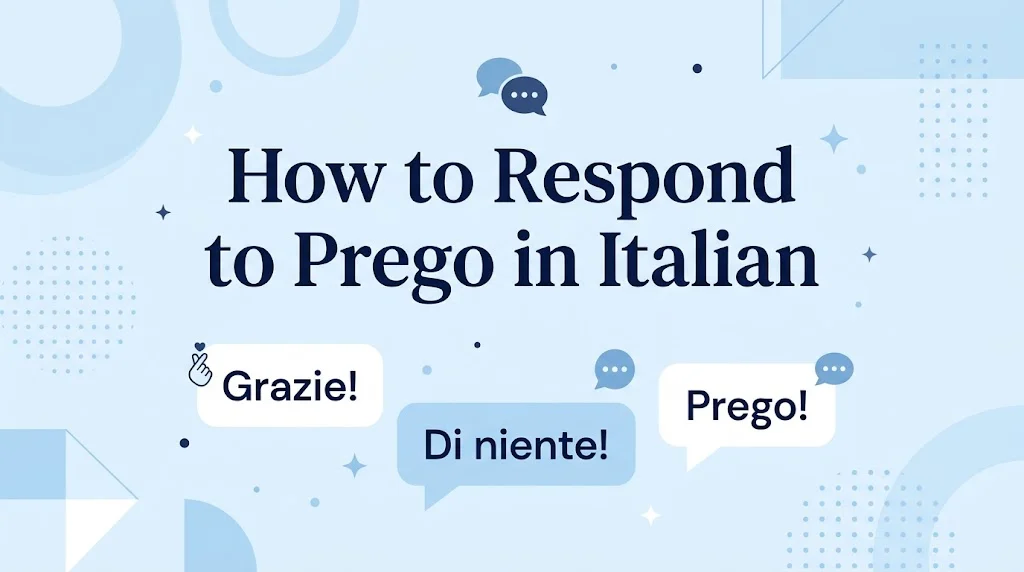
The best way to respond to prego in Italian depends on the context. After someone says prego as a response to grazie, you usually do not need to reply at all, but you can continue naturally with grazie a te, molto gentile, figurati, di niente, sei gentilissimo/a.
Ever said grazie in Italian and got a friendly prego back, only to wonder what you are supposed to say next? You are definitely not alone. Italian conversations can feel wonderfully expressive, and even a tiny word like prego can have several meanings depending on the situation. It can mean “you’re welcome,” but it can also be used to invite someone to proceed, offer something, or politely give permission.
That means your response depends on whether you are texting an Italian friend, chatting with someone you like, speaking to a waiter, talking with a colleague, or simply trying to sound natural while traveling. Knowing how to respond to prego in Italian helps you avoid awkward pauses and makes your conversation feel more authentic. From simple replies to playful comebacks, here are plenty of natural options for different moods and situations.
Polite Responses
- Grazie a te.
Use this when you want to return the kindness after someone helps you.
Meaning: Thank you to you too. - Molto gentile.
Use this when someone has been particularly kind or helpful.
Meaning: That is very kind. - Grazie, sei molto gentile.
Use this when you want to express sincere appreciation.
Meaning: Thank you, you are very kind. - La ringrazio.
Use this with someone you do not know well or in a formal setting.
Meaning: I thank you. - Grazie mille.
Use this when you want to emphasize your gratitude.
Meaning: Thank you very much. - È davvero gentile da parte tua.
Use this when someone has done something thoughtful.
Meaning: That is really kind of you. - Grazie ancora.
Use this when you have already thanked someone and want to reinforce it.
Meaning: Thanks again. - Apprezzo molto.
Use this when you genuinely value someone’s help.
Meaning: I really appreciate it. - Ti ringrazio.
Use this with someone you know in a friendly or familiar setting.
Meaning: Thank you. - Grazie di cuore.
Use this for heartfelt gratitude.
Meaning: Thank you from the bottom of my heart. - Gentilissimo, grazie.
Use this when speaking warmly to a man who has helped you.
Meaning: Very kind of you, thank you. - Gentilissima, grazie.
Use this when speaking warmly to a woman who has helped you.
Meaning: Very kind of you, thank you. - Grazie, davvero.
Use this when you want to sound sincere and natural.
Meaning: Thank you, really. - Ti sono molto grato.
Use this when a man wants to express deep appreciation.
Meaning: I am very grateful to you. - Ti sono molto grata.
Use this when a woman wants to express deep appreciation.
Meaning: I am very grateful to you.
Casual Responses
- Grazie!
Use this when you want to keep the exchange short and natural.
Meaning: Thanks. - Figurati!
Use this with friends or people you know casually.
Meaning: No worries or don’t mention it. - Di niente!
Use this for an easygoing response.
Meaning: It’s nothing. - Nessun problema!
Use this when you want a relaxed modern reply.
Meaning: No problem. - Tranquillo!
Use this when speaking casually to a man.
Meaning: Don’t worry about it. - Tranquilla!
Use this when speaking casually to a woman.
Meaning: Don’t worry about it. - Non c’è problema!
Use this when you want to reassure someone.
Meaning: There is no problem. - Ci mancherebbe!
Use this when someone thanks you for something you were happy to do.
Meaning: Of course, no need to thank me. - Ma figurati!
Use this with close friends for an even more relaxed tone.
Meaning: Oh, don’t mention it. - Assolutamente!
Use this when you want an enthusiastic response.
Meaning: Absolutely. - Certo!
Use this when the situation calls for a confident casual reply.
Meaning: Of course. - Volentieri!
Use this when you were happy to help.
Meaning: Gladly or my pleasure. - Sempre!
Use this with someone close to you.
Meaning: Always, especially when offering continued support. - Nessun problema, davvero.
Use this when you want to reassure someone.
Meaning: Really, there is no problem. - Quando vuoi!
Use this with a friend when you are happy to help again.
Meaning: Anytime.
Friendly Responses
- Grazie, amico!
Use this with a male friend in a relaxed conversation.
Meaning: Thanks, buddy. - Grazie, cara!
Use this with a female friend in a warm conversation.
Meaning: Thanks, dear. - Grazie, caro!
Use this with a male friend you are comfortable with.
Meaning: Thanks, dear. - Sei un tesoro!
Use this when someone has been especially helpful.
Meaning: You are a sweetheart. - Che gentile!
Use this after receiving a thoughtful favor.
Meaning: How kind! - Grazie di tutto!
Use this when someone has helped you in several ways.
Meaning: Thanks for everything. - Sei davvero gentile.
Use this when you want to compliment someone’s kindness.
Meaning: You are really kind. - Ti devo un favore!
Use this when someone has helped you and you want to return the favor.
Meaning: I owe you one. - Grazie, sei grande!
Use this with a friend who has come through for you.
Meaning: Thanks, you are awesome. - Che carino da parte tua!
Use this after someone does something sweet.
Meaning: That is so sweet of you. - Grazie, davvero apprezzo.
Use this when you want casual but genuine gratitude.
Meaning: Thanks, I really appreciate it. - Mi hai salvato!
Use this humorously when someone solves a problem for you.
Meaning: You saved me. - Sei stato un grande aiuto.
Use this when thanking a male friend for practical help.
Meaning: You were a great help. - Sei stata un grande aiuto.
Use this when thanking a female friend for practical help.
Meaning: You were a great help. - Grazie, davvero troppo gentile!
Use this when someone goes out of their way for you.
Meaning: Thank you, you are really too kind.
Funny Responses
- Prego? Io devo ancora imparare l’italiano! 😂
Use this when you are joking about your Italian skills.
Meaning: You are humorously admitting that you are still learning. - Grazie, professoressa! 😂
Use this when a friend has just taught you something.
Meaning: You are playfully treating them like your teacher. - Figurati, sto diventando italiano! 🇮🇹
Use this after successfully navigating an Italian conversation.
Meaning: You are joking that your Italian skills are improving. - Grazie, ora mi sento ufficialmente elegante.
Use this when you want to make a simple exchange dramatic.
Meaning: You are joking about sounding sophisticated in Italian. - Prego ricevuto! 😂
Use this with a friend who enjoys silly wordplay.
Meaning: You are playfully pretending the word itself is a formal message. - Grazie, il mio italiano approva.
Use this when practicing Italian with friends.
Meaning: You are joking that your language skills are celebrating. - Okay, Italian mode activated. 🇮🇹
Use this after having a successful Italian exchange.
Meaning: You are humorously announcing your Italian confidence. - Grazie, chef!
Use this when someone has helped you with food or cooking.
Meaning: You are giving them a playful honorary title. - Grazie, maestro!
Use this when someone has taught you something.
Meaning: You are jokingly calling them a master. - Prego, ma con pizza. 🍕
Use this with friends when you want an exaggerated Italian joke.
Meaning: You are connecting the language exchange with a playful pizza reference. - Grazie, Duolingo sarebbe fiero. 😂
Use this when practicing Italian phrases.
Meaning: You are joking that your language-learning app would approve. - Sto parlando italiano adesso, attenzione. 😂
Use this when you are feeling confident about your Italian.
Meaning: You are humorously announcing your language progress. - Grazie, cinque stelle per il servizio. ⭐
Use this after someone helps you impressively.
Meaning: You are jokingly reviewing their helpfulness like a service. - Perfetto, conversazione italiana completata.
Use this after successfully finishing a short Italian exchange.
Meaning: You are playfully treating the conversation like a completed mission. - Grazie, ora voglio solo pasta. 🍝
Use this with someone who appreciates Italian-themed humor.
Meaning: You are turning the language moment into a light food joke.
Flirty Responses
- Grazie, sei dolcissimo.
Use this when responding warmly to a man you like.
Meaning: Thank you, you are very sweet. - Grazie, sei dolcissima.
Use this when responding warmly to a woman you like.
Meaning: Thank you, you are very sweet. - Sei sempre così gentile con me.
Use this when you want to hint that you notice their attention.
Meaning: You are always so kind to me. - Grazie, mi fai sorridere.
Use this when someone’s kindness genuinely makes you smile.
Meaning: Thank you, you make me smile. - Con te dico sempre grazie. 😉
Use this when you want a subtle playful flirt.
Meaning: You are joking that they give you many reasons to be grateful. - Grazie, sei speciale.
Use this when you want your appreciation to feel more personal.
Meaning: Thank you, you are special. - Solo perché sei tu. 😉
Use this when you want to suggest that you would not do the same for everyone.
Meaning: Only because it is you. - Grazie, ma il tuo sorriso è il vero regalo.
Use this when you want a romantic compliment.
Meaning: You are playfully saying their smile matters more than the favor. - Con un prego così, come faccio a non sorridere?
Use this when someone says prego in an especially charming way.
Meaning: You are teasing them about their charm. - Grazie, bello!
Use this with a man when the relationship is already playful.
Meaning: Thanks, handsome. - Grazie, bella!
Use this with a woman in a playful romantic context.
Meaning: Thanks, beautiful. - Sei troppo carino con me.
Use this when someone is being especially sweet.
Meaning: You are too cute or sweet with me. - Grazie, mi stai viziando. 😉
Use this when someone keeps treating you kindly.
Meaning: You are playfully saying they are spoiling you. - Con te è sempre un piacere.
Use this when you want something subtly romantic and classy.
Meaning: With you, it is always a pleasure. - Grazie, potrei abituarmi a queste attenzioni. 😉
Use this when you want a confident flirt.
Meaning: You are hinting that you enjoy their attention and want more.
Sarcastic Responses
- Prego? Che formalità! 😂
Use this when a friend suddenly sounds unusually formal.
Meaning: You are teasing them for their formal tone. - Grazie, signore!
Use this jokingly with a male friend.
Meaning: You are playfully exaggerating the formality. - Grazie, molto professionale. 😂
Use this when someone gives an overly polished response.
Meaning: You are teasing them for sounding like a customer-service representative. - Wow, che educazione!
Use this when someone is unexpectedly polite.
Meaning: You are playfully pointing out their politeness. - Addirittura in italiano?
Use this when someone surprises you by speaking Italian.
Meaning: You are joking about the unexpected language choice. - Okay, signor italiano. 😂
Use this with someone showing off their Italian.
Meaning: You are teasing them about their language skills. - Cinque minuti in Italia e già sei fluente.
Use this when a friend is exaggerating their Italian ability.
Meaning: You are playfully mocking their sudden confidence. - Va bene, professorino.
Use this when someone corrects your Italian.
Meaning: You are teasing them for acting like a teacher. - Calma, Dante. 😂
Use this when someone becomes dramatically poetic in Italian.
Meaning: You are humorously comparing them to a famous Italian poet. - Molto italiano da parte tua.
Use this when someone is leaning into Italian expressions.
Meaning: You are playfully calling attention to their Italian style. - Okay, pasta included next time.
Use this when someone is showing off Italian phrases.
Meaning: You are turning their language skills into a food joke. - Non esagerare con l’italiano. 😂
Use this when a friend keeps using Italian expressions.
Meaning: You are joking that they are taking the Italian theme too far. - Bene, ora manca solo la Vespa.
Use this when someone is enthusiastically embracing Italian culture.
Meaning: You are joking that they need one more classic Italian detail. - Molto elegante, devo dire.
Use this when someone unexpectedly sounds sophisticated.
Meaning: You are giving playful approval with a sarcastic edge. - Bravo, hai superato l’esame d’italiano.
Use this when a friend uses Italian correctly.
Meaning: You are jokingly congratulating them for passing a language test.
Cute Responses
- Aww, grazie! 🥰
Use this when someone has been especially kind.
Meaning: You are responding with warm affection. - Grazie, che dolce! ❤️
Use this after receiving a sweet gesture.
Meaning: Thank you, that is so sweet. - Sei un amore!
Use this with someone you are close to.
Meaning: You are such a sweetheart. - Grazie di cuore. ❤️
Use this when you want your gratitude to feel heartfelt.
Meaning: Thank you from my heart. - Che carino!
Use this when someone does something adorable or thoughtful.
Meaning: How sweet or cute. - Grazie, mi hai fatto sorridere. 😊
Use this when someone’s gesture brightens your mood.
Meaning: Thank you, you made me smile. - Sei troppo dolce!
Use this when someone is being especially affectionate.
Meaning: You are so sweet. - Un grazie gigante! 🤗
Use this with a close friend.
Meaning: A huge thank you. - Grazie, tesoro!
Use this only when the relationship is affectionate and familiar.
Meaning: Thank you, sweetheart. - Che bello sentirlo da te.
Use this when the sender’s words feel especially meaningful.
Meaning: It is lovely to hear that from you. - Grazie, mi hai reso felice.
Use this when someone genuinely makes your day better.
Meaning: Thank you, you made me happy. - Un abbraccio e grazie! 🤗
Use this with a close friend or loved one.
Meaning: Sending a hug along with your thanks. - Grazie, sei sempre adorabile.
Use this for someone who regularly treats you kindly.
Meaning: Thank you, you are always adorable. - Dolcissimo, grazie!
Use this when speaking warmly to a man.
Meaning: So sweet, thank you. - Dolcissima, grazie!
Use this when speaking warmly to a woman.
Meaning: So sweet, thank you.
Romantic Responses
- Grazie, amore.
Use this with a romantic partner.
Meaning: Thank you, my love. - Sei sempre nel mio cuore.
Use this when you want a deeply affectionate response.
Meaning: You are always in my heart. - Grazie per essere sempre così presente.
Use this when your partner consistently supports you.
Meaning: Thank you for always being there. - Con te è tutto più bello.
Use this when you want a romantic compliment.
Meaning: Everything is more beautiful with you. - Grazie, amore mio.
Use this for an intimate message to a partner.
Meaning: Thank you, my love. - Sei una persona speciale per me.
Use this when you want to express genuine emotional closeness.
Meaning: You are a special person to me. - Mi fai sentire fortunato.
Use this when a man wants to tell his partner how lucky he feels.
Meaning: You make me feel lucky. - Mi fai sentire fortunata.
Use this when a woman wants to tell her partner how lucky she feels.
Meaning: You make me feel lucky. - Grazie per tutto quello che fai per me.
Use this when acknowledging a partner’s ongoing support.
Meaning: Thank you for everything you do for me. - Sei il mio sorriso preferito.
Use this as a sweet romantic message.
Meaning: You are my favorite smile. - Con te, sempre. ❤️
Use this when you want an intimate but very short reply.
Meaning: With you, always. - Grazie per rendere le mie giornate più belle.
Use this when someone consistently brightens your life.
Meaning: Thank you for making my days more beautiful. - Ti adoro.
Use this when you have an affectionate romantic relationship.
Meaning: I adore you. - Sei il mio piccolo momento felice.
Use this for a cute romantic text.
Meaning: You are my little happy moment. - Grazie, amore. Ora vieni qui. ❤️
Use this when you want to turn gratitude into an affectionate invitation.
Meaning: You are expressing affection and wanting closeness.
Professional Responses
- Grazie, molto gentile.
Use this in workplace or business conversations.
Meaning: Thank you, very kind. - La ringrazio molto.
Use this with clients, customers, or senior colleagues.
Meaning: Thank you very much. - Grazie per la disponibilità.
Use this when someone has made time to help professionally.
Meaning: Thank you for your availability. - Apprezzo molto il suo aiuto.
Use this in formal professional communication.
Meaning: I really appreciate your help. - Grazie per la cortesia.
Use this in formal situations.
Meaning: Thank you for your courtesy. - È stato molto gentile.
Use this when thanking a man for professional assistance.
Meaning: That was very kind of you. - È stata molto gentile.
Use this when thanking a woman for professional assistance.
Meaning: That was very kind of you. - La ringrazio per la sua attenzione.
Use this when someone has carefully handled your request.
Meaning: Thank you for your attention. - Grazie per il supporto.
Use this in workplace communication.
Meaning: Thank you for the support. - Molte grazie per l’assistenza.
Use this when someone has helped you professionally.
Meaning: Many thanks for the assistance. - Grazie per la collaborazione.
Use this with colleagues or business partners.
Meaning: Thank you for the cooperation. - La ringrazio per la disponibilità.
Use this in formal emails or professional exchanges.
Meaning: Thank you for your availability. - Molto apprezzato, grazie.
Use this when you want a concise professional response.
Meaning: Much appreciated, thank you. - Grazie ancora per il suo aiuto.
Use this after receiving professional assistance.
Meaning: Thanks again for your help. - Le sono molto grato per l’aiuto.
Use this when a man wants to express formal gratitude.
Meaning: I am very grateful to you for your help.
Clever Responses
- Grazie a te, direi che siamo pari.
Use this when both people have helped each other.
Meaning: You are suggesting that the kindness goes both ways. - Un semplice grazie non basta.
Use this when someone has done something particularly meaningful.
Meaning: You are saying their kindness deserves more appreciation. - Direi che il grazie è reciproco.
Use this when both people have reason to appreciate each other.
Meaning: You are saying the gratitude is mutual. - Volentieri, sempre.
Use this when you want to show that helping them was easy.
Meaning: You are happy to help anytime. - Nessun grazie necessario.
Use this for a concise and confident response.
Meaning: There is no need to thank me. - Il piacere è stato mio.
Use this when you genuinely enjoyed helping.
Meaning: The pleasure was mine. - È stato un piacere aiutarti.
Use this with someone you know personally.
Meaning: It was a pleasure helping you. - Quando posso, volentieri.
Use this when you want to show willingness to help again.
Meaning: Whenever I can, gladly. - Per te, sempre.
Use this with someone close to you.
Meaning: For you, always. - Nessun problema, siamo qui per questo.
Use this when helping someone is simply part of the situation.
Meaning: There is no problem because helping is what you are here to do. - Non devi ringraziarmi.
Use this with someone who keeps thanking you.
Meaning: You do not need to thank me. - È il minimo che potessi fare.
Use this when you feel your help was only a small gesture.
Meaning: It was the least I could do. - Felice di esserti stato utile.
Use this when a man wants to say he was glad to help.
Meaning: Happy that I was useful to you. - Felice di esserti stata utile.
Use this when a woman wants to say she was glad to help.
Meaning: Happy that I was useful to you. - Alla prossima!
Use this when ending a casual helpful exchange.
Meaning: Until next time.
Dramatic Responses
- Grazie, mi hai salvato la giornata!
Use this when someone fixes a frustrating problem.
Meaning: You are exaggerating playfully to show how much their help mattered. - Non so come avrei fatto senza di te!
Use this when someone comes through at exactly the right moment.
Meaning: You are emphasizing how valuable their help was. - Sei arrivato nel momento perfetto!
Use this when a man helps at just the right time.
Meaning: You are saying their timing was perfect. - Sei arrivata nel momento perfetto!
Use this when a woman helps at just the right time.
Meaning: You are saying her timing was perfect. - Mi hai letteralmente salvato!
Use this humorously when someone solves an important problem.
Meaning: You are dramatically emphasizing your gratitude. - Non dimenticherò mai questo gesto!
Use this when someone does something unusually thoughtful.
Meaning: You are playfully saying you will remember their kindness. - Un eroe, praticamente. 😂
Use this when someone helps you out of a small crisis.
Meaning: You are humorously exaggerating their heroic status. - Questo merita un premio!
Use this after someone does something impressively helpful.
Meaning: You are joking that their kindness deserves recognition. - Come posso mai ringraziarti abbastanza?
Use this when someone has helped you significantly.
Meaning: You are emphasizing how grateful you feel. - Sei ufficialmente la persona del giorno.
Use this when someone makes your day better.
Meaning: You are humorously giving them an imaginary award. - Mi hai tolto un peso enorme!
Use this when someone’s help removes a major worry.
Meaning: You are saying their help brought you relief. - Che salvataggio epico!
Use this after someone rescues you from an awkward situation.
Meaning: You are dramatically praising their quick help. - Non potevi arrivare in un momento migliore!
Use this when their assistance comes at exactly the right time.
Meaning: You are emphasizing their perfect timing. - Ti devo una statua! 😂
Use this when jokingly expressing huge gratitude.
Meaning: You are exaggerating how much you appreciate them. - Questo favore entrerà nella storia.
Use this when you want an exaggerated humorous response.
Meaning: You are joking that their small favor was legendary.
Sweet And Heartfelt Responses
- Grazie per la tua gentilezza.
Use this when someone’s kindness genuinely touches you.
Meaning: Thank you for your kindness. - Mi ha fatto davvero piacere.
Use this after receiving a thoughtful gesture.
Meaning: It genuinely made me happy. - Grazie per esserci.
Use this with someone who consistently supports you.
Meaning: Thank you for being there. - Lo apprezzo davvero tanto.
Use this when you want to emphasize sincere gratitude.
Meaning: I really appreciate it. - Grazie dal profondo del cuore.
Use this for a deeply emotional expression of gratitude.
Meaning: Thank you from the bottom of my heart. - La tua gentilezza significa molto per me.
Use this when someone’s kindness has personal significance.
Meaning: Your kindness means a lot to me. - Sono davvero grato per tutto.
Use this when a man wants to express heartfelt appreciation.
Meaning: I am truly grateful for everything. - Sono davvero grata per tutto.
Use this when a woman wants to express heartfelt appreciation.
Meaning: I am truly grateful for everything. - Grazie per aver pensato a me.
Use this when someone remembers you or does something considerate.
Meaning: Thank you for thinking of me. - Le tue parole significano molto.
Use this after receiving an encouraging or emotional message.
Meaning: Your words mean a lot. - Mi hai fatto sentire davvero speciale.
Use this when someone’s gesture makes you feel appreciated.
Meaning: You made me feel truly special. - Grazie per il tuo cuore grande.
Use this with someone known for being generous and caring.
Meaning: Thank you for your big heart. - Sono fortunato ad averti.
Use this when a man wants to express affection toward someone close.
Meaning: I am lucky to have you. - Sono fortunata ad averti.
Use this when a woman wants to express affection toward someone close.
Meaning: I am lucky to have you. - Grazie, davvero. Non lo dimenticherò.
Use this when someone has done something especially meaningful.
Meaning: Thank you, truly, I will not forget it.
Chill And Short Responses
- Grazie!
Use this when you want to keep things effortless.
Meaning: Thanks. - Grazie mille!
Use this when you want slightly stronger gratitude.
Meaning: Thanks a lot. - Figurati!
Use this with friends and familiar people.
Meaning: No worries. - Di niente!
Use this for a simple everyday response.
Meaning: You are welcome. - Certo!
Use this when you want to sound confident and relaxed.
Meaning: Of course. - Volentieri!
Use this when helping was genuinely enjoyable.
Meaning: Gladly. - Sempre!
Use this with someone close.
Meaning: Always. - Tranquillo!
Use this casually with a man.
Meaning: No worries. - Tranquilla!
Use this casually with a woman.
Meaning: No worries. - Nessun problema!
Use this in relaxed everyday conversations.
Meaning: No problem. - Ma figurati!
Use this with friends for extra casual warmth.
Meaning: Don’t mention it. - Ci mancherebbe!
Use this when you want to strongly reassure someone.
Meaning: Of course, no need to thank me. - Quando vuoi!
Use this when you are happy to help again.
Meaning: Anytime. - Con piacere!
Use this when you want to sound warm but natural.
Meaning: With pleasure. - Nessun problema, davvero!
Use this when you want to close the exchange positively.
Meaning: Really, there is no problem.
FAQs
What does prego mean in Italian?
Prego commonly means “you’re welcome” after someone says grazie. Depending on context, it can also mean “please,” “go ahead,” or “after you.”
Do I need to respond when someone says prego after grazie?
Usually, no. The exchange can naturally end there. A smile, nod, or simple continuation of the conversation is perfectly normal.
What is the most natural response to prego?
If prego means “you’re welcome,” you generally do not need another response. If you want to continue, grazie a te, molto gentile, or a similar phrase can work depending on the situation.
Can prego have a flirty meaning?
Prego itself is not inherently flirty. The tone, relationship, facial expression, and surrounding conversation can make an otherwise ordinary exchange feel playful or romantic.
How should I respond to prego professionally?
If the conversation is formal, phrases such as molto gentile, la ringrazio, or grazie per la disponibilità are appropriate when expressing appreciation.
Conclusion
Knowing how to respond to prego in Italian is less about memorizing one perfect sentence and more about understanding the vibe. With friends, keep it casual with figurati, di niente, or grazie. In professional settings, choose something more polished. With someone special, a warm compliment can turn an ordinary language exchange into a memorable moment.
The best response is the one that sounds natural for your relationship and the situation. Italian is full of expressive little phrases, so do not be afraid to experiment and have fun with them. Save this list for your next Italian conversation, share it with a fellow language learner, and keep practicing. Before long, these phrases will feel as natural as saying grazie.
Discover More Related Articles:
- How to Respond to a Narcissist Text | Smart Replies for Every Situation In 2026
- How to Reply With a Video on TikTok | Easy Guide In 2026

Jennifer Wilson is an experienced writer and content creator with over 20 years of expertise in digital publishing, lifestyle, and informative content. Holding a degree in English Literature, she contributes to Responary.Com, where she shares engaging, well-researched articles that help readers stay informed and inspired.